Are you a team member in a veterinary practice?
Are you a pet parent planning a trip with your furry pal?
State of Hawaii Animal Quarantine: A Pet Owner's Guide
Bringing your furry best friend along on your move to Hawaii? Fantastic! But before you start packing the chew toys and beach towels, you need to get familiar with the state's very specific animal import rules. The goal is to keep Hawaii rabies-free, and with the right prep work, your pet's arrival can be a walk in the park.
Most pets that are properly prepared can be released to you right at the airport. It just takes some careful planning.
Why Hawaii Is So Strict About Pet Imports
Moving a dog or cat to Hawaii isn't like crossing any other state line. Hawaii is the only state in the U.S. that is completely rabies-free, a status it protects fiercely. To keep it that way, the state has some of the most thorough animal import rules in the world.
This whole process is designed to protect the local ecosystem, residents, and all the other animals from a very serious disease.
While the word "quarantine" can sound pretty scary, it doesn't automatically mean a long, sad separation. In reality, most pet owners who follow the checklist to the letter are reunited with their pets the very same day they land. It's all about the prep work.
The Three Possible Outcomes for Your Pet
The journey isn't a one-size-fits-all deal. Your pet's arrival experience will fall into one of three main scenarios, depending entirely on how well you've prepared. Understanding these pathways is the first step to a successful move.
To give you a clearer picture, here’s a quick breakdown of the different programs.
Hawaii Animal Quarantine Program Options at a Glance
This table summarizes the main quarantine programs, outlining the core requirements and outcomes for each to help you choose the right path.
Program | Key Requirement | Typical Duration | Best For |
|---|---|---|---|
Direct Airport Release (DAR) | All requirements met perfectly; documents submitted on time. | Immediate release after airport inspection. | Well-prepared pet owners who follow every step. |
5-Day-or-Less Program | Minor errors or missed deadlines. | Up to 5 days at the quarantine station. | Pet owners who are mostly prepared but missed a detail. |
120-Day Quarantine | Failure to meet core requirements (e.g., no valid rabies titer test). | 120 days at the quarantine station. | Pets arriving without the necessary pre-arrival preparations. |
As you can see, your preparation directly impacts your pet’s experience. The goal for nearly everyone is to qualify for Direct Airport Release.
The good news? The vast majority of pets avoid that dreaded long-term quarantine. Careful preparation is what makes the difference between a quick reunion and a long, expensive wait.
The numbers back this up. According to the Hawaii Department of Agriculture, of the nearly 19,000 pets that entered the state between mid-2022 and mid-2023, an impressive 65.7% qualified for Direct Airport Release. Only 3.1% ended up in the full 120-day quarantine.
For a deep dive into every requirement you'll need to meet, check out our comprehensive guide on https://passpaw.com/blog/taking-pet-to-hawaii. It's the perfect resource to help you get everything in order.
Your Pre-Arrival Pet Prep Checklist
Getting your pet ready for Hawaii is a bit like preparing for a big exam—it requires careful study and following instructions to the letter. Think of this checklist as your pet's passport to paradise, where each completed task brings you one step closer to that happy reunion right at the airport.
Completing these steps correctly is what separates a quick airport release from an unexpected, expensive, and stressful stay at the quarantine station. It's a detailed process, but it's completely manageable when you tackle it one step at a time. Let's dig in.
First Things First: The Microchip
Before you do anything else—vaccinations, blood tests, or paperwork—your pet needs a working microchip. This tiny electronic chip is your pet’s permanent ID, and for Hawaii's animal quarantine branch, it's the foundation of the entire process.
The most important rule? The microchip has to be implanted before any rabies vaccinations are given. If the shots come first, they don't count.
Here’s what to check with your vet:
Is it readable? Your vet needs to scan the microchip to make sure it’s working properly and a scanner can easily pick up the number.
Does the number match everything? The microchip number on your vet's records must be a perfect match on all other documents, like the vaccine certificates and the blood test submission form. A single wrong digit can throw a wrench in the whole process.
If your pet already has a microchip, great! Just have your vet scan it at your next appointment to confirm it’s still working. If not, this is your absolute first step.
The Two-Shot Rabies Vaccination Rule
With the microchip in place and confirmed, it's time for the rabies shots. Hawaii asks for proof of at least two rabies vaccinations in your pet's lifetime, and both must be given by a licensed veterinarian.
The timing here is very important and where many people get tripped up.
The two vaccinations must be given at least 30 days apart.
The most recent vaccine must also be given more than 30 days before your pet lands in Hawaii.
Rushing this step is a common mistake that may disqualify you from the Direct Airport Release program. You just can't cram for this test.
Key Takeaway: The "30-Day Rule" is a recurring theme you can't ignore. At least 30 days between the two rabies shots, and the second shot must be given at least 30 days before arrival. Planning ahead isn't just a suggestion; it's a key part of the process.
Making sure your vaccination records are clear and correct is a huge part of this. For a deeper dive into what makes for good documentation, you can review our guide on providing proof of rabies vaccines for travel.
The Crucial FAVN Rabies Antibody Test
This is arguably the most important and time-sensitive part of the whole puzzle. The Fluorescent Antibody Virus Neutralization (FAVN) test is a blood test that shows the rabies vaccines actually worked by measuring the antibody levels in your pet's system. It’s the ultimate proof that your pet doesn't pose a rabies risk.
Your veterinarian will draw the blood, but it must be sent to a state-approved lab, like Kansas State University or the DOD Food Analysis and Diagnostic Laboratory in Texas.
The timing of the FAVN test is guided by several strict rules:
The blood can only be drawn at least 14 days after the most recent rabies shot.
Your pet cannot arrive in Hawaii until at least 30 days have passed since the lab received the sample.
The test result must be a "pass"—a level of 0.5 IU/ml or greater.
That 30-day waiting period after the lab gets the sample is not flexible and officially starts the countdown to your pet's arrival eligibility. The good news? A successful FAVN test is valid for three years, as long as you keep your pet’s rabies boosters current without any gaps.
Health Certificate and Tick Treatment
As your travel date gets closer, you've got a couple more boxes to check. Within 14 days of your arrival in Hawaii, your pet needs to see a licensed veterinarian for an official health certificate. This is the vet’s final sign-off that your pet is healthy and fit to fly.
During that same visit, the vet must treat your pet with a product that kills ticks, like Fipronil or something equally effective. The specific product used has to be listed right on the health certificate. This isn’t optional; it's a required step to protect the islands' ecosystem from new pests.
This final vet visit is your last chance to triple-check that every piece of paper is in perfect order before you send it all off to Hawaii. Because the state is rabies-free, these rules are some of the strictest in the world and are followed very closely. A pet that meets every requirement can be released in just a few hours. One that doesn't could face up to 120 days in quarantine.
How to Manage Your Timeline and Paperwork
When you're dealing with the State of Hawaii's animal quarantine rules, your calendar is everything. This isn't a process you can rush. A missed deadline isn't a small hiccup—it's the one thing that can land your pet in a quarantine facility instead of coming home with you from the airport. Getting the timeline right is the secret to a smooth, stress-free arrival in paradise.
The trick is to work backward from your travel date. This approach helps ensure every single requirement is ticked off in the correct order, with plenty of wiggle room for those "just in case" moments. It's a game of precision, not speed.
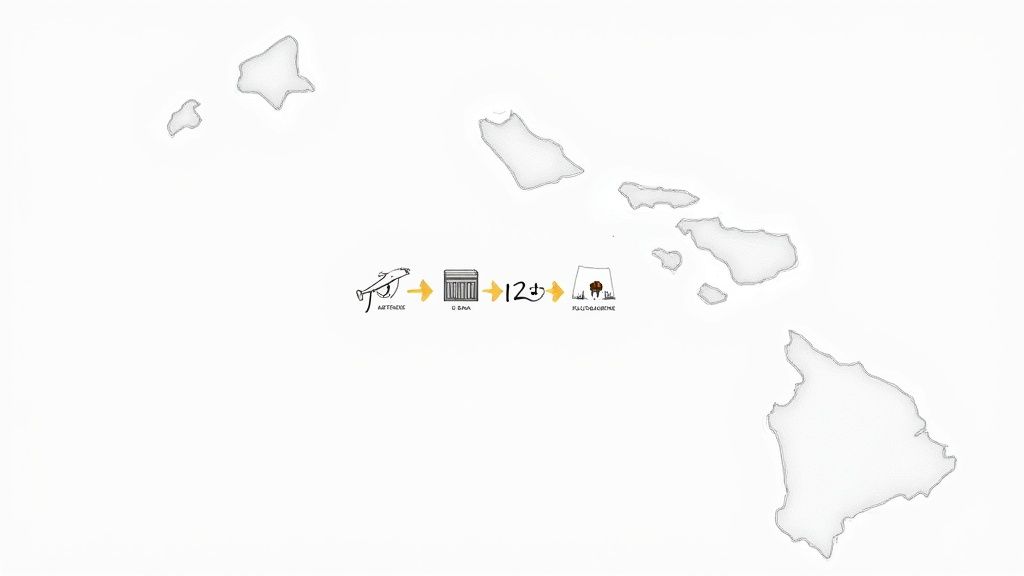
This simple infographic lays out the core steps visually, from the first microchip scan to the final blood test.

As you can see, the sequence is key: microchip first, then vaccinations, and finally the FAVN blood test. Each step has its own mandatory waiting period, so you can't stack them up.
Your Countdown to Paradise: A Practical Timeline
Let's be honest, the paperwork for Hawaii can feel like a mountain. But breaking it down into a countdown makes it completely doable. Here’s a sample timeline to keep you on track.
150+ Days Before Arrival
Confirm the Microchip: This is your absolute first step. Head to your vet to make sure your pet's microchip is implanted and scannable. If they don't have one, get it done right away. This has to happen before anything else.
Get Rabies Vaccinations in Order: Your pet needs at least two rabies shots in its lifetime. The most recent one must be current and given no less than 30 days before arrival.
120 Days Before Arrival
Draw Blood for the FAVN Test: Time to schedule the FAVN rabies antibody blood test. Your vet can only draw the blood sample at least 14 days after that most recent rabies shot. From there, they'll ship it off to an approved lab like Kansas State University.
Heads up: the important 30-day waiting period before your pet can enter Hawaii starts the day the lab receives the sample, not the day your vet draws the blood.
Submitting Your Documents Correctly
Once that 30-day wait is over and you have a passing result, you can start putting your document packet together. The main document is the Dog & Cat Import Form (AQS-279). You'll need to attach clear copies of your pet's rabies vaccination certificates to this form.
Pro Tip: Don't put this off. The Animal Quarantine Station needs your completed paperwork in hand—including the AQS-279 and rabies certificates—at least 10 days before your pet lands to even consider them for Direct Airport Release. This deadline is firm.
It's a good idea to send your documents as early as possible. It gives the officials time to spot any problems and let you know, giving you a chance to fix them without panicking. It’s a simple move that buys a lot of peace of mind.
For tips on keeping all these records straight, looking into essential document management tips can make the whole process feel less chaotic.
Final Steps and Common Mistakes to Avoid
The last piece of the puzzle is the original health certificate. This has to be issued by a licensed veterinarian within 14 days of your arrival in Hawaii, and it must travel with your pet. It’s also a good idea to send a copy to the quarantine station ahead of time.
Getting this health certificate properly endorsed is its own little project. We have a detailed guide that walks you through exactly how to get a USDA-endorsed pet health certificate if you need it.
After helping so many families, we've seen a few common tripwires. Watch out for these:
Incomplete Forms: Double- and triple-check that every single blank on the AQS-279 form is filled. One missing date or signature can jam up the whole process.
Forgetting Payment: The required fees have to be sent with your paperwork. They typically accept a cashier's check or money order, so plan for that.
Hard-to-Read Documents: Make sure your copies are crisp and clear. If they can't read the rabies certificate, it's as good as missing.
Mismatched Microchip Numbers: A single typo on the microchip number across any of your documents is an automatic disqualification for airport release. Check it carefully.
Avoiding these simple mistakes will make all the difference, helping you get everything in purr-fect order for a happy reunion on the island.
What to Expect on Your Pet's Arrival Day
The moment your plane touches down in Hawaii is a huge milestone, but your furry friend’s journey isn’t quite over yet. After months of careful planning, knowing exactly what happens next can make all the difference in keeping your own stress levels in check. This final part of the process is well-organized, but it definitely requires some patience.
Once you land, don't expect to see your pet at the gate or circling the baggage claim carousel. Instead, airline staff will transport them directly from the aircraft to the Airport Animal Quarantine Holding Facility. This is a secure, dedicated area where state officials carry out the final, important inspection.
The Inspection Process at HNL and Neighbor Islands
If you’re landing at Daniel K. Inouye International Airport (HNL) on Oahu, this facility is right on the airport grounds. Inspectors will scan your pet’s microchip to confirm their identity and then get to work reviewing all the original documents that traveled with them. They are carefully cross-referencing that microchip number and ensuring every single health requirement has been perfectly met.
For anyone flying directly into neighbor island airports like Kona (KOA), Kahului (OGG), or Lihue (LIH), the process is similar but needs a bit more coordination on your part. You must arrange for a state-approved veterinarian to be present at the airport to conduct the inspection, as these locations don’t have a full-time quarantine station.
It’s important to remember this process takes time. Even if every 'i' is dotted and 't' is crossed, you should plan on waiting a few hours for the inspection and release. It's a good idea to pack your patience right alongside your pet's favorite toy for the big reunion.
The state’s Department of Agriculture takes this process very seriously. They use significant funds to maintain these facilities—over $267,650 each year just for the rent of the Animal Quarantine Holding Facility at HNL—to ensure it remains a secure and effective checkpoint. You can dig into these details in the state budget documents on their official website.
Possible Outcomes of the Inspection
The inspector’s review will lead to one of three outcomes, and which one you get is a direct result of how well you prepared.
Direct Airport Release (DAR): This is the best-case scenario and the goal every pet owner is aiming for. If all your paperwork is in flawless order and every requirement has been met, your pet will be released to you directly from the airport facility.
5-Day-or-Less Program: If there are minor issues—a missing signature or a document that couldn’t be verified right away—your pet might be moved to the main quarantine station for a short stay. This gives officials time to sort out the issue.
120-Day Quarantine: This is the outcome everyone wants to avoid. It’s for pets arriving without meeting core requirements, like having a valid FAVN blood test. This is by far the most stressful and expensive scenario, which is why that pre-arrival prep is so important.
To help you stay organized and nail that Direct Airport Release, our Hawaii pet travel planner provides a step-by-step checklist to make sure you don’t miss a single thing.
After the long journey, successfully clearing this final hurdle can feel a bit 'ruff', but seeing your pet released and ready to start your new life together makes every bit of effort worth it.
Sorting Out the Costs and Special Cases
Let's talk about the budget. Planning for your pet's move to Hawaii means knowing what to expect financially. The fees for the animal quarantine programs can vary quite a bit, and getting a handle on this early will save you from any nasty surprises down the road.
The good news is that the fee structure is pretty logical. The ultimate goal for most pet owners is Direct Airport Release, which is by far the cheapest and fastest route. As you get into the longer quarantine options, the price tag jumps quite a bit. Think of it as a strong motivator to get all your paperwork perfectly in order.
A Breakdown of Quarantine Fees
To help you map out your budget, here’s a look at what each program costs. These fees are per pet and are set by the Hawaii Department of Agriculture. It’s always a good idea to double-check their official website for the latest numbers, as they can change.
This table gives you a clear picture of what you can expect to pay.
Estimated Fees for Hawaii Animal Quarantine Programs
This data table outlines the typical costs associated with each quarantine program for one pet, helping you budget for your move.
Quarantine Program | Estimated Cost Per Pet | Notes |
|---|---|---|
Direct Airport Release (DAR) | $185 | You'll pay this fee when you submit your paperwork ahead of your arrival. |
5-Day-or-Less Program | $244 | This covers the inspection and your pet's short stay at the facility. |
120-Day Quarantine | $1,080 | A much higher cost reflecting the long-term care and boarding. |
The financial difference is huge, right? Aiming for that $185 Direct Airport Release isn't just about getting to see your furry friend sooner—it's the smartest financial move you can make. It’s not often your pet can save you nearly a thousand dollars just by having their documents in order.
Special Programs and Exemptions
Hawaii has a few important exceptions for certain situations, designed to help military members and accommodate service animals. It’s worth checking if you qualify.
One of the biggest helps is for military personnel.
If you're an active-duty U.S. military member with official orders for Hawaii, you might be eligible for a reimbursement of up to $550 for your pet's quarantine fees. This is a great benefit for service members and their families moving to the islands.
You’ll generally pay the fees upfront and then file for reimbursement once your pet is released.
There are also specific rules for service and guide dogs. While properly trained service animals have a modified entry process, they are not exempt from the rabies and health requirements. You'll need to provide official documentation showing their training and status. The best move is to contact the Animal Quarantine Station directly to get the precise instructions for your animal. This helps ensure a smooth, respectful process for these incredible companions.
Your Top Hawaii Pet Quarantine Questions Answered
Even with the most detailed checklist, it’s completely normal to have a few last-minute questions about Hawaii's animal quarantine. The rules are specific, and getting a little more clarity can make all the difference. We get it. This is the final stretch, and we’re here to tackle the most common questions we hear from pet owners just like you.
Think of this as smoothing out the final wrinkles in your plan. Nailing these details will help you feel 100% ready for your pet’s journey to the islands.
How Long Is the FAVN Blood Test Valid?
This is probably one of the most important timelines to get right. A passing FAVN rabies antibody test result is valid for three years, starting from the date the lab first received the blood sample. That gives you a pretty generous window to plan your move without feeling rushed.
But there’s a big catch. That three-year validity depends entirely on keeping your pet’s rabies vaccinations perfectly up to date. If you miss a booster and there’s any gap in coverage—even for a day—the FAVN test becomes invalid. You’d have to start the entire vaccination and testing process all over again. That's a headache nobody wants.
Key Takeaway: Set a calendar reminder (or three!) for your pet’s rabies booster. Keeping that vaccination current is the only way to protect your three-year FAVN validity and avoid a huge setback.
Can I Visit My Pet in the Quarantine Station?
Absolutely. If your pet ends up at the Animal Quarantine Station, whether for the 5-Day-or-Less program or a longer stay, you can definitely visit. Just know that the station operates on a very specific schedule.
The facility has specific visiting hours, which you can always find on the Hawaii Department of Agriculture's website. It's smart to check for the most current times before you head over. The environment is kept calm and safe for all the animals, so you'll need to follow their rules while you're there. Knowing this ahead of time helps set the right expectations if a short stay becomes part of your pet's journey.
What Happens If My Flight Is Delayed?
Flight delays are a reality of travel, and Hawaii is prepared for them. If your flight gets delayed and you land in Honolulu after the Airport Animal Quarantine Holding Facility has closed for inspections, don’t panic. There's a plan for this.
Pets arriving after hours are kept safe and secure overnight at the airport facility. An inspector will process your pet first thing the next business morning. It means a slight delay in your reunion, but your pet will be well cared for. Just be aware that this overnight stay might come with an extra fee, so it’s wise to have a little buffer in your budget just in case.
Does Hawaii Have Breed Restrictions?
This is a huge relief for many pet owners. Unlike many other places, Hawaii does not ban specific breeds of dogs or cats. Your pit bull, rottweiler, or any other breed is welcome, as long as they meet all the state's health and import requirements.
Hawaii's focus is entirely on preventing rabies, not on restricting certain types of animals. Every single dog and cat, no matter the breed, has to go through the exact same process: microchip, vaccinations, and blood tests.
It's important to mention, though, that hybrids of domestic animals and wild animals (like a wolf-dog) are generally not allowed. As long as your pet is a standard domestic dog or cat, you can put all your energy into getting the paperwork perfect.
Navigating Hawaii's animal quarantine is all about managing the details. Passpaw takes the guesswork out of the process, turning confusing checklists into simple, guided steps. We help validate your documents in real-time and keep you and your vet on the same page. To ensure a happy, quarantine-free arrival in paradise, visit https://passpaw.com and start your pet’s journey the right way.
More articles
From regulatory changes to best practices for veterinarians and pet owners, our resources keep you ahead of the curve.