Are you a team member in a veterinary practice?
Are you a pet parent planning a trip with your furry pal?
Your Ultimate Guide to Pet Travel to Hawaii in 2026
So, you're planning to bring your furry co-pilot to paradise? Moving a pet to Hawaii is completely doable, but it needs careful, step-by-step preparation. Following the state's rules is key if you want to avoid a mandatory quarantine period and have your pet released to you right at the airport.
Your Pet’s Eligibility Checklist For Hawaii
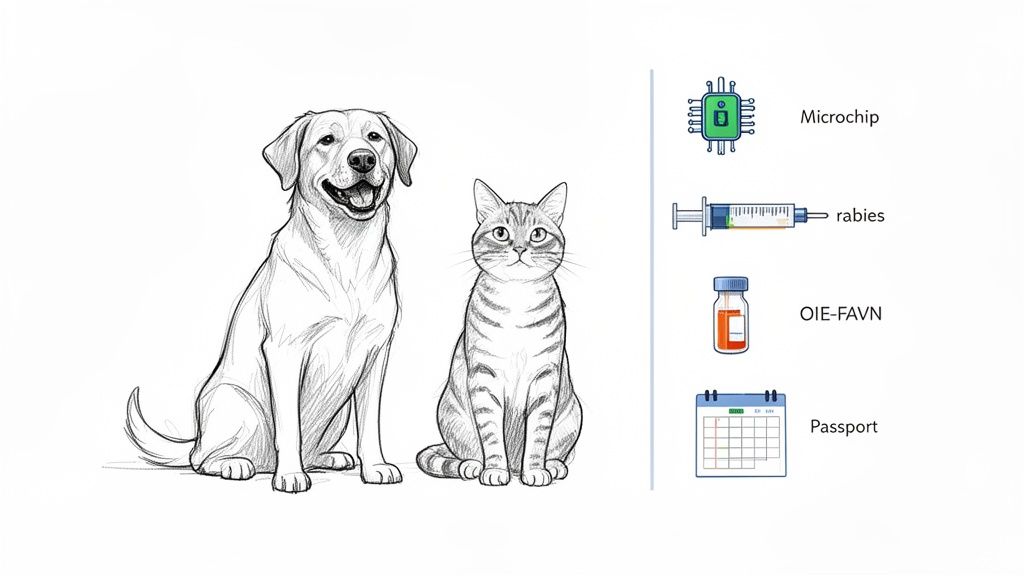
The rules for bringing a pet to Hawaii can look a bit scary at first. We get it. But the process is much easier when you know exactly what’s needed. These rules aren't just for show; they are in place to protect Hawaii's special, rabies-free status.
Every step is designed to show your pet is healthy and not a risk. By sticking to the state's timeline, your pet can qualify for Direct Airport Release (DAR). This means they can leave the airport with you, skipping a long and stressful quarantine. Think of it as the VIP pass to the islands for your four-legged family member.
Core Requirements For A Smooth Arrival
Let’s get this journey started on the right paw. A successful trip rests on three key requirements. These are the first things you need to plan with your veterinarian, often months before you travel.
Working Microchip: Your pet must have a working microchip implanted before their rabies antibody test. This chip is your pet’s official ID for the whole process.
Two Rabies Vaccinations: Hawaii asks for proof of at least two rabies shots during your pet's lifetime. The most recent one must be given more than 30 days before arrival.
Passing OIE-FAVN Rabies Antibody Test: After the latest rabies vaccine, your vet will draw blood for this very important test. The blood sample must arrive at an approved lab more than 30 days before your pet lands in Hawaii.
Key Takeaway: The whole process, from the first vet visit to your arrival day, can easily take six months or more. Starting early is the single best thing you can do for a stress-free experience.
To help you see the timeline, here’s a quick look at the main steps for a Direct Airport Release.
Hawaii Pet Travel Timeline At A Glance
This table gives a simple summary of the key deadlines you'll need to meet. Remember, timing is everything.
Timeline | Required Action | Key Detail |
|---|---|---|
6+ Months Before Travel | Check microchip & rabies history. | Confirm the chip is working and that the pet has at least 2 rabies vaccines on record. |
4-6 Months Before Travel | OIE-FAVN blood draw. | Must be done more than 30 days before arrival. A passing result is valid for 3 years. |
60 Days Before Travel | Submit Forms AQS-279 & AQS-278. | Send dog & cat import forms and all supporting documents to the state. |
30 Days Before Travel | Notify Animal Quarantine Station. | Email your flight info at least 30 days out to schedule the airport inspection. |
Within 14 Days of Travel | Get Health Certificate. | A USDA-accredited vet must issue the certificate, which is valid for 14 days. |
This timeline is a great starting point, but it's a good idea to double-check the official state requirements as they can change.
Planning Your Pet's Transportation
Once you have the medical requirements on your calendar, you can start thinking about the flight itself. Not all airlines are approved to fly pets into Hawaii, and there are special rules for making the reservation. It’s also worth looking at all your options, including the benefits of flying private to Hawaii for a more direct travel experience.
Keeping all these dates and documents straight can feel like a big job. A digital tool can help you map out every step and avoid expensive mistakes. For a personalized timeline based on your pet's specific health records and your travel date, check out our pet travel planner. A clear plan lets you focus on the fun part—all the new adventures waiting for your best friend in paradise.
Why Hawaii Has Such Strict Pet Import Rules
Ever wonder why getting your pet to Hawaii feels like such a big deal? The mountain of paperwork, the strict timelines, the feeling that one wrong move could mess everything up—it’s a lot. But those rules aren't there just to make things hard.
It all comes down to one word: rabies. Hawaii is one of the few places on Earth that is completely rabies-free, and every single import rule is designed to keep it that way. The islands’ location is both a gift and a weak spot; it has protected them from diseases common elsewhere, but it also makes them very open to risk if a disease were ever brought in.
From a 120-Day Quarantine to a Modern System
For a long time, protecting this rabies-free status meant a long, sad separation for families and their pets. It's amazing that Hawaii has remained rabies-free since 1912, but for almost a hundred years, that success had a big downside: a mandatory 120-day quarantine for every single dog and cat arriving on the islands.
This wasn’t a punishment, but it was a hard reality for pet owners. Thankfully, things changed. In 2017, Hawaii introduced a much more modern, family-friendly system called Direct Airport Release (DAR). This program finally created a path for well-prepared pets to skip quarantine entirely. You can see how the requirements have evolved and get a deeper look into the history.
Understanding the Direct Airport Release Program
The Direct Airport Release (DAR) program was a game-changer. It moved the proof from a long post-arrival quarantine to careful pre-travel preparation. Instead of thinking every pet is a risk, the state now trusts that owners can provide clear proof that their pet is safe before they even get on the plane.
This is a win for everyone. The state keeps its strong safety standards, and you get to walk out of the airport with your best friend.
The DAR program isn't about making travel harder; it's about making it safer. By following the rules, you are helping to protect Hawaii's special environment for everyone—paws and all.
Qualifying for DAR means you’ve successfully proven your pet’s health status. The main requirements—a working microchip, a specific rabies vaccine history, and a passing OIE-FAVN rabies antibody test—all work together to create a health record that shows your pet is not a risk.
Think of it this way: the old system treated every pet as a possible threat until proven safe by quarantine. The new DAR system lets you prove your pet is safe from the start. It’s a huge improvement, but it puts all the responsibility on you to get every single detail right. That’s why following the timeline is so important.
A Timeline For A Stress-Free Arrival In Hawaii
Planning a pet’s move to Hawaii can feel like a lot, but it doesn't have to be. When you break the process down into a clear timeline, it becomes a series of simple steps. The key is knowing what to do and when to do it.
Let's walk through the entire journey, from six months out right up to your arrival, so you can avoid common issues and make sure your pet has a smooth entry.
Start At Least 6 Months Before Your Flight
If there’s one piece of advice to take away, it’s this: start early. The biggest mistake we see is owners not allowing enough time. Giving yourself at least six months creates a much-needed safety net for any surprise issues, like a lab test that needs to be redone.
Your first move is to book a visit with your veterinarian to get things started.
During this first appointment, your vet will handle two key items:
Verify the Microchip: Your pet needs a working microchip. The vet will scan it to confirm it’s readable and the number is correct on all records. If the pet has a different chip or no chip at all, this is the time to get one put in.
Review Rabies Vaccine History: Hawaii is very specific, needing proof of at least two rabies vaccinations during the pet’s lifetime. Your vet will check this in the pet’s history. The most recent vaccine must be given more than 30 days before arriving in Hawaii.
Timing The Rabies Shots And Blood Test Perfectly
This is where the clock really starts ticking. Once the microchip is confirmed to be in place and working, your pet can get their most recent rabies vaccine if needed. This must be done by a licensed veterinarian.
After the shot is given, a waiting period begins. You must wait at least 30 days before the vet can draw blood for the OIE-FAVN rabies antibody test. This test is a must-have; it proves the vaccine is working by measuring the level of rabies antibodies in your pet’s system. Drawing blood too soon will make the test invalid.
Don't cut corners on the waiting periods. Hawaii's rules are very strict about the timing between the rabies vaccine, the blood draw, and your arrival. Trying to speed up the process is a common reason pets get turned down for Direct Airport Release.
The 30-Day Waiting Period After The Blood Test
Once the blood is drawn, it gets sent to an approved lab. The moment the lab receives the sample, another waiting period starts. Your pet cannot land in Hawaii until at least 30 days have passed from the date the lab officially received the sample.
This is exactly why starting six months out is so important. If you do the math, the minimum time from the final rabies shot to being able to fly is 60 days, and that assumes a perfect process with no delays.
The good news? A passing FAVN test result is valid for 36 months, giving you a wide window of flexibility for your travel plans once it's done.
This infographic shows just how far Hawaii's pet import rules have come, moving from a long, mandatory quarantine to the current system that rewards advance preparation.
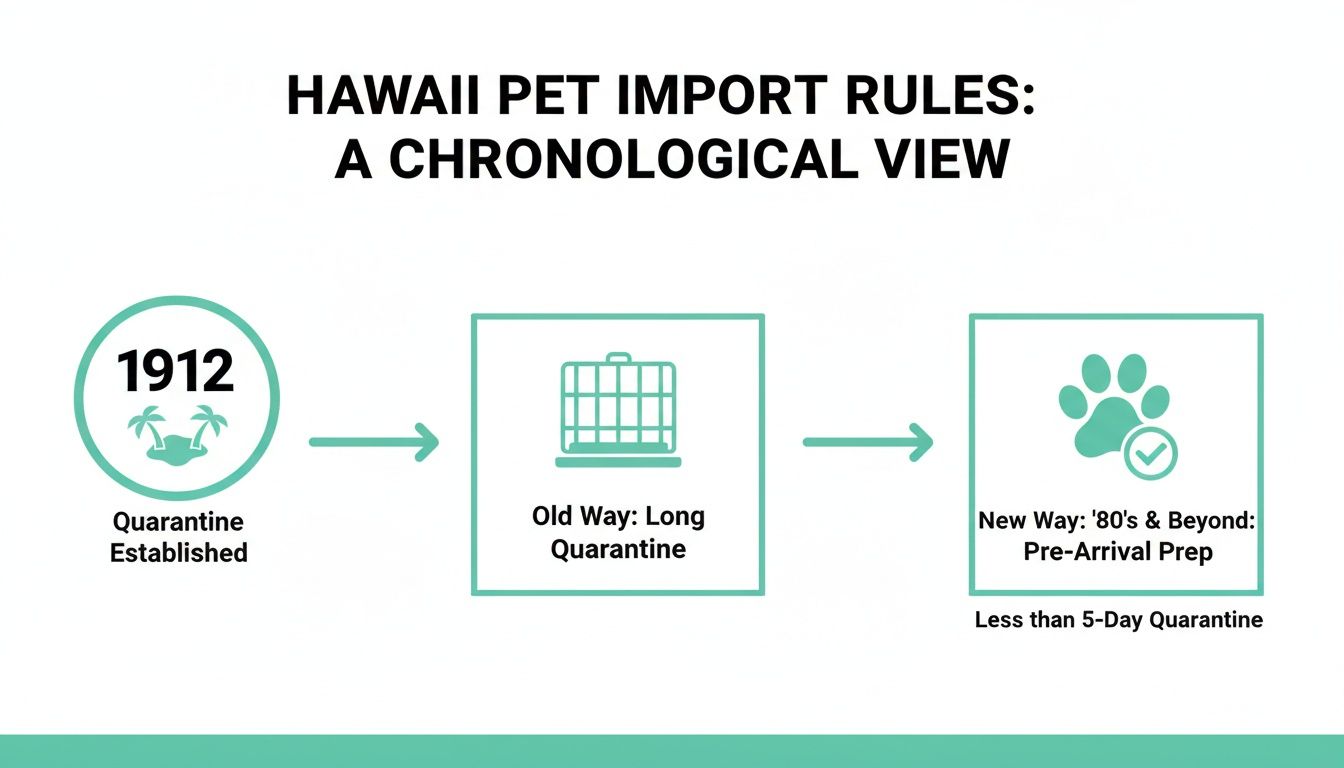
This change is great for pet owners, but it also means the responsibility to get everything right falls on you and your vet.
The Final 10-Day Countdown
The last two weeks are all about final checks and paperwork. Your pet will need one last exam with a USDA-accredited vet no more than 14 days before your arrival in Hawaii. This is when the official health certificate will be completed.
This health certificate is the star of your document package. It confirms your pet is healthy, free of parasites, and has received the needed flea and tick treatment.
Here are a few tips for handling the final documents:
Use Blue Ink: All original documents must have original signatures in blue ink. No copies are allowed.
Don't Laminate: It might seem like a good way to protect the papers, but the state needs to handle and stamp the original documents. Laminated papers may be rejected.
Double-Check Everything: Carefully review every detail on the health certificate and import forms with your vet. A wrong date or a typo in the microchip number can cause big problems.
Your entire paperwork package—including the original health certificate and rabies certificates—should be sent to the Animal Quarantine Station at least 10 days before you land. This gives them time to review the file and approve your pet for Direct Airport Release.
To get a better understanding of why these rules are in place, check out our detailed guide on the State of Hawaii animal quarantine. Following this timeline will make the whole process much easier.
Once you’ve got the timeline sorted, the next challenge is the paperwork. This is where you need to be extra careful. Getting the forms right and knowing the airline's rules are very important for a smooth Direct Airport Release (DAR) in Hawaii.
Think of it this way: the paperwork is your pet’s passport to paradise. Each document tells a piece of their health story, showing they meet Hawaii’s strict rabies-free standards. Let's walk through exactly what you need.
Mastering The Essential Forms
The two most important documents you'll be dealing with are the Dog & Cat Import Form (AQS-279) and the official Veterinary Health Certificate. The AQS-279 is basically your formal application to bring your pet into the state. It lists their information, your contact info, and your flight plans.
The health certificate is the final, time-sensitive piece of the puzzle. It has to be completed by your USDA-accredited veterinarian within 14 days of your arrival in Hawaii. This form confirms your pet is healthy for travel and has recently received a flea and tick treatment. To get a better handle on this important document, you can read our guide on veterinary health certificates.
A Real-World Scenario: Let's say your flight is on the 20th of the month, and your vet appointment is on the 5th. If a sudden airline problem delays your flight to the 21st, your health certificate is now expired because it's outside the 14-day window. You’d have to rush back to the vet for a new exam and a new certificate. This is why we suggest scheduling that appointment as close to your flight as you can.
Understanding The Fee Structure
Submitting your paperwork on time isn't just about following rules—it saves you money. Hawaii's Animal Quarantine Station should have all your documents, including the AQS-279 and supporting records, in their hands at least 10 days before you land.
Meet this deadline, and the Direct Airport Release fee is $185 per pet. If your documents arrive late—fewer than 10 days out—that fee jumps to $244 per pet. That extra cost covers the rush to get your pet's file reviewed. Planning ahead is a smart move.
Choosing The Right Airline And Crate
Not just any airline can fly your pet to Hawaii for a Direct Airport Release. You have to work with one of their approved carriers.
Here’s what to focus on when you're booking:
Approved Airlines: Double-check that your airline is on Hawaii's approved list. The big ones like Alaska, American, and United are usually on it, but you should always confirm, as policies can change.
Booking Your Pet's Spot: You can’t just add a pet to your reservation online. You have to call the airline directly to reserve their space, whether they're flying in the cabin or as cargo. These spots are limited, so make that call as soon as your dates are set.
Crate Requirements: Your pet’s travel crate must be airline-approved. This means it’s strong, has airflow on at least three sides, and is big enough for your pet to comfortably stand up, turn around, and lie down. Don't wait to buy the crate—give your pet plenty of time to get used to it.
Remember, airlines have their own rules on top of Hawaii's regulations. Many have temperature limits and won't fly pets in cargo if it's too hot or cold. This is exactly why you need to talk to a real person at the airline. Getting these details right from the start makes the journey safer and less stressful for everyone—especially your furry co-pilot.
Making Hawaii Pet Travel Easier for Vets and Owners
After walking through all the timelines and paperwork, it’s clear that pet travel to Hawaii is a big project. One missed deadline or a single wrong form can mess up the whole trip. This is exactly where the right technology can step in to make a huge difference.
For any veterinary clinic, juggling these moving parts can be stressful. The old way of doing things—using messy spreadsheets, paper files, and lots of emails and phone calls—just leaves too much room for mistakes.
The Old Way: A Manual Mess
Let's be honest, managing Hawaii's strict pet import process has always been a big headache for vet teams. You're suddenly responsible for tracking vaccine dates, remembering the 30-day waiting period for the OIE-FAVN test, and making sure every single spot on every form is filled out perfectly.
This manual process usually looks something like this:
Digging through old files to put together a pet’s complete vaccine history.
Setting manual calendar reminders that can easily get lost in a busy clinic.
Constantly checking the state’s requirements on a separate website, just hoping the information hasn’t changed.
For pet owners, the experience can feel like a mystery. You're left anxiously waiting for updates from the clinic, never quite sure if everything is on track for a smooth arrival. That worry is precisely what a modern approach is designed to fix.
The Passpaw Way: A Clear, Automated Workflow
We built Passpaw specifically to replace that old and risky workflow. Think of it as a central spot where vets and pet owners can work together in real-time, making sure everyone is on the same page. Instead of a messy spreadsheet, you get a smart system built for the special challenges of pet travel to Hawaii.
The platform lays out a clear roadmap from the very first step to the final arrival. It sends automatic reminders to the vet clinic for important deadlines, like when to draw blood for the FAVN test or when the 14-day health certificate window is about to open.
This makes a huge difference. With airlines reporting a 15-20% year-over-year increase in pet travel bookings to the islands, being efficient is key. Using a platform that checks information in real-time is the best way to make sure all rules are met, which is vital for avoiding that higher $244 release fee for late or wrong paperwork.
The goal is simple: reduce the headache for veterinarians and give pet owners complete peace of mind. It’s about replacing worry with confidence.
Total Transparency for Pet Owners
With Passpaw, you’re no longer left in the dark. The platform gives you a crystal-clear view of your pet’s progress. You can see exactly which steps have been completed, what's coming up next, and confirm that every document has been checked by your vet.
This teamwork ensures that when arrival day finally comes, you aren't wondering if you missed a step. Everything has been tracked, checked, and confirmed, so you can focus on the exciting adventure ahead with your best friend.
You can even use our dedicated tool to calculate your pet's pp requirements from the United States to Hawaii and get started on the right foot.
Answering Your Top Hawaii Pet Travel Questions
Even after you’ve double-checked every form and hit every deadline, a few questions can keep you up at night. You’ve handled the timeline and worked with your vet, but what about those last-minute "what-if" situations?
Let's clear up those final doubts. We've gathered the most common questions we hear from pet owners and vets to give you clear, direct answers. Think of it as a final check to give you the confidence that you’re ready for anything.
What Happens If My Pet's FAVN Test Result Is Too Low?
This is a common worry, and for good reason—a low test result can throw a real wrench in your plans. If your pet's OIE-FAVN rabies antibody test comes back below the required 0.5 IU/mL, they won't be approved for Direct Airport Release (DAR).
At that point, you have to restart part of the process. Your vet will need to give your pet another rabies vaccine. After that shot, you face a mandatory 30-day wait before drawing blood for a new FAVN test. There's no way to skip this waiting period.
This is exactly why starting the entire Hawaii process at least six months before your travel date is so important. That extra time allows you to get the first results and, if the worst happens, do a revaccination and re-test without messing up your moving schedule.
The best defense is a good offense. Working closely with your vet to make sure the first rabies vaccine process is followed perfectly is the best way to help get a strong immune response and a passing result on the first try.
Can I Bring a Puppy or Kitten to Hawaii?
Yes, but they have to meet the exact same strict requirements as an adult dog or cat. This timeline makes it almost impossible for very young puppies and kittens to qualify for the Direct Airport Release program.
Let's do the math. A puppy or kitten must be:
At least 90 days old (around 3 months) to get their first rabies shot.
Then wait 30 days after that vaccination before the FAVN blood draw.
After the lab receives the sample and it passes, Hawaii's 30-day waiting period begins before the pet can arrive on the islands.
When you add up all those waiting periods, the absolute youngest a puppy or kitten can be to enter Hawaii through the DAR program is roughly seven to eight months old. Any young pet that doesn't meet this timeline and all other requirements will face the full 120-day quarantine.
What Are the Most Common Mistakes That Lead to Quarantine?
It's almost always the small, avoidable errors that cause the biggest headaches. Overlooking a single detail can disqualify a pet from Direct Airport Release and land them in quarantine upon arrival.
From our experience, these are the most common mistakes we see:
Improper Vaccine Records: An expired rabies vaccine or a history that doesn't clearly show two lifetime shots is a big red flag for officials.
Microchip Issues: Using a microchip that isn't the standard type or, worse, one that has moved and can't be scanned upon arrival.
Missing the Health Certificate Window: The veterinary exam and signed health certificate must be completed within a strict 14-day window before your flight. A flight delay can easily cause this certificate to expire.
Late Paperwork Submission: All your required documents and fees must be received by the Animal Quarantine Station at least 10 days before you land.
Another common problem is a simple typo. A wrong number in a microchip on a form can make the whole application invalid. Careful double-checking is a must, and it’s why a guided service can be a lifesaver. Landing in Honolulu only to find out there’s a paperwork issue is not the aloha welcome anyone wants.
Do Service Animals Have Different Requirements for Hawaii?
This is a very important question, and the state of Hawaii's answer is clear: no, they do not.
While trained service animals have specific rights under the Americans with Disabilities Act (ADA) for public access and flying in the cabin, they are not exempt from Hawaii's animal import and public health rules.
All dogs and cats entering the state—including fully trained service animals, emotional support animals, and therapy animals—must follow the exact same rabies quarantine requirements.
Every single animal must have:
A working, scannable microchip.
The required rabies vaccination history.
A passing OIE-FAVN rabies antibody test result.
A valid health certificate issued by a USDA-accredited vet.
There are no exceptions to these health rules. Keeping Hawaii rabies-free is a shared duty, so you must plan for your service animal to meet all the same requirements as any other pet.
With careful planning, you can make your pet’s journey to paradise a smooth one. Using a trusted platform to guide you through every step ensures no detail is missed. Passpaw helps veterinary teams and pet owners work together, automating reminders and checking documents in real-time so you can feel confident your pet will be ready for a 'fur-st' class arrival. Check out Passpaw to see how we can simplify your pet's move to Hawaii.

More articles
From regulatory changes to best practices for veterinarians and pet owners, our resources keep you ahead of the curve.