Are you a team member in a veterinary practice?
Are you a pet parent planning a trip with your furry pal?
Dog Carrier Size Chart for Safe Travel
You've got the dog packed, the leash is by the door, and the flight feels close enough to touch. Then the carrier comes out, and the whole trip suddenly hangs on one awkward question, does this box fit the dog, and will the airline agree? That's where a dog carrier size chart earns its keep, because one carrier can look fine on the kitchen floor and still fail at the gate.
The tricky part is that you're sizing for two different things at once. IATA's carrier sizing uses four measurements of the dog, nose to tail base (A), floor to elbow (B), shoulder width (C), and floor to top of head or ear (D), and the resulting internal dimensions must let the dog stand, sit, turn around normally, and lie in a natural position (IATA pet transport guidance). That's the animal-fit side. Then the airline adds its own external limits, and those can change by aircraft, route, and carrier style.
A good chart keeps both tracks visible. It should help a vet tech, shipper, or owner measure the dog once, calculate the minimum interior space, and then compare that against the airline's smallest applicable cabin limit. That way the chart becomes a working checklist, not just another pretty sizing graphic. For more general pet travel context, a helpful starting point is Passpaw's pet travel overview.
Why Carrier Sizing Trips Up So Many Travel Plans
A common clinic-day scene goes like this. The owner arrives with a carrier that seemed perfect at home, the dog steps in without drama, and everyone relaxes until someone checks the airline rule. Suddenly the bag is too tall, or too wide, or fine on one flight but not the next one in the itinerary.
That's the first reason carrier sizing causes trouble. People treat the label on the bag like a universal answer, but weight classes are a rough hint, not a fit test. A compact, broad-chested dog and a longer, narrower dog can weigh the same and still need very different interiors.
Two rules are working at once
The first rule is about the dog. The carrier has to fit the animal's body and movement needs, not just its weight. The second rule is about the trip. The carrier has to fit the aircraft's under-seat space or the airline's published cabin limit.
That split matters because a carrier that works for one leg can fail on another. A soft-sided option may pass one aircraft group and miss another, even when the dog fits beautifully inside. That's why a dog carrier size chart should not stop at a breed name or a pound label.
Practical rule: measure the dog first, then check the smallest aircraft or airline limit on the itinerary. If either side fails, the trip fails.
The smartest charts make that visible. They separate internal fit from external travel limits, so nobody confuses comfort space with cabin clearance. That one change saves a lot of last-minute crate swapping, which is the opposite of a pawsitive travel day.
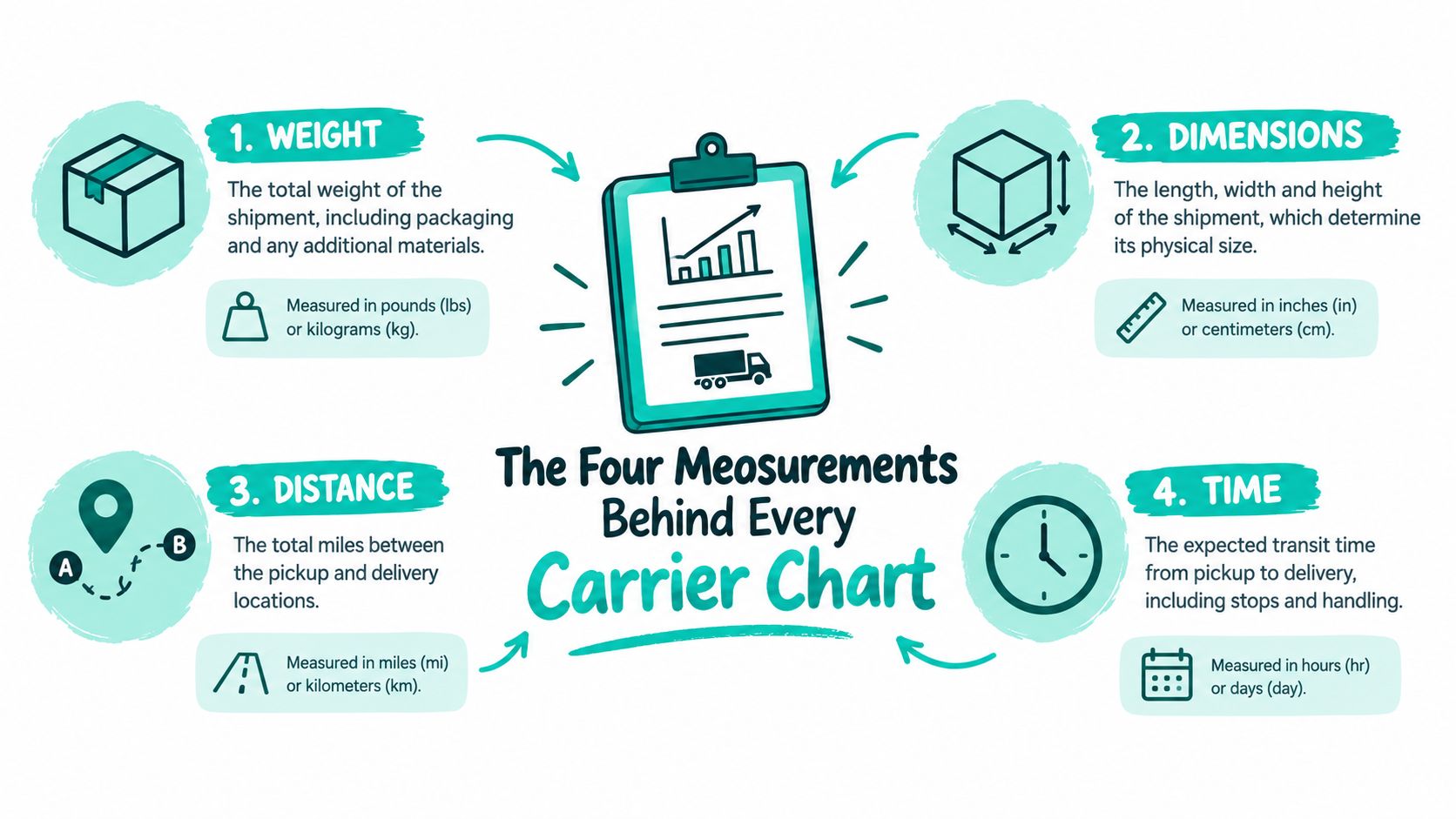
The Four Measurements Behind Every Carrier Chart
Start with the dog, not the breed label
A good carrier chart begins with A, B, C, and D. Breed labels can set a rough expectation, but they do not show whether a dog is long-backed, broad through the chest, or tall at the shoulders.
A is nose to the base of the tail. B is floor to the elbow joint. C is shoulder width, or the widest point of the body. D is the standing height from the floor to the top of the head or ear, whichever is higher (IATA container requirements).
A quick example makes the numbers feel real
Say a dog measures 18 inches for A, 6 inches for B, 8 inches for C, and 16 inches for D. That still does not produce the carrier size by itself, but it shows the shape you are fitting. The dog needs enough length to settle without folding up tightly, enough width to turn, and enough height to stay upright without brushing the roof.
D can be the deciding number. IATA defines D as the standing height from the floor to the top of the head or ear, whichever is higher, so the tallest point becomes the limit for internal height (IATA container requirements). Upright ears can make a carrier fail even when the rest of the fit looks fine.
What to write on the chart
A clean chart should record:
Length, A: nose to tail base
Elbow height, B: floor to elbow
Width, C: shoulder width or widest body point
Tallest height, D: floor to head top or ear tip
Posture note: relaxed, tall, curled, or squirmy
That last note matters because posture changes the result. Some dogs stand like statues, others hunch when nervous. A chart should keep the larger, more honest number so the carrier check matches the dog you travel with.
Measuring Your Dog the Right Way
The cleanest measurement happens when the dog stands naturally on all four paws. Not stretched by a handler, not crouched from nerves, and not lounging like it's Sunday on the sofa. A dog that slouches can look smaller than it really is, and that can send the chart off course.
Use a soft tape if you've got one. Measure from the nose to the tail base, then floor to elbow, then across the shoulders, then floor to the top of the head or ear tip. A reliable chart records length from nose to base of tail, height from floor to top of head or ears, whichever is taller, and width across the shoulders or widest body point, taken while the dog stands naturally on all four paws (Pawcare Journal on carrier measurement).
The details that quietly skew the result
Thick fur can add real bulk, especially around the chest and neck. A freshly groomed dog may measure a little differently from the same dog before a trim, so don't assume last month's numbers still hold. If the dog is nervous, give it a minute to settle before you measure.
Carrier interiors also lose space faster than many people expect. Door latches, ventilation rims, stitched seams, and bedding lips all eat into usable room. That's why the measurement on the box can be a poor clue unless you know whether it's the outside shell or the inside space.
Measure twice, because a wiggly dog will happily change a number by an inch and then blame you for the math.
For clinic records, write the date, the measured numbers, and the position used. That gives the next vet tech, groomer, or travel coordinator a paper trail they can trust. A chart is much more useful when it travels with the pet instead of living only in someone's memory.
From Measurements to Minimum Carrier Dimensions
The math gets easier once the letters have a job. For one dog, IATA's minimum internal dimensions are length = A + 0.5B, width = 2C, and height = D plus bedding thickness, per IATA's live-animals container rules. The dog's body, not the retail size label, sets the starting point.
A worked example
Take the earlier dog with A = 18, B = 6, C = 8, and D = 16. The minimum internal length is 18 + 3, so 21 inches. The minimum internal width is 16 inches. The minimum internal height begins at 16 inches, then gains a little room for bedding thickness.
That last detail matters. Bedding adds comfort, but it also takes up vertical space inside the carrier. Thick padding can reduce headroom, while very thin padding may leave the floor too hard for a long trip, so the chart should record the bedding assumption instead of leaving it vague.
Snub-nosed dogs need a larger buffer
IATA also says carriers for snub-nosed breeds should be 10% larger. That extra room can make a real difference when a dog already fits tightly in a standard container. It is a buffer for breathing room and posture, not a decorative margin.
Dog Measurement | What It Means | Minimum Internal Carrier Dimension |
|---|---|---|
A | Nose to base of tail | Length = A + 0.5B |
B | Floor to elbow | Used in the length formula |
C | Shoulder width or widest point | Width = 2C |
D | Floor to top of head or ear tip | Height = D + bedding thickness |
A carrier that says “fits this breed” can still miss the mark if the internal dimensions are off. The formula should override the marketing line every time. That keeps the carrier roomy enough for the dog, without turning it into a loose box that shifts too much in transit.
Airline Carrier Limits by Carrier and Aircraft

The same dog can clear one cabin rule and fail another
Airline limits sit beside the dog-fit formula, not inside it. A carrier may fit the animal well and still miss the cabin envelope on a specific aircraft. That is why every chart needs an airline and aircraft column.
American Airlines shows the point clearly. It lists soft-sided carriers at 18 x 11 x 11 inches, hard-sided carriers at 19 x 13 x 9 inches on mainline flights, and 16 x 12 x 8 inches on American Eagle (American Airlines pet policy). The aircraft on each leg matters as much as the airline name.
What the published limits teach
Other airline policies show the same pattern in different ways. Carrier dimensions are not universal, and the smallest segment usually controls the decision. Frontier's own pet policy page lists cabin limits for its carriers, while Air Canada publishes a 115 linear-inch limit, calculated as length + width + height, for its referenced in-cabin carrier category (Frontier example listed in airline guidance, Air Canada pet carrier guidance).
A chart that only says “airline approved” leaves too much room for error. A chart that names the airline, the aircraft type, the carrier construction, and the external dimensions is much harder to misread. If your team handles a lot of travel cases, United Airlines pet carrier guidance is a useful comparison point for the kind of airline-specific checking that keeps people out of trouble.
Rule of thumb: validate the smallest limit across every segment of the itinerary. If one leg is tighter than the others, that is the number that counts.
The Dog Carrier Size Chart Template You Can Reuse
A reusable chart works best when each assumption has its own line. That keeps one person from guessing the bedding depth while another person guesses the carrier style. The goal is to make the decision visible, not leave it buried in memory.
A simple layout that travels well
Use columns like these:
Dog identifier: name, file number, or client initials
A, B, C, D: the four dog measurements
Calculated minimum interior size: length, width, height
Carrier model: the specific kennel or bag being considered
Actual interior size: measured or published interior dimensions
Airline and aircraft: one row per segment
Fit check: yes or no for stand, sit, turn, lie down
Clearance note: bedding thickness, ear-tip height, or snub-nose buffer
That structure separates the dog from the product. It also keeps the chart useful across appointments, not just on one travel day. A vet tech can add notes, a travel coordinator can confirm the route, and the owner can see where the final decision came from.
The American Kennel Club recommends adding 2 to 3 inches above shoulder height for soft-sided carriers and 3 to 5 inches for hard-sided carriers per AKC sizing guidance. Use that as a separate clearance line, so the height buffer stays visible instead of disappearing into a vague “roomy enough” label.
Record internal dimensions, not just outside shell size. External size matters for the plane, but interior size is what the dog lives in. A chart that mixes those up can look tidy and still give a bad answer.
Carrier Examples That Work Across Common Sizes
A small dog, a medium dog, and a larger dog may all travel on the same route, yet they do not need the same carrier style. Construction changes how the space works. Soft sides flex a little, hard sides hold their shape, and IATA-style containers are built around the animal's measured body rather than a marketing label.
What to look for in each style
A soft-sided carrier often works better under an airline seat because the walls can give slightly when space is tight. A hard-sided carrier gives a firmer shell, which helps when the dog leans or shifts. An IATA-style container follows measurement-led rules, so the fit comes from the dog's own dimensions and the movement space those dimensions require.
A useful carrier chart should capture both the interior room and the outer shell. A listing can look generous and still fail a cabin check if the exterior is too large. That is why the best examples show the usable space and the route limit side by side.
Dog Size Band | Carrier Style | What Matters Most |
|---|---|---|
Small | Soft-sided | Under-seat flexibility and interior floor room |
Medium | Hard-sided | Shoulder width, internal height, and door shape |
Larger travel case | IATA-style container | Exact measured fit and movement space |
The route matters after the flight too. If your trip includes a stop at a park or a road segment, local rules can change what is practical once you land. The TX State Parks dog rules are a good reminder that the same dog may need a different setup on the ground than it does in the cabin.
For international trips, the carrier example should still be matched against the specific airline and aircraft on each leg. A carrier that clears one flight may miss another by a small margin, so the final comparison should always be route-specific. That keeps the chart useful instead of turning it into a generic guess.
The strongest carrier listing does not just name a breed or a size class. It shows interior length, width, height, and the route limits together, so the decision stays tied to the dog, the carrier, and the trip.
Fit Checks Before You Book the Flight

Run the same checks every time
A carrier should pass four basic posture tests before you commit to the ticket. The dog should be able to stand, sit, turn around, and lie down in a natural position. If one of those fails, the carrier is too tight, even if the numbers looked close on paper.
Start with standing. If the dog touches the top when standing naturally, height is the problem. Then check sitting. A dog that can stand but not sit comfortably may be short on headroom or shoulder space. After that, test the turn. If the dog has to twist awkwardly to reverse direction, width is the issue. Finally, check the lie-down position, because a dog that can't settle flat will usually shift around during the trip.
If the door hardware pokes into the dog when it lies down, the carrier may be the wrong shape even when the measurements look fine.
Bedding can also change the result fast. A thick pad may improve comfort, but it can raise the dog into the roof line and erase the clearance you just measured. That's why the fit check should happen with the actual bedding in place, not with an empty shell on the floor.
For a stepwise travel gear refresher, Passpaw's pet travel crate guide fits well alongside this routine. Keep that kind of reference handy, because a last-minute remeasure is easier than a denied boarding check.
Linking Carrier Fit to International Health Certificate Timing
Carrier fit and health paperwork need to be checked together. If the carrier is too small, the dog may need a different setup, which can slow the certificate process. If the carrier is too large for the aircraft, the trip can still stall after the paperwork is otherwise ready.
Lock the carrier decision early, before the certificate workflow gets too far along. A chart that keeps the dog's measurements, the carrier's interior size, and the route's aircraft limits in one place gives the clinic a single reference point. It also cuts down on rework when a client swaps carriers late in the process.
Aircraft-specific limits can change the answer even when the dog's measurements stay the same. The construction-style split covered in the airline limits section above is a good example of why timing matters. A carrier choice that looks fine at first can fail once the final cabin rules are checked, and that means the paperwork may need to be revisited.
A chart can sit beside the health certificate file as a support document. It helps the team confirm that the dog, the carrier, and the route line up before final paperwork goes forward. For clinics handling international cases, Passpaw's veterinary international health certificate workflow shows how carrier details can stay tied to travel documentation instead of drifting away from it.
When the carrier is settled early, the rest of the travel prep feels more orderly. The chart keeps the pet comfortable, keeps the route realistic, and keeps the paperwork aligned with the actual carrier the dog will use.
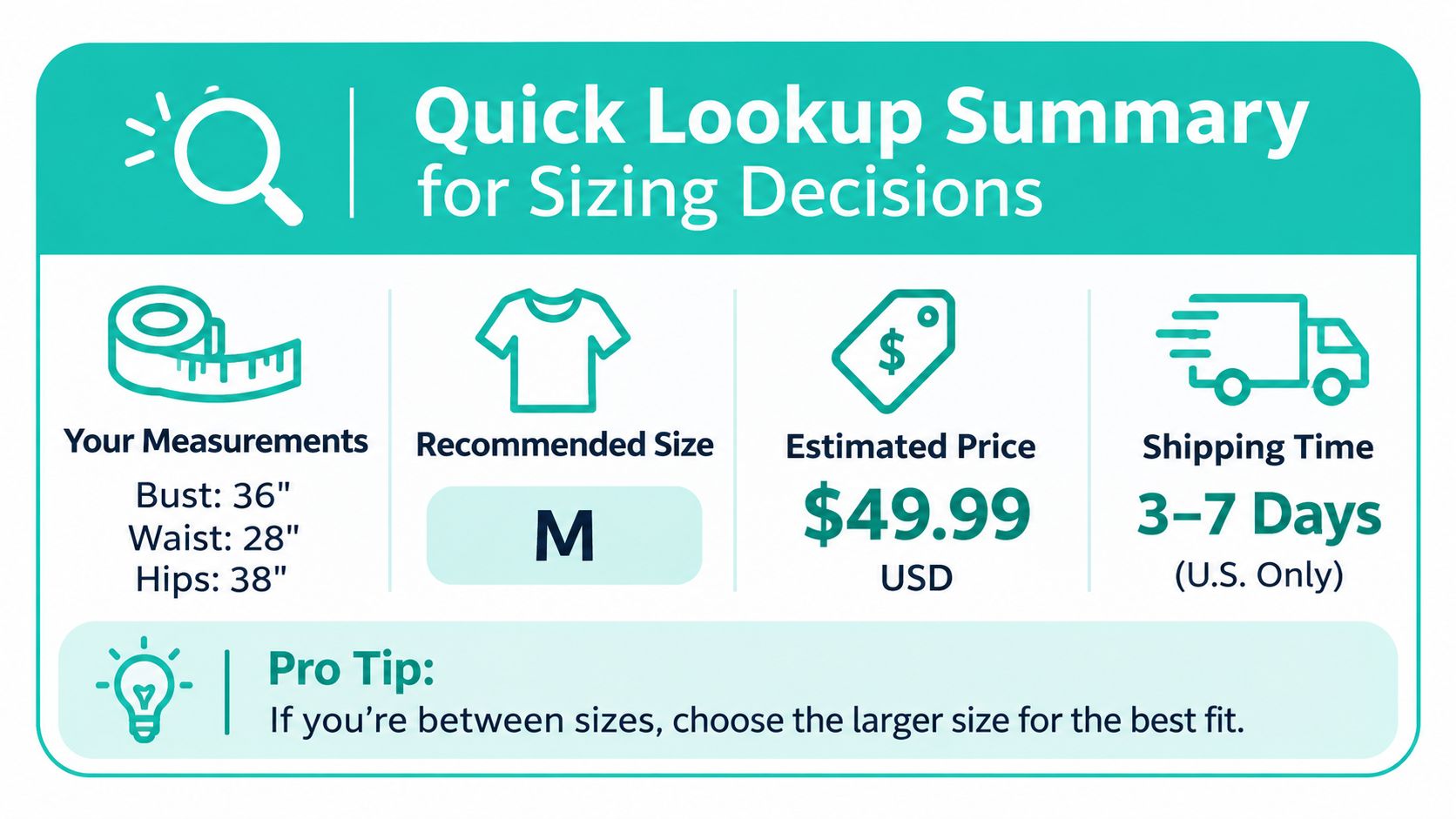
Quick Lookup Summary for Sizing Decisions
Fast rules to keep at your elbow
A usable dog carrier size chart starts with the dog, then checks the carrier, then checks the route. The core measurements stay the same, A nose to tail base, B floor to elbow, C shoulder width, and D floor to top of head or ear tip, whichever is higher. From there, the working formulas are length = A + 0.5B, width = 2C, and height = D plus bedding thickness.
Three questions sort out the final choice:
Does the dog fit by movement, not just by weight? The dog still needs to stand, sit, turn, and lie down naturally.
Does the carrier meet the smallest limit on the itinerary? Aircraft type can change the answer.
Is there enough clearance above the dog? The AKC guidance calls for 2 to 3 inches above shoulder height for soft-sided carriers and 3 to 5 inches for hard-sided carriers.
Airline rules also check the outside of the carrier, so the shell can fail even when the interior fit looks fine. Air Canada's 115 linear-inch limit is a clear example of why the chart has to track both the inside space and the outside envelope.
Keep the decision simple: What are the dog's measurements? What is the carrier's interior size? What is the smallest airline or aircraft limit on the route? If those three answers line up, the carrier choice is usually on solid ground.
More articles
From regulatory changes to best practices for veterinarians and pet owners, our resources keep you ahead of the curve.