Are you a team member in a veterinary practice?
Are you a pet parent planning a trip with your furry pal?
Documentation Requirements for Pet Travel Made Easy
You're at the airport with your pet, a carrier, a passport, and a health certificate signed by your veterinarian. At check-in, the airline employee looks at the date and tells you the certificate was issued 12 days ago, while the destination requires it within 10 days of arrival. Your flight leaves without you, your pet is unsettled, and the rebooking bill can become painfully expensive.
That situation feels unfair because the paperwork is complete. Yet international pet travel rarely depends on whether you have a folder full of forms. It depends on whether each document is valid for the right destination, issued by the right person, completed in the right sequence, endorsed when required, and accepted by both government officials and the airline.
This is the last-mile validity problem. A document packet can look perfect and still fail at the final checkpoint because one date, signature, translation, or airline cutoff doesn't line up. The guidance below treats documentation requirements as a connected system, so you can plan the trip one milestone at a time instead of hoping every form will pass muster.
Why Documentation Requirements Trip Up Even Prepared Travelers
The traveler at JFK may have done what most careful owners would do. They visited a veterinarian, obtained a signed health certificate, gathered vaccination records, and arrived early with the pet safely secured in a carrier. The problem wasn't a missing document. The problem was that the certificate had crossed a timing boundary.
The U.S. Department of State explains that airlines typically require pet health certificates to be no older than 10 days, even when the destination country allows a longer period. USDA APHIS guidance also tells owners to verify destination requirements every time they travel with a pet. A country's rule and an airline's rule can therefore point to different deadlines, and the stricter one controls your check-in experience.

A complete packet can still be rejected
Think of the paperwork as a chain. The microchip must match the pet identified on the rabies record. The vaccination may need to occur in the correct sequence. The health certificate must be issued inside the destination's window, then reviewed or endorsed by the appropriate authority if required. The airline may apply another cutoff at the counter.
One weak link can stop the trip. A certificate can be medically accurate but unusable because it was issued too early. A government endorsement can be present but still fail if it falls outside the certificate's acceptable period. A document can also be correct for the final country while a transit point applies a different rule.
Practical rule: Treat the departure date, arrival date, airline cutoff, endorsement date, and transit rules as one timeline.
Veterinary practices and travel coordinators can reduce confusion by using a structured review rather than relying on a checklist alone. Resources such as SupportGPT's documentation AI guide can help teams think about document workflows, while a focused review of common documentation gaps in pet travel can help identify missing links between forms.
The safest approach is to verify every date and dependency before the final certificate appointment. That gives you time to correct an error while your pet is still home, rather than discovering it beside a busy check-in desk.
The Core Documents Every International Trip Requires
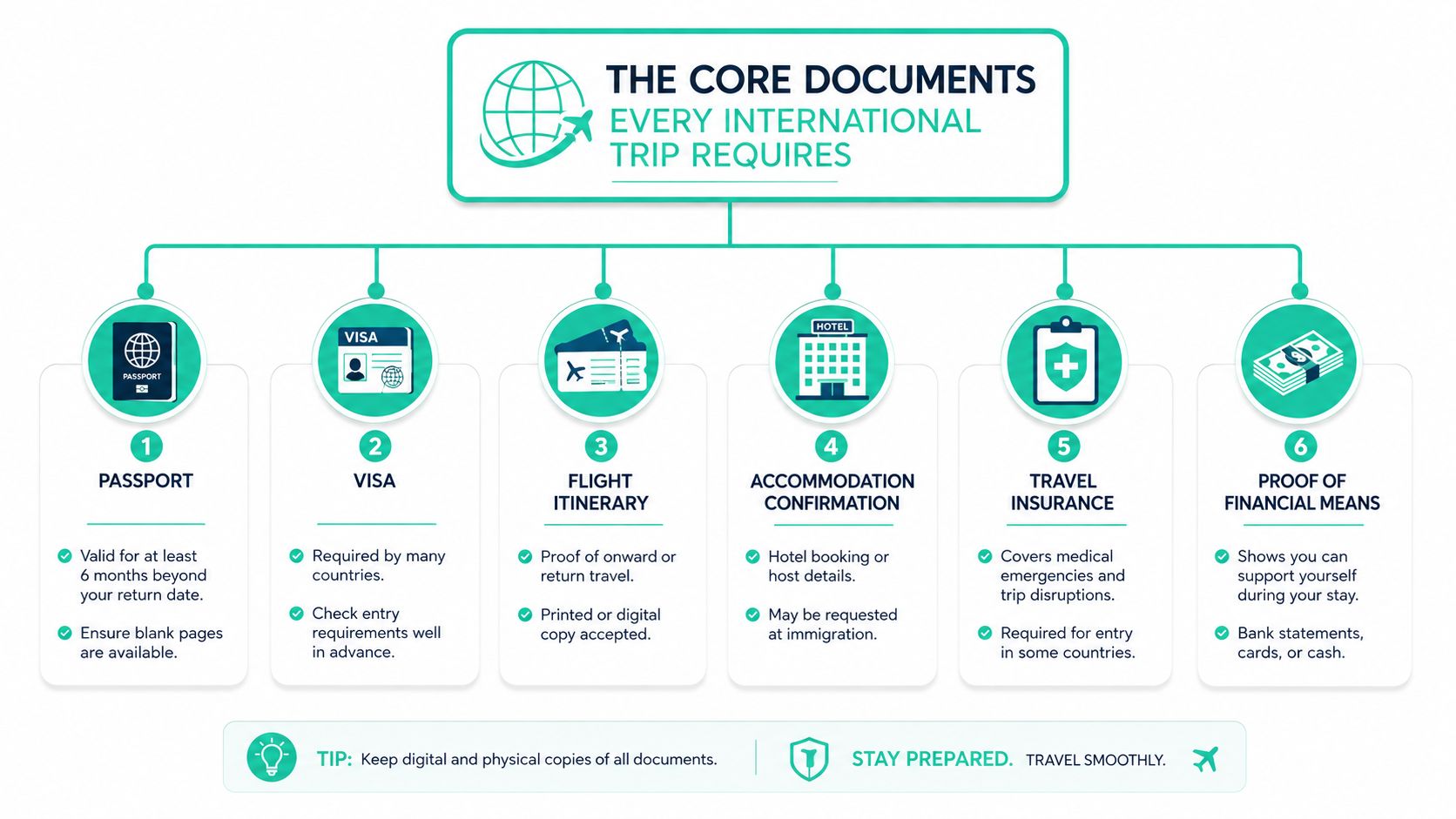
A pet can arrive at the airport with a full folder and still be refused boarding if one document is the wrong form or falls outside its valid window. Start by identifying the records that prove four things: the pet's identity, health status, vaccination history, and permission to enter. The exact paperwork depends on the destination, but these categories appear across many international journeys.
The international health certificate
An international health certificate, also called a veterinary certificate, records the veterinarian's examination and the details required by the destination. The issuing veterinarian may need a government-approved form that lists the pet's microchip, vaccinations, tests, and treatments.
A general health note cannot replace a destination-specific certificate. The U.S. Centers for Disease Control and Prevention states that animal health certificates must be legible, accurate, and complete. Some countries also require certified translations, so a veterinarian's signature alone may not satisfy the border authority. Review the CDC travel guidance for pets and service animals before the appointment.
Vaccination records
Vaccination records show which vaccine was given, when it was administered, and which animal received it. Rabies documentation often receives close review because a destination may use it to determine whether testing, waiting periods, permits, or additional controls apply.
For dogs, cats, and ferrets traveling from Great Britain or Northern Ireland to the EU, the pet must be microchipped, vaccinated against rabies, and wait 21 days after a primary vaccination before travel, according to the UK government's pet travel guidance. A qualifying booster may follow different timing rules. Confirm which type of vaccination your pet received before reserving transport.
Import permits
An import permit is advance approval from the destination authority when that country requires one. It may specify testing, treatment, inspection, or quarantine arrangements.
Check this requirement early. A permit may need approval before the health certificate is issued, or its number may have to appear on another document. Keep the approved permit with the rest of the packet, and check whether its validity covers the planned arrival rather than only the date of application.
Government endorsements
An endorsement allows an official authority to review and validate the veterinarian's certificate. For many destinations, international health certificates prepared in the United States must be reviewed, countersigned, stamped, or embossed by USDA APHIS Veterinary Services. APHIS also supports electronic completion and submission through VEHCS, although acceptance of digitally endorsed certificates depends on the destination.
The endorsement method is part of the requirement, not an administrative detail. Canada, for example, requires its Canadian International Health Certificate to be printed on legal paper, 8.5 by 14 inches, and states that no other format is accepted. Confirm the destination's form, paper size, submission route, and airline deadline before printing or mailing the certificate.
Use this guide to travel documents for pets to compare how the records connect. A complete packet is usable only when the identity details match and every approval, signature, and timing window remains valid through check-in and arrival.
How Requirements Change by Destination and Transport Mode
Destination rules don't form one universal system. They change with the country's rabies controls, national forms, border process, and the way your pet travels. A flight can add airline rules to government rules, while a land or sea crossing may replace airline screening with customs and identity checks.
The EU provides a clear example. For entry from a non-EU country, the pet needs an animal health certificate issued by an official or authorised veterinarian and endorsed by the competent authority. The certificate must include the microchip code, rabies vaccination details, and, where relevant, blood test and tapeworm treatment details. The European Commission's entry guidance says the certificate is valid for 10 days from issue until documentary and identity checks at the EU border, with the period extended by sea travel time.
Great Britain uses a different route structure. A pet health certificate is required when entering or returning from a Part 2 listed or not listed country, and a pet passport or Animal Health Certificate can't be used for those routes. For a Part 1 listed country, several documents may work, including an EU pet passport, a Great Britain pet health certificate, or an Animal Health Certificate issued in Great Britain, according to the UK application guidance for a GB pet health certificate.
A comparison at a glance
Destination | Health Certificate Required | Rabies Vaccination Rule | Special Requirements | Endorsement Needed |
|---|---|---|---|---|
EU from a non-EU country | Yes, issued by an official or authorised veterinarian | Rabies details must be recorded | Microchip, possible blood test and tapeworm details, documentary and identity checks | Competent authority endorsement |
EU from Great Britain or Northern Ireland | Yes, issued no more than 10 days before travel | Microchip, rabies vaccination, and a 21-day wait after primary vaccination | The pet must be at least 12 weeks old before rabies vaccination | Follow the route-specific certificate process |
Great Britain from a Part 2 listed or not listed country | Yes | Route-specific rabies conditions apply | A pet passport or Animal Health Certificate can't be used for those routes | Follow the GB certificate process |
Canada | Route-specific records apply | Rabies certificate requirements vary by origin | The required form and format can be strict | Check the destination and origin combination |
Transport mode adds another layer. Airlines may inspect the certificate at check-in, compare the pet's identity with the paperwork, and apply a cutoff that is narrower than the destination's window. Sea travel can extend an EU certificate's validity by sea travel time, while a land crossing avoids airline check-in but still involves border inspection.
The practical standard is simple: satisfy the strictest applicable rule among the destination, transit countries, government authorities, and carrier. Ask the airline for its current pet-document policy in writing, then compare it with the government requirements rather than assuming one replaces the other.
Building Your Preparation Timeline From Travel Date Backward
A pet can arrive at the airport with every form in the folder and still miss the flight. The problem is often a timing mismatch: one document is valid for the border, another expires before airline check-in, or a required step was completed in the wrong order.
Start with the date your pet must arrive, then work backward to each condition that must be satisfied before the final health certificate is issued. For entry into the EU from a non-EU country, the animal health certificate must be issued within 10 days of entry. The airline may set a narrower cutoff, so schedule the veterinary appointment only after confirming that the microchip record, rabies documentation, tests, treatments, permits, translations, and endorsements can all be ready.
A backward planning method
Begin with arrival and check-in. Record the destination arrival date, the airline's certificate cutoff, and every transit point. Use the earliest applicable deadline as your working date.
Check rabies timing. Confirm whether the destination requires a waiting period after a primary vaccination, a blood test, or a specific vaccination certificate. For travel from Great Britain or Northern Ireland to the EU, a primary rabies vaccination is followed by a 21-day wait before travel, as noted in the UK government rules.
Confirm identity sequencing. The microchip number must match the pet and every relevant record. Ask the veterinarian to scan the chip and compare that number with the vaccination and certificate paperwork before the final appointment.
Resolve permits and endorsements. Check whether an import permit is required and whether the certificate needs government review, a stamp, an embossed seal, or electronic submission. USDA APHIS supports electronic completion and submission through VEHCS for eligible certificates, but the destination must accept that process.
Reserve the final examination. Book the health certificate appointment inside both the destination and airline windows. Leave time for corrections, office closures, courier delays, or a request for a clearer scan.
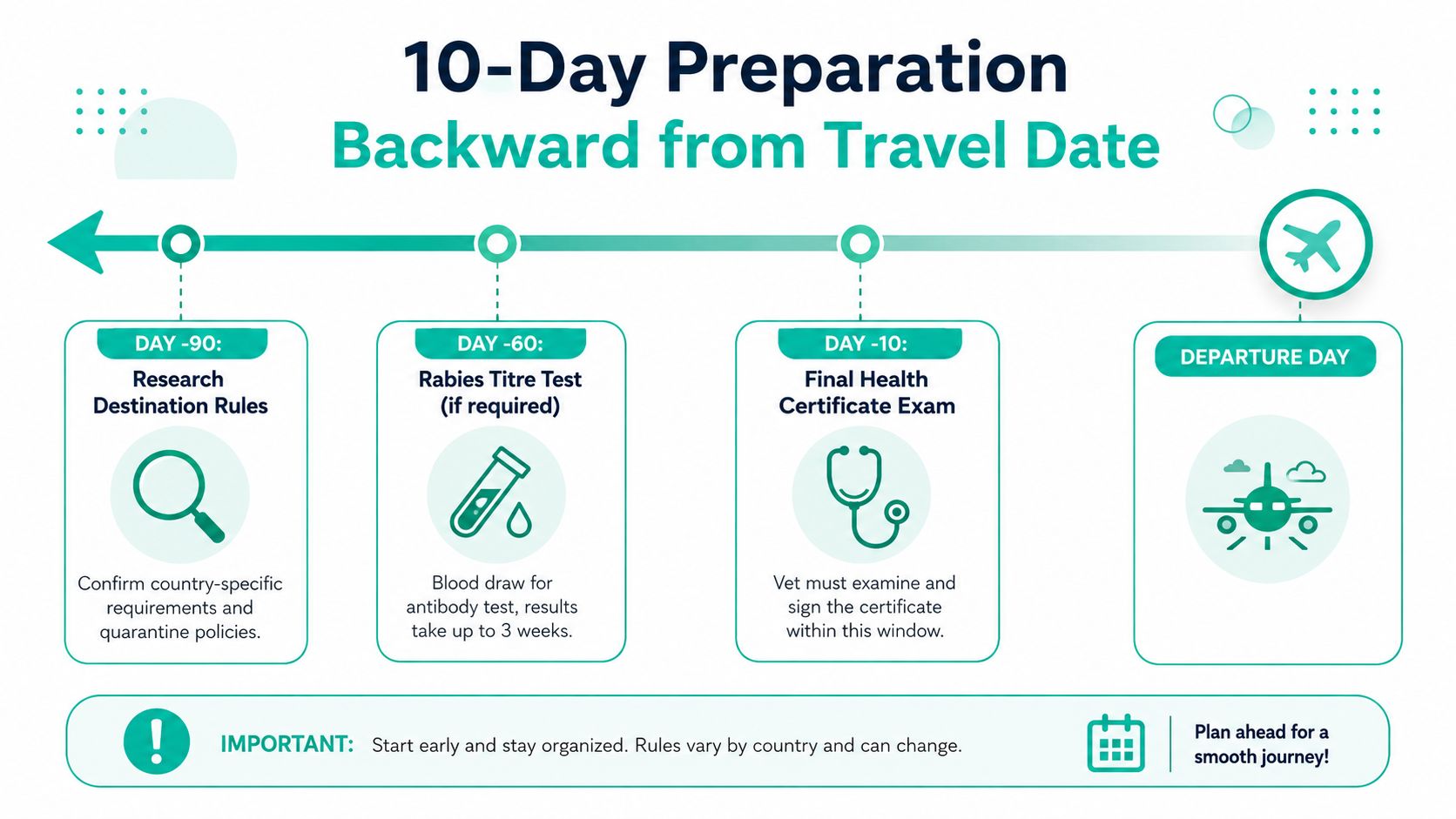
A reverse timeline exposes last-minute failures early. Rabies waiting periods, testing, authority review, and changes to the itinerary can all shift the usable date of the final packet, even when each document appears correct on its own.
Use this pet passport planning guide to organize identity and vaccination records before destination-specific paperwork is prepared.
Hidden Timing Traps That Invalidate Complete Document Packets
A folder can contain every requested form and still fail because the documents don't work together in time. The most common trap is assuming that the destination's validity window is the only deadline that matters.
An airline may accept a certificate only if it was issued within its own check-in window. The U.S. Department of State notes that airlines typically require certificates no older than 10 days, even when a destination permits a longer period. That difference turns airline check-in into a separate compliance checkpoint, not a simple handoff before border control.
Four conflicts to check before departure
Certificate issue date: Confirm whether the destination measures validity from issue, arrival, or documentary inspection. The EU uses a 10-day period from issue until checks at the border for entry from a non-EU country.
Endorsement timing: Make sure the government endorsement is completed while the underlying certificate is still usable. An endorsement added after a relevant window can leave the packet out of step.
Record sequence: Verify that the microchip identity and vaccination history align. If the destination requires the chip to be recorded before vaccination, a reversed sequence may require veterinary review or a new protocol.
Transit timing: Treat each layover as a possible document checkpoint. A transit country may apply its own rules even when your pet never leaves the airport.
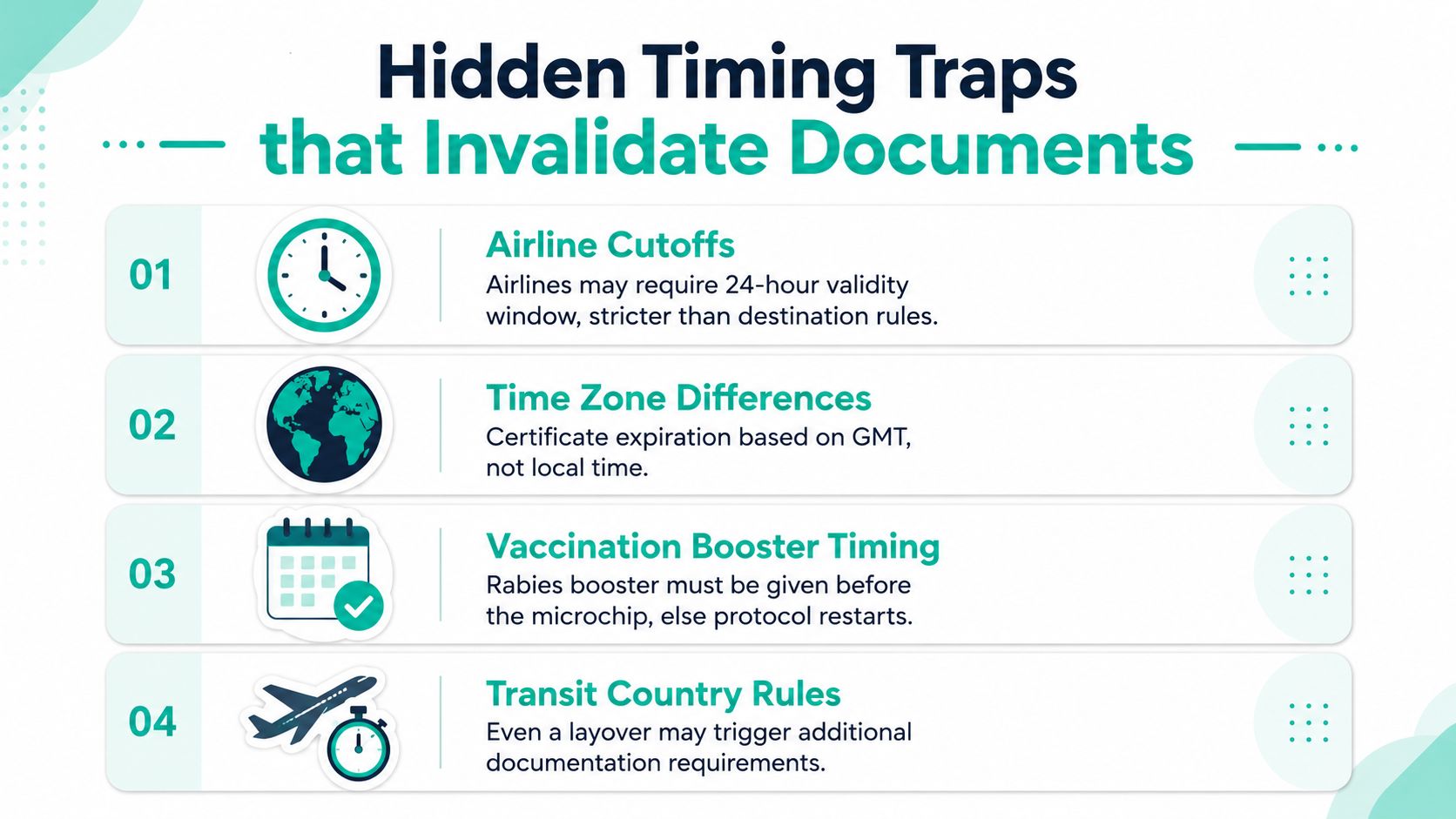
Weekends, holidays, mailing delays, and flight changes make these conflicts harder to spot. If a rebooked flight moves arrival outside the certificate's window, call the veterinarian and the relevant authority before traveling. Don't assume the original forms can be carried onto the new flight.
How Passpaw Catches Errors Before They Reach the Border
A useful document workflow should check more than whether a file has been uploaded. It should compare the pet's identity, vaccination history, destination, travel dates, certificate fields, and endorsement status so that a mismatch appears before check-in.
Passpaw is one platform designed for this kind of review. It lets veterinary practices and pet travel teams manage travel documents, validate uploaded records against entered pet information, organize destination requirements, and display treatment dates clearly. Its workflow can help users prepare supporting documents such as rabies certificates and identify errors before the packet reaches the border.
Validation should follow the travel story
The system needs to understand sequence, not just storage. If the departure date changes, the health certificate deadline may change with it. If the itinerary gains a transit country, the review must include that location. If a document is missing a field or the pet's microchip number differs between forms, the team should have a clear correction task.
Passpaw's documentation verification workflow fits into a practice's process. A veterinarian or coordinator can use a centralized record to prioritize tasks by travel date, communicate with the client, and keep the application moving instead of searching across scattered emails and attachments.
No software replaces confirmation with the destination authority, airline, or veterinarian. The value of validation is that it gives the human team a clearer list of what still needs attention, especially when the packet is complete in appearance but not yet valid for the actual journey.
Answers to Common Questions About Pet Travel Paperwork
Does a layover create new paperwork? It can. A transit country may apply its own entry or transit controls, even when your final destination is elsewhere. A route through the EU on the way to Great Britain should be checked as a multi-country itinerary, not treated as a single-country trip.
What happens if a flight is rebooked? Recalculate the certificate window from the new travel and arrival details. Contact the veterinarian promptly to ask whether a new examination or certificate is needed, then confirm the endorsement process with the responsible authority. The airline must also confirm that the revised dates fit its policy.
Are digital copies enough at the border? Don't rely on a phone photo or scanned backup as the primary record. Some destinations accept digitally endorsed certificates through approved systems such as VEHCS, while other routes require a specified printed form or original document. Keep the required physical paperwork and a secure digital backup.
Do return trips use the same paperwork? Not necessarily. Re-entry to the United States can require documentation separate from the forms used to leave, particularly when the pet's travel history includes a high-risk rabies country. CDC guidance identifies a special rabies vaccination certification for U.S.-vaccinated dogs that have been in a high-risk rabies country within the past 6 months, and the form must be endorsed before departure.
What if officials reject a document? Ask exactly which field, date, issuer, translation, or endorsement caused the problem. Follow the border authority's instructions, which may include additional inspection or quarantine arrangements, and contact your veterinarian, airline, and relevant government authority while you're still at the checkpoint. Keep copies of every record and note the official guidance so the correction is precise.
Passpaw helps veterinary practices and pet travel teams organize destination-specific documents, validate records against pet information, and track timing-sensitive tasks. Visit Passpaw to see how its workflow can help you catch documentation errors before your pet reaches the airport or border.

More articles
From regulatory changes to best practices for veterinarians and pet owners, our resources keep you ahead of the curve.