Are you a team member in a veterinary practice?
Are you a pet parent planning a trip with your furry pal?
Can a dog get parvo after being vaccinated: can it happen?
It’s a question that catches many loving pet owners off guard: can a dog still get parvo even after being vaccinated? The short answer is yes, but it is extremely rare. When it does happen, it’s almost never because the vaccine itself is faulty. Instead, it’s usually due to a tricky combination of factors involving a puppy’s young, developing immune system and the precise timing of their shots.
Vaccines are incredibly effective, but they aren't a 100% iron-clad guarantee—especially during a very specific window of vulnerability in a puppy's early life.
Understanding Why a Vaccinated Dog Might Get Parvo
It's a scenario that sends a shiver down any pet owner’s spine. You've done everything right—followed the vet’s advice to the letter—yet your vaccinated puppy still gets sick. This situation is sometimes called "vaccine failure," but that term is a bit misleading. It doesn’t mean the vaccine didn't work; it means the puppy's body couldn't build the strong immune response needed for full protection at that exact moment.
This is most common in very young puppies. Think of it this way: a puppy gets a temporary shield of immunity from its mother's milk, which is fantastic for protecting them in their first few weeks. But that inherited shield can sometimes get in the way, blocking the vaccine from properly "training" the puppy's own immune system to fight off parvo. This creates a delicate balancing act for vets.
The Window of Susceptibility
There's a period in a puppy’s life, usually between 6 and 16 weeks of age, known as the "window of susceptibility." During this time, the protective antibodies they got from their mom are starting to fade, but their own vaccine-induced immunity hasn't fully kicked in yet.
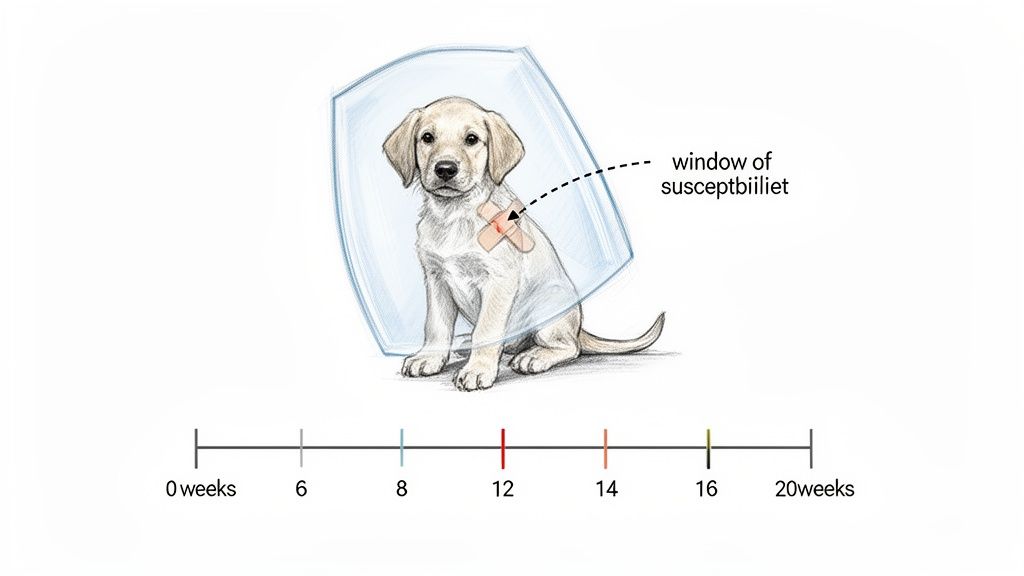
It’s in this gap that a puppy is most vulnerable to an infection like parvo, even if they've already had their first shot.
The whole point of a puppy vaccine series is to close this "window of susceptibility" as quickly and safely as possible. We give booster shots every few weeks until we're confident the puppy's own immune system can take over completely.
This is exactly why a series of vaccinations is so critical. A single shot just isn't enough to guarantee protection when those maternal antibodies might still be interfering. If you want to dive deeper into the nuts and bolts of vaccine schedules, you can learn more about what vaccinations your dog needs in our detailed guide.
To make things clearer, here’s a quick rundown of the main reasons a vaccinated dog might still get sick.
Why a Vaccinated Dog Might Still Get Parvo
Factor | Simple Explanation | Who Is Most At Risk |
|---|---|---|
Maternal Antibody Interference | Mom's antibodies, passed through milk, can block the vaccine from working. | Puppies between 6-16 weeks old. This is the #1 reason. |
Incomplete Vaccine Series | Missing a booster or stopping the series too early leaves gaps in protection. | Puppies who haven't finished their full shot schedule (usually 3-4 shots). |
Improper Vaccine Handling | Vaccines are delicate. If they get too warm, they become useless. | Any dog, but especially relevant for at-home vaccinations where storage isn't guaranteed. |
Weakened Immune System | An underlying illness or stress can prevent the body from responding to the vaccine. | Dogs with other health issues, heavy parasite loads, or extreme stress. |
As you can see, it's a bit of a tricky puzzle. But by sticking to the right vaccine schedule and working with your vet, we can make sure our pups are as protected as paw-ssible.
How a Puppy’s Immune System Can Interfere with Vaccines
To figure out why a seemingly protected puppy can still get parvo, we need to look at a fascinating tug-of-war happening inside their tiny bodies. It all begins with a priceless gift from their mother: her milk. This isn't just food; it's a super-charged liquid shield packed with maternal antibodies.
These antibodies act as a borrowed, temporary immune system, protecting the newborn puppy from germs while their own defenses are still under construction. It's an incredible head start. But this helpful shield can sometimes get in the way of vaccinations.
Think of it like this: a vaccine is meant to teach a puppy's immune system what parvovirus looks like so it can build its own long-term defense. But if the mother's strong antibodies are still hanging around, they see the weakened virus in the vaccine and immediately knock it out. The puppy's own immune system never gets the chance to "meet" the virus and learn how to fight it.
The Double-Edged Sword of Maternal Antibodies
This whole process is called maternal antibody interference, and it is the single most common reason a puppy gets parvo after being vaccinated. The mother's antibodies, while trying to do their job, essentially disarm the vaccine before it can work.
This creates a tricky situation. The level of these maternal antibodies is different for every puppy, even within the same litter. Some puppies lose this borrowed immunity as early as six weeks, while others might hold onto it for 16 weeks or even longer. There's really no way to know for sure without specific blood work, which is why a single puppy shot is never enough.
The goal of the puppy vaccine series—with shots every three to four weeks—is to land a dose at the exact moment the maternal antibodies have faded just enough for the vaccine to work, but before the puppy is left totally exposed. We're trying to close that window of vulnerability.
Why Timing Is Everything
The timing of those shots is absolutely critical. Research shows just how challenging it can be to get it right. For instance, a key study revealed that vaccinating at 6 weeks resulted in only 52% of puppies developing an immune response. That number jumps to 88% at 9 weeks and finally hits 100% at 12 weeks with a single, well-timed shot. You can learn more about these vaccine efficacy findings and see why early shots often fail—the maternal antibodies are just too strong.
This data is precisely why veterinarians insist on completing the entire series of shots. It’s not about giving unnecessary medicine; it’s a strategic plan to make sure at least one of those doses lands in the sweet spot to build strong, lasting immunity.
Maternal antibody interference isn’t a flaw in the puppy or the vaccine. It’s a natural biological process that vets have to carefully navigate to ensure every puppy is successfully immunized.
Other Factors That Can Affect Vaccine Success
While maternal antibodies are the main culprit, other things can also cause a vaccine to fail. It's not just about what's happening inside the puppy, but also about the world around them.
Here are a few other important considerations:
Vaccine Handling and Storage: Vaccines are delicate biological products. They have to be kept refrigerated at a specific temperature. If a vaccine gets too warm during shipping or sits out too long, it can become useless before it’s ever given.
The Puppy’s Health Status: A vaccine works best on a healthy, thriving animal. If a puppy is already sick, stressed from a new home, or has a heavy load of intestinal worms, their immune system might be too busy fighting other battles to respond properly to the vaccine.
Different Strains of Parvovirus: Parvovirus is sneaky and can change, creating different strains. Modern vaccines are designed to protect against the most common and dangerous ones (like CPV-2b and CPV-2c), but it's something researchers are always keeping an eye on.
Individual Immune Response: Just like people, every dog is an individual. In very rare cases, a dog might have a health or genetic issue that prevents their immune system from responding correctly to any vaccine. This can sometimes be investigated with a special blood test. To get a better sense of this, you might be interested in our guide on what a titer test for rabies in dogs is, which explores a similar idea of measuring immunity.
Understanding these factors helps paint the full picture. It shows that successful vaccination is a team effort between the breeder, the vet, and you, the owner—all working to give that puppy its best shot at a long, healthy life.
The Ideal Puppy Vaccination Schedule for Full Protection
To build a rock-solid defense against parvovirus, a puppy needs a strategically timed series of vaccines, not just a one-and-done shot. It’s all about timing. We're essentially in a race against those disappearing maternal antibodies, trying to land a vaccine dose at the perfect moment to kickstart the puppy's own immune system.
Think of it like a relay race. Mom's immunity is the first runner, protecting the pup for the first few weeks. The vaccine series is the next runner, ready to grab the baton just as the first one starts to tire. A smooth handoff ensures there's never a gap in protection.
Building Immunity One Booster at a Time
Veterinarians typically start the parvo vaccine series when a puppy is between 6 and 8 weeks old. This first shot gets the ball rolling, but there's a good chance it'll be neutralized by mom's lingering antibodies. That's why we don't stop there.
Booster shots are given every 3 to 4 weeks until the puppy is at least 16 to 20 weeks old. Each booster is another opportunity to trigger the puppy's immune response, improving the odds that one will hit the mark as maternal antibodies fade. It is very important not to skip shots; completing the entire series is the only way to ensure full protection.
This visual timeline breaks down how a puppy shifts from relying on their mother's antibodies to developing their own vaccine-powered immunity.
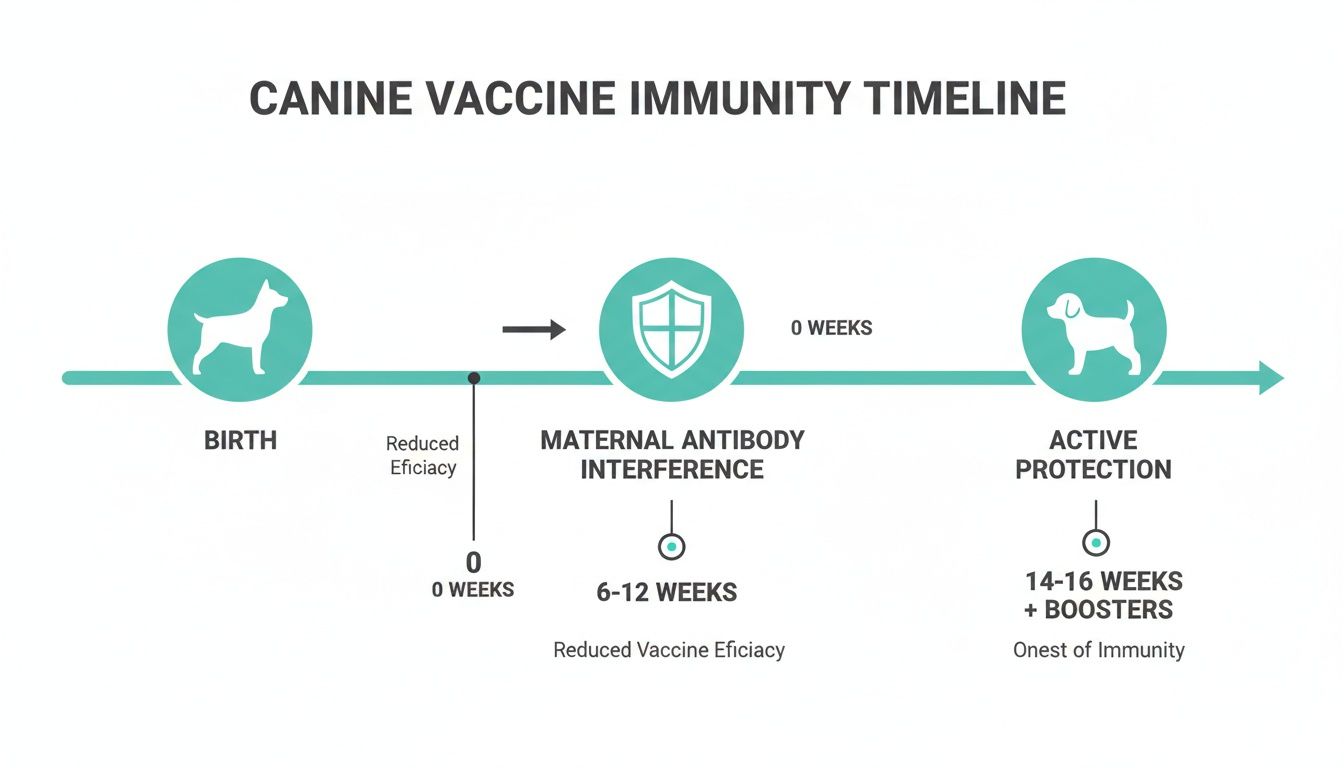
As the infographic shows, that "window of susceptibility" only closes after the puppy's immune system fully responds to the vaccine series and has finally overpowered any interference from mom.
Key Takeaway: A puppy isn't considered fully protected until about two weeks after their final booster shot. Until then, you have to be very careful about where you take them.
Sticking to the schedule is the best way to prevent a heartbreaking breakthrough infection. If you stop the series early or miss a booster, you're leaving a dangerous gap in their defenses. To get a better idea of what to budget for, check out our guide on the costs associated with puppy vaccinations.
Recommended Puppy Parvovirus Vaccination Timeline
To help you visualize the process, here’s a common timeline that you and your vet will likely follow. Of course, this is a general guide—your vet might adjust it based on your puppy’s specific health, breed, and local risk factors.
Dose Number | Puppy's Typical Age | The Goal of This Dose |
|---|---|---|
First Dose | 6-8 Weeks | The initial attempt to stimulate an immune response, though maternal antibodies might still block it. |
Second Dose | 10-12 Weeks | Maternal immunity is fading, giving this booster a much better chance of being effective. |
Third Dose | 14-16 Weeks | A critical shot for catching puppies whose maternal antibodies stuck around longer than average. |
Fourth Dose (Optional) | 18-20 Weeks | Often recommended for high-risk breeds or puppies in high-exposure environments to seal the deal. |
Following this schedule carefully is the single most important thing you can do to set your puppy up for a healthy, parvo-free life.
Vaccinations and Pet Travel Requirements
This vaccination schedule isn't just about protecting your dog at the local park—it’s also very important for pet travel. Many countries, and even some states, have strict rules that may require proof of a complete and current vaccination record.
If you're planning an adventure with your pup, officials will likely review their health certificate and vaccine history, looking for a few key things:
Proper Timing: Proof that the puppy series was completed correctly.
Current Boosters: Evidence that adult dogs are up-to-date on their shots.
Veterinarian Verification: All records should be signed and verified by a licensed veterinarian.
An incomplete or poorly documented vaccine history could complicate your travel plans. It's just one more reason why following your vet's recommended schedule is a paw-sitive step for your pet's health and your future adventures together.
Recognizing the Warning Signs of a Parvo Infection
Even with the best precautions, knowing how to spot a potential parvovirus infection is a critical skill for any pet owner. This isn't about panicking over every upset stomach; it's about understanding the specific, serious signs that scream "emergency."
Parvo moves fast. A puppy that was happily playing in the morning can become very ill by the evening. The difference between a minor tummy ache and a life-threatening crisis often comes down to recognizing the symptoms quickly and acting without hesitation.
Key Symptoms to Watch For
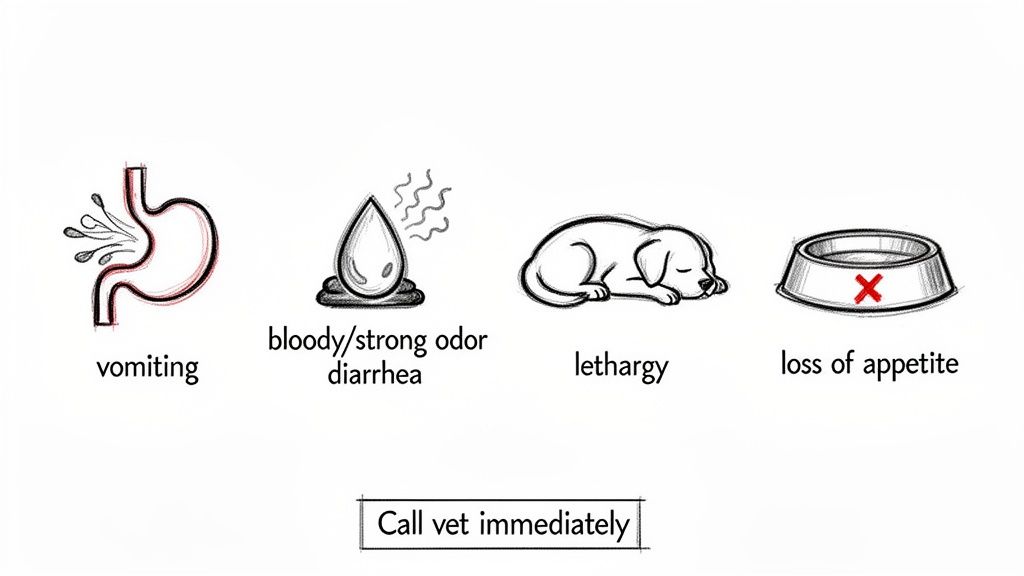
While "vomiting and diarrhea" are the classic signs, parvo presents with a very distinct and severe set of symptoms. Being able to identify these specifics can help you act decisively when every minute counts.
The most common warning signs include:
Severe, often bloody diarrhea: This is the hallmark sign. The diarrhea is typically watery, and carries a uniquely foul and strong odor that is hard to forget.
Forceful vomiting: A dog with parvo will often vomit repeatedly, sometimes to the point they can't even keep water down. This is what leads to rapid, dangerous dehydration.
Extreme lethargy: This goes far beyond just being tired. A parvo-infected dog will appear listless, weak, and completely uninterested in their surroundings, toys, or family.
Complete loss of appetite: A sick dog will refuse all food, even their favorite treats. This sudden and total lack of interest in eating is a major red flag.
Fever or low body temperature: As their body fights the infection and goes into shock, their temperature can either spike or drop to dangerously low levels.
If you see these signs—especially in a puppy or young dog, even one who has started their vaccine series—you need to contact your veterinarian immediately.
The Urgency of Early Intervention
When it comes to parvovirus, time is the single most important factor for a positive outcome. The virus aggressively attacks the lining of the intestines and the bone marrow, causing severe dehydration and leaving the dog wide open to other bacterial infections. The faster you get to a vet, the better their chances.
Treatment is intensive, but it works. Studies on outcomes paint a stark picture: for an untreated puppy, the survival rate can be very low. But with aggressive supportive care, those odds can climb to 60-90%. This is why waiting to "see if things improve" is simply not an option. Although it's rare for a dog to get parvo after being vaccinated, the symptoms must always be taken seriously. You can learn more about parvo treatment promise from veterinary experts who are seeing new therapies emerge.
Never adopt a "wait and see" approach with suspected parvo. The severe dehydration and internal damage caused by the virus can become irreversible in a matter of hours. Immediate veterinary attention is key.
Ultimately, your quick action can make all the difference. Knowing these signs allows you to be your dog's best advocate, ensuring they get the lifesaving care they need without a moment's delay. It's a heavy responsibility, but being prepared is your best defense.
What Does Treatment Look Like for a Breakthrough Infection?
When a dog gets parvo despite being vaccinated, it's a critical situation that demands immediate veterinary care. There’s no magic pill or single cure for the virus itself. Instead, treatment is a marathon of aggressive supportive care designed to help the dog's own immune system finally win the fight.
The primary goal is to manage the tough symptoms and head off serious complications before they can take hold. Think of the vet team as a personal support crew for your dog’s body, giving it everything it needs to battle the virus head-on. This intense process almost always requires hospitalization for several days.
The Cornerstones of Parvo Treatment
Veterinary care for a parvo infection is a multi-pronged attack, tackling the virus's effects from every angle. The entire treatment plan is built to stabilize the patient and support them until their own body can clear the infection.
A typical treatment plan includes a few key pillars:
Intravenous (IV) Fluids: Parvo causes severe vomiting and diarrhea, which quickly leads to life-threatening dehydration. IV fluids are the single most critical part of treatment. They rehydrate the dog, correct dangerous electrolyte imbalances, and maintain blood pressure.
Anti-Nausea Medications: To break the cycle of vomiting, powerful anti-nausea drugs are a must. This not only makes the dog more comfortable but also allows their damaged gut to start healing and prevents further fluid loss.
Nutritional Support: A sick puppy has no appetite and can't keep food down. Vets often provide nutrition through a feeding tube or IV to give their body the energy it needs to fuel the fight.
Antibiotics: Parvovirus damages the intestinal lining, creating a gateway for dangerous bacteria to leak into the bloodstream. Antibiotics don't treat the virus, but they are essential for preventing a serious secondary bacterial infection (sepsis).
Supportive care is all about managing the battlefield. By controlling dehydration, stopping vomiting, and preventing secondary infections, veterinarians give the dog’s immune system a fighting chance to defeat the parvovirus.
Survival Rates and the Hard Reality of Cost
With prompt and aggressive treatment, the survival rate for parvovirus can be as high as 90%. Without it, the odds are heartbreakingly grim—often less than 10%. This statistic alone shows why getting to a vet immediately is so important.
But this intensive care comes at a steep financial cost, often running into several thousands of dollars. It's a difficult reality for many pet owners and strongly reinforces why prevention is always, always the better path. The cost of a full vaccine series is a tiny fraction of what parvo treatment costs.
While it’s rare for a vaccinated dog to get parvo, the possibility drives home the value of completing the full vaccine series on schedule. Shelter studies show that even with aggressive in-hospital care, the mortality rate can be 8%, and breakthrough infections are a real concern—one study noted 11% of positive cases had all three vaccine doses. You can find out more about how parvovirus breakthroughs occur on Dogs Naturally Magazine. This reality makes prevention through proper vaccination a non-negotiable part of responsible pet ownership.
Practical Steps to Keep Your Pet Safe
Knowing the science is one thing, but putting it into practice is what really keeps your dog safe. Protecting a puppy, especially during those first few vulnerable months, means being smart about their world—both at home and when you venture out. Think of it as creating a safety bubble until their immune system is fully trained and ready for anything.
These aren't complicated rules. They're common-sense steps that make a world of difference. A little bit of caution now paves the way for a lifetime of happy, healthy adventures down the road.
Creating a Safe Zone at Home and Beyond
Here’s the key thing to remember: your puppy isn't considered fully protected until about two weeks after their final booster shot. Until you hit that milestone, it's critical to limit their exposure to places where the virus might be hiding. Parvovirus is incredibly resilient and can stick around in the soil, on surfaces, and in the environment for months.
Here are some simple but powerful ways to lower the risk:
Avoid High-Traffic Dog Areas: This is the big one. Keep your puppy away from places where lots of other dogs gather, especially if you don't know their vaccination history. That means dog parks, pet stores, popular hiking trails, and busy roadside rest stops are off-limits for now.
Socialize Smart: Socialization is important, but it has to be safe. Stick to playdates with healthy, fully vaccinated adult dogs you know and trust. The best place for this is a clean, private environment like your home or a securely fenced-in yard.
Watch Where You Walk: You can accidentally track the virus home on your shoes, clothes, or hands. If you’ve just come from a shelter, another vet’s office, or a dog park, make it a habit to change your clothes and wash your hands thoroughly before you greet your puppy.
Use a Carrier at the Vet: When it's time for those vaccine appointments, carry your puppy in a carrier or hold them on your lap. Don't let them wander around on the floor or sniff everything in the waiting room, where sick animals may have been.
A Quick Note on Travel: Planning a trip? Verifying your pet's vaccination status isn't just a good idea—it's often necessary. Many destinations, airlines, and lodging places have rules that may require fully documented and properly timed vaccination records. One missing shot could complicate your travel plans.
The Importance of Meticulous Record-Keeping
Keeping your dog’s health records organized is more than just good housekeeping; it’s a core part of being a responsible pet owner. These documents are the official proof of your dog's protection, and you'll need them for everything from travel and boarding to groomers and training classes.
Think of it as your dog's health passport. A good record will clearly show the date of each shot, the type of vaccine given, and the signature of the vet who administered it. This is your key to proving your dog is low-risk and ready for new experiences. To make it easier, you might be interested in our guide that includes a printable puppy shot record to help you get started.
Navigating Pet Travel and Documentation
For anyone who loves to travel with their pets, proper vaccination paperwork is your golden ticket. International health certificates and transport regulations can be very strict, and officials may comb through your pet’s records to make sure every single requirement has been met.
An incomplete vaccine series is one of the most common reasons pet travel gets derailed. Just imagine arriving at the airport, ready for your trip, only to be told your dog can't fly because a booster was missed or given a few days too late. It’s a heartbreaking and completely avoidable situation.
By following your vet's recommended schedule to the letter and keeping organized records, you’re doing more than just protecting your dog from parvo. You’re also making sure they can join you on all your adventures without a hitch. It's a simple strategy that delivers priceless peace of mind.
Lingering Questions About Parvo and Vaccines
We've covered a lot of ground, but it's natural to still have a few questions buzzing around. To wrap things up, let's tackle some of the most common concerns we hear from pet owners about parvovirus and vaccinations.
Can My Adult Dog Get Parvo If Their Boosters Are Current?
It's exceptionally rare, but not completely impossible. For an adult dog with a solid, up-to-date vaccination history, their immune system is primed and ready to shut down a parvo threat. They have the immunological tools to fight off the virus.
In the handful of cases where a fully vaccinated adult dog does get sick, it's almost always tied to a severely weakened immune system from another serious health problem. For the vast majority of healthy, properly vaccinated adult dogs, the risk is incredibly low.
How Long Does Parvovirus Survive in the Environment?
This is where parvo gets its nasty reputation. It's an incredibly hardy virus, capable of surviving in the soil, on indoor floors, and on things like food bowls for months—sometimes over a year in the right conditions.
This resilience is exactly why parvo is so widespread and contagious. It shrugs off weather changes and many common cleaners, making it critical to keep unvaccinated puppies away from public spaces where other dogs have been.
What Is a Titer Test and Does My Dog Need One?
A titer test is a simple blood test that measures the level of parvo-fighting antibodies in your dog’s system. It’s a snapshot that tells your vet whether your dog still has protective immunity from their previous vaccines.
Vets sometimes use this for adult dogs to decide if a booster is truly needed. It's a great way to avoid over-vaccination while ensuring protection is still strong. If you have pet travel on the horizon or just want a more tailored vaccine plan, it's definitely something to discuss with your vet.
If a Dog Survives Parvo, Are They Immune for Life?
Yes, a dog that pulls through a natural parvo infection usually develops a rock-solid, lifelong immunity. The fight their body puts up against the real virus creates a more powerful and lasting defense than a vaccine can provide. It's a rough way to earn immunity, but it works.
That doesn't mean they get a free pass from vet visits, though. They still need regular wellness check-ups and other core vaccines to stay protected from different diseases.
Navigating the world of pet health and travel rules can feel like a maze, but you don't have to figure it out alone. Passpaw offers a straightforward solution for managing international health certificates, making sure you and your vet have everything organized for your next adventure. Learn more about how Passpaw can help.
More articles
From regulatory changes to best practices for veterinarians and pet owners, our resources keep you ahead of the curve.