Are you a team member in a veterinary practice?
Are you a pet parent planning a trip with your furry pal?
Your Ultimate Guide to Finding Dog Friendly Lodging
Hitting the road with your dog is one of life’s great joys, but finding the right place to stay can feel a bit ruff. The phrase "dog-friendly lodging" gets thrown around a lot, but it means so much more than just a place that won't turn you away at the door.
A truly great spot doesn't just tolerate your dog—it welcomes them. This guide will help you sift through the options and find those gems where you and your best friend will both feel right at home.
What Does Dog-Friendly Lodging Really Mean?
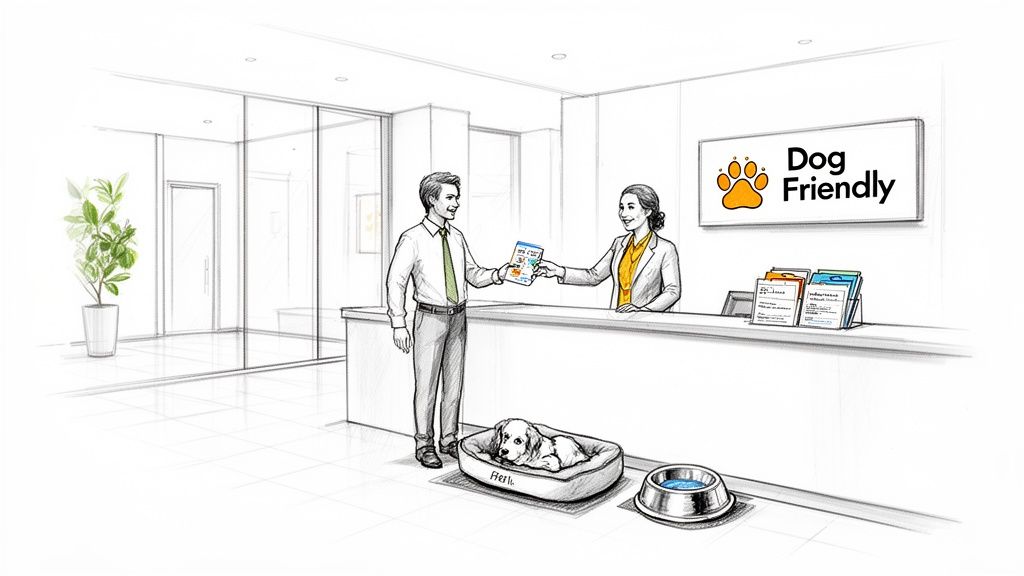
Finding a hotel or rental that is genuinely happy to host your dog can completely change the vibe of your trip. It’s not just about getting a room key; it’s about feeling welcome and knowing your dog is considered a real guest.
Luckily, the travel industry is catching on. The global pet-friendly hotel market is expected to jump from roughly $28.6 billion in 2025 to over $49 billion by 2032. That boom means more choices than ever, from simple roadside motels to five-star resorts rolling out the red carpet for your pup.
Beyond Just "Pets Allowed"
Think of a "pets allowed" sign as the bare minimum. It means you can bring your dog, but that’s about it. A truly dog-friendly property goes the extra mile. They get it—your dog isn't just a pet; they're family.
"A truly dog-friendly property anticipates the needs of pet owners. It’s not just about avoiding a 'no pets' policy; it’s about creating a 'yes, pets!' atmosphere."
It’s those thoughtful touches that show they're genuinely excited to have your dog stay. That’s what separates an okay stay from a truly memorable one.
What to Look for in a Truly Welcoming Stay
So, what does this "yes, pets!" atmosphere actually look like? It's usually a mix of practical features and a pet policy that's clear and fair.
Here are a few green flags that signal a property is paws-itively happy to see your dog:
Designated Green Spaces: A clean, easy-to-reach, and well-kept area for potty breaks is a game-changer.
In-Room Goodies: Some of the best places provide dog beds, food and water bowls, and maybe even a welcome treat.
Clear and Reasonable Policies: A good sign is a straightforward policy on fees, size or breed restrictions, and rules about common areas. It shows they’ve put thought into the experience for all guests, two-legged and four.
And if you're the type who prefers sleeping under the stars, our guide on camping with dogs offers another great way to adventure with your pet.
Ready to book a trip with your dog? Great! But before you hit "confirm," we need to talk about pet policies. The term “dog-friendly” can mean wildly different things, and understanding the fine print is the best way to avoid surprise fees or a stressful check-in.
Think of a pet policy as the official "house rules" for your dog. It's the agreement between you and the hotel or rental owner, and reading it before you book is a must. Trust me, sorting this out upfront is far easier than dealing with a problem when you’re standing at the front desk with your luggage and a confused pup.
How to Decode Pet Policies and Avoid Hidden Fees
When you find a spot you love, your first mission is to hunt down their pet policy. You can usually find it on the property’s website or in the details of a booking site listing. Keep a sharp eye out for specifics that could throw a wrench in your plans.
Common Rules to Look For
Don't just scan for the words "pets allowed." You need to know the conditions. Here are the most common restrictions you'll run into:
Weight Limits: Many places, especially hotels, limit the weight of dogs they welcome. This is often around 25 to 50 pounds.
Breed Restrictions: Unfortunately, some properties may not allow certain breeds. This is often because of their insurance carrier, not a personal preference, but it’s a deal-breaker if your dog is on the list.
Number of Pets: Traveling with your whole pack? Most places limit guests to one or two dogs per room. You’ll need to call ahead and check if you have more.
Access Rules: The policy should be clear about where your dog can and can't go. Is the patio fair game? What about the lobby or other shared areas?
These rules are there to keep things comfortable for everyone, so respecting them is key. For a better sense of what to expect, take a look at the policies for some dog-friendly motels—they often provide a good baseline.
The True Cost: Pet Fees Explained
Here’s the thing: “dog-friendly” rarely means “dog-free.” Most properties charge extra for your four-legged family member, and these fees come in a few different flavors. Knowing what you're actually paying for is important for budgeting and avoiding a nasty surprise on your final bill.
A clear fee structure is the mark of a genuinely pet-welcoming spot. If the costs are hard to find or confusing, that’s a red flag. Pick up the phone and get a clear answer before you commit.
Here’s a breakdown of the usual suspects when it comes to fees:
Nightly Pet Fee: This is a set charge added for each night of your stay, almost like an extra guest fee. It can be anywhere from $10 to $75+ per night.
One-Time Deep Cleaning Fee: This is a flat fee you pay once per stay, no matter how long you're there. It covers the extra cleaning needed after a pet checks out and usually runs between $50 and $250.
Refundable Damage Deposit: Some places charge an upfront deposit that you get back after check-out, as long as your dog didn’t redecorate the room. It’s basically a security deposit to give the owner peace of mind.
Always double-check which fee structure a property uses. A one-time cleaning fee might be a bargain for a week-long vacation, while a simple nightly fee is probably better for a quick weekend getaway. Figuring this out ahead of time helps you compare options and find the best dog friendly lodging for your trip.
Finding and Vetting the Perfect Dog Friendly Stay
Once you have a handle on how pet policies work, the hunt for the perfect dog-friendly lodging begins. Sifting through countless listings can feel overwhelming, but a smart strategy will help you quickly find a fantastic spot for both you and your pup.
The big booking platforms are the best place to start. Sites like Vrbo, Booking.com, and the pet-focused BringFido all have powerful filters that let you view only properties that welcome dogs. Using these filters is the fastest way to narrow the field and avoid the disappointment of finding a great place with a strict no-pet rule.
Digging for Details Beyond the Listing
A "pet-friendly" tag is a good starting point, but it doesn't give you the full picture. The real gems are hidden in the guest reviews. Make it a point to search for comments from other travelers who brought their dogs—they almost always provide honest feedback.
These reviews can reveal key details you won't find in the official property description. You might learn that a hotel's promised "green space" is just a tiny patch of dirt near the parking lot, or that a rental's "dog-friendly" patio sits right on a noisy, busy street. That inside scoop is priceless.
This simple flow helps you review a property's rules and fees before committing, preventing any last-minute headaches.
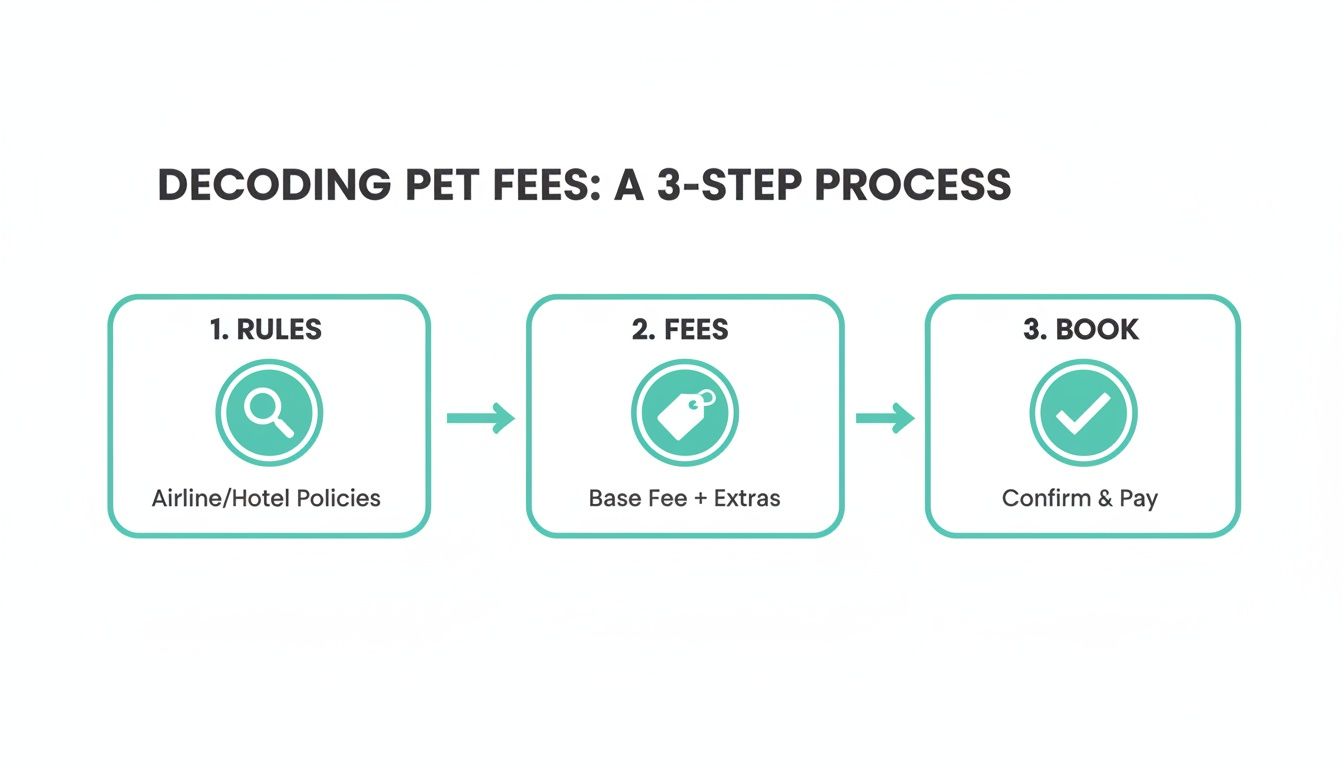
This 3-step process—investigate the rules, understand the fees, and then book—is your best defense against unexpected charges or restrictions.
Questions to Ask Before You Book
Before you pull out your credit card, a quick message or phone call to the host can clear up any final questions. Think of it as a final screening to confirm the stay will be as smooth and enjoyable as you hope.
Here are a few good questions to ask:
Are there any specific areas of the property where dogs are not allowed?
Is there a designated potty area, and are waste bags provided?
Can my dog be left unattended in the room for short periods?
What are some nearby dog-friendly parks, trails, or restaurant patios you'd recommend?
When searching for a truly dog-friendly place, cleanliness is key. Many top-tier dog-friendly properties, especially short-term rentals, use a detailed short term rental cleaning checklist to guarantee a fresh environment for every single guest. Don't hesitate to ask about their cleaning protocols; it offers extra peace of mind.
Getting clear answers upfront ensures the property’s definition of dog friendly lodging lines up with your own. If you need more ideas, exploring different types of accommodations can open up new possibilities for your next dog friendly vacation. Taking these extra steps is the best way to ensure you and your furry co-pilot have a fantastic trip.
Your Pre-Travel Checklist for a Smooth Check-In
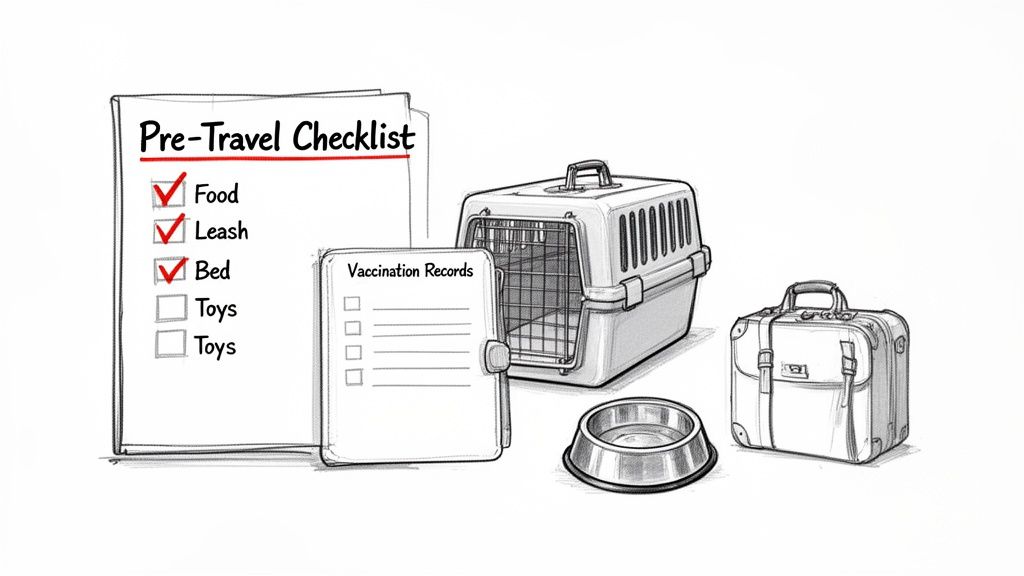
A successful trip with your dog is decided long before you ever leave the house. The difference between a hectic, stressful arrival and a smooth, welcoming check-in almost always comes down to preparation.
Walking in with everything in order doesn't just make your life easier; it shows the property manager or hotel staff that you're a responsible owner. It sets the right tone from the very start. Getting organized means you're ready for anything, whether it’s a quick document check or a minor travel hiccup.
Packing the Essentials
Your dog's comfort is a top priority, and that starts with packing familiar items and practical necessities. Think of it as their own personal travel kit—a little piece of home can make a new, unfamiliar space feel safe and secure.
Here’s a quick rundown of what you’ll need:
Food and Water: Stick to their regular diet. Pack enough food for the whole trip, plus a few extra meals just in case. Sudden food changes are a recipe for an upset stomach. Collapsible bowls are a lifesaver for meals on the road.
Bed and Toys: A familiar bed, blanket, or a couple of favorite toys bring the scent of home. This provides a huge sense of security and can greatly reduce anxiety in a new environment.
Leash, Collar, and Waste Bags: These are must-haves. Double-check that your dog’s collar has an ID tag with your current cell phone number. And you can never have too many waste bags.
This isn't just about convenience—it's about making your dog feel secure. A comfortable dog is a well-behaved dog, which is the key to a great trip for everyone involved.
Getting Your Paperwork in Order
This is where preparation really pays off. Having your dog’s documents organized and easy to grab is important, especially if you're flying or crossing state lines. It can make all the difference at the check-in counter.
An organized folder with your dog’s health records is your golden ticket. It shows you respect the property's rules and helps the staff process your check-in quickly.
For most domestic car trips, a copy of your dog’s vaccination records—especially proof of rabies vaccination—is usually enough. I always recommend keeping a digital copy on your phone and a hard copy in your glove box.
The requirements get stricter for air travel or international trips. In those cases, you will likely need a Health Certificate for Travel, often called a Certificate of Veterinary Inspection (CVI). This is an official document signed by an accredited veterinarian confirming your dog is healthy and free from contagious diseases.
Since the rules vary widely by airline and destination, it’s important to start this process well in advance. To get a handle on what’s involved, you can learn all about getting a dog health certificate for travel in our comprehensive guide.
To bring it all together, here is a simple checklist you can use to make sure nothing gets left behind.
Essential Dog Travel Checklist
This table breaks down everything you need to pack and prepare for a hassle-free journey with your furry companion.
Category | Essential Items | Pro Tip |
|---|---|---|
Comfort & Safety | Food, water, collapsible bowls, bed or blanket, favorite toys. | Freeze a toy stuffed with peanut butter or treats. It's a great way to keep them occupied and calm during travel or alone time. |
Gear | Leash, collar with up-to-date ID tags, harness, waste bags. | Pack a spare leash. You'd be surprised how often they get misplaced or chewed through. |
Health & Grooming | Any regular medications, first-aid kit, grooming wipes, brush. | Ask your vet for a summary of your dog's health history, including any chronic conditions or allergies, in case of an emergency. |
Documentation | Vaccination records (especially rabies), Health Certificate (if required), lodging confirmation with pet policy. | Keep digital copies of all documents in a cloud folder (like Google Drive) and paper copies in a waterproof envelope. |
With these items checked off, you’ll be fully prepared for a smooth check-in and an enjoyable stay at your dog-friendly lodging.
Alright, you've found and booked the perfect dog-friendly spot. That’s a huge win. Now for the most important part: making sure you and your dog are the kind of guests who get invited back.
Being a five-star pet guest really just comes down to respect—for the property, for the owner, and for any other guests nearby. A little preparation and good "petiquette" not only guarantee a smooth trip for you but also help keep doors open for future travelers with dogs.
Respect the Rules and the Space
First things first: never leave your dog unattended unless you’ve gotten the green light from the hotel or rental owner. It might seem harmless, but an anxious dog in a new place can cause a surprising amount of damage or noise. Even a crated, quiet dog is a no-go for many properties, so always ask.
Always, always clean up after your pet, both inside and out. Keep waste bags with you on every walk and stick to designated potty areas. If you really want to impress your host, bring your own waterproof couch covers for dogs to protect furniture from muddy paws or unexpected messes. It’s a small gesture that shows a ton of respect.
Minimize Your Pup’s Impact
A new place with new sounds and smells can be a lot for even the most well-behaved dog. Managing your dog's noise level is probably the single most important thing you can do to be a good neighbor.
A quiet dog is a happy neighbor. If your dog tends to bark at new sounds, try turning on a TV or a white noise app to muffle hallway chatter or outside noises.
If your dog does start barking, step in right away. A quick distraction with a favorite toy or a simple, calm command is usually enough to settle them down. It shows you’re on top of it and considerate of everyone's peace and quiet.
Here are a few other pro tips for a seamless stay:
Wipe Paws: Keep a towel right by the door. A quick wipe-down prevents tracked-in mud, dirt, and water.
Bring Familiar Items: Pack a favorite blanket or bed. The scent of home is incredibly comforting and helps your dog settle in much faster.
Stick to a Routine: As much as possible, keep feeding and walking times consistent with your schedule back home. Predictability reduces anxiety.
Following these simple steps isn't just about being a good guest; you're acting as an ambassador for all pet owners. Every positive experience encourages more properties to offer genuinely welcoming dog friendly lodging, and that makes traveling better for all of us.
Frequently Asked Questions About Dog Friendly Travel
Even with the best plans, a few common questions always seem to pop up when you're traveling with your dog. Let's clear up some of the most frequent points of confusion so you can book your trip with confidence.
What Is the Difference Between 'Pets Allowed' and 'Pet-Friendly'?
These terms might sound the same, but they can mean a world of difference for you and your dog. Think of "pets allowed" as the bare minimum—it simply means the property allows your dog's presence and you won't be turned away at the door. Rules are often strict, and amenities are usually not available.
"Pet-friendly," on the other hand, suggests a genuinely welcoming atmosphere. These are the places that often go the extra mile with thoughtful touches like dog beds, water bowls, or dedicated green spaces for potty breaks. When in doubt, a quick call to the front desk is the best way to understand what you’re really getting.
Can a Hotel Turn Away My Service Animal?
This is an important distinction. In the United States, under the Americans with Disabilities Act (ADA), hotels and other public places generally must allow service animals. A service animal is defined as a dog that is individually trained to do work or perform tasks for a person with a disability.
It's important to understand that these protections do not typically apply to emotional support animals. Laws can be complex and vary by state and local rules, so for specific guidance, it's best to consult official government resources on disability rights.
Does My Dog Need a Health Certificate for Domestic Travel?
This is a very common question, and the answer depends entirely on how you're traveling.
Driving: If you're traveling by car across state lines, you generally don't need a formal health certificate. It's still a smart move to keep your dog's vaccination records in the glove box, just in case.
Flying: For air travel, the answer is almost always yes. Most airlines require a recent Certificate of Veterinary Inspection (CVI), which is typically issued within 10 days of your flight.
Always double-check the specific rules with your airline and your destination state well in advance. Sorting this out early will save you a major headache at the airport.
Planning a trip with a pet has its challenges, but Passpaw is here to make managing health documents simple. Our platform helps veterinary practices prepare all the necessary paperwork, ensuring every detail is correct for your specific destination. Learn more at https://passpaw.com and travel with confidence.

More articles
From regulatory changes to best practices for veterinarians and pet owners, our resources keep you ahead of the curve.