Are you a team member in a veterinary practice?
Are you a pet parent planning a trip with your furry pal?
Are Dogs Allowed on the Beach? A Complete Guide for 2026
Dreaming of sandy paws and salty air? For many dog owners, a simple question looms large: can I bring my dog to the beach? The answer, almost always, is it depends. Beach access for dogs is a patchwork of local rules, seasonal restrictions, and specific guidelines for each stretch of sand.
Your Guide to Paws in the Sand
A perfect beach day with your dog is totally possible, but it does require a bit of planning. These rules aren't there to ruin your fun; they exist to protect local wildlife, manage crowds during busy times, and ensure a safe, enjoyable experience for everyone—whether they have two legs or four.
Think of this as your roadmap to navigating the rules. A little bit of research upfront means less time guessing and more time fetching fun in the surf with your best friend. For instance, some beaches that welcome dogs all year might have very different rules during the busy summer months. If you're heading to the shore, our guide on NJ beaches that allow dogs is a great place to see these variations in action.
The most important thing to remember is that there's no single rule for all beaches. A beach that’s a dog’s paradise in October could be off-limits in July. Always check the local guidelines before you pack the car.
To help you get started, we've broken down the most common things that determine whether a beach is dog-friendly.
Dog Beach Rules at a Glance
This table gives you a quick overview of what to look for when you're checking the rules for a specific beach.
Rule Type | Common Variations | What to Look For |
|---|---|---|
Leash Laws | On-leash only, designated off-leash areas, or voice control allowed. | Posted signs at beach entrances or on the town's official website. |
Seasonal Access | Dogs allowed only during the off-season (e.g., after Labor Day until Memorial Day). | Local park and recreation department websites often list specific dates. |
Time Restrictions | Access permitted only during certain hours, like early morning or late evening. | Community bulletin boards or official beach web pages. |
Understanding these three factors—leashes, seasons, and times—will cover most of the situations you'll run into. Always start by checking the official website for the town or park you plan to visit.
Understanding Local Beach Rules for Your Dog
So, are dogs allowed on the beach? The short answer is: it depends entirely on local rules. Figuring these out can feel tricky, but once you know the common patterns, you’ll be able to check any beach’s dog policy with confidence.
These rules aren't random. They're usually in place to protect wildlife, like nesting sea turtles, or to manage crowds and ensure everyone's comfort during peak tourist season. Understanding the "why" behind them makes the rules a lot easier to appreciate and follow.
Common Beach Regulations
A busy beach in July has very different needs than a quiet, windswept shore in November. This is why you'll see rules that often vary by leash requirements, season, and even the time of day.
Leash Requirements: This is the most common rule. Many beaches require dogs to be leashed at all times. Others may have designated on-leash and off-leash areas, so be sure to know where the boundaries are.
Seasonal Restrictions: It’s very common for beaches to welcome dogs only during the off-season. This typically means access is allowed from after Labor Day until Memorial Day.
Time-of-Day Limits: Some places allow dogs on the sand only during less crowded hours, such as before 9:00 AM or after 5:00 PM, especially during the summer months.
It seems that following leash rules can be a global challenge. For instance, a study of beaches in southern Chile found that while dogs were present on over 92% of them, only about 13% were on a leash. This shows just how important it is for dog owners to follow local rules for the safety and enjoyment of everyone. You can read the full research on beach pet compliance to learn more.
This flowchart breaks down the simple logic for checking if your dog is welcome.
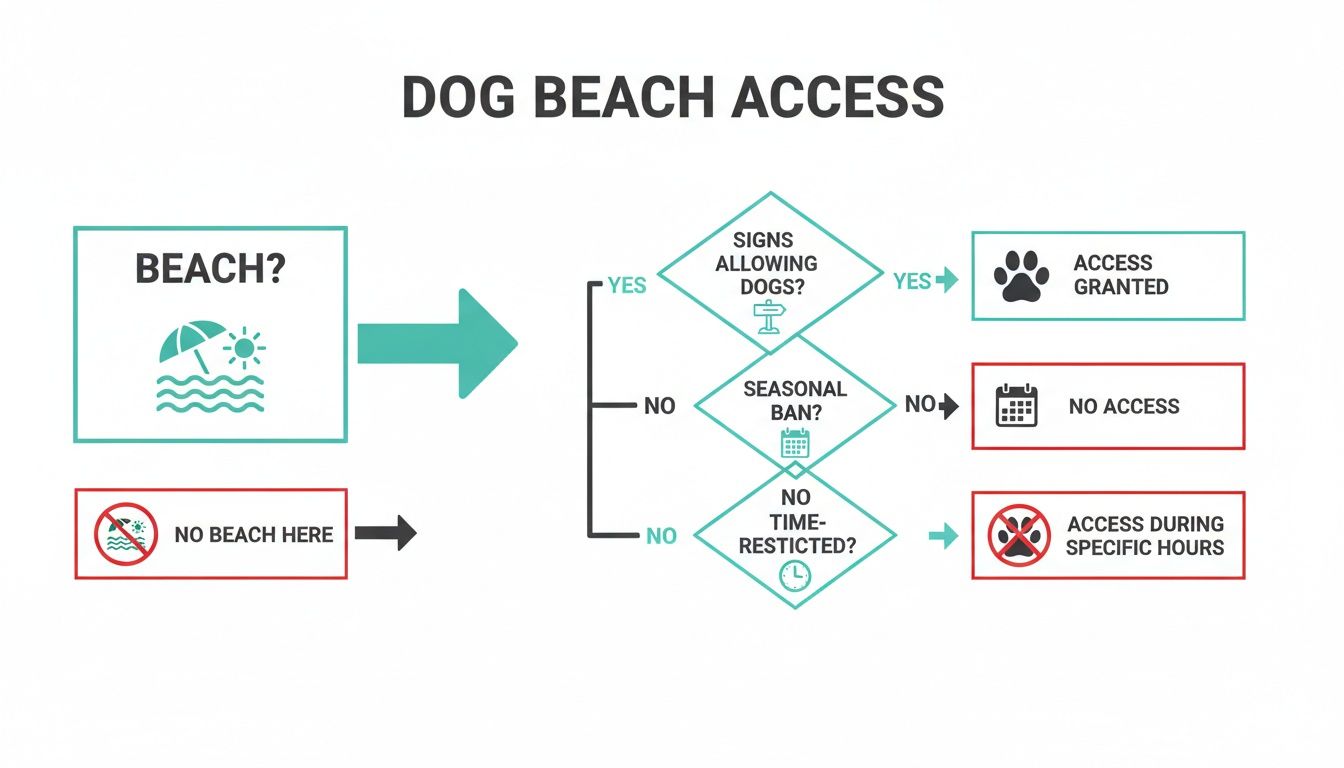
The process is always the same: start by looking for posted signs at the entrance, then check for any seasonal or time-based rules that might apply. This same principle of "check local regulations first" applies to all public lands, not just beaches. For another example, you can check out our guide on whether dogs are allowed at Arches National Park.
How to Find Dog-Friendly Beaches Near You
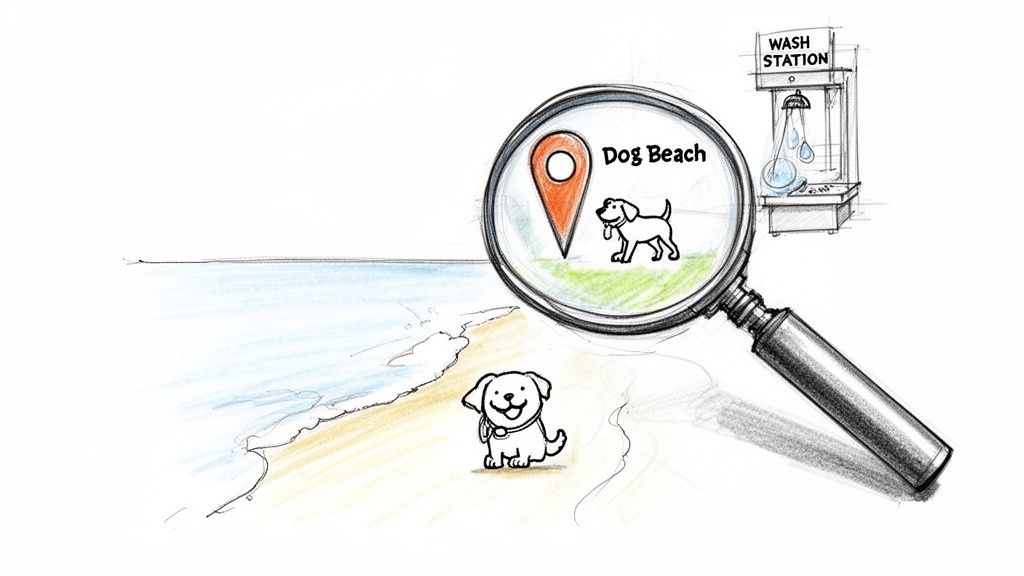
Alright, now for the best part—finding that perfect stretch of sand for you and your dog. With a bit of research, you can discover some incredible dog-friendly beaches that don't just tolerate dogs but truly welcome them. It all comes down to knowing where to look.
A great way to start is by exploring travel guides for different regions, like these unforgettable Lagos beaches, to get a feel for your options. While they won't all be dog-friendly, this gives you a list of potential places to check out further.
Your Go-To Search Tools
Once you have a location in mind, your first stop should always be the official source. Head to the website for the town, city, or park authority that manages the beach you want to visit. Look for a "Parks and Recreation" or "Beach Information" section. That's where you’ll find the most accurate, up-to-date rules on hours, leash laws, and no-go zones.
Don't stop there, though. The real inside scoop often comes from fellow dog owners. Local pet-focused social media groups and travel apps can be goldmines for discovering hidden gems and getting practical advice. You'll get tips official sites might miss, like the easiest beach access points or where to find a dog wash station on your way out.
A recent study identified top U.S. dog-friendly destinations like Huntington Beach's Dog Beach, Florida's Fort De Soto, and Oregon's Cannon Beach. These spots are celebrated for their welcoming policies, often allowing off-leash play, and appeal to the 15.4% of pet owners who list beach holidays as their top choice. Discover more insights from the dog-friendly beach study.
Some beaches have truly gone the extra mile, becoming top spots for anyone traveling with a pet. These places aren't just dog-tolerant; they're designed for a perfect day out with your pup.
Huntington Dog Beach, California: Famous for its huge off-leash area where dogs have plenty of room to run and play in the surf.
Fort De Soto Park, Florida: This spot features a dedicated dog park with separate fenced-in areas for both large and small dogs, plus handy dog showers for rinsing off all that sand and salt.
San Diego, California: The whole city is known for its pet-friendly vibe. For a deeper look, check out our guide on dog-friendly places in San Diego.
These examples show it's more than possible to find a place where your dog can enjoy the sun and sand. With the right research, you're sure to find a spot that’s a real treat for the whole family.
Essential Beach Safety and Etiquette for Dog Owners

Okay, so you've found a beach that welcomes dogs. That's the easy part. Now comes the real work: making sure your day is safe, fun, and respectful to everyone around you.
Think of yourself as an ambassador for all dog owners. Every time we visit a beach and follow the rules—both written and unwritten—we help ensure these spaces stay open for our four-legged friends in the future.
The Unspoken Rules of Beach Etiquette
Beyond the official signs, there's a code of conduct that really matters. Being a considerate owner is what keeps beaches dog-friendly year after year. It’s less about what’s officially allowed and more about what’s appreciated.
Always Pick Up Waste: This one is non-negotiable. Pack more poop bags than you think you’ll need and use the proper bins. Leaving a mess is not only gross but also a top reason dogs lose their public privileges.
Manage Barking: Constant barking can ruin the relaxing vibe for others. If your dog is getting a little too vocal, it’s time to find a quieter spot, offer a chew toy, or even call it a day.
Respect Personal Space: Remember, not everyone is a dog person. Keep your pup from running up to strangers, their kids, or their blankets, especially if you’re in an off-leash area. A solid recall command is your best friend here.
Following these simple courtesies does more than just make for a peaceful day; it actively helps keep beaches open for all dog owners. When everyone pitches in, it’s a win-win for pets and people alike.
Critical Safety Tips for Your Dog
A beach is a blast, but it's not your average dog park. It comes with its own set of potential dangers. A little prep can make all the difference between a great day and a ruff one.
First, hot sand can seriously burn paw pads. Before you let them run, press the back of your hand on the sand for seven seconds. If it’s too hot for you, it's definitely too hot for their paws. Stick to the wet sand near the water or look into a good pair of dog booties.
Next, saltwater is not safe for dogs to drink in large amounts. It can lead to an upset stomach, dehydration, or worse. Always bring plenty of fresh water and a bowl, and encourage your dog to drink from it often.
Finally, dogs can get sunburned and overheat, too. A beach umbrella is a must-have for creating a shady spot to rest. Keep a close eye out for signs of heatstroke, like frantic panting, drooling, or weakness. Your job is to make sure the fun doesn't come at the cost of their safety.
Preparing for Pet Travel to Beach Destinations
So you’ve found the perfect dog-friendly beach. But what if it’s in another state or, even better, across an ocean? That simple question—"Are dogs allowed on the beach?"—suddenly gets a lot more complicated.
Rules can change a lot when you cross a border. This isn't just about leashes and collars anymore. Many destinations have specific rules about health certificates and proof of up-to-date vaccinations to let your pet in. These aren't just friendly suggestions; they're official requirements that can turn your trip planning into a frantic paper chase.
Simplify Your Travel Paperwork
Keeping all these documents straight while you're trying to pack can be stressful. One missed signature or an out-of-date form might stop your trip in its tracks. A service built specifically for pet travel can be a huge help here.
For the millions of pets traveling each year, dealing with different beach rules and international health requirements is a major hurdle. Platforms like Passpaw help by automating health certificates and checking documents in real-time.
Pet travel is no longer a small niche. A recent report showed that 53% of travelers now bring their pets on vacation, with many planning several trips a year. If you want to discover more insights about pet travel statistics from Condor Ferries, it's clear that for these dedicated owners, getting the paperwork right is essential.
Using a tool like Passpaw helps you handle this complex paperwork, making sure every form is correct and ready for your destination. It helps turn that potential travel headache into pure excitement for your beach adventure. To get started on your next trip, you can read also our guide to planning a pet-friendly vacation.
Let's tackle a few common questions that pop up time and again when it comes to dogs and beaches. Getting these details right can make all the difference between a great day and a frustrating one.
Can I Get Fined for Having My Dog on the Beach?
Yes, and the fines can be pretty high. Ignoring a local beach rule isn't just a minor slip-up; it can result in anything from a verbal warning to a significant ticket.
Park rangers, local police, or beach patrol officers are usually the ones who handle enforcement. The best way to stay on the right side of the rules is simple: look for the signs posted at every beach entrance. They will clearly outline the rules for your visit, ensuring your day stays fun and penalty-free.
Are Service Dogs Allowed on All Beaches?
In most cases, yes. Laws like the Americans with Disabilities Act (ADA) in the U.S. generally grant legitimate service animals access to most public areas, and that includes beaches where other pets might not be allowed. The key is that the service dog must be under the handler's control at all times.
It's important to understand that these protections usually apply specifically to trained service animals. They often do not extend to emotional support animals or other pets.
What Should I Pack for a Beach Day With My Dog?
A little preparation goes a long way. Think of it like packing a beach bag for a toddler—you’ll want to have the essentials covered.
Here’s a quick checklist for your dog’s bag:
Fresh Water and a Bowl: Crucial for preventing your dog from drinking saltwater, which can make them sick.
Poop Bags: Always pack more than you think you need. There’s no such thing as being too prepared.
A Towel and Shade: A simple beach umbrella works perfectly to create a cool spot for your dog to rest out of the sun.
A Long Leash: This gives your dog a bit of freedom to explore while making sure you stay in control.
Paw Protection: If you know the sand gets scorching hot, dog booties are a smart investment to prevent burns.
Planning a trip that involves crossing state or international borders? Don't let paperwork stand in your way. Passpaw helps you organize and validate all your pet's travel documents, making your journey smooth and stress-free. Learn more at https://passpaw.com.

More articles
From regulatory changes to best practices for veterinarians and pet owners, our resources keep you ahead of the curve.