Are you a team member in a veterinary practice?
Are you a pet parent planning a trip with your furry pal?
A Pet Owner's Guide to United Airlines Carry On Pet Travel
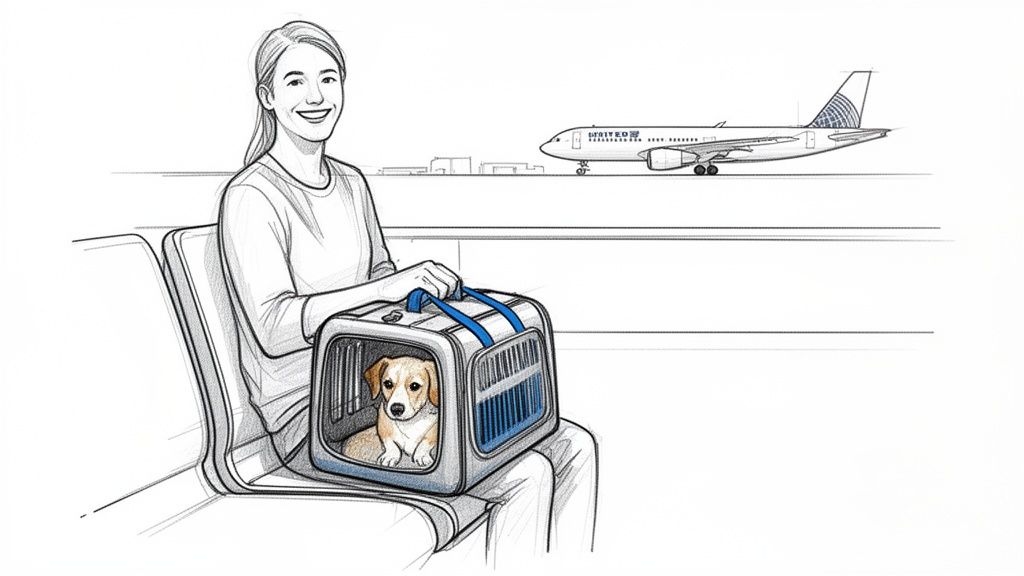
Flying with a small dog or cat in the cabin on United is absolutely paw-sible, as long as they can travel comfortably in an approved carrier that fits under the seat in front of you. It's a popular option, but it does come with a fee of $150 each way.
Keep in mind that space is limited for pets on each flight, so you'll need to reserve their spot well in advance.
Is Your Pet Eligible for In-Cabin Travel on United?
Before you start packing, the first step is to confirm your furry co-pilot meets United's rules. Getting this sorted out from the start is the key to avoiding any last-minute surprises or heartbreak at the check-in counter.
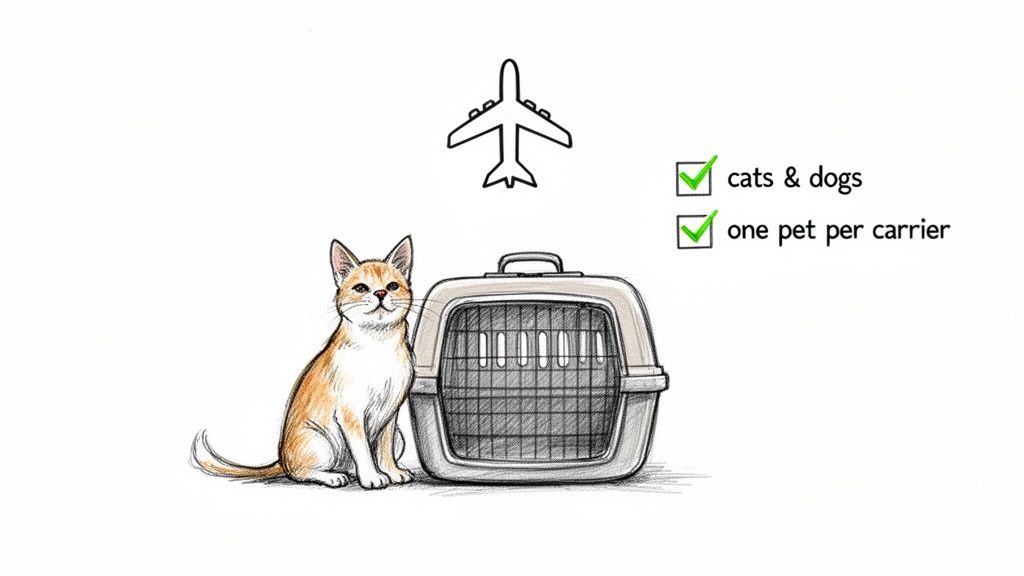
United's policy for in-cabin pets is pretty simple: they only allow domesticated cats and dogs. This means that other small pets like rabbits, birds, or hamsters will have to sit this trip out. This rule is in place to help ensure the safety and comfort of everyone on board.
Understanding Key Restrictions
Beyond just the species, United has a few other important rules you'll need to follow. These are all designed with your pet's well-being and a smooth flight experience in mind.
Age Matters: For flights within the U.S., your puppy or kitten must be at least two months old. If you're heading abroad, the minimum age is usually four months, mainly because of international rabies vaccination guidelines.
One Pet Per Carrier: This is the standard rule. Your pet needs enough room inside the carrier to stand up and turn around without difficulty.
Health and Behavior: It goes without saying that your pet should be healthy and well-behaved. They must stay inside their carrier, zipped up, for the entire flight.
Important Takeaway: United limits in-cabin pets to cats and dogs. The 'one pet per carrier' rule is firm, and age minimums are in place for the safety of young animals.
Traveling with Two Pets
What if you have a pair of furry friends you want to bring along? It's possible for one person to travel with two pets on United, but it requires a special booking process.
To make it work, you have to purchase an adjacent seat for your second pet.
You'll have two seats and two separate carriers. One carrier will go under the seat in front of you, and the second will be stowed under the seat in front of the extra one you purchased. You'll also pay the $150 pet fee for each animal. This seems to be the only approved way to fly with two pets in the cabin.
For a complete breakdown of the rules, take a look at our deep dive into the United Airlines pet policy for in-cabin travel. Following these steps is the suggested way to fly with two pets in the cabin.
Choosing the Right Carrier and Understanding the Fees
Alright, you've confirmed your pet can fly in the cabin. The next hurdle is finding them the perfect temporary home for the journey. This isn't just about comfort—choosing a carrier that meets United's specific rules is very important. It has to fit completely under the seat in front of you, and it has to stay there for the entire flight.
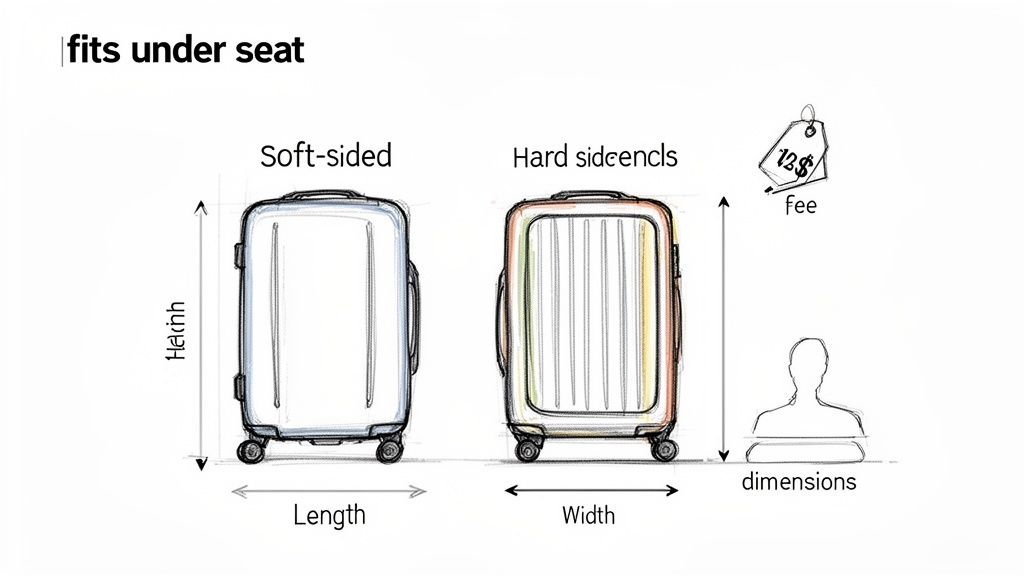
Getting the measurements right is critical. United has slightly different rules depending on whether you go with a hard or soft-sided carrier, so pay close attention here.
Carrier Dimensions Explained
So, what are the magic numbers? United allows both hard and soft-sided carriers, as long as they stick to the size limits.
Hard-Sided Carriers: These need to be 17.5 inches long x 12 inches wide x 9 inches high or smaller.
Soft-Sided Carriers: You get a little more wiggle room here, with a maximum size of 18 inches long x 11 inches wide x 11 inches high.
The difference in size allowance comes down to flexibility. Soft-sided carriers can squish down a bit, making them easier to fit into the tight under-seat space. From our experience, a soft-sided carrier with a flexible frame and plenty of mesh for ventilation is usually the best bet. They’re often more comfortable for your pet and a whole lot easier to manage.
Here's a crucial tip: Always check the aircraft type for your flight. Some planes, like the Boeing 737 MAX, have less space under the seat—we're talking a height of just 10 inches. A quick check of your flight details can save you from a major headache at the gate.
For a deeper dive into picking the perfect travel setup for your pet, be sure to check out our guide on airline pet travel carriers.
United Airlines Pet Carrier and Fee Quick Guide
Here's a quick reference table to keep the key details straight.
Requirement | Specification |
|---|---|
Soft-Sided Carrier | Max dimensions: 18" L x 11" W x 11" H |
Hard-Sided Carrier | Max dimensions: 17.5" L x 12" W x 9" H |
One-Way Travel Fee | $150 per pet, per direction |
Long Layover Fee | An additional $150 fee for layovers over 4 hours (domestic) or 24 hours (international) |
Aircraft Restriction | Some planes have reduced under-seat height (e.g., 10 inches on the Boeing 737 MAX) |
This table should help you quickly confirm you’ve got everything covered before you head to the airport.
Breaking Down the Travel Fees
Now, let's talk about the cost. United charges a service fee for each pet you bring into the cabin.
Currently, that fee is $150 per pet for each one-way trip. And yes, that's per direction. A round-trip flight will cost $300 for each pet traveling with you. This fee is non-refundable and covers one segment of your travel.
Be mindful of your layovers, too. A domestic flight with a stopover longer than four hours might bring an additional charge. Planning your route to have shorter connections can save you from an unexpected extra fee. Being prepared for these costs ahead of time makes the whole check-in process smoother for everyone involved.
Getting Your Pet's Ticket on a United Flight
So, you've checked that your pet and their carrier meet United's requirements. Awesome. Now it's time to get their ticket. Booking a spot for your United Airlines carry on pet isn't as simple as adding a checked bag; it's a separate step, and you shouldn't leave it to the last minute.
United only allows a handful of pets in the cabin on any given flight. Those spots fill up shockingly fast, especially on popular routes or during holiday seasons. Booking early is your best defense against finding out that your flight is already at its pet limit.
Adding a Pet to Your Reservation
The easiest way to secure your pet's spot is right when you're booking your own ticket. Whether you're on the United website or using their app, keep an eye out for the "Travel with a pet" option in the traveler details section. Ticking that box adds your furry co-pilot to your reservation from the start.
Already booked your own flight? Don't sweat it. You can still add your pet by calling United's customer service line. Just have your confirmation number ready and tell the agent you need to add an in-cabin pet to an existing booking. They’ll check for space and get you sorted.
Pro Tip: Don't hang up or close the browser until you see a confirmation that your pet is officially on the reservation. This should show up in your booking details and is your proof that your companion has a guaranteed spot.
The Cost of a Carry-On Pet
Let's talk money. For flights booked on or after April 26, 2024, United's fee for a carry-on pet is $150 each way. It's worth noting that this puts United on the higher end compared to other major U.S. airlines, where the average fee is around $118. You can see how different carriers stack up over at MoneyTalksNews.com.
What if You're Bringing Two Pets?
Thinking of flying with a pair of companions? United’s policy on this is very specific and requires a bit of planning. To bring two pets, you must buy a second, adjacent seat for the additional animal. In short, you're booking two seats for yourself and paying the $150 pet fee for each pet.
Here’s how to make that happen without a hitch:
Book two seats together: When you make your reservation, book your own seat and the one right next to it.
Add a pet to each ticket: This is the tricky part. You'll likely need to call United directly to make sure the reservation is structured correctly, with one pet assigned to each of the ticketed seats.
Following this process can help ensure each pet has its own designated under-seat space, which keeps you in line with United's rules and sets you up for a much smoother trip.
Preparing Health Documents for Your Trip
Wrangling travel paperwork can feel like a chore, but it's a very important part of a smooth journey with your pet. Getting the right health documents in order isn't just about checking a box; it helps you meet all the rules, whether you're flying across the state or across an ocean. It protects your pet and saves you from a world of headache at the airport.
For most domestic flights within the U.S., United Airlines doesn't require a health certificate for pets traveling in the cabin. That said, it's always a good idea to have your pet's rabies vaccination records on hand. Some states have their own specific import rules, and it’s better to be overprepared than caught off guard.
Navigating Domestic vs. International Rules
This is where things get tricky. While a domestic hop might just call for basic vaccine proof, international travel is a different story. Every country has its own strict set of rules for bringing in pets, and a single misstep can have serious consequences.
A common pitfall is thinking airline approval is the final word. The truth is, your destination country's import rules are what matter most. United can't let your pet board if your paperwork doesn't satisfy the laws of the country you're flying to.
This is why advance planning is your best friend. Requirements can include everything from specific microchip standards and recent rabies titer tests to government-endorsed health certificates that must be issued within a very tight window. Some countries demand documents be completed just 10 days before you fly, leaving absolutely no room for error.
Before you even get to the paperwork, you need to book your pet's spot. This graphic breaks down how to handle booking for one or two pets.
As you can see, the process for reserving their spot is fairly straightforward—it’s the documentation that requires the most attention to detail.
Simplifying Complex Paperwork
Keeping up with international regulations feels like a full-time job, especially since they can change without notice. One incorrectly filled-out form or a missed deadline can derail your entire trip. This is where a specialized service can be a lifesaver.
Tools like Passpaw are built to help you and your veterinarian get this process right. They offer real-time validation of forms, making sure every detail is accurate according to your specific destination's rules. This kind of expert back-up can reduce human error and buy you back valuable time. When you have guidance on these detailed forms, you can feel more confident that everything is in order.
To get a more complete picture of what you'll need, take a deeper dive into the various travel documents for pets and how to prepare them. Understanding these details is the final, crucial step to ensuring your United Airlines carry on pet is ready for takeoff.
Your Day-of-Travel Checklist for a Smooth Trip
The big day is finally here! With your bags packed and pet carrier at the ready, a little prep at the airport can make all the difference. Having a game plan helps keep both you and your pet calm and collected from the moment you walk through the door.
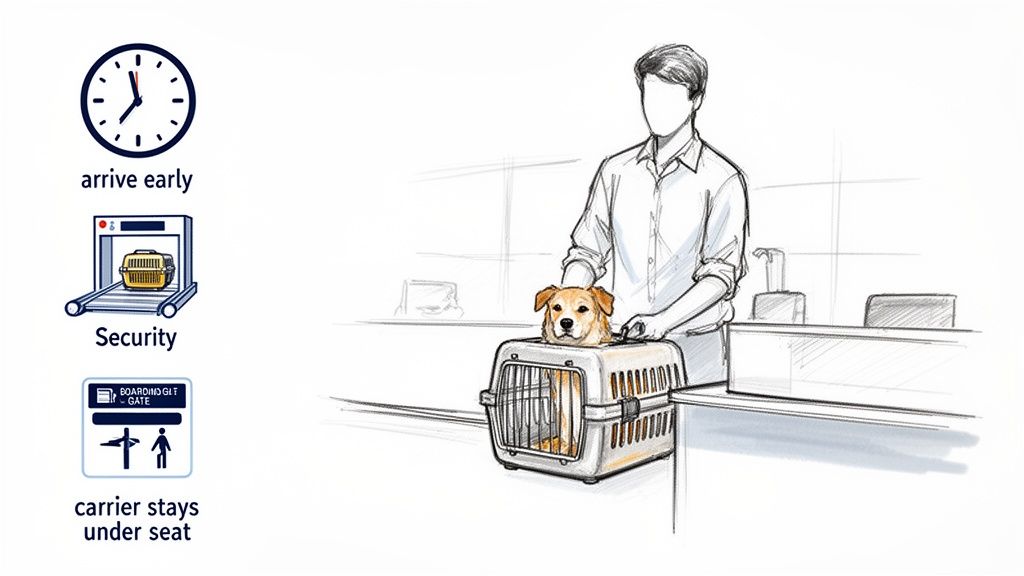
First things first, give yourself extra time. You'll need to head straight to the United ticket counter, as curbside or self-service check-in isn't an option when traveling with a pet. An agent needs to see your furry friend, finalize the pet fee, and give you a special tag for the carrier.
Navigating Airport Check-In and Security
Once you're checked in, your next stop is the TSA checkpoint. The screening process itself is pretty straightforward, but knowing what to expect ahead of time can prevent any last-minute stress.
Here’s a quick rundown of how it works:
You'll carry your pet through: First, you’ll need to take your cat or dog out of their carrier. You’ll then hold them in your arms as you both walk through the metal detector.
The carrier gets scanned: The empty carrier—whether it's hard-sided or soft—will go through the X-ray machine with your other carry-on luggage.
Time to get settled again: After you're both cleared, you can find a quiet spot away from the main hustle and bustle to place your pet back inside their carrier.
If you’re flying with a cat, getting them back into the carrier in a busy airport can sometimes be tricky. Our guide on flying with a cat has some great tips for making this part much less stressful.
Keeping Your Pet Calm During the Flight
From the gate to your final destination, the number one rule is simple: your pet must stay inside their carrier for the entire flight. This is a firm policy designed for the safety and comfort of everyone on board.
The carrier has to be stowed completely under the seat in front of you. It’s not allowed on your lap or on an empty seat next to you.
United's in-cabin pet rules are quite firm. While there were some incidents in the past that led to a drop in pet travel back in 2018, the airline’s actual incident rate was still relatively low. Today, the rules are tight to promote everyone's safety, which is why your pet should remain securely in their carrier.
To keep your little co-pilot comfortable, tuck a familiar blanket or a favorite (non-squeaky) toy into their carrier. Speaking to them in a calm, reassuring voice can also work wonders for any travel jitters. With a bit of planning, your airport experience can be a walk in the bark.
Answering Your Top Questions About Flying with Your Pet on United
Even the most seasoned traveler can have a few last-minute questions when a four-legged friend is involved. To make sure you feel completely confident walking up to that gate, let's run through some of the most common questions we hear about United's in-cabin pet policy.
Think of this as your final pre-flight check. Getting these details sorted now can save you a lot of stress on travel day.
What About My Emotional Support Animal?
This is probably one of the biggest points of confusion out there. Due to changes in federal regulations, airlines like United no longer recognize emotional support animals (ESAs) as a separate class of assistance animals.
In short, your ESA will now travel under the standard in-cabin pet rules. That means they'll need to be in a compliant carrier that fits under the seat in front of you, and you'll have to pay the standard $150 pet fee each way. Only fully trained service dogs, which fall under a completely different set of regulations, are an exception.
What Happens If I Have a Long Layover?
This is a detail that can catch people by surprise and double their pet travel costs. When you're flying within the United States, if you have a layover that’s more than four hours long, United considers it a new flight segment for your pet.
That means you’ll get hit with another $150 pet fee. It’s always a good idea to look closely at your connection times when booking. If you can find a shorter layover, you can avoid that extra charge. International layover rules can be even trickier, so if you're flying a complex international route, it's smart to call United and confirm the policy for your specific itinerary.
This is one of those easy-to-miss details in the fine print. Always double-check your full itinerary, especially connection times, before you click "purchase."
Are There Places I Can't Bring My Pet in the Cabin?
Yes, and this is a big one. It's very important to check this before you book anything. United prohibits in-cabin pets on flights to, from, or even just passing through certain countries. This isn't the airline's choice; they're following government quarantine laws designed to prevent the spread of animal diseases.
Some of the major destinations where you cannot bring a pet in the cabin include:
Australia
United Kingdom
New Zealand
South Africa
This list isn't complete, so you should check the specific rules for your destination on the United website. Trust us, you want to sort this out at the very beginning of your planning.
How Old Does My Puppy or Kitten Need to Be?
United has age minimums in place to help ensure young animals are healthy and safe enough for air travel. For domestic flights within the U.S., your puppy or kitten must be at least two months old.
Planning an international trip? The bar is higher. Your little one needs to be at least four months old to fly internationally. The main reason for this is to ensure they are old enough to meet the rabies vaccination requirements, which differ from country to country. It’s a simple but important step for a safe journey.
Navigating the world of international pet travel can feel overwhelming, but you don't have to do it alone. Passpaw was built to simplify the complex health certificate process, making sure every document is accurate and ready for your trip. Check out https://passpaw.com to see how we help you and your veterinarian prepare for a seamless journey.
More articles
From regulatory changes to best practices for veterinarians and pet owners, our resources keep you ahead of the curve.