Are you a team member in a veterinary practice?
Are you a pet parent planning a trip with your furry pal?
A Practical Guide to Flying With a Cat
Flying with a cat doesn't have to be a cat-astrophe. With the right prep work, it can be a surprisingly smooth process. It all comes down to a few key steps: making sure your cat is healthy enough for the trip, checking the airline's pet policies, and then booking the tickets for both of you. A little planning goes a long way in turning a potentially stressful trip into a smooth adventure.
Your Pre-Flight Plan for Traveling With a Cat
The thought of putting your cat on a plane probably brings up a million questions. Will they be scared? What's the deal with all the paperwork? Can they even sit with me in the cabin? The good news is, you're not the first person to ask these things. Flying with your feline friend is completely doable and way more common than you might think.
Every year, over 4 million pets and other live animals fly worldwide. In the U.S. alone, that number is a massive 2 million animals on commercial flights. And cats? They make up about 22% of all pet air travel annually, second only to dogs. So, you're in good company.
This simple, three-step plan covers the absolute must-dos when you're first planning your cat's flight.
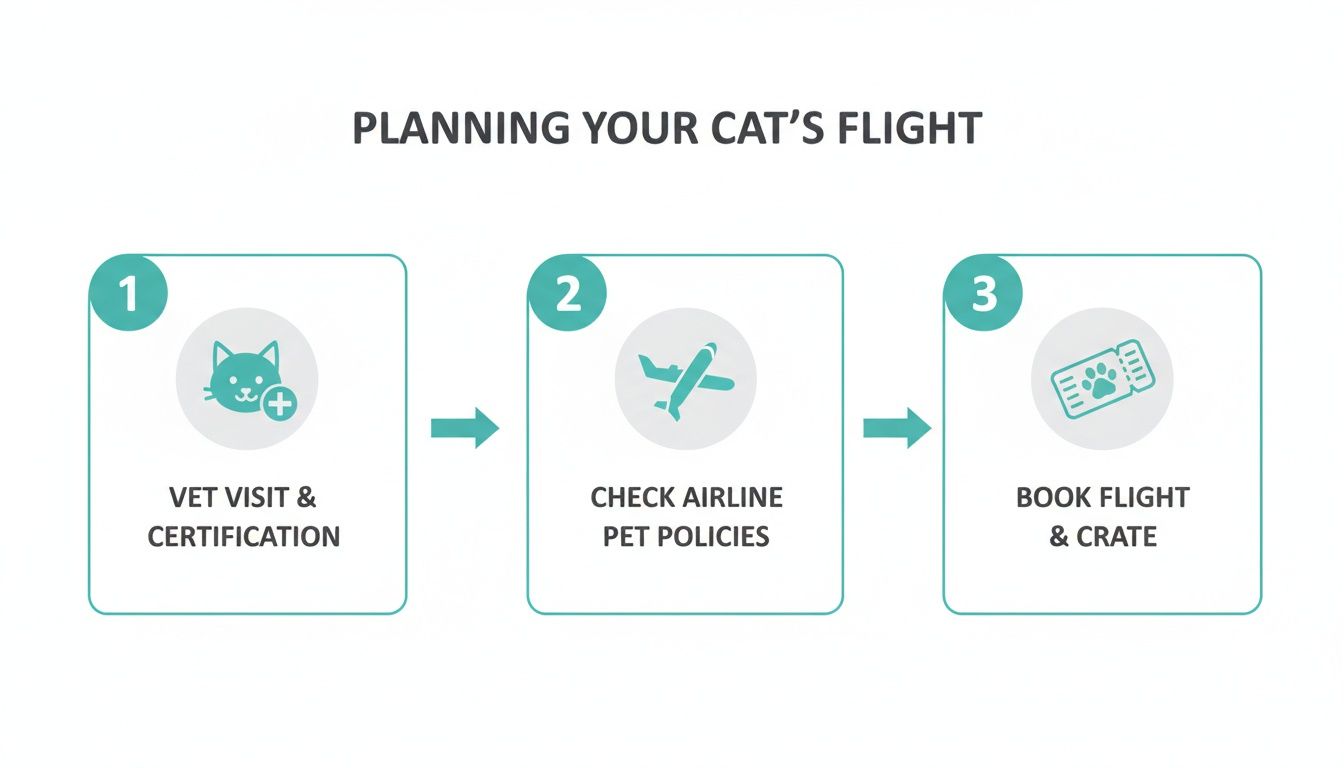
As you can see, a successful trip starts well before you ever pack a bag. It begins with a trip to the vet and ends with finally booking that flight.
Start With a Vet Visit
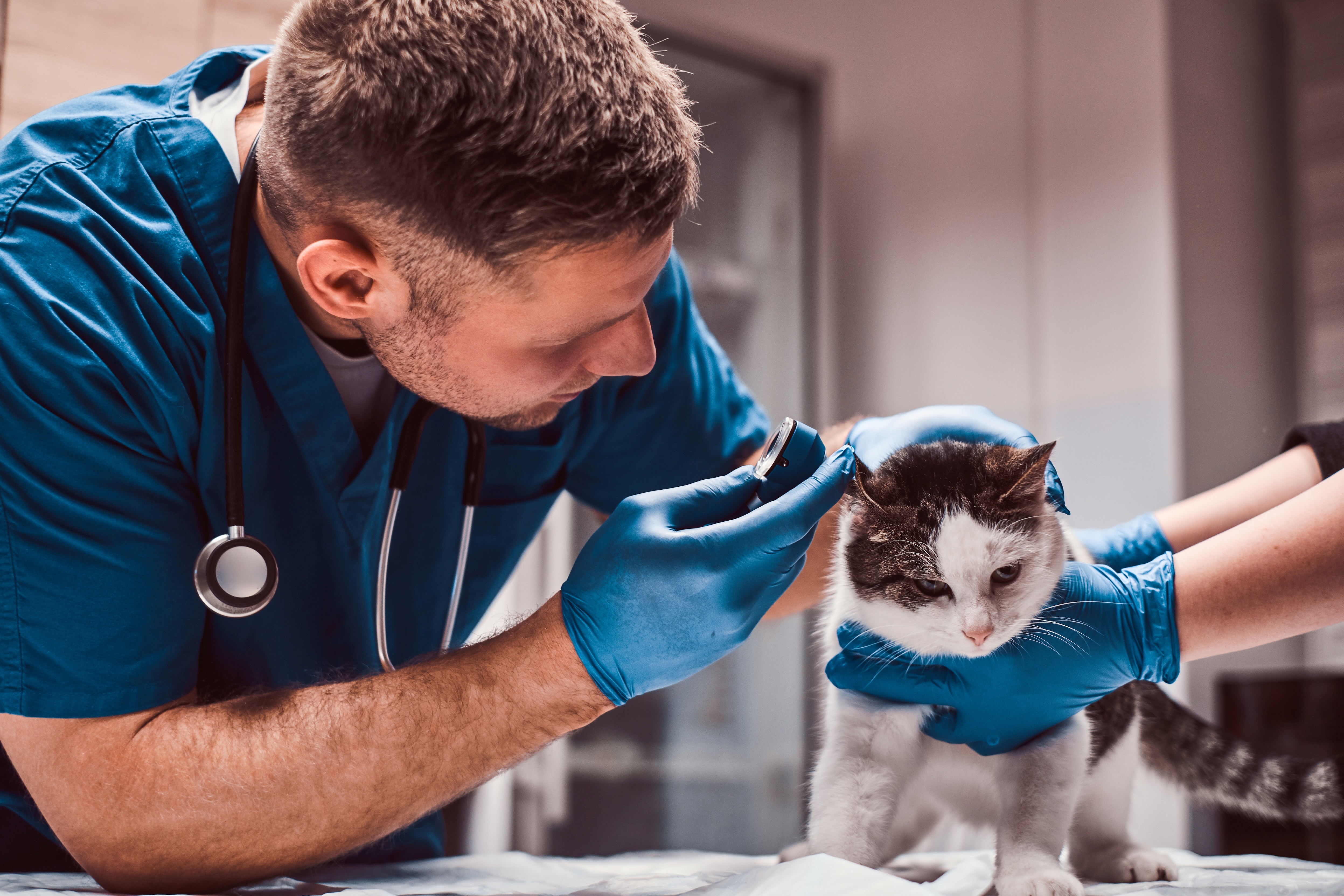
First things first: schedule a visit with your veterinarian. Try to do this a few months before you plan to fly, if possible. This appointment is a must-do for a couple of reasons. For one, your vet needs to give your cat a clean bill of health for travel, looking at their age, personality, and any medical history. It's a basic check-up that gives you total peace of mind.
This is also the perfect time to get the ball rolling on destination-specific health requirements. If you're traveling internationally (or even to places like Hawaii), you'll likely need to show proof of:
Up-to-date vaccinations: Rabies is almost always needed, but other vaccines might be on the list.
A microchip: Most countries now ask for an ISO-compliant microchip for identification.
Parasite treatments: Some places need specific flea, tick, or deworming treatments given within a strict timeframe.
Getting a head start on this saves you from a world of last-minute panic. To keep all these moving parts organized, our pet travel planner can help you create a clear timeline for every task.
Decode Airline Pet Policies
Once you've got the all-clear from your vet, it's time to become an expert on airline pet policies. And I mean an expert. The rules can be very different from one airline to the next, so never assume they're all the same.
The single biggest mistake I see pet owners make is booking their own flight before they’ve confirmed the airline’s pet policy and, crucially, if there's even a spot available for their cat. Always, always check for pet availability on your flight before you hit "purchase."
When you're looking at the airline's website or calling customer service, here's what you need to focus on:
In-cabin vs. Cargo: Can your cat fly in the cabin with you? Most airlines allow it for smaller pets, but they only allow a few animals on each flight. You need to book one of those spots.
Carrier Size and Type: Airlines are very strict about carrier dimensions. It has to fit under the seat in front of you.
Pet Fees: Be ready to pay a fee, which usually runs between $95 and $150 each way for domestic travel.
Booking Process: You almost always have to call the airline to add your pet to the reservation, even if you booked your own ticket online. Don't skip this step!
As you're getting ready, remember that you'll have extra gear for your cat. Learning how to pack for a week in a carry-on and travel light can be a lifesaver. Juggling less of your own stuff makes the whole airport experience far less chaotic.
Choosing the Right Carrier for Air Travel
When you're flying with a cat, their carrier is more than just a box—it's their personal safe space in a world of loud noises and new smells. The right one can make the difference between a stressed-out kitty and a calm co-pilot. Getting this choice right is one of the most important steps for a smooth journey.
Your first big decision is whether to go with a soft-sided or hard-sided carrier. Each has its place, and the best option usually comes down to where your cat will be during the flight.

This choice is a big one, as it directly impacts your cat's comfort and how easy it is for you to navigate the airport.
Soft-Sided vs. Hard-Sided Carriers
For in-cabin travel, soft-sided carriers are almost always the way to go. Their flexible shape makes it much easier to fit them under the airplane seat, which is a key airline rule. They’re also lighter to carry around the terminal and often have more comfortable padding inside for your cat.
Hard-sided carriers, on the other hand, are the standard for cats traveling in cargo. They offer much better protection and are usually required by airlines for any pet flying below deck. Their strong, secure build is essential for the cargo area. If your cat is flying cargo, a hard-sided carrier is almost certainly what you'll need.
Here’s a quick breakdown:
Carrier Type | Best For | Key Advantages |
|---|---|---|
Soft-Sided | In-Cabin Travel | Flexible to fit under seats, lightweight, often more comfortable padding. |
Hard-Sided | Cargo Travel | Maximum protection, often required for cargo, easy to clean and very secure. |
Ultimately, the airline has the final word. Always, always double-check their specific rules for carrier materials, ventilation, and locking mechanisms before you buy anything. You can dive deeper into selecting the perfect airline pet travel carrier in our detailed guide.
Getting the Size Just Right
No matter which type you choose, the carrier must be the correct size. This isn't just about comfort; it's a firm airline rule. Your cat needs to have enough room to stand up and turn around completely without their head or back hitting the top.
To find the right fit, you’ll need to do some quick measurements:
Length: Measure your cat from the tip of their nose to the base of their tail.
Height: Measure from the floor to the top of their head while they are standing.
Add a few inches to both of those measurements, and you’ll have the ideal carrier dimensions. A carrier that’s too big can feel unstable during turbulence, while one that's too small is unkind—and will get you turned away by the airline.
Turning the Carrier into a Cozy Den
Your goal is to make the carrier feel like a familiar, happy place long before you ever leave for the airport. You want your cat to see it as a safe retreat, not a scary box that only comes out for vet visits. This conditioning process is the real secret to a less stressful travel day.
Start this process weeks in advance. Just leave the carrier open in your living room with the door taken off. Make it inviting by placing a soft blanket that smells like home inside. Toss in some of your cat's favorite toys or a few tasty treats to encourage them to explore it on their own terms.
Make it a paws-itive experience! Never, ever force your cat into the carrier. Let their curiosity lead the way. Positive reinforcement—a treat, some praise—when they venture inside will build a strong, happy association.
Once they're comfortable going in and out, try closing the door for just a few seconds, then open it and give them a reward. Slowly increase the time the door stays closed. The next step is picking up the carrier and walking around the house, then trying short car rides. This gradual introduction helps them get used to the motion and feeling of travel, making the actual flight much less of a shock.
Navigating Vet Visits and Travel Paperwork
Let’s be honest, paperwork is nobody's favorite part of travel planning. But when you’re flying with your cat, getting the documents right is absolutely necessary. This isn’t just about ticking boxes; it’s about making sure your cat is healthy, safe, and allowed to board the plane and enter your destination.
We’ll break down the process to make it less of a last-minute scramble and more of a clear, manageable plan.
Understanding the Health Certificate
The star of the show here is the Certificate of Veterinary Inspection (CVI), also known simply as a health certificate. This is an official document signed by an accredited veterinarian, confirming your cat is fit for travel and free of contagious diseases. Airlines and border officials need this as proof that your furry co-pilot isn't a health risk.
Think of the CVI as your cat’s official travel pass. It’s a snapshot of their health at a very specific point in time, with all the key info authorities need at a glance.
What’s on it?
Your info: Name and contact details.
Your cat’s details: Name, age, breed, color, and other identifiers.
Microchip Number: A must for tracking and identification, especially for international flights.
Vaccination Records: Proof of a current rabies vaccination is almost always needed.
Vet’s Declaration: A formal statement from your veterinarian confirming they examined the cat and found it healthy for travel.
Getting these details 100% correct is critical. A simple typo, like a wrong microchip digit or an overlooked vaccine date, can get you turned away at the check-in counter.
The Critical Role of Timing
This is where so many pet owners get tripped up. A health certificate is only valid for a short time.
For most domestic flights in the U.S., the CVI should be issued within 10 days of your departure. That tight window means you have to time your vet appointment perfectly—close enough to the flight for the certificate to be valid, but with just enough of a buffer in case something unexpected comes up.
Flying internationally? The rules can get even tighter. Many countries may ask for the certificate to be issued just 5 to 7 days before arrival. On top of that, you’ll likely need an official endorsement from the USDA’s Animal and Plant Health Inspection Service (APHIS), which adds another time-sensitive step to your to-do list.
The biggest hurdle isn't the vet exam itself—it's coordinating the appointment, the paperwork, and the final endorsements all within a very narrow window before you fly. Procrastination is not your friend here.
Coordinating With Your Veterinarian
Your vet is your most important partner in this whole process. Start the conversation as soon as you know you’re traveling, even if the trip is months away. Give them your destination and dates so they can help you map out a realistic timeline for exams, vaccinations, and paperwork.
A quick heads-up: not all vets are accredited to issue international health certificates. Be sure to confirm your vet has the right credentials. If they don’t, they can almost always refer you to a local clinic that does.
When you book the final appointment, be specific. Tell the front desk you need a CVI for air travel and whether it's for a domestic or international trip. This helps them schedule enough time and have the right forms ready. For a deeper look at what you'll need, check out our guide on the essential travel documents for pets.
Below is a quick-glance table to help you keep track of the core documents.
Essential Travel Documents Checklist
This table summarizes the core documents you'll likely need. Always double-check the specific requirements for your airline and destination, as rules can vary.
Document Type | Required For | Key Details & Timing |
|---|---|---|
Health Certificate (CVI) | Domestic & International | Issued by an accredited vet. Typically valid for 10 days (domestic) or 5-7 days (international) before travel. |
Rabies Vaccination Certificate | Domestic & International | Must be current and given according to your destination's rules. Bring the original signed certificate. |
Microchip Records | Primarily International (Recommended for all) | The microchip number should be listed on all documents and match the one implanted in your cat. |
USDA Endorsement | International | May be required by many countries. The endorsed CVI must be completed within a strict timeframe before arrival. |
Import Permit | Some International Destinations | Check if your destination requires a pre-approved permit to bring a pet into the country. |
Remember to bring your travel itinerary and destination address to the vet appointment. Your vet needs these details to fill everything out correctly. This is exactly where services like Passpaw come in, helping vet practices manage the entire documentation process so no detail gets missed. By helping to validate everything in real-time, we help reduce human error and give you peace of mind on travel day.
How to Keep Your Cat Calm on Travel Day
The big day is here. You’ve done all the prep work, your cat has a cozy carrier, and your documents are ready to go. Now, the main goal is simply getting from your front door to the airplane seat with as little stress as possible.
Remember, a calm owner often leads to a calmer cat. Your relaxed energy is your single most important tool.
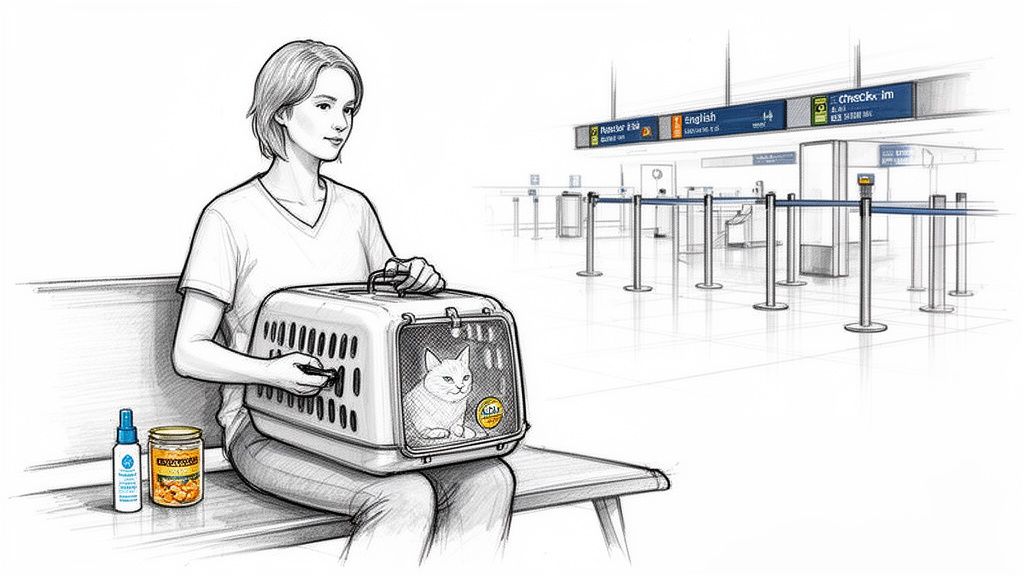
This part of the journey is all about smart, proactive steps. From timing their last meal perfectly to knowing exactly how to handle the security line, a little know-how makes all the difference.
Pre-Airport Preparations at Home
Your cat’s travel day experience begins long before you head to the airport. The morning of your flight should be all about setting a peaceful tone while handling a few last-minute practicalities.
About three to four hours before you plan to leave, offer your cat a small meal. This timing is strategic—it’s just enough to keep them from getting too hungry without increasing the risk of an upset stomach or motion sickness. Also, make sure they have one last chance to use the litter box before they go into their carrier.
Here are a few extra tips for a smooth departure:
Use Calming Products: A pheromone spray like Feliway can be a real game-changer. Just spritz the inside of the carrier about 15-20 minutes before putting your cat inside. It helps create a sense of familiarity and security in a strange environment.
Cover the Carrier: Drape a lightweight, breathable blanket over the carrier. This simple trick blocks out overwhelming sights and sounds, helping your cat feel more hidden and safe.
Stay Positive: Your cat is incredibly tuned in to your emotions. Speak to them in a soft, reassuring voice as you get ready. Your calm demeanor sends them a powerful signal that everything is okay.
Tackling the Security Screening
Navigating the airport security checkpoint is often the most nerve-wracking part of flying with a cat. But when you know what to expect, it becomes much more manageable.
Yes, you will have to take your cat out of the carrier.
The carrier itself needs to go through the X-ray scanner, just like your backpack or purse. Meanwhile, you will carry your cat through the walk-through metal detector. The best way to do this safely is to have your cat in a well-fitted harness with a leash attached before you even get in the security line. This gives you a secure hold and prevents any chance of a panicked escape in a busy airport.
When it’s your turn, just let the TSA agent know you’re traveling with a cat. They see it all the time and will guide you. Hold your cat securely against your body to help them feel safe during the few moments they’re out of their carrier.
Once you’re both through the metal detector, you can put your cat back in the carrier and gather your things. It’s over in a flash, and that little bit of preparation makes it a breeze.
Should You Medicate Your Cat for a Flight?
It’s a common question: should I give my cat something to calm them down for the flight? While it might seem like a kind gesture, most veterinarians and airlines strongly advise against sedation.
Sedatives and tranquilizers can affect a cat’s ability to regulate their body temperature and maintain balance. At high altitudes with different oxygen levels, these side effects can become a serious health risk. A disoriented cat is also more likely to become distressed, not less.
Instead of medication, the focus should be on natural calming methods and solid preparation. All that carrier training you did weeks ago, the familiar scent of home on their blanket, and the use of pheromone sprays are much safer—and often more effective—alternatives. These things help your cat manage stress without the risks of sedation.
While it's a big undertaking, remember that air travel for pets is remarkably safe when planned correctly. Global statistics show that fewer than 0.01% of the 4+ million annual pet transports experience serious incidents. The most common issues, like overheating or poor crate handling, are largely preventable with the right preparation.
You can learn more about global pet air travel safety and see how your careful planning directly contributes to a secure trip. Your proactive efforts are the best way to ensure your feline friend has a safe and comfortable journey.
Managing In-Flight and Post-Arrival Comfort
You've made it through security, navigated the terminal, and finally boarded the plane. Great job! Now, your role shifts from travel coordinator to your cat's personal flight attendant.
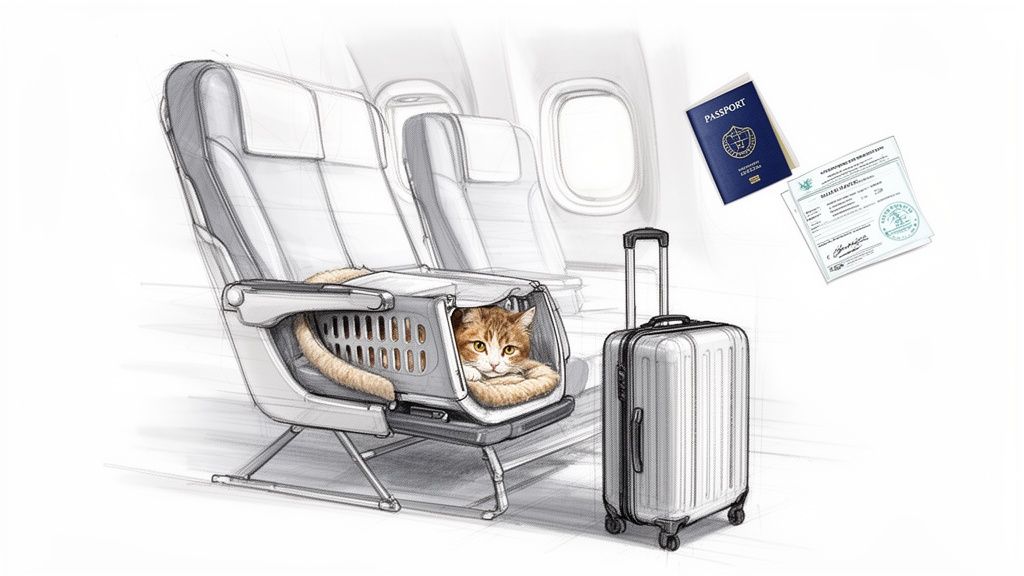
Once you get to your seat, take a moment to get your cat settled. Slide their carrier all the way under the seat in front of you, making sure the mesh ventilation panels have plenty of room to breathe. The last thing you want is for your luggage or the seat structure to block airflow. A stuffy carrier on a stuffy plane is no fun for anyone.
It’s tempting, but whatever you do, don't take your cat out of the carrier during the flight. It's against airline rules and poses a safety risk. You can still provide plenty of comfort without breaking the rules. Lean down and speak to them in a calm, soothing voice to let them know you're right there. If they seem thirsty, you can carefully unzip a tiny corner of the carrier and offer a few drops of water from your fingertip—it’s just enough to help with hydration without making a mess.
Your Post-Arrival Game Plan
The moment the wheels touch down, a new set of priorities kicks in. Flying is stressful for cats, and the first few minutes back on solid ground can really shape their ability to relax. Your best tool here is patience. Don't rush it.
Instead of making a beeline for the chaotic baggage claim, find a quiet corner to regroup. Family restrooms are perfect for this—they're private and secure. Once inside, you can safely let your cat out of their carrier for a much-needed stretch. Offer a little water or a couple of their favorite treats. It’s a small pause that gives them a chance to reset before you face the next leg of your journey.
A few minutes of quiet time in a secure space after a loud, bumpy flight can make a world of difference for your cat's stress levels. It’s a crucial buffer before they have to deal with a taxi ride or another new environment.
If you're dealing with a layover, check the airport map for designated pet relief areas. While they’re usually designed with dogs in mind, they can still offer a welcome break. Just remember to use your judgment based on your cat's personality; for some, the bathroom break is a much better option.
Creating a Safe Haven at Your Destination
When you finally walk through the door of your hotel or new home, there's one last crucial step: helping your cat feel safe. New places can be very intimidating for animals like cats. The best approach is to create a dedicated "safe room" before you even open the carrier.
Pick a small, quiet room where you can shut the door, like a bathroom or spare bedroom. By starting them off in a smaller space, you keep them from feeling overwhelmed by a whole new house.
Before you let them out, get their room ready with all the essentials:
Familiar Smells: Place their carrier in the room (with the door propped open) along with a blanket or toy that smells like home.
Key Resources: Set up their litter box, food, and a bowl of fresh water. Try to place them in separate corners of the room.
Hiding Spots: The open carrier is a great start, but also make sure there’s a spot under a bed or behind a chair where they can retreat if they feel nervous.
Now, you can open the carrier and let them explore on their own terms. Some cats will start sniffing around right away, while others might hide for hours or even a full day. Give them the time and space they need. Your calm energy and a well-prepared room will signal that they've landed somewhere safe, making for a much smoother transition.
Common Questions About Flying With a Cat
Even the most seasoned traveler has questions when a cat is coming along for the ride. If you're wondering about the little details of flying with your feline friend, you're not alone. Let's clear up some of the most common concerns cat owners have.
Getting these things sorted out now means less stress on travel day and more excitement for the adventure ahead.
Should I Medicate My Cat Before a Flight?
It's a question that comes from a good place—the desire to make the trip as calm as possible for your cat. But when it comes to sedation, the answer from vets and airlines is almost always a firm no.
Tranquilizers can affect a cat's ability to regulate their body temperature and balance, which is risky when you factor in the changing cabin pressure and oxygen levels at high altitudes. A disoriented cat isn't a calm cat; they often become more anxious.
Instead, the best approach is to focus on natural calming methods and good old-fashioned preparation.
Make the Carrier a Happy Place: This is your number one tool. Start getting your cat used to their carrier weeks, not days, before your flight.
Try Pheromones: A spritz of a calming pheromone spray inside the carrier can create a familiar, secure feeling for your cat.
Add a Scent of Home: Tucking in one of your old t-shirts or a small blanket that smells like you provides a powerful, comforting scent.
These strategies let your cat manage stress naturally, without the health risks that come with medication.
How Much Does It Cost to Fly With a Cat?
The cost of your cat’s ticket can vary quite a bit, so you’ll always want to check directly with the airline. The price really depends on whether you're flying domestic or international and if your cat is traveling in the cabin with you or as checked baggage or cargo.
For a domestic flight in the U.S. with your cat in the cabin, you can generally expect to pay a one-way fee somewhere between $95 and $150. If you're flying internationally or if your cat is traveling in the cargo hold, the price is usually higher, often starting around $200 and going up from there.
Just a heads-up: this pet fee is separate from your own ticket. You almost always have to call the airline to add a pet to your reservation, so be sure to confirm the exact fee and their process before you book.
What Happens at Airport Security With My Cat?
For many pet owners, this is the most stressful part of the whole airport experience, but it’s actually a pretty quick and straightforward process. You will have to take your cat out of their carrier to go through the security checkpoint.
The empty carrier goes on the belt to be X-rayed with your luggage. Meanwhile, you'll carry your cat through the metal detector. Here’s a pro tip: to prevent any surprise escape attempts in a busy airport, get your cat into a well-fitted harness and leash before you even get to the security line.
When it's your turn, just let a TSA agent know you have a pet. They see this all the time and will tell you what to do. Holding your cat close and securely will help them feel safe for the few moments they're out of the carrier. Once you're cleared, you can put your cat right back inside, and you're ready to head to your gate.
Navigating all the moving parts of pet travel can feel like a lot, but you don't have to figure it all out on your own. Passpaw takes the guesswork out of the health certificate process for veterinary practices, making sure every document is correct and ready for travel. We help vets handle travel documents with confidence, which gives you peace of mind. Learn more at https://passpaw.com.
More articles
From regulatory changes to best practices for veterinarians and pet owners, our resources keep you ahead of the curve.