Are you a team member in a veterinary practice?
Are you a pet parent planning a trip with your furry pal?
Your Guide to the Spirit Airlines Dog Policy
Of course you can bring your dog on a Spirit Airlines flight, but there’s a catch: they have to be small enough to fit in a carrier that slides under the seat in front of you. Spirit does not allow pets to fly in cargo, which means in-cabin is the only way to go.
Let's dig into what you need to know before you and your furry co-pilot take to the skies.
What to Know Before Flying with Your Dog on Spirit
Planning a trip with your dog requires a little homework, but the Spirit Airlines dog policy is pretty straightforward once you get the hang of it. Think of it as a pre-flight checklist for your pet, making sure everything is in order before you even start packing their favorite squeaky toy.
The biggest rule is about size. Spirit welcomes small domesticated dogs, cats, household birds, and rabbits inside the cabin. This is great for those of us with smaller companions, but if you have a larger breed, you'll need to look at other airline options. If you're curious how Spirit's rules compare to other carriers, check out our guide on which airlines allow pets in the cabin.
To make things easier, here’s a quick rundown of Spirit's policy.
Spirit Airlines Dog Policy at a Glance
This table breaks down the most important rules and costs for bringing your dog on a Spirit flight.
Policy Item | Details |
|---|---|
Pet Fee | $125 per pet carrier, each way. |
Travel Option | In-cabin only (no pets in cargo). |
Carrier Size Limit | Maximum 18"L x 14"W x 9"H. Soft-sided carriers are recommended. |
Weight Limit | Combined weight of dog and carrier must be 40 lbs or less. |
Eligible Pets | Small dogs, cats, household birds, and rabbits. |
Number of Pets | 1 carrier per passenger, with up to 2 small puppies or kittens inside. |
Health Documents | Needed for U.S. Virgin Islands; rabies vaccine proof for Puerto Rico. |
Keep this handy as you plan your trip, but always double-check Spirit's official site for the latest details before you book.
Key Rules and Costs
The fee is simple and predictable: $125 per pet carrier for each one-way flight, no matter how long or short the trip is.
One thing to watch out for is paperwork. If you're headed to the U.S. Virgin Islands, you'll need a health certificate from your vet. For travel to Puerto Rico, you have to show proof of a current rabies vaccination. You can find more of these specific guidelines on Spirit's help center.
A common mistake is thinking the rules are the same for all domestic flights. Always, always double-check the entry requirements for your specific destination, especially when flying to U.S. territories.
Of course, the flight is only half the battle. A huge part of a stress-free trip is locking down comfortable pet friendly vacation rentals where you're headed. When you know you have a welcoming place to land, the whole journey becomes a lot more enjoyable for you and your dog. Planning everything from takeoff to touchdown is the real secret to a pawsitively good trip.
Does Your Dog Meet Spirit's In-Cabin Requirements?
Before you get too excited about your trip, you need to make sure your dog actually qualifies for a spot on a Spirit flight. This is a big one: Spirit only allows pets to fly in the cabin.
Unlike other airlines that might offer a cargo option for bigger animals, Spirit doesn't. If your dog can't fly in the cabin with you, they can't fly Spirit at all. It's a deal-breaker for many large dog owners, so it's the first thing you need to confirm.
Because it's "in-cabin or nothing," every single pet has to meet a clear set of rules to get on board. Let's walk through exactly what Spirit is looking for.
Age and Weight Limits
First up, the basics. Spirit requires all pets to be at least eight weeks old and fully weaned. This is a standard rule across most airlines, put in place for the health and safety of young puppies.
The other major number to know is the weight limit. The combined weight of your dog and their carrier must be 40 pounds or less. This is a firm rule. It's a good idea to weigh your pet inside their carrier before heading to the airport to avoid any last-minute surprises. You can find more details on their rules over on Spirit's customer support page.
This flowchart gives you a quick visual of how Spirit makes the call.
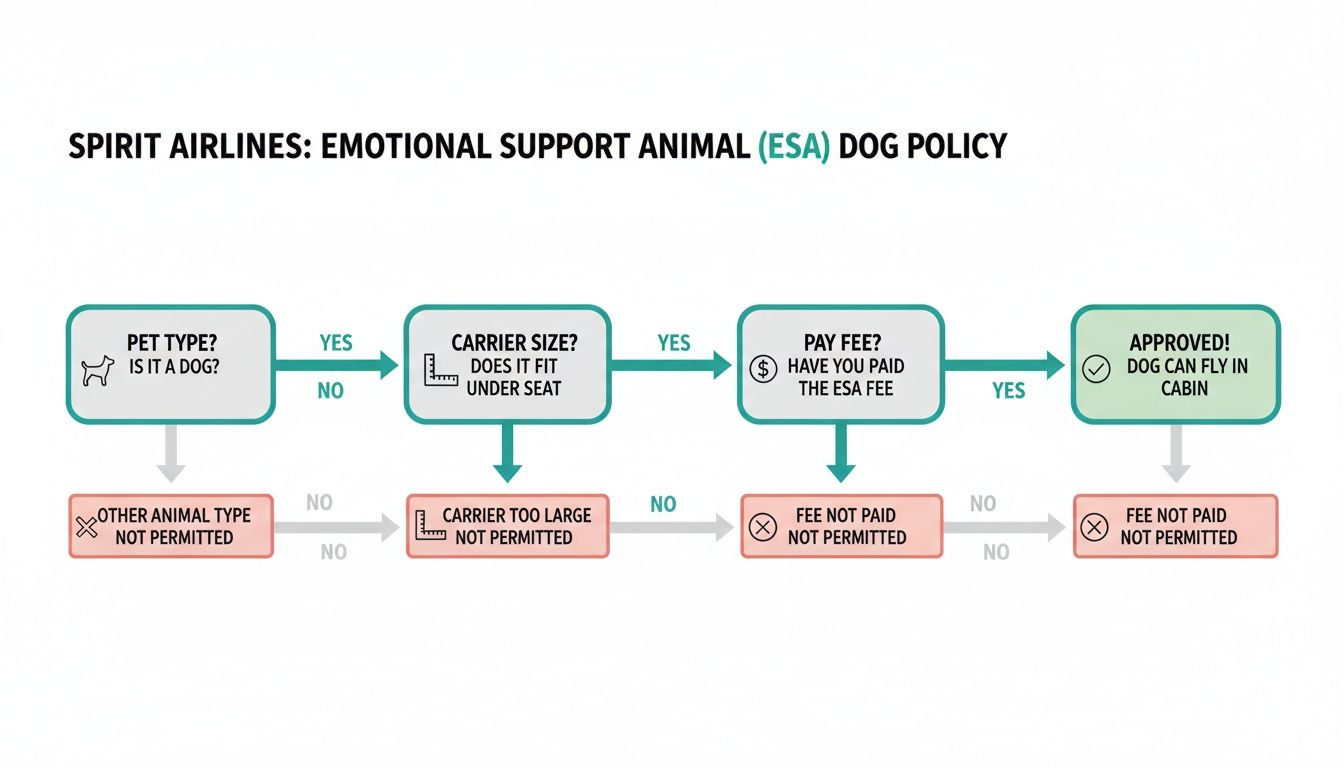
As you can see, it really comes down to a few core things: having the right kind of pet, the right size carrier, and paying the fee.
Breed and Health Considerations
So, what about certain breeds? The good news is that Spirit's policy is pretty open—they do not have specific breed restrictions for dogs flying in the cabin. As long as your dog fits the size and weight rules and can behave themselves, their breed isn't going to be a problem.
That said, your dog must be harmless, not disruptive, and odorless. In plain English, this means your dog should be clean and well-behaved. Constant barking or growling at other passengers isn't going to fly, literally.
Remember, the flight crew has the final say. If they feel a pet is being disruptive, acting aggressively, or seems to be in distress, they have the authority to deny boarding. This is all about ensuring the safety and comfort of everyone on the plane.
At the end of the day, your dog's health comes first. They need to be in good enough shape to handle the stress of air travel. If your dog has any underlying health issues, a quick chat with your veterinarian before you book is always the smartest move. It helps ensure your furry friend is truly ready for their adventure in the clouds.
Choosing the Right Pet Carrier for Spirit Flights
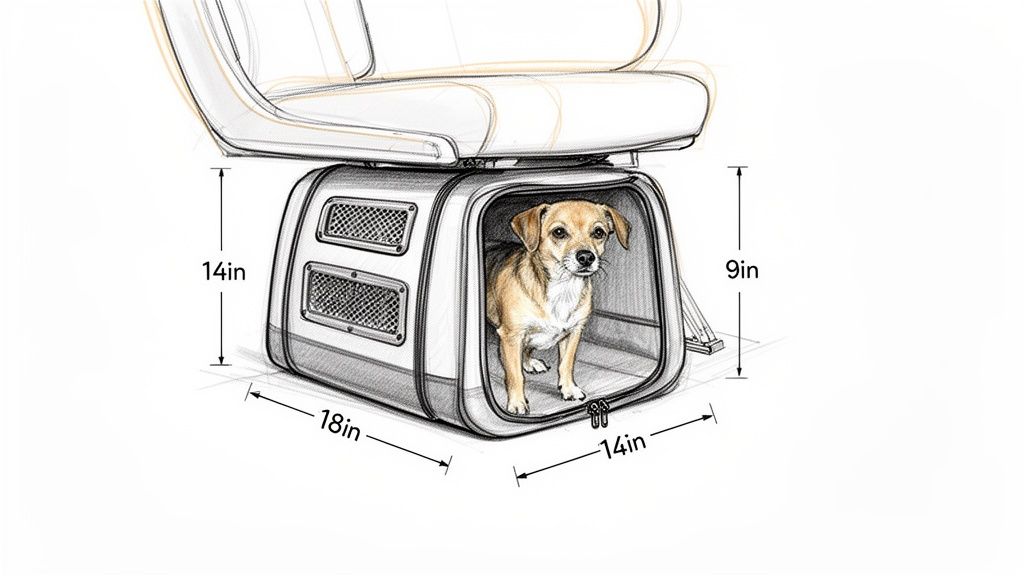
Once you've confirmed your dog is good to go for an in-cabin flight, your next mission is finding the perfect carrier. Think of it as your dog's personal travel pod—it has to be safe, comfortable, and follow the rules. Nailing this choice is one of the biggest factors in having a smooth, stress-free travel day.
Spirit is serious about carrier dimensions, and for good reason. The space under an airline seat is tight, and the carrier must slide completely underneath the seat in front of you for the entire flight. This isn't just a suggestion; it's a safety rule.
Carrier Dimensions and Type
The Spirit Airlines dog policy leaves no room for guessing when it comes to size. Their official guidelines state that pet carriers can be no larger than 18 inches long by 14 inches wide by 9 inches high (45.72cm x 35.56 cm x 22.86cm).
Spirit also requires a soft-sided carrier. Hard plastic kennels simply won't work because they can't flex to fit the unique shape of the under-seat space. A soft-sided carrier gives you that little bit of squish you need to make it fit. Don't just trust the tag—get out a tape measure and check the dimensions yourself to avoid any "ruff" surprises at the gate.
Ensuring Your Dog's Comfort
Meeting the airline's rules is only half the battle. That carrier also needs to be a comfortable little den for your dog. A key rule of thumb is that your pet must be able to stand up and turn around inside without being cramped. This allows them to shift positions and stay comfortable during the flight.
Here’s how to quickly measure your dog to find the right fit:
Length: From the base of their neck to where their tail begins.
Height: From the floor to the top of their shoulders while they're standing.
The carrier should be just slightly larger than these measurements. One that’s too small is stressful and unsafe, but one that’s too big probably won't fit under the seat.
Pro Tip: Don't let the first time your dog sees the carrier be on travel day. Weeks ahead of your trip, leave it open in your living room. Toss some tasty treats and a favorite blanket inside. This helps them build a positive association, seeing it as a safe space rather than something to fear.
Features of a Great Pet Carrier
Not all carriers are created equal. When you're shopping around, a few key features can make a world of difference for your pet's journey. For a really deep dive on this, check out our complete guide on how to choose an airline pet travel carrier.
In the meantime, here are a few must-haves to look for:
Excellent Ventilation: You want plenty of airflow, so look for mesh panels on at least two or three sides.
Secure Zippers: Some dogs are little escape artists. Locking zippers prevent a clever pup from nudging their way out.
Waterproof Bottom: Nerves can lead to accidents. A waterproof liner is a lifesaver for easy cleanup.
Padded Interior: A soft, removable bed makes the ride more comfortable and is easy to wash after you land.
Picking the right carrier is all about finding that sweet spot between the airline's rules and your dog's comfort. By focusing on the right size, space, and safety features, you can ensure your dog's trip is as pleasant as possible.
Navigating Health Documents and Paperwork
Figuring out the required paperwork can feel like the most confusing part of planning a trip with your dog. Fortunately, the Spirit Airlines dog policy keeps things relatively simple for most domestic flights. Still, it's very important to know when you'll need specific documents to avoid any last-minute hiccups at the airport.
For most flights within the mainland United States, Spirit doesn't ask for a health certificate for your dog. This makes domestic travel pretty straightforward. However—and this is a big one—assuming this rule applies everywhere is a common mistake that can derail your plans right at the ticket counter.
Domestic vs. U.S. Territory Travel
The rules change the moment your flight crosses over water to a U.S. territory. Destinations like Puerto Rico and the U.S. Virgin Islands have their own specific animal import regulations to protect their local environments. Think of it like passing through a mini-customs checkpoint, even though you're still technically in the U.S.
This is where a little preparation becomes your best friend. The requirements for these destinations are much different from a flight between, say, Florida and Texas.
For example, when flying to Puerto Rico, Spirit requires you to present proof of a current rabies vaccination for your dog. This is a must-have for entry to the island.
It's a great habit to always travel with a copy of your dog's rabies vaccination certificate, even if it isn't officially required for your flight. It’s a simple document that can solve a lot of potential problems on the spot.
Health Certificates and Destination Rules
For other destinations, the requirements get even more involved. If you're traveling to the U.S. Virgin Islands, for instance, a formal health certificate is needed for your pet. This isn't just a Spirit rule; it's an entry requirement for the territory, and the document must be issued by a licensed veterinarian. You can always double-check the latest specifics directly from Spirit's official help center.
This health certificate, sometimes called a Certificate of Veterinary Inspection (CVI), confirms your dog is healthy and fit to fly. It shows they're up-to-date on vaccinations and free from contagious diseases.
Here’s a quick breakdown to keep in your back pocket:
Mainland U.S. Flights: Health certificates are generally not required.
Puerto Rico: Proof of rabies vaccination is needed.
U.S. Virgin Islands: A formal health certificate is required.
These documents aren't just airline red tape; they are often put in place by the destination's agricultural authorities. The airline is simply following the rules for that location. For a deeper look into what these documents involve, check out our guide on essential travel documents for pets.
Ultimately, you are responsible for knowing and meeting the entry rules for your destination. A quick call to your vet or a search on the destination's official government website a few weeks before you fly can prevent a "ruff" start to your vacation.
How to Book Your Dog's Flight and Check In
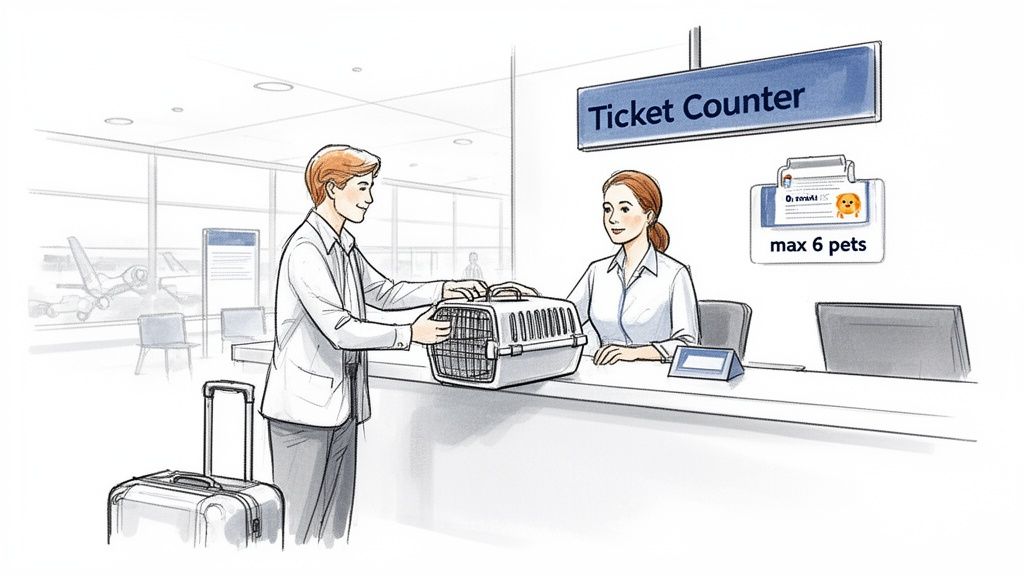
Getting your dog a spot on a Spirit flight isn’t quite as simple as adding a bag to your online booking. It’s a hands-on process, but for a good reason. The airline has to make sure they don't have too many furry passengers on board, so you'll need to work directly with them to lock in your pet's reservation.
Think of it like trying to snag a popular concert ticket—the spots are very limited and disappear fast. A little bit of planning goes a long way.
Booking Your Dog’s Spot
This is the big one: you can't add your dog to your reservation through the Spirit Airlines website or their app. You have to get in touch with their Guest Services by phone or direct message. It’s an extra step, but it’s the only way to do it.
So, why the manual process? Spirit only allows a maximum of six pet carriers per flight. That's not a lot of room. Because of this tight limit, the best move you can make is to add your pet at the exact same time you're booking your own ticket. The Points Guy has a great breakdown of the Spirit pet policy that dives deeper into this.
Pro-Tip: Call Spirit before you hit "purchase" on your own ticket. Ask the agent to confirm there's an open pet spot on the flight you want. Once they say yes, book your ticket and your pet's spot in the same conversation.
This one simple phone call can save you from the major headache of finding out the flight's "pet hotel" is full after you’ve already bought your non-refundable ticket.
Navigating the Airport Check-In Process
When travel day arrives, you’ll have to skip the convenience of the self-service kiosks and online check-in. The Spirit Airlines dog policy is firm on this: all travelers with pets must check in at the main ticket counter with an airline agent. No exceptions.
This is where the agent will take care of a few key things:
Confirm your dog’s spot on the flight and take the $125 pet fee.
Look over your pet's required paperwork, like their health certificate or vaccination records.
Give your pet carrier a quick inspection to make sure it meets the size limits (18"L x 14"W x 9"H).
Check that your dog has enough room to comfortably stand up and turn around inside.
Giving yourself plenty of extra time at the airport is a must. Aim to be there at least two hours before your domestic flight. Keep all of your dog's paperwork organized and within easy reach—it will make the whole process go much smoother for you, your dog, and the airline staff. For more general advice on air travel with your companion, take a look at our complete guide on how to fly with pets.
Understanding Service Animal Policies on Spirit
The rules for service animals are a completely different ballgame than those for regular pets, so it's important to know the difference before you head to the airport. Spirit Airlines bases its service animal policy on the regulations from the U.S. Department of Transportation (DOT), which keeps things consistent across the airline industry.
This means that while your pet dog needs to be in a carrier and comes with a fee, a trained service animal does not. It all boils down to the animal's job. A pet is a companion, but a service animal is trained to perform specific tasks that help a person with a disability.
What Qualifies as a Service Animal
Under the DOT's rules, a service animal is defined as a dog, of any breed, that is individually trained to do work for someone with a disability. This can include physical, sensory, psychiatric, intellectual, or other mental disabilities.
The key word here is trained. For instance, a dog that guides a visually impaired person or alerts someone before a seizure is a service animal.
Important Clarification: The DOT only requires airlines to recognize trained service dogs. Animals that provide comfort just by being present, like emotional support animals (ESAs), therapy animals, or other companions, are now considered regular pets and have to follow the standard pet travel rules.
This is a huge distinction. If you’re traveling with an ESA, you must follow the standard Spirit Airlines dog policy. That means paying the $125 fee and making sure your dog is in a carrier that fits under the seat.
Required Forms and Check-In
If you're flying with a trained service animal on Spirit, you'll need to fill out the U.S. Department of Transportation’s Service Animal Air Transportation Form. You have to submit this form to Spirit at least 48 hours before your flight.
This form is your way of confirming your dog’s health, training, and good behavior. It gives the airline a way to verify that your animal meets all the requirements to be safely in the cabin without a carrier.
When it's time to fly, you'll still need to check in at the ticket counter. An agent will look over your form and might also observe your dog to make sure it's under your control. The animal has to be on a harness, leash, or tether at all times and behave properly both in the airport and on the plane.
Got More Questions About Flying with Your Dog on Spirit?
Even after reading through all the rules, a few questions tend to pop up again and again. Let's tackle some of the most common ones to make sure there are no surprises on travel day.
Can I Buy an Extra Seat for My Dog?
It’s a great thought, but the answer from Spirit is a firm no. You can't purchase an adjacent seat for your pup. They need to stay safely inside their carrier, which must be stowed completely under the seat in front of you for the entire flight. No exceptions.
What Happens If My Pet Carrier Is Too Big?
This is one area where Spirit is very strict. Their carrier dimensions (18"L x 14"W x 9"H) are non-negotiable. If you get to the airport and your carrier won’t fit in their sizer, you’ll be turned away.
It's a "ruff" situation to find yourself in, so do yourself a favor and measure your carrier at home before you even think about packing.
Does Spirit Always Require a Health Certificate?
For most domestic flights within the mainland U.S., you're in the clear—no health certificate is needed. But things change the moment you fly to a U.S. territory.
You will absolutely need a health certificate to fly with your pet to the U.S. Virgin Islands. Always double-check the specific entry requirements for your final destination well in advance.
Navigating pet travel paperwork can feel like a maze, but Passpaw is designed to simplify it. Our platform helps veterinarians and pet owners get the right health certificates for their destination, ensuring a smooth and compliant journey. Plan your pet's next adventure with Passpaw.
More articles
From regulatory changes to best practices for veterinarians and pet owners, our resources keep you ahead of the curve.