Are you a team member in a veterinary practice?
Are you a pet parent planning a trip with your furry pal?
How to Fly with Pets Without the Stress
So, you're thinking about flying with your pet. The key is planning ahead. You’ll need to figure out if your pet is truly up for the trip, decide between the cabin and cargo, get a handle on airline rules, and pull together all the right paperwork. Nailing these paw-sentials early is the secret to a trip that’s smooth for both of you.
Your Pre-Flight Checklist Before Booking a Ticket

Bringing your furry co-pilot on a flight is exciting, but it calls for some honest thinking long before you even browse for tickets. The truth is, not every pet is suited for air travel, and your first job is to figure out if it's the right move for your companion.
You're not alone in this. In the US, around 2 million pets take to the skies on commercial flights each year. This trend is part of a global pet travel market expected to reach $5.9 billion by 2034. While this means more resources are available, it also shows just how important it is to get every detail right.
Is Your Pet a Good Candidate for Flying?
Before you get lost in airline policies, take a good look at your pet. How do they handle stress? What's their overall health like? A dog who gets anxious on short car rides will probably find a busy airport and a loud plane frightening. An older cat with a heart condition might struggle with the changes in cabin pressure.
Here's what to think about:
Temperament: Is your pet generally laid-back in new situations, or do loud noises and crowds send them into a panic?
Health: Do they have any long-term issues, especially with their heart or breathing? Flying can make these conditions worse.
Breed: This is a big one. Brachycephalic (snub-nosed) breeds like Pugs, French Bulldogs, and Persian cats are at a much higher risk of breathing problems at high altitudes. Many airlines have strict rules or won't allow these breeds to fly at all, particularly in cargo.
Cabin vs. Cargo: The Big Decision
This is one of the most important choices you'll make. It usually comes down to your pet's size, but their safety and comfort should be your top priorities.
Flying in the Cabin This is the best option for small pets who can fit comfortably in a carrier under the seat in front of you. They're with you the whole time, which greatly reduces stress for everyone. The catch? Airlines only allow a few pets in the cabin per flight, so you have to book their spot the moment you book your own.
Traveling in Cargo For larger animals, the cargo hold is the only choice. While it's a temperature-controlled, pressurized part of the plane, your pet will be alone. It can be a perfectly safe way to travel if you plan carefully, but it requires an IATA-compliant crate and a close eye on the weather. Extreme heat or cold at your departure or arrival city can make cargo travel unsafe, and airlines may cancel your pet's booking if temperatures aren't in a safe range.
If you're weighing these options, our complete guide to pet travel dives deeper into the pros and cons of each.
The Must-Have Basics: Microchips and Vaccinations
Before you even think about booking, get the fundamentals locked down. These are standard for almost every airline and destination on the planet.
Your pet's microchip is their permanent ID and your best chance of being reunited if you get separated. It’s a tiny detail that provides immense peace of mind during the chaos of travel.
First, check that your pet’s microchip registration is up-to-date with your current phone number and address. It’s a five-minute task that could save you a world of worry. Next, confirm that all their vaccinations, especially rabies, are current. You’ll need official records to prove it. Sorting these basics out first makes every other step of the process much easier.
Navigating Airline Rules and Booking Your Flight

Once you've decided your pet is fit to fly, it's time to tackle the next big hurdle: the airlines. Every airline has its own specific rulebook for pets, and assuming they're all the same is a recipe for a bad day. This is where your research needs to be spot-on.
You can't just add your pet to a booking like an extra suitcase. Airlines are very strict about how many pets are allowed in the cabin on any given flight—sometimes as few as four or six total. You need to reserve that spot the moment your own travel plans are set.
Your Pre-Booking Airline Checklist
Before you pull out your credit card, pick up the phone and call the airline directly. Yes, they have pet policy pages on their websites, but a real conversation is the only way to get confirmation and clarity. Getting this right from the start is key for a smooth trip.
Here's what you need to ask:
Is there space for my pet on this specific flight? Confirm availability for both your departure and return flights before you book anything.
What is the exact pet fee? Get the cost for each leg of the journey so there are no surprises.
What are the carrier size and weight limits? Write down the maximum dimensions for under-seat carriers and the total weight allowed (this almost always includes both your pet and the carrier).
Are there any breed restrictions? Be completely honest about your pet’s breed. This is especially important for brachycephalic (snub-nosed) breeds like Pugs, French Bulldogs, or Persian cats, which face many restrictions.
What are the check-in procedures for pets? Find out exactly where to go and how early you need to show up. It’s usually different from standard check-in.
Understanding Airline Pet Fees and Policies
Pet travel fees and rules can vary widely between airlines. Most carriers limit in-cabin pets to around 8-10kg (about 17-22 lbs), and that weight almost always includes the carrier.
To give you a clearer picture, here is a quick comparison of what you can expect from some major airlines.
Airline Pet Policy At-a-Glance Comparison
Here’s a snapshot of the policies for several popular airlines. Remember, these figures are a guide—always call the airline to confirm the most current rules and fees for your specific flight.
Airline | In-Cabin Pet Fee (One-Way) | Typical Weight Limit (Pet + Carrier) | Key Restriction Notes |
|---|---|---|---|
Delta Air Lines | $95 - $125 | Varies by aircraft; must fit under seat | No pets in Business Class on some international flights. Brachycephalic breeds restricted from cargo. |
United Airlines | $125 | Must fit under seat; no specific weight limit | No pets on flights to/from certain destinations (e.g., Australia, UK). Limited pets per flight. |
American Airlines | $150 | Must fit under seat; combined weight up to 20 lbs | Carry-on only, no checked pets on transatlantic/transpacific flights. |
Southwest Airlines | $125 | Must fit under their specific carrier dimensions | Domestic flights only. No pets in cargo. |
JetBlue | $125 | 20 lbs (9 kg) | Only one pet per passenger allowed. |
Air France | €70 - €125 | 17 lbs (8 kg) | Brachycephalic breeds may be banned from cargo. |
Lufthansa | €50 - €110 | 17 lbs (8 kg) | Strict carrier dimension requirements. |
This table highlights just how different the rules can be. For a more in-depth look at a specific carrier's rules, check out our deep dive into the Delta pet travel policy to understand the details. The bottom line is to do your homework for the airline you choose, as these policies can and do change.
CRITICAL TIP: Booking your pet's spot is almost never an online task. You usually have to call the airline to add a pet to your reservation. Make this call immediately after booking your own ticket to secure their place before it fills up.
Insider Tips for a Better Booking Experience
A little bit of smart planning here goes a long way for both your pet's comfort and your own peace of mind. It's not just about getting there; it's about making the journey as easy as possible.
Choose Direct Flights Whenever Possible Layovers are a huge source of stress for pets. They add hours to the journey, increase the time spent in the carrier, and introduce the risk of problems during transfers. A direct flight is always the safest and kindest option.
Pick Your Flight Times Wisely This is especially important if your pet has to travel in cargo. Avoid flying during the peak heat of a summer afternoon or the freezing temperatures of a winter morning. Airlines have temperature rules and may refuse to fly pets in cargo if the tarmac is too hot or too cold. Early morning or late evening flights are usually your best bet.
Getting Your Pet and Their Carrier Ready for the Big Day
A comfortable pet is a calm pet. That simple idea is the secret to a smooth flight. In the weeks leading up to your trip, your whole game plan should focus on getting your furry friend and their travel carrier ready, transforming a scary new experience into something manageable. This is less about checking off a list and more about building your pet’s confidence.
The right carrier is a must-have. Think of it as your pet's little mobile apartment for the journey—it has to be safe, comfortable, and, most importantly, approved by the airline. Whether you need a soft-sided carrier for the cabin or a hard-sided crate for cargo, it has to meet very specific rules to even get on the plane.
Choosing the Right Travel Carrier
Finding the perfect carrier is key—it can't be too big or too small. A carrier that’s too cramped is uncomfortable, but one that's too large can make your pet feel insecure and might not fit under the seat.
Here’s a quick checklist of what to look for:
Airline Approval: It must meet the airline's specific dimensions for under-seat space (for cabin travel) or IATA standards (for cargo). Don't guess—go to the airline's website and find their exact size limits.
Proper Ventilation: Look for mesh on at least two or three sides. Good airflow is vital for keeping your pet from getting stressed or overheated.
Secure Latches: Make sure the zippers are strong and lockable to stop any furry escape artists. For hard-sided crates, the bolts and the door latch should be metal, not plastic.
Waterproof Bottom: Accidents happen, especially when pets are nervous. A leak-proof bottom will keep any messes contained.
Making the Carrier a Safe Haven
A common mistake is pulling out the carrier for the first time on travel day. Imagine being put into a strange box and then taken to a loud, busy airport. The goal is to make the carrier a familiar, happy place long before you start packing.
Start this process at least a few weeks in advance. Just place the carrier in your living room with the door open. Toss some of your pet’s favorite treats inside, or even start feeding them their meals in there. You’re trying to build a positive association, turning the carrier from a scary cage into a cozy den.
Pro Tip: Put an old t-shirt you've worn or your pet’s favorite blanket inside the carrier. Your familiar scent is very calming and can work wonders to reduce their anxiety during the flight.
Food, Water, and the Sedation Question
One question that comes up all the time is whether to sedate a pet for a flight. It might seem like a kind option for a nervous traveler, but most veterinarians and the American Veterinary Medical Association (AVMA) strongly advise against it. Sedation can affect a pet's ability to control their body temperature and even their breathing, which is especially risky at high altitudes.
Instead, focus on natural calming methods and smart pre-flight feeding. It's a good idea to limit food for 4-6 hours before the flight to help prevent motion sickness and accidents. For water, you can freeze it in a carrier-mounted dish or just pop in a few ice cubes—this gives them water without the risk of a big spill. Your vet can also be a great resource for suggesting calming supplements, like pheromone sprays or special chews, which are much safer alternatives to prescription sedatives.
Getting Your Paperwork and Health Certificates in Order
Let's be honest: tackling the paperwork for pet travel can feel like a lot. But it's more manageable than it seems. Getting your documents sorted out early is the secret to avoiding a frantic, last-minute scramble at the check-in counter.
The entire process centers on one key document: the Certificate of Veterinary Inspection (CVI), often called a health certificate. Think of it as your pet's official "fit to fly" note, signed by a vet, confirming they're healthy and have all their shots. Airlines require this to help keep every animal (and person) on the plane safe.
This timeline gives you a bird's-eye view of the prep process, from getting your pet comfortable in their carrier to that all-important final vet visit.
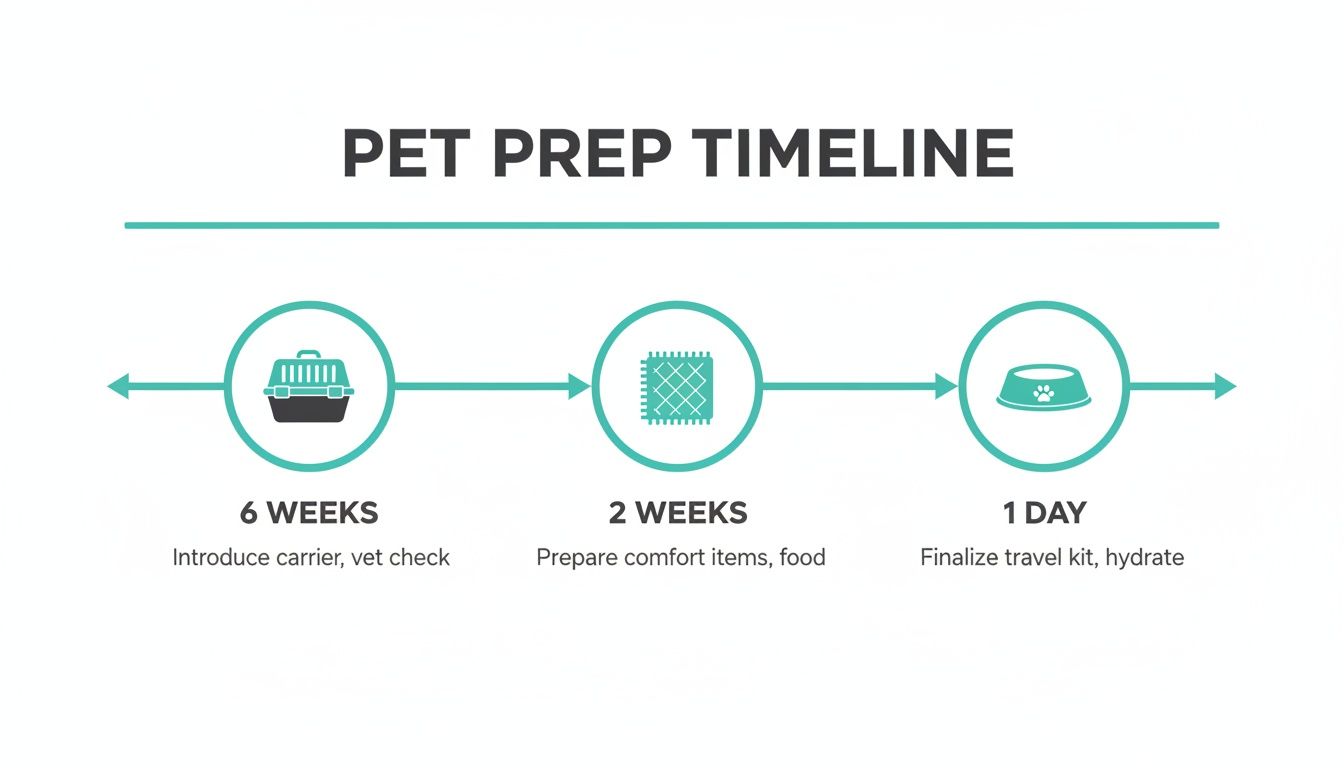
As you can see, this isn't a one-and-done task. It's a series of small, manageable steps that build confidence for both you and your furry copilot.
Domestic vs. International Paperwork
The documents you need depend entirely on your destination. Flying from California to New York is much simpler than crossing an ocean.
For Domestic Travel (e.g., within the US): In most cases, you’ll just need a standard health certificate from an accredited veterinarian. This document confirms your pet is healthy enough for the trip and has their rabies shot.
For International Travel: This is where things get more complex. Every country has its own rulebook, which can include very specific requirements for vaccines, microchips, and even parasite treatments. The international health certificate is a much more detailed document, and there’s no room for error.
The Critical Pre-Flight Vet Visit
Your most important pre-travel appointment is with a USDA-accredited veterinarian. This is a key detail—not every vet has this specific credential, which is needed to sign official travel documents. Always double-check when you book your appointment.
Timing this visit is everything. Most airlines and countries want the health certificate to be issued within 10 days of your departure. This window is firm, so plan accordingly. Flying out on June 20th? Your vet appointment can't be any earlier than June 10th.
Here’s what happens during that visit:
The vet performs a full physical exam to make sure your pet is in good health.
They’ll review vaccination records and give any shots that are needed.
Finally, they’ll fill out and sign the official health certificate.
Pro Tip: Don't be afraid to ask your vet a million questions. They are your best resource. Walk into that appointment with your flight details and destination info so they can give you the most accurate advice possible.
Understanding USDA APHIS Endorsements
For many international trips, there's one more hoop to jump through after the vet visit. The signed health certificate often needs an official government endorsement from the USDA Animal and Plant Health Inspection Service (APHIS). This is a government stamp of approval that verifies your vet’s signature and the document.
This endorsement isn't instant, so you can't leave it for the last day. Some countries allow a digital submission, but others require you to mail in the physical paperwork. Because of these moving parts, managing a veterinary international health certificate is a detail-oriented job where every box needs to be checked. This is where a service like Passpaw can help your vet clinic navigate the rules without the headaches and ensure everything is filed correctly and on time.
Getting your paperwork right isn't just about following the rules—it's about helping your pet have a safe, stress-free journey.
Your Travel Day Game Plan from Airport to Arrival
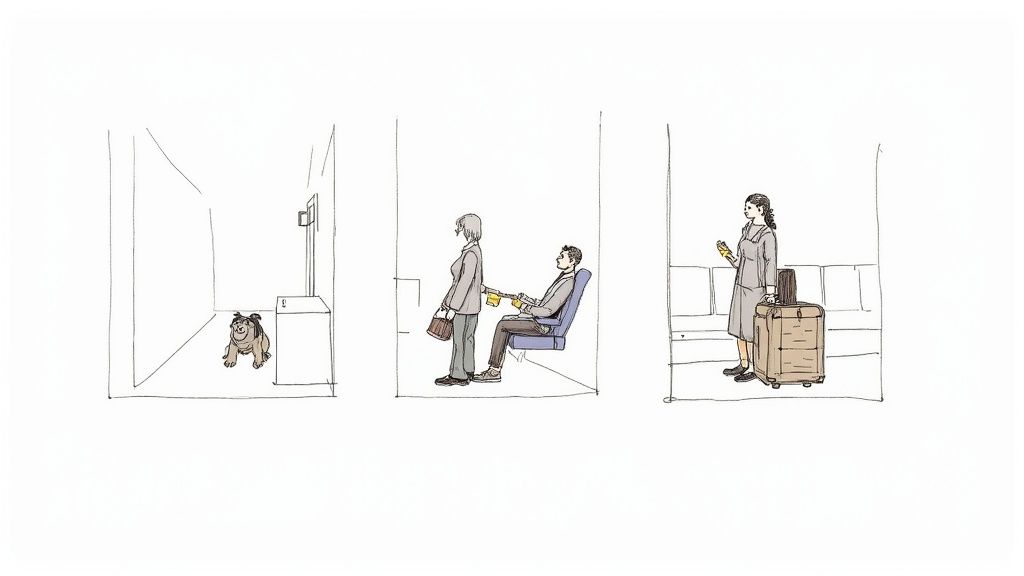
The day you've been planning for is finally here. You’ve prepped your pet, your paperwork is in order, and now it’s all about a smooth trip from your front door to your final destination. A clear travel day plan makes all the difference—it helps you stay calm, which in turn keeps your pet calm.
Start your morning with a long walk or a fun play session. The goal is to get out any extra energy so your pet is more likely to rest during the flight. This is also the perfect time for one last potty break before you head out the door.
Navigating the Airport with Your Pet
Let’s be honest: airports can be overwhelming for animals. Navigating the crowds, noises, and strange smells requires patience and a good game plan. Knowing what to expect at each stage can keep things from getting ruff.
A huge part of your plan is knowing how early you should arrive at the airport. You'll need extra time for pet relief breaks and the special check-in process. Budget at least an extra hour on top of the standard recommendation. Pet check-in always takes longer, and you'll need to go to the full-service counter, even if you don't have bags to check.
The airline agent will:
Inspect your pet's carrier to make sure it meets their rules.
Carefully review all your documents, especially the health certificate.
Collect the pet fee if you haven't already paid it.
After you're checked in, find the airport's pet relief area for one last bathroom break before security. A pro tip: check your airport's map online beforehand. Many now have small, designated spots after security, too.
Going through security can be the most stressful part. Your pet cannot go through the X-ray scanner while inside their carrier. You will need to take your pet out, hold them securely in your arms, and walk through the metal detector while the empty carrier goes on the belt.
This is a moment that calls for a secure grip. A well-fitted harness gives you an extra layer of security in case your pet gets spooked and tries to wiggle free from your arms.
Smooth Landings and Final Steps
You've landed—congratulations! The journey isn't quite over, but the final leg is just as important.
For Pets in the Cabin: Your first priority after deplaning should be finding the nearest pet relief area or just heading straight outside. Your pet has been cooped up for a long time and will be very grateful for the chance to stretch their legs and relieve themselves.
For Pets from Cargo: If your pet traveled in cargo, the pickup process is a bit different. You won't find them at the regular baggage carousel. Instead, you'll need to head to one of two places:
The airline's baggage service office: This is the most common spot for domestic flights.
A separate cargo facility: This is often the case for international arrivals or for very large pets.
Before you leave the gate area, ask an airline representative exactly where you need to go. Once you're reunited, immediately check on your pet and their crate, offer a small amount of water, and then head outside for that much-needed potty break. This final step marks the successful end of your travel day adventure.
Common Questions About Flying with Pets
Even the most detailed travel plan can leave you with a few "what ifs." That's completely normal. Flying with a pet has a lot of moving parts, and it's smart to think through potential issues before they happen.
Think of this as your final pre-flight briefing. We’ll cover everything from flight disruptions to the popular question about bathroom breaks at 30,000 feet. Having these answers ready will help you walk into the airport feeling confident.
What Happens if My Flight is Delayed or Cancelled
A flight delay is a headache for any traveler, but it’s a different level of stress when your pet is with you. The first thing to do is take a breath and find an airline agent to talk to. What happens next depends on whether your pet is in the cabin or traveling as cargo.
For pets in the cabin: Your pet stays with you, but they must remain in their carrier. If you're facing a long delay, ask the gate agent to point you toward the nearest pet relief area—just remember you'll likely have to go back through security.
For pets in cargo: The airline is responsible for your pet's well-being. They should move them to a safe, temperature-controlled holding area. It's important to speak directly with the airline staff and get a clear plan for how they will be cared for, including access to water.
A little pre-planning here can be a lifesaver. Before you even leave for the airport, jot down the numbers for a few pet-friendly hotels or boarding kennels near your departure and arrival airports. Just in case.
Can I Fly with Two Small Pets in One Carrier
I get this question all the time, especially from people with bonded pairs. Unfortunately, the answer is almost always no. Nearly every airline has a strict one-pet-per-carrier rule. It’s about ensuring each animal has enough space to stand up, turn around, and get proper airflow.
Airlines might make a rare exception for two very young, very small puppies or kittens from the same litter, but you shouldn't count on it. You must call the airline when you book and get clear permission. If you show up with two pets in one carrier without that prior approval, you will likely be denied boarding.
How Do Pets Go to the Bathroom on the Plane
This is probably the number one worry for pet parents, but the reality is simpler than you might think: they generally don't. Pets must stay inside their carriers for the entire flight, so there are no mid-air potty breaks.
Preparation is everything. Line the bottom of the carrier with a couple of absorbent puppy pads. I always recommend packing a few extras in your carry-on, so you can do a quick swap during a layover if needed. To minimize the chance of an accident, limit their food and water for about four to six hours before the flight, and be sure to take them for one last, very thorough potty break right before you head to the gate. Managing pet-related messes is a common concern for pet owners, especially around travel. For tips on keeping your home environment clean and stress-free from pet accidents, you might find solutions like machine washable sofa covers for easy pet clean-up.
Service Animal vs. Emotional Support Animal
The rules here have changed a lot in the last few years, and it's important to know the difference. Airlines no longer treat these two categories the same way.
A Service Animal is a dog that has been individually trained to perform specific tasks for a person with a disability. Under the Air Carrier Access Act, legitimate service dogs can fly in the cabin at no charge and are not required to be in a carrier.
An Emotional Support Animal (ESA), however, is no longer a recognized category for air travel. Airlines now consider ESAs to be regular pets. That means you'll have to follow all the standard pet policies: pay the pet fee, make sure they're in an airline-compliant carrier, and keep them stowed under the seat in front of you.
Our goal is to help you feel completely confident about your travel plans. For veterinary teams managing the tricky paperwork for international trips, Passpaw offers a clear path forward. Our platform helps vets and their clients get all the necessary health certificates right the first time, making the entire process less stressful for everyone involved. Discover how we can help at https://passpaw.com.
More articles
From regulatory changes to best practices for veterinarians and pet owners, our resources keep you ahead of the curve.