Are you a team member in a veterinary practice?
Are you a pet parent planning a trip with your furry pal?
Rabies Vaccine Certificate for Dogs Travel Guide
You’ve booked the flight, lined up the carrier, checked the pet policy, and maybe even bought the fancy collapsible water bowl. Then the paperwork review starts, and one document suddenly matters more than every other item on your checklist: the rabies vaccine certificate for dogs.
That moment catches people off guard. Pet owners often assume the certificate is just a receipt from the last vaccine visit. Veterinary teams often know better, but they still run into avoidable errors when a routine vaccine record gets treated like a travel-ready document. For travel, the details matter. A lot.
Your Dog's Most Important Travel Document
A rabies certificate does two jobs at once. It confirms that a dog has been vaccinated by a licensed veterinarian, and it gives officials enough information to trust that record when a dog crosses a state line or an international border.
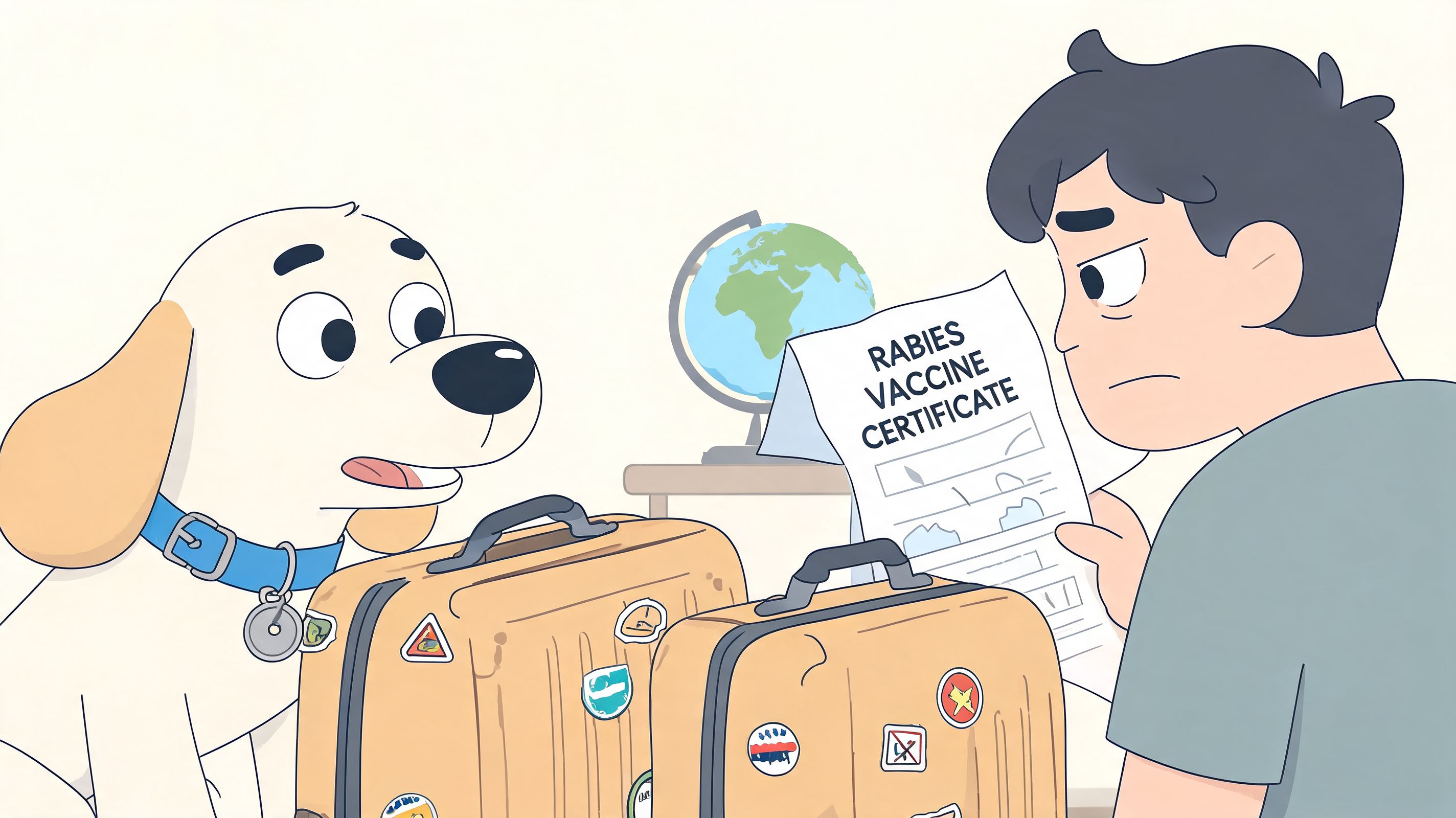
That’s why I tell clients and clinic staff to stop thinking of it as “just paperwork.” It’s closer to a passport backed by medical history. If the certificate is missing key details, unclear, or out of sync with travel rules, a trip can stall fast.
Rabies isn’t a minor box to tick. Routine vaccination programs in the United States began in the 1940s and led to the elimination of the canine rabies virus variant by 2008, a major public health milestone documented in the AAHA canine vaccination guidelines. That history is part of why officials take this document so seriously.
Practical rule: If a destination asks for proof of rabies vaccination, assume they want a complete, legible, travel-ready certificate, not a casual invoice or reminder slip.
For pet owners, that means checking the certificate long before travel week. For clinic teams, it means reviewing every field as if a border officer will read it line by line, because sometimes they will.
If you need a plain-language overview of what counts as valid proof of rabies vaccine, start there before you deal with country-specific forms. It helps separate everyday vaccine records from documents that hold up during travel review.
The short version is simple. A rabies vaccine certificate for dogs protects public health, supports legal compliance, and keeps your travel plans from going to the dogs.
Anatomy of a Rabies Certificate
A strong certificate identifies three things clearly: who owns the dog, which dog received the vaccine, and exactly what vaccine was given by which veterinarian. If any one of those pieces is weak, the document becomes harder to trust.
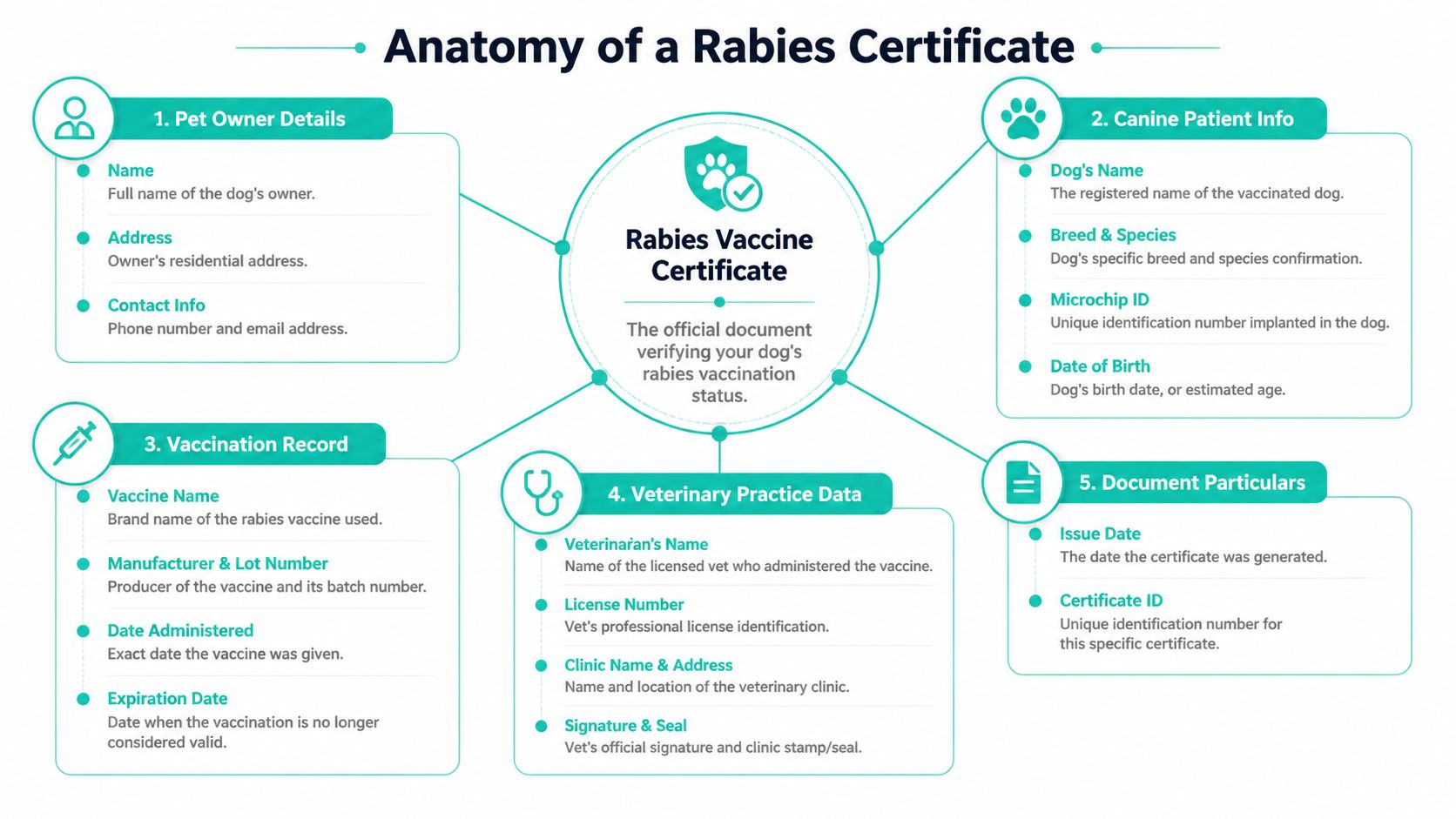
The owner and dog details
Start with the identity section. This is the part many people skim, but it’s the part that often causes the messiest corrections.
A complete certificate should match the owner’s legal details and the dog’s physical description closely enough that someone outside your clinic can connect the paperwork to the actual animal in front of them. In California, required fields include owner details and dog description under Health and Safety Code §121690(b), as explained by the California Veterinary Medical Association guidance on rabies vaccines and certificates.
Look closely at these fields:
Owner name and address. Travel documents should match the person handling the trip and the information used on related forms.
Dog description. Breed, color, age, and sex help distinguish one dog from another.
Dog name. It sounds basic, but nicknames and legal names can create confusion if records don’t match.
The vaccine record itself
The vaccine section is the beating heart of the certificate, as the record proves not only that a rabies shot happened, but which product was used and when that protection is considered valid.
Important fields usually include:
Field | Why it matters |
|---|---|
Date of vaccination | Establishes when immunity timeline starts |
Vaccine type | Clarifies whether the product is labeled as a 1-year or 3-year vaccine |
Manufacturer | Identifies the exact product used |
Lot number | Supports traceability |
Booster or prior history context | Helps determine whether immediate validity applies in some travel situations |
Clinic staff get tripped up here when they copy from inventory loosely, enter the wrong lot number, or confuse reminder dates with legal validity dates. Those aren’t harmless typos. They can force a reissue.
A rabies certificate should read like a verified medical document, not a rushed checkout note.
The veterinarian section
This part proves the vaccine wasn’t self-reported or entered by someone without authority to issue the document. The same California guidance notes that an incomplete certificate can be legally invalid and may lead to fines or quarantine.
That’s why the certificate should clearly show:
Veterinarian name
Clinic name and contact information
Veterinarian signature
Any required license or identifying practice details
For pet owners, the simplest test is this: could a border official, airline reviewer, or public health office call the clinic and verify the record quickly?
For practices, a clean template helps. A usable rabies vaccine certificate template can reduce omissions, especially when your team is handling multiple travel cases at once.
How Travel Plans Change Certificate Rules
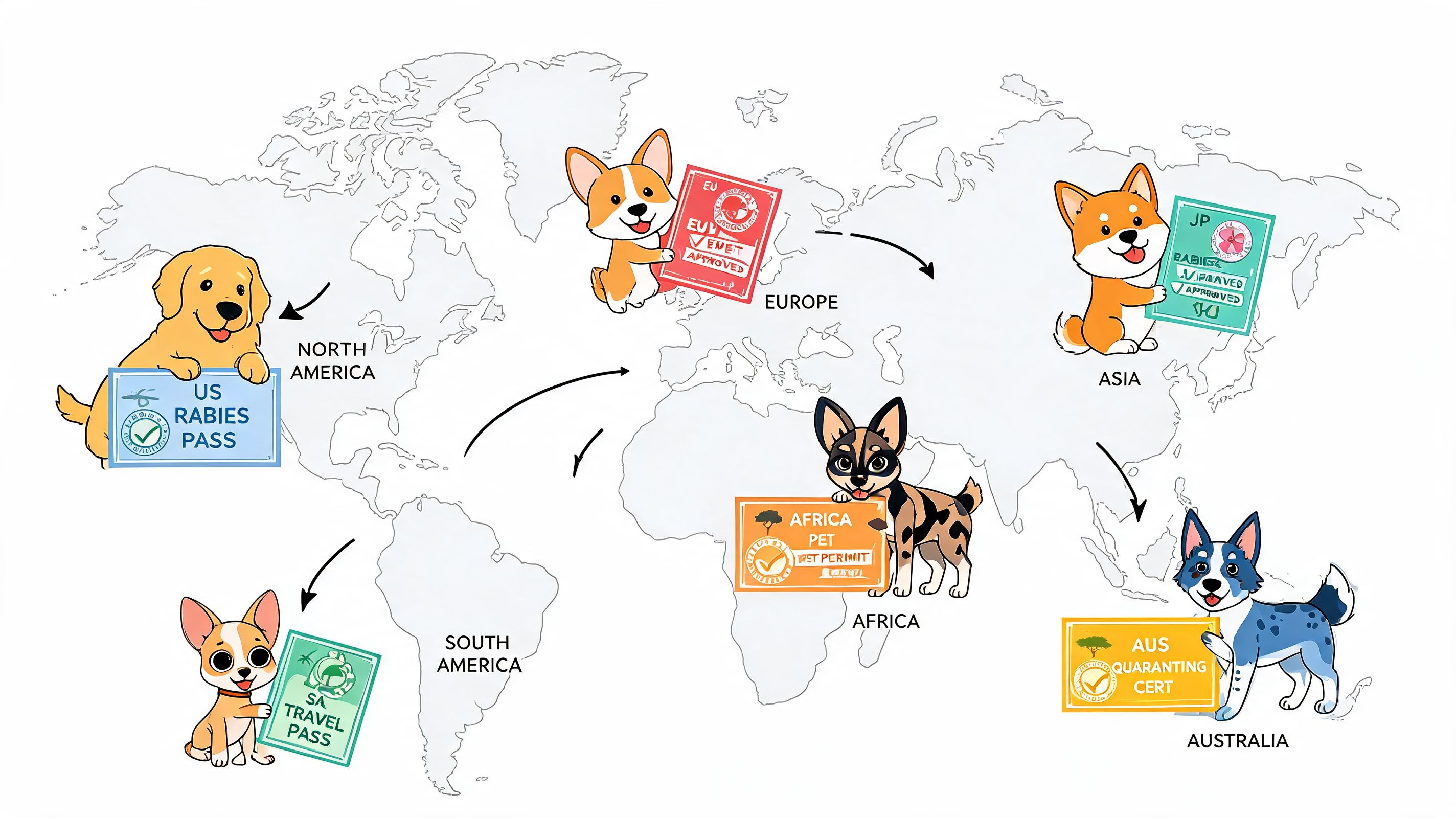
The same dog can need very different paperwork depending on where it’s going. That’s what makes travel compliance tricky. A certificate that works for local boarding may not work for an international flight, and a certificate that works for one country may fail for U.S. re-entry from another.
Domestic travel is usually the simplest
For travel within the United States, the rabies vaccine certificate for dogs is often a basic proof document. Airlines, boarding facilities, landlords, and local jurisdictions may ask for it, but the review process is usually more straightforward than international travel.
That doesn’t mean “anything goes.” State and local rules still matter, especially around age of vaccination and licensing. A record that’s incomplete can still create problems, just usually closer to home.
International travel raises the bar
Once a dog travels internationally, the certificate often becomes one piece of a larger compliance set. Depending on destination, you may need extra forms, an international health certificate, timing checks, and in some cases a rabies serology requirement.
A useful way to think about it is this:
Travel scenario | What usually matters most |
|---|---|
Domestic U.S. trip | Current rabies certificate and local compliance |
Travel to another country | Destination-specific health rules, certificate format, timing, and possible endorsements |
Return from a high-risk rabies country | CDC-specific form rules, microchip sequence, vaccine timing, and possibly titer documentation |
Pet owners often underestimate how much local enforcement shapes compliance. In Japan, registered dogs were over 50 times more likely to be vaccinated than unregistered ones, according to the published rabies vaccination study in Japan. That’s a useful reminder that official systems, registration, and document checks change behavior. Travel authorities rely on the same logic.
High-risk country travel is where errors multiply
Clinics and owners frequently find themselves in the paperwork doghouse. If a dog is going to or returning from a country the CDC considers high-risk for rabies, the rules tighten. The rabies certificate alone may not be enough, and the timing of vaccination and related documents can become the deciding factor.
Common trouble spots include:
Assuming an old export document is still accepted
Using a vaccine record that doesn’t connect clearly to the dog
Missing supporting items such as titers when required
Waiting too long to start the process
If you’re sorting through country-by-country logistics, this guide to understanding pet relocation requirements is a useful companion for the broader planning side.
For destinations or return routes that call for serology, review the basics of a dog rabies titer test early. That’s one of the requirements owners most often learn about later than they should.
Border compliance is rarely ruined by one huge mistake. More often, several small assumptions pile up until the paperwork no longer fits the trip.
How to Get Your Dog's Certificate Correctly
The cleanest rabies certificate starts before the appointment. That surprises owners, but it’s true. If the dog’s identification, vaccine timing, and travel plan aren’t lined up in advance, the certificate may need to be redone or may not support the trip at all.
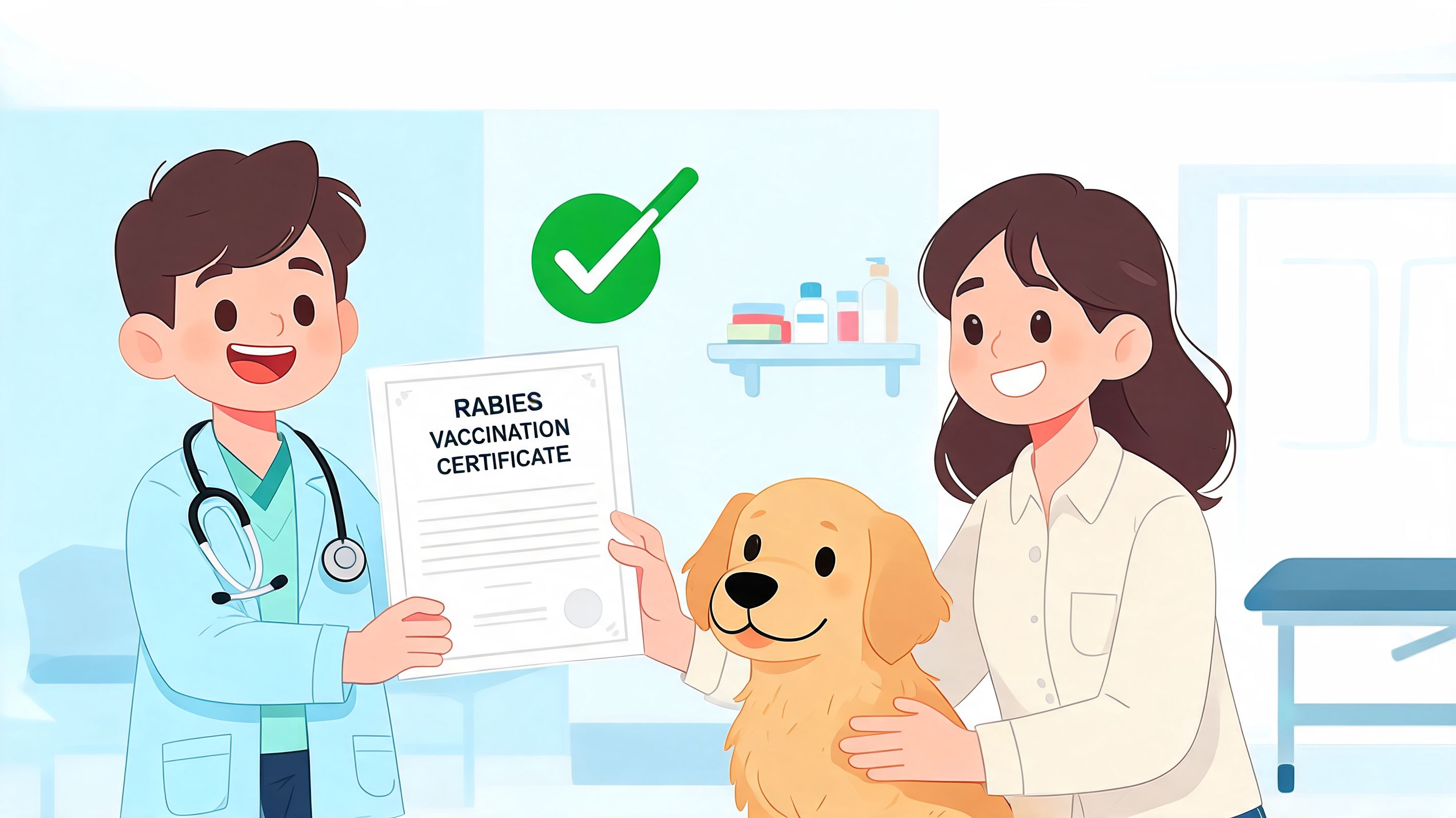
Start with the microchip
For dogs returning to the United States from high-risk countries, the CDC requires the microchip to be implanted before the rabies vaccine is administered, and the first rabies vaccination must be given at least 28 days before the certificate is issued, according to the CDC guidance for dog importation and U.S.-issued rabies vaccination certification.
That sequence matters. If a dog receives a rabies vaccine first and the microchip later, the record may not support the required certification.
For clinic teams, the workflow should be boringly consistent:
Scan for an existing microchip
Implant a chip if needed
Confirm and record the number accurately
Vaccinate after chip confirmation
Issue the certificate only when timing rules are satisfied
Know whether this is a first vaccine or a booster
This is one of the biggest forks in the road. A true booster with no lapse in coverage can be treated differently from a first vaccine or a lapsed vaccine history in some travel situations.
That means staff shouldn’t guess from memory or from the client’s phone photo of an old tag. Review the prior certificate, check dates carefully, and confirm whether coverage has remained continuous. If the record chain is weak, treat it cautiously and verify before promising travel timing.
Review the certificate before the client leaves
The appointment isn’t done when the vaccine is given. It’s done when the paperwork is correct.
Use a short review checklist:
Identity check. Owner name, dog description, and microchip number should all match the chart and travel documents.
Product check. Vaccine manufacturer, lot number, and administration date should match the medical record exactly.
Signature check. The issuing veterinarian’s details must be complete and legible.
Travel check. Make sure the certificate supports the actual itinerary, not just routine compliance.
Clinic habit that works: Read the final certificate out loud against the medical record before printing or sending it. It catches more mistakes than a silent skim.
If a case may also require endorsement or broader international paperwork, it helps to understand the role of a USDA pet travel certificate before the family locks in departure dates.
The biggest practical advice I can give is simple. Don’t schedule the paperwork around the flight. Schedule the flight around the paperwork. That approach saves far more stress than any last-minute scramble.
Common Certificate Mistakes to Avoid
Most certificate problems aren’t dramatic. They’re small errors that become expensive because nobody catches them until the deadline is close.
The most common issue is timing confusion. Public guidance often says a dog must be vaccinated, but that doesn’t help much when owners are trying to line up vaccine dates, booster history, and return travel from a higher-risk location. The CDC has specifically noted a gap here, including confusion about the 28-day timing for an initial rabies vaccination before travel certification for U.S. re-entry and how to coordinate boosters with longer-term travel plans in its instructions for the U.S.-issued rabies vaccination form.
The mistakes I see most often
Some errors look minor in the chart and major at review time.
Using the wrong date logic. Staff may enter a date based on reminder software instead of the legal vaccine validity shown by product label and prior history.
Treating a lapsed booster like an uninterrupted booster. That can change how a trip is timed and what documents are acceptable.
Leaving identity gaps. A missing microchip number, incomplete dog description, or owner mismatch can make the certificate hard to trust.
Relying on hard-to-read entries. Illegible handwriting, clipped scans, and blurry phone photos don’t travel well.
Assuming every destination wants the same thing. One certificate may be sufficient for one route and incomplete for another.
What works better
The fix usually isn’t fancy. It’s disciplined review.
Try this before any certificate goes out:
Checkpoint | What to confirm |
|---|---|
Travel date review | Does the vaccine timeline fit the itinerary? |
History review | Is this truly a booster with no lapse? |
Identity review | Do owner, dog, and microchip details align across records? |
Document review | Is the certificate complete, legible, and signed? |
A second pair of eyes helps. In busy clinics, the veterinarian may focus on medical accuracy while a technician or travel coordinator catches formatting and travel-sequence issues.
If a travel case feels rushed, that’s usually the signal to slow down and verify more, not less.
Owners can help too. Bring prior rabies records, confirm the exact destination, and mention every transit point. A direct flight and a connecting route don’t always create the same document needs.
Simplifying Pet Travel Compliance for Good
Rabies paperwork gets difficult when people treat it like a one-form task. It isn’t. It’s a chain of details: vaccine history, identification, destination rules, travel timing, signatures, and sometimes extra supporting documents. When one link is weak, the whole plan wobbles.
That’s why the best clinics build a process, not just a form-completion habit. They use standard intake questions, verify microchips before vaccine visits tied to travel, review prior rabies history before promising deadlines, and check the final certificate against the itinerary. It’s less glamorous than last-minute heroics, but it works better.
What manual systems do poorly
Paper-heavy workflows usually break in familiar places:
Rules change and old checklists stay in circulation
Teams rely on memory for destination-specific steps
Expiration windows get missed when travel dates shift
Clients don’t know what the clinic still needs from them
That’s where modern document workflows help. The value isn’t magic. It’s consistency. Good systems flag missing fields, prompt staff to check timing, keep records connected to the right pet, and make it easier to communicate with owners before the trip becomes urgent.
The better long-term approach
For pet owners, the takeaway is simple. Start early, keep every rabies record, and ask your veterinary team to review the travel plan, not just the vaccine due date.
For practices, the smarter play is to treat travel compliance as an operational service. Use repeatable templates. Build a review sequence. Track deadlines against actual departure dates. If your team handles international cases regularly, digital tools can reduce the back-and-forth and catch errors before they become expensive.
The rabies vaccine certificate for dogs isn’t hard because the form is mysterious. It’s hard because travel turns a routine medical record into a high-stakes compliance document. Once you respect that difference, the process gets much easier to manage, and everyone can get back to the fun part of the trip.
If your clinic or pet travel workflow needs a cleaner way to manage international paperwork, Passpaw helps organize pet travel documents, validate requirements in real time, and keep owners and veterinary teams aligned from the first appointment to final submission.
More articles
From regulatory changes to best practices for veterinarians and pet owners, our resources keep you ahead of the curve.