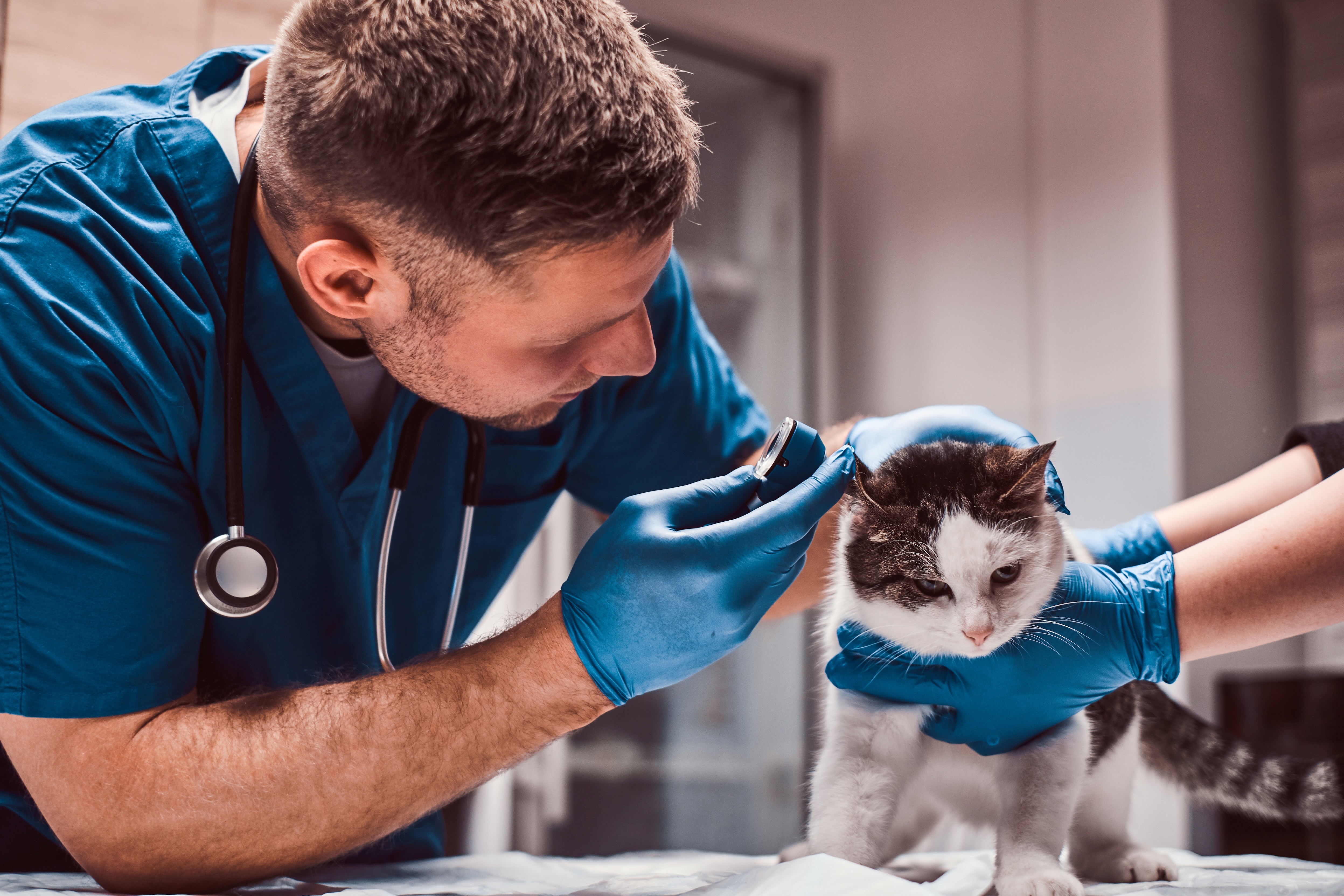
Are you a team member in a veterinary practice?
Are you a pet parent planning a trip with your furry pal?
Your Rabies Vaccine Certificate Template Guide
A rabies vaccine certificate template is more than just a fill-in-the-blanks form; it’s the blueprint for one of your pet's most important official travel documents. This single piece of paper proves your pet is vaccinated against rabies, a common requirement for entry into most countries and a vital health record for their well-being.
Getting this document right is key for a smooth journey.
Why This Certificate Is Your Pet's Golden Ticket
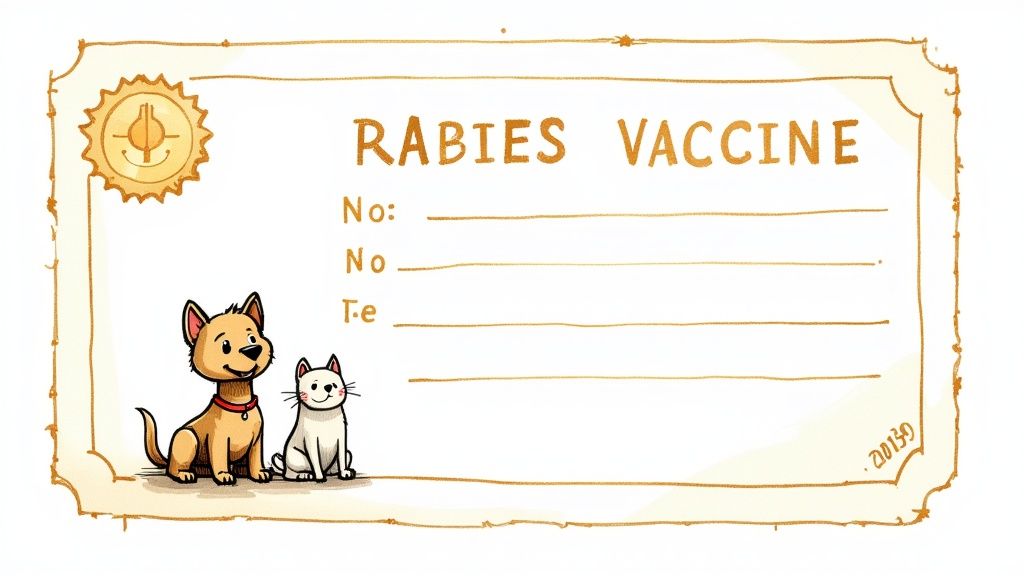
Before you start hunting for the perfect rabies vaccine certificate template, let's dig into why this document carries so much weight. Think of it as your pet's passport—a key that unlocks new adventures and keeps them safe. A missing detail or an incorrect date could lead to stressful delays, unexpected quarantine, or even being denied entry at your destination.
This certificate isn't just about ticking a box. It serves a few critical purposes, all centered around global safety. It's your part in a worldwide effort to control one of the planet's most monitored diseases.
A Shield Against Travel Troubles
First and foremost, a rabies certificate is your official proof of vaccination. Most countries have strict rules to protect their local animal populations and public health. A properly completed certificate instantly tells border officials that your pet is not a risk.
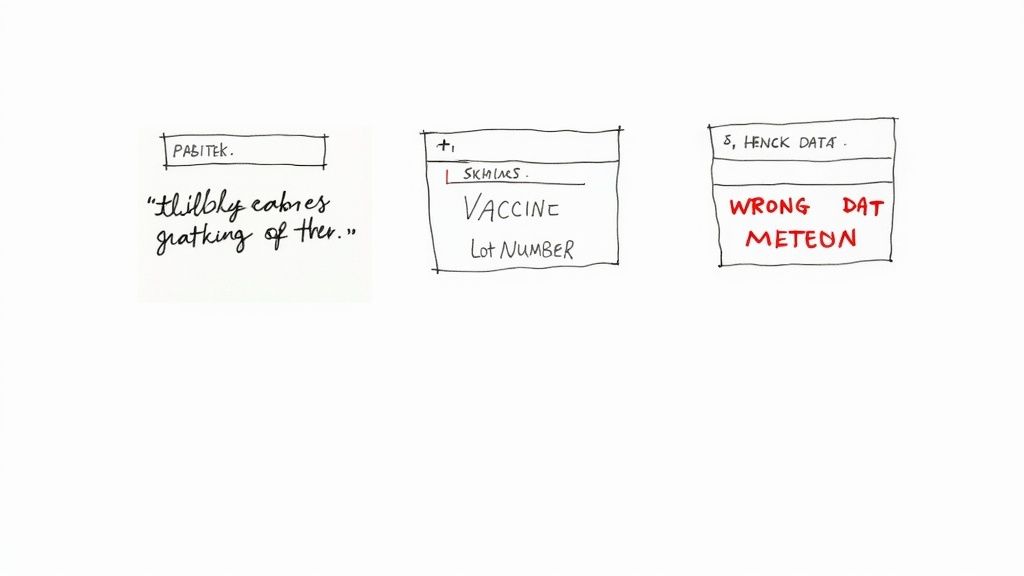
I'll never forget the story of a family moving to Japan who nearly missed their flight. Their vet had forgotten to write down the vaccine’s lot number on the certificate. This one tiny detail, so easy to overlook, almost derailed their entire relocation. It’s a powerful reminder that every single field on the form matters.
More Than Just a Form
A valid certificate is your key to avoiding these kinds of headaches. Here’s what it accomplishes:
Protects Public Health: It confirms your pet is part of the global fight against rabies.
Shows Fitness to Fly: Airlines and border agents see it as evidence your pet meets health standards.
Avoids Quarantine: A correct certificate is often the only thing standing between your pet and a lengthy, stressful quarantine period.
Let's break down the must-have information that every rabies certificate needs to be considered valid for travel.
Essential Details for Every Rabies Certificate
This table outlines the important information that every valid rabies vaccine certificate should include to be accepted by travel authorities.
Information Field | What It Is | Why It Matters for Travel |
|---|---|---|
Pet Details | Name, breed, age, sex, microchip number, and color. | This info should match your pet's other travel documents and their microchip record. Any differences can raise red flags. |
Vaccine Information | Vaccine name, manufacturer, lot/serial number. | Authorities need to verify the vaccine is approved and traceable. The lot number is crucial for this. |
Vaccination Dates | Date of vaccination and expiration date. | Countries have strict timelines. The vaccine should be given after microchipping and be valid for the entire trip. |
Veterinarian Info | Vet's name, clinic address, license number, and signature. | This confirms the vaccination was given by a licensed professional. An original "wet ink" signature is usually needed. |
Missing any of these details could cause issues, so double-check everything with your veterinarian before you leave the clinic.
The careful documentation on a rabies certificate is so important that global health organizations rely on it. In fact, around 78% of the global demand for rabies vaccines is driven by the need for post-exposure treatment, which depends on accurately documented vaccination schedules. This shows just how seriously this is taken worldwide.
Ultimately, this document is a cornerstone of responsible pet ownership, especially for those of us with a case of wanderlust. Understanding its importance is the first step in preparing a purr-fectly compliant travel plan. For a deeper dive into what different countries require, check out our guide on international pet travel requirements.
Anatomy of a Flawless Rabies Certificate
Let's break down what turns a simple form into an official, travel-ready document. A proper rabies vaccine certificate template isn't just a single page; it’s a collection of key data points that officials will look at closely. Getting every single detail right is important if you want a stress-free journey with your furry co-pilot.
This blueprint-style diagram shows the essential components you'll find on a well-structured rabies certificate, highlighting exactly where each piece of information should go for maximum clarity.

As you can see, a flawless certificate is organized, easy to read, and leaves no room for confusion about your pet's identity or vaccination status.
Your Pet's Unique Identifier
First up, and arguably the most important piece of information, is your pet’s microchip number. This is the universal standard for identifying animals across international borders.
The Microchip Number: This is often a 15-digit ISO-compliant number. Always double-check this against your vet's records because a single wrong digit can bring your travel plans to a screeching halt.
Pet Description: This includes their name, breed, color, sex, and date of birth. The description should be specific and match their appearance to prevent any mix-ups at the border.
Think of the microchip as your pet’s passport number—it’s the one thing that links them directly to all their official documents.
Decoding the Vaccine Details
Next are the nitty-gritty specifics about the vaccine itself. This section tells officials everything they need to know about the shot your pet received, so it has to be detailed and accurate.
You'll need to include:
Vaccine Manufacturer and Product Name: For example, "Nobivac" or "Imrab."
Lot or Serial Number: This number is unique to the batch of vaccine used and is very important for traceability.
Date of Vaccination: The exact date the shot was given.
Expiration Date: This is the date the vaccine's protection officially ends.
One of the most common points of confusion is the difference between a 1-year and a 3-year rabies vaccine. While both are effective, your destination country might only accept one type, or they may have specific rules about how long the vaccine must be valid after you arrive. Always check the import requirements carefully.
Understanding Key Dates
The dates on your certificate are probably the most critical fields. An error here is one of the top reasons for travel denial. The two you absolutely must get right are the vaccination date and the effective date.
The vaccination date is simply the day the shot was given. Simple enough. However, the vaccine isn't considered effective immediately. Most countries have a mandatory waiting period, typically 21 to 30 days, after the primary vaccination before it's valid for travel. For instance, if a vaccine was given on June 1st, your pet likely can't travel until June 22nd at the very earliest.
This documentation is taken seriously worldwide, backed by a massive global effort. The rabies vaccine market is valued at roughly USD 1.33 billion, with North America alone making up about 41% of that. This just shows how critical vaccination is, and why the paperwork has to be perfect. You can discover more insights about the global rabies vaccine market on mordorintelligence.com.
Finally, the certificate must have your veterinarian's complete information: their name, clinic address, license number, and an original "wet ink" signature. This is what authenticates the document and confirms a licensed professional gave the vaccine. To learn more about what makes this document official, check out our guide on getting proof of a rabies vaccine.
Alright, you've got your rabies vaccine certificate template designed and ready to go. Now comes the important part: filling it in correctly and getting it officially stamped. This is where the details really matter. Think of it as the final assembly before your pet’s travel documents are ready for inspection.
First up, you’ll need to pull all the specific information from your veterinarian's records. This isn't just a simple copy-paste job; you need exact details. I'm talking about your pet’s full microchip ID, the precise date of their last rabies vaccination, and the complete product information for the vaccine itself—brand, serial number, the works.
From Vet Records to Official Form
Transferring this information is all about precision. A common mistake is a simple typo in the microchip number. Mixing up just two digits can cause the entire certificate to be questioned at the border.
Here’s a tip I always give clients: read the microchip number out loud while your vet or a clinic staff member follows along on their screen. It sounds almost too simple, but this quick double-check can save you from a massive headache later. A little caution now prevents a whole lot of travel drama.
Another must-have is the veterinarian's signature. For international travel, this is often an original "wet ink" signature—meaning the vet physically signed the paper. Photocopies or digital signatures may not be accepted. Make sure the signature is readable and that the vet’s license number and clinic details are clearly printed alongside it.
A well-designed document makes this whole process smoother for everyone. To create a professional-looking certificate that's easy for officials to read, check out some of the top certificate creation software. It can make a huge difference in how smoothly things go.
Getting the Official Stamp of Approval
Once your vet has signed the certificate, you're close, but not quite done. For many countries, especially when you're flying out of the United States, the document may need an official government endorsement. This is a final step that can make it recognized abroad.
In the U.S., that official stamp often comes from the United States Department of Agriculture (USDA) Animal and Plant Health Inspection Service (APHIS). For countries that require it, this step is usually not negotiable.
Here’s a quick rundown of what that process might involve:
Find an Accredited Vet: The certificate usually must be completed and signed by a USDA-accredited veterinarian. Not all vets have this specific accreditation, so confirm this with your clinic well in advance.
Submit to APHIS: Your vet will usually handle submitting the completed health certificate package to the APHIS office for your state. This is often done online through their portal, but sometimes you still need to mail in physical copies.
Pay the Endorsement Fee: There's a fee for this service, so be sure to factor that into your pet travel budget.
This endorsement is basically the government's way of saying, "We've reviewed this document, and it meets international standards." It’s the layer of authenticity that border officials are trained to look for.
Timing is everything here. The APHIS endorsement may only be valid for a short window, often just 10 to 30 days, depending on your destination country. This means you have to get the certificate filled out by your vet and endorsed by APHIS in that tight timeframe right before you leave. Planning this sequence perfectly is the key to a stress-free departure with your furry co-pilot.
Common Certificate Mistakes and How to Dodge Them
Even with the best intentions, it's surprisingly easy to slip up on a rabies vaccine certificate template. A tiny mistake—one that seems totally insignificant—can create a massive headache at the border. This section is your safety net, designed to help you spot those common blunders before they become a cat-astrophe.
From a vet's scribbled handwriting to a missing vaccine lot number, the smallest details can derail your plans. One frequent issue is using the wrong date format. If your destination country uses DD/MM/YYYY and your certificate says MM/DD/YYYY, that confusion alone is enough to cause serious delays.
The Critical Order of Events
One of the biggest and most overlooked mistakes is the timing of your pet's microchip implant versus their rabies vaccination. For most countries, the sequence is important and something they check carefully.
Here's a real-world example I've seen play out: A traveler was all set for their move to an EU country. Their dog’s rabies certificate looked perfect—signed, dated, and complete. But during the official review, an agent noticed the microchip was implanted on May 10th, while the rabies shot was given a week earlier on May 3rd.
The problem? The microchip has to be implanted before the rabies vaccine so officials can be 100% sure the vaccinated animal is the one being identified. The certificate was immediately invalidated. The poor dog had to be re-vaccinated and the owner had to wait another mandatory 21-day period before they could even think about traveling.
Key Takeaway: The microchip must be implanted and scannable before the rabies vaccine is administered. Any other order can affect your pet's travel eligibility for many destinations.
Mismatched Descriptions and Incomplete Details
Another classic pitfall is when the pet’s description on the form doesn’t quite match the pet standing in front of the official. If your certificate says "brown" but your dog is a mix of tan and white, it’s going to raise questions. Be specific. Use terms like "brindle," "tricolor," or "merle" if they apply.
Leaving fields blank is just as bad—it’s an immediate red flag. Every box on that form, from the vaccine's lot number to your vet's license number, is there for a reason. In the United States, these documents are a core part of extensive rabies control programs. The annual cost of rabies management in the U.S. exceeds $500 million, and the data on these certificates provides useful medical evidence. You can learn more about the USDA's efforts in rabies management on their site.
To help you stay on top of things, the USDA APHIS pet travel website is a fantastic resource for checking the exact rules for your destination.
This tool is your best friend for double-checking country-specific details. Don't skip it.
Your Pre-Travel Certificate Checklist
Before you file that certificate away, run through this quick checklist. It’ll help you catch any potential showstoppers.
Readability Check: Can you clearly read every single word, number, and signature? If you can't, an official probably can't either.
Microchip Verification: Does the number on the certificate exactly match the number on your pet's official microchip record? No typos allowed.
Date Formats: Are all dates written in the format required by your destination country?
Vaccine Details: Are the vaccine manufacturer, brand name, and lot number all present and accounted for?
Signature and Stamp: Is there an original "wet ink" signature from your accredited veterinarian? Photocopies may not be accepted.
Your Pre-Travel Final Document Check
You've got the endorsed rabies vaccine certificate in hand—nice work! You're in the home stretch, but don't pack your bags just yet. Before you and your furry co-pilot are cleared for takeoff, there's one last, crucial check to perform. This isn't about doubting your work; it's about being ready for any curveballs travel day might throw at you.
The first rule of pet travel paperwork is to never rely on a single copy. Make several photocopies of the original, signed certificate. Then, take it a step further with digital backups. Snap a few clear photos with your phone and save a PDF copy to your email, a cloud drive, and your phone itself. If the original gets lost or damaged, you’ll have a backup ready to go.
Confirming Destination and Airline Rules
Now’s the time to triple-check every last detail. It's not uncommon for country import regulations to change with very little warning. About a week before you fly, head back to the official government website for your destination. You just want to confirm their requirements haven't been updated since you last looked.
Next up, the airline. Airlines sometimes have their own specific rules, which can sometimes be even stricter than the country's regulations. Pull up their pet travel policy page or give their customer service a call to confirm a few key things:
Document format: Do they need the original document at the check-in counter, or will a high-quality copy work?
Carrier requirements: Double-check their rules for your pet's travel carrier one more time.
Health certificate timeline: Do they have their own validity window for the health certificate that you need to be aware of?
Running through this final check helps ensure there are no frustrating surprises when you get to the airport. It's the last step in making sure your pet’s paperwork is truly ready for an adventure.
Final Peace-of-Mind Check: Always keep the original, physical certificate in your carry-on luggage—never in checked baggage. This document is your pet's ticket, and you'll need easy access to it at multiple checkpoints throughout your journey.
If you do hit a last-minute snag or have a question that's proving hard to answer, don't panic. Your best resources are the destination country's embassy or consulate, or a professional pet transport service. They live and breathe these rules and can give you the clarity you need.
The rabies certificate is a huge piece of the puzzle, but it's just one piece. For a broader look at getting your companion ready, this guide to stress-free pet journeys has some great tips. Staying organized is everything, and to keep all these moving parts in order, consider using our pet travel planner. This last check is all about making sure every 'i' is dotted and 't' is crossed, so your trip is memorable for all the right reasons.
Common Questions About Rabies Certificates
Still have a few questions buzzing around? We get it. International pet travel paperwork can feel like a maze. Let’s clear up some of the most common questions we see about using a rabies vaccine certificate template. Getting these details right is key to a smooth journey.
Can I Just Use a Digital Copy of the Certificate?
While it’s always a good idea to have a digital backup on your phone or in the cloud, the answer is almost always no. Most countries and nearly all airlines may not accept a digital copy as the official document.
They often need to see the physical, original certificate with a "wet ink" signature from your accredited veterinarian. Don't leave home without that original piece of paper in hand.
When Should I Get the Certificate Before My Trip?
This is one of the most time-sensitive parts of the whole process, and the answer depends entirely on your destination's specific rules. There are two key timelines to watch:
The rabies vaccine itself usually needs to be given at least 21 to 30 days before travel to be considered valid.
The health certificate portion, which your rabies certificate is part of, often must be issued within a very tight window, typically 10 days before your flight.
You have to confirm the specific timeline required by your destination's official import regulations. Don't guess.
What happens if the microchip number on the form is wrong? An incorrect microchip number can be a deal-breaker. It’s a major red flag that could get your pet denied entry at the border. Before your vet signs anything, ask them to scan your pet's chip and physically watch them verify that the number on the scanner matches what's written on the certificate.
Is My Pet’s Rabies Tag Good Enough for Travel?
Nope. A rabies tag is not an official travel document. While that little metal tag is helpful for local identification if your pet ever gets lost, it doesn't contain the detailed vaccination history and pet information needed by airlines and border officials.
You must have the full, properly completed certificate. Understanding the timing and frequency of these shots is also important, and our guide on how often your dog needs a rabies vaccine breaks it down further.
At Passpaw, we turn complicated pet travel paperwork into a simple, stress-free process. Our platform helps veterinary practices manage and validate every document, ensuring your pet is ready for their next adventure. Learn more at Passpaw.
More articles
From regulatory changes to best practices for veterinarians and pet owners, our resources keep you ahead of the curve.