Are you a team member in a veterinary practice?
Are you a pet parent planning a trip with your furry pal?
Rabies Certificates: Essential Guide to Pet Travel
You’ve booked the flight, checked the pet carrier, and started thinking about where your dog will nap at the destination. Then the paperwork shows up and the mood changes fast. Most pet owners don’t get stuck on the travel itself. They get stuck on one small document that turns out to be doing a very big job.
That document is the rabies certificate.
It can feel like just another form, but it isn’t. A rabies certificate is often the document that decides whether your pet boards smoothly, gets delayed, or is turned away because one line was missing. I’ve seen owners focus on the vaccine itself and overlook the certificate details, only to find out later that a valid shot and a valid travel document are not always the same thing.
Your Ticket to Travel A Guide to Rabies Certificates
Travel with a pet starts out fun. You compare routes, think about weather, and wonder whether your dog will love the new park or whether your cat will spend the whole trip judging your choices from the carrier. Then the practical question lands on your lap. “Do we have the right rabies paperwork?”

That question matters for more than border control. Rabies is one of the few diseases where the stakes are brutally clear. The World Health Organization estimates 59,000 human deaths from rabies each year, and dog bites account for 99% of transmissions according to the WHO rabies fact sheet. That’s why countries treat rabies certificates as core public health documents, not just travel admin.
Why this paper carries so much weight
A rabies certificate tells officials, airlines, veterinary staff, and import authorities that your pet’s vaccination history can be traced and verified. It connects the pet, the vaccine, and the professional who issued the record.
For pet owners, that means peace of mind. For veterinary teams, it means accuracy has to be built in from the start. A certificate filled out casually can create serious problems later, especially when travel plans involve more than a simple domestic trip.
Practical rule: A rabies shot in the medical record is not automatically the same as a travel-ready rabies certificate.
The good news
Most rabies certificate problems are preventable. Owners don’t need to memorize every rule, and clinics don’t need to reinvent the process every time. What works is a simple approach: verify the pet’s ID, confirm the vaccine details, review every field before the client leaves, and match the certificate to the destination’s actual requirements.
That’s the part people often miss. The certificate isn’t just paperwork. It’s your pet’s boarding pass with teeth.
What Is a Rabies Certificate Exactly
A rabies certificate is best thought of as your pet’s health passport for rabies vaccination. It documents that a specific animal received a specific rabies vaccine on a specific date, from a provider authorized to issue that record under the applicable rules.
What it is
At its core, the certificate is both a medical record and an official document. It links your pet’s identity to the vaccination event. For travel, that link is what matters. Authorities don’t just want proof that some pet was vaccinated. They want proof that this pet was vaccinated, and that the details can be verified.
That’s why a strong certificate includes identifying details about the animal, the owner, the vaccine, and the issuing veterinarian or supervising veterinarian where applicable.
What it is not
A rabies certificate is not the same as the little metal rabies tag on a collar.
That tag can be helpful for local identification, but it doesn’t replace the document. It also isn’t the same as a payment receipt from the clinic or a brief invoice line that says “rabies vaccine given.” Those records may show that a service happened, but they often don’t include all the fields needed for travel or official review.
Here’s the easiest way to separate them:
Rabies certificate: the formal record used to verify vaccination details
Rabies tag: a collar tag that may help with local licensing or identification
Vet receipt: proof of purchase or visit, not necessarily proof of travel compliance
Why the distinction matters
Owners often assume any clinic printout will do. That’s where trouble starts. If a country, airline, or border official asks for the rabies certificate, they usually mean the complete certificate, not a receipt and not a tag number scribbled on the back of an appointment card.
Keep the original certificate in a safe place, and keep a readable backup copy for your own records. That simple habit saves a lot of scrambling later.
For veterinary practices, the distinction matters too. If the team treats the certificate as an afterthought, missing details can follow the client all the way to the airport. If the clinic treats it as a formal travel document from the moment of vaccination, the process becomes much smoother for everyone involved.
Key Information on Every Rabies Certificate
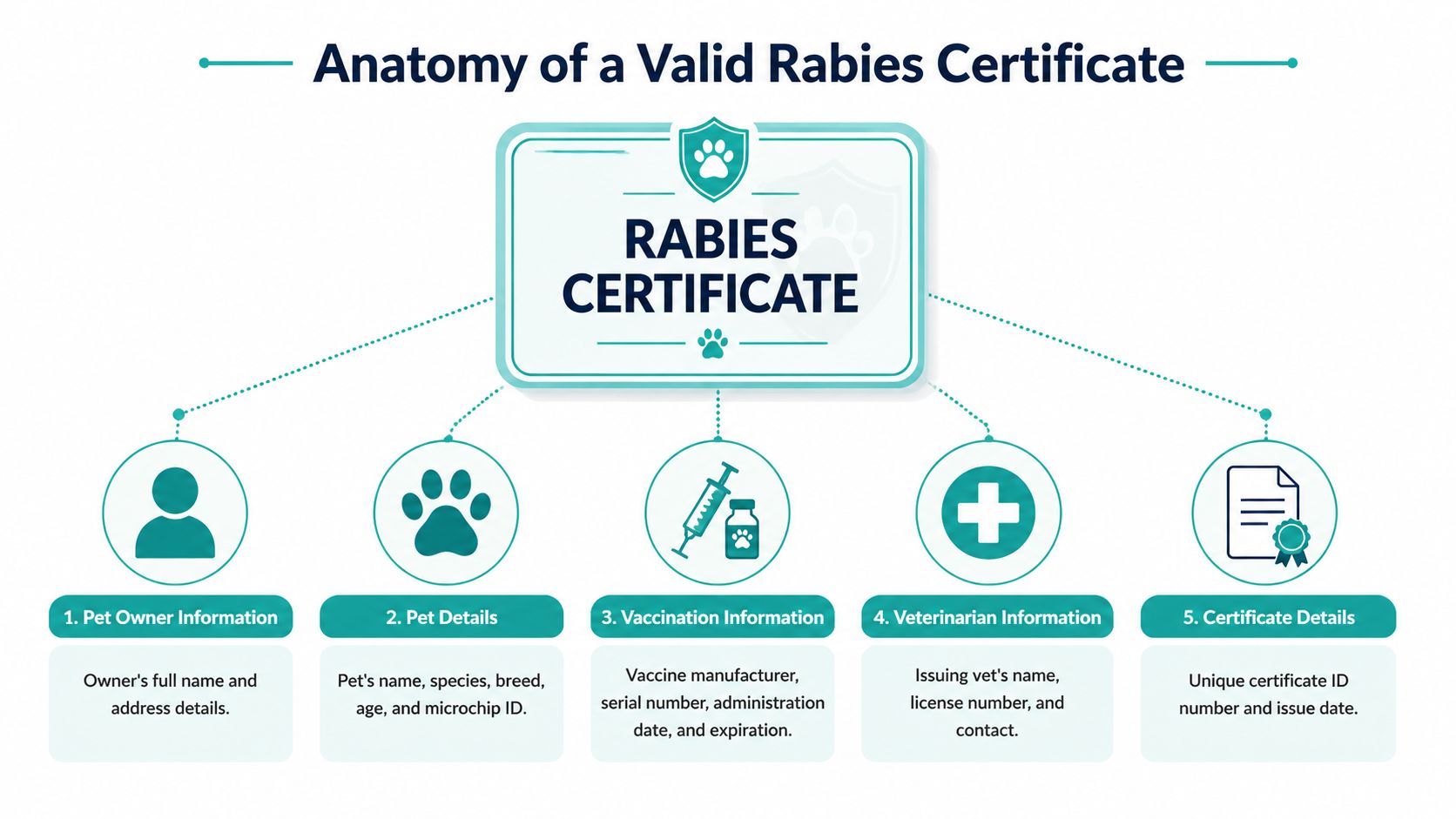
The difference between a useful certificate and a rejected one often comes down to one blank field. That sounds fussy, but it’s how these documents work. CDC-related guidance reflected in the AVMA model document makes clear that a valid rabies certificate for international travel needs detailed information, including the microchip number, vaccine lot number, and the veterinarian’s original ink signature. A missing field, such as vaccine expiration date, can invalidate the document as shown in the AVMA model rabies control document.
The checklist that matters
If you’re an owner, review the certificate before you leave the clinic. If you’re in practice, make this part of the discharge workflow, not a last-minute favor at the front desk.
Field | What to Check For | Why It's Critical |
|---|---|---|
Owner information | Full name and address match the traveler’s documents | Mismatched owner details can create questions about who the pet belongs to |
Pet identification | Pet’s name, breed, color, age or date of birth, sex, weight if listed | Confirms the certificate belongs to the right animal |
Microchip number | Exact number is present and readable | The microchip ties the animal to the record |
Vaccination date | Date the rabies vaccine was administered | Officials use it to confirm timing requirements |
Expiration date | Clear end date of vaccine validity | Missing expiration can invalidate the certificate |
Vaccine manufacturer | Full manufacturer name, not shorthand | Identifies the exact product used |
Product name | Full vaccine product name | Helps verify the record if reviewed closely |
Serial or lot number | Entered fully and legibly | Supports traceability |
Veterinarian details | Name, license number, clinic address | Shows who issued the document |
Signature | Original ink signature where required | Confirms the certificate was formally issued |
The fields people miss most often
The biggest trouble spots aren’t usually the pet’s name or the owner’s phone number. It’s the technical details. Vaccine manufacturer, product name, serial or lot number, and expiration date are easy to skip when a clinic uses a basic template or copies information from memory.
Microchip details deserve special attention. If the travel route involves stricter import review, the chip must line up correctly with the vaccination record. If those records don’t connect cleanly, the certificate can stop being useful no matter how sure everyone is that the pet was vaccinated.
A certificate should be reviewed like a passport application, not like a routine handout.
What works in real clinics
The most reliable clinics use a standard checklist and one approved certificate format. They don’t rely on handwritten memory for vaccine data, and they don’t wait until the owner calls in a panic the night before travel.
For pet owners, it helps to compare your document against a model before your appointment is over. A simple reference like this rabies vaccine certificate template guide can help you spot whether your paperwork looks complete or whether it’s missing one of the fields that tends to cause trouble.
That quick review may feel a little extra in the exam room. It’s still easier than finding out at check-in that your “complete” certificate wasn’t quite complete after all.
How to Obtain a Rabies Certificate for Your Pet
Getting a rabies certificate is usually straightforward when the clinic and owner are aligned early. Problems tend to happen when the appointment is treated as a routine vaccine visit, but the travel requirements are much stricter than anyone discussed.
What happens at the appointment
The certificate is typically created when the vaccine is administered and documented. The clinic records the pet’s identifying details, the vaccine details, and the issuing professional’s information. If travel is involved, this is the moment to confirm that the certificate needs to be travel-ready, not just suitable for local records.
Owners should bring any prior rabies documentation, microchip information, and travel timing if they have it. Veterinary teams should ask where the pet is going and whether the pet will later need additional paperwork beyond the certificate.
Who can give the vaccine and who signs
This catches people off guard. Some states, including Florida and California, may allow supervised non-veterinarians such as registered veterinary technicians to administer the rabies vaccine, while the supervising veterinarian is typically responsible for issuing and signing the official certificate for accountability, as discussed in the Florida Veterinary Medical Association practice article.
That doesn’t mean every clinic can handle it the same way. It means practices need to know their own state rules and workflow responsibilities. Pet owners don’t need to interrogate the treatment room, but they should expect that the official certificate is issued correctly and signed by the appropriate responsible professional.
What owners should ask before leaving
A few calm questions can save a lot of future stress:
Ask for the full certificate rather than assuming the invoice includes everything you need.
Confirm the microchip number if your pet has one and make sure it matches your records.
Check legibility before you walk out. Smudged writing and partial entries create avoidable problems.
Store the original safely and keep a backup copy for your files.
If your trip involves broader travel paperwork, it also helps to understand how the rabies certificate fits into the larger process. This overview of a veterinary health certificate is useful because many owners confuse the rabies certificate with the full set of travel documents. They’re related, but they’re not the same animal.
Using Rabies Certificates for International Travel
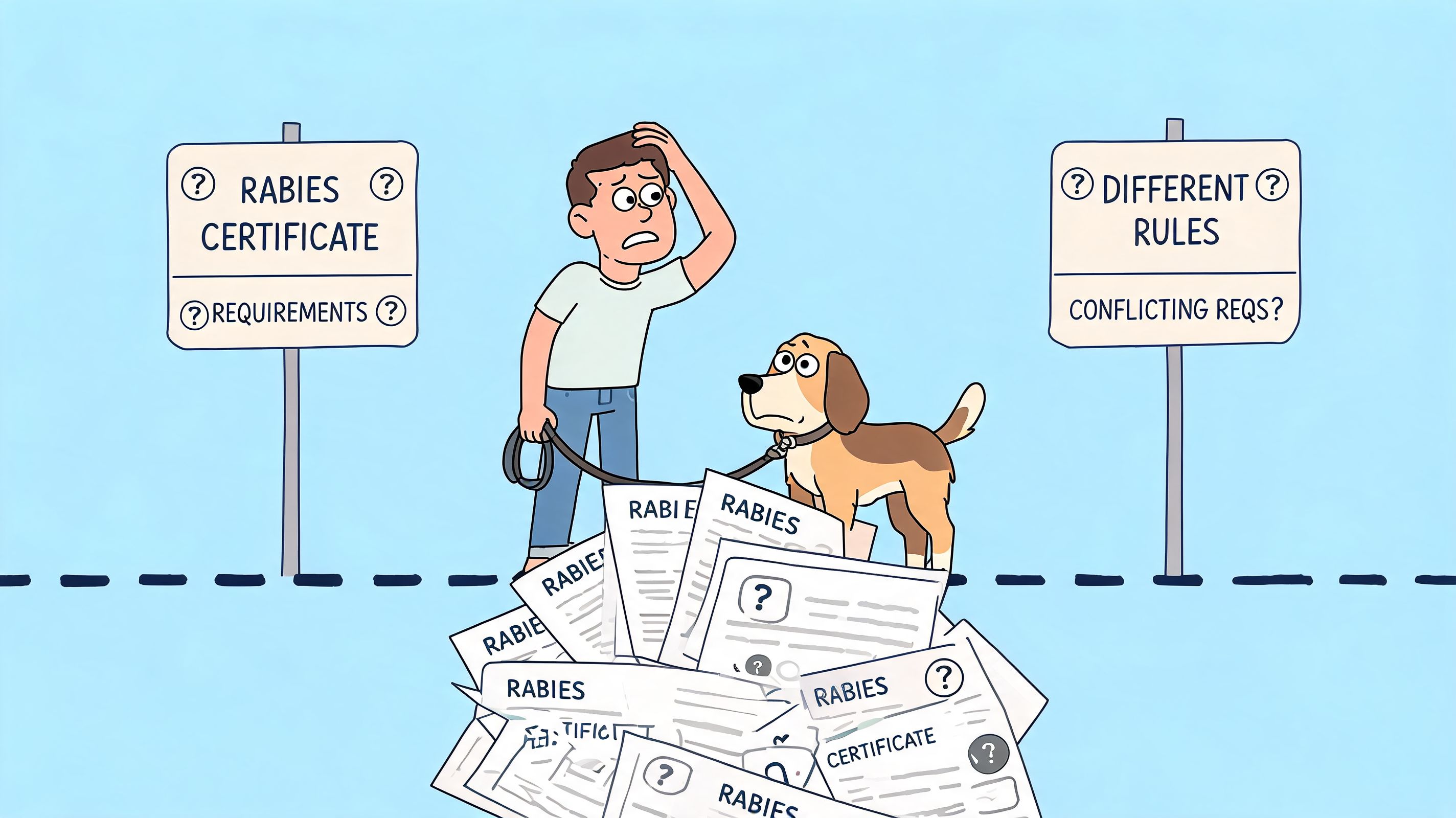
International travel is where rabies certificates stop being simple and start becoming very specific. A domestic certificate may be perfectly fine for local licensing and still fall short for border entry. That’s why owners and clinics need to think beyond “Is the pet vaccinated?” and move to “Will this exact document satisfy this exact destination?”
When the certificate alone isn’t enough
Some routes require more than proof of vaccination. For dogs traveling from high-risk countries, a rabies titer test is often required to avoid a mandatory 28-day quarantine. The blood sample must be drawn at least 30 days after vaccination and sent to an approved lab, and a result of at least 0.5 IU/mL is needed, according to the CDC guidance for dog importation.
That timing matters. If the blood is drawn too early, or if the result doesn’t meet the required level, the owner may need to repeat steps and adjust the travel plan. This is one of the most common points where people realize too late that “my dog got the vaccine” was only the beginning.
Common travel mistakes
International rabies certificate issues usually fall into a few buckets:
Wrong document for the route. A general clinic certificate may not include the level of detail needed for import review.
Timing errors. Vaccination date, blood draw date, and entry date all have to line up.
Microchip mismatch. The pet, the vaccine record, and any supporting test results have to point to the same animal.
Assuming all countries treat rabies the same way. They don’t.
What works better than last-minute cleanup
The best travel prep starts early and uses one master record for the pet’s vaccination history, microchip details, and destination-specific tasks. Clinics do better when one team member owns the compliance checklist rather than letting the process bounce between doctor, technician, and front desk. Owners do better when they stop relying on memory and gather every document in one place.
If international travel is even a possibility, act as if the certificate may be inspected by someone who has never met you, your pet, or your veterinarian. Because it probably will be.
A strong next step is learning the titer side of the process before you need it. This guide to the dog rabies titer test helps owners understand why a valid vaccine record still may not be enough for some entries.
International pet travel doesn’t reward guesswork. It rewards timing, clean records, and a little less winging it with your winging it.
How Passpaw Prevents Pet Travel Headaches
The hard part about pet travel compliance isn’t usually the medicine. It’s the coordination. Owners have pieces of the story. Clinics have other pieces. The destination rules add another layer, and everyone feels the pressure when the travel date gets close.

Why shared visibility matters
A collaborative platform helps because rabies certificates don’t live in isolation. They connect to microchip records, travel timelines, health certificate tasks, destination rules, and client communication. When those pieces live in separate inboxes or paper folders, mistakes multiply fast.
For clinics, the practical win is structure. Staff can work from one process instead of rebuilding the same checklist for every traveler. Owners can see what’s needed, what’s complete, and what still needs action. That removes a lot of the back-and-forth that turns simple questions into stressful delays.
Better for practices and owners
For veterinary teams, the value is operational. A platform can support document review, task management, and clearer communication with clients. That makes the work more predictable and easier to delegate safely.
For pet owners, the benefit is confidence. Instead of wondering whether the clinic has the latest file or whether the right form was emailed three weeks ago, they have a clearer path and a single place to track documents.
A tool like Passpaw’s pet travel planner fits especially well when a trip involves multiple moving parts, not just one vaccine visit. It helps bridge the gap between what the clinic knows and what the owner needs to do next.
Good pet travel prep feels boring in the best way. The paperwork is complete, the dates line up, and nobody is hunting for a document at the airport.
That’s the primary goal. Not flashy tech. Fewer surprises, fewer errors, and a smoother trip for the humans and the fur crew.
Your Rabies Certificate Questions Answered
Can I travel with a digital copy only
Sometimes a digital copy is useful for backup, but it shouldn’t be your only plan. Some travel steps still depend on original signatures or original paperwork review. Keep a digital copy for convenience, but ask your veterinarian and the destination authority what they expect you to carry in hand.
What if I lose the original rabies certificate
Call the issuing veterinary practice first. They may be able to provide a replacement copy or help verify what was originally issued. Don’t wait until the week of travel. If the document has to be recreated, reviewed, or matched to other paperwork, time matters.
Do cats need rabies certificates too
They may, depending on the destination and the travel context. Owners often focus on dogs because dog import rules get more attention, but cats can also need rabies documentation for travel. The safest approach is to check the destination’s pet entry rules early and ask your clinic to prepare cat paperwork with the same level of care.
Is a rabies tag enough proof
No. A tag can support local identification, but it does not replace the certificate. If a border official, airline, or government office asks for rabies documentation, bring the actual certificate.
A good rabies certificate doesn’t just prove your pet got a vaccine. It proves the details can stand up to scrutiny. That’s what keeps travel plans from going sideways at the last minute.
If you're planning pet travel and want fewer paperwork surprises, Passpaw gives pet owners and veterinary teams one place to organize documents, track requirements, and keep the rabies certificate process on course.

More articles
From regulatory changes to best practices for veterinarians and pet owners, our resources keep you ahead of the curve.