Are you a team member in a veterinary practice?
Are you a pet parent planning a trip with your furry pal?
Your Guide to the Best Portable Cat Carrier in 2026
Think of a portable cat carrier as your cat's personal travel suite. Whether you're heading to the vet down the street or flying across the country, it's their safe space. The best ones are secure, well-ventilated, and sized just right—giving your cat enough room to stand up and turn around, but not so much that they slide around. Nailing this choice is the first step to a calm journey for everyone involved.
Choosing Your Cat's First-Class Travel Companion
Getting ready for a trip with your cat goes way beyond packing their favorite toy mouse. The single most important item on your checklist is the right portable carrier. This one decision affects everything from your cat’s safety to whether you’ll even be allowed to board your flight.
It's helpful to think of the carrier as a temporary, mobile home for your cat. Just like our own homes, it needs to be safe, comfortable, and suited for its purpose. It's not just a box; it's a personal den that can make the difference between a relaxed traveler and a very stressed-out cat.
The Growing Demand for Safe Pet Travel
As more people travel with their pets, the demand for reliable and safe travel gear has shot up. The global pet carrier market is growing fast, which shows that owners are paying more attention to transportation safety than ever before. Choosing a carrier that meets specific airline and safety standards is now essential.
The numbers back this up. The pet carriers market was valued at around $764.5 million in 2023. Looking ahead, the demand for cat carriers specifically is expected to grow at a compound annual growth rate (CAGR) of 7.5% from 2026 to 2030, partly because of transportation safety rules. You can dig into more of the data from sources like Grand View Research.
An Overview of Carrier Types
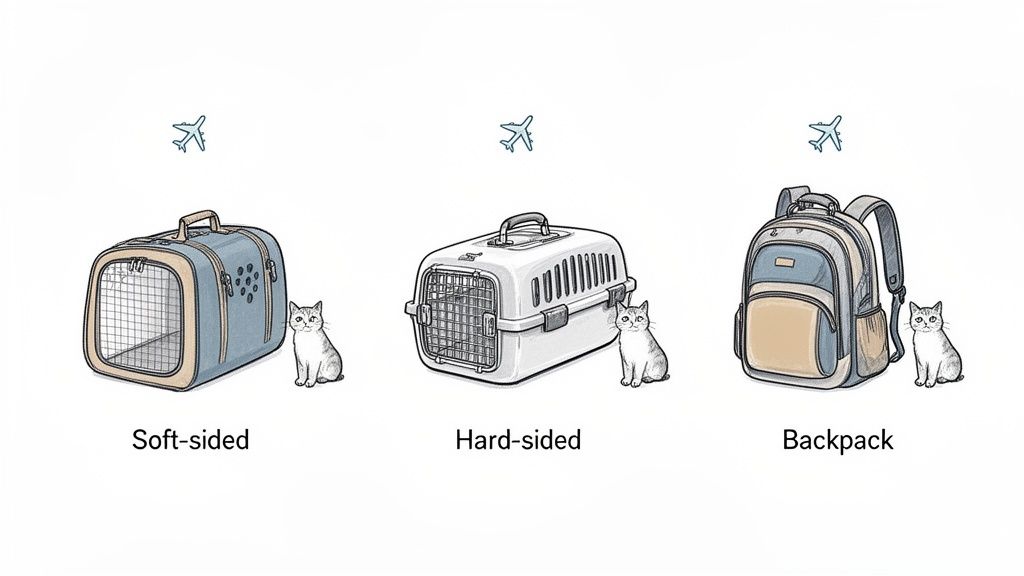
Before we get into the nitty-gritty, let's look at the main types of carriers you'll find. Each one is designed for different kinds of travel and different cat personalities.
To make it easier to compare, here's a quick breakdown of the most common options.
Quick Guide to Portable Cat Carrier Types
Carrier Type | Primary Material | Best For | Key Feature |
|---|---|---|---|
Soft-Sided | Nylon, Polyester | In-cabin air travel, car trips | Flexible, lightweight, easy to store |
Hard-Sided | Durable Plastic | Air cargo, vet visits, nervous cats | Maximum protection, easy to clean |
Backpack | Fabric & Mesh | Hikes, city walks, public transit | Hands-free convenience, good visibility |
This table gives you a starting point, but let's quickly unpack what makes each one tick.
Soft-Sided Carriers: Made of flexible fabrics like nylon, these are the go-to for in-cabin flights because they can squish a bit to fit under the seat. It’s no surprise they made up 59% of the market's revenue share in 2023.
Hard-Sided Carriers: Built from tough plastic, these offer the best physical protection and are a breeze to clean after an accident. They are often suggested if your pet is traveling in the airline's cargo hold.
Backpack Carriers: This modern style gives you a hands-free way to navigate busy airports, trails, or city streets. They’re fantastic for confident, curious cats who enjoy taking in the sights.
Remember, the right carrier does more than just move your cat from point A to B. It gives them a secure den that muffles the stress of new sights, sounds, and smells. A good travel experience starts here.
This guide will walk you through all the details, from measuring your cat for a purr-fect fit to understanding confusing airline rules. By the time you're done, you'll be ready to pick a carrier that makes every trip feel like first-class.
Finding the Purr-fect Fit and Style
Once you’ve settled on getting a portable cat carrier, the next challenge is finding one that works for your cat and your travel plans. The single most important factor here is size. This isn’t about luxury; it’s about safety.
A carrier that’s too big lets your cat slide around during bumps and turns, which is stressful and can even cause injury. One that's too small is uncomfortable, restricts airflow, and can be upsetting. The goal is to hit that "just right" sweet spot.
How to Measure Your Cat for a Carrier
Getting the right dimensions is easier than it sounds. All you need is a soft measuring tape and a calm cat. The key is making sure they have enough room to stand up and turn around completely inside.
Here’s a quick guide to getting the right measurements:
Measure the Length: Run the tape from the tip of your cat's nose to the base of their tail (don't include the tail itself). Add about 2-4 inches to this number for the ideal carrier length.
Measure the Height: With your cat standing, measure from the floor to the top of their head or the tips of their ears—whichever is higher. Add another 2-4 inches to find the minimum carrier height.
That little bit of extra space gives your cat the wiggle room they need to shift positions and stay comfortable on the journey. Just remember, these are general guidelines. If you’re flying, always double-check the airline's specific sizing rules.
Hard-Sided vs. Soft-Sided Carriers
Your next big decision is the material: hard-sided plastic or a soft-sided fabric carrier. Each has its place, and the best choice really depends on how you'll be traveling.
Hard-Sided Carriers:
Pros: Think of these as the tanks of the carrier world. They’re made from tough plastic, offer maximum protection, and are a breeze to wipe down and sanitize—a huge plus for anxious travelers who might have an accident.
Cons: They tend to be heavy, bulky, and don’t have much give when you’re trying to squeeze them into tight spaces.
Soft-Sided Carriers:
Pros: These are much lighter, easier to carry, and can often be compressed slightly to fit under an airplane seat. Many also come with handy pockets for treats, paperwork, or toys.
Cons: They don’t offer the same impact protection as a hard shell and can be trickier to clean thoroughly if there's a mess.
For most car trips and in-cabin flights, a soft-sided carrier is a fantastic option. For air travel in cargo or for cats who are particularly anxious or prone to scratching, the robust security of a hard-sided carrier is often the better choice. For a more detailed look at travel crates specifically, check out our guide on choosing the right travel crates for cats.
Exploring Modern Carrier Styles
The world of pet travel gear has expanded far beyond the basic box. Today, innovative styles like cat backpacks and strollers are popular for different kinds of outings.
Cat Backpacks: These are perfect for the adventurous pair. If you hike, navigate busy city streets, or use public transit, a backpack keeps your hands free and your cat securely snuggled against you. Many even feature bubble windows for curious cats who want a view.
Cat Strollers: An excellent choice for leisurely walks, especially for senior cats, young kittens, or pets with mobility issues. They offer a safe, enclosed way for your cat to get fresh air without the risks of being on a leash.
The demand for these varied carrier types is a global phenomenon. North America currently holds the largest market share (37.7% in 2023), but the Asia-Pacific market is the fastest-growing. In places with high-density urban living, like Japan, compact and lightweight carriers have become especially popular. With the global market projected to hit $1,047.69 billion in 2026, it’s clear that owners everywhere are committed to finding better, safer ways to travel with their pets, a trend noted by The Business Research Company.
Ultimately, the right style depends on your cat's personality and your lifestyle. A confident, curious cat might love the view from a backpack, while a more timid cat will likely feel safer in the classic fortress of a hard-sided carrier.
Navigating Airline Rules for Pet Travel
Flying with your cat can feel overwhelming, with a long list of rules that seem to change from one airline to the next. But getting a handle on these regulations isn't just about avoiding a headache at the check-in counter; it's about making sure your cat is safe and comfortable from departure to arrival.
First, you'll need to know whether your cat will travel in the cabin with you or in the cargo hold. In-cabin travel means your cat stays in their carrier under the seat in front of you. Cargo is a separate, temperature-controlled, pressurized area of the plane, typically for larger animals or specific international routes.
For any in-cabin travel, the carrier's ability to fit under the seat is the most important factor. This is precisely why most experienced travelers opt for soft-sided carriers—they offer just enough flexibility to fit into those tight spaces.
Understanding IATA Guidelines
Most airlines build their pet policies around the guidelines set by the International Air Transport Association (IATA). These aren't laws, but they serve as the global standard for animal welfare during air travel. Think of them as a baseline that each airline then adjusts.
IATA's core recommendations for a portable cat carrier focus on three key points:
Sufficient Size: Your cat must be able to stand up, turn around, and lie down comfortably in a natural position.
Secure Construction: The carrier must be escape-proof. This means sturdy zippers and secure latches that can't be nudged open by a curious nose.
Adequate Ventilation: Proper airflow is vital. A good carrier will have mesh panels on at least two or three sides to keep fresh air circulating.
When you're trying to get a feel for how airlines think, it can be helpful to look at their other policies. For example, understanding airline rules for travel companions like strollers can offer surprising insights into how they approach special items.
This simple flowchart shows how your travel plans directly influence your carrier choice.
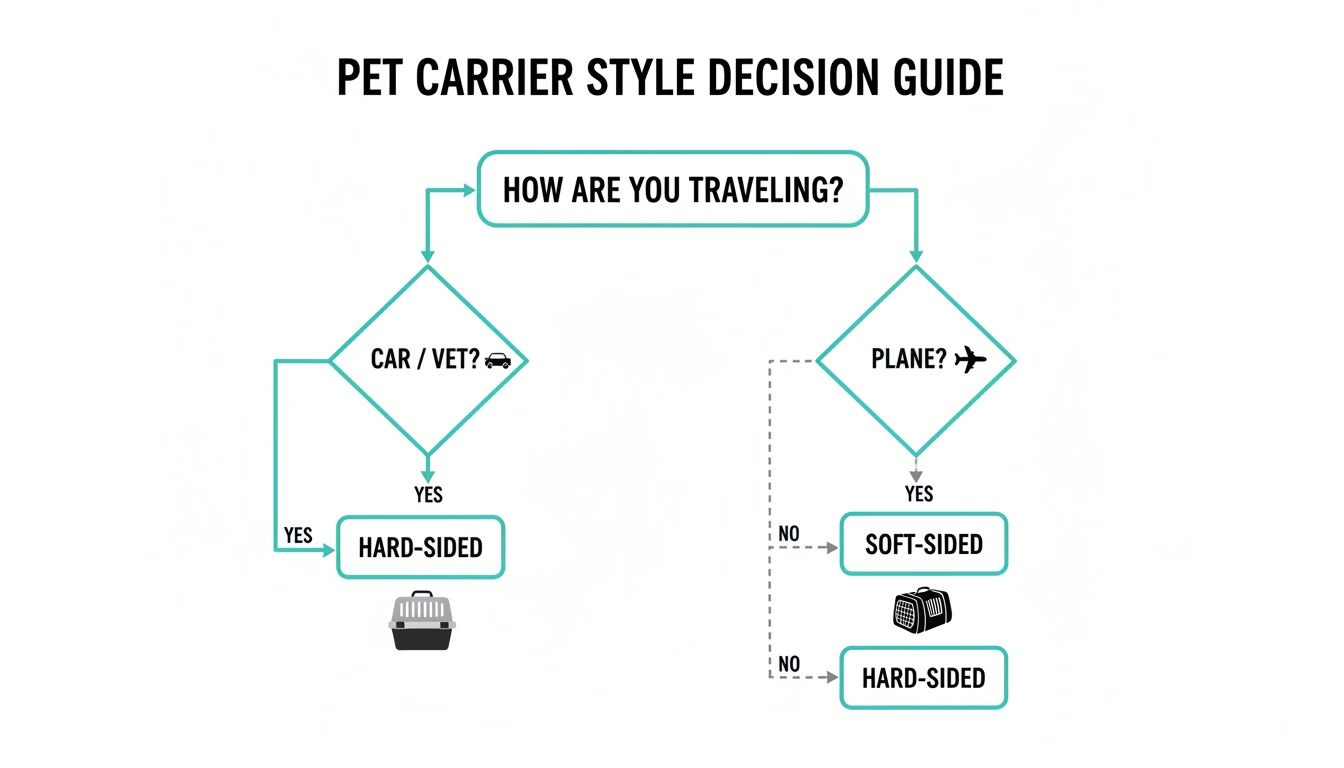
As you can see, soft-sided carriers are almost always the right call for flying, thanks to their under-seat flexibility. For car trips, however, the sturdy protection of a hard-sided carrier is often the better choice.
Always Check with Your Specific Airline
This is the most critical rule in pet travel. While IATA provides a solid foundation, every airline writes its own unique rulebook. What works for one airline might not fly on another, so never make assumptions.
Before you even think about booking a ticket—and definitely before buying a carrier—you need to call the airline directly or check the pet policy on their website. You'd be surprised how much rules can differ, from strict weight limits (pet plus carrier) to rules about certain breeds.
This is also where the paperwork comes in. Platforms like Passpaw are designed to help veterinary practices manage all the necessary health documents, making sure everything is aligned with both airline and destination country requirements. It takes a huge load off everyone's shoulders.
To ensure you're ready for flight day, use this checklist to confirm the details with your airline.
Your Airline Pre-Flight Checklist:
In-Cabin Spot Availability: Have you confirmed there's a spot for a pet on your flight? Airlines only allow a few pets in the cabin, so booking early is key.
Carrier Dimensions: Do you have the exact maximum dimensions (length x width x height) for an in-cabin portable cat carrier?
Weight Limits: What is the total combined weight limit for your cat and the carrier?
Health Certificate Requirements: What specific health documents do they need? Most ask for a certificate from a licensed vet issued within 10 days of travel.
Breed Restrictions: Is your cat's breed allowed? Some flat-faced (brachycephalic) breeds like Persians can have trouble with high altitudes and may face restrictions.
Associated Fees: How much is the pet fee? This is always a separate charge from your own ticket.
Running through this checklist might feel tedious, but it will save you from the gut-wrenching experience of being turned away at the gate. If you want to dive deeper, you can learn more about which airlines allow pets in the cabin in our complete guide. A little extra prep work is your ticket to a smooth start to your journey.
Must-Have Safety and Comfort Features
When you're picking out a portable cat carrier, it's easy to get caught up in the size and look of it. But what really separates a decent carrier from a great one are the small details that help ensure your cat's safety and comfort.
Think of it less like a simple box and more like a purpose-built mobile safe space for your cat.
Your cat’s security should be the number one priority. A flimsy carrier is just asking for a travel cat-astrophe, so you’ll want to give its construction a serious once-over. Look for features that tell you the manufacturer put safety first—it’s the only way you’ll get real peace of mind on the move.
Essential Safety Features to Look For
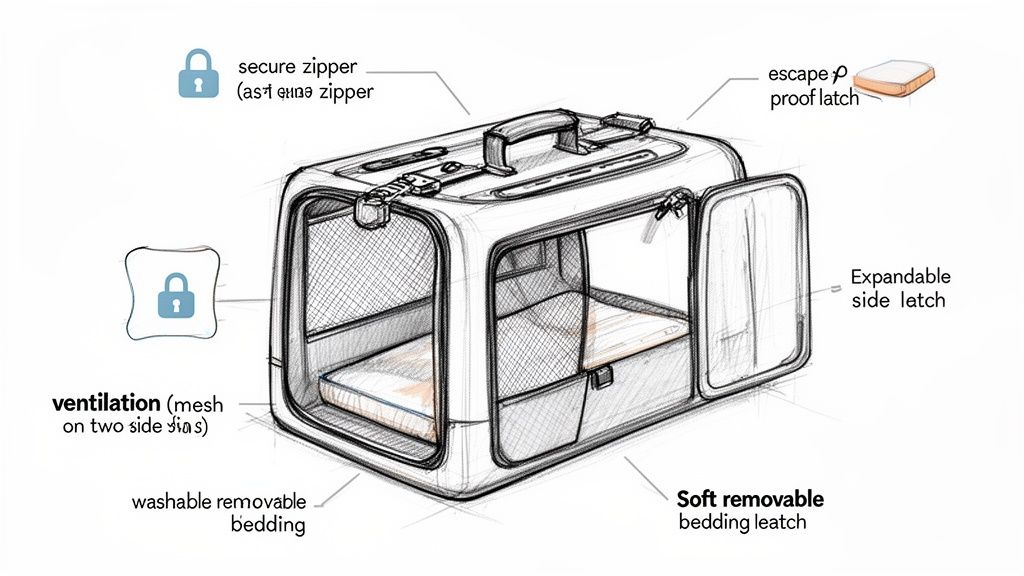
An escape-proof design is a must-have. Cats are smart, and if they want out, they can be incredibly persistent. The carrier needs to be smarter. Pay extra attention to the zippers and latches, since these are the most common escape routes.
Here are the key safety elements you should be looking for:
Locking Zippers: Many of the best carriers now have zippers that clip together or include small loops you can secure with a carabiner. This simple feature is often enough to stop a clever cat from pawing or nosing the zipper open.
Durable Materials: Whether it’s a soft-sided model with tough, rip-resistant fabric or a hard-sided one made from thick, sturdy plastic, the material needs to feel solid. Don't forget to check the seams and stitching to make sure they can handle a determined scratcher.
Sturdy Frame: For soft-sided carriers, a firm internal frame is crucial. It helps the carrier keep its shape and prevents it from collapsing on your cat, which is especially important when it’s tucked under an airline seat.
Secure Latches and Doors: If you're looking at a hard-sided carrier, make sure the door latches securely and can’t be bumped open by accident. A metal door is almost always more secure than a plastic one.
Your cat's safety during transit is paramount. A carrier with weak points is a risk not worth taking. Prioritizing escape-proof construction and durable materials ensures that their personal travel suite remains a secure and contained environment throughout the journey.
Key Comfort Elements for a Happy Traveler
Once you've got safety locked down, comfort is the next focus. A comfortable cat is a calm cat, and a few smart features can make all the difference in their travel experience. After all, nobody enjoys being stuck in a stuffy, cramped space.
Good ventilation is absolutely vital. A carrier with poor airflow can get hot and uncomfortable fast, which is a major source of stress for your pet.
Ample Ventilation: Look for a portable cat carrier with mesh windows on at least two or three sides. This creates cross-ventilation, keeping fresh air moving and giving your cat a good view of their surroundings, which can help reduce anxiety.
Soft, Washable Bedding: Most quality carriers come with a removable, machine-washable fleece or sherpa pad. It gives your cat a soft spot to lie down and makes cleanup a breeze if there's an accident.
Easy-to-Clean Surfaces: For the carrier itself, look for waterproof or water-resistant materials. A quick wipe-down can handle minor spills, keeping your pet’s space clean and hygienic.
Modern Features and Tech Integration
The pet carrier market is always improving, with new features popping up to make travel safer and more comfortable. Some of the latest carriers now have expandable sections that you can unzip during layovers or car breaks, giving your cat extra room to stretch. This is a fantastic feature for longer journeys.
Technology is also starting to play a bigger role. We're seeing more smart carriers with built-in fans, temperature controls, and even GPS tracking. In fact, industry reports show a growing trend towards tech-integrated, airline-friendly carriers, signaling that owners are expecting more from their pet's travel gear.
Choosing the right carrier is about more than just one trip; it’s an investment in your cat’s well-being for all your future travels. For a deeper look at the specifics of different travel crates, you might want to read our guide on how to choose the perfect pet crate for travel. By carefully weighing these features, you can confidently pick a carrier that truly puts your cat's well-being first.
Helping Your Cat Love Their Carrier
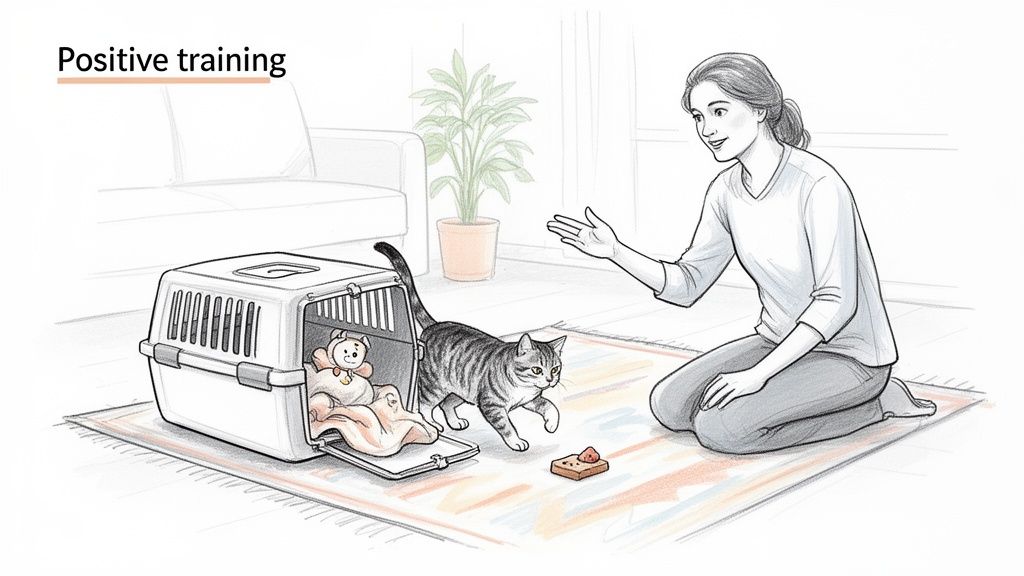
Even the perfect carrier is worthless if your cat views it as a scary box that only appears before a vet visit. The real secret to smooth travel lies in transforming that carrier from a source of dread into a cozy, mobile den. This process requires patience, but the payoff is a much calmer cat—and a far less stressful experience for you.
The goal is to reframe your cat's relationship with their carrier. Instead of signaling something unpleasant, you want them to see it as a familiar, safe space. Getting this right prevents a last-minute, pre-travel showdown and makes the entire journey more pleasant.
Step 1: Turn the Carrier into Furniture
First things first: make the carrier a normal, non-threatening part of your home. Don't just pull it out of a closet moments before you need to leave. Instead, make it a fixture in your cat’s daily life.
Place the open carrier in a room where your cat already likes to spend time, like the living room or your bedroom. Make it inviting by lining it with a soft blanket or an old t-shirt that smells like you. That familiar scent is incredibly reassuring to cats.
A portable cat carrier that is always present becomes just another piece of furniture. When it's no longer a strange object that only appears before a car ride, your cat's natural curiosity will often win over their initial fear.
To make the carrier even more appealing, toss a few high-value treats or their favorite toy near the entrance. As your cat gets comfortable, place the treats just inside the door, and then eventually all the way at the back. Never force them inside; let them explore on their own terms.
Step 2: Create Positive Associations
Once your cat willingly approaches and sniffs the carrier, you can start building stronger positive associations. This part of the process is all about directly linking the carrier with things your cat loves: food and comfort.
Start by feeding your cat their regular meals near the carrier. If they eat without hesitation, you can gradually move the food bowl closer until it’s right at the entrance. The final step is placing the food bowl just inside the carrier, encouraging them to step in to eat.
After they are consistently going inside to eat, try closing the door for just a few seconds while they are occupied. Always open it again before they finish eating and well before they show any signs of panic. Slowly increase the time the door is closed over several days, making sure every session ends on a positive note with praise or another treat.
Step 3: Take Practice Trips
After your cat willingly spends time in their carrier with the door closed, it's time to introduce motion. These practice trips need to be short, calm, and always end with a positive reward.
Start simple by just moving around the house. Gently pick up the carrier and walk with it to another room, then set it down and let your cat out. Reward them immediately. Once they are calm with this step, you can move on to the car.
Short Car Ride Practice:
Stationary Start: Secure the carrier in the car but don't start the engine. Sit with your cat for a few minutes, speaking calmly, then go back inside and reward them.
Engine On: Repeat the process, but this time, turn the engine on for a minute or two before you head back inside.
Short Drive: Once they're comfortable with the engine noise, take a very brief drive—just around the block is perfect. Make the destination a happy one: home.
Managing Travel Day Jitters
Even with plenty of practice, travel day can bring on a case of the jitters. To keep your cat as calm as possible, maintain a reassuring tone and consider using a calming pheromone spray inside the carrier about 15-20 minutes before you leave.
These sprays mimic natural feline facial pheromones, which create a sense of familiarity and security in their environment. Avoid loud noises and sudden movements, and your cat will take their cues from your relaxed demeanor.
Your Role in a Pet’s Journey: Guiding Clients Through Travel
When a client plans to travel with their pet, their first call is almost always to you, their veterinarian. Your role can—and should—go far beyond just signing a health certificate. By guiding them through the entire maze of pet travel, you become an essential partner in their journey.
This level of support doesn't just build incredible trust; it transforms a confusing, high-stress task for the client into a clear, manageable process.
A great starting point is the carrier itself. During routine appointments, you can proactively ask about travel plans. Explaining the importance of a good portable cat carrier early on helps prevent those last-minute scrambles for an appropriate crate and helps ensure the cat’s safety from day one.
Getting ahead of this conversation isn't just a win for the pet owner. It makes your team's life easier, too. When clients are well-informed from the start, the official certification process flows smoothly, with fewer mistakes and less frantic back-and-forth.
Guiding Clients on Carrier Selection
Your expert advice on choosing a carrier can make all the difference. Most pet owners are simply overwhelmed by the options and the jungle of conflicting airline rules. You can cut through that noise by focusing their attention on what really matters.
Start with the basics that apply to any carrier, whether for a quick car trip or a long-haul flight. Reinforce the key points: solid ventilation, secure latches, and enough room for the cat to stand up and turn around completely. Having a model carrier in your clinic to physically point out these features makes the advice tangible and memorable.
For any client planning to fly, the most critical piece of advice you can give is to check the specific airline's rules for in-cabin carriers. Explain that there's no single "airline-approved" carrier, and that dimensions and weight limits vary wildly. This one tip can prevent a truly heartbreaking denial at the check-in counter.
Streamlining Clinic Workflows with Modern Tools
Let's be honest: managing the mountain of paperwork for international pet travel is a huge time-sink for any busy practice. This is exactly where specialized platforms are changing the game. Solutions like Passpaw are built from the ground up to bring order to the chaos of pet travel certification.
By centralizing all the documents, tracking every deadline, and simplifying how you communicate with clients, these tools turn a complex, error-prone service into an efficient, high-value part of your practice. It saves your team hours, slashes the risk of human error, and cements your clinic's reputation as the go-to expert.
For instance, instead of your team manually tracking vaccination and health certificate deadlines on a spreadsheet, the right platform sends automated reminders to both your staff and the client. It helps ensure every single requirement for the destination country is identified and met, turning a logistical nightmare into a clear, step-by-step workflow.
For veterinarians ready to upgrade this part of their practice, you can learn more about getting started with pet travel certification.
To help structure these conversations, here's a quick checklist your practice can use to guide clients, showing how a dedicated workflow tool fits in.
Vet Pre-Travel Consultation Checklist
This table provides a simple framework for veterinary teams to follow during pre-travel consultations, ensuring no critical step is missed.
Checklist Item | Key Consideration | Passpaw Workflow Integration |
|---|---|---|
Microchip Verification | Is the microchip readable? Is the registration info current? | Upload microchip details into the pet's travel file and set a task to verify registration with the client. |
Vaccination Status | Are all vaccinations, especially rabies, current and given within the required timeframes? | Track all vaccination dates and automatically flag any expirations that conflict with the travel timeline. |
Carrier Check | Does the client's portable cat carrier meet airline and IATA guidelines? | Send clients a pre-travel checklist that includes specific carrier requirements and links to official guidelines. |
Health Certificate | Are all necessary forms and endorsements identified and scheduled for completion? | Automatically prioritize tasks based on the flight date to ensure all paperwork is signed and endorsed on schedule. |
By adopting a structured approach and using tools designed for the job, your clinic can make international pet travel a seamless, positive experience for everyone involved—your clients, their pets, and your team.
Frequently Asked Questions
Trying to figure out the world of cat travel can definitely bring up a lot of questions. We get it. Here are some straightforward answers to the most common things we hear about choosing and using a cat carrier.
How Do I Know if a Carrier Is Airline Approved?
This is a common point of confusion—there’s no universal “airline approved” sticker. The responsibility really falls on you to check the specific airline’s rules before you fly.
Most airlines prefer soft-sided carriers for in-cabin travel because they have some give and can fit under the seat in front of you. Always call the airline or check their website to confirm their exact maximum dimensions and weight limits. Don't leave this to guesswork.
Should I Choose a Hard or Soft Carrier?
This really comes down to how and where you'll be traveling.
Soft-Sided Carriers are great for in-cabin air travel and most car trips. They're lightweight and flexible, making them easier to handle.
Hard-Sided Carriers offer more structural protection and are often suggested if your cat is traveling in cargo. They're also much easier to wipe down and deep clean.
How Can I Make the Carrier More Comfortable?
Your goal is to make the carrier feel like a safe, cozy space, not a cage. Start by placing a familiar blanket or an old t-shirt with your scent inside.
Adding a soft, absorbent pad is also a great idea for both comfort and to manage any potential accidents. Above all, make sure the carrier has plenty of ventilation and never leave your cat alone in a parked car, even for a minute.
What if My Cat Hates Their Carrier?
Most cats will be suspicious of a carrier at first, so don't wait until travel day for the big reveal. Start weeks in advance by leaving the carrier open in your living room.
Toss some treats or a favorite toy inside so your cat can explore it on their own terms. This helps them see it as a normal part of the furniture, not a trap. Once they're comfortable, try a few short practice trips in the car that end back at home—not at the vet—to build a more positive association.
Ready to simplify the paperwork for your pet's next journey? Passpaw offers a streamlined solution for managing international pet health certificates, making travel compliance easier for veterinarians and pet owners alike. Learn more at https://passpaw.com.
More articles
From regulatory changes to best practices for veterinarians and pet owners, our resources keep you ahead of the curve.