Are you a team member in a veterinary practice?
Are you a pet parent planning a trip with your furry pal?
A Guide to Travel Crates for Cats Your Feline Will Actually Like
Choosing the right travel crate for your cat is about more than just getting from point A to point B. It’s about giving them a safe, comfortable space on the road or in the air. A good crate isn’t just a box; it’s a key piece of gear with important features like good ventilation, secure latches, and strong materials that keep your cat safe no matter what the journey brings.
Why Your Cat’s Travel Crate Matters
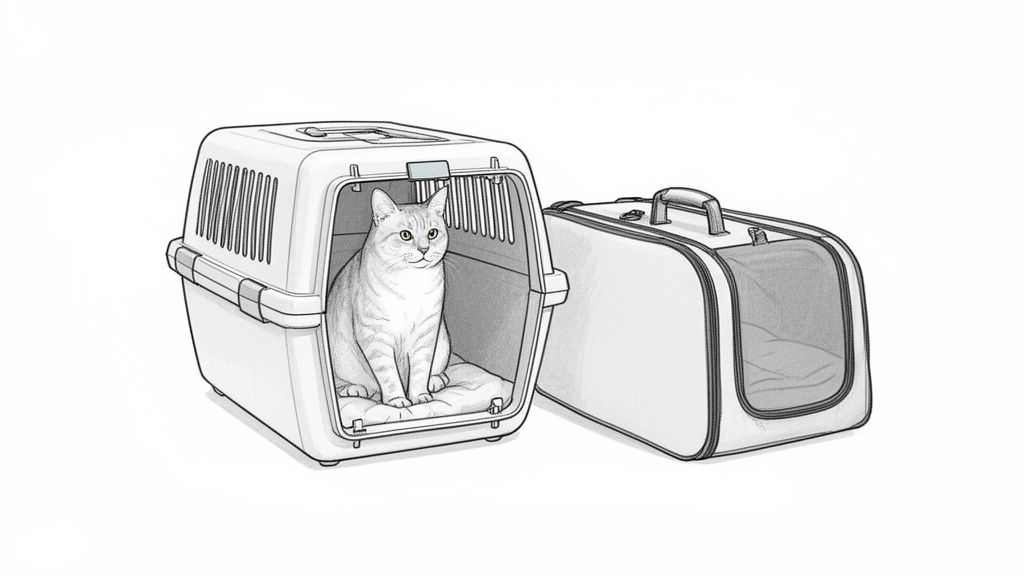
Let's be honest, traveling with a cat can be stressful. But a successful trip often comes down to one of the very first decisions you make: picking the right carrier. Think of it as your cat's personal safe space—a mobile den that brings a sense of security and familiarity to a totally new environment.
A well-chosen crate can be the difference between a calm traveler and a frantic, unhappy passenger. It’s a foundational piece of gear that directly impacts your cat’s well-being, whether you're just driving to the vet or flying across the country.
The Foundation of Safe Feline Travel
You’re not alone in wanting your pet to travel in comfort. The global pet travel crate market was valued at an estimated $1.5 billion in 2025 and is expected to grow significantly through 2033. This boom shows just how many of us now see our pets as part of the family, ready to join in on our adventures.
Interestingly, hard-sided crates make up over 60% of that market, largely thanks to their durability and how they often meet airline recommendations. You can see more details on this trend in reports covering pet travel market growth.
This focus on quality gear highlights a key point: safety is a top priority. An escape-proof latch isn’t just a nice-to-have feature; it’s what helps prevent a scary situation at a busy airport or a highway rest stop. Proper ventilation is just as critical to prevent overheating and ensure your cat can breathe easily.
A travel crate isn't just about containment; it's about creating a secure, personal environment that moves with your cat, helping them feel grounded and protected no matter where they go.
Key Elements of a Great Cat Crate
So, what should you actually look for? The first decision is between the two main styles: hard-sided and soft-sided. Each has its pros and cons, and the right choice really depends on how you're traveling.
Hard-Sided Crates: These are the top choice for air travel, especially if your cat is flying in cargo. They offer the best protection from bumps and are a breeze to clean up if accidents happen.
Soft-Sided Carriers: Great for in-cabin flights or road trips. They're lightweight, more flexible to store, and their cozy interior can feel less sterile and more like a den for anxious cats.
No matter which type you pick, some features are universal must-haves. Look for secure locking mechanisms (steer clear of flimsy plastic clips), plenty of ventilation on at least two sides, and sturdy construction. The goal is to find a carrier that makes your cat feel safe, not trapped. It’s the first real step to making your next journey a paw-sitively smooth one.
Hard vs. Soft Cat Carriers: A Detailed Comparison
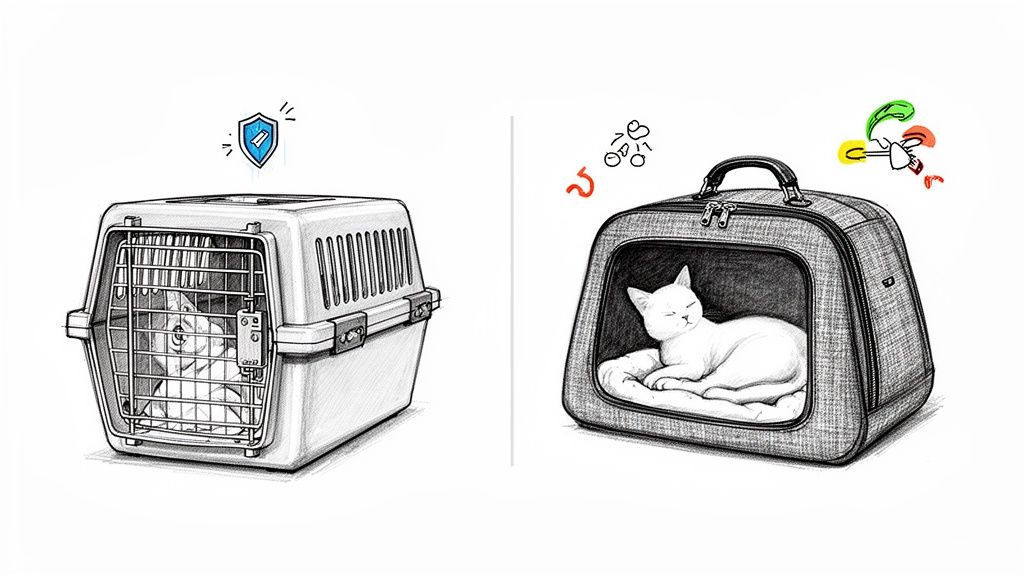
Choosing between a hard and soft travel crate feels like a classic showdown in the pet world. Every cat owner has a preference, but the right choice really boils down to your cat's personality and where you’re headed. It’s about much more than just looks—it's about finding the safest, most comfortable, and practical option for the journey.
And it’s a choice more people are making. The pet carrier market is growing steadily, with the cat segment alone projected to expand by 5-6% annually through 2031. Right now, soft-sided bags are very popular with a 59% revenue share, largely because they're cozy and fit under the seats of roughly 80% of major airlines.
On the flip side, hard kennels are the go-to for about 70% of international flights where escape-proof security is a major consideration. If you're curious, you can dig into these pet carrier market trends to see just how much feline travel is taking off.
Hard-Sided Cat Crates
Think of a hard-sided crate as your cat's personal bodyguard. Usually made from tough, durable plastic, their rigid structure offers excellent protection against bumps, drops, and the general chaos of travel. This is extremely important if your cat is traveling in the cargo hold of an airplane.
They're also a breeze to clean. Accidents happen, especially when a cat is stressed. With a hard crate, you can just wipe down the non-porous surface, and it’s good as new. That hygienic advantage makes them a practical choice for any trip.
For air travel, these crates are often the preferred option for cargo. Most airlines have strict requirements for cargo transport, and hard-sided carriers are built to meet them.
Look for these key features:
Bolt-together construction: It's a good idea for the top and bottom halves to be secured with metal nuts and bolts, not flimsy plastic clips that can pop open.
A single metal door: A strong, single metal door is far more secure than plastic or multi-door designs.
Ample ventilation: Proper airflow is essential, so look for openings on at least three sides.
Soft-Sided Cat Carriers
While hard crates are the champions of protection, soft-sided carriers often win on comfort and convenience. Made from materials like nylon or polyester, they have a cozier, den-like feel that can be very soothing for an anxious cat. That padded interior can make a trip to the vet feel a lot less clinical.
Their biggest selling point is flexibility. Soft-sided carriers can be gently compressed to slide under an airplane seat, which is needed for in-cabin travel. They’re also lightweight and easy to carry, and many come with shoulder straps to free up your hands.
A soft-sided carrier can feel more like a familiar bed than a sterile box, which can significantly reduce your cat's stress levels during shorter journeys. This sense of security is invaluable for nervous felines.
Hard vs Soft Cat Crate Feature Comparison
To help you decide, here’s a quick side-by-side comparison of the key features for each type of crate. Think about what matters most for your specific travel plans and your cat's temperament.
Feature | Hard-Sided Crate | Soft-Sided Crate |
|---|---|---|
Primary Use Case | Air cargo, long road trips, escape-prone cats | In-cabin air travel, short trips, calm cats |
Protection | Excellent. Rigid structure protects from impact. | Good. Padded but offers less impact protection. |
Security | Superior. Metal bolts and doors help prevent escapes. | Fair. Zippers can be opened by determined cats. |
Cleaning | Very Easy. Non-porous plastic wipes clean. | Moderate. Fabric can absorb messes and needs washing. |
Portability | Bulky. Heavier and more awkward to carry. | Excellent. Lightweight with carrying straps. |
Airline Compliance | Often suggested for cargo travel. | Ideal for in-cabin travel. |
Comfort | Less cozy, but offers more stable footing. | Very cozy and den-like. |
Storage | Takes up significant space when not in use. | Collapsible and easy to store. |
Ultimately, there's no single "best" crate for every situation. A sturdy hard crate might be perfect for a cross-country move, while a lightweight soft carrier is ideal for trips to the vet.
Making the Right Choice for Your Trip
So, how do you pick the purr-fect carrier? It all comes down to your travel plans.
Go with a hard-sided crate if:
You’re flying and your cat must travel in the cargo hold. This is a common airline rule.
Your cat is a known escape artist who claws or chews at carriers.
You prioritize maximum physical protection and easy cleaning above all else.
You're taking a long road trip and want the peace of mind that comes with a super-sturdy crate.
A soft-sided carrier is your best bet if:
You’re flying and your cat is small enough to travel with you in the cabin.
Your main use will be quick car rides to the vet or groomer.
Your cat is generally calm and would feel more secure in a cozier space.
Portability and easy storage are top priorities for you.
The best travel crate is one that meets the demands of your journey while keeping your furry friend safe and as comfortable as possible. For a deeper dive, check out our guide to understanding airline pet carrier requirements.
How to Measure Your Cat for a Perfectly Sized Crate
Finding the right travel crate for your cat feels a bit like Goldilocks—not too small, not too big, but just right. A crate that’s too cramped can cause stress and discomfort. On the other hand, one that’s too spacious can make your cat feel insecure, letting them slide around with every bump in the road.
Getting the size correct is your first step toward a peaceful journey for everyone. The good news? You don’t need to be a professional tailor to get it right. It all comes down to two simple measurements.
The Two Essential Measurements
Forget complicated math. All you need is a soft measuring tape and, ideally, a calm and cooperative cat.
Here’s what to measure:
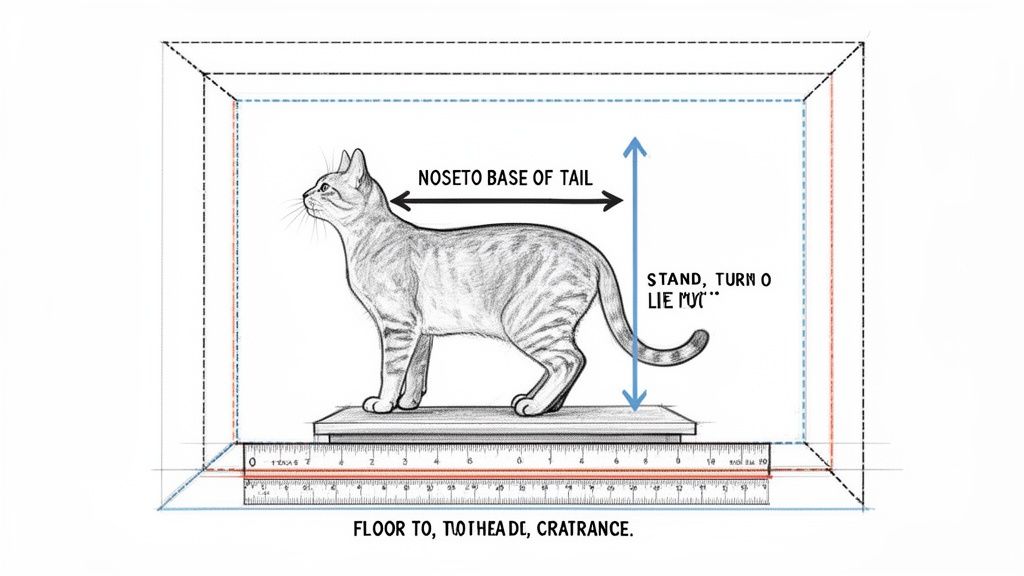
Length (A): Start at the tip of your cat’s nose and measure straight back to the base of their tail. Don’t include the tail itself—its curve will just throw off the measurement.
Height (B): While your cat is standing naturally, measure from the floor up to the top of their head or the tips of their ears, whichever is higher.
These two numbers are all you need to find the perfect fit. Pro tip: try to measure when your cat is relaxed, maybe after a meal or a good nap. A wiggly, anxious, or overly playful cat will only give you inaccurate numbers and a whole lot of cat-titude.
Applying the Turnaround Rule
With your cat’s length and height in hand, you can now apply the golden rule of crate sizing: the turnaround rule. This isn’t just a recommendation; it’s a standard recognized by animal welfare organizations and most airlines for humane transport.
A properly sized travel crate must be large enough for your cat to comfortably stand up, turn around completely, and lie down in a natural position without being cramped.
This simply means the crate's interior needs to be a bit larger than your cat. A good rule of thumb is to add about four inches to both the length and height you measured. This extra room gives them enough space to stretch, reposition, and not feel trapped.
For instance, if your cat is 16 inches long and 10 inches high:
Ideal Crate Length: 16 inches + 4 inches = 20 inches
Ideal Crate Height: 10 inches + 4 inches = 14 inches
That little bit of extra space is crucial. It ensures your cat can stand fully without their head hitting the top and turn around without feeling like they’re in a straightjacket.
Sizing Up for Airline Travel
Flying with your cat, especially if they’ll be in the cargo hold, adds another layer of requirements. The International Air Transport Association (IATA) sets guidelines that most airlines follow to ensure animal safety and welfare.
Airlines typically want 2-3 inches of extra headroom above your cat's head when they are standing inside the crate. This is a common safety standard for many carriers. If you show up with a crate that’s too small, you may risk being denied boarding at check-in—a nightmare scenario for any pet owner.
Always, always double-check the specific pet travel policy of the airline you're using. You can find this on their website, or you can call them directly. For a more detailed breakdown, our guide on airline pet carrier requirements is a great resource.
Basing your choice on your cat's actual measurements is the only reliable way to go. It’s far more accurate than the weight-based suggestions you see on crate packaging, which don’t account for how lanky or compact your cat might be. Get the measurements right, and you can confidently pick a crate that’s a perfect, safe fit.
Acclimating Your Cat to Its Travel Crate
Here's the real secret to a peaceful journey: it’s not some magic calming spray or a fancy toy. The key is helping your cat see its travel crate as a safe space, not a scary box. For most cats, the carrier only ever means one thing—a stressful trip to the vet. That creates an instant negative association we need to undo.
The goal is to completely flip that script. We want to turn the crate into a familiar, cozy den they’ll walk into on their own. This isn't a process you can rush; it’s a gentle art that takes patience and plenty of positive reinforcement. Your best bet is to start weeks, or even months, before your trip. By moving slowly and reading your cat's cues, you can change the crate from a source of fear into a source of comfort.
Creating a Positive First Impression
First things first, you have to make the crate a normal, boring part of your cat's environment. Place the carrier down in a room where your cat already hangs out, like the living room or your office. Then, take the door off completely, or at least prop it wide open so it can’t accidentally swing shut and spook them.
Next, make the inside as inviting as possible.
Familiar Scents: Line it with a soft blanket or an old t-shirt that smells like you. A familiar scent is very reassuring for a cat.
Favorite Toys: Toss a few of their favorite toys inside—a crinkle ball, a catnip mouse—to spark their curiosity.
Treat Trails: Create a little trail of high-value treats that leads right into the crate. Let your cat discover them on their own time, without any pressure from you.
The whole point here is to let your cat explore the crate at their own pace. Don't ever force them inside. Let them sniff it, walk around it, and eventually, step inside on their own terms. This phase is all about building trust and turning the crate into just another non-threatening piece of furniture.
Building Comfort and Confidence
Once your cat seems comfortable investigating the open crate, you can start building on that positive foundation. Begin feeding your cat their regular meals right next to the carrier. Over a few days, gradually move the food bowl closer until it’s just inside the entrance, and eventually, all the way in the back.
This simple trick connects the travel crate with something they already love—food. It's a powerful way to build a positive association. As you do this, keep praising your cat with a soft voice whenever you see them interacting with the crate.
The key is to make every single interaction with the crate rewarding. Whether it's a treat, a meal, or gentle praise, your cat needs to learn that good things happen when the carrier is around.
Let's be honest, challenges in cat travel are common. In fact, studies show that 25% of cats experience significant stress in transit, often from things like poor ventilation or uncomfortable padding. Thankfully, innovations like breathable mesh panels and orthopedic bases have been shown to cut that anxiety by up to 40%. Proper acclimation is a huge piece of that puzzle, making the crate a predictable, safe space. To see how carrier design impacts comfort, you can read more about these pet carrier market insights.
Practicing for the Real Thing
When your cat is happily eating meals inside the crate, it's time to bring the door back into the picture. After they finish a meal inside, quietly close the door for just a few seconds, then immediately open it and give them a treat. Slowly increase the time the door is closed, working your way up to a few minutes.
If your cat shows any sign of distress—like meowing loudly or pawing at the door—you’ve gone too fast. No big deal. Just shorten the time next time. It’s far better to have ten positive, 10-second sessions than one negative 5-minute ordeal.
Once they're calm with the door closed for a few minutes, try picking up the carrier and just holding it for a moment before putting it down and letting them out. The next step is a short walk around the room. From there, you can finally progress to brief practice trips in the car.
Start with a quick drive.
Gently place your cat inside their now-familiar and safe-feeling crate.
Secure the crate properly in your car so it can't slide around.
Take a very short drive—just around the block is perfect for the first time.
Come straight back home, let your cat out, and reward them with praise and a special treat.
These little mini-trips teach your cat that not every carrier journey ends at the vet. By keeping the experiences short and positive, you help them get used to the motion and sounds of travel. For more guidance on getting ready for the big day, check out our other resources on successful pet travel.
Navigating Airline Rules and Travel Paperwork
Flying with your cat is about more than just finding the right crate. You're also stepping into a world of specific airline rules and a surprising amount of paperwork. Getting this part right is the key to a smooth check-in and avoiding any last-minute surprises at the airport.
Every airline has its own rulebook, so you should treat their website as your main source of information. These rules cover everything from the exact crate dimensions for in-cabin travel to the type of hardware suggested for cargo.
Understanding Airline Crate Requirements
Whether your cat is flying in the cabin with you or as cargo, the crate has to meet some pretty strict guidelines. For in-cabin travel, airlines usually want soft-sided carriers that can fit comfortably under the seat in front of you. They'll give you maximum dimensions, and it's up to you to make sure your carrier will fit.
For cargo travel, the rules are even tighter. Most airlines stick to the standards set by the International Air Transport Association (IATA).
These guidelines are all about safety and usually suggest:
A hard-sided plastic crate secured with metal nuts and bolts.
A single, solid metal door with a secure spring-lock latch.
Plenty of ventilation on at least three sides of the crate.
"Live Animal" stickers and proper identification labels.
Always, always double-check the specific requirements with your airline. A carrier that doesn't meet the airline's rules is one of the top reasons pets get denied boarding.
The Paperwork Puzzle: Health Certificates and More
Beyond the crate, you'll need a folder full of documents to show your cat is healthy and ready to fly. The most important document is the Certificate of Veterinary Inspection (CVI), often just called a health certificate.
This form is issued by an accredited veterinarian and confirms your cat is healthy enough for travel and up-to-date on vaccinations. Here's the catch: most airlines require this certificate to be issued within 10 days of your flight, so the timing is critical.
You’ll also need proof of rabies vaccination, especially if you're traveling internationally or to certain states or countries. Keep these original documents with you—not in your checked luggage! You'll need to show them at the check-in counter.
This helpful timeline shows the key steps to getting your cat comfortable with its carrier, from the first introduction to practice trips.
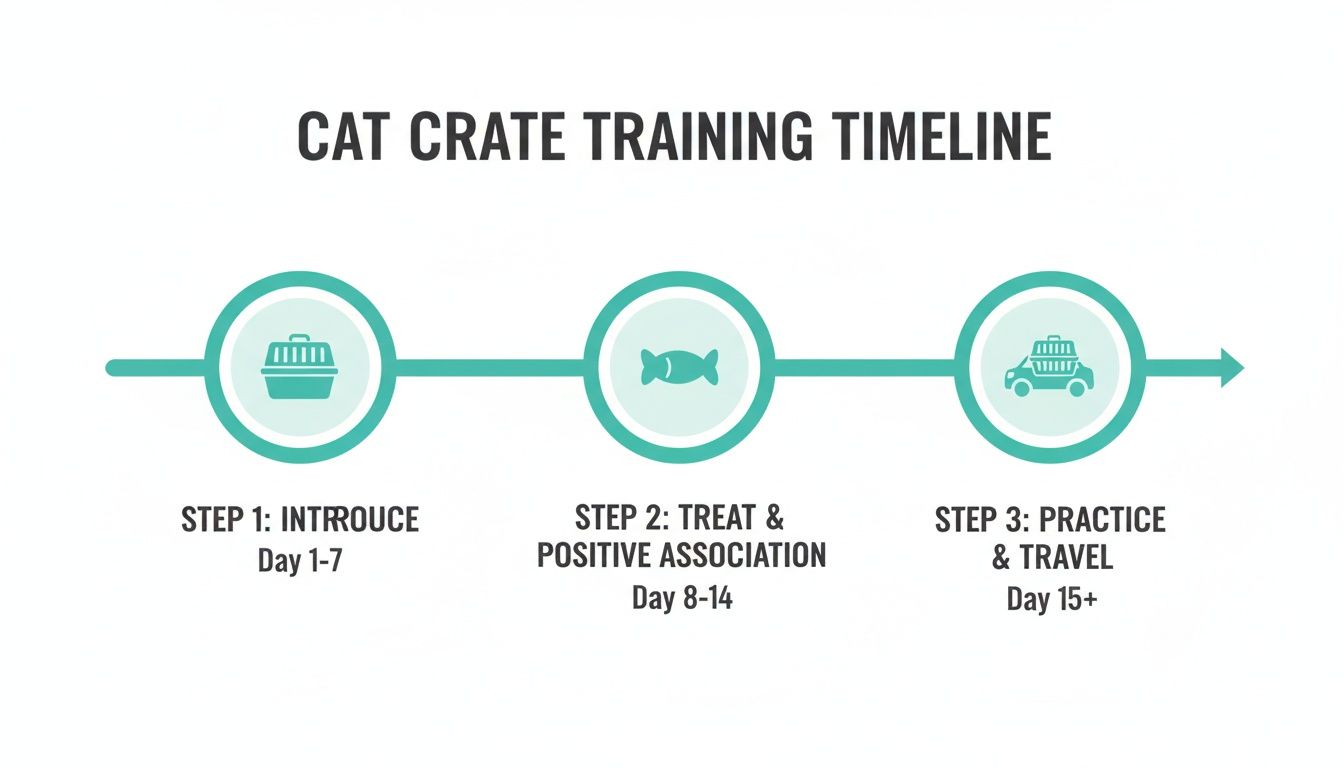
As you can see, successful crate training is a gradual process built on trust and positive reinforcement. It’s not something you can rush a few days before your trip.
Streamlining the Process with Digital Tools
Juggling vet visits, paperwork deadlines, and making sure you've checked every single box can feel like a full-time job. This is where modern tools can make a huge difference, turning a difficult task into a manageable one.
Getting the crate right is just one part of the equation. Airlines often encourage compliant travel crates for 75% of pet cargo, a policy that has helped slash rejection rates from 18% down to under 5%. Still, documentation errors affect nearly 30% of pet travel attempts. Digital platforms like Passpaw help automate this paperwork maze by offering real-time validation for over 50 countries and sending task alerts based on your travel date, which can cut document errors by 60%. It's no wonder a 2023 survey found that 72% of owners delay trips over compliance fears—a statistic that helpful tools are working to change.
Think of it this way: the airline is responsible for your cat's safety during the flight, but you're responsible for showing they are safe to fly. Proper paperwork is your proof.
Services designed for pet travel can keep all your documents organized in one place, help you track deadlines for health certificates, and ensure every destination-specific requirement is met. For a more detailed walkthrough, our article on the essentials of flying with a cat is an excellent resource. By planning ahead and using the right tools, you can ensure all your paperwork is in perfect order, making the airport experience much smoother for everyone involved.
Your Travel Day Checklist for a Smooth Trip
When the big day finally arrives, a little bit of prep work can make all the difference. Being organized doesn't just keep you calm; it sends a clear signal to your cat that everything is under control. This isn't about a rigid, stressful schedule—it's about having a simple game plan to ensure a smooth, low-panic departure for everyone.
Think of it as your pre-flight rundown. A quick check of these essentials before you head out the door means no last-minute scrambling. And as any experienced pet parent knows, a calm owner almost always leads to a calmer cat.
Crate Comfort and Essentials
First things first, let's make sure the crate is more of a cozy den than a scary box. Setting it up for comfort is one of the easiest ways to reduce your cat's travel anxiety.
Absorbent Bedding: Start by lining the crate floor with a puppy pad or a similar absorbent liner. You’ll be grateful for this later. Then, put a soft blanket that smells like home on top for a bit of familiar comfort.
Clip-On Dishes: Attach food and water dishes to the inside of the crate door. They should be empty for the journey itself, but this makes it easy for airline staff to give your cat water during a long layover.
Secure Identification: Your cat should already be wearing a collar with an ID tag. Double up by attaching another tag directly to the crate with your name, phone number, and destination address clearly written.
One last pro tip: give your cat a final chance to use the litter box right before you leave. It’s a simple step that can keep the crate cleaner and your cat much happier during the trip.
Final Pre-Travel Preparations
With the crate ready to go, there are just a few more details to tick off. These might seem small, but they’re very important for a successful trip.
To help prevent motion sickness or accidents, it's best to hold off on food for about four to six hours before you leave. It's perfectly fine to offer small sips of water right up until you head out the door. Now is also the time to make sure all your "Live Animal" stickers and contact info are securely attached to the outside of the crate.
Remember, the goal on travel day is predictability and calm. By having a checklist, you create a structured, low-stress routine that benefits both you and your cat.
This isn't the moment for frantic energy. Take a deep breath and run through this final checklist of documents and comfort items before you walk out the door.
Key Documents: Grab the folder with your government-issued ID, flight details, and your cat's health certificate. Make sure it's easily accessible—not buried in your checked luggage!
Comfort Items: If the airline allows it, tuck a small toy or a piece of your unwashed clothing into the crate. Your familiar scent can be very reassuring.
Calming Aids: If your vet suggested a calming spray or supplement, now's the time to use it. Follow their instructions on dosage and timing precisely.
To make packing for the big day even easier, here's a quick-reference table summarizing everything you'll need.
Cat Travel Day Packing Checklist
This table breaks down the essential items to pack in or attach to your cat's travel crate, ensuring they have everything they need for a safe and comfortable trip.
Category | Essential Items | Pro Tip |
|---|---|---|
Crate Interior | Absorbent puppy pad, familiar blanket or t-shirt. | Roll up an extra blanket to place along the side; it can provide a sense of security for your cat to snuggle against. |
Crate Exterior | "Live Animal" stickers, secure ID tag with contact and destination info. | Use a zip tie to attach the ID tag to the crate so it can't easily be torn off. |
Attachments | Clip-on food and water dishes (empty), small bag of food taped to the top. | Pre-portion the food into a ziplock bag. This makes it easy for airline staff to feed your cat during a layover without guessing amounts. |
Personal Carry-On | Cat's health certificate, travel documents, vet-prescribed calming aids. | Keep digital copies of all documents on your phone as a backup. Platforms like Passpaw are great for this. |
By methodically going through your list, you can leave home feeling confident and prepared. You’ve turned a potentially chaotic day into the start of your next great adventure together.
Have More Questions About Cat Travel Crates?
Even with a perfect plan, last-minute questions always seem to pop up. Getting them answered ahead of time is the key to feeling confident on travel day. Let's walk through some of the most common things pet owners ask.
Should I Put Food or Water in the Crate?
This is probably the number one question we hear. For flights, the best practice is to clip empty food and water bowls to the inside of the carrier door. Airlines typically recommend skipping meals right before and during the flight to avoid upset stomachs and messes.
But having the bowls attached means that during a long layover, airline staff can easily give your cat some water without having to open the crate. It's a simple step that adds a layer of safety.
What About Sedation? It Seems Kinder.
It's a tempting thought, especially if you have an anxious cat. But nearly all veterinarians and airlines strongly advise against sedating your pet for air travel.
Sedatives can interfere with a cat's natural ability to regulate their body temperature and keep their balance, which is a serious risk at high altitudes. It's far safer to help them feel comfortable in their carrier through positive association beforehand.
My Cat Absolutely Hates the Crate. What Now?
This is a classic problem, usually because the crate only comes out for scary trips to the vet. The trick is to change that association, and you'll want to start a few weeks before your trip.
Make the travel carrier a normal piece of furniture in your living room. Leave the door open, put a soft blanket inside, and toss in a few high-value treats when your cat isn't looking. This helps them see it as a safe den, not a prison. Short, fun "practice trips" around the house or to the end of the driveway (with a reward at the end) can also work wonders.
Choosing the right travel crate and preparing your cat properly isn't just about following rules; it's about advocating for your pet's well-being and making the journey as comfortable as possible for them.
Can I Just Put Both My Cats in One Crate?
For both safety and airline policy reasons, the answer here is almost always a firm no. Every cat needs their own crate.
They need enough personal space to stand up, turn around, and lie down comfortably without being crowded. Putting them together can lead to stress or even fights, and it goes against nearly every airline's travel policy. Giving each cat their own secure space is the way to go.
Navigating the paperwork for your cat's journey can be just as important as choosing the right crate. Passpaw makes managing health certificates and travel documents simple, so you can focus on your trip. Streamline your pet travel compliance at https://passpaw.com.
More articles
From regulatory changes to best practices for veterinarians and pet owners, our resources keep you ahead of the curve.