Are you a team member in a veterinary practice?
Are you a pet parent planning a trip with your furry pal?
Your Guide to Certification for Veterinarians and Pet Travel
Navigating the world of international pet travel can feel a bit like herding cats, but it all comes down to having the right credentials. A specific certification for veterinarians is the key that unlocks this valuable service, and for vets in the U.S., that means one thing above all else: USDA accreditation. This is the essential foundation for any vet who wants to issue international health certificates for their clients' furry, feathered, or scaled family members.
Why Pet Travel Certification Matters
Let's be honest: the demand for pet travel services is on the rise. In a world where clients see their pets as part of the family, helping them travel safely is a great opportunity for your practice. Many pet owners admit they’d travel more if they could just bring their companions along, which shines a spotlight on a clear need for your expertise. Offering pet travel services isn't just about filling out paperwork; it's about providing peace of mind and building strong trust with your clients.
But what does it actually take to get your practice involved? The process can look complex, with its different authorities and specific credentials. This guide is here to pull back the curtain and make it all clearer. We’ll walk you through the entire journey, from understanding the must-have credentials to confidently issuing official travel documents.
Think of this as your step-by-step roadmap to turning a complex, often-dreaded task into a manageable—and profitable—service for your clinic.
The Foundation of Pet Travel Services
At the heart of issuing travel documents is a special authorization. Without the proper certification for veterinarians, you cannot sign off on the health certificates required for international or even some domestic travel. It’s not just about being a licensed veterinarian; it’s about having the specific federal approval to perform this official function.
Think of it like this: your veterinary degree gives you the license to practice medicine, but USDA accreditation gives you the authority to act as an official representative for animal health matters related to travel. It's an added layer of trust and responsibility.
This guide will focus primarily on the credentials you need to get started:
USDA Accreditation: This is the absolute first step. It authorizes you to complete and sign international health certificates, making you the crucial link between your client and their destination country's requirements.
Specialty Board Certifications: While not required for signing travel paperwork, these advanced certifications can provide vital expertise for complex cases, like checking if a pet with a chronic illness is fit to fly.
From Wild Goose Chase to a Walk in the Park
Feeling a bit overwhelmed? Don't be. Our goal is to make this process feel less like a bureaucratic maze and more like a key that unlocks new growth for your practice. We'll also touch on how modern tools like Passpaw can simplify the entire workflow, turning it into a "walk in the park" so you can focus more on patient care and less on paperwork.
Let's get the ball rolling.
Thinking about helping clients travel with their pets? The first and most crucial step is becoming a USDA Accredited Veterinarian. This isn't just another certification; it's a federal authorization that gives you the ability to sign off on a pet's health for official purposes, especially for international travel.
Without this specific credential, you can't issue the international health certificates that other countries require. It’s the key that unlocks a valuable and in-demand service for your clinic.
Being accredited signals that you've been trained on the specific federal regulations designed to help prevent the spread of animal diseases across borders. It shows clients you're an essential partner in their journey. The process is designed to empower you, not to be a bureaucratic headache.
And the demand is only growing. The veterinary profession itself is expanding—as of December 31, 2023, there were 127,131 veterinarians in the U.S., with another 15,157 students enrolled in the 2022-23 academic year. You can dig into these veterinary profession statistics from the AVMA to see the trends. With more people and pets on the move, your accreditation becomes more valuable than ever.
Which Accreditation Category Is Right for You?
The USDA offers two accreditation categories. The good news is that choosing between them is usually straightforward. It’s not about which one is "better," but which one aligns with the animals you see every day. This isn't a ruff decision—your practice type will make the choice clear.
Key Insight: The only real difference between Category I and Category II is the types of animals each one covers. Your choice should directly reflect your clinic's patient list so you can serve your clients without any hiccups.
Let's break down the two paths so you can pick the right one for your practice.
USDA Accreditation Categories at a Glance
This table lays out the core differences to help you see exactly where your practice fits. Most small animal vets will find Category I is all they need, while mixed or large animal practitioners will require the broader scope of Category II.
Feature | Category I Accreditation | Category II Accreditation |
|---|---|---|
Primary Animal Focus | Covers all animals except food/fiber species, horses, birds, farm-raised aquatic animals, and certain zoo animals. | Covers all animal species, with no exceptions. |
Commonly Treated Animals | Dogs, cats, rabbits, hamsters, guinea pigs, and other small companion animals. | All animals, including dogs, cats, livestock (cattle, swine), poultry, horses, and exotic species. |
Ideal For | Vets in small animal or exotics practices who focus exclusively on companion pets. | Vets in mixed or large animal practices, or those who might see any species that walks through the door. |
Ultimately, choosing the right category ensures you’re equipped to handle the specific travel needs of the pets—and clients—you serve.
The Application and Training Process
Once you know which category you need, getting accredited is a clear-cut process. The main requirement? You must hold a valid license to practice veterinary medicine in your state.
The journey generally looks like this:
Initial Core Orientation: This is your main training. It’s an online program from APHIS that walks you through the basics of accreditation, your official responsibilities, and the principles of animal health regulations.
Application Submission: After the training, you'll submit your application to the USDA. This is usually handled through their online portal, where you'll enter your license info and select your accreditation category.
State and Federal Approval: Your application gets a final review from your state's animal health official and the USDA-APHIS Veterinary Services office.
The whole point is to give every accredited vet the same solid foundation of knowledge. For a more detailed walkthrough, be sure to read our guide on navigating the process for USDA veterinary accreditation. This will equip you to handle pet travel cases with confidence and precision from day one.
Exploring Specialty Veterinary Certifications
While USDA accreditation is the essential credential for signing off on pet travel documents, specialty board certifications are where you can really set your practice apart. This advanced certification for veterinarians is on a whole different level, going far beyond the foundational knowledge needed for general practice.
Here’s a good way to think about it: your DVM degree is like a general practitioner's license in human medicine. A specialty certification, on the other hand, is like becoming a cardiologist, a surgeon, or a dermatologist. It signals a much deeper, more focused expertise in one specific area of veterinary medicine.
What It Means to Be a Diplomate
When a vet earns a specialty certification, they become a Diplomate of a specific American Veterinary Medical Association (AVMA) recognized specialty organization. That title is a big deal. It tells both clients and colleagues that you’ve gone through a tough, multi-year process of advanced training and passed a comprehensive exam to prove it.
This path isn't for the faint of heart. It usually involves:
An Internship: A year of intense, hands-on clinical work right after veterinary school.
A Residency: A demanding three-to-four-year program focused entirely on one specialty, all under the direct supervision of other Diplomates.
Rigorous Examinations: A series of challenging written and sometimes practical exams built to test the highest level of expertise.
Achieving Diplomate status is a massive commitment and shows a real dedication to mastering a particular field.
Why Specialty Certification Matters for Pet Travel
At first glance, being a board-certified specialist might not seem directly connected to filling out travel forms. But that expertise becomes very valuable when you’re faced with complex or non-routine cases. Your deep knowledge allows you to assess a pet's fitness to travel with a much higher degree of confidence.
For example, imagine a client wants to fly their 12-year-old Persian cat with a known heart murmur to another country. A Diplomate of the American College of Veterinary Internal Medicine (Cardiology) can give a much more detailed and authoritative assessment of that cat's risk than a general practitioner might.
This advanced insight is crucial for protecting the animal's welfare and giving pet owners genuine peace of mind.
Key Specialties for Complex Travel Cases
While any specialty adds value to a practice, some are particularly helpful when you’re evaluating pets for travel. Here are a few examples:
Internal Medicine: Specialists in this area have advanced knowledge of chronic conditions like diabetes, kidney disease, or Cushing's disease. They can make truly informed decisions about whether a pet can safely handle the stress of a long trip.
Surgery: A board-certified surgeon can give expert guidance on post-op travel restrictions and assess how stable orthopedic or soft-tissue repairs are before a journey.
Animal Behavior: For pets with severe travel anxiety or aggression, a veterinary behaviorist can develop management plans to make the trip safer and less stressful for the animal—and everyone else involved.
Anesthesia and Analgesia: These specialists are the ultimate experts on sedation, a topic that comes up all the time with anxious pets. Their input can be critical in high-risk situations.
This kind of specialized training is only becoming more important as the profession grows. The global veterinary education market is projected to hit USD 6.04 billion by 2033. In the U.S. alone, there are now 46 distinct specialties recognized by the AVMA, with over 16,500 veterinarians holding Diplomate status. You can find more details in this report on the veterinary education market.
Ultimately, having a specialist on your team—or just knowing when to refer to one—adds a powerful layer of safety and confidence to your pet travel services. It’s a purr-fect way to handle those tricky cases with the highest standard of care.
Your Step-By-Step International Health Certificate Workflow
So, you have your accreditation and maybe even a specialty certification for veterinarians. That's a huge accomplishment. But putting it all into practice for the first time can feel a little intimidating, especially when a client wants to take their pet overseas.
Don't worry. Issuing an international health certificate (IHC) is a process. And like any good process, you can break it down into clear, manageable steps. Think of this workflow as your go-to checklist to get it done right, without the stress.
The moment a client says the words "international travel," your job begins. It’s not just about the final exam and signing a form; you’re about to become that pet’s dedicated travel agent. Your role is to make sure every "i" is dotted and "t" is crossed long before anyone heads to the airport.
Step 1: Initial Client Consultation and Research
The clock starts ticking the second your client books that first "pet travel" appointment. Honestly, this initial meeting is probably the most critical part of the entire process. Get it right, and you're set up for success. It’s not just a quick chat—it's a fact-finding mission.
Your main goals here are to gather every last detail about the pet, the destination, and the travel dates. At the same time, you need to set clear expectations with the client. Let them know this is a detailed process that demands teamwork and strict attention to deadlines. This is your chance to get organized from day one and prevent a lot of future headaches.
Here’s what you absolutely have to cover in that first meeting:
Destination Country: Where are they going? This is the single most important piece of information you need.
Travel Dates: When are they planning to leave? So many treatments and endorsements are tied to rigid timelines.
Pet's Information: Confirm the pet’s age, breed, and any pre-existing medical conditions.
Microchip Status: Does the pet have a microchip? Importantly, is it an ISO-compliant 15-digit chip? If not, that needs to be your first order of business.
Step 2: The Examination and Paperwork Phase
Once you have the destination’s rules in hand, it’s time to schedule the official exam. This is where your clinical skills and regulatory knowledge really come together. This exam is much more than a standard wellness check—it's an official assessment to confirm the pet is healthy, free from infectious diseases, and meets every specific requirement for entry.
During this phase, careful attention to detail is your best friend. Every form has to be filled out perfectly, often with blue ink, and with zero abbreviations or errors. Seriously, even one tiny mistake can throw a wrench in the plans. This is not the time to be waggish with the details.
This graphic really illustrates how the foundational steps of education, training, and examination all build on each other—just like the systematic workflow you're following now.
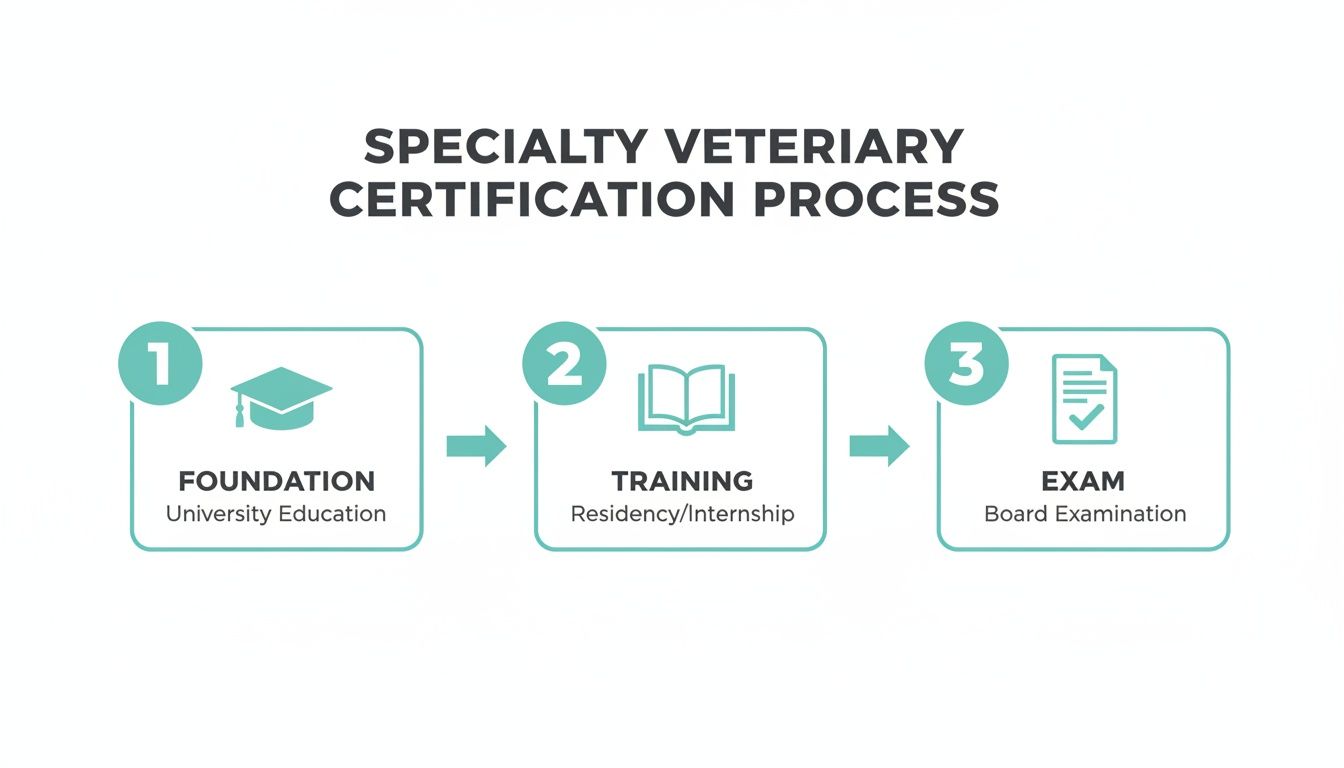
Becoming a specialist is a structured journey, much like the process for getting these IHCs done correctly.
Pro Tip: Always, always download the latest version of the health certificate and country requirements directly from the USDA-APHIS website for every single trip. Don't ever rely on old files saved on your computer. Regulations change constantly and without warning.
Step 3: Finalizing and Submitting the Documents
You've done the exam and filled out the health certificate, but you're not done yet. The document now needs to be endorsed by the USDA. This is the final, official stamp of approval from the government, and it's essential.
You’ll need to submit the completed paperwork to your state's APHIS Veterinary Services endorsement office. The fastest and most common method is almost always electronic. As you work through your IHC workflow, making sure sensitive health records are sent securely is key; a system for HIPAA compliant internet fax for secure data transmission can be a great option.
Here’s a quick look at how the final steps unfold:
Your Signature: You sign the health certificate as the accredited veterinarian.
Submission to USDA: The completed package is then sent to the USDA for their review and endorsement.
Endorsement and Return: The USDA office reviews everything, applies their official seal, and returns the endorsed certificate to you or directly to the client.
For a deeper dive into one of the most common forms you'll encounter, check out our guide on the APHIS 7001 health certificate.
Better yet, using a dedicated platform like Passpaw can help automate so many of these workflow steps, from client intake all the way to document verification. It drastically cuts down the risk of human error, ensures you’re always using the most current information, and frees up your team to focus on what matters most—excellent patient care.
Common Mistakes in Pet Travel Paperwork and How to Avoid Them
Even with the right certification for veterinarians, the road to a successful international health certificate is paved with potential issues. One small slip-up on a form can instantly ground a pet's travel plans, causing massive stress for your client and a domino effect of headaches for your clinic.
Think of this as your field guide to sidestepping those common, trip-canceling errors. Navigating this process isn't just a clinical task; it's an administrative challenge where attention to detail is everything. Every mistake is a chance to build a more foolproof system, turning potential chaos into calm, predictable success.
The Treacherous Timelines
One of the most frequent and frustrating mistakes we see is miscalculating timelines. Destination countries have very specific windows for exams, treatments, and endorsements. These aren't ruff estimates; they are hard deadlines.
For instance, a country might require a rabies titer test be done at least 30 days after vaccination but no more than one year before entry. Another might require the final health exam to happen within 10 days of arrival. Getting these dates wrong—even by a single day—can make the entire certificate invalid.
The Perils of Paperwork Specifics
The paperwork itself is a minefield. These aren't just friendly suggestions; they're strict requirements where absolute precision is the name of the game.
Here are a few common paperwork pitfalls:
Using the Wrong Ink: It sounds minor, but many countries and the USDA itself often state that forms should be completed in blue ink. Using black ink is often a reason for rejection.
Abbreviations and Write-Overs: There’s no room for shortcuts. Writing "SID" instead of "once daily" or crossing out a mistake instead of starting with a fresh form will almost always cause issues with the certificate.
Outdated Forms: This is a big one. APHIS constantly updates country requirements and the specific health certificate forms. Using a version you saved to your desktop six months ago is a recipe for disaster.
Key Insight: Treat every pet travel case like a brand-new project. Never rely on memory or old files. The only safe source of truth is the USDA-APHIS Pet Travel Website, checked at the very beginning of every new process.
Microchip Mayhem and Vaccination Snafus
Beyond the dates and forms, basic pet information can create major roadblocks if not handled perfectly from the start.
A classic issue is the microchip. Many countries, especially in the European Union, require a 15-digit ISO 11784/11785 compliant microchip. If a pet has an older 9- or 10-digit chip, officials at the destination might not be able to read it. It is very important to scan the pet and verify the chip type at the very first consultation.
Vaccination records are another huge trouble spot. The timing, type, and documentation of rabies vaccinations are checked with a fine-toothed comb. A common requirement is ensuring the pet was microchipped before or on the same day as their primary rabies shot. For a deeper dive into these critical details, you can learn more about how to get a USDA-endorsed pet health certificate.
By getting familiar with these common mistakes, you can build proactive checklists and protocols in your clinic. This systematic approach helps you catch errors before they happen, ensuring every furry client gets their ticket to fly without a hitch.
How to Streamline Pet Travel Services at Your Clinic
After walking through all the steps and common pitfalls, one thing is crystal clear: managing pet travel paperwork demands an incredible amount of precision and time. A single mistake can unravel the whole process, leading to heartbreaking delays for clients and their pets. But what if you had a digital assistant dedicated to making it all smoother, faster, and way less stressful for your team?

This is where modern technology completely changes the game for how clinics handle the certification for veterinarians workflow. Imagine a system that organizes everything for you, so your team can focus on the pet, not the paperwork.
Embrace Technology for Better Organization
A dedicated software platform acts as your single source of truth. No more juggling spreadsheets, scattered paper files, and long email chains. Instead, you get a central hub for every single pet travel case. This doesn't just keep you organized—it dramatically cuts down on the risk of human error, which is the number one reason paperwork gets rejected.
These tools are built by people who get it. They guide you and the pet owner through each milestone, from the first bit of data collection to the final document submission, making sure nothing falls through the cracks. It’s all about bringing a sense of calm to what can feel like total chaos.
A platform like Passpaw can automate the routine administrative work, freeing up your highly skilled veterinary team to focus on what they do best: providing excellent medical care. This transforms a time-sucking service into a streamlined, more profitable part of your practice.
By using a system that automatically checks forms against the latest country requirements, you can finally stop worrying about outdated information. This is a game-changer for staying organized, giving you real confidence that every certificate you issue is spot-on. You can learn more about how tech supports this in our guide to document management best practices.
From Manual Burden to A Streamlined Service
Let’s talk about the real-world benefits of bringing a platform designed for pet travel services into your clinic. The whole point is to make the experience better for everyone—your staff, your clients, and most importantly, the pets.
Here’s how it helps:
Automated Workflows: The system can automatically generate task lists based on the pet's destination and travel date. This ensures every deadline for vaccinations and treatments is met without fail.
Seamless Client Communication: Keep pet owners in the loop with automated updates and crystal-clear instructions. This means fewer anxious phone calls and emails bogging down your front desk.
Error Reduction: By validating data as it's entered and using constantly updated templates, the software flags common mistakes before they become travel-delaying disasters.
Increased Profitability: When your team spends less time buried in admin tasks, they can handle more cases efficiently. Suddenly, a complex service becomes a reliable and healthy revenue stream.
Ultimately, this modern approach helps you stop chasing paperwork and start leading a more efficient, less stressful process. It lets you offer this valuable service without it becoming a major drain on your clinic's resources, turning a potential headache into a fur-tunate opportunity.
Your Top Questions About Pet Travel Certification, Answered
Even after you've got the basics down, a few questions always seem to pop up when you're knee-deep in pet travel paperwork. This is completely normal.
Let's walk through some of the most common queries we hear from vets, so you can feel totally confident adding this service to your practice.
How Do I Keep My USDA Accreditation Active?
Maintaining your USDA accreditation is fairly straightforward, but you do have to stay on top of it. You'll need to complete online supplemental training modules every few years, with the exact frequency depending on your accreditation category.
APHIS will email you directly when your training is due, which is why it's important to keep your contact information current in their system. Completing this continuing education on time ensures your credentials don't lapse, so you can continue issuing health certificates without a hitch.
What Is the Difference Between a Health Certificate and a Pet Passport?
This is a classic point of confusion, and it’s a great question. Think of an international health certificate (IHC) as a one-time travel document. It's created for a specific pet, for a specific trip, to a single destination country, certifying the pet's health status on the day of your exam.
A "pet passport," on the other hand, is more like a long-term health diary. The most common example is the EU Pet Passport, a booklet that tracks a pet’s vaccinations and health records over its lifetime. It’s designed for easy, repeated travel between EU member countries.
Key Takeaway: The United States does not issue official pet passports. For any pet leaving the U.S. for another country, the USDA-endorsed international health certificate is the critical document they'll need for entry.
Am I Responsible if a Country Changes Its Rules?
This is a big concern for many veterinarians, and understandably so. Your professional duty is to certify the pet's health and document its compliance with the destination country's known requirements at the time you perform the exam. You are certifying facts as they exist on that day.
However, we all know regulations can change overnight without any warning. This is why it’s a strong best practice to use a service that provides real-time regulatory updates. It's also smart to advise clients to double-check all rules with their airline and the destination's consulate or embassy right before their departure date.
A great way to protect your practice is to document everything. Keep records of the sources you used for requirements (like screenshots of the APHIS website) and save your communications with the client. This shows you performed your due diligence with the best information available at the time and helps ensure a smooth journey for your furry travelers.
Navigating the world of pet travel certification doesn’t have to feel like you’re on your own. Passpaw gives you the tools to automate your workflows, stay compliant with real-time requirements, and streamline client communication from beginning to end. Ready to turn this complex service into a manageable—and profitable—part of your practice? Explore how Passpaw can help.
More articles
From regulatory changes to best practices for veterinarians and pet owners, our resources keep you ahead of the curve.