Are you a team member in a veterinary practice?
Are you a pet parent planning a trip with your furry pal?
Your Guide to Bringing Pets in Germany
Thinking about moving to Germany and worried about leaving your best friend behind? Don't you worry! Bringing pets to Germany is very common, and the country is one of the most welcoming places in Europe for animal lovers.
Welcome to a Pet-Friendly Germany
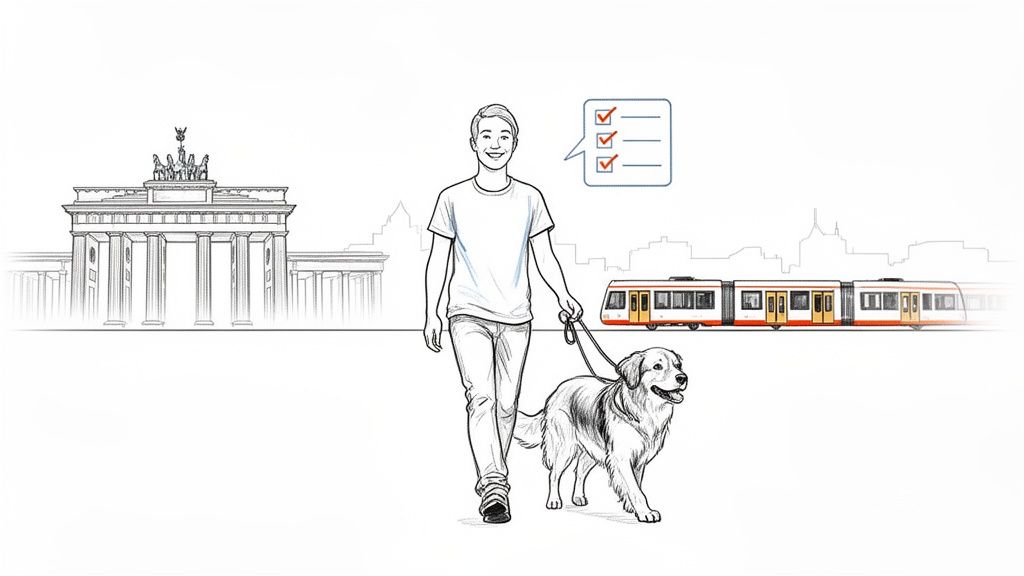
It’s one thing to say a country is "pet-friendly," but in Germany, you can really feel it. You'll see well-behaved pups joining their owners at cafes, sprawling dog parks in major cities, and an overall culture that treats animals as true family members.
The numbers back this up. In 2026, it's estimated there are nearly 34 million pets in the country, with a whopping 44% of all German households home to at least one animal companion. Cats lead the pack at 15.9 million, but dogs are a close second with 10.5 million loyal pups. For more details, you can explore data on the German pet market and its growth.
This widespread pet ownership means you'll find a strong support system already in place. Pet supply stores are on almost every corner, and the network of highly-qualified veterinarians makes finding care easy.
Your High-Level To-Do List
While the culture is warm and fuzzy, the German import process is all business. It requires careful planning and attention to detail. Think of it as a series of checkpoints you must clear to ensure your pet’s journey is safe, legal, and stress-free.
The key to a smooth move is organization. By understanding each step and building a clear timeline, you can manage the process without feeling overwhelmed and make sure all four paws land safely on German soil.
To help you get started, we've put together a high-level checklist. This gives you a bird's-eye view of the entire journey before we dive into the nitty-gritty of each step in the sections below.
Here's a quick look at the major tasks on your plate.
Germany Pet Relocation Quick Checklist
Action Item | Key Detail | Timeline |
|---|---|---|
Confirm Microchip | Must be a 15-digit ISO 11784/11785 compliant chip. | 3-6 months before travel |
Verify Rabies Vaccination | Must be given after microchipping and at least 21 days before entry. | 1-3 months before travel |
Obtain Health Certificate | Issued by an accredited vet; usually valid for just 10 days. | 1-2 weeks before travel |
Check Breed Rules | Research state-specific laws for 'Listenhunde' (listed breeds). | As soon as you know your destination |
Arrange Pet-Friendly Travel | Book with an airline that has clear pet transport policies. | 2-4 months before travel |
Plan for Arrival | Know the registration and tax requirements for your new city. | Upon arrival |
Seeing the whole roadmap at once can make the process feel much more doable. Now, let's get into the specifics of each of these action items.
Navigating Pet Paperwork and Taxes in Germany
Once you and your furry companion have landed and settled in, it's time to handle the German side of pet ownership. The word "paperwork" might make you groan, but tackling these few steps right away will set you up for a smooth start. Most of these rules apply specifically to dogs, as cats and other small pets have far fewer hoops to jump through.
Germany takes pet ownership seriously, and their system is built around responsibility. Think of these registrations as your official welcome to the community of German pet parents. Getting them done shows you're a responsible owner and helps fund the public services that make Germany such a great place for people and their pets.
The German Dog Tax (Hundesteuer)
First up is the Hundesteuer, or dog tax. This isn’t a federal tax; it's a local one managed by your city or municipality (Gemeinde). The money collected goes toward things like maintaining parks and providing those handy dog waste bag dispensers you'll see everywhere.
The cost can vary quite a bit depending on where you live. In a smaller town, you might pay around €90 per year, but in a major city like Berlin, it’s closer to €120 for your first dog (and more for any others). Some states also have a higher tax for certain breeds known as Listenhunde, which we’ll get to in a bit.
Don't think of the Hundesteuer as a penalty. It's part of being a dog owner in Germany, helping make sure public spaces stay clean and enjoyable for everyone—pet owners and non-pet owners alike.
You’ll need to register for this tax within two to four weeks of moving in or getting your dog. Don't let this one slide, as failing to register can result in some pretty big fines.
How to Register Your Dog
The registration process itself is called Anmeldung. It's a pretty simple task you'll handle at your local municipal office—either the Bürgeramt (citizen's office) or the Finanzamt (tax office), depending on your city.
Here’s a quick rundown of what to do:
Find the Right Office: Just search online for "Hundesteuer Anmeldung" plus your city’s name. That should point you in the right direction.
Gather Your Docs: You'll typically need your own city registration paper (Meldebescheinigung), your passport or ID, and your dog's info (breed, age, and microchip number).
Fill Out the Form: The office will give you a simple, one-page form to complete with your details and your dog's.
Get Your Dog Tag: After you're registered, you’ll receive a Hundesteuermarke, which is a small metal tag. Your dog should wear this on their collar whenever they're out in public as proof of registration.
Keep in mind, this registration is completely separate from the import paperwork you filled out to get your pet into the country. If you need a refresher on that, check out our guide on how to get a pet passport.
Pet Liability Insurance
Another key step in many German states is Hundehaftpflichtversicherung, or dog liability insurance. This isn't just a recommendation; it's a requirement in places like Berlin, Hamburg, and Lower Saxony. This insurance covers any costs if your dog accidentally injures someone or damages property.
Imagine your dog gets a case of the zoomies at a café and knocks over someone's brand-new laptop. Without insurance, you’d be on the hook for the entire replacement cost. For a small annual fee, this policy gives you incredible peace of mind and protects you from huge, unexpected bills.
The commitment to pets here is real. In fact, despite economic pressures, the German pet food market hit an impressive €4.3 billion in sales in 2024. It’s a clear sign of just how deeply Germans value their animal family members and prioritize their well-being.
Meeting Germany's Pet Entry Requirements
Getting your pet's travel paperwork in order is easily the most detail-oriented part of moving to Germany. The rules are strict, but they all serve one core purpose: to protect the health and safety of all animals within the country. It’s best to see this not as a hurdle, but as a series of well-defined checkpoints that ensure a smooth arrival for you and your pet.
The requirements change depending on where you're coming from. The process for someone arriving from a neighboring EU country is much simpler than for someone coming from a "third country" like the United States, Canada, or Australia. Let's walk through exactly what you'll need.
Coming From an EU Country
If you’re moving from another EU member state, the process is refreshingly simple. Your pet just needs three things:
An EU Pet Passport: This is the standard, blue booklet issued by a licensed vet in the EU. It holds all your pet's records, from their microchip number to their full vaccination history.
A Valid Rabies Vaccination: The vaccination must be current and correctly logged in the pet passport. If this is your pet's first rabies shot after being microchipped, you have to wait at least 21 days after the vaccination date before you can travel.
A Compliant Microchip: Your pet needs an ISO 11784/11785 compliant 15-digit microchip. This is the global standard, so nearly all modern microchips fit the bill.
For those already within the EU, the journey is simple as long as these three key items are squared away.
Arriving From a Non-EU Country
Bringing a pet from outside the European Union requires a few more steps. This is called a "non-commercial" import, which just means you're traveling with your personal pet, not selling them. The requirements are all built around proving your pet's identity and health status.
The golden rule for international pet travel is to start early and double-check everything. A small error in timing or paperwork can cause significant delays, so careful planning is your best friend.
Here is the essential checklist for anyone arriving from a non-EU country:
ISO-Compliant Microchip: As with EU travel, your pet must be microchipped with a 15-digit ISO 11784/11785 chip. Importantly, this must be done before the rabies vaccination. If your pet has a different type of chip, you can bring your own scanner, but getting an ISO-compliant one is the safer bet.
Rabies Vaccination: A licensed veterinarian must administer the rabies vaccine after the microchip has been implanted. You must wait a minimum of 21 days after this primary vaccination before you can enter Germany.
Animal Health Certificate (AHC): This is your most time-sensitive document. An accredited veterinarian in your home country must issue the AHC, and it's usually valid for only 10 days from the issue date until your pet arrives and is checked in the EU. You can use our tool to check the specific requirements for bringing your pet from the United States to Germany and make sure you've covered all your bases.
Rabies Antibody Titer Test: This is an extra step for pets coming from countries that Germany considers "high-rabies" or "unlisted." The blood for this test must be drawn at least 30 days after the rabies vaccination, and you must then wait another three months from the date of the blood draw before you can enter Germany. Always check Germany's official list to see if this applies to your country of departure.
Once you and your dog have arrived and settled in, you'll need to handle a few local administrative tasks.
As you can see, owning a dog in Germany involves three key responsibilities: registering your dog with the local authorities, paying the annual dog tax (Hundesteuer), and getting liability insurance.
Understanding the Animal Health Certificate
The Animal Health Certificate (AHC) is a multi-page document that acts as your pet’s official entry permit. It's the official confirmation from a veterinarian that your pet is healthy, properly vaccinated, and meets all of Germany's import rules.
The form includes your pet's microchip number, rabies vaccination details, and a signed declaration of health. Because it’s only valid for a 10-day window before arrival, scheduling this final vet appointment is one of the most important parts of your travel timeline.
As the international pet travel market grows—it's projected to expand from USD 151.9M in 2024 to USD 244.7M by 2030—managing this complexity is becoming easier. Purpose-built software can help veterinarians and owners navigate these requirements, check certificates against country rules in real time, and reduce the chance of last-minute errors.
By following these steps and paying close attention to the timelines, you can make sure your pet’s journey to Germany is a complete success.
Understanding German Dog Breed Laws
When you're planning a move to Germany with your dog, there's one topic you really can't ignore: the country's rules around specific breeds. This is where Germany’s famous love for rules meets its love for dogs, and it’s a serious matter. Getting this wrong can have major consequences.
Germany has Breed-Specific Legislation (BSL), which restricts certain dogs considered potentially dangerous. These breeds are known as Listenhunde, which literally translates to "listed dogs." The key thing to know is that these rules are not national; they're set by each of Germany's 16 federal states (Bundesländer). The rules in Bavaria can be completely different from those in Berlin.
The goal isn't to label your dog as "bad," but to ensure that owners of certain powerful breeds are proven to be responsible and their dogs pose no threat. This means you might have some extra hoops to jump through.
The Two Categories of Listed Dogs
While the exact lists vary from state to state, most use a two-tiered system for their Listenhunde. Getting a handle on these categories is your first step to figuring out if your dog is affected.
Category 1 (Kategorie 1): These dogs are seen as dangerous by the law, and it's nearly impossible to argue otherwise. Importing these breeds into Germany is generally banned at the federal level, and owning one already in the country is either prohibited or comes with extreme restrictions.
Category 2 (Kategorie 2): Dogs in this category are presumed to be dangerous, but here’s the important part: you usually get a chance to prove they aren't. This is done through a temperament test called a Wesenstest.
If your dog passes its Wesenstest, it can often be exempted from the toughest rules, like being required to wear a muzzle in public spaces.
Breeds That May Be on the List
Because the breed lists change depending on where you plan to live, you have to check the specific regulations for your destination Bundesland. There’s no way around it.
Crucial Tip: Before you book a flight or sign a lease, your first move should be to search online for "[State Name] + Listenhunde". This will bring up the official government list and all the associated rules you need to follow.
Still, certain breeds appear on these lists so frequently that it’s good to be aware of them.
Commonly Listed Breeds
Category | Examples of Breeds | Potential Restrictions |
|---|---|---|
Category 1 | Pit Bull Terrier, American Staffordshire Terrier, Staffordshire Bull Terrier, Bull Terrier | Federal import ban, may be prohibited entirely, or require a special permit to own. |
Category 2 | Dogo Argentino, Rottweiler, Cane Corso, various Mastiffs | Higher dog tax (Hundesteuer), mandatory muzzling in public, must pass a temperament test. |
This table is just a general guide. Don't make assumptions. Some states list more than a dozen breeds, so confirming the rules for your specific destination is an absolute must. You don’t want to land yourself—and your dog—in a tricky situation.
Failing to follow these laws can lead to everything from big fines to, in the worst-case scenario, your dog being seized by the authorities. Being proactive and doing your homework is the best gift you can give your four-legged family member for a smooth start to your new life in Germany.
Finding Pet-Friendly Housing and Life in Germany
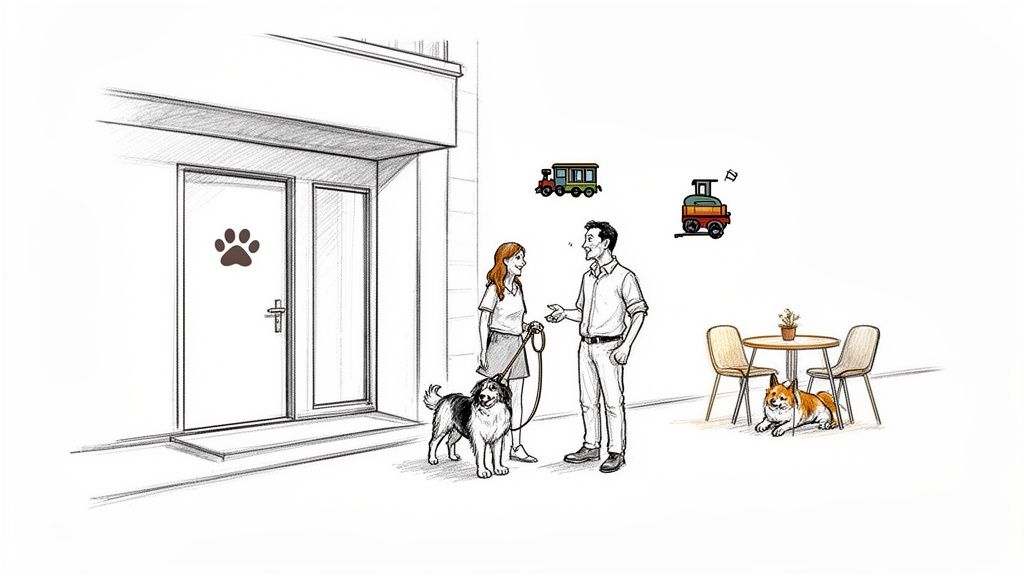
You’ve made it! After all the paperwork, flights, and waiting, you and your pet are finally on German soil. But this is where the real adventure starts: settling into daily life with your best friend by your side.
Germany has a wonderful, well-earned reputation for being pet-friendly. But it's not a total free-for-all. It’s a culture built on mutual respect. As long as you're a responsible owner with a well-behaved pet, you'll find Germany to be incredibly welcoming.
Finding a Pet-Friendly Apartment
First things first, you need a place to live. Finding a pet-friendly apartment, or Wohnung, can be a real headache, especially in the very competitive rental markets of big cities. Throwing a pet into the mix definitely makes it tougher, but it’s absolutely doable.
Before you even start looking, get a feel for the German real estate scene. This essential guide to finding a home in Germany is a great primer on the market, rental culture, and what to expect.
A 2018 court ruling generally prevents landlords from having a blanket ban on all dogs and cats. That's the good news. The bad news is they can still say "no" on a case-by-case basis. This is where honesty and a little bit of charm go a long way.
Pro Tip for Renters: When you apply for an apartment, attach a short "pet resume." Include your pet's breed, age, and a few lines about their calm temperament. A quick photo or even a note from a previous landlord can work wonders to show you have a good four-legged citizen, not a furry wrecking ball.
Never try to sneak a pet in. It’s a direct violation of your lease and a fast track to being asked to leave. Make sure your contract specifically says pets are allowed (Haustiere erlaubt) before you sign anything.
Daily Life and Social Rules
Life with a pet in Germany, particularly a dog, is very public. You’ll see them everywhere—riding the train, browsing in shops, and snoozing under a cafe table. This freedom is great, but it comes with a set of unwritten social rules.
Here’s a quick rundown of what to expect:
Public Transit: Most local transport systems (U-Bahn, S-Bahn) are fine with dogs. Small pups in a carrier usually ride free, while larger dogs often need a child's ticket (Kinderticket). They must always be on a leash, and some cities require a muzzle.
Restaurants & Cafés: Many places are happy to have well-behaved dogs, especially if they have an outdoor terrace. It’s always polite to ask first before you bring your dog inside. Don’t be surprised if the staff brings out a water bowl for your companion before they take your order!
Shopping: For hygiene reasons, dogs are a no-go in supermarkets and grocery stores. However, many other shops, like clothing boutiques and bookstores, are perfectly fine with it. Just look for a "Hunde verboten" (Dogs Forbidden) sign on the door.
Getting the hang of these little things will help you and your pet feel like locals in no time. If you're planning on exploring more of the country, our guide on finding dog-friendly lodging can be a huge help for your travels.
Vets, Supplies, and Quiet Hours
One of your first tasks should be to find a local veterinarian (Tierarzt). A quick Google search for "Tierarzt + [your city]" will give you plenty of options, and you can usually find English-speaking vets in larger towns.
You’ll have no problem finding pet supplies. Big chains like Fressnapf and Zooplus are like pet superstores with everything you could ever imagine. You'll also find all the basics in the pet food aisle of any major supermarket.
Finally, get familiar with Ruhezeit, or quiet hours. This is a big deal in Germany. It’s generally observed from 10 PM to 6 AM and all day on Sundays. During these times, loud noise is a major no-no, and that includes a dog that won’t stop barking. It’s all part of being a good neighbor in your new community.
Your Final Checklist for a Smooth Move
Getting a pet to Germany involves a lot of moving parts, and it’s easy to feel overwhelmed. This timeline breaks down the essential tasks into manageable steps, so you can be sure nothing falls through the cracks.
Think of this as your project plan for a successful move. Tackling these items in order will make the entire process much smoother for both you and your pet.
Three to Six Months Before Travel
This is your core planning window. Starting this far in advance gives you breathing room to handle the big-ticket items without a last-minute scramble. Getting these basics right is key.
Confirm Your Pet’s Microchip: Your pet must have an ISO 11784/11785 compliant 15-digit microchip. If they have a different type, or no chip at all, your vet needs to implant one. This step absolutely must be done before their rabies vaccination.
Check German Breed Laws (Listenhunde): This is a critical, can't-skip step. You need to research the specific rules in the German state (Bundesland) you’re moving to. Confirm your dog’s breed is not on a restricted or banned list before you go any further.
Book Pet-Friendly Flights: Start calling airlines to check their pet travel policies, costs, and availability. You’ll want to book your pet's spot on the flight as soon as you can, especially if they will travel in the cargo hold, as spaces are limited.
One to Two Months Before Travel
As your travel date approaches, the focus shifts to veterinary visits and official paperwork. This is where the timeline starts to get tight, so stay on top of it.
Preparation is what turns relocation anxiety into excitement. Knowing every document is double-checked and every booking is confirmed lets you focus on the new adventure ahead.
Here's what to lock in:
Administer Rabies Vaccination: Your pet needs a rabies shot at least 21 days before they can enter Germany. Don't forget, the microchip must be implanted before this vaccination is given.
Arrange a Rabies Titer Test (If Required): If you're traveling from a country Germany considers high-risk for rabies, this blood test is mandatory. The blood draw must happen at least 30 days after the rabies vaccination, and you have to wait three months from the date of the blood draw before you can travel.
Prepare the Travel Crate: Buy an IATA-compliant travel crate and start getting your pet used to it. Make it a positive space with treats and toys. A comfortable pet is a calm traveler.
The Final Weeks and Upon Arrival
You’re in the home stretch. This is all about the final health sign-off and taking care of business once you land in Germany.
Obtain the Animal Health Certificate (AHC): This is extremely time-sensitive. An accredited vet must issue the AHC within 10 days of your arrival in Germany.
Register at Your Local Office (Anmeldung): Within one to two weeks of arriving, you must register your dog at the local citizen's office (Bürgeramt) and tax office (Steueramt) to start paying the annual dog tax (Hundesteuer).
Get Liability Insurance: Sign up for Hundehaftpflichtversicherung (dog liability insurance) immediately if it's required in your state. Even where it’s optional, it’s a very smart idea.
For a deeper dive into the process, read our complete guide on the ins and outs of pet relocation overseas.
Frequently Asked Questions About Pets in Germany
Moving to a new country with a pet brings up a ton of questions. We get it. Here are a few common ones we hear from people making the move to Germany, with simple answers to help you prepare.
Can I Bring My Cat or Dog on Public Transport?
Yes, you can. Germany is generally quite accommodating when it comes to pets on trains, buses, and trams.
If your pet is small enough to fit comfortably in a carrier, they can usually travel for free. For larger dogs, you'll typically need to buy a child's ticket (Kinderticket). They must be on a leash, and some transport authorities may require a muzzle. These rules vary by city, so always check with the local transit company before you head out.
Are There Vets Who Speak English?
You’ll have no problem finding one, especially in the bigger cities. Many veterinarians (Tierärzte) in places like Berlin, Munich, and Frankfurt are fluent in English and often have English-language versions of their websites.
A quick phone call is usually all it takes to confirm. Don't hesitate to shop around to find a practice where you and your pet feel comfortable.
Think of your new vet as a key partner in your pet’s life abroad. Building that relationship early means you’ll have trusted support for everything from routine check-ups to those unexpected "ruff" days.
What if I Don't Pay the German Dog Tax?
Don't skip it. The Hundesteuer (dog tax) is a local rule, and German cities are very thorough about it. They do conduct checks, and getting caught without being registered can result in big fines that are much more expensive than the tax itself.
Make registering your dog at the local tax office (Steueramt) one of the first things you do, usually within two to four weeks of your arrival. It’s a small bit of admin that keeps you on the right side of the rules and helps fund the public perks that make Germany so pet-friendly.
Navigating the paperwork for international pet travel can feel overwhelming. Passpaw is built to simplify the entire process, creating a clear, step-by-step path for both veterinarians and pet owners. Learn how Passpaw can help you ensure a stress-free journey for your pet.

More articles
From regulatory changes to best practices for veterinarians and pet owners, our resources keep you ahead of the curve.