Are you a team member in a veterinary practice?
Are you a pet parent planning a trip with your furry pal?
Your Complete Guide to Pet Relocation Overseas
Moving abroad is a huge adventure. Bringing your pet along adds another layer of planning, but it's totally doable with the right preparation. A successful pet relocation overseas comes down to planning ahead, with specific vet visits, precise paperwork, and a good look at airline and country rules.
Why Planning Your Pet's Move Is a Big Deal
Moving your pet to another country isn’t like booking them a seat on the plane. Think of it more like getting them a special passport—or paws-port—filled with health records, government stamps, and travel permits. Every country has its own set of rules, all made to protect its local animals from outside diseases.
This isn't just about paperwork; it's about your pet's well-being. A well-planned move makes things much less stressful for both of you. Starting early is key—we're talking six months to a year in advance. That might sound like a lot, but it’s often necessary. This timeline gives you the breathing room needed for multi-step vaccinations, waiting periods after blood tests, and getting all the right approvals without a frantic last-minute scramble.
Key Pieces of the Relocation Puzzle
Every international pet move, no matter the destination, has a few core parts you'll have to handle. Get these right from the start, and the rest of the process will feel much more manageable.
Country-Specific Rules: This is your starting point. The rules of your destination country guide everything else. Moving to a place like Australia or Japan involves a much stricter process than moving between most EU nations.
Veterinary Preparations: This is where the real work begins. It includes getting an ISO-compliant microchip, making sure all vaccinations (especially rabies) are current, and completing specific health checks and tests required by your destination.
Documentation and Timelines: You'll be dealing with a stack of paperwork, from health certificates to import permits. The catch? Many of these documents have tight expiration dates, which makes your timing very important.
Airline and Travel Logistics: Not all airlines are the same when it comes to pet travel. Choosing a truly pet-friendly airline and getting an IATA-compliant travel crate are vital for your pet's safety and comfort during the flight.
The secret to a stress-free pet relocation is simple: start early and stay organized. The timelines for things like rabies antibody tests and government approvals are often set in stone, so building a buffer into your schedule is the best way to avoid unexpected delays.
Understanding these pieces is the first step toward a smooth journey. This guide will give you a clear roadmap, breaking this complex process into simple steps. For a more personalized plan, a dedicated tool can help you map out the specific requirements for your trip. You can learn more about how to create a personalized checklist with our pet travel planner to ensure nothing gets missed.
Your Pre-Travel Planning Timeline
Moving a pet overseas isn't something you can pull off at the last minute. The single most important piece of advice is to start early. Think of it as a marathon, not a sprint.
Ideally, you should start planning six months to a year before you intend to travel. That might sound like a long time, but this timeline is shaped by required waiting periods for medical treatments and slow-moving government paperwork. Trust us, there are no shortcuts.
Rushing the process leads to expensive mistakes, frantic last-minute scrambles, or the worst-case scenario: your pet being denied entry. Giving yourself a long runway is the best way to handle everything without the stress of a ticking clock.
This infographic gives you a bird's-eye view of the major phases.
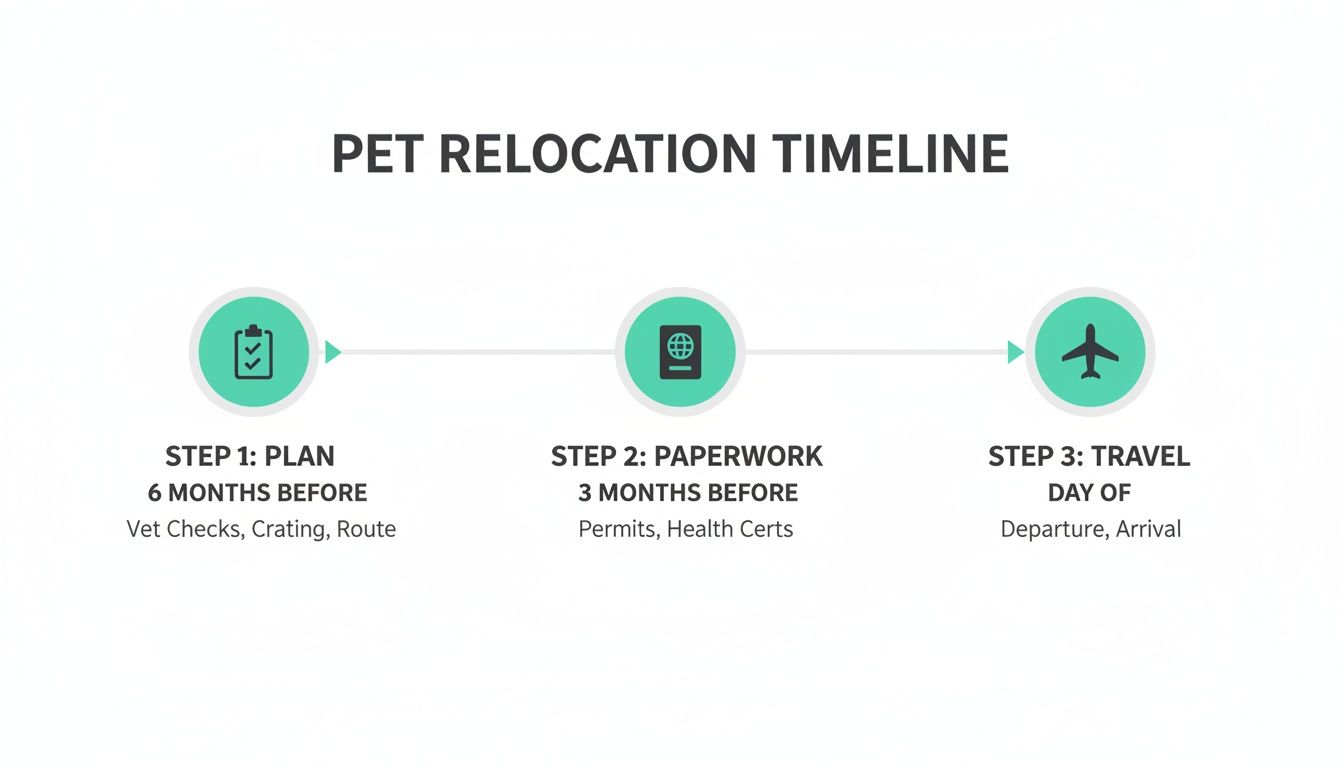
As you can see, planning, paperwork, and travel are separate but overlapping stages. Every box you tick early on makes the next one that much easier.
Starting Your Research and Initial Vet Visit
Before you even think about booking flights, your first move is to dig into the specific import rules for your destination country. The official websites for their ministry of agriculture or animal health are your best source of information. These regulations will shape every single step you take from here on out.
Once you have a rough idea of what's needed, it’s time to find the right vet. You need a veterinarian who is USDA-accredited (or has the equivalent certification in your country). This is a special certification needed to sign off on international health certificates.
Your first meeting is key. It sets the stage for everything to come and benefits from expert guidance from veterinary clinics and pet services. Be ready to discuss a few key things:
Your destination: Bring the import regulations you found. This gets you and your vet on the same page from day one.
Your pet’s history: Have all past vaccination records and any known health conditions handy.
Microchipping: Confirm your pet has an ISO-compliant microchip. If not, this is priority number one.
A pet's microchip must be implanted before the rabies vaccination is given. If the order is reversed, many countries will consider the vaccination invalid, forcing you to start the process all over again.
This first meeting is where your vet helps you map out a clear timeline for vaccinations, blood tests, and parasite treatments based on your destination's schedule.
Microchips and Vaccinations: The Foundation of Your Timeline
With your vet on board, the real medical prep begins. First up is the ISO-compliant microchip. This is a must. This specific 15-digit chip is the global standard, and customs officials will scan it on arrival to match your pet to their paperwork.
Next is the rabies vaccination. This isn't just a simple shot—its timing is everything. The vaccine must be given after the microchip is implanted. For many destinations, especially rabies-free or rabies-controlled countries like the UK or Japan, that’s just the beginning.
Let's walk through a real-world example.
Example Scenario: Moving a Cat from the U.S. to the UK
Say you're moving your cat, Luna, from Texas to London. The UK is very strict about preventing rabies. Here’s how her timeline would look:
Microchip First: Luna needs an ISO-compliant microchip before anything else.
Rabies Vaccination: After she's chipped, she gets her rabies vaccine. She has to be at least 12 weeks old.
Mandatory Wait: This is a big one. You must wait a minimum of 21 days after the vaccination before Luna can travel. This period shows the vaccine is effective and cannot be skipped.
Health Certificate: Within 10 days of your travel date, a USDA-accredited vet must issue the official health certificate.
For other destinations like Australia or Singapore, the rules get even tougher. They often require a Rabies Antibody Titer Test (RNATT), which is a blood test proving the vaccine is working. The blood sample can only be drawn at least 30 days after the rabies shot, and then you're hit with another waiting period of three to six months before your pet is allowed to enter.
That titer test waiting period is exactly why starting your move overseas a year in advance is often the smartest thing you can do.
If there's one part of pet relocation overseas that feels like a full-time job, it's the paperwork. Let’s be honest, the number of forms, signatures, and official stamps can feel a bit much. But try to think of it as putting together your pet’s official travel file.
Each document is a key piece of a puzzle. When you put them all together correctly, they grant your furry family member safe passage to their new home.
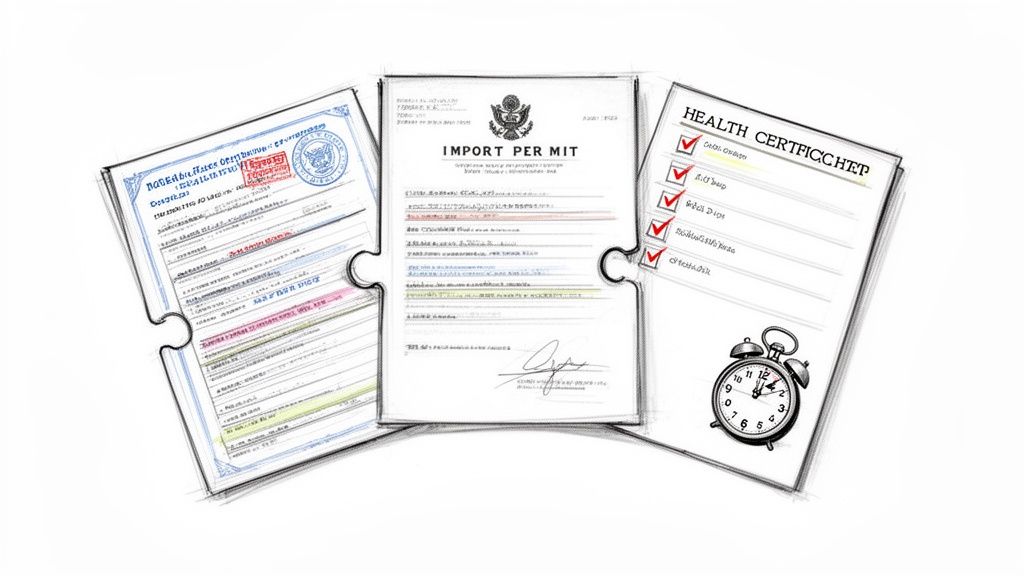
This process is so much more than just filling out forms. You're creating a complete, verifiable story of your pet's health history. It’s not just a formality; it’s a necessary biosecurity measure for your destination country. Don't worry, we're about to make this whole process a lot less of a cat-astrophe.
The Core Documents You Will Encounter
While every country has its own unique set of rules, most international moves involve a few key documents. Getting a handle on what they are and why they matter is the first step to mastering this stage.
International Health Certificate (IHC): This is the star of the show. It's a multi-page document issued by your accredited veterinarian confirming your pet is healthy, free from contagious diseases, and up-to-date on all the required vaccinations for your destination.
Import Permit: Some countries, especially those with strict quarantine laws like Australia or Singapore, require you to apply for and receive an import permit before your pet can even be considered for entry. This is often one of the very first—and most time-consuming—steps in the whole journey.
Government Endorsement: The IHC isn’t official until it’s stamped by the proper government body in your departure country. In the United States, this is the USDA’s Animal and Plant Health Inspection Service (APHIS). This endorsement is the final seal of approval that makes the document valid for travel.
For example, a move from the U.S. to France will focus heavily on the EU Health Certificate. A move to Japan, however, involves the IHC, proof of multiple rabies vaccinations, a waiting period after a titer test, and a pre-arrival notification to Japanese authorities. The difference is huge.
The Critical Role of Timing and Endorsements
The single biggest mistake pet owners make is underestimating the deadlines. Many of these official documents have a very short shelf life, which creates a tight timeline you have to follow exactly.
The most common deadline is for the International Health Certificate, which is often valid for only 10 days from the date your accredited veterinarian signs it. This means the final vet visit, the government endorsement, and your flight must all happen within this very narrow window.
This is where things can get tricky. You have to get the certificate signed by your vet, then immediately send it (usually overnight) to the correct government office for that official endorsement stamp. Once you get it back, you have to get on that plane before it expires.
Proper planning is everything. Forgetting this final government stamp is a common and costly error that can get your pet denied boarding at the airport. You can dive deeper into our detailed guide on the USDA pet travel certificate to better understand the endorsement process and avoid those common pitfalls.
Common Document Requirements for Popular Destinations
To give you a clearer picture of how much things can vary, let's look at the requirements for a few popular destinations. Just remember, these rules can change, so you should always check the official government source for your specific country.
This table highlights some of the key differences you might encounter when planning a pet relocation overseas.
Document or Requirement | European Union (e.g., France, Germany) | United Kingdom | Australia | Japan |
|---|---|---|---|---|
Microchip | ISO-compliant chip required | ISO-compliant chip required | ISO-compliant chip required | ISO-compliant chip required |
Rabies Vaccination | Required (at least 21 days before travel) | Required (at least 21 days before travel) | Required, plus a titer test | Required (2 doses), plus a titer test |
Rabies Titer Test (RNATT) | Not required for pets from the U.S. | Not required for pets from the U.S. | Required (blood drawn after vaccination) | Required (blood drawn after 2nd vaccine) |
Mandatory Waiting Period | 21 days post-vaccination | 21 days post-vaccination | 180 days after blood draw for titer test | 180 days after blood draw for titer test |
Import Permit | Not required | Not required | Required (apply months in advance) | Required (advance notification form) |
Internal/External Parasites | Tapeworm treatment required for some EU nations | Tapeworm treatment required (1-5 days before arrival) | Extensive treatments required | Treatments required |
As you can see, the difference between moving a pet to the EU versus Australia is night and day. Australia’s 180-day waiting period and import permit mean you need to start that process more than six months before you even hope to travel.
Getting the paperwork right isn't just a suggestion; it's the key to a successful journey.
Choosing The Right Travel Crate And Method
Once the mountain of paperwork is mostly behind you, it's time to shift focus to the journey itself. How your pet travels is just as important as having the right documents. Get this part right, and you're setting them up for a safe, comfortable trip.
This isn't a small thing, either. The entire pet relocation overseas industry is growing—it was valued at USD 1.2 billion in 2023 and is on track to more than double by 2032. That's a whole lot of families who, just like you, are committed to bringing their pets on their international adventures.
Deciding How Your Pet Will Fly
When it comes to air travel, there are really three main options. The best one for you will depend on your pet's size, their breed, and the airline’s specific rules.
In-Cabin: This is the best-case scenario for small pets that can fit in a carrier under the seat in front of you. It's the least stressful option since they're with you the whole time, but spots are very limited. You have to book way in advance.
Accompanied Baggage (Checked Baggage): For pets too big for the cabin, this used to be a common choice. They travel in a pressurized, climate-controlled hold on the same flight as you. However, more and more airlines are moving away from this service, so it's not always available.
Manifest Cargo: This is the standard for larger pets, certain international routes, or when an airline simply doesn't allow pets as checked baggage. Your pet travels in the same safe, climate-controlled hold but is checked in and handled through a separate cargo facility. It's the method used by all professional pet shippers.
Finding The Perfect Travel Crate
Picking the right travel crate isn't just a suggestion—it's a requirement. For your pet to fly, their crate must meet the International Air Transport Association (IATA) standards. Think of it less as a box and more as their personal safety pod for the flight.
Here’s what to look for in an IATA-compliant crate:
Sturdy Construction: It needs to be made from hard plastic or wood with a secure metal-grated door.
Proper Ventilation: Airflow is key. The crate must have ventilation on all four sides.
Correct Sizing: This is the big one. Your pet must be able to stand up, turn around, and lie down naturally. Measure them from nose to tail base and from the floor to the top of their head, then add a few inches to those numbers to find the right size.
Secure Hardware: The two halves of the crate must be fastened with metal nuts and bolts. Plastic clips are a no-go; they can fail under pressure.
Getting the crate right is a huge deal. That's why we created a detailed guide on selecting an airline pet travel carrier that goes deep into the IATA specs and helps you pick the perfect one.
Pro Tip: Don't wait until the last minute to buy the crate. Get it weeks, or even months, before your trip. This gives your pet plenty of time to get used to it, so it feels more like a cozy den and less like a scary cage on travel day.
Navigating Airline Restrictions
Airlines have a lot of rules designed to keep animals safe, and two of the most common hurdles are breed and temperature restrictions.
Many airlines won't fly brachycephalic (snub-nosed) breeds like Pugs, French Bulldogs, or Persian cats in the cargo hold. These breeds can have breathing problems at high altitudes, so their travel is often restricted or requires special handling.
You'll also run into temperature limits. Airlines will refuse to transport pets as cargo if it's too hot or too cold at the departure, arrival, or connecting airports. This is to protect animals from extreme temperatures while they're on the tarmac.
These challenges are exactly why so many people choose to hire a professional pet shipper. These experts manage the entire process—from booking pet-friendly flights to handling customs—offering a true door-to-door service that removes all the guesswork and stress.
Managing Travel Day and Arrival
The big day is finally here. After months of checklists, vet visits, and careful planning, your pet's international move is about to happen. These final 48 hours are all about keeping things calm and comfortable for your pet, because a smooth departure and arrival set the stage for a happy life in your new home.
Think of this last stretch as a relaxed, organized send-off, not a frantic scramble. Your pet feeds off your energy, so your calm attitude will make a huge difference for them. It’s time to get your travel companion ready for takeoff without ruffling any feathers (or fur).
Preparing for Departure
In the 24 hours before the flight, your pet’s well-being is the top priority. A light meal about four to six hours before heading to the airport is usually a good idea to prevent an upset stomach. Keep a full water bowl available right up until you leave, though.
A long walk or an energetic play session is also a great way to burn off some of that nervous energy. A tired pet is far more likely to rest during the flight. Just before you put them in the travel crate for the last time, take them for one final potty break so they're as comfortable as possible for the journey.
Finally, get the travel crate ready for departure.
Final Check: Give all the metal nuts and bolts one last tightening to make sure they're secure.
Comfort Items: Add a familiar blanket or an old t-shirt with your scent on it. Avoid bulky toys that could become a hazard during the trip.
Paperwork: Securely tape a waterproof plastic sleeve to the top of the crate with copies of all essential travel documents inside. You'll keep the originals with you.
At The Airport and Upon Arrival
If your pet is flying as manifest cargo, you won’t be going to the main passenger terminal. Instead, you'll drop them off at a separate cargo facility. It's usually a simple process where airline staff inspect the crate, check the paperwork, and scan your pet's microchip. Just be sure to arrive at the time they give you—typically three to four hours before the flight—to keep stress levels low.
Once you land, the next part of your pet relocation overseas begins. Your pet will be taken from the plane to a special animal reception center or customs facility. You’ll need to clear immigration first, then head to the assigned area to start the clearance process.
Have all your original documents ready to hand over to customs officials. This means the endorsed health certificate, your import permit, and vaccination records. Keeping everything in one organized folder can make this step much quicker and smoother.
Navigating Customs and Quarantine
After you present the paperwork, a customs agent or government vet may do a quick inspection to check your pet’s health and verify their identity with the microchip. If all your documents are in order and your destination doesn't require quarantine, you can usually take your pet home right from the airport.
However, countries with strict biosecurity laws, like Australia or Japan, will transport your pet directly to a government quarantine facility. The length of their stay is set by the country's rules and isn't something you can change. I know this can be the toughest part for pet owners, but these facilities are designed for animal welfare. It's a good idea to confirm visitation policies ahead of time. Many find that using professional pet transport services really helps simplify the complexities of customs and quarantine logistics.
Once you’ve cleared customs or your pet has completed quarantine, it’s finally time for that happy reunion. The long journey is over, and your furry family member is officially home.
Your Top Questions About Moving a Pet Overseas, Answered
Even the most carefully planned international move comes with its fair share of questions. It's a complicated process, so having a few "what ifs" is completely normal. We hear them all the time from pet owners just like you.
Think of this section as a quick guide for those common concerns. We’ll cover everything from your pet's comfort during the flight to the practicalities of cost and quarantine. Let’s clear things up so you can move forward with confidence.
Should I Sedate My Pet for the Flight?
This is easily one of the most common questions we get, and the answer from vets and airlines is almost always a firm no. In fact, most airlines don't allow it. At high altitudes, sedatives can affect your pet's breathing and ability to regulate their body temperature.
So, what's the alternative? Crate training. Getting your pet comfortable with their travel crate weeks or even months ahead of the trip is the safest and most effective way to reduce their anxiety. When the crate feels like their personal den, they're far more likely to travel calmly without any medication.
What’s the Difference Between a Pet Shipper and the Airline?
It’s an easy mistake to make, but they play two very different roles in your pet's journey.
The Airline: They provide the actual transportation. Their cargo team is responsible for getting your pet from one airport to another in a pressurized, climate-controlled hold.
A Professional Pet Shipper: They’re the project managers for the entire move. A good shipper is a logistics expert who coordinates every single step—from booking the best, most direct flight to triple-checking every document and navigating customs clearance on arrival. They can even arrange for ground transport to your new home.
While you can book a flight directly with an airline's cargo division, hiring a professional shipper takes the immense stress of managing dozens of time-sensitive details off your plate. You're paying for expertise and peace of mind.
How Much Does International Pet Relocation Actually Cost?
This is the big question, isn't it? The honest answer is: it varies—a lot. You could be looking at a range anywhere from $1,000 to over $10,000.
Several key factors will determine your final bill:
Your Pet's Size: Airfreight costs are based on the crate's volume, not just weight. A Great Dane will always cost more to fly than a Chihuahua.
Your Destination: Countries with strict import rules and mandatory quarantine, like Australia or New Zealand, naturally come with higher costs for permits, government fees, and quarantine facility stays.
The Services You Choose: A full-service, door-to-door relocation company will be a larger investment than if you manage the paperwork and bookings yourself.
It's worth noting that this is a growing field. As more people move abroad for work or lifestyle changes, international pet travel has become the fastest-growing part of the pet travel services market. You can read more about these pet travel industry trends.
Can I Visit My Pet if They Have to Go Into Quarantine?
Whether you can visit your pet during a mandatory quarantine period is entirely up to the destination country and the specific facility's biosecurity rules.
Some quarantine stations allow scheduled, supervised visits, which can be a huge comfort. Others, however, have very strict no-visitation policies to protect all the animals in their care. It’s important to research this well in advance so you know exactly what to expect during what can be a very emotional waiting period. It's the final hurdle before you're reunited for good.
Juggling health certificates, lab tests, and shifting country rules is often the most stressful part of an international move. Passpaw gives veterinary practices a simple, organized platform to manage all the necessary documentation, ensuring every detail is correct and every deadline is met. Discover how Passpaw makes pet travel compliance easier for everyone involved.

More articles
From regulatory changes to best practices for veterinarians and pet owners, our resources keep you ahead of the curve.