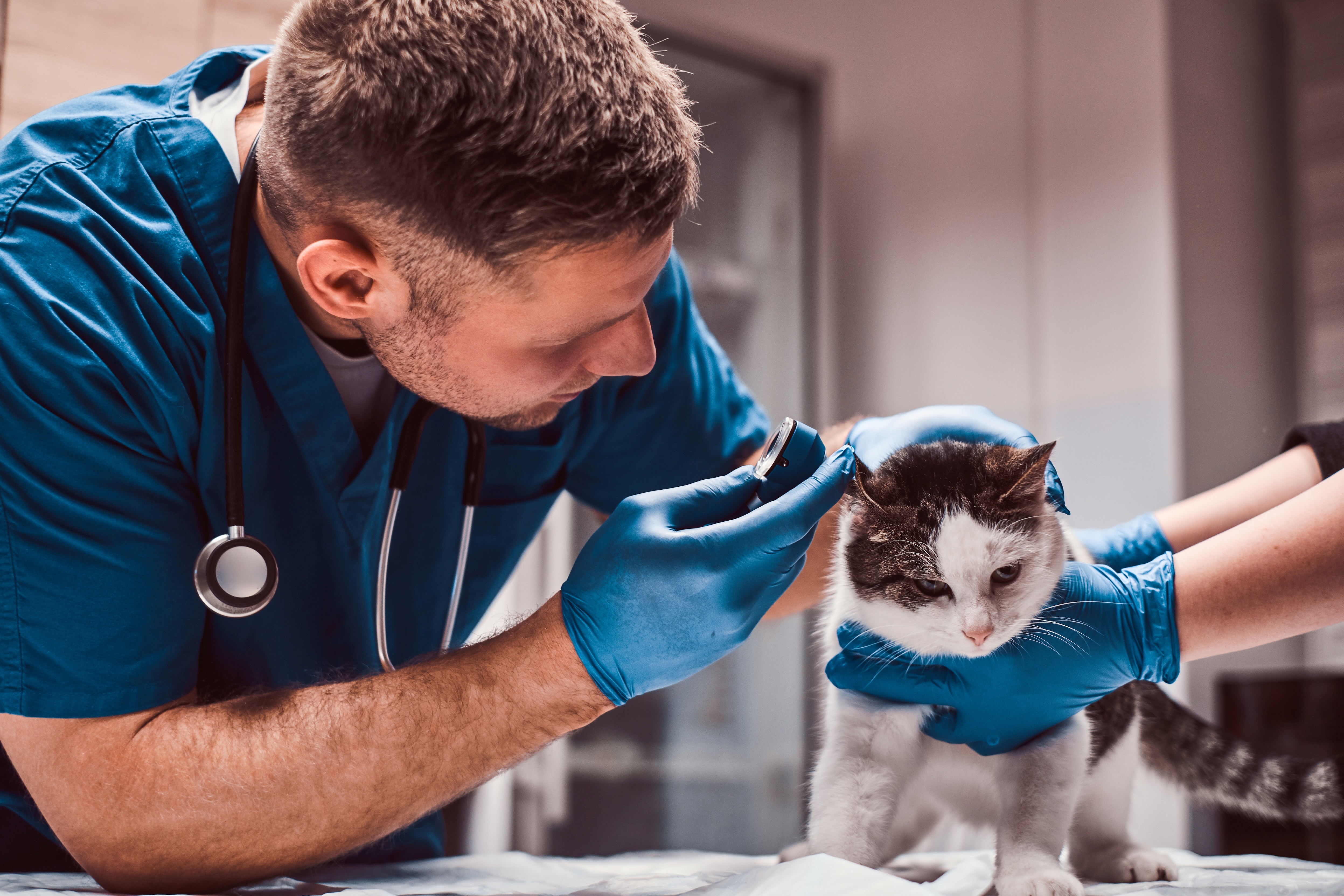
Are you a team member in a veterinary practice?
Are you a pet parent planning a trip with your furry pal?
Pet Travel to Europe: 2026 Guide for a Smooth Journey
If you're planning pet travel to Europe, you're probably juggling flight dates, carrier rules, vaccine records, and one anxious question that keeps popping up. "When do I need each step done so my pet can get through the border without trouble?"
That concern is justified. The process isn't hard because any one requirement is impossible. It's hard because the order matters, the timing matters, and a document that looks fine in your inbox can still cause problems at the airport if the details don't line up on the day you arrive.
I approach this the same way I do in practice. We don't treat pet travel paperwork like a last-minute form. We treat it like a medical and administrative timeline with checkpoints. That mindset prevents most of the stressful mistakes I see, especially for dogs and cats flying in as very important paw-ssengers.
Your Pet Travel Timeline Starts Now
You have flights on hold, a carrier picked out, and a folder full of vaccine records. Then the real pressure starts. Will your pet clear border inspection, or will a date mismatch on one document turn your dog or cat into a very confused paw-ssenger after a long flight?
That risk usually starts months before departure, not at the airport. In practice, the pets who get through cleanly are the ones with a managed timeline from the first record check onward. The endorsed health certificate matters, but it is the last link in the chain. Border officials review the whole sequence behind it.
The sequence matters more than many owners expect. Your pet needs an ISO-compliant microchip before any travel-related rabies vaccination or paperwork. After a primary rabies vaccination, there is a 21-day waiting period before travel under the standard route.

Start with the sequence, not the flight
I see the same preventable problems every season. A pet was vaccinated before the chip was implanted. The microchip number on the rabies certificate does not match the scan at the appointment. The family booked a fixed departure date first, then discovered the certificate appointment, endorsement timing, and airline check-in rules all had to fit into a narrow window.
Each of those can derail entry, even when the pet is healthy.
A practical timeline usually looks like this:
Months before travel
Scan and confirm the microchip: Do not rely on memory or an old invoice. The number must match every record exactly.
Review rabies history: Confirm whether the vaccine is valid for the full trip and whether it counts as a current vaccination rather than a restart.
Check destination and origin requirements: Some itineraries need extra steps, including titers or longer lead times.
After the rabies vaccine
Count the waiting period carefully: The 21 days start after the primary rabies vaccination, not on the day of the appointment.
Check for record errors early: A typo in the chip number or vaccine date is much easier to fix now than during certificate endorsement.
In the final travel window
Book the certificate exam at the correct time: Too early can make the paperwork invalid. Too late leaves no room for corrections.
Plan for endorsement, courier time, and airport presentation: Getting the certificate issued is only part of the job. The document still has to reach the right authority, come back on time if your route requires that step, and match the pet standing at the border.
Practical rule: If one date changes, review the whole file. Travel paperwork works like a chain of timed medical and legal steps, not a single form.
What works in real cases
Early record review saves trips. I want owners to gather the microchip information, rabies certificate, any prior travel documents, and the exact first country of entry well before the final appointment. That gives the clinic time to catch sequence problems, expired vaccines, or missing details while there is still time to fix them.
A routine wellness visit rarely covers this properly. Travel prep involves identity verification, vaccine validity, destination rules, endorsement planning, and border-readiness. The gap between "certificate obtained" and "admitted on arrival" is where many guides fall short. That is also where veterinary oversight helps most, because small administrative errors become big airport problems.
For owners who want the process organized from the start, the Passpaw pet travel planner helps track requirements, deadlines, and supporting records before you reach the certificate stage.
Why early planning pays off
Europe is a very pet-friendly region. FEDIAF's European pet statistics show just how common pet ownership is across European households. That does not make border entry informal. It means airports and inspectors see pet travelers every day, and they expect paperwork that is complete, correctly sequenced, and ready for review.
From a veterinary standpoint, the biggest benefit of planning early is simple. It prevents expensive resets. If the order is wrong or the timing is too tight, there is rarely an airport fix. You may need to repeat a step, delay endorsement, or postpone travel entirely. That is the part owners remember, and not in a tail-wagging way.
Decoding European Health Certificates
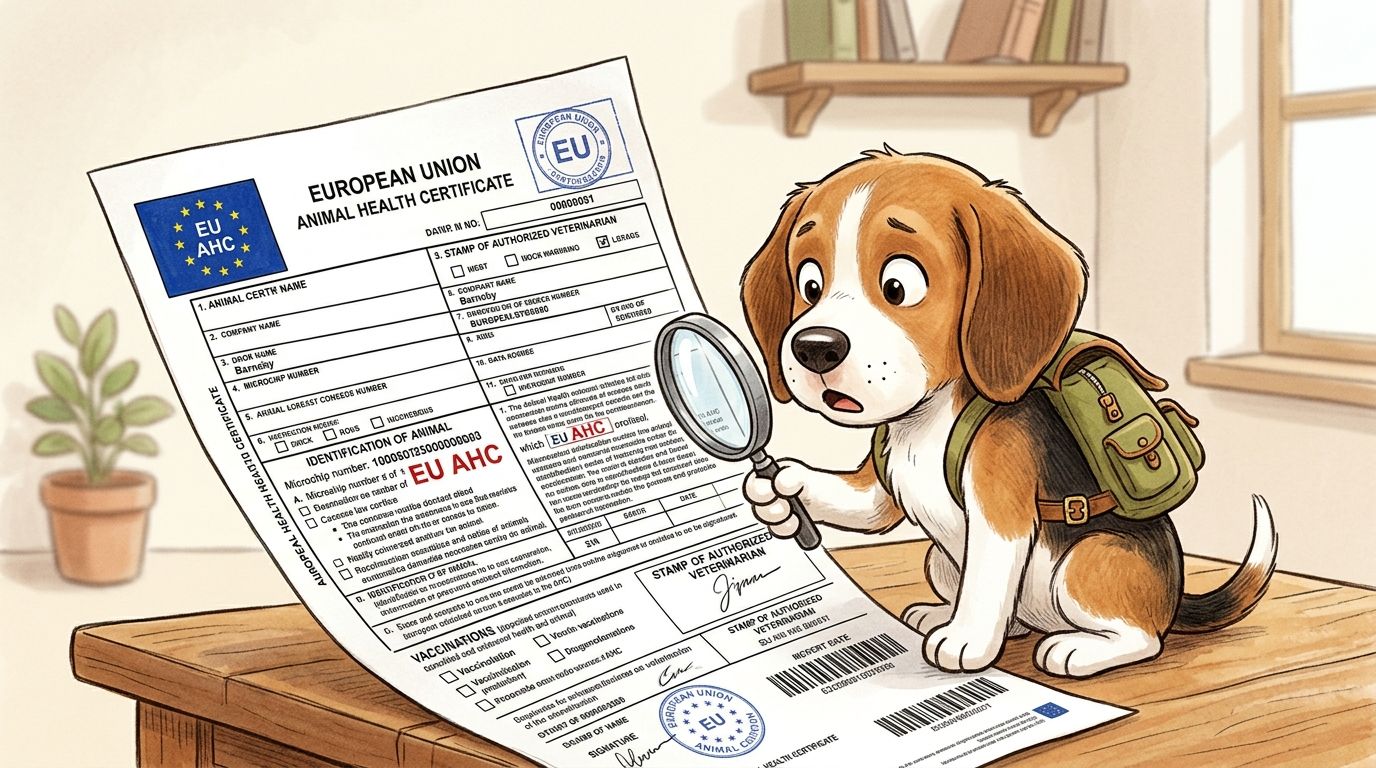
Once the medical timeline is in good shape, attention shifts to the document that owners worry about most. The EU Animal Health Certificate, often shortened to AHC, is the paperwork border officials expect to see for many pets entering from outside the EU.
Think of it as your pet's travel clearance packet. It ties together identity, rabies compliance, veterinary examination, and official approval. If any one part is off, the document can become the weak link.
The 2026 rule change that matters
For many travelers, the biggest shift is this. Starting April 22, 2026, non-EU residents traveling with dogs, cats, or ferrets can no longer use an EU pet passport and must instead obtain an official EU Animal Health Certificate issued by an official veterinarian and endorsed by the competent authority before entry. The certificate is valid for only 10 days from issuance until the traveler's point of entry (2026 EU pet travel update).
That 10-day validity window is where stress builds. Owners often hear "the certificate is done" and assume the hard part is over. In practice, the clock has started ticking.
Who does what
Many owners are understandably confused about the chain of custody for the certificate. Here's the practical version.
Step | Who handles it | Why it matters |
|---|---|---|
Medical review | Your veterinary team | They confirm records, chip, and vaccine history |
Certificate completion | Official veterinarian | The document must be completed in the proper official capacity |
Government endorsement | Competent authority | The certificate needs official endorsement before entry |
Border presentation | Traveler | Originals must be available when you arrive |
One common misunderstanding is thinking any clinic signature is enough. It isn't. The certificate has to be issued in the proper official framework for your country of departure.
The AHC isn't just a form your vet fills out. It's a time-sensitive document that has to survive review by both endorsing authorities and border staff.
Why owners get caught out
The problem usually isn't one dramatic error. It's a small mismatch between travel logistics and document validity. Flights move. Cargo bookings change. Some owners enter through a different EU country than the one they first mentioned to the clinic. Those details matter.
A good preparation habit is to keep your flight itinerary, address at destination, and microchip record together with the certificate packet. If one field on the document doesn't match the pet, owner, or route information you're traveling under, that can trigger delays.
If you'd like a fuller overview of how the paperwork works before your clinic visit, this guide to a pet health certificate for international travel is a useful starting point.
Navigating Country-Specific Rules and Titers
A pet can have an endorsed certificate and still hit trouble at inspection if one country-specific rule was missed. That is the gap owners feel most acutely at the border, because by then there is no easy fix, only delay, quarantine, or denied entry.
The safest approach is to screen the trip from three angles as soon as dates are realistic. Check the pet's origin country rabies status, the arrival country's extra treatment rules, and the total number of animals traveling under that booking. I review those items before I worry about packing lists, because they are the details that decide whether your paw-ssenger is admissible on the day of arrival.
Variation one and the rabies titer question
Some pets traveling from higher-risk countries need more than a microchip, a valid rabies vaccination, and a health certificate. They also need a rabies antibody titration test processed through an approved laboratory, followed by a waiting period that starts from the blood sample date. If that rule applies, it sets the whole calendar.
Owners frequently lose time. They assume the titer is a final paperwork step, when it is really an early planning step with consequences for flights, temporary housing, and certificate timing. A titer drawn too late can leave every other document technically correct but still useless at inspection.
For a practical breakdown of timing, lab handling, and common mistakes, this guide to the dog rabies titer test is a helpful reference.
Variation two and destination-specific treatment
Some countries add a timed treatment requirement that has nothing to do with rabies. Dogs entering Finland, Ireland, Malta, and Norway may need tapeworm treatment for Echinococcus multilocularis within a defined pre-entry window. Owners who are otherwise organized still miss this because the rabies timeline gets all the attention.
Route matters too. Border officials assess the trip you are presenting, not the one originally discussed with the clinic. If your first point of entry changes, or you transit differently than planned, the treatment schedule and paperwork review may need to change with it.
That is one reason vet-managed platforms such as Passpaw help reduce last-minute surprises. They keep the travel timeline tied to the actual itinerary, so a changed route or appointment date is more likely to trigger a review before you are standing at the counter with a nervous terrier and a closing check-in window.
A quick screening method works well here:
Origin country. Does your departure point trigger added rabies controls?
Arrival country. Does that country require timed parasite treatment?
Actual route. Are you entering through one country before continuing to another?
Variation three and how many pets are traveling
Pet numbers can change the legal category of the movement. Personal travel within the usual pet entry framework generally allows up to five animals, with limited exceptions for documented competitions or similar events involving animals over a certain age.
I pay close attention to this with families relocating, breeders, and clients trying to start your remote work lifestyle without leaving pets behind. Six animals on one plan may sound like one household move. At inspection, it may be treated very differently from a routine non-commercial trip.
That distinction matters because border checks are practical, not theoretical. Officers compare the animals, the route, the dates, and the documents in front of them. If those pieces do not line up under the correct rule set, a certificate that looked fine in the exam room may not carry the day.
How Vets Streamline Travel with Passpaw
The handoff that worries me most is not the exam. It is the stretch between a signed certificate and a border officer matching that paperwork to the pet in front of them.
That is why clinics increasingly use structured travel workflows instead of treating international certificates like ordinary forms. Demand has grown with the category itself. The Europe pet travel services market is expanding steadily, according to Grand View Research's Europe pet travel services outlook. In practice, that means more owners need active case management, not just a stamped page and a hopeful wave goodbye to their furry paw-ssengers.
The manual version versus the managed version
A manual process breaks down in ordinary ways. Records arrive in fragments. A vaccine entry is legible in one file and cropped in another. The owner changes the first airport of entry after the certificate draft is already in progress, then calls after hours to ask whether the new timing still fits the document window.
A vet-managed process with Passpaw gives the team one working record tied to the itinerary, deadlines, and required documents. That matters because the primary goal is not speed. The goal is to catch the small mismatch that causes trouble later, before a border official scans a microchip and starts comparing dates.
In clinic, the difference is noticeable. Staff spend less time hunting through inboxes and voicemail. Owners get clearer instructions and fewer crossed wires. The veterinarian still makes the medical and legal judgment, but the platform reduces the clerical noise around it.
Where platforms help in real practice
Used properly, Passpaw helps veterinary teams organize travel-date priorities, document collection, destination rules, and client updates in one place. I find that most errors are preventable if the workflow forces the right checks at the right time.
The practical gains tend to show up here:
Earlier record cleanup: Missing microchip documentation, inconsistent vaccine dates, and incomplete treatment entries are easier to spot before the final appointment.
Better certificate accuracy: Staff can review one current itinerary and one current packet instead of reconciling multiple email threads.
Clearer owner follow-through: Clients can see what is pending, what is approved, and what still needs action before departure.
Fewer border-day surprises: The process stays tied to the actual route, which helps if a client enters through one EU country before continuing onward.
That last point deserves more attention than it usually gets. A certificate can be endorsed correctly and still fail inspection if the route, timing, or supporting records no longer match. A managed system lowers that risk by keeping the veterinary team involved through the full timeline, not just the appointment slot.
Owners also benefit from practical travel guidance beyond paperwork. Passpaw's guide to flying with pets internationally is a useful example of the carrier and preparation details that often trip people up after the medical documents are finished.
For clinics buried in seasonal travel calls, communication support also matters. Services that help practices find vet answering solutions can reduce front-desk pileups and make it easier to respond before a simple question turns into a missed deadline.
Avoiding Common Travel Day Pitfalls
You land after an overnight flight, your dog is tired, you are tired, and the certificate that took weeks to arrange is finally in hand. Then the inspector asks for the original paperwork, scans the microchip, checks the dates against your first EU arrival point, and finds a mismatch. That is the failure point owners remember. The certificate was endorsed, but the border check still did not pass.
That gap between endorsement and inspection causes more problems than many guides admit. Border officials assess the pet in front of them, the original documents in front of them, and the actual route and timing used that day. A certificate can be perfectly endorsed and still fail if the entry date is outside the valid window, the supporting record is incomplete, or a country-specific timing rule was missed, as described in this guide discussing common EU border inspection failures.
A common airport scenario
I see the same pattern every season. The owner did the hard part, booked the vet visits, paid for endorsement, and assumed the rest would sort itself out. At inspection, the original certificate is in checked baggage, the tapeworm treatment line is missing a time, the chip number on one record does not match cleanly, or the pet entered through a different EU country than the one everyone planned around.
None of these errors are dramatic. They are administrative, which is exactly why they cause so much stress.
Vet-managed systems help here because they keep the timeline tied to the live itinerary instead of treating the health certificate as the finish line. That matters on travel day. If your clinic is using Passpaw or a similar managed workflow, the value is not only cleaner paperwork. It is fewer last-minute route mismatches, fewer expired entry windows, and fewer panicked owners trying to reconstruct a packet at the check-in desk.
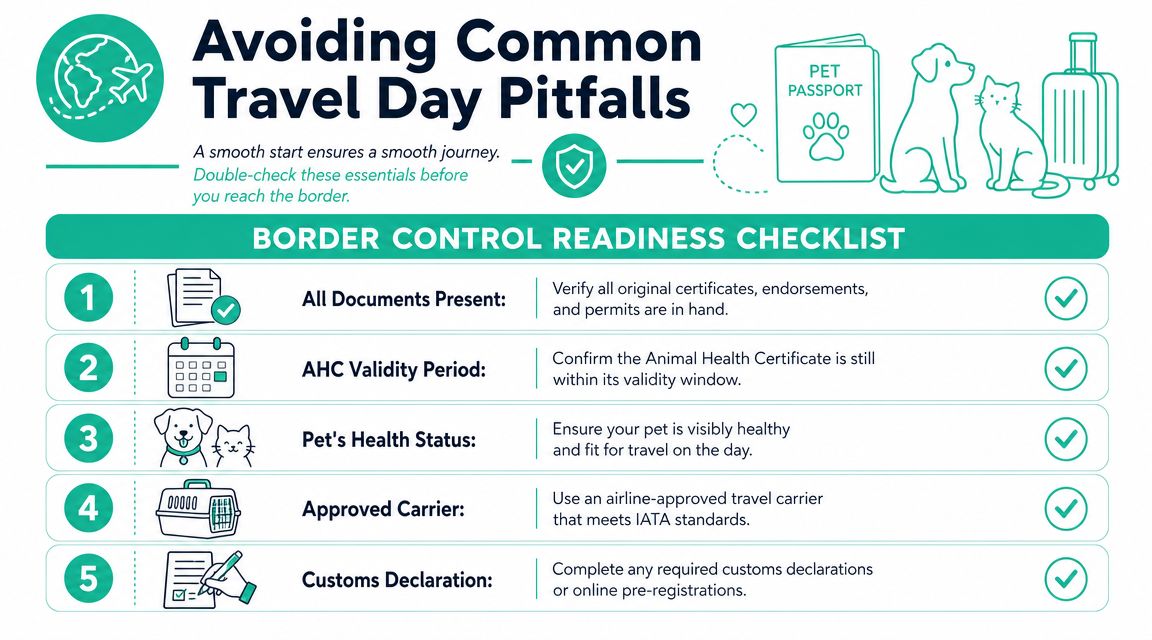
The border-day checklist I give clients
Border inspection is a paper-and-process exercise. Prepare for it that way.
Carry originals in hand luggage: Never put the certificate packet in checked bags.
Bring paper backups: Phones run out of battery, screens crack, and airport Wi-Fi fails at the worst time.
Check validity against entry, not departure: The date that matters is when your pet reaches the EU border.
Confirm your first point of entry: Inspectors assess the route taken, not the route originally booked.
Review treatment entries line by line: Dates, times, product details, and signatures must be complete where required.
Keep your pet travel-ready in appearance: Border staff may look closely at whether the animal appears fit to continue.
Use the right carrier: The crate or cabin carrier must satisfy the airline and keep your paw-ssenger safe and settled.
For pets flying as cargo or in cabin, owners also need the transport side sorted early. This practical guide to flying with pets internationally covers carrier setup, airport handling, and preparation details that often get left until the final week.
What reduces stress most
Use paper first, digital second. At the inspection desk, originals matter most. Keep them in one folder, ordered the way an official is likely to review them: microchip record, rabies proof, endorsed certificate, then any added treatment documents.
A calm border interaction usually comes from simple preparation, not luck.
If the documents are complete, easy to reach, and matched to the route your pet traveled, inspection is usually straightforward and your furry flyer can start the trip on the right paw.
Frequently Asked Questions About Pet Travel to Europe
A lot of failed trips happen after the health certificate is issued, not before. The paperwork may be technically correct, but border inspection is where timing errors, route changes, and missing supporting records catch up with owners and their four-legged paw-ssengers. These are the questions clients ask me most often when they want to avoid that last-minute scramble.
Can I travel with more than five pets
Usually, no under the standard non-commercial route. If you are traveling with more than five, the movement may be treated differently unless the animals are going to a competition, show, or sporting event and you can produce the required registration documents. This is worth checking before you book, because the wrong movement category can create problems that no airline confirmation will fix at the border.
What if my flight is delayed and my certificate is close to expiry
Treat a delay as a document problem, not just a travel inconvenience.
What matters is whether the certificate is still valid when your pet reaches the EU border. I advise clients to contact the veterinary team as soon as delays start to look likely, especially if the itinerary includes an overnight hold or rebooking through a different first-entry country. Once you are at the airport, options are often limited and expensive.
Does the UK follow the same process as other non-EU countries
For planning purposes, yes. Travel from the UK into the EU should be prepared under the same third-country framework discussed earlier in this guide. Owners still get caught out by assuming an older EU pet passport will carry the trip. In many cases, it will not.
Does every pet need a rabies titer test
No. The answer depends on the country of departure and sometimes the route used to get to Europe. This is one of the biggest reasons I tell clients not to rely on a generic checklist pulled from a forum. A titer requirement missed early can shift your travel date by months, so the country pair needs to be reviewed before anyone books a flight.
Can my regular veterinarian handle all of this
Sometimes. Some family practices are very good at routine vaccines and microchip records but do not handle travel certificates or endorsement workflows often enough to do them efficiently under deadline. That is not a red flag. It usually means the clinic knows where mistakes happen and would rather refer you than guess.
The question is whether your vet can manage the whole chain, from records review to certificate preparation to the steps needed for official endorsement, without a timing gap. That handoff point is where trips often wobble.
What should I bring to the certificate appointment
Bring the records that prove identity, vaccination history, and travel plan in one file. That usually means microchip details, rabies certificate, prior travel documents if your pet has them, and the full itinerary showing the first EU arrival point. If a treatment or lab test applies, bring that too.
I also like owners to bring a written travel timeline. One page is enough. It helps the clinic spot problems fast, especially if there are multiple flights, a stopover, or a recent vaccine date that sits close to the certificate window.
If you want a more organized way to keep forms, deadlines, and country requirements in the right order, Passpaw is a practical tool to review with your veterinary team. Used well, it helps reduce the gap between getting the certificate endorsed and clearing inspection, which is the part many pet travel guides gloss over until a border official starts asking questions.

More articles
From regulatory changes to best practices for veterinarians and pet owners, our resources keep you ahead of the curve.