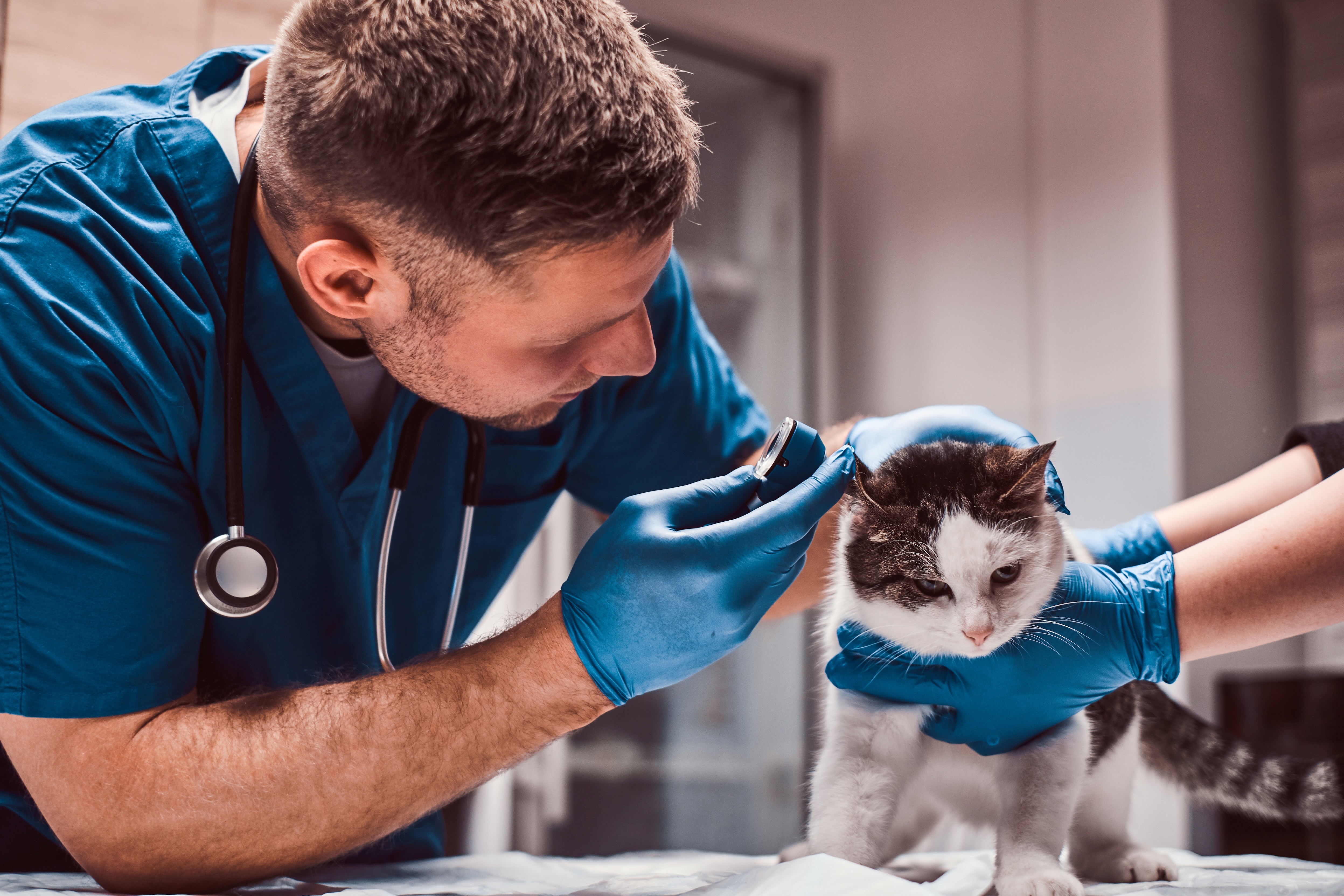
Are you a team member in a veterinary practice?
Are you a pet parent planning a trip with your furry pal?
Moving Overseas Pets: Your Complete Relocation Guide
Moving a pet across the globe isn't just another item on your to-do list—it's about relocating a family member. It can feel like a mountain of work, but with the right game plan, it's completely doable. The secret is to start early. Moving overseas with pets is a marathon, not a sprint, involving specific health checks, stacks of paperwork, and a lot of careful coordination.
Your Pet's "Pawsport": Planning the Big Move
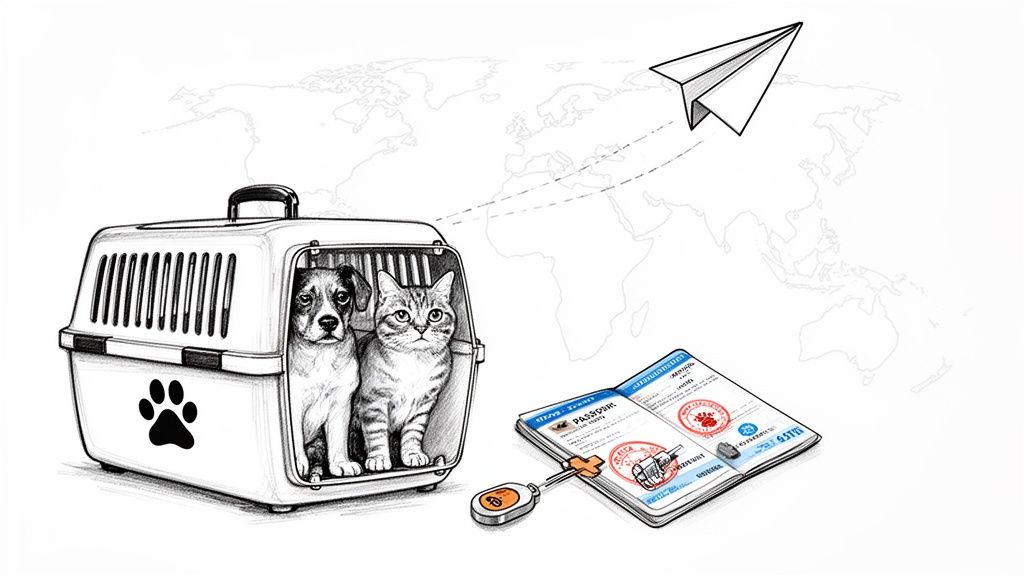
Think of preparing for an international move with your pet as creating their very own "pawsport," complete with all the right stamps and approvals. It’s a journey that mixes logistics with a whole lot of love. The single biggest mistake people make is underestimating just how long everything takes. Waiting until the last minute is a recipe for stress, surprise costs, and potential travel nightmares.
You're definitely not alone in this. More and more, families are refusing to leave their pets behind. The global pet relocation market hit a massive USD 1.2 billion in 2023 and is on track to double by 2032. This isn't just a statistic; it shows how deeply our pets are woven into the fabric of our lives. Their safe journey is a top priority for millions of us.
To give you a clearer picture of the journey ahead, here’s a typical timeline that breaks down the major milestones.
International Pet Travel Planning Timeline
This timeline is a great starting point for any international move. While every country's rules are a bit different, these key steps will almost always be part of your process.
Time Before Travel | Key Action Items | Why It Matters |
|---|---|---|
6-12+ Months | Research destination country's import rules. Schedule an initial talk with a USDA-accredited vet. | This is your foundation. Some countries need blood tests (like a rabies titer test) with waiting periods of 3 months or more after the blood draw. Starting now prevents last-minute panic. |
3-6 Months | Give rabies vaccine (if needed). Get an ISO-compliant microchip implanted. Complete any needed blood tests (e.g., rabies titer). Start crate training. | These steps have strict timing rules. A rabies vaccine, for example, often must be given at least 30 days before travel but can't be expired. Crate training reduces your pet's stress on travel day. |
1-2 Months | Book your pet's flight (confirm airline rules). Apply for an import permit if needed by the destination country. | Airlines have limited space for pets, especially in the cabin or for larger animals in cargo. Booking early secures their spot and gives you time to get any necessary government permits. |
2-4 Weeks | Schedule the final health certificate exam with your vet. Arrange any needed pre-travel parasite treatments. | The final health certificate is often only valid for a very short window (sometimes just 5-10 days). This appointment needs to be timed perfectly with your departure date. |
Within 10 Days of Travel | Your USDA-accredited vet issues the international health certificate. Submit all documents for government endorsement (e.g., USDA APHIS). | This is the final, official step. The endorsed paperwork is your pet's ticket to fly. Delays here can derail your entire trip. |
Getting a head start gives you the breathing room to handle any curveballs—and they can happen. A calm, well-planned move is a safe move for your pet.
Start Sooner Rather Than Later
The golden rule for moving overseas with a pet is to start planning at least 6 to 12 months ahead of your travel date. I know that sounds like a lot, but it's not an exaggeration. Countries like Japan, Australia, and New Zealand have some of the strictest import rules in the world, often involving rabies titer tests followed by a 180-day waiting period before your pet can even enter the country.
Starting early isn't just about avoiding panic. It allows you to:
Dig deep into your destination's specific rules without rushing.
Book vet appointments that fit your schedule.
Give your pet plenty of time to get comfortable and happy in their travel crate.
Avoid expensive last-minute fees for expedited paperwork or flights.
Think of it this way: The more time you invest upfront, the less stress both you and your pet will experience on travel day. A well-planned move is a calm move.
Research Your Destination’s Rules
Every single country has its own set of rules for bringing in animals. The requirements for moving a dog to Germany are completely different from those for bringing a cat to Singapore. Never assume anything. Your first stop should always be the official government source—usually the website for the Ministry of Agriculture or Animal Health for your destination country.
Be on the lookout for specifics on:
Microchip Requirements: Most countries now ask for an ISO-compliant 15-digit microchip. If your pet has an older, non-ISO chip, they may need a new one.
Vaccinations: Rabies is the big one, but your destination might require others, like DHLPP for dogs or FVRCP for cats.
Blood Tests: Rabies titer tests (FAVN) are a common requirement for entering rabies-free or rabies-controlled areas like the EU, Japan, or the UAE.
Parasite Treatments: Many countries require specific internal (deworming) and external (flea/tick) treatments given within a tight window before travel.
Breed Restrictions: This is a tough one, but some countries ban or restrict the import of certain breeds they consider to have aggressive tendencies, such as Pit Bulls, Staffordshire Bull Terriers, or Japanese Tosas.
Doing this homework first is the bedrock of your entire plan. It will set your timeline and create the to-do list for you and your veterinarian.
Talk to Your Veterinarian
Once you have a handle on the requirements, book a talk with a USDA-accredited veterinarian. This conversation is very important. Come prepared! Bring a printout of the rules you found to guide the discussion. Your vet is your partner in this, and together you can map out a clear timeline for every vaccination, test, and treatment.
Your vet will also confirm if your pet is healthy enough for the journey, which is especially important for very young, senior, or brachycephalic (flat-faced) breeds. This is your chance to ask every question you have and make sure you're starting off on the right foot. For a deeper dive into the paperwork, check out our guide on how to get a pet passport. This teamwork is the first major step toward a safe and successful move for your best friend.
Tackling Vet Visits and Vital Paperwork
Once you have a rough timeline, it’s time to get into the details of health requirements and the mountain of paperwork that comes with them. This is where the details really, really matter. One tiny mistake or a missed deadline can create big headaches, turning a smooth journey into a stressful ordeal for both you and your pet.
The demand for pet travel is booming, with the market expected to hit USD 5.3 billion by 2034. But here’s a sobering thought from industry insiders: mismatched or incomplete documents cause rejection rates as high as 15-25% at international borders. That alone shows just how critical it is to get every single piece of paper right.
To give you a bird's-eye view, the process boils down to three key phases: solid research, careful planning, and close work with your vet.
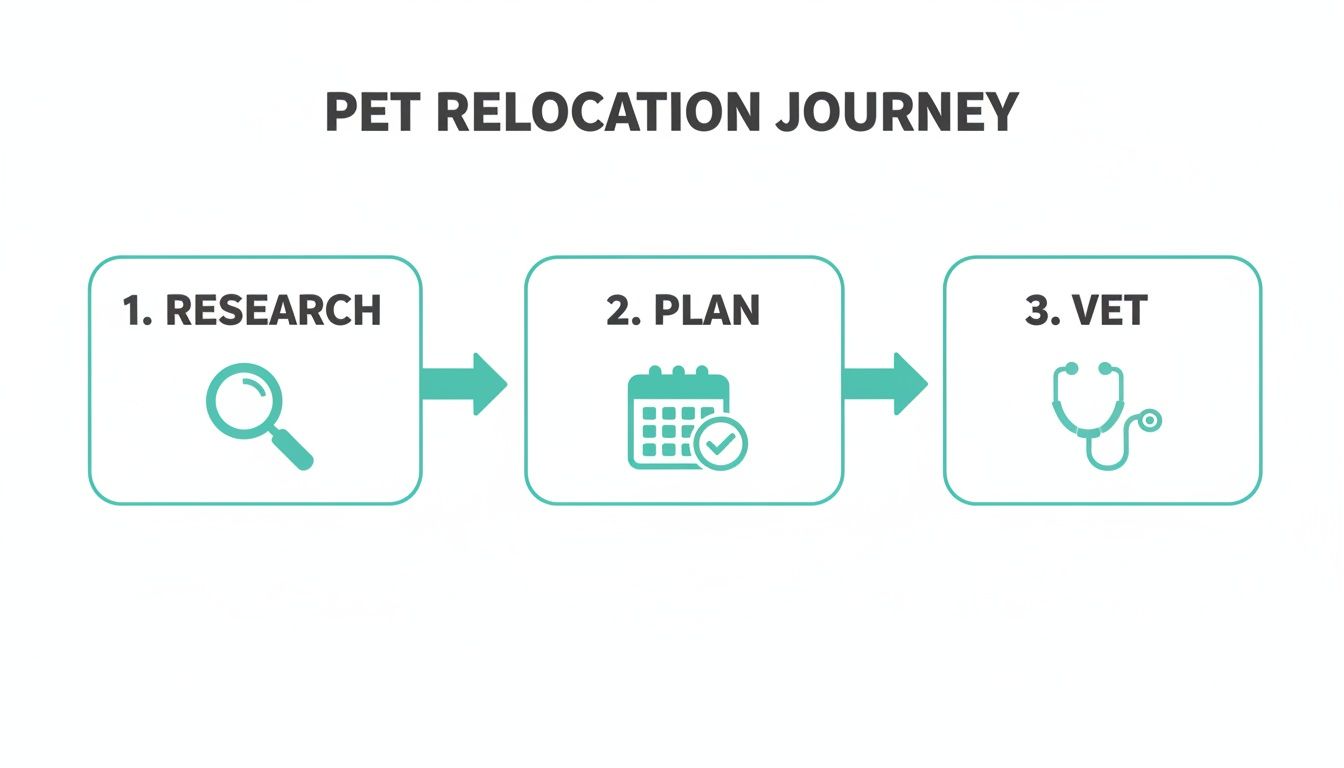
This graphic is a great reminder that a successful move starts long before you ever step into the vet's office.
The Microchip: Your Pet's International Passport
Before you do anything else—vaccines, health certificates, anything—your pet needs a microchip. Think of it as their permanent, international ID. Almost every country now requires a 15-digit ISO-compliant microchip because it uses a frequency that can be read by scanners worldwide.
What if your pet already has an older, non-ISO chip (like a 9 or 10-digit one)? You have two choices:
Implant a new, ISO-compliant chip. Your vet can place it right alongside the old one.
Bring your own microchip scanner that can read the non-ISO chip.
Honestly, the first option is almost always the simplest and safest bet. It's a quick procedure that ensures officials in your destination country can identify your pet without a problem.
Key Takeaway: The microchip must be implanted before the rabies vaccination. Many countries, especially in the EU, will not recognize a rabies vaccine if it was given before the microchip was scanned and recorded.
Decoding Vaccinations and Titer Tests
With the microchip in place, the next step is getting all vaccinations up to date. The rabies vaccine is the big one for international travel, but you’ll want to make sure core vaccines (like DHLPP for dogs or FVRCP for cats) are current, too.
The real trick is the timing. A primary rabies vaccine usually needs to be given at least 21-30 days before travel, though this varies by country.
But for many rabies-free or rabies-controlled destinations like Japan, Singapore, or Australia, a simple vaccine isn't enough. They ask for a rabies titer test (also called a FAVN test). This is a blood test that shows the rabies vaccine worked and created enough antibodies.
Here’s the rundown on the titer test:
Timing is Everything: The blood sample can only be drawn at least 30 days after the most recent rabies shot.
The Waiting Game: After a successful test result comes back, many of these countries enforce a waiting period of 3 to 6 months before your pet can even enter.
Use an Approved Lab: The blood sample has to be sent to a government-approved lab for analysis.
This multi-month timeline is exactly why we say to start planning up to a year in advance. You simply can’t rush this part of the process.
The International Health Certificate
The International Health Certificate (IHC) is the official document that brings everything together. It's completed by a federally accredited veterinarian and states that your pet is healthy and meets all the import rules for your destination country.
This isn’t just a standard check-up. The final exam has to happen within a very tight window—often just 5 to 10 days before you fly. At this appointment, your vet will perform a full exam and fill out the specific IHC form required by your destination.
But it's not done yet. After your vet signs the certificate, it must be sent to a government authority for an official endorsement, like the USDA APHIS in the United States. That government stamp is the final seal of approval that makes the document valid for travel. We walk through this important step in our guide to the USDA pet travel certificate.
Depending on your destination, you may also need certified document translation for your pet's records if they aren't in the local language. Keeping all this paperwork organized is half the battle when moving overseas with your furry family member.
Choosing the Right Flight and Travel Crate
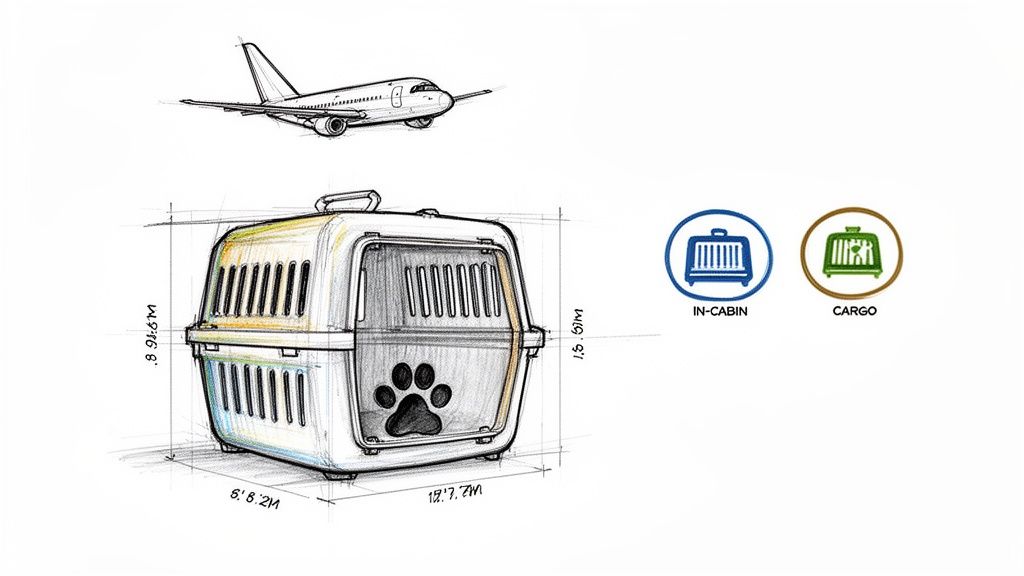
Picking the right flight and travel crate is a massive step in the moving overseas pets process. This isn't just logistics; it's about your pet's safety and comfort. The decisions you make here will directly impact their stress levels and their smooth entry into your new country.
This is much more than just booking a ticket. You need to understand how different airlines handle animal transport and make sure their temporary home—the travel crate—is a secure, safe space. Getting this right is a cornerstone of a successful relocation.
In-Cabin, Checked Baggage, or Cargo
One of the first calls you'll have to make is how your pet will fly. There are generally three options, and your choice will depend on your pet's size, your destination, and the airline's specific pet policies.
Flying In-Cabin: This is for small pets only. Their carrier has to be compact enough to slide under the seat in front of you. It's usually the least stressful option since they stay by your side.
Flying as Checked Baggage: For pets too large for the cabin, this option lets them travel on your same flight, just in a temperature-controlled, pressurized cargo hold. Be aware, though, that some airlines have stopped offering this on international routes.
Flying as Manifest Cargo: This is the common method for larger animals or pets traveling unaccompanied. They're in the same pressurized hold, but the booking is handled by the airline's cargo department, which means separate drop-off and pick-up locations.
Pro Tip: Always, always try to book a direct flight. Fewer layovers mean less transit time, a lower risk of handling mistakes during transfers, and a far less stressful journey for your pet.
Selecting an IATA-Compliant Travel Crate
Don't just grab any carrier off the shelf. International air travel requires a crate that meets the strict guidelines set by the International Air Transport Association (IATA). These rules exist to keep your pet safe and secure. Airlines can—and absolutely will—refuse to board your pet if the crate isn't up to snuff.
Before you buy anything, get familiar with the specific airline pet carrier size requirements for your airline. While IATA provides the baseline, individual airlines often have their own extra rules.
Here are the non-negotiable features for an IATA-compliant crate:
The Right Size: Your pet must be able to stand up, turn around completely, and lie down comfortably in a natural position.
Sturdy Construction: The crate must be made of rigid plastic, wood, or metal. Soft-sided carriers or wire-mesh crates are a hard "no" for the cargo hold.
Secure Locking Mechanism: The door needs a secure, spring-loaded lock. Airlines often suggest you add zip ties to the door's corners for extra security.
Solid Roof & No Wheels: The roof must be solid, with no doors or openings. If the crate has wheels, you must remove them before checking in.
Plenty of Ventilation: To ensure good airflow, the crate must have ventilation on at least three sides. Most international flights now ask for it on all four sides.
Crate Training for a Calm Journey
Once you've got the crate, the real work begins. Your goal is to make it feel like a safe den, not a punishment. This is called crate training, and it’s probably the most important thing you can do to reduce your pet’s travel anxiety.
You’ll want to start this process weeks, or even months, before your flight. The trick is to build a positive association.
Make it Inviting: Put the crate in a central spot in your home with the door wide open. Place a familiar blanket, a favorite toy, and some tasty treats inside.
Encourage Exploration: Let your pet investigate it on their own terms. Never force them inside.
Feed Meals Inside: Start by placing their food bowl right at the entrance. As they get comfortable, gradually move it toward the back of the crate.
Practice Short Closures: Once they are happily going in and out, start closing the door for just a few seconds. Stay right there, praise them, and then open it. Slowly increase the time.
This slow-and-steady method helps your pet view the carrier as their personal sanctuary. For a deeper dive, check out our guide on choosing the best airline pet travel carrier. A well-trained pet is a calmer traveler, which makes the entire journey easier on everyone.
Managing Arrival Quarantine and Acclimation
You’ve made it. After all the planning, paperwork, and travel, your pet has finally landed in your new country. It’s a huge moment, but the journey isn't quite over. Navigating customs and a potential quarantine period requires just a little more patience.
Once you're through that final hurdle, the focus shifts entirely to helping your best friend settle in. A soft landing is just as important as a safe flight.
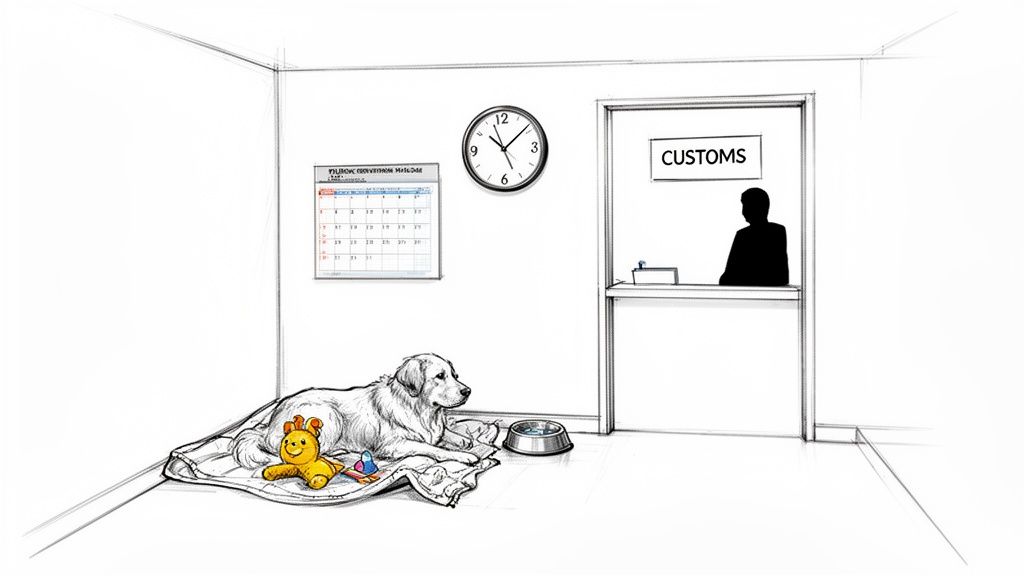
Navigating Customs and Quarantine
Your first stop upon arrival will be customs. This is where border officials will carefully review every document you’ve prepared, from the international health certificate to the government endorsement stamp. Having everything perfectly organized in both physical and digital formats is essential here.
Some destinations, especially rabies-free countries like Australia, New Zealand, or even Hawaii, enforce a mandatory quarantine. It's not a punishment; it's an important biosecurity measure designed to protect local animals from diseases your pet might unknowingly carry.
Quarantine is a protective measure, not a penalty. It’s a country's way of ensuring the health and safety of its native animal population before welcoming a new furry resident.
If your pet has to go into quarantine, it pays to know what to expect. These government facilities are built with animal welfare in mind, providing clean kennels, food, water, and professional care. You won't be able to stay with them, but most places offer visiting hours or provide updates. Do your homework on the specific facility beforehand to learn their rules and see if you can bring familiar items, like a favorite toy or blanket, to make their stay more comfortable.
Helping Your Pet Settle Into Their New Home
Bringing your pet home for the first time marks the real start of their acclimation. The new house is full of unfamiliar smells and sounds, which can be pretty stressful for an animal. Your number one job is to create a pocket of familiarity and safety.
Start by carving out a dedicated "safe space" for them in a quiet part of your home. Fill it with things that smell like their old, happy life:
Their favorite bed or blanket
A few well-loved toys
Their food and water bowls
Let them explore their new world on their own terms. Don't drag them out of their safe zone. The idea is to make them feel secure, not overwhelmed by the change.
Re-Establishing a Familiar Routine
Pets are creatures of habit. After the chaos of travel, one of the kindest things you can do is get them back on their old schedule as fast as possible. This consistency is a powerful signal that life is returning to normal.
Try to stick to your previous routine for:
Feeding Times: Serve meals at the exact same times you always did.
Walks and Potty Breaks: Keep walks consistent to reinforce house-training and get them used to their new neighborhood.
Playtime and Cuddles: Make dedicated time for play and affection to reassure them that your bond is as strong as ever.
Predictability is incredibly comforting for an anxious pet. It’s a simple but effective way to rebuild their sense of stability after a long and confusing journey.
Finding a New Veterinarian
Don't put off finding a new local vet until there's an emergency. Start researching practices as soon as you arrive and schedule a "get to know you" appointment within the first week or two.
This initial visit is the perfect chance to:
Get your pet officially registered in the new country.
Learn about any local health risks, like specific parasites or regional diseases.
Set up a schedule for booster shots and other preventative care.
Having a trusted veterinarian in your new city provides immediate peace of mind. It means you’re prepared for anything and can keep your pet's health a top priority as they begin their new life. This is the final step in making your international move a complete success for the whole family.
How a Little Tech Can Take the Stress Out of Your Journey
Let's be honest: managing an international move with your pets feels a lot like herding cats. You're juggling vet appointments, staring down deadlines, and trying to understand government forms. It's easy to feel overwhelmed.
This is exactly where modern tools can make a world of difference for both you and your vet clinic. Instead of a chaotic mess of sticky notes and flagged emails, imagine having a single, central hub. A place where every document, deadline, and conversation is neatly organized and tracked, so nothing gets missed. That’s the kind of peace of mind a dedicated platform provides.
Ditching the Dreaded Paperwork Pile-Up
The sheer volume of paperwork is, without a doubt, one of the biggest headaches. One tiny mistake—a wrong date, a missed signature, a misread rule—can derail everything, causing massive delays or even rejection at the border. Software like Passpaw is designed to prevent this by automating the heavy lifting for vet practices. It generates the right documents for the right country and checks them against the most current requirements.
For you, the pet owner, this translates to real benefits:
Fewer Gut-Wrenching Errors: Automated checks catch the kind of human mistakes that lead to last-minute panic and expensive problems.
Clearer Communication: You’re no longer in the dark. You can see the progress, understand what your vet needs from you, and feel like part of the team.
Real Confidence: There's great reassurance in knowing an expert system is checking every single step of the process.
This screenshot gives you a peek at the Passpaw dashboard, showing how vet teams can manage multiple pet travel cases at once.
What you're looking at is a clear, organized command center. It automatically prioritizes tasks by travel date, making sure the most urgent moves get the attention they need, right when they need it.
A Smarter Way to Get Your Pet From A to B
The global pet travel services market is booming and expected to hit USD 3.95 billion by 2032. Yet, here’s a sobering thought: industry experts estimate that a whopping 20-30% of pet moves attempted without professional help hit a major snag. Why? Complicated health certificates, confusing rabies titer test rules, and regulations that seem to change overnight.
The whole point is to turn a chaotic fire drill into a manageable project. When your vet clinic uses a platform built specifically for this purpose, they can stop chasing down paperwork and focus on what truly matters—your pet’s health and a safe journey.
This shift helps sidestep the common pitfalls that cause travel nightmares, ensuring your furry family member's trip is as smooth as paws-sible. It bridges the gap between your trusted veterinarian and the maze of international regulations.
Curious how it all comes together? You can get a feel for it yourself with Passpaw's pet travel planner and see how the right technology can simplify your big move.
Common Questions About Moving Overseas With Pets
Even the most organized pet owner has questions when it comes to an international move. It's a complicated process, and feeling a little overwhelmed by the details is completely normal. We hear the same questions pop up time and again, so we've put together some straight answers to help you navigate this adventure.
Think of this as your go-to guide for those tricky "what-if" moments. A little clarity can go a long way in turning travel stress into the excitement it should be.
How Much Does It Cost to Move a Pet Internationally?
This is almost always the first thing people ask, and the honest answer is: it depends. The total cost can swing from a few hundred dollars to several thousand. It's a huge range because so many different things factor into the final price.
Your total cost will really be shaped by a few key things:
Your Pet's Size: Bigger pets need bigger, heavier crates. That means a higher cargo fee from the airline—it's as simple as that.
Your Destination: A quick, direct flight to a country with straightforward rules will cost a fraction of a multi-stop journey to a place with a mandatory quarantine period.
Airline and Service Level: Every airline has its own fee structure. Plus, deciding to hire a professional pet relocation service will add to the cost, but it can dramatically reduce your stress and workload.
The main expenses you'll need to budget for are the flight itself, an IATA-compliant travel crate, vet exams and health certificates, government endorsement fees, and, if needed, quarantine costs.
Should I Sedate My Pet for the Flight?
It’s a tempting thought—to help them sleep through the stress of the flight. But the expert consensus is a firm no. Most veterinarians and all airlines strongly advise against sedating pets for air travel. The American Veterinary Medical Association (AVMA) points out that sedatives can interfere with a pet's ability to regulate their body temperature and keep their balance, which is a real risk at high altitudes.
So, what’s the alternative? Preparation and positive association.
Start positive crate training weeks, or even months, ahead of time. The goal is for the carrier to feel like a safe, familiar den, not a scary box.
Talk to your vet about natural calming supplements or anxiety wraps. These don't carry the same risks as prescription sedatives and can still help take the edge off.
A calm pet is a well-prepared pet. Familiarity and comfort are much safer and more effective than medication.
What Happens If My Pet's Paperwork Is Incorrect?
This is where things can get serious, fast. An error on your pet’s paperwork is one of the biggest risks in this whole process, and the results can be upsetting, depending on your destination's rules.
At best, you’re looking at long, frustrating delays at the airport while officials sort things out. At worst, your pet could be denied entry and put on the next flight home (at your expense) or forced into a long, expensive quarantine.
This is exactly why every single detail on every form is so important. You have to triple-check every document, confirm every date, and make sure every signature is where it's supposed to be. I always recommend carrying both physical and digital copies of all your paperwork when you travel—you never know when you might need a backup.
The journey of moving your pet overseas is filled with details, but you don't have to manage it all alone. At Passpaw, we provide a platform that helps your veterinary team get the paperwork right the first time, reducing errors and giving you peace of mind. Learn more about how we simplify pet travel at https://passpaw.com.
More articles
From regulatory changes to best practices for veterinarians and pet owners, our resources keep you ahead of the curve.