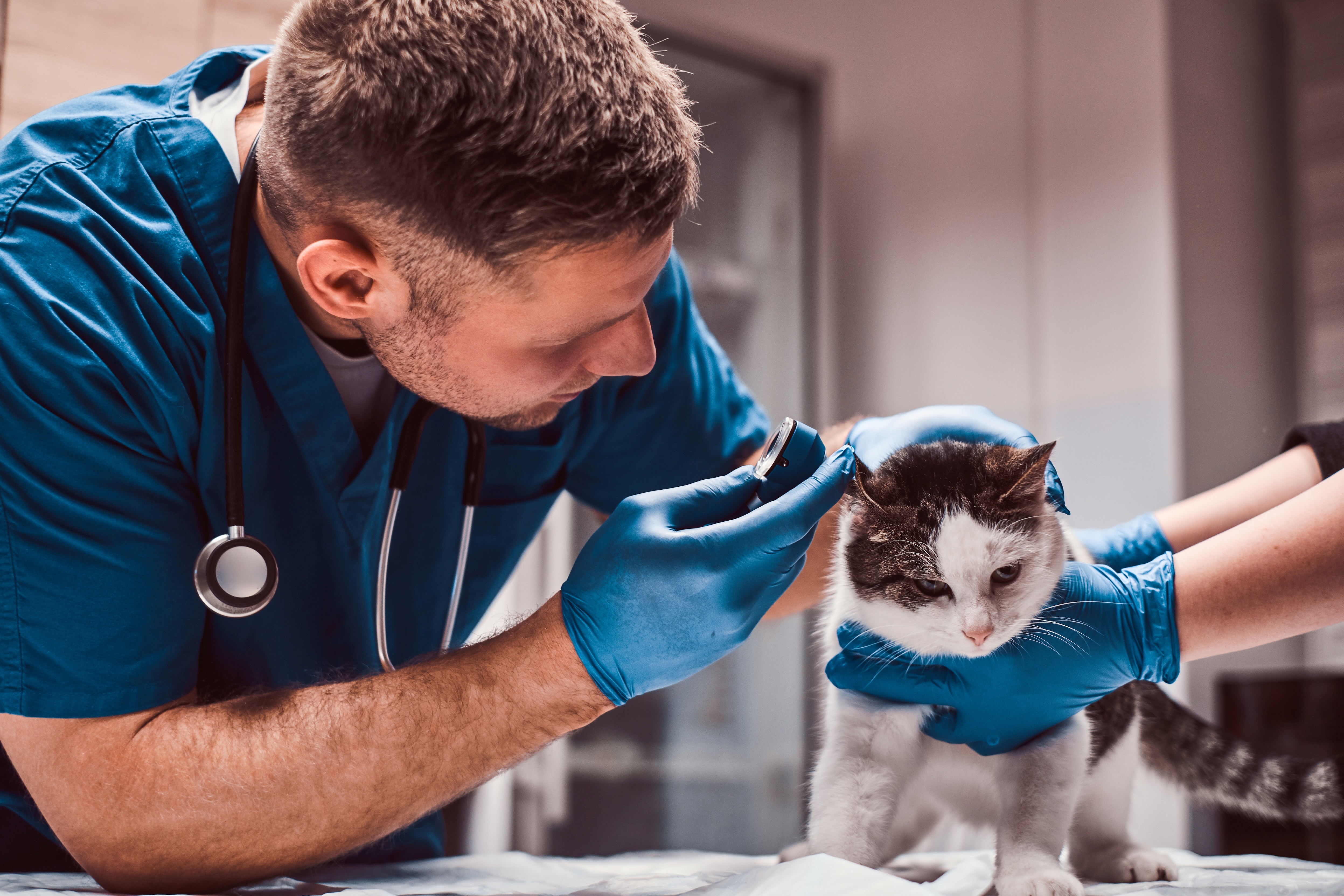
Are you a team member in a veterinary practice?
Are you a pet parent planning a trip with your furry pal?
How to Book a Flight for Your Cat Without Stress
Figuring out how to book a flight for your cat comes down to a few key decisions. First, you'll need to decide if your cat will fly in the cabin with you or as checked cargo. Once that's sorted, your next step is to call the airline directly to get your cat added to your reservation.
You’ll also need to get a health certificate from your vet within 10 days of your flight and make sure you have an airline-approved carrier ready to go.
An Overview of Flying with Your Cat
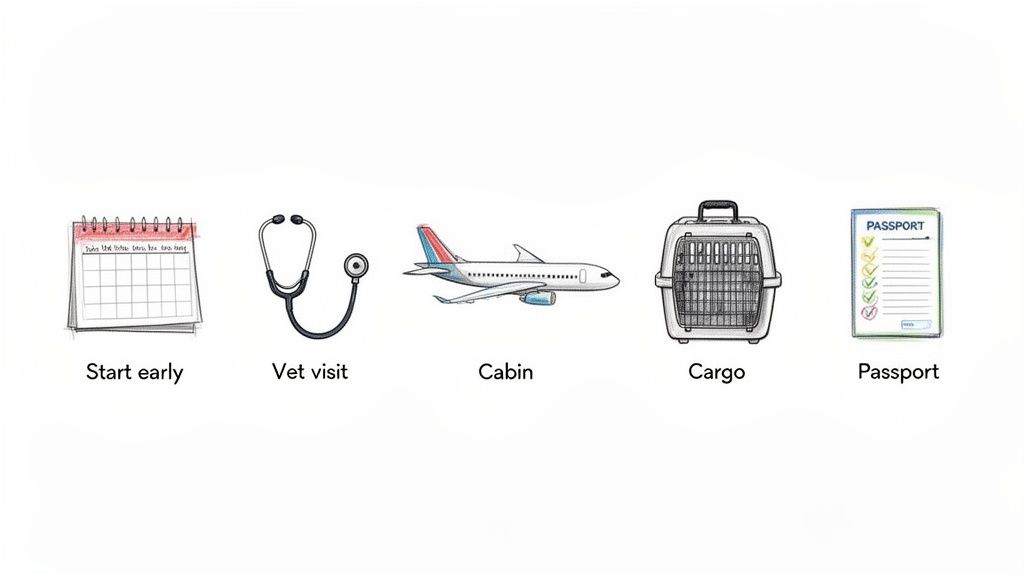
Planning a trip with your feline friend can feel like a huge task, but breaking it down into smaller steps makes it much easier to handle. The first big choice is whether your cat will travel in the cabin or in the pressurized, temperature-controlled cargo hold. This decision usually depends on your cat's size, its personality, and the airline's specific rules.
To give yourself the best shot at good fares and a smooth journey, it's worth checking out some advice on the best time to book flights, since the number of pet spots on any given plane is always limited.
Cabin vs. Cargo: A Quick Look
For most cat owners, having their pet in the cabin is the ideal setup. It lets you keep a close eye on them and offer some comfort during what can be a stressful experience. The catch? This is usually only an option for smaller cats who can fit comfortably in a carrier that slides under the seat in front of you.
Cargo travel, on the other hand, is the main option for larger pets or for flights where in-cabin travel isn't allowed. While the idea of putting your cat in cargo might sound a little scary, airlines have special programs and facilities to keep animals safe and comfortable.
To help you get a clearer picture, here’s a quick comparison of the two main options. This table breaks down the key factors to help you figure out the best fit for your situation.
Cabin vs Cargo Options for Your Cat
This side-by-side comparison should help you decide which route to take based on your cat's size, temperament, and the airline's policies.
Travel Option | Best For | Pros | Cons |
|---|---|---|---|
In-Cabin | Small cats, anxious pets, domestic travel. | Your cat stays with you, reducing stress; you can monitor their well-being directly. | Limited to small carriers that fit under a seat; pet spots per flight are very restricted. |
Cargo | Larger cats, international flights, brachycephalic (flat-faced) breeds on certain airlines. | Allows larger cats to travel; temperature-controlled and pressurized environment. | Can be more stressful for the cat; you are separated during the flight. |
Ultimately, the choice depends on what makes the most sense for your cat and your travel plans. Just be sure to weigh the pros and cons carefully.
Key Takeaway: The single most important step is to call the airline before you finalize your own ticket. You need to confirm they have space for a pet on your desired flight, as most planes only allow a handful of animals in the cabin.
This guide will walk you through every detail, from picking the right airline and managing vet visits to handling travel day like a pro. With a little preparation, you can make this a smooth experience for both of you. Let's get this journey started on the right paw.
Choosing the Best Airline for Your Cat
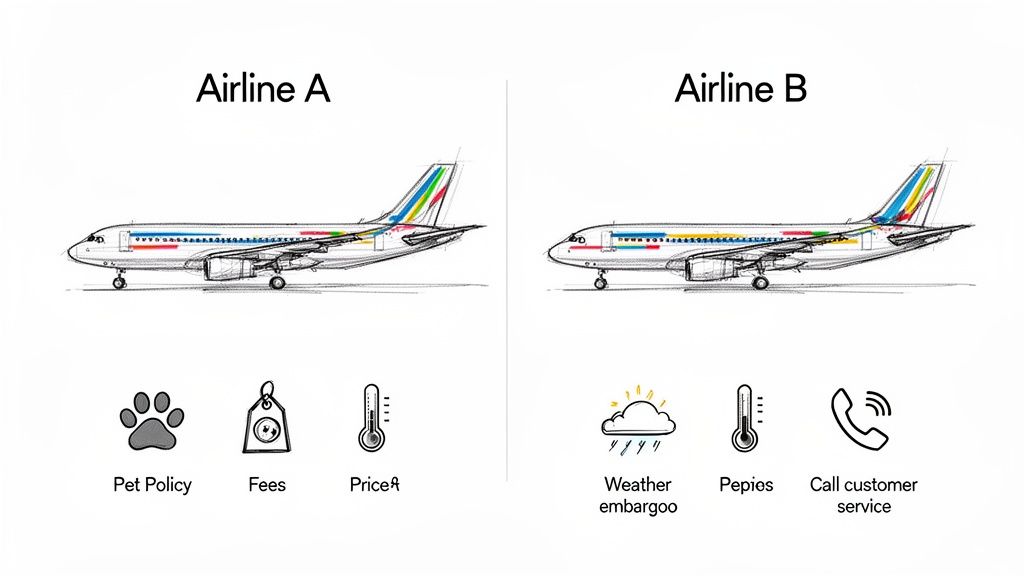
So, you’ve figured out whether your cat is flying in-cabin or as cargo. The next big step is picking an airline that’s a good fit. This isn't just about finding the cheapest flight; it's about finding one whose policies work for your cat's needs.
Airline pet policies can be very different. You'll see changes in everything from fees and crate requirements to which breeds are even allowed to fly. A little research now will save you a world of headaches later.
This is a bigger deal than ever before. The global pet travel services market hit $2.4 billion in 2024 and is on track to reach $5.3 billion by 2034. It's clear that traveling with our furry family members is becoming the new normal.
How to Find and Understand Pet Policies
First things first: head straight to the airline's official website. Search for their "traveling with pets" or "pet policy" section. This is your best source of information.
Don't just give it a quick scan. You need to dig into the details that will make or break your travel plans.
Pet Fees: Find the one-way fee for bringing your cat, whether in-cabin or cargo. Expect to pay anywhere from $95 to $150 per direction on domestic flights, and remember, this fee is usually non-refundable.
Carrier Dimensions: Airlines are very specific about the maximum size for carriers. Get out a tape measure and check yours against their rules for both soft-sided and hard-sided crates.
Total Pets Allowed: This one surprises a lot of people. Most airlines only allow a handful of pets on any given flight, sometimes as few as four to six total. Booking early is your best strategy.
Pro Tip: Once you find the airline’s policy, save it as a PDF or take a few screenshots. Policies can change, and having a record of the rules when you booked can be a lifesaver.
Comparing Key Airline Differences
On the surface, many airline policies seem similar, but the fine print is where it gets tricky. Some airlines are known for being more welcoming to pets, while others have strict rules that might not work for you and your cat.
Let's imagine you're booking a cross-country flight and weighing two options for your cat to fly in the cabin.
Airline A (a major carrier): They charge $125 each way and allow standard-sized soft carriers. Their booking process is straightforward.
Airline B (a budget airline): Their fee is only $95 each way, but their under-seat space is famously small, meaning your carrier might not fit.
In this scenario, spending the extra $30 on Airline A is likely worth it for the peace of mind that your cat and their carrier will actually fit. For a deeper dive into specific airlines, check out our guide on the best airlines for pet travel.
Watch Out for Breed and Weather Restrictions
Some airlines have restrictions on brachycephalic (flat-faced) breeds like Persians and Himalayans. Because these cats can have breathing difficulties at high altitudes, many airlines won't allow them in the cargo hold. Always double-check if your cat's breed is on a restricted list.
Weather rules are another important factor. Airlines will not transport pets in cargo if the temperature is too hot or cold at any point in the journey—departure, arrival, or layover cities. This is most common in the peak of summer or the middle of winter.
For instance, trying to fly your cat out of Phoenix in July as cargo is probably a no-go. The airline will likely have a heat restriction in place for your pet's safety, and it's not something you can negotiate.
The Final and Most Important Step: Call the Airline
You’ve done the research. You've compared the policies. You've picked an airline. But don't click "book" just yet.
Before you purchase your ticket or pay any pet fees, it's a very good idea to call the airline.
Tell the reservation agent you want to add a pet to a specific flight you're looking at. They can check the system and confirm if there’s an open spot for an animal. Because the number of pets is so limited, this availability often doesn't show up correctly on their website.
This five-minute phone call is the single most important thing you can do to make sure your cat has a confirmed spot on the plane. It prevents the nightmare scenario of showing up at the airport only to be told there's no room for your pet.
Getting Your Cat and Carrier Ready for the Skies
With your flight booked, it's time to focus on getting your cat and their travel gear squared away. The right carrier and a little prep work can make a huge difference in how well your cat handles the journey. This isn't just about checking boxes on an airline's list; it's about creating a safe, familiar space for your cat on what will be a very unusual day for them.
Think of the carrier as your cat’s private little cabin. The goal is to make it feel less like a box and more like a cozy, mobile den. This process should start long before you even think about packing your own bags.
Choosing the Right Carrier
First things first: you need a carrier that meets the airline's rules. Airlines are incredibly specific about size, ventilation, and how secure the carrier is, so this is one area where you can't just guess.
Soft-Sided Carriers are almost always the go-to for in-cabin travel. They have a little give, which helps when fitting them under the notoriously tight airplane seats, and they're generally lighter.
Hard-Sided Crates are the standard for cargo travel. They offer more protection and are built to handle the bumps and shuffles from baggage handlers.
No matter which style you need, the carrier must have good ventilation on at least three sides. It also has to be large enough for your cat to stand up, turn around, and lie down without being cramped. A word of caution, though: a carrier that's too big can make a cat feel insecure, especially during bumpy air.
For a deep dive into the best options, check out our complete guide to choosing an airline-approved pet travel carrier. It’ll help you find the perfect fit.
Making the Carrier a Happy Place
Now for the real challenge: convincing your cat that this new carrier is the best thing since catnip. It all comes down to positive association, a process you should start weeks, if not months, before your flight.
Just leave the carrier open in a room where your cat likes to hang out. Don't push them in. Instead, make it an inviting spot.
Furnish It: Put a soft blanket inside, or even better, an old t-shirt that smells like you. Familiar scents are a huge comfort to cats.
Offer Rewards: Casually toss their favorite treats or a toy inside. A little sprinkle of catnip can also work wonders to get them interested.
Feed Meals Nearby: Start by putting their food bowl next to the carrier. Over a few days, move it just inside the entrance, and then eventually all the way to the back.
The whole point is for your cat to start walking in and out on their own, learning to connect the carrier with good things like food, naps, and safety. This bit of groundwork will make travel day much less of a cat-astrophe.
Packing Your Cat’s Onboard Essentials
Your cat needs a carry-on, too. You’ll want to have these items packed and easy to grab during your trip.
Absorbent Pads: Line the bottom of the carrier with a puppy pad or something similar. Accidents happen, especially on a stressful day.
Familiar Blanket: A small, soft blanket from home provides comfort and a comforting scent of security.
A Favorite Toy: A small, silent toy is a great idea. Just please, no jingle bells for the sake of your fellow passengers.
Small Bag of Food: It's best not to feed your cat a big meal right before flying, but having a small bag of their kibble is smart in case you face a long delay.
Expert Advice: Do not sedate your cat for a flight unless it is specifically prescribed and directed by your veterinarian. The American Veterinary Medical Association (AVMA) strongly advises against it. Sedation can affect a cat's ability to regulate body temperature and maintain balance, which can be risky at high altitudes.
Instead of medication, look into natural calming aids. Pheromone sprays like Feliway can be a game-changer. Just spritz a little inside the carrier about 15-20 minutes before your cat goes in. These sprays mimic natural feline pheromones, creating a sense of calm without the risks of sedation.
Managing Veterinary Visits and Health Certificates
Navigating the paperwork for your cat's flight can feel like herding... well, you know. But with a good plan, you can get all the documents in order without any last-minute chaos. This part of the process is all about timing, accuracy, and working closely with your veterinarian.
Getting the paperwork right is very important. Roughly 2 million domestic animals take to the skies on commercial flights in the U.S. each year, and you’d be surprised how many are feline flyers. Cats account for 22% of all pet journeys, and that number is on the rise. In fact, they're expected to be the fastest-growing segment in the pet travel market through 2033. If you're curious about the numbers, you can explore detailed pet travel statistics to see the full picture.
The Health Certificate Timeline
For domestic travel within the U.S., the key document is the Certificate of Veterinary Inspection (CVI), more commonly known as a health certificate. This is the airline's proof that your cat is healthy enough to fly and has its needed vaccinations.
Timing is absolutely everything here. Most U.S. airlines require the health certificate to be issued no more than 10 days before your departure. It’s a firm deadline, so booking your vet appointment at the right time is critical. Schedule it too early, and the certificate will expire by the time you fly. Wait too long, and you risk not having it in hand at check-in.
Key Insight: That 10-day window for a health certificate is a common rule for most airlines. I always advise clients to book their vet visit for about 7-8 days before the flight. It gives you a small buffer for any unexpected hiccups without cutting it too close.
This timeline gives a good visual of how all the pieces fit together leading up to that crucial vet visit.
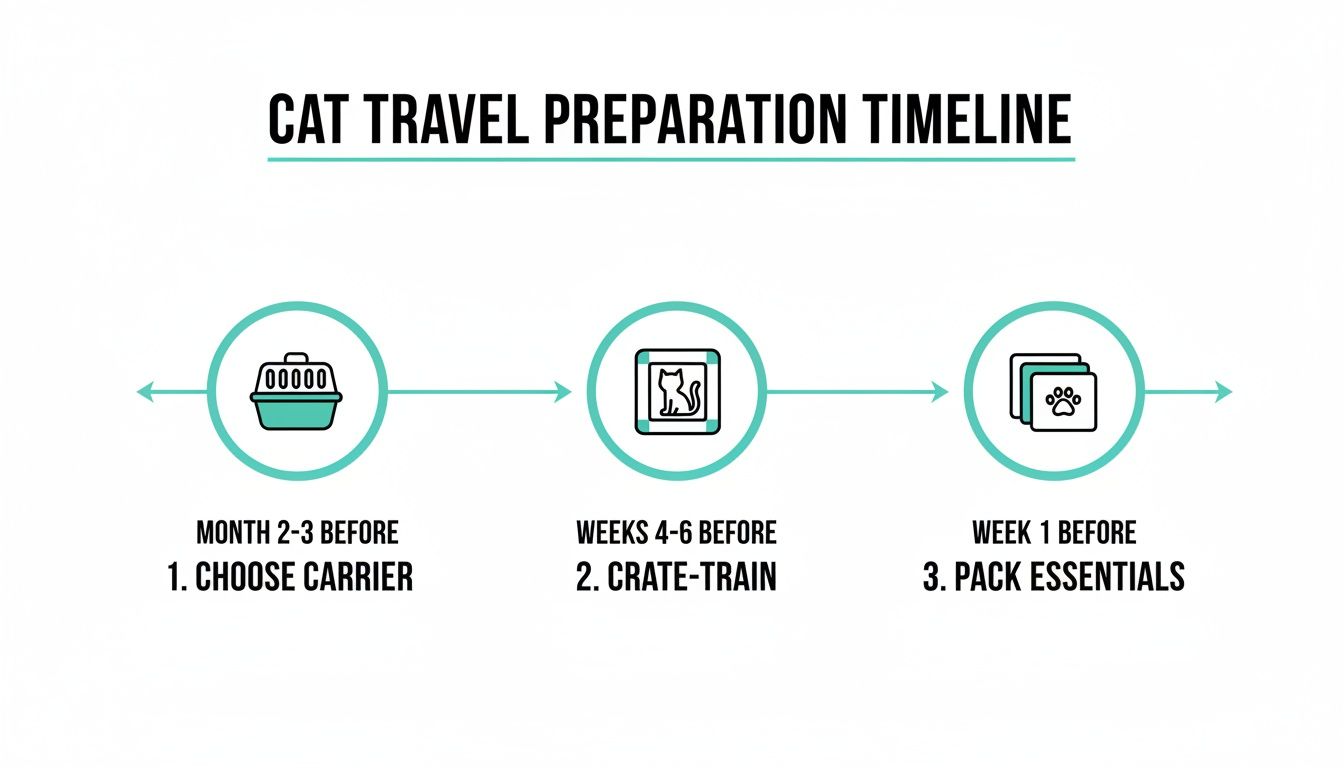
As you can see, the vet visit is one of the final steps after you've handled the carrier, training, and packing.
What Your Vet Will Check
During the health certificate appointment, your vet will give your cat a full physical exam to make sure there are no signs of illness. They'll also verify a couple of important items:
Rabies Vaccination: Your cat’s rabies vaccine must be current. The certificate will list the vaccine date, so have that info ready. If your cat is due for a booster, it’s a good idea to get it done at least 30 days before you travel.
Microchip Information: While it's not always required for domestic flights, a microchip is your cat's best safety net if they ever get lost. Make sure the chip is registered with your current contact info, and ask your vet to give it a quick scan during the visit to confirm it’s reading properly.
This appointment is also the perfect opportunity to chat with your vet about any travel anxiety your cat might have. They can offer great advice on calming aids or other strategies to make the journey less stressful.
International Travel: A Whole Different Animal
Flying internationally with your cat? Buckle up, because this adds several layers of complexity. Every country has its own specific import rules, and they are often much more demanding than what you'll find for a domestic trip.
You won't be using a standard CVI. Instead, you'll likely need an International Health Certificate (IHC). This document is a bigger deal and often needs to be endorsed by the USDA's Animal and Plant Health Inspection Service (APHIS) after your veterinarian fills it out.
The IHC process can involve a whole host of other requirements:
Specific Vaccinations: Some countries require vaccines beyond the standard rabies shot.
Blood Titer Tests: Many destinations, like countries in the European Union, require a rabies titer test. This is a blood test done well in advance to prove the vaccine is working, and getting the results can take months.
Parasite Treatments: It's common for countries to require flea, tick, and deworming treatments within a very specific timeframe before arrival.
Because these rules vary so much, your first step should be to check the APHIS website for your destination country's requirements the moment you start planning. The timeline for international paperwork can easily start 6 months or more before your flight. For a deeper dive into this document, check out our article on the health certificate for pet travel.
Navigating Travel Day for a Smooth Departure
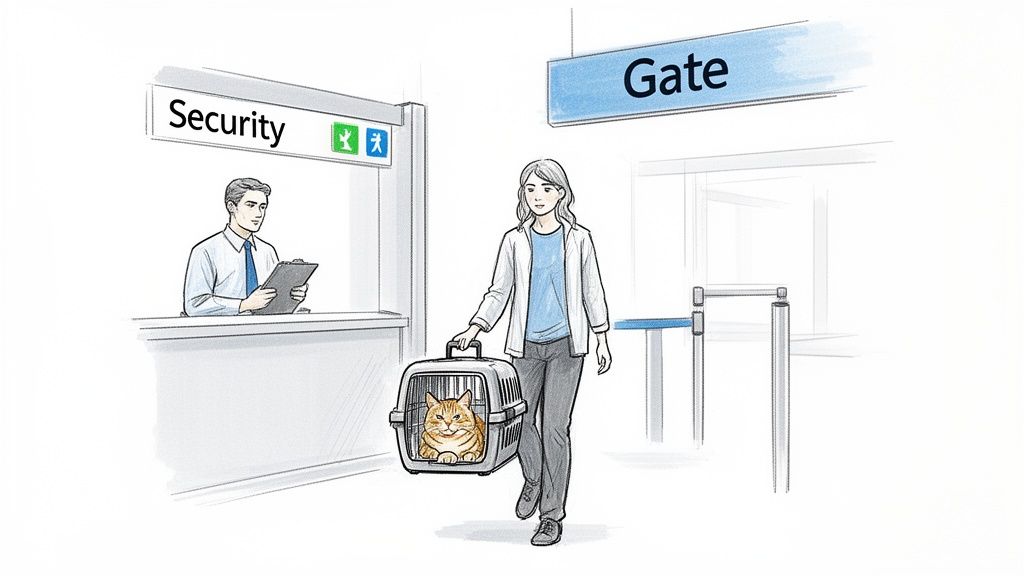
When the big day finally arrives, your calm attitude is your most important tool. Cats are incredibly perceptive; if you’re stressed, they will be, too. By preparing for each step of the airport process, you can be a confident leader for your cat, making the experience much smoother for both of you.
The key is to manage the morning routine to set your cat up for success. This starts with breakfast.
Before You Leave Home
To help prevent an upset stomach or the need for a potty break at the worst possible time, it’s a good idea to limit food and water a few hours before heading to the airport. Vets often suggest withholding food for about four to six hours before the flight.
Don't restrict water completely, though. You can offer small sips, but it's best to pick up the water bowl about an hour before you leave. This simple step helps minimize the chances of motion sickness or accidents in the carrier.
Travel Day Tip: Before you zip your cat into their carrier, give them one last chance to use the litter box. A final potty break can make a huge difference in their comfort level during that first leg of the journey.
Checking In at the Airport
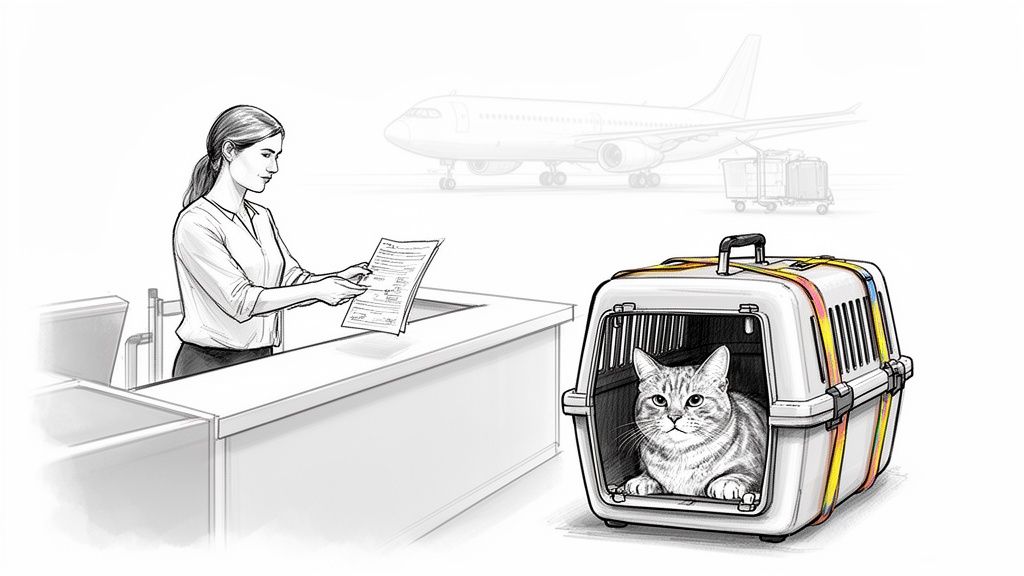
Once you arrive, head straight for the full-service check-in counter. You can’t use a kiosk or curbside check-in when you’re traveling with a pet. Have all your documents organized and ready to go in an easily accessible folder:
Your Cat's Health Certificate: The airline agent will want to see this to confirm your cat is fit for travel.
Proof of Rabies Vaccination: Keep this handy right alongside the health certificate.
Your Reservation Confirmation: This should show that you've already paid the pet fee.
The agent will check the carrier to make sure it meets their requirements. They might even ask you to briefly take your cat out so they can see inside. This is the moment where all that carrier training really pays off! Stay calm and handle your cat gently.
Going Through Security
This is often the most stressful part for pet parents, so let’s walk through it. Your cat's carrier has to go through the X-ray scanner, which means your cat cannot be inside. You will need to carry your cat in your arms through the metal detector.
Here's how to make this process go smoothly:
Get Ready: Before you get to the front of the line, make sure your cat's harness is secure. A well-fitting harness is your best friend here, as it gives you a much better hold.
Talk to the TSA Agent: Just let the officer know you have a cat with you. They see this every day and will guide you through the process.
Hold Them Securely: Hold your cat firmly but gently against your body as you walk through the metal detector. Speak to them in a calm, reassuring voice.
Resettle Quickly: Once you’re through, your first priority is getting your cat back into their carrier and zipping it securely. Then you can go back for your shoes, laptop, and other belongings.
Air travel is booming, with a projected 9.8 billion global passengers in 2025. This means airports are more accustomed than ever to seeing pets, but being prepared makes everything easier for everyone. You can learn more about this industry growth from the latest pet air transport trends.
What to Do for a Cargo Handoff
If your cat is traveling in the cargo hold, the process is quite different. You'll take them to a special cargo drop-off location, which is usually in a separate building from the main passenger terminal.
For your own peace of mind, it’s a good idea to ask the airline staff a few key questions:
Can you confirm the cargo hold is temperature-controlled and pressurized?
How will my cat be loaded onto the plane?
Where exactly do I pick them up when we land?
Once you hand them over, staff will attach their travel documents directly to the crate. This can be tough, but remember that airlines have dedicated procedures in place to keep animals safe during their journey.
Handling Delays and Unexpected Changes
Let's be real: even the most perfectly planned trip can have issues. Air travel is full of surprises—a sudden storm, a mechanical problem, or a crew delay can change everything. When you've got your cat with you, those disruptions can feel about ten times more stressful.
But staying prepared is your best defense. Knowing what to do when things get messy will help you stay calm and in control, which is the absolute best thing you can do for your cat.
Let’s walk through the most common hiccups and how to handle them like a pro.
When Your Flight Gets Delayed
A short delay is usually just an annoyance. Your first move? Find a quiet corner of the terminal, far away from the rushing crowds and noisy gates. This small act can significantly lower your cat’s stress levels while you wait for updates.
Most major airports have designated pet relief areas. Now, they're usually designed with dogs in mind, but they can be a lifesaver if you need a private, secure space to offer your cat a sip of water or just check on them without an audience. A quick search on the airport's website should show you a map.
Pro Tip: I always keep a small, collapsible water bowl and a bottle of water in my carry-on. Dehydration is a real risk during long waits. Offering just a few sips can keep your cat comfortable without making them need a litter box urgently.
Navigating Cancellations and Rebooking
A full flight cancellation is the scenario every pet traveler dreads. If this happens, head straight for the gate agent or the airline’s customer service desk. When it’s your turn, calmly but clearly explain that you are traveling with a cat in the cabin.
This detail is absolutely critical. When the agent looks for a new flight, they aren’t just looking for a seat for you—they're looking for one of the very few pet spots on another plane. These are extremely limited, so the faster you act, the better.
Be Proactive: While you're in line, get on the airline’s app and start searching for other flights. If you find a good option, you can suggest it to the agent.
Ask the Right Questions: Don't just accept the new flight. Ask specifically about the pet policies on that flight and confirm your pet fee will be transferred. Never assume it will move over automatically.
Consider Other Options: If rebooking is looking like a nightmare, it might be time to think about a plan B. For really complicated situations, looking into professional pet transport services can be a reliable backup.
Preparing for an Overnight Stay
If you get stranded overnight, your number one job is finding a safe, pet-friendly place to stay. This is not something you want to figure out at midnight in a strange city.
Before you even leave home, do a little research. Find a few pet-friendly hotels near your departure and arrival airports. Save their names and numbers in your phone. Having this information ready means you can book a room right from the terminal instead of frantically searching for a place that will welcome your cat.
A little prep work here turns a potential crisis into a manageable inconvenience. It ensures both you and your cat can get a safe night's rest before tackling the rest of your journey.
Your Top Questions About Flying With a Cat, Answered
Even after all the planning, a few questions always seem to pop up right before you book. Let's tackle some of the most common ones we hear from cat owners to get you those last few answers you need.
How Much Does It Cost To Fly With a Cat?
The cost really depends on where your cat will be riding—in the cabin with you or down in the cargo hold.
For in-cabin travel on U.S. domestic flights, the one-way pet fee is usually between $95 and $150. If your cat is traveling as cargo, the price is higher, typically landing somewhere between $200 and $500. This depends on factors like the size of the crate and how far you're flying. Your best bet is to always check the airline's website for the most current fees.
Can I Buy a Separate Seat for My Cat on the Plane?
It's a question that comes up a lot, but unfortunately, the answer is a firm no. You can't purchase an extra seat just for your cat.
Airlines are very clear about this. If your cat is traveling in the cabin, their carrier has to stay tucked away under the seat in front of you for the entire flight. This isn't just a suggestion; it's a safety rule for takeoff, landing, and any turbulence.
What Documents Are Required for Domestic Cat Travel?
For most flights within the United States, you'll want to have two key documents ready to go to make check-in a breeze.
Certificate of Veterinary Inspection (CVI): This is the official health certificate, signed by your vet. It's often required to be issued within 10 days of your departure.
Proof of Rabies Vaccination: You’ll want to be able to show that your cat's rabies shot is current.
I always recommend carrying the original paper copies and having digital backups on your phone. While airline agents don't ask for them every single time, you could be denied boarding if they do and you can't provide them.
Key Reminder: International travel is a completely different ballgame. The paperwork is much more complex and can include USDA endorsements, blood tests, and specific parasite treatments, often needing to be started months in advance.
What Should I Do if My Flight Is Delayed or Canceled?
Flight disruptions are always stressful, but they're even more so with a pet in tow. Having a game plan is everything. The second you find out about a delay or cancellation, your first move should be to tell the gate agent you're traveling with a live animal.
Ask them about the airline's policy for rebooking passengers with pets. Spots for animals on other flights are incredibly limited, so you need to act fast. It's also a great idea to immediately locate the airport's pet relief area.
For those really long delays or an unexpected overnight stay, a backup plan is a lifesaver. Before you even head to the airport, look up a couple of pet-friendly hotels nearby. This little bit of prep can turn a potential crisis into a manageable hiccup, ensuring your cat stays safe and comfortable.
Juggling all the travel requirements can feel overwhelming, but your vet doesn't have to manage it alone. Passpaw helps veterinary practices streamline the entire health certificate process, ensuring every document is accurate and ready on time. Ask your vet about Passpaw to make your next trip a breeze.
More articles
From regulatory changes to best practices for veterinarians and pet owners, our resources keep you ahead of the curve.