Are you a team member in a veterinary practice?
Are you a pet parent planning a trip with your furry pal?
Your Guide to a Health Certificate for Pet Travel
Think of a health certificate for pet travel as your pet’s official passport. It's an official document signed by a special vet, saying your pet is healthy, up-to-date on shots, and free of any sicknesses that can spread. This isn't just a good idea; it's a critical piece of paper that most airlines and countries require before your furry friend can tag along.
Your Pet's Official Pawsport to Adventure
Planning a trip with your pet is one of life's great joys, but let's be honest—the paperwork can feel a bit ruff. The single most important document you’ll handle is the health certificate. This is much more than a simple "fit to fly" note from your vet. It's a key record showing your companion meets the strict health rules of your destination.
Airlines and border officials are very particular about this certificate for a few good reasons:
Public Health Protection: It's all about stopping the spread of diseases, both between animals and from animals to people.
Animal Welfare: This confirms your pet is physically ready for the challenge and stress of travel without putting its own health at risk.
Following the Rules: It’s your proof that you’ve followed the rules and met all the requirements of your destination.
What's Actually on the Certificate?
Every health certificate is a snapshot of your pet's current health. While the details can change depending on where you're going, the main information is pretty standard. This document is the backbone of the booming pet travel industry. With nearly 2 million pets taking to the skies on commercial flights in the U.S. alone each year, you can see why standard health checks are so important. The global pet travel services market is valued at around $2.4 billion—that’s a lot of pets on the move!
The certificate pulls together several key pieces of information into one neat package. Here’s a quick look at what you can expect to find.
Health Certificate At a Glance
This table breaks down the main parts of a typical health certificate, explaining what each part means and why it's so important for a smooth journey.
Component | What It Means | Why It's Important |
|---|---|---|
Pet Identification | Your pet's name, breed, age, color, and—most importantly—their microchip number. | This is how officials confirm the certificate belongs to your pet and not another. It prevents any mix-ups. |
Vaccination Records | A detailed list of current vaccinations, especially rabies, including the dates they were given. | Many destinations have strict rules about rabies risk. This proves your pet is protected and follows the rules. |
Veterinarian's Statement | An official statement from a special vet confirming your pet is healthy and shows no signs of disease. | This is the heart of the document. It’s a professional’s word that your pet is genuinely fit for travel. |
Owner Information | Your name and contact details. | This links you directly to your pet, making it easy for authorities to reach you if something comes up. |
Getting these details right is the first, and most important, step toward a stress-free adventure with your best friend.
A health certificate is your pet’s official permission slip to cross borders. It tells authorities that their trip is safe, follows the rules, and is well-managed.
Understanding these parts is key. For a much deeper look into the nitty-gritty details, check out our complete guide on the animal health certificate for travel. It's your ticket to getting this right and ensuring a smooth trip.
How to Get Your Pet's Health Certificate Step by Step
Getting the right paperwork for your pet’s trip can feel like a huge task, but if you break it down into simple steps, it’s much more like a clear roadmap to your destination. Following this process in order is the key to a stress-free experience.
First thing's first: before you do anything else, you have to research your destination's specific rules. Every single country, and sometimes even individual states, has its own unique playbook. What gets your dog into France won’t necessarily fly in Japan, so don’t waste time barking up the wrong tree.
Finding the Right Veterinarian
Once you know what’s needed, it’s time to book an appointment. But here's the catch—you can't just go to any vet. For most travel, and especially for international trips, you must see a USDA-accredited veterinarian.
These are vets who have completed special training and are officially approved by the U.S. Department of Agriculture (USDA) to issue health certificates for pet travel. Not every vet has this approval, so it’s very important to confirm this when you call to book. A simple question like, "Are you USDA-accredited for international health certificates?" will get you on the right path.
The All-Important Vet Exam
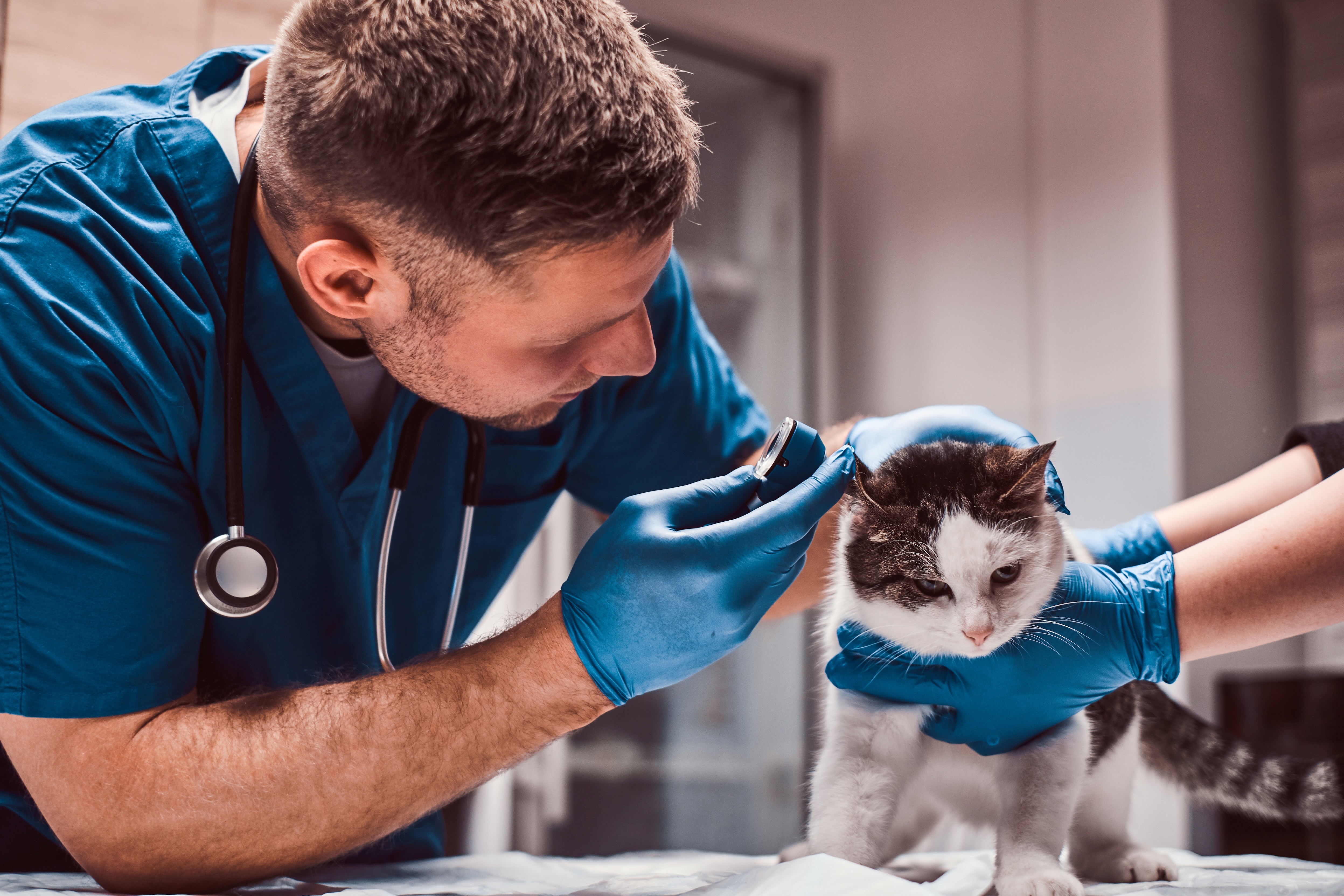
This vet visit is way more than a quick check-up. It's a full examination to confirm your pet is healthy and meets every single travel requirement on the list.
During the appointment, the vet will:
Perform a physical exam: They'll check your pet from nose to tail, making sure there are no signs of any diseases that can spread.
Verify the microchip: Your vet will scan your pet’s microchip to make sure it’s working right and, most importantly, that the number on the scanner matches your paperwork exactly.
Review vaccination records: They'll double-check that all the necessary shots, particularly for rabies, are up-to-date and were given within the accepted timeframe.
This whole process is laid out in our simple "Pawsport" flow, which shows you the key stages from that first vet check to the final stamp of approval.
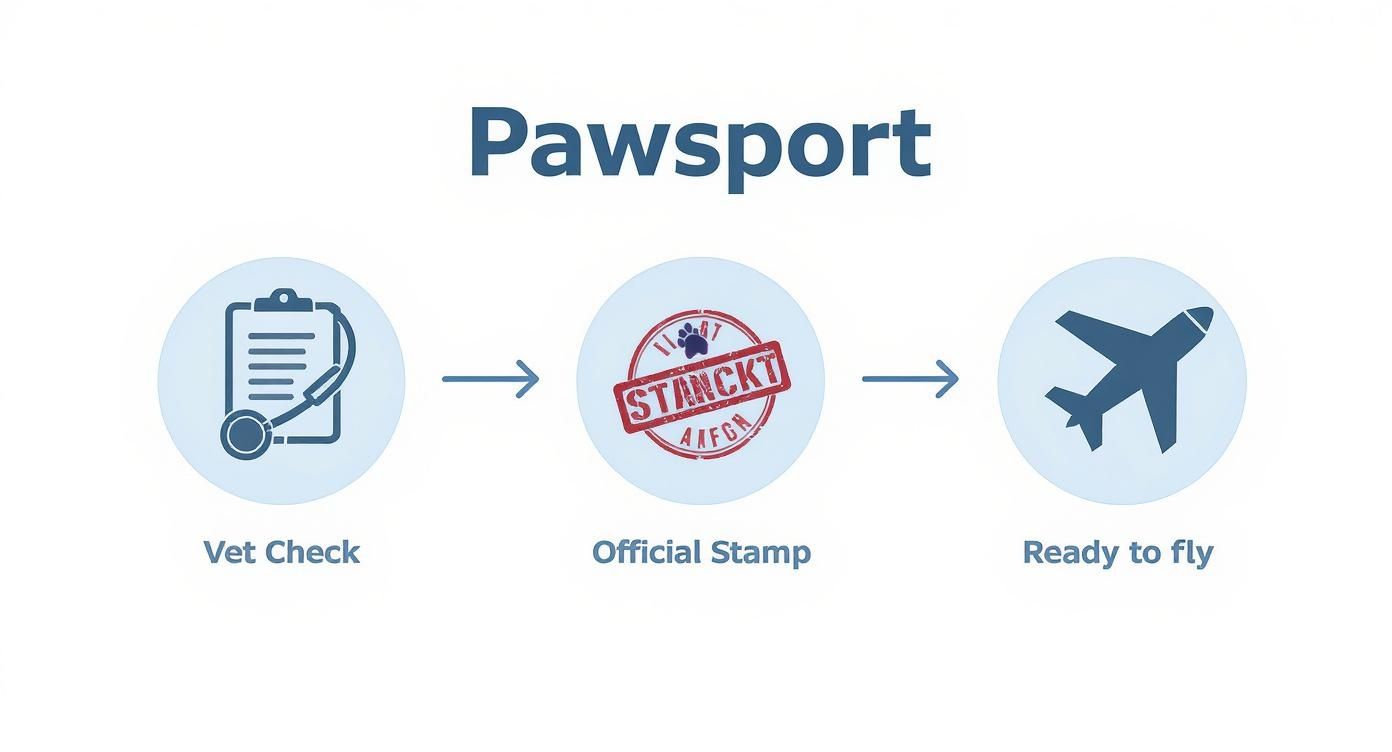
As you can see, the journey to getting that document involves clear, important checkpoints that all build on one another. There are no shortcuts here.
Filling Out the Forms and Getting Endorsed
After the exam, your accredited vet will help you complete the official health certificate forms. These documents are very detailed and require perfection—even a tiny mistake, like a wrong date or a typo in a microchip number, can make the whole certificate invalid.
The final, must-do step for most international travel is getting the certificate endorsed by the USDA. Your vet will submit the signed paperwork to the USDA’s Animal and Plant Health Inspection Service (APHIS) for their official stamp of approval.
This government endorsement is what makes the document official in the eyes of other countries. It's the final seal that says your pet is ready for their big adventure. For a deeper dive, learn more about the specifics of a veterinary international health certificate to make sure you have all your bases covered.
Domestic vs International Pet Travel Requirements
Planning a trip with your furry co-pilot is one of the best parts of being a pet owner. But when it comes to the paperwork, it’s not a one-size-fits-all deal. The requirements for a health certificate for pet travel change a lot depending on one simple question: are you staying in the country or flying abroad?
Think of it like packing for a vacation. A weekend road trip to the next state requires a small bag. A month-long trip through Europe? That’s going to need a much bigger suitcase and a lot more planning.
Traveling domestically—say, from California to New York—is usually a pretty simple process. You'll almost always need a health certificate, but the rules are generally more relaxed. The main goal is simply to show that your pet is healthy and up-to-date on their rabies vaccination.
International travel, however, is a completely different ball game. Crossing borders means you’re entering another country with its own specific public health laws. This is where the details get complicated and the stakes for getting it right are very high.
Key Differences at a Glance
The jump from a domestic flight to an international one isn’t just about a longer plane ride; it’s a massive leap in vet and paperwork hurdles. The reason is simple: every country has its own unique environment, and they have strict rules to protect their people and native animals from foreign diseases.
To make it crystal clear, let's look at the typical requirements side-by-side.
Requirement | Domestic Travel (Typical) | International Travel (Typical) |
|---|---|---|
Veterinarian Type | An accredited veterinarian is recommended. | A USDA-accredited veterinarian is required. |
Health Certificate | Standard form, often valid for 30 days. | Country-specific form, often valid for only 10 days. |
Rabies Vaccination | A current rabies vaccine is standard. | Current vaccination is just the start; timing and proof are critical. |
Microchip | Recommended for safety. | Usually required and must be a specific ISO-compliant type. |
Additional Tests | Rarely required. | Often requires rabies titer blood tests, parasite treatments, etc. |
Government Endorsement | Not usually needed. | USDA (APHIS) endorsement is a final step you can't skip. |
As you can see, the checklist for an international trip is much longer and far more exact. This isn't something you can plan in a few weeks—you need to start thinking about it months in advance.
The Complex World of International Rules
When you take your pet abroad, you aren't just meeting an airline's policy. You are proving to an entire government that your pet poses zero health risks.
Some countries are known for being very strict, and for good reason. Island nations like Japan, Australia, and the United Kingdom have spent centuries protected from certain diseases, and they go to great lengths to keep it that way.
For these destinations, you should prepare for a much tougher process that could include:
Specific Microchip Standards: Many countries require a 15-digit ISO 11784/11785 compliant microchip. If your pet has a different type, they may need a new one put in before anything else.
Rabies Titer Test: After the rabies vaccine, some countries require a blood test to prove the vaccine is working well. This has to be done at an approved lab, and there’s often a waiting period of several months after the test before you can even travel.
Parasite Treatments: It's common for countries to require specific treatments for internal and external parasites (like tapeworms) given by a vet within a very tight window before your flight.
The journey to getting an international health certificate often involves a specific order of vet exams, vaccinations, and sometimes even a required quarantine. In the strictest countries, like Australia and New Zealand, your pet might have to spend a minimum of 10 days in a government facility upon arrival, all at your expense.
Don't ever assume the rules are the same for two different countries, even if they're neighbors. Each nation sets its own rules, and it's your job to meet every single one for your specific destination.
This is why careful, thorough research is the most important thing you can do. To get you started on the right foot, we've put together a detailed guide on international pet travel requirements that dives deeper into what you’ll need.
Preparing for an international move is a marathon, not a sprint. But with the right information and plenty of lead time, you and your pet can cross the finish line with confidence.
Understanding the Health Certificate Timeline
When it comes to getting a health certificate for pet travel, timing isn’t just important—it’s everything. This is easily the biggest source of stress for pet owners, because the time these documents are valid can be very short. Get the timing wrong, and all that carefully prepared paperwork could be useless before you even leave for the airport.
Think of it like a concert ticket that’s only good for one specific night. Show up a day late, and you’re not getting in. It’s the same deal with most international health certificates; they come with a very strict expiration date.
For many countries, the certificate must be issued by a USDA-accredited veterinarian within 10 days of your scheduled departure. That tight timeframe leaves almost no room for error. Careful planning isn't just a good idea, it's a must.
Working Backward From Your Departure Date
The best way to nail this important timeline is to work backward from your travel date. This simple trick helps you see every step clearly and schedule your appointments at exactly the right time. The last thing you want is a last-minute scramble—that’s a recipe for a cat-astrophe.
Let's walk through a sample timeline. Say your flight leaves on the 20th of the month, and your destination country has that common 10-day validity rule.
Departure Day (Day 0): Month 20th
This is go-time. All your documents have to be completed, signed, endorsed, and ready to show.
USDA Endorsement Window (Day -5 to Day -1): Month 15th - 19th
After your vet issues the certificate, it must be sent to the USDA for its official endorsement. This can often be done online, but you still have to allow time for processing.
Vet Examination Appointment (Day -10 to Day -6): Month 10th - 14th
This is the sweet spot for your final vet exam. The clock starts ticking the moment the vet signs that certificate, so aiming for the beginning of this 10-day window is a smart move.
Planning backward like this turns a stressful deadline into a calm, manageable checklist.
A common mistake is getting the health certificate too early. It might feel proactive, but a certificate issued on the 9th of the month for a flight on the 20th would be expired and completely useless on travel day.
Why Every Destination Has Its Own Clock
Just to keep things interesting, not every country or airline plays by the same rules. While the 10-day window is a common standard for international travel, it’s definitely not used everywhere.
Some destinations might have a 5-day or 7-day rule.
Certain airlines may have their own internal policies that are even stricter than the country’s requirements.
Domestic travel within the U.S. is usually more relaxed, often allowing for a longer validity period of around 30 days.
This is why your very first step, before anything else, is to confirm the specific timeline for your exact destination and your chosen airline. Check their official websites or even call their customer service lines to get the most current information. Treating this as a step you can't skip will save you from massive headaches down the road and help ensure your pet’s journey is a smooth one.
Common Mistakes to Avoid for a Smooth Trip
Let's be honest: figuring out the world of pet travel can feel like trying to solve a puzzle with moving pieces. Even the most organized pet owners can hit an unexpected problem.
The best way to ensure a smooth trip is to learn from the common slip-ups others have made. That way, you can avoid those last-minute, heart-stopping surprises at the airport. Getting a health certificate for pet travel is a game of details, and one small oversight can cause a massive headache. The good news? These mistakes are almost always preventable with a little planning.
Let's walk through the most common pitfalls and how you can easily avoid them.
Starting the Process Too Late
When it comes to pet travel, waiting until the last minute is your worst enemy. It's the number one reason plans go wrong. Many pet owners are caught completely off guard when they learn that certain requirements, like rabies titer blood tests, can require a waiting period of three months or more before the pet is even allowed to travel.
You simply can’t rush biology or government paperwork. The moment you even think you might be traveling, start your research. This gives you a comfortable cushion to understand your destination's rules, schedule vet appointments without the stress, and build in time for any unexpected delays.
Using a Non-Accredited Veterinarian
This is a key detail that’s surprisingly easy to miss. Not every veterinarian is approved to issue a health certificate for international or even interstate travel. For any trip abroad, you must use a USDA-accredited veterinarian. A certificate from a non-accredited vet is worthless for international travel and will be rejected.
Before you book that all-important exam, just call your clinic and ask one simple question: "Is my veterinarian USDA-accredited for issuing international health certificates?" Making that one phone call can save you from the nightmare of having to start the entire process over again.
A valid health certificate isn't just a suggestion—it's the gatekeeper for global travel. With roughly 53% of pet owners worldwide now looking to travel with their companions, getting this document right is a part of the modern travel experience you can't skip. You can dive deeper into these trends by exploring detailed pet travel statistics and seeing how regulations are shaping these journeys.
Misunderstanding Microchip Requirements
Heads up: a microchip isn't just a microchip when you're crossing borders. Many countries, particularly those in the European Union, specifically require a 15-digit ISO 11784/11785 compliant microchip. If your pet has an older, non-compliant chip, scanners at the border might not be able to read it.
The fix is simple, but it has to happen in the right order. Your vet needs to scan your pet's current microchip at the very start of the process. If it's not the right kind, a new, compliant one must be put in before the rabies vaccination is given. If it's done afterward, that vaccine won't count for your trip.
Common Documentation Errors
Tiny paperwork errors can sink your entire certificate. These are some of the most common stumbles we see:
Incomplete Vaccine Records: Every single vaccine entry needs the date it was given, the date it expires, and the vaccine's product info (like the serial number). Missing details are a huge red flag for officials.
Wrong Forms or Endorsements: Each country has its own specific health certificate form. Using a generic one or forgetting to get the required USDA (APHIS) endorsement for international travel is a guaranteed way to be denied entry.
Mixed-Up Numbers: Double-check, then triple-check that your pet’s microchip number is written perfectly on every single form. A single wrong digit is one of the top reasons certificates get rejected at the border.
By keeping these potential issues in mind, you can build a travel plan that’s practically foolproof. A little extra care now goes a long way in making sure your adventure with your best friend begins without a hitch.
Your Essential Pre-Travel Checklist
Getting that health certificate for pet travel is a huge weight off your shoulders, but you're not quite at the finish line yet. To make sure travel day goes off without a hitch, a final checklist is your best friend. This is where you pull all the details together—from paperwork to your pet’s comfort items—so nothing gets missed in the final countdown.
Think of it as your own pre-flight check before heading to the airport. A little bit of organization now will save you from a world of panic later. It’s time to pack your pet’s carry-on!
Final Document Double-Check
Let's be honest, the paperwork is the single most important part of this whole adventure. Before you even think about packing a toy or a blanket, gather every single document and give it one last, careful review. A tiny mistake here can cause massive headaches down the road.
Health Certificate Validity: Is the issue date within the required window for your airline and destination? For many international trips, this is a strict 10-day window.
Microchip Number: Double-check that the microchip number on the certificate is a perfect match with your pet's records. A single digit off is a surprisingly common reason for rejection.
Vaccination Records: Scan all the vaccination details, especially for rabies. Make sure every date and detail is present and accounted for.
Copies, Copies, Copies: Have digital and physical copies of everything. Keep them all together in an easily accessible folder you can grab in a second.
Packing Your Pet’s Essentials
Just like you have your carry-on, your pet needs a go-bag with all their essentials to stay safe, comfortable, and happy during the trip. A few familiar things can make a huge difference in keeping them calm.
A well-prepared pet is a happy traveler. Focusing on their comfort with familiar items can greatly reduce travel anxiety, making the experience positive for everyone involved.
Make sure these key items make it into their bag:
Travel-Safe Carrier: It must be airline-approved, have good airflow, and be big enough for your pet to stand up and turn around. No exceptions.
Food and Water: Pack their regular food—enough for the trip, plus a bit extra for unexpected delays. Collapsible bowls are a great space-saver.
Familiar Comforts: A favorite blanket or a small toy that smells like home can be a huge source of security for them in a strange new environment.
Leash and Harness: Keep a secure leash and harness handy for potty breaks or when you need to get through the airport.
Beyond just the health certificate, a solid travel checklist is your ticket to a smooth journey. For those traveling with cats, Your Ultimate Cat Travel Checklist has some excellent, cat-focused advice.
Preparing for a Calm Travel Day
Your pet feeds off your energy. If you're frazzled and stressed, they will be too. But if you’re calm and prepared, they’re far more likely to feel at ease. A little prep work on the day of travel goes a long way. Take your dog for a nice, long walk before you leave for the airport, and remember to keep your voice and attitude positive and reassuring.
With the right planning, traveling with your furry co-pilot can be an amazing and rewarding experience. For more tips and deep dives into navigating your journey, check out our complete guide to pet travel.
Wishing you and your best friend a safe and happy journey
Have Questions? We've Got Answers
Getting a health certificate for pet travel can feel like you're trying to solve a puzzle. To help you piece it all together with confidence, here are some straight-talking answers to the questions we hear most often from pet travelers just like you.
How Much Will a Pet Health Certificate Cost?
This is a big one, and the honest answer is: it depends. There’s no single price tag because the final cost is based on a few things, like where you're headed and what your vet charges for the exam and paperwork.
Generally, you can expect the total to cover:
The vet exam: The accredited veterinarian's time to perform a thorough health check.
Paperwork time: The administrative work required to fill out those detailed forms correctly.
USDA endorsement: For any international trip, there's a government fee for that all-important official stamp.
Extra tests or treatments: If your destination requires specific blood work or parasite treatments, those will add to the bill.
It’s always a smart move to ask your vet for an estimate upfront. That way, you'll know exactly what to expect.
Can My Regular Vet Handle an International Certificate?
This is a really important detail. Only a USDA-accredited veterinarian is approved to issue a health certificate for international travel. Your regular vet might be the best in town for check-ups and cuddles, but unless they've gone through special federal training to get this approval, they can't sign the forms.
When you book your appointment, make sure you confirm your vet has this approval. A certificate signed by a non-accredited vet will be rejected at the border, and that's a headache nobody wants.
What Happens if My Flight Gets Delayed and My Certificate Expires?
It's every traveler's worst nightmare, but it’s something to be prepared for. Most international health certificates are only valid for 10 days. If a long delay pushes your departure past that 10-day window, your certificate is no longer valid.
Should this happen, you’ll need to find a local USDA-accredited vet to issue a new one, often in a hurry. This is exactly why we recommend traveling with both digital and physical copies of your pet's entire medical history. Having everything on hand makes getting an emergency certificate so much easier.
Organization is your best friend when travel plans go sideways. Keep a dedicated folder with all original documents and digital backups so you can pivot quickly if things change.
Do I Really Need a Health Certificate for a Road Trip to Another State?
Yep, you usually do. The rules for domestic travel are definitely more relaxed than for going abroad, but most states still require a health certificate, often called a Certificate of Veterinary Inspection (CVI). It’s a simple step to help prevent the spread of diseases like rabies across state lines.
The good news? These domestic certificates are typically valid for a longer stretch, usually 30 days. It’s a quick and easy step to make sure your road trip is fun, safe, and totally by the book.
Feeling like you're drowning in details and deadlines? Passpaw is designed to take the stress out of the process. Our platform walks you and your vet through every single requirement, step-by-step, ensuring your pet’s travel documents are perfect. Find out how we can make your next trip easier at https://passpaw.com.
More articles
From regulatory changes to best practices for veterinarians and pet owners, our resources keep you ahead of the curve.