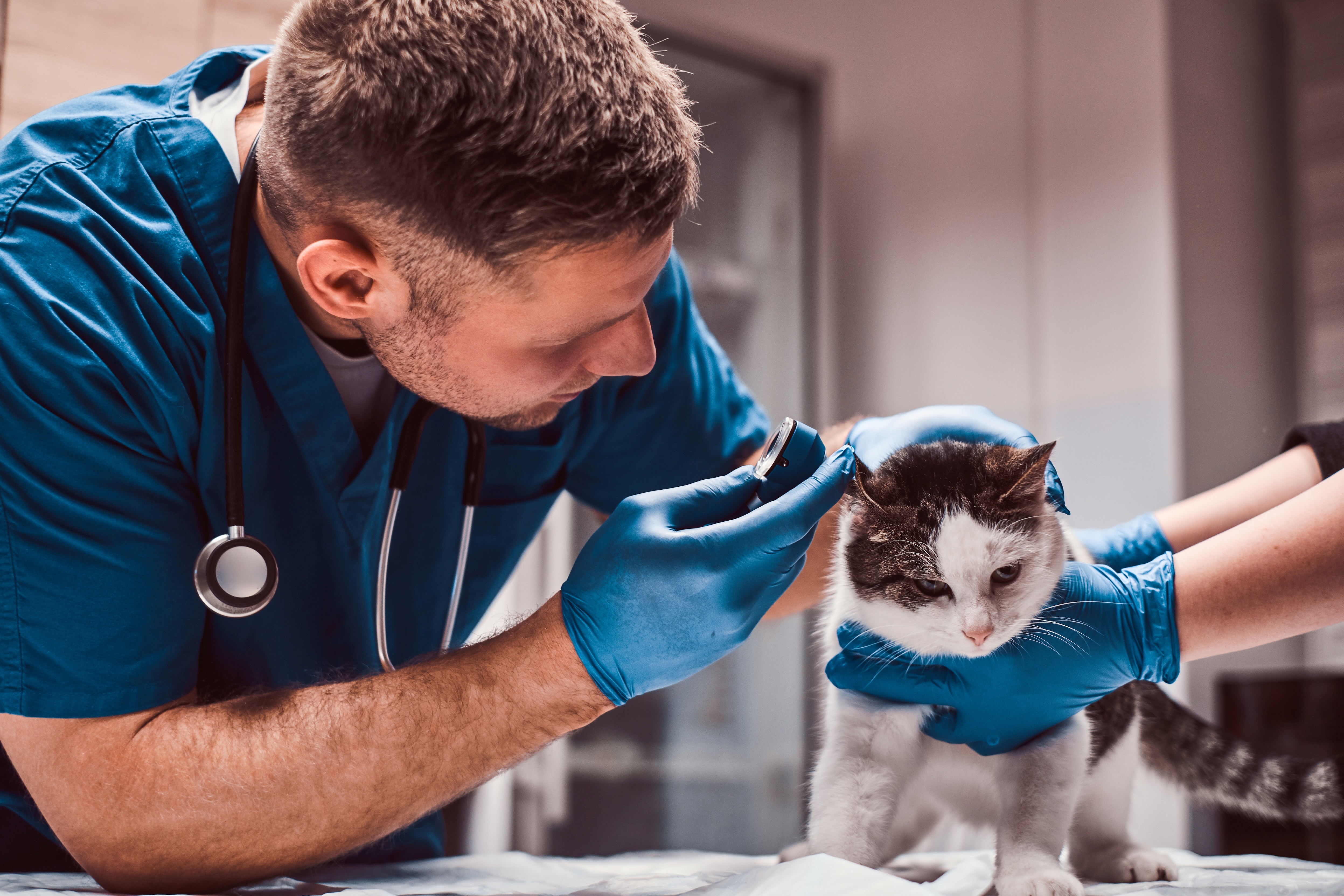
Are you a team member in a veterinary practice?
Are you a pet parent planning a trip with your furry pal?
How Much For Pet Passport in 2026? Your Full Cost Guide
So, you’re planning an international move and your furry co-pilot is coming with you. That's great! But as you start digging into the details, one big question pops up: how much does a pet passport actually cost?
The short answer is that in 2026, the total cost for your pet’s travel documents can be anywhere from $200 to over $1,200. The final price isn't for a single "passport" but for a whole collection of required services and certificates that get your pet ready for the trip.
Your Quick Guide to Pet Passport Costs
Figuring out the cost of pet travel documents is a bit like booking an airline ticket. There’s no single, fixed price. The final bill depends on where you're starting, where you're going, and what "extras" your pet needs to be cleared for travel. It’s definitely not a one-size-fits-all deal, but we're here to break it all down for you.
First, let's clear up a common point of confusion. The term "pet passport" means different things depending on your location and destination. Getting this right is the first step to an accurate cost estimate.
EU Pet Passport: For those living in the European Union, this is a little blue booklet that makes travel between member countries incredibly simple. It’s reusable and lasts for your pet’s entire life, as long as their vaccinations are kept up-to-date.
Animal Health Certificate (AHC): If you're in Great Britain (England, Scotland, and Wales) and traveling to the EU, this is the document you'll need. Unlike the EU passport, it's only good for a single trip.
USDA-Endorsed Health Certificate: For anyone with a pet traveling from the United States, this is the standard document. However, the exact forms and endorsements are decided by the country you're traveling to.
Estimated Pet Travel Document Costs at a Glance
To give you a clearer picture of how these costs add up, we've put together a table with typical price ranges. Remember, these are estimates, and your final costs will depend on your specific travel plans, your vet's fees, and your destination's rules.
Service or Document | Estimated Cost Range (USD) | Estimated Cost Range (GBP) | Key Information |
|---|---|---|---|
Vet Consultation & Exam | $75 - $250 | £60 - £200 | This fee covers the vet’s time for the health check and to research country-specific rules. |
Microchip Implantation | $50 - $75 | £40 - £60 | A 15-digit ISO-compliant microchip is needed for almost all international travel. |
Rabies Vaccination | $30 - $80 | £25 - £65 | Must be given after microchipping. Timing is critical for many countries. |
Rabies Titer Test (FAVN) | $200 - $400 | £160 - £320 | Needed for entry into rabies-free countries like Japan or Australia. Has a long waiting period. |
Government Endorsement Fee | $100 - $200+ | £80 - £160+ | This is the fee charged by agencies like the USDA to certify the final health certificate. |
Animal Health Certificate (UK) | $125 - $350 | £100 - £280 | A single-use document for travel from Great Britain to the EU or Northern Ireland. |
Additional Treatments | $50 - $150 | £40 - £120 | Includes things like required tapeworm treatments or flea/tick prevention. |
Total Estimated Range | $200 - $1,200+ | £160 - £960+ | The final cost depends entirely on which of the above services your destination country needs. |
This table helps show why there isn't one single price tag. A trip requiring only an exam and a health certificate will be on the low end, while a trip to a strict country needing a titer test and multiple treatments will be on the high end.
Why Is There Such a Big Price Difference?
That huge cost range—from a couple of hundred dollars to well over a thousand—is there because you're not paying for a piece of paper. You're paying for a careful process. This involves vet consultations, specific vaccinations, microchipping, and in some cases, blood tests or parasite treatments that must be done in a specific order.
The total cost is a sum of several parts. This includes the vet's time to research rules, the necessary medical treatments, and the final government endorsement fees, which all vary by country.
A simple trip from France to Germany with an existing EU Pet Passport, for example, might only require a quick check-up. But moving a pet from the U.S. to a country with very strict import rules, like Australia or Japan, involves a much more complex and expensive series of steps that can take months.
The rules can feel overwhelming, but understanding the costs is the first, most important step to a smooth journey. For a complete picture of all travel expenses, be sure to check out our deep dive into the cost of shipping pets in our detailed article.
In the sections that follow, we'll break down every detail so you can plan your budget and your timeline with confidence.
When the final bill for your pet's travel paperwork lands in your hands, the total can be a bit of a shock. It’s easy to wonder why it costs so much. But you're not just paying for a signature on a form; you're paying for a careful series of professional services that have to be absolutely purrfect.
Let's pull back the curtain on that vet invoice and see exactly where your money is going. Think of it as a detailed packing list for your pet’s journey—every item, from the vet's time to mandatory treatments, has its place and its price.
The Core Consultation and Paperwork Fee
The first—and usually largest—charge you'll see is for the veterinary consultation and administrative work. This isn't your average wellness check. The vet handling your paperwork, who must be federally accredited for international travel, is taking on a huge amount of responsibility.
This fee covers a lot more than just the exam. It includes:
The physical examination to certify your pet is healthy and fit to fly.
The time your vet team spends digging into the specific, often confusing, import rules for your destination.
The careful, precise completion of every form, where one tiny mistake could get your pet denied entry at the border.
You’re paying for your vet’s specialized knowledge and their time to get every single detail right. This is the expert oversight that prevents costly, heartbreaking disasters when you land.
Depending on where you're coming from and going to, the exact document can vary.
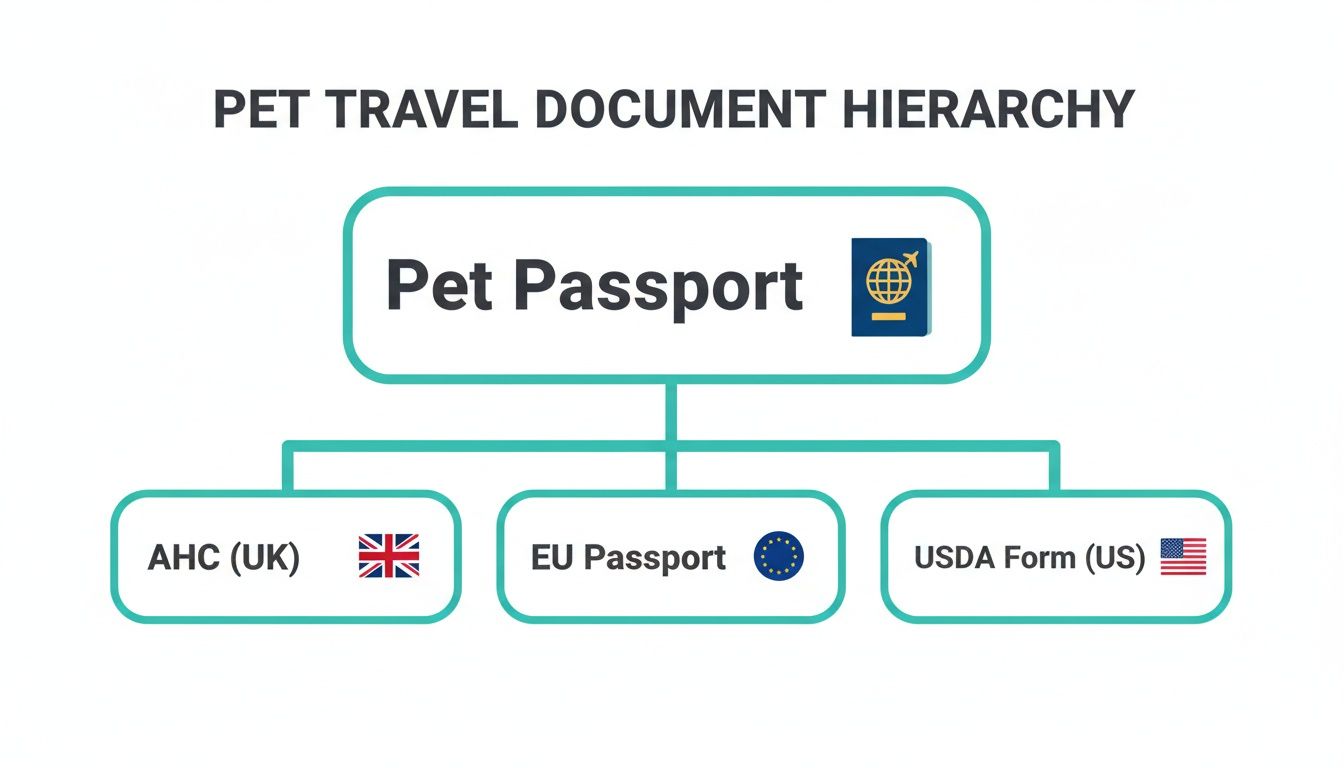
This chart shows how the general idea of a "pet passport" breaks down into specific, official documents like an Animal Health Certificate (AHC) for travel from the UK or a USDA-endorsed form for pets leaving the US.
Essential Medical Procedures and Their Costs
On top of the consultation fee, there are several medical items that are non-negotiable for international travel. Each one shows up as a separate line item on your bill.
Microchip Implantation: Before anything else, your pet needs an ISO-compliant, 15-digit microchip. If they don’t have one, or have an older, incompatible chip, your vet will need to implant a new one. This typically runs between $25 and $50 (£20-£40).
Rabies Vaccination: This is the absolute cornerstone of pet travel. The shot must be given after the microchip is implanted and scanned. The vaccine itself might only be $15 to $35 (£12-£28), but getting the timing right is critical.
Additional Vaccinations and Treatments: Your destination might have other specific needs. For instance, countries like Finland, Ireland, and Malta demand a specific tapeworm treatment for dogs, given by a vet within a very strict time window before you arrive. This can add another $35 to $50 (£28-£40). To get a better sense of vaccination costs in general, check out our guide on how much shots for dogs cost.
These individual services are what make up a complete and compliant travel certificate.
It's no surprise that across the globe, vet fees consistently make up 60-80% of the total expense for preparing pet travel documents. The bulk of what you pay goes directly to professional veterinary services and required medical care.
Even a basic Animal Health Certificate can cost anywhere from $100 to $250 (£75-£200) once you combine the vet's time with all the necessary treatments. You can get more insight into these pet travel document costs and their components to see how prices vary worldwide.
By understanding what each charge represents, you can see that you're investing in a smooth, safe, and successful journey for your best friend. It’s not just a piece of paper—it’s peace of mind.
Comparing Travel Documents for the UK, EU, and US
Trying to figure out pet travel paperwork can feel like you've been given a map in a totally different language. The rules, the price tag, and even what the documents are called all shift depending on where you're starting your journey. So, when someone asks "how much is a pet passport," the real answer starts with figuring out which "passport" they actually need.
Not all pet travel documents are the same, and knowing the key differences is what makes for a trip that’s smooth instead of stressful. Let's break down the main paperwork you'll encounter for the UK, EU, and US.
The UK: Animal Health Certificate (AHC)
For anyone with a pet in Great Britain (that’s England, Scotland, and Wales), traveling to the EU got a lot more complicated after Brexit. The old blue pet passports issued in Great Britain? They’re no longer valid for trips into the European Union.
Now, you have to get an Animal Health Certificate (AHC) for every single trip to the EU or Northern Ireland. This was a huge shift, especially for people who travel back and forth frequently.
An AHC is a one-and-done document. It has to be issued by an official veterinarian within 10 days of your travel date. Once you arrive in the EU, it's good for moving between EU countries for up to four months.
That single-use rule is the most important thing to remember. While it works perfectly fine for a one-off holiday, the costs really start to stack up if you're a frequent traveler.
The EU: The True "Pet Passport"
For pet owners living in an EU member state, the EU Pet Passport is the gold standard of convenience. It’s a little blue book that’s good for your pet’s entire life, as long as you keep their rabies vaccination up to date.
This passport allows for easy, seamless travel between all EU countries. No new paperwork for every trip. This makes it incredibly cost-effective and is the reason it’s considered the true "passport" in the world of pet travel.
The US: The International Health Certificate
Coming from the United States, the process is different yet again. There’s no reusable, all-in-one passport. Instead, you'll need a new International Health Certificate for each trip, and the specific requirements are set by the country you're flying to.
Your USDA-accredited vet will fill out the exact forms your destination country requires. Then, the whole package has to be endorsed by the U.S. Department of Agriculture (USDA). That endorsement is the official government stamp of approval that makes it all valid.
For U.S. travelers, the cost and hassle all come down to the destination. A trip to Canada is pretty straightforward, but getting a pet to the EU involves a much more detailed and specific certificate. It's a good idea to check a guide on International Pet Travel Requirements to know exactly what forms and vet work are needed for your specific trip.
Pet Travel Document Comparison UK EU and US
To really see how these documents differ, it helps to put them side-by-side. This table breaks down the core document, how long it's good for, and what you can expect to pay for just the document itself.
Region of Origin | Primary Document | Validity for EU Travel | Estimated Core Document Cost |
|---|---|---|---|
United Kingdom (GB) | Animal Health Certificate (AHC) | Single Trip Only | £100 - £200 |
European Union | EU Pet Passport | Lifetime (with valid rabies vaccine) | €100 - €300 (one-time issuance) |
United States | USDA-Endorsed Health Certificate | Single Trip Only | $150 - $400+ (vet & USDA fees) |
As you can see, the single-trip nature of the AHC and the U.S. Health Certificate makes them very different from the EU's lifetime passport. For UK pet owners in particular, needing a new certificate for every single trip—at £100 to £200 a pop—has been a major financial change from the old system.
Ultimately, the document you need and what you'll end up paying is all about your starting point and your final destination. Getting clear on which path applies to you is the first, most important step in planning your pet’s big adventure. You can learn more about the specific travel documents for pets in our more detailed guide.
Avoiding Hidden Costs and Unfortunate Surprises
The initial quote for your pet's travel documents might seem straightforward, but it's often just the tip of the iceberg. When you're budgeting for international pet travel, it’s the unexpected expenses that can really throw a wrench in your plans.
Think of it like booking a flight—the base fare looks good, but the final price can climb quickly once you add in all the extras. Let's uncover some of these common surprises so you can plan for them.
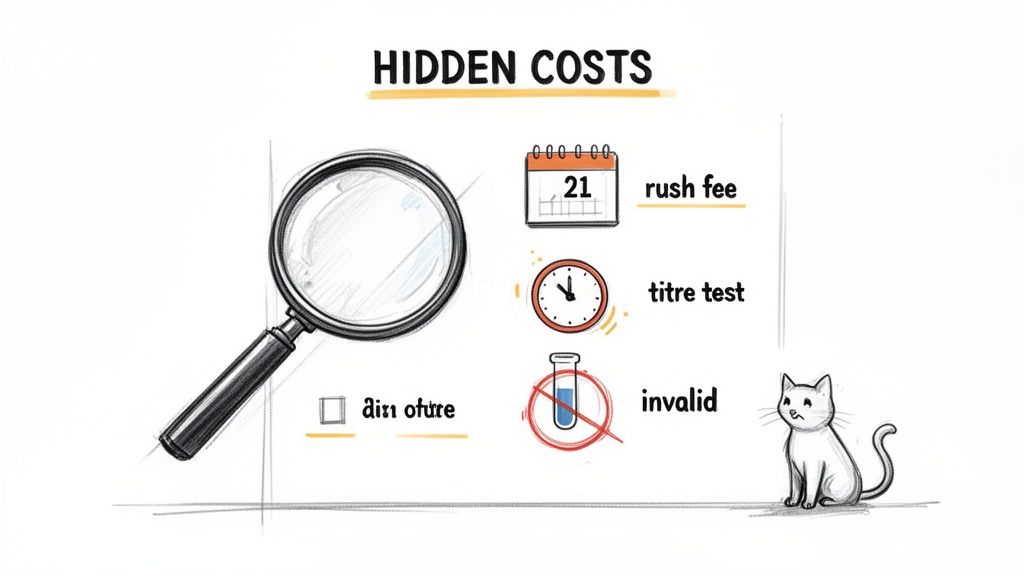
Rush Fees and Tight Timelines
In the world of pet travel, waiting until the last minute is a real budget-buster. Many documents, like the Animal Health Certificate (AHC), have a very short validity window—often just 10 days before departure.
Leaving things to the last minute almost guarantees you'll face express fees to get everything processed on time. A 2026 analysis showed that emergency processing can easily add $150 to $250 (£120-£200) to your total bill.
This is a critical point. Reports show that a significant number of pet travel delays are caused by incomplete or rushed paperwork, a costly and stressful mistake for any pet owner.
Unexpected Medical Requirements
Every country sets its own rules, and this is where many pet owners get caught off guard. Some of the most common "surprise" costs come from specific medical needs you might not have known about.
Rabies Antibody Titre Test (FAVN): This blood test is needed for entry into rabies-free countries like Japan or Australia, and even for entering the EU from a high-rabies nation. The test alone can cost between $200 and $400 and requires a strict waiting period of several months after the sample is drawn.
Repeat Vet Visits: A simple mistake can send you right back to the vet. If a form is filled out incorrectly, a microchip isn't scanned at the right time, or a treatment is given outside the required window, you'll need another appointment. That means paying for the vet's time and services all over again.
Specific Treatment Endorsements: For dogs traveling to countries like Finland, Ireland, or Malta, a specific tapeworm treatment is needed. This isn't just a pill you give at home. A vet must give it and document it on the official paperwork within a strict 1-to-5-day window before arrival.
The most painful hidden cost isn't always financial. A simple error, like not waiting the full 21 days after a rabies shot, can invalidate the entire travel document. This could mean your pet is denied travel, forcing you to cancel your trip and lose money on flights and fees.
Paperwork Errors and Re-Issuance Fees
Mistakes happen, but in pet travel, they can be expensive. A misspelled name, an incorrect microchip number, or a missed signature can render a health certificate useless.
If an error is discovered after the official government endorsement, you may have to start the entire process from scratch. This means paying for a new health certificate, a new vet exam, and new endorsement fees.
This is exactly why planning ahead is a must. Giving yourself a buffer allows you to catch and correct any issues without paying hefty rush fees.
To truly protect yourself from these surprises, it’s also wise to look into pet travel insurance options. A good policy can help cover costs from travel cancellations or unexpected vet needs abroad, making the journey a lot less 'ruff' on your wallet.
Actionable Tips for Saving Money on Pet Travel
Taking your pet on an international adventure is exciting, but let's be honest—the costs for travel paperwork can add up faster than you expect. The good news is that with some smart planning, you can keep those expenses in check. This isn’t about cutting corners; it’s about being a prepared pet parent.
A little foresight makes a huge difference. Here are some practical strategies to make your pet's journey more affordable.
Plan Ahead to Avoid Rush Fees
The single best way to save money? Start the process early. Last-minute planning is the number one driver of inflated costs. When you're up against a deadline, vets and government agencies often add on expedited service fees, and those can be steep.
By starting several months before your departure date, you create a crucial buffer. This lets you schedule vet appointments without the urgency, shop around for the best prices, and completely sidestep the premium you'd otherwise pay for needing everything done right now.
Bundle Services at Your Vet
When you book the appointment for the travel certificate, think about what else your pet needs. If their annual check-up or other routine vaccinations are coming due, doing everything in one visit can often save you money.
Here’s why that works:
One Consultation Fee: Combining services means you’re likely paying for one primary consultation fee instead of several separate ones over multiple visits.
Time Efficiency: Your vet can handle everything at once, from the health check to administering shots or treatments. This is often more cost-effective for the clinic, and those savings can be passed on to you.
Simpler Paperwork: It’s much easier for your vet’s team to manage and document everything when it’s all done in a single, comprehensive appointment.
Travel with Multiple Pets on One Certificate
If you have a multi-pet household, you might be in luck. For many routes, like travel from Great Britain to the EU, a single Animal Health Certificate (AHC) can cover up to five pets traveling together. This is one of the most effective ways to lower the per-pet cost.
While each pet still needs their own health check, the administrative fee for the certificate itself is often discounted for each additional animal. It's common to see discounts of 20-30% for each extra pet added to the same AHC. There are also promising developments on the horizon, such as the UK government's plan to introduce free lifetime documents for pets traveling to Northern Ireland starting in June 2025, which will slash repeat fees. To get more details on how new rules are making travel more affordable for multi-pet families, explore the complete guide to pet passports in 2025.
The key takeaway is simple: never leave pet travel preparations to the last minute. By starting early and exploring all your options, you can keep the answer to "how much for a pet passport" on the lower end of the scale.
How Modern Solutions Are Taming Pet Travel Paperwork

Anyone who's moved a pet internationally knows the traditional process can be a headache. It’s often a scramble of paperwork, looming deadlines, and confusing country-specific rules that creates stress for pet owners and a big administrative task for vet clinics. This complexity is ripe for mistakes, which can quickly drive up the cost of a pet passport with correction fees and last-minute travel changes.
Thankfully, we're moving past the era of overflowing paper folders and frantic calls to government offices. A new generation of tools is finally making this entire experience more manageable for everyone involved.
The Power of Automation and Accuracy
Think of it like having a smart assistant who's an expert in international pet travel. That's the basic idea behind platforms like Passpaw. These tools give veterinarians a clear, step-by-step dashboard to manage the entire process, from the first check-up to the final endorsed document.
They work by automatically checking every piece of information against the destination country's most current rules in real-time. This is a world away from the old method, which relied on a clinic's manual notes and the hope that the rules hadn't changed since the last time they checked.
The biggest win here is the drastic reduction in human error. A simple typo, a wrong date, or a forgotten signature can derail an entire trip. Automation acts as a safety net, cross-referencing every detail to ensure it’s correct before the documents ever leave the clinic. It’s the key to preventing those heart-stopping panics at the airport check-in counter.
For a vet clinic, the old way of doing things is incredibly time-consuming. Modern solutions give clinics tools to work more efficiently, which can translate to a faster, more reliable service for the pet owner.
This streamlined approach helps keep costs in check by catching the very errors that lead to expensive re-issuance fees and extra vet visits. More than anything, it provides peace of mind that your pet’s journey is being handled with precision.
How Digital Tools Benefit Pet Owners
While these platforms are built for veterinarians, the pet owner is the ultimate beneficiary. Instead of feeling like you're in the dark, you get a process that feels clear and under control. The paperwork is no longer some mysterious black box. You can trust that every single requirement is being met correctly.
For example, Passpaw’s platform automates a large part of the administrative grind for clinics, handling things like client reminders and tracking regulatory updates. This can free up a significant amount of a vet's time each week. With surveys showing many practices struggle with manual paperwork—which can have high error rates—this shift is a game-changer.
By making the process faster and far more accurate, these tools help deliver a smooth, worry-free start to your adventure. You can also stay on top of your own to-do list with our handy pet travel planner tool. It’s all part of a larger shift that’s turning a once-dreaded chore into a far more manageable and transparent experience.
Common Questions About Pet Travel Costs
It's natural to have a few final questions as you get ready to tackle the paperwork for your pet's trip. The process has a lot of moving parts, and it’s the practical details that often come up just as you’re about to begin.
We’ve put together answers to some of the most common questions we hear about the costs and logistics of pet travel documents. Think of it as a final check-in to give you the confidence to move forward.
How Long Are Pet Travel Documents Valid For?
This completely depends on the specific document your pet needs. For example, an EU Pet Passport is typically valid for the life of your pet, provided you keep their rabies vaccination up to date. It functions a lot like your own passport—keep the key details current, and it remains valid.
An Animal Health Certificate (AHC), on the other hand, is a different story. This is the document needed for pets traveling from Great Britain to the EU, and it’s strictly a one-time-use certificate. It has to be issued within 10 days of your travel date and is only valid for that single entry into the EU. Once there, it allows for up to four months of onward travel.
Can I Get a Discount for Traveling with More Than One Pet?
Yes, in many cases you can. This is one of the best ways to bring down the total cost if you’re traveling with multiple pets. An Animal Health Certificate (AHC), for instance, can cover up to five pets traveling together to the same destination.
While each pet will still need its own health check and any necessary treatments, most vets and travel services will offer a reduced rate for adding more pets to the same certificate. This can seriously lower the cost per pet, making the answer to "how much for a pet passport" feel much more reasonable for multi-pet families.
What Happens If My Pet’s Paperwork Is Wrong at the Border?
This is the scenario every pet owner dreads, and for good reason. Errors or incomplete documents can lead to serious problems at the border. In a best-case scenario, you're looking at long, stressful delays.
At worst, your pet could be denied entry entirely. This could mean they are placed into quarantine at your expense—which is very costly—or even put on the next flight back to your origin country. This is precisely why getting every detail right is so important.
Your best defense against this situation is working with a vet or service that is very careful. Double-checking every date, microchip number, and vaccination record is the only way to prevent a costly and heartbreaking outcome at the border.
Do I Need a Pet Passport for Domestic Travel?
For the most part, no. The term "pet passport" and the complex documents we've been discussing are specifically for international travel. When you're traveling within your own country, the rules are almost always much simpler.
For example, on a domestic flight within the US, you’ll usually just need a recent health certificate from your vet, often called a Certificate of Veterinary Inspection (CVI). If you’re traveling by car or train within the UK, you typically don’t need any special paperwork at all. Still, it’s always smart to double-check the specific policies of your airline or transport company before you go.
Preparing for international pet travel is a demanding process, but it doesn't have to be overwhelming. With Passpaw, veterinarians can manage the entire workflow, reduce errors, and ensure a smooth journey for their clients and their beloved pets. Learn more about how Passpaw is making pet travel compliance simpler and more reliable at https://passpaw.com.
More articles
From regulatory changes to best practices for veterinarians and pet owners, our resources keep you ahead of the curve.