Are you a team member in a veterinary practice?
Are you a pet parent planning a trip with your furry pal?
How Much Do Shots for Dogs Cost: A 2026 Vet Vaccine Price Guide
So, what's the real cost of keeping your dog up-to-date on their shots? When you add it all up, a full round of puppy vaccinations or annual adult boosters usually falls somewhere between $75 and $200.
Of course, that final number depends entirely on your dog’s specific needs, your local veterinary costs, and the type of clinic you visit.
This guide will help you get a handle on that price tag. We’ll break down which shots are non-negotiable, what factors make the price swing up or down, and even share a few practical ways to make this essential part of your dog's health care more affordable.
Think of it as your roadmap for handling your dog’s vaccination schedule without any financial surprises. Our goal is to give you the confidence to make the best decisions for your furry family member.
What to Expect in This Guide
A vaccine appointment is much more than a quick shot. The cost covers not just the vaccine itself, but also the veterinarian’s time, their expertise, and a thorough exam to make sure your pup is healthy enough for the shot.
To help you plan and budget, we’ll dive into a few key areas:
Core vs. Lifestyle Vaccines: We’ll explain which shots are must-haves for every dog and which are recommended based on their daily activities and environment.
Price Factors: You'll see why a private vet in a major city charges differently than a low-cost clinic in a small town.
Saving Money: We'll cover some smart tips for managing vaccination costs without cutting corners on your dog’s health.
A single vaccination appointment is more than just a quick poke; it's a smart step in a lifelong wellness plan. Investing a small amount in preventive shots today can help you avoid thousands of dollars in emergency care for a preventable illness down the road.
By the end, you’ll have the knowledge to talk confidently with your vet and ensure your companion gets the protection they need to live a long, happy, and healthy life.
Understanding Core vs. Lifestyle Dog Vaccines
When you ask your vet, "How much will my dog's shots cost?" their first question back will likely be, "So, what's your dog's life like?" This isn't just small talk. The answer helps your veterinarian separate the essential vaccines into two buckets: core and lifestyle.
Think of core vaccines as the must-haves for every single dog, no matter their age, breed, or where they live. These protect against severe, widespread diseases that can be fatal.
Lifestyle vaccines, on the other hand, are recommended based on your dog's unique routine and environment. They’re just as important for the right dog, but not every pup needs every single one.
The Essential Core Vaccines
Core vaccines are the foundation of your dog’s health. They’re recommended by vets everywhere because the diseases they guard against are both highly contagious and incredibly dangerous. It's the first step in giving your pup a 'paw-sitive' start in life.
These key shots include:
Rabies: A fatal virus that can spread to people. Vaccination is often required by law in most states, so there’s no getting around this one.
DHPP (or DA2PP): This is the hard-working combo shot, often called the "distemper vaccine." It protects against four serious viruses in one go: Distemper, Adenovirus (Hepatitis), Parainfluenza, and the notoriously tough Parvovirus.
Because they are so vital, these are always part of a standard vaccination plan. If you want to learn more, you can check out our guide on what vaccinations your dog needs.
Lifestyle Vaccines for the Adventurous Pup
This is where your dog's social calendar and favorite sniffing spots really matter. Is your dog a regular at the dog park, or more of a homebody? Your vet needs to know to recommend the right protection.
This chart breaks down the factors that play into the final cost, and your dog’s specific needs are a huge part of it.
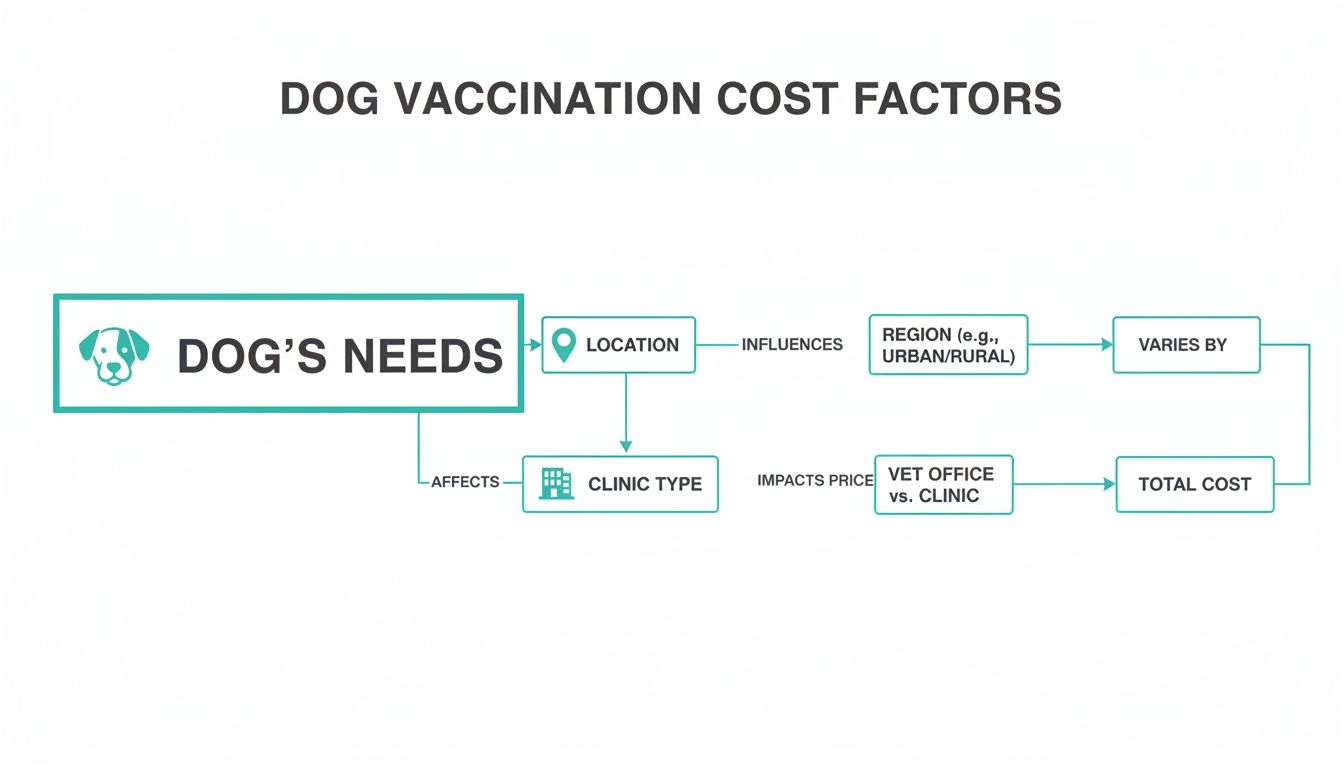
As you can see, your dog’s activities, where you live, and the type of clinic you visit are the biggest drivers of your final bill.
Common lifestyle vaccines include:
Bordetella: You might know this as the "kennel cough" vaccine. It’s a must for any dog that goes to daycare, grooming, boarding, or socializes at the dog park.
Leptospirosis: This bacterial infection can be found in contaminated water and soil, often spread through wildlife urine. It’s a smart choice for dogs that hike, swim in lakes or ponds, or live in areas with a lot of wildlife.
Lyme Disease: Transmitted by ticks, this vaccine is crucial for dogs living in or traveling to wooded or grassy areas where Lyme is common.
Choosing the right lifestyle vaccines is a team effort between you and your vet. Be honest about your dog's adventures—whether it's swimming in the local creek or greeting every dog at the park—so they get the right protection.
The cost for these shots gets added to the core vaccine bill, which is why the price can change so much from one dog to the next.
We’re also seeing a shift toward more customized protection. For example, some newer combination vaccines can cover up to nine diseases in a single injection and may last for several years. While these might have a higher upfront cost, they reflect a move away from a one-size-fits-all approach. Vets can now build a vaccine plan based on a dog's real-world risks, which is far more effective and a big reason why there's no single, simple answer to "how much do shots for dogs cost?"
What Factors Influence the Final Price Tag
Ever compare vet bills with a friend from another town and wonder why your costs for the exact same dog shots were so different? It’s not random. The final price on your bill is shaped by a few key factors.
Once you understand what goes into that final number, the bill becomes a lot less mysterious. It's almost never just the cost of the vaccine itself; a whole range of services contributes to what you pay.
Your Location and Clinic Type
Where you live has a huge impact on your vet bill. A clinic in a major city with high rent and operating costs will almost always charge more than a practice in a quiet, rural area. It’s just simple economics.
The type of clinic you choose also plays a big part in the final cost.
Private Veterinary Practices: These are your traditional vet clinics. They offer personalized care and build a long-term relationship with you and your pet. Their prices cover full services, the overhead of a staffed hospital, and modern equipment.
Low-Cost Vaccine Clinics: Often run by non-profits or local shelters, these clinics provide essential vaccinations at a much lower price. They're a fantastic, budget-friendly option for routine boosters in healthy adult dogs.
The All-Important Vet Exam Fee
One of the biggest items on your bill is the veterinarian exam fee. When you take your dog in for shots, you aren't just paying for the liquid in the syringe. You're paying for the veterinarian's time and, most importantly, their expertise.
A vet's examination is a key health screening. The vet checks your dog’s heart, lungs, temperature, and overall condition to make sure they are healthy enough to get a vaccine. This step is vital for your dog’s safety.
This fee covers the head-to-tail check-up that can spot health issues before they become serious problems. Think of it as a crucial part of preventive care that makes sure the vaccine is both safe and effective for your dog.
Puppy Series vs. Adult Boosters
Your dog's age is another major factor. A puppy's first year is packed with vet visits, which naturally means higher initial costs.
Puppies need a series of shots, usually given every three to four weeks until they are about 16 weeks old. That means multiple appointments, and each one comes with its own exam fee on top of the vaccine cost. For a complete look at what to expect, our guide on puppy vaccination prices breaks it all down.
An adult dog, on the other hand, typically just needs boosters every one to three years. This makes their long-term vaccination costs much lower and more predictable. It's a huge reason why the answer to "how much do shots for dogs cost?" can vary so widely.
The money pet owners invest in these services is significant, contributing to a global dog vaccines market that was valued at over $2 billion in 2025. With North America leading in preventive health spending, it's clear how vital vaccination has become in modern pet care. You can learn more about this trend with these market insights.
Preparing Your Dog for International Travel
Taking your dog on a trip, especially across international borders, goes way beyond packing their favorite toys. This kind of travel demands a whole new level of veterinary planning, which in turn affects the total cost of your dog's shots and preparation. It's a 'ruff' process if you're not prepared!
When you're traveling internationally, your dog's standard vaccination plan often isn't enough. Many countries have strict rules about the timing of specific vaccines, particularly rabies, sometimes requiring them months before your departure date. Getting this timing wrong isn't just an inconvenience—it could lead to your pet being denied entry.
The Added Costs of International Pet Travel
International travel introduces requirements that go far beyond routine shots, adding new costs to your budget. It’s not just about getting the right vaccines, but also proving they’re effective.
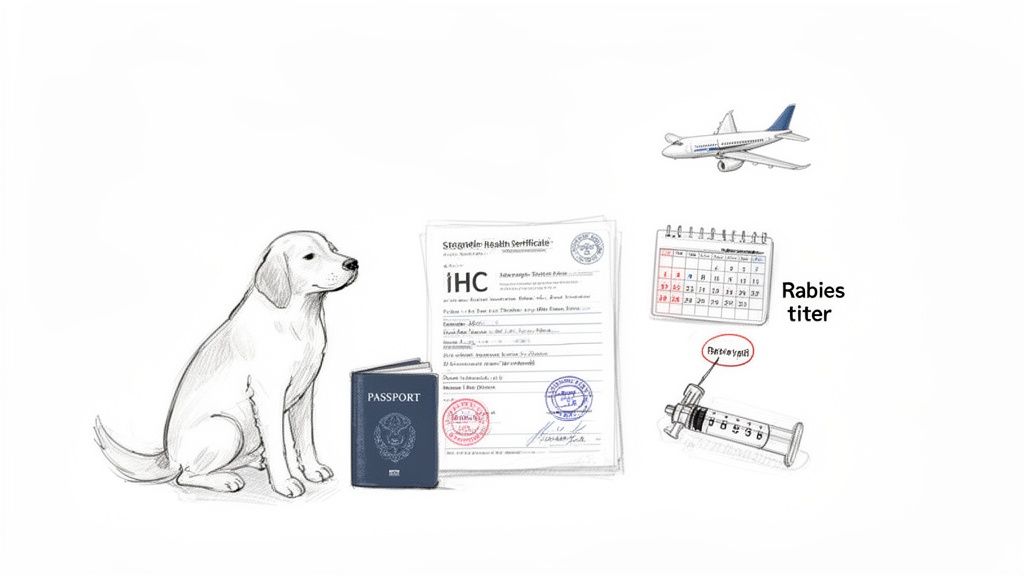
Rabies Titer Test: Many rabies-free destinations, including countries in the European Union, Japan, and Australia, require a rabies titer test. This blood test confirms your dog has enough antibodies to be immune to rabies. It has to be performed at a specific time after the rabies vaccine and can cost between $300 and $700, depending on the laboratory used.
Specific Parasite Treatments: Your destination might require specific deworming or anti-tick treatments. These must be given by a veterinarian within a very narrow window before you travel.
International Health Certificates (IHCs): This is the official document proving your dog meets all the destination’s health regulations. The process involves a thorough veterinary exam and an endorsement from a government body like the USDA, adding another layer of cost and coordination.
For a traveling pet, their vaccination record and health certificate are as critical as a passport. Every single date, signature, and detail matters—one small mistake can derail the entire journey.
These extra steps are part of a global push for public health. The market for canine vaccines is growing, driven by international programs aimed at controlling diseases that can pass from animals to humans. For example, the World Health Organization’s 'Zero by 30' initiative, which aims to eliminate human deaths from dog-transmitted rabies by 2030, is helping standardize vaccination rules and influencing costs around the world.
Simplifying Complex Travel Paperwork
Navigating the web of regulations, deadlines, and forms can be completely overwhelming for pet owners and even for veterinary clinics. Getting every detail right is absolutely critical, which is where specialized tools can make all the difference.
Platforms like Passpaw are specifically built to help veterinary practices manage these complex travel requirements. By centralizing destination rules, tracking deadlines for vaccines and tests, and streamlining paperwork, they significantly reduce the risk of expensive errors. This ensures your dog's travel documents are accurate and complete, saving you from stress, wasted money, and last-minute panics.
For a deeper dive into this topic, be sure to read our guide on what vaccines dogs need to fly.
How to Save Money on Your Dog’s Vaccinations
Keeping your dog healthy is a top priority, but vet bills can add up. The good news is that with some smart planning, you can manage vaccination costs without compromising on the quality of care your dog receives.
Finding affordable options is entirely possible. Let's walk through some practical strategies that make routine veterinary care much more manageable.
Look for Wellness Plans and Local Clinics
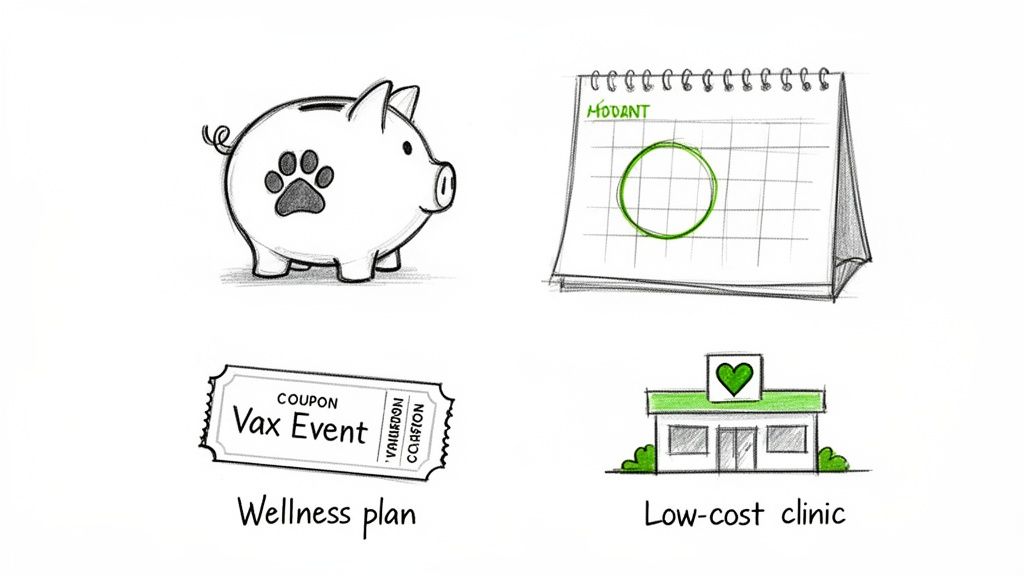
Many veterinary practices now offer pet wellness plans. It’s important to know these aren't the same as pet insurance. Instead, they work like a subscription, bundling routine services like annual exams, vaccines, and parasite control into a predictable monthly payment. This is an excellent way to spread costs throughout the year.
Another great option is to search for local vaccination clinics. These events, often run by animal shelters or mobile vet services, provide core vaccines at a much lower price. They are an ideal fit for healthy adult dogs who simply need their annual boosters.
Consider Preventive Care Insurance Add-Ons
Standard pet insurance is mainly designed for unexpected accidents and illnesses. However, many insurance companies now offer preventive care add-ons that you can add to a standard policy. This extra coverage reimburses you for routine wellness care, which typically includes:
Annual vaccinations and check-ups
Flea, tick, and heartworm prevention
Routine blood work
While this adds a small amount to your monthly premium, a wellness rider can make budgeting for yearly care far more predictable. It helps ensure you never have to postpone essential care because of the cost.
Think Long-Term and Invest in Prevention
At the end of the day, the single most effective way to save money on your dog’s healthcare is to invest in prevention. A vaccine might seem like just another expense today, but it's one of the best tools you have against much larger, heartbreaking bills in the future.
A $30 rabies or DHPP vaccine is a tiny price to pay to avoid a potential $3,500+ emergency bill for treating a preventable disease like parvovirus. It’s one of the best investments you can make in your dog’s long-term health and your own financial peace of mind.
By combining these approaches, you can significantly lower the annual cost of your dog's vaccinations. Being proactive about finding affordable care shows that responsible pet ownership and smart financial planning can go hand-in-hand.
A Vet's Guide to Talking About Costs and Travel
Talking about money is rarely the best part of a vet’s day. But when we’re transparent about why things cost what they do, we build incredible trust with our clients. It’s our job to connect the number on the invoice to the life-saving protection it buys.
When you break down a wellness visit, listing the exam, core vaccines, and any lifestyle-specific shots helps prevent sticker shock. More importantly, it gives you a chance to explain the why behind each item. A Bordetella vaccine isn't just an add-on; for the right dog, it's a "dog park pass" that keeps them safe while they play. Framing it that way helps clients see the immediate benefit.
Take the Headache Out of Pet Travel for Your Clients
But where conversations about cost and complexity really ramp up is international travel. The maze of regulations, titer tests, and tight deadlines can be a challenge for owners and a big administrative task for your team. This is where the right tools can make all the difference for your practice.
By turning the complicated process of getting an International Health Certificate into a clear, guided service, you do more than just cut down on paperwork. You create a premium, confidence-building experience for your traveling clients and position your practice as an expert partner in their pet's adventures.
Platforms like Passpaw were built for this exact challenge. They organize country-specific requirements, automate deadline reminders, and help your team prepare accurate travel documents with a fraction of the manual effort.
Instead of your team spending hours on paperwork, they can focus on what they do best: providing excellent medical care. Bringing on a tool like this lets your practice offer a high-demand, high-value service with confidence. It turns a massive headache into a streamlined, team-led process, making you the go-to resource for every globetrotting pet owner.
Your Top Questions About Dog Vaccine Costs
Let's tackle a few common questions that pop up when we talk about vaccination costs. We’ll give you some straightforward answers to help you feel confident about your pet care decisions. This is the part where we 'unleash' the facts.
Are Low-Cost Vaccine Clinics Safe for My Dog?
Yes, for the most part. Clinics run by reputable organizations are a safe and affordable way to get essential core vaccines, especially for healthy adult dogs who just need their routine shots.
The main trade-off is that these clinics usually don't include the full, nose-to-tail health exam you’d get at your regular vet. That full check-up is key for puppies, senior dogs, and any pet with an ongoing health issue.
Does My Dog Really Need Shots Every Single Year?
Not necessarily for every single vaccine. We've learned that some core vaccines, like the DHPP, can provide solid protection for up to three years once the initial puppy series is done.
However, other "lifestyle" vaccines often do require annual boosters to stay effective. Think of things like Bordetella (for kennel cough) or Leptospirosis, which are more important if your dog is frequently around other dogs or spends a lot of time outdoors.
Your veterinarian will create a schedule that fits your dog’s specific lifestyle and risk factors. This approach makes sure your companion gets exactly the protection they need without being over-vaccinated.
Does Pet Insurance Cover the Cost of Shots?
Typically, no. Standard pet insurance plans are designed to cover unexpected accidents and illnesses, not routine care like vaccinations.
However, many insurance companies offer wellness or preventive care plans as an add-on. These plans are designed to help you budget for predictable costs like annual exams, shots, and parasite prevention. You might also want to read our article that covers special cases like rabies titer testing for dogs and its costs.
Navigating pet health requirements, especially for travel, can be a real headache. Passpaw is here to make it simple. Our platform helps veterinary practices manage all the necessary paperwork, from health certificates to vaccine records, ensuring every detail is correct for a stress-free journey. Find out how we can help at https://passpaw.com.
More articles
From regulatory changes to best practices for veterinarians and pet owners, our resources keep you ahead of the curve.