Are you a team member in a veterinary practice?
Are you a pet parent planning a trip with your furry pal?
Camping with Dogs: The Essential Guide for Safe, Fun Adventures
Nothing quite beats hitting the trail with your best friend. For many of us, camping with our dogs isn't just a trip—it's an experience that deepens our bond and creates memories that last a lifetime. And with just a bit of smart planning, you can make sure the adventure is safe, fun, and comfortable for everyone, two-legged and four.
Your Next Adventure: The Rise of Dog-Friendly Camping
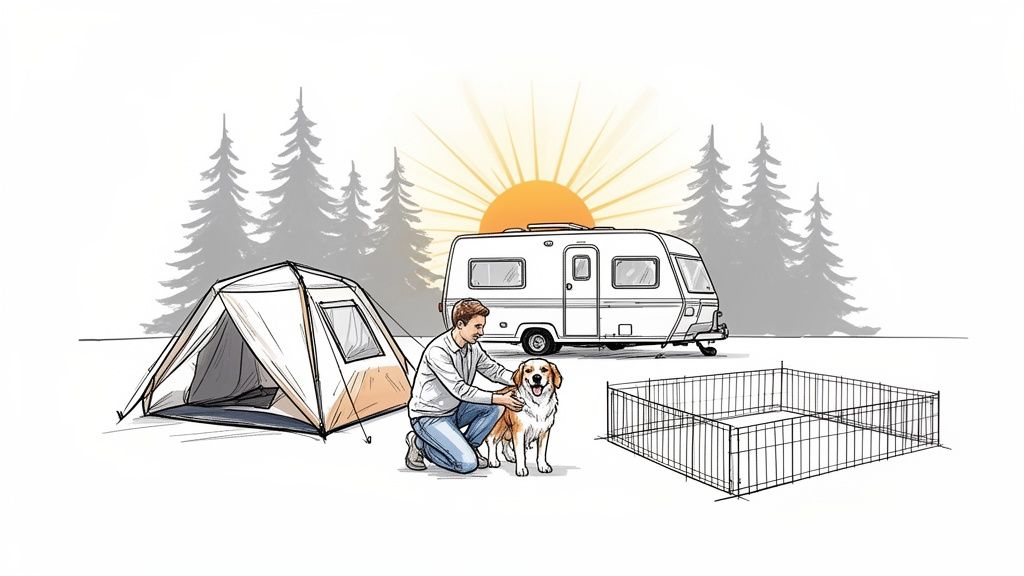
If it feels like you're seeing more wagging tails at campgrounds, you’re not wrong. Taking our dogs into the great outdoors has gone from a niche activity to a full-blown movement, and it’s easy to understand why. Sharing a crackling campfire or a morning hike with our pups turns a good trip into an unforgettable one.
This isn’t just a feeling; the numbers back it up. Recent data shows that more than half of all campers now bring their dogs along for the ride. According to The Dyrt's 2026 Camping Report, a whopping 53.7% of campers brought dogs to campsites in 2025. It’s a huge cultural shift, and it’s changing the face of outdoor recreation.
What This Means for You and Your Pup
This boom in pet-loving adventurers has kicked off some fantastic changes across the camping world. Campgrounds are stepping up, rolling out more amenities specifically for our four-legged companions.
It’s now much more common to find:
Designated dog parks where your pup can burn off some energy and play off-leash safely.
Clearly marked, pet-friendly trails so you know exactly where you and your co-pilot can explore.
Campsites with easy access to waste stations and other dog-centric conveniences.
This wave of dog-friendly options makes it easier than ever to plan your trip. It’s no longer about just finding a place that allows dogs, but finding one that genuinely welcomes them.
A well-planned trip ensures that both you and your dog can relax and enjoy the experience. The goal is to make memories, not manage mishaps.
Before you head out, here is a quick look at the major steps to get you and your dog ready for the great outdoors.
Quick Glance Prep For Camping With Your Dog
Preparation Phase | Key Actions | Why It Matters |
|---|---|---|
Health & Safety Check | Vet visit, update vaccinations, get parasite prevention. | Ensures your dog is healthy enough for the trip and protected from ticks, fleas, and heartworm. |
Behavior & Training | Practice "come," "leave it," and quiet commands. Socialize your dog around new sights and sounds. | A well-behaved dog is a safe dog and a good neighbor to fellow campers. |
Gear & Packing | Pack a dog-specific first-aid kit, food, water, bowls, leash, harness, and bedding. | Having the right gear keeps your dog comfortable, safe, and prepared for minor emergencies. |
Campsite & Travel Rules | Research campground pet policies, trail rules, and any local guidelines. | Avoids surprises and ensures you're welcome wherever you go. |
This table gives you the big picture, but the real secret to success is in the details.
Preparing for a Pawsitively Perfect Trip
A truly great camping trip with your dog boils down to thoughtful preparation. This guide is here to walk you through everything—from pre-trip health checks and campsite etiquette to packing essentials and handling minor trail troubles.
Remember, every park and campground has its own set of rules. Doing a little homework upfront is always a smart move. For example, our guide on whether dogs are allowed at Arches National Park shows just how much guidelines can differ from one place to another. With a bit of research, you'll be all set for an incredible adventure together.
Prepping for Your Trip: Health Checks and Travel Documents
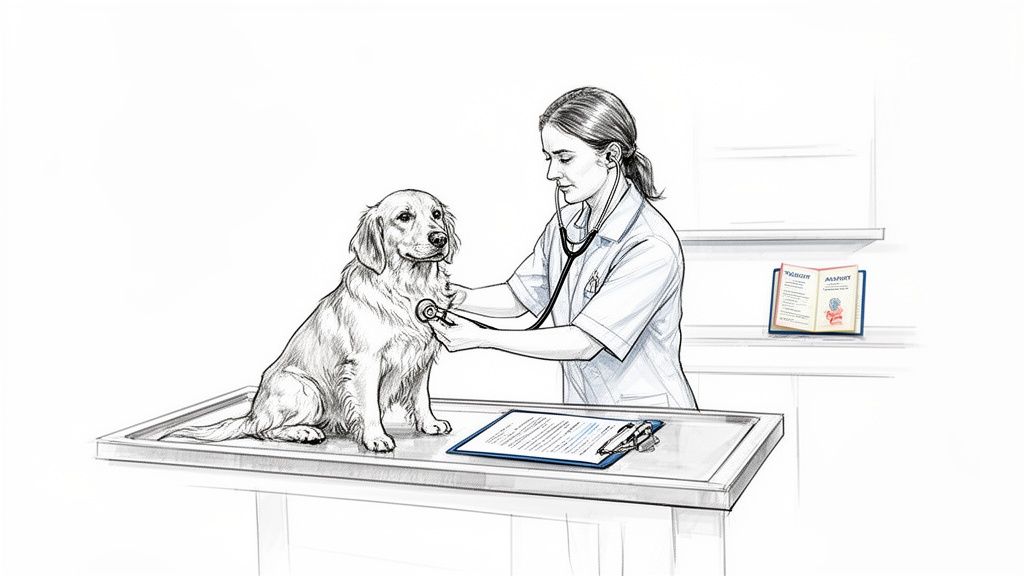
A fantastic camping trip starts long before you pack the tent. The real foundation for a safe and fun adventure is making sure your dog is healthy and ready for the trail. Getting this right from the start sets the whole trip up for success.
That's why a pre-trip visit to your veterinarian isn't just a good idea—it's a very important step. This check-up is your chance to get a professional green light, confirming your dog can handle the physical demands of hiking, swimming, and living outdoors, even for a weekend.
Why a Vet Visit Is Your First Stop
Your vet will give your dog a thorough once-over, checking everything from their heart and lungs to their joints and mobility. This is especially important for puppies, senior dogs, or brachycephalic (flat-faced) breeds, who can sometimes struggle with heavy activity or extreme temperatures.
It's also the perfect time to get ahead of any potential health risks. A comprehensive guide to preventive health care for dogs can offer more insight, but your vet can tailor a plan specifically for your trip.
Beyond a general wellness check, this visit is key for addressing the specific health challenges you'll face in the great outdoors.
Vaccinations and Parasite Prevention
The wilderness is wonderful, but it’s also home to parasites like ticks, fleas, and mosquitoes. These aren't just a nuisance; they carry serious diseases that can turn a dream trip into a nightmare.
Your vet can help you get the right protections in place:
Flea and Tick Prevention: This is a top priority for avoiding illnesses like Lyme disease and Rocky Mountain spotted fever. A monthly preventative is usually the simplest and most effective option.
Heartworm Medication: Transmitted by mosquitoes, heartworm disease can be serious. Make sure your dog’s prevention is current before you go.
Core Vaccinations: Ensure your dog is up-to-date on all core vaccines, especially rabies. It's often required in most places and a standard rule for nearly every campground.
Depending on your destination, your vet might suggest other vaccines, like one for Leptospirosis, a bacterial disease spread through contaminated water. To learn more, take a look at our guide on what vaccinations your dog might need for travel. A little proactive planning here brings a lot of peace of mind.
A healthy dog is a happy camper. Proactive prevention against parasites and diseases ensures that the only things you bring home are great photos and muddy paw prints.
Understanding Travel Documents
If your camping adventure takes you across state or international borders, your packing list might need to include more than just a leash and kibble. Some destinations ask for official health documents to show your dog is healthy and vaccinated.
This is where a Health Certificate, also known as a Certificate of Veterinary Inspection (CVI), comes into play. It's an official document from an accredited veterinarian confirming your dog is free of contagious diseases and meets the entry requirements for where you're headed.
The rules can be confusing and vary widely by destination. Getting the paperwork right isn't the most exciting part of trip planning, but it's very important for avoiding any ruff encounters with local authorities.
Fortunately, managing this process is getting much easier. Platforms like Passpaw are designed to help veterinarians and pet owners handle travel documents without the headache. These services ensure every detail is correct according to your destination's specific guidelines, letting you focus less on paperwork and more on planning which trail to hit first.
Training and Trail Manners for Your Canine Camper
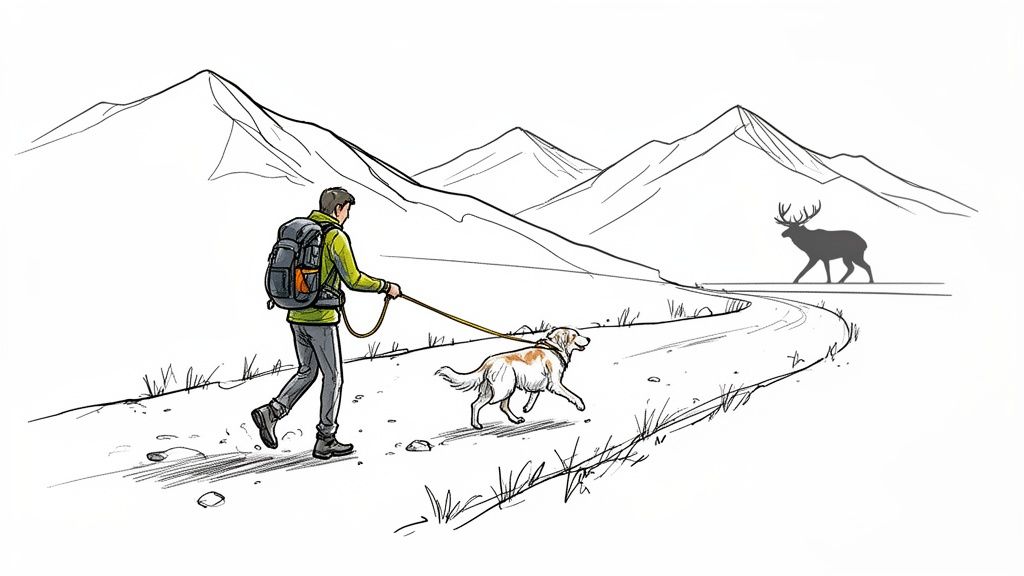
A well-behaved dog is a happy camper—and honestly, they make for much happier neighbors at the campsite. When you're camping with your dog, good manners aren't just polite; they're a key part of keeping everyone safe. The great outdoors is packed with new sights, sounds, and smells that can overexcite even the most laid-back pup.
Think of it like getting your dog ready for a big party. You’d want them to greet guests politely, not swipe food off the table, and definitely come back when you call them. The same logic applies to a campsite, where the "guests" might be other campers, a curious squirrel, or even larger wildlife. A little training beforehand makes the entire trip less stressful and way more fun.
Mastering Essential Commands
Before you even start pulling out the sleeping bags, it's time to get serious about a few key commands. In an unfenced environment like a forest or campground, a reliable recall is your number one safety tool. You’ll want to practice these commands in different settings, starting in your quiet backyard and then moving to a local park to slowly add more distractions.
These are the non-negotiables for any dog joining you in the wild:
'Come' or 'Here': This one is the most important command of all. It needs to be absolutely rock-solid. Practice it constantly, using high-value treats and tons of praise to make returning to you the best decision your dog can possibly make.
'Leave It': From a dropped piece of trail mix to a curious porcupine, your dog needs to know to back off from potentially dangerous items. This command can help prevent an emergency vet visit miles from civilization.
'Stay' or 'Wait': This is crucial for keeping your dog safe while you’re busy setting up the tent, cooking dinner, or just organizing your gear. A solid "stay" stops them from darting into a camp road or wandering over to another campsite uninvited.
Try to start practicing these skills weeks or even months before your trip. Short, upbeat training sessions are way more effective than long, frustrating ones. If you make it a fun game, your dog will be a much more enthusiastic student.
Your dog's recall isn't just a trick—it's a lifeline. A dog that comes when called, every single time, is a dog that can safely enjoy more freedom and stay out of harm's way on your adventure.
Handling New Sights and Sounds
For a dog, a campsite can be a total sensory overload. The crackle of a campfire, the zip of a tent door, laughter from a nearby site, and the unfamiliar rustling in the woods can all trigger anxiety or a barking frenzy. The goal is to get them used to these new experiences before you're miles from home.
One of the best things you can do is a "test run." Just set up your tent in the backyard for an afternoon. Let your dog sniff it, go inside, and hear all the strange sounds it makes. This little preview helps them understand that this new object is a safe space—their home away from home.
If you can, take your dog to a busy park or a pet-friendly outdoor café. This is great practice for staying calm around strangers, other dogs, and all sorts of unexpected noises. Reward them with a treat whenever they're being quiet and relaxed. The goal is to make you more interesting than all the distractions.
Trail Etiquette for Paws on the Path
Once you actually hit the trail, you and your dog become ambassadors for all dog-owning campers. Following proper trail etiquette is what ensures that our favorite spots remain welcoming to pets. Remember, the "Leave No Trace" principles apply to our furry friends, too.
Leash Rules Are a Priority: Keep your dog on a leash, especially in busy areas or national parks. A common suggestion is a 6-foot leash. This isn't just about controlling your dog; it protects them from wildlife encounters and shows respect to other hikers who might be nervous around dogs.
Yield to Others: When you meet other hikers on the trail, step to the side and have your dog sit. This is especially important if you encounter people with small children or horses.
Scoop the Poop: Always. No exceptions. Bag your dog’s waste and pack it out with you. Leaving it on the side of the trail—even if you plan to grab it on your way back—is a major no-go.
So, what about that barking dog at the campsite? It’s a common problem. If your dog starts barking at your neighbors, redirect their attention immediately with a command like 'look' or 'touch', and give them a reward the moment they quiet down. A favorite chew toy can also be a fantastic distraction to help them settle in and relax.
Your Dog's Ultimate Camping Packing List
Heading out into the woods with your dog is an incredible experience, but forgetting one critical item can turn a great trip sour fast. When you're camping, you’re on your own, and that goes for your pup's needs, too. A solid packing list is your best friend for making sure your four-legged companion is safe, happy, and comfortable from start to finish.
If you find yourself double-checking your dog’s gear, you're in good company. An estimated 84.8 million people camped in 2025, and with a whopping 53.7% of them bringing their dogs, that’s about 45.6 million dogs joining the adventure. This growing trend, detailed further at outdoors.com, has built a fantastic community understanding of what our dogs really need out there.
Essential vs Recommended Dog Camping Gear
Before you start throwing things in a bag, it helps to think in terms of "must-haves" versus "nice-to-haves." This quick table will help you prioritize, especially if you're trying to pack light for a backpacking trip versus a car camping weekend.
Item Category | Must-Have Essentials | Helpful Extras |
|---|---|---|
Food & Water | Extra day's worth of food, fresh water, food/water bowls | High-calorie snacks for active days, water filter/purifier |
Safety Gear | First-aid kit, ID tags, reflective/LED collar, 6-ft leash | Long line or tie-out cable, bear bell, dog life jacket (if near water) |
Comfort Items | Insulated bed or blanket, travel crate, poop bags | Familiar toy or chew, paw balm, dog-specific towel |
Health & Docs | Medications, copy of vaccine records, vet contact info | Tick key/tweezers, dog-safe insect repellent, styptic powder |
Now, let's break down why these items are so important and add a few pro tips.
Food and Water Supplies
This seems obvious, right? Grab the kibble and go. But a little extra thought here can make a huge difference in the backcountry.
Always pack at least one extra day's worth of food. You never know when a muddy road, a surprise storm, or just having too much fun might extend your trip. A food buffer means a minor delay doesn't turn into a major problem.
Keep their food in a waterproof, airtight container. It not only saves the food from a downpour but also keeps curious raccoons and other wildlife from sniffing around your tent all night.
For bowls, you can't beat collapsible silicone. They're lightweight, save a ton of space, and are super easy to rinse out. Pack one for food and one for water. And on that note, never assume you’ll find clean drinking water. Always bring more water than you think you’ll need for your dog, especially if you're planning strenuous hikes or camping in the summer heat.
Comfort and Safety Gear
A comfortable dog is a calm and happy dog. One of the best ways to help them settle into a new environment is by making their temporary home feel safe and familiar. A travel crate can be a game-changer here, giving them a secure "den" to retreat to. If you're looking for the right one, check out our detailed guide on choosing a pet crate for travel.
Beyond their personal space, think about what will keep them cozy and visible.
Bringing a familiar blanket or bed from home can work wonders. The familiar scent provides a sense of security in an unfamiliar environment, helping your dog settle down faster at night.
High-visibility gear is a must-have. Once the sun goes down, a dark-colored dog can vanish just a few feet away from the campfire. An LED collar or a reflective vest makes them easy to spot, preventing them from getting lost or tripped over. It's a simple piece of gear that brings a lot of peace of mind.
The Dog-Specific First-Aid Kit
You wouldn't leave home without a first-aid kit for yourself, and your dog needs one tailored to their specific needs. While many items overlap, some are unique to our canine friends. You can buy a pre-made kit or easily build your own.
Make sure yours includes:
Antiseptic Wipes: Perfect for cleaning out minor scrapes from branches or rocks.
Tweezers: Essential for pulling out ticks, thorns, or splinters.
Gauze and Vet Wrap: For covering wounds to keep them clean and prevent licking. Vet wrap is fantastic because it sticks to itself, not to fur.
Styptic Powder: Quickly stops bleeding from a clipped or broken nail. It’s a lifesaver.
Dog-Safe Antihistamine: For allergic reactions to things like insect bites. But always consult your vet for the correct type and dosage for your specific dog before you leave.
Emergency Contact Info: A waterproof card with your vet's phone number and the number for the nearest emergency animal hospital to your campsite.
Being ready for a minor scrape or a run-in with a thorny bush means you can handle it calmly without cutting your adventure short. A little preparation goes a long way toward keeping your camping trip a pawsitive experience for everyone involved.
Keeping Your Dog Safe and Happy at the Campsite
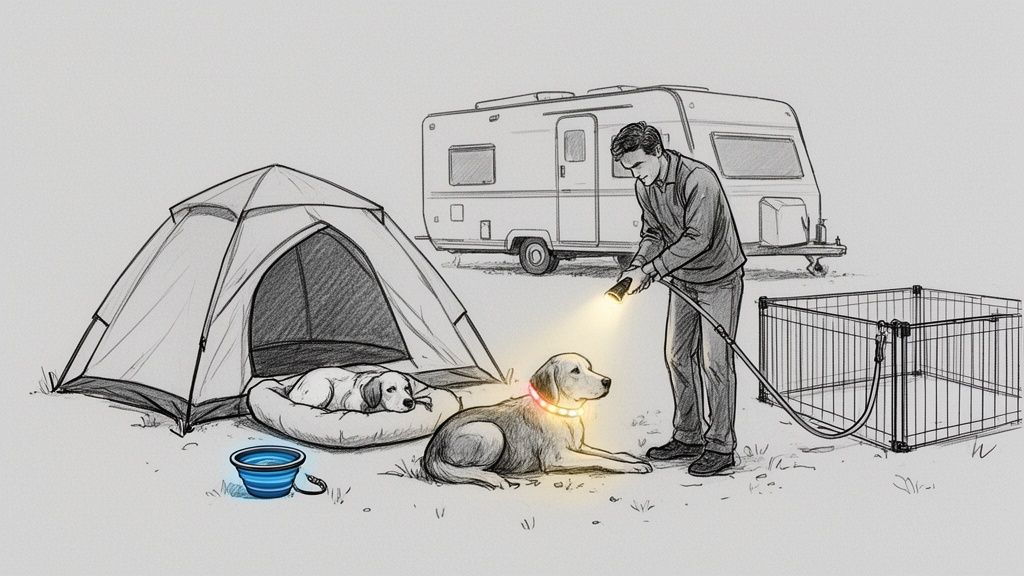
You’ve made it. The drive is over, you’ve pulled into your spot, and the real fun is about to start. But before you kick back, it’s time to shift into safety mode. A little prep work right now is what makes the difference between a great trip and a stressful one.
Your very first job is to scout the area. Before you even think about unpacking, take a quick walk around your designated site. Keep an eye out for anything a curious dog might get into—broken glass, sharp rocks, rusty old tent stakes, or food scraps left by the last campers.
It’s also smart to identify any local plants. A quick search on your phone for "toxic plants for dogs in [your location]" can be a lifesaver. You'd be surprised what common wildflowers can be harmful if your dog decides to have a nibble.
Setting Up a Secure Campsite
Even the most loyal, well-behaved dog can’t resist the siren call of a thousand new smells. The golden rule of camping with your pup is simple: never leave them unsupervised. Most campgrounds suggest dogs stay leashed anyway, and honestly, it’s just good practice for keeping them out of trouble.
You have a few solid options for keeping your dog contained while giving them some freedom:
Tether or Tie-Out: A long cable secured to a picnic table or a heavy-duty ground stake is a classic for a reason. It lets your dog explore the campsite without wandering off.
Portable Pen or Crate: An outdoor playpen creates a safe, enclosed zone for your dog to hang out. This is a fantastic choice for puppies or dogs who might get tangled in a tether. Even bringing their travel crate outside gives them a familiar, safe "den."
A tie-out offers more room to roam but comes with a risk of getting tangled, so you’ll need to keep a close watch. A pen is more secure but offers less space. Pick what makes the most sense for your dog’s personality and the layout of your site.
One of the most common complaints at campgrounds is a dog that won't stop barking at every passing person, squirrel, or leaf. Keeping your pup close and occupied with a good chew toy can help them settle in and not feel the need to be the campsite's unofficial alarm system.
Managing Comfort and Basic Needs
A campsite is an exciting, new world for your dog, but it's also unpredictable. It’s up to you to manage their basic comfort, whether that means staying cool on a hot afternoon or warm on a chilly night.
Always make sure there's a shady spot for your dog to relax. If your site is wide open, you can create shade with a simple tarp or even just by parking your car strategically. On hot days, a cooling mat or a damp towel can make a huge difference.
On the flip side, temperatures can plummet once the sun goes down. An insulated dog bed or an extra fleece blanket on the tent floor will keep them from getting cold. A good rule of thumb is if you’re feeling chilly, they probably are, too.
And, of course, fresh water is non-negotiable. Your dog needs constant access to clean water, especially on warm days or after a good hike. Keep their bowl full and in a shady spot where they can always get to it. While you're at it, stay on the lookout for parasites. Knowing what flea dirt looks like, for example, can help you catch a problem before it gets out of hand.
Food Storage and Wildlife Safety
Your dog's food smells just as good to a raccoon or bear as it does to them. Storing food properly isn't just about keeping it fresh—it's about preventing unwanted visits from wildlife, which can be dangerous for everyone involved.
Just follow a few simple rules for food storage:
Never leave dog food out, especially overnight.
Store all food—yours and your dog's—in a bear-resistant container or locked inside your vehicle.
Feed your dog, then immediately put the bowl and any leftovers away.
This keeps your campsite from becoming an all-you-can-eat buffet for local critters. A curious raccoon is one thing, but a bear drawn to your site is a serious safety hazard. A little bit of diligence here protects you, your dog, and the wildlife.
Common Questions About Camping With Dogs
Even the most seasoned campers have a few "what if" moments when planning a trip with a new four-legged companion. It's totally normal. Getting these last-minute details ironed out will give you the confidence to handle whatever the trail throws your way.
Think of this as your final pre-trip check-in. We've gathered some of the most frequent questions we hear and answered them with practical, road-tested advice.
How Do I Know if My Dog Is Ready for Camping?
This is the big one, and it really comes down to knowing your specific dog—their age, health, and personality. A spunky young adult will have a blast on a long hike, but a senior dog with achy joints might prefer a quieter, more relaxed setup. The key is being honest about their physical limits and temperament.
Not sure? Give it a trial run. A long day hike is a great start. Even better, try an overnight campout in your own backyard. It’s the perfect low-stakes way to see how they react to sleeping in a tent, the strange sounds of the night, and being outdoors for an extended time. If they're a ball of stress, you know you need to start with shorter, less ambitious adventures.
What Is the Best Tent Setup for a Dog?
You don't need a special "dog tent," but you absolutely need to think about space. A good rule of thumb is to get a tent rated for one more person than you have. If it's just you and your partner, a three-person tent will give a medium or large dog enough room to stretch out without everyone feeling cramped.
Durability is also a factor. Look for a tent with a tough, resilient floor—or just use a separate footprint underneath—to protect it from claws. We always bring a dedicated towel or small mat to wipe down muddy paws before they even get inside. It makes a huge difference.
Remember, the tent is a safe den, not a crate. Never leave your dog alone in a tent. On a sunny day, temperatures can skyrocket to dangerous levels in minutes. A panicked dog can also easily tear through the mesh trying to get out.
Can My Dog Sleep Outside the Tent?
While it might seem rugged and romantic for your dog to sleep under the stars, it's generally not the safest move. Keeping them inside the tent with you is the best way to protect them from a few very real risks:
Weather: An unexpected downpour or a sudden drop in temperature can leave your dog cold, wet, and miserable.
Wildlife: A curious raccoon can cause a major ruckus, and a run-in with a larger predator could be a serious threat.
Wandering Off: Even the most loyal dog might be tempted to investigate a strange sound in the middle of the night and get lost.
Bringing them inside is the simplest way to keep them warm, safe, and accounted for until morning.
What if My Dog Barks at Everything?
A constantly barking dog is the fastest way to ruin the peaceful vibe of a campground. The best strategy is a mix of proactive training and on-site management. Before you even pack the car, work on a solid "quiet" command at home, using plenty of positive reinforcement.
At the campsite, try to figure out what's triggering the barking. If it's every person who walks past your site, use your car or a strategically placed tarp to create a visual block. Keeping them busy with a long-lasting chew or a puzzle toy is also a great way to prevent boredom barks. It's all about keeping them from getting fur-strated.
Is It Okay to Leave My Dog at the Campsite Alone?
The short answer is almost always no. Most campgrounds have strict rules against leaving pets unattended, and for good reason. It’s a safety hazard for your dog—they could suffer from heatstroke, separation anxiety, or an encounter with wildlife—and it’s a major courtesy issue for your neighbors.
If you plan on doing an activity where dogs aren't allowed, you’ve got a couple of options. You can travel with a friend and take turns dog-sitting. Another great option is to find a local pet daycare for a few hours. More and more people are choosing to bring their pets on trips rather than leaving them behind, contributing to a pet lodging market estimated at USD 8.62 billion in 2024. You can check out more insights on this trend over at Technavio.
Ready to simplify your pet travel preparations? Passpaw offers a seamless platform to help veterinarians manage all the necessary health documents for your dog's next adventure, whether you're camping across state lines or exploring a new country. Ensure your paperwork is perfect so you can focus on the fun. Learn more and get started at https://passpaw.com.

More articles
From regulatory changes to best practices for veterinarians and pet owners, our resources keep you ahead of the curve.