Are you a team member in a veterinary practice?
Are you a pet parent planning a trip with your furry pal?
Health Certificate for Hawaii: A Step-by-Step Guide
You’ve booked the trip, found the pet-friendly lodging, and started picturing your dog snoozing under a lanai table or your cat glaring at tropical birds from a sunny window. Then someone mentions Hawaii pet import rules, and the mood changes fast.
A health certificate for hawaii is not just a routine travel form. It sits inside one of the strictest pet entry systems in the U.S., and small paperwork mistakes can lead to quarantine, delays, extra fees, or a very long day at the airport. That’s the part most owners don’t expect.
The good news is that this process is manageable when you work in the right order. The bad news is that winging it almost never works. Hawaii rewards careful prep, readable records, and good timing. It does not reward last-minute optimism.
I’ve seen the smooth arrivals, where a pet lands, gets inspected, and heads off for island life with barely a hiccup. I’ve also seen otherwise well-prepared owners get tripped up by one missing vaccine lot number, one noncompliant tick treatment, or one upload that never finished in the portal. This guide is built to keep you in the first group.
Your Pet's Hawaiian Dream Vacation Starts Now
A Hawaii trip with your pet usually starts with a simple thought: “How hard can this be?” For many U.S. destinations, that answer is “not very.” Hawaii is different.

Hawaii protects its rabies-free status very aggressively, and that shapes every part of the import process. Your dog or cat doesn’t just need to be healthy. The state wants a documented chain of proof: identity, vaccine history, rabies antibody testing, timing, parasite treatment, and a properly prepared health certificate.
That’s where owners often get tangled up. They think the hard part is the blood test. Sometimes it is. But just as often, the trouble comes from the admin side. A scanned copy where an original was expected. A microchip number typed with one digit off. A portal upload that looked complete but wasn’t.
What this process actually feels like
In practice, Hawaii travel prep is a mix of medicine, logistics, and proofreading. Your veterinarian handles the medical side, but you still have a job to do as the owner. You need to gather records early, answer forms completely, and keep every date aligned with your flight plan.
A few realities help to keep expectations sane:
It’s detail-heavy: This isn’t a one-appointment task.
Timing matters: Even valid documents can fail if they’re dated outside the allowed window.
Original records matter: Hawaii is picky for a reason.
Last-minute fixes are limited: Once travel week arrives, there’s very little room to recover.
Practical rule: If a step seems fussy, assume it matters. Hawaii’s system was built to prevent disease entry, not to be convenient.
The owners who do best are not always the most experienced travelers. They’re the ones who start early, keep a clean document trail, and ask questions before they book the flight.
Pre-Flight Prep Your 4-Month Countdown
The strongest Hawaii files start months before departure. For most U.S. mainland pets, the prep period typically spans 120 days, and total costs often range from $500-$1200+ once you factor in exams, blood draws, and related paperwork, as outlined in this Hawaii pet travel health certificate overview.
That timeline surprises people, but it makes sense once you break the process into pieces. The early stage is about building a clean foundation. If the basics are shaky, everything after that gets harder.
Start with identity and rabies records
Before talking about flights, focus on two things: microchip verification and rabies history.
Your pet needs a readable microchip, and the number has to match every document exactly. I always tell owners to scan the chip at the clinic before moving forward with any Hawaii paperwork. If the scanner struggles in the exam room, that’s a warning sign you don’t want to discover at the airport.
Rabies records need the same level of attention. Hawaii expects a full, usable history, not “my previous vet should have it somewhere.” Track down every certificate early, especially if your pet changed clinics.
What to verify before you do anything else
Use this short checklist before you book travel:
Microchip works: Ask the clinic to scan it and confirm the number in the medical record.
Rabies certificates are complete: Dates, manufacturer details, and identifying pet information should be legible.
Names match: Owner name and pet name should be consistent across records.
Species matters: Hawaii’s routine pet import pathway is for dogs and cats. If you’re traveling with another species, the process is different.
The trade-off owners often miss
Some people want to move fast and “do all the forms later.” That approach backfires. Early prep feels slow, but it gives you room to replace missing records, repeat a scan, or correct old paperwork without panic.
By contrast, rushed files create expensive problems. A dog may be perfectly healthy and fully vaccinated, but if the records don’t line up, Hawaii treats the paperwork problem as a travel problem.
Good Hawaii prep is boring in the best possible way. Clear records in, smooth airport release out.
Choose the right veterinary help
Not every clinic handles Hawaii paperwork often. That doesn’t mean a clinic can’t do it well, but it does mean you should ask direct questions.
A useful starting conversation sounds like this:
Question to ask your clinic | Why it matters |
|---|---|
Have you prepared Hawaii travel documents before? | Experience helps spot errors early. |
Who checks the vaccine history for completeness? | Rabies records need careful review. |
How do you track document deadlines? | Hawaii timing is strict. |
Who handles owner instructions? | The process works best when owners know their part too. |
A good clinic won’t just fill in a form. They’ll help you build a sequence that works.
The Critical Timeline for Tests and Vaccinations
This is where the clock becomes real. Once your pet’s identity and vaccine history are in order, the next key step is the FAVN rabies antibody test. To qualify for Hawaii’s 5 Day or Less program, the result must be 0.5 IU/mL or greater, and there must be a minimum 30-day waiting period from the date the lab receives the blood sample to the date your pet arrives in Hawaii, according to this Hawaii travel certificate guidance.
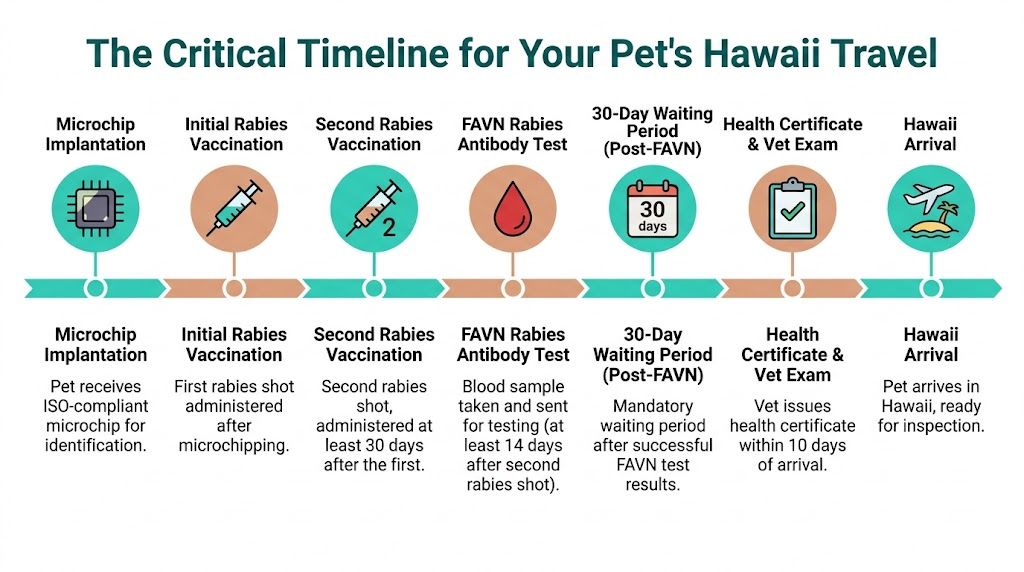
That single waiting period drives a lot of travel plans. Owners often hear “my pet passed the blood test” and assume they’re ready. They’re not. A passing result is necessary, but timing still controls entry.
The sequence that works
The safest approach is to think in order, not in fragments.
Confirm the microchip is in place and readable
Confirm rabies vaccination history is valid
Draw the FAVN sample at the right point in the vaccine timeline
Wait for the lab result
Count the required waiting period from the lab receipt date
Schedule the final exam and health certificate close to departure
This is also the stage where owners start shopping for flight gear. If your airline allows in-cabin or specific soft-sided carriers, it helps to choose one early and practice before travel day. A well-fitted option such as airline-approved cat and dog travel bags can make airport handling much easier, especially for anxious pets.
What works and what doesn’t
A lot of owners try to compress this stage. That’s where trouble starts.
What works:
Booking the FAVN draw as soon as your veterinarian confirms the vaccine timing is appropriate
Waiting to buy nonrefundable flights until the medical timeline is clear
Keeping one written travel calendar with lab dates, exam dates, and submission dates
What doesn’t:
Guessing when the waiting period starts
Relying on memory for vaccine dates
Assuming a test result alone guarantees release
The FAVN test proves immunity. It does not replace the waiting period, the certificate, or the rest of the file.
Don’t forget the last-mile medical details
Near departure, your vet will also need to document the required parasite control and final physical exam. This is one of those parts owners underestimate because it seems routine. It isn’t routine in a Hawaii file.
The product used matters. The date matters. The way it’s documented matters. If your clinic gives a treatment in hospital and records the product clearly, that’s much safer than asking everyone to remember what was applied at home.
A tidy medical record is your best friend here. It’s not glamorous, but it saves a lot of tail-chasing later.
Navigating Paperwork and the HIPOP Portal
For many travelers, the paperwork stage is harder than the medical stage. The medicine is usually straightforward once dates are set. The paperwork has more hidden tripwires.
Hawaii requires an original, English-language health certificate issued within 14 days of arrival, and common pitfalls such as photocopies or incomplete microchip data account for up to 30% of rejections and delays, according to this Direct Airport Release documentation guide.
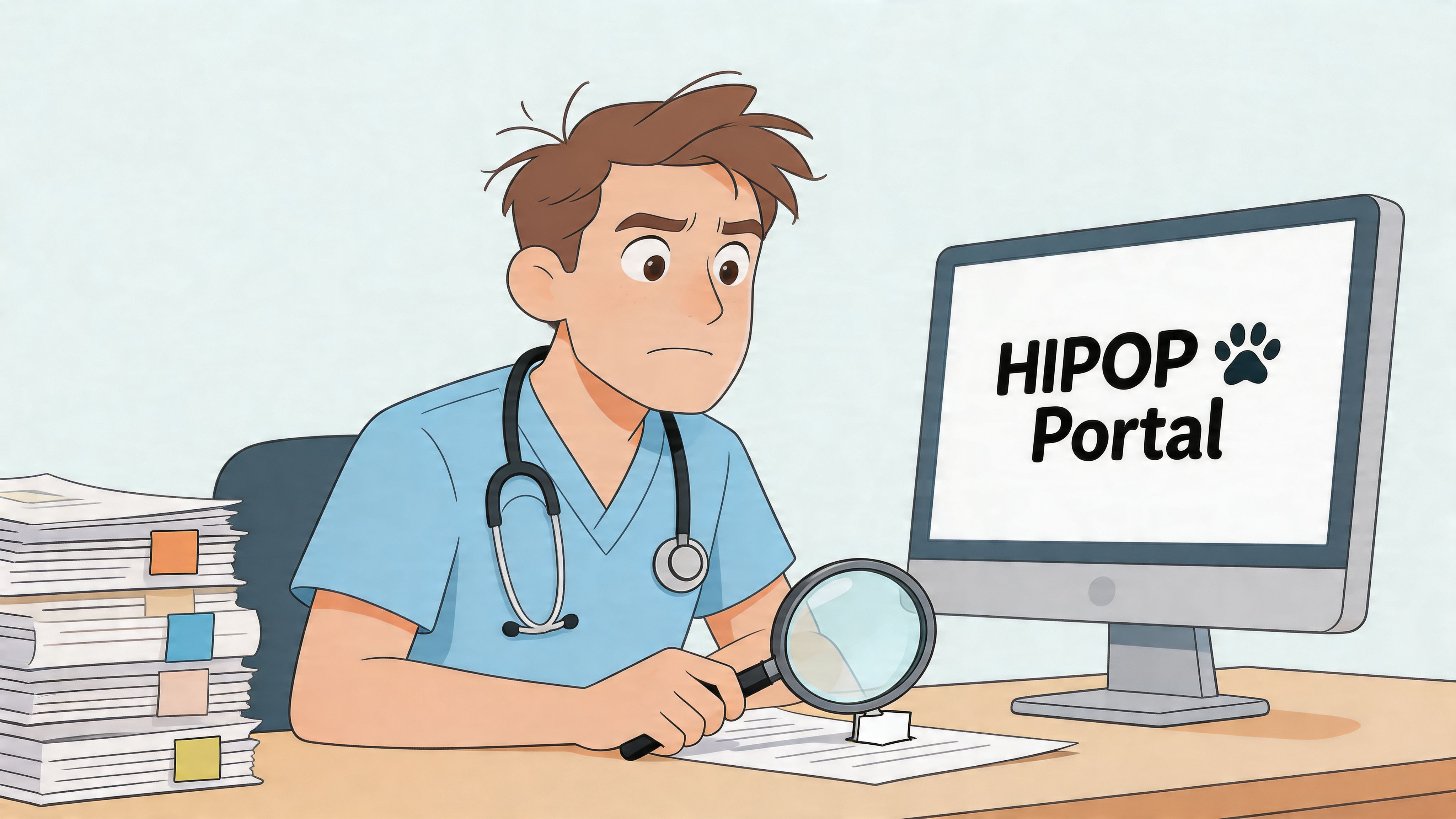
That’s why the Hawaii Pet Owner Portal, or HIPOP, deserves more attention than it usually gets. It’s helpful, but only if you use it carefully.
How to use HIPOP without creating your own problems
If you’re filing through HIPOP, slow down and treat it like a legal intake, not an online shopping cart. Each pet needs its own record. Uploads need to be complete, readable, and matched to the correct animal.
A practical workflow looks like this:
Create the owner account first: Use an email you regularly monitor.
Build one pet profile per animal: Don’t mix records between pets, even if they travel together.
Upload the supporting records cleanly: Rabies certificates, FAVN result, health certificate, and itinerary should be easy to read.
Review before submitting: Check microchip number, vaccine dates, and file labels.
Track status after submission: Don’t assume silence means approval.
If you want a broader view of how accredited paperwork and destination requirements fit together, this USDA APHIS pet travel explainer is a useful companion read.
A plain-language HIPOP checklist
Owners usually run into trouble in the same few places. Here’s the checklist I’d use in clinic and at home:
Item | What to check |
|---|---|
Pet profile | Correct species, identifying details, and microchip number |
Rabies uploads | Both certificates are legible and belong to the correct pet |
FAVN upload | Result is readable and associated with the right animal |
Health certificate | Original signed document exists and matches travel timing |
Itinerary | Arrival airport and dates match your actual plan |
Why portal errors happen
HIPOP doesn’t create most errors. People do. They upload from their phones in a hurry, use vague file names, or assume an old scan is “good enough.” Then they’re surprised when the file gets kicked back.
Field note: If you can’t read a document easily on your own screen, don’t upload it yet. Hawaii staff won’t guess what a blurry record says.
Another common issue is waiting too long to submit. Owners focus on getting the exam done, then forget that the digital file still needs review. That lag can turn a compliant pet into a stressful arrival.
Paper still matters
Even with online submission, keep your hard copies organized. Bring the original signed records with you. I like a simple folder with documents in the same order they appear in the application. Airport staff appreciate a clean packet, and so will you if someone asks for one page in a hurry.
This part may feel fussy, but it’s where a well-prepared file really earns its keep.
Finalizing Your Pet's Arrival and Inspection
Travel week is not the time to improvise. By this point, your medical work should be done and your application should already be under review or approved. What matters now is clean coordination between your documents, your flight, and the arrival airport.
Since mid-2025, HIPOP has reduced processing times for complete applications from 10-14 days to 3-5 days, but over 20% of applications still require resubmission because of upload errors. Those mistakes can put owners at risk of $244 in quarantine fees plus $14.30 for each day of early arrival, according to the Hawaii Animal Quarantine information page.
Match the travel plan to the approval plan
One of the biggest practical mistakes is treating the flight booking as separate from the import plan. It isn’t. If your pet is set up for Direct Airport Release into Honolulu, your arrival details need to match that path. If you’re using a neighbor island route, permit handling and inspection logistics matter even more.
That means checking:
Arrival airport: Honolulu and neighbor island arrivals do not run identically.
Arrival timing: Don’t book a flight first and ask questions later.
Owner contact details: Phone and email should match what’s in the application.
Pet packet: Keep originals and backup copies with you.
If you need a broader overview of release options and how the arrival side works, this Hawaii animal quarantine guide is a solid reference.
Fees and timing are linked
Owners sometimes focus only on the base fee and forget that timing mistakes can add cost. Early arrival, incomplete approval, or unresolved upload issues can change the outcome from smooth release to avoidable expense.
A short comparison helps:
Program path | Fee |
|---|---|
Direct Honolulu release | $185 |
5-Day or Less | $244 |
Neighbor island direct release | $165 |
Extra early-arrival day | $14.30 per day |
The smartest move here is simple. Don’t fly until the file is ready.
A complete application sent on time gives you options. A nearly complete application sent late gives you stress.
What to have in hand on arrival day
Keep the airport routine boring and orderly:
Printed originals: Don’t rely on battery life.
Readable pet identification info: Tag, carrier label, and owner contact details.
Calm handling plan: Water, a leash or harness, and enough time between connections.
A backup mindset: If airport staff ask for a document, hand it over quickly without digging through screenshots.
This final stretch is mostly about not undoing the good work you already did.
Common Mistakes That Can Lead to Quarantine
A lot of owners think that if they’ve “done the steps,” they’re safe. Hawaii is more exacting than that. The steps matter, but the details inside the steps matter just as much.
An estimated 25% of health certificate failures are tied to missing vaccine lot or serial numbers, or to a tick treatment that wasn’t explicitly administered and documented by a veterinarian. Another 20% of cases get rescheduled because the owner failed to provide complete intake forms to the clinic a week before the appointment, based on this Hawaii health certificate package guidance.
That should tell you something important. Many failures are not dramatic. They’re clerical.
The mistakes I’d check for first
This is the short list I’d review before any Hawaii file leaves the clinic:
Missing vaccine identifiers: If the rabies certificate leaves out the lot or serial information, that can derail the file.
Wrong tick product or vague documentation: Hawaii wants a product that meets the rule and a record showing the veterinarian administered and documented it properly.
Incomplete intake from the owner: When the owner sends partial travel details, the clinic is forced to guess or delay.
Photocopy confusion: If an original is required, a copy doesn’t magically become acceptable because it looks neat.
Multi-pet mix-ups: Families traveling with two pets often swap documents by accident.
One common bad assumption
Owners often assume a familiar flea and tick medication is automatically acceptable. That’s not safe. Product choice for Hawaii should be checked against the rule, not against brand popularity.
If the record doesn’t clearly say what was given, when it was given, and who gave it, treat that as a problem now, not later.
A better final review
Before travel, do one last audit with fresh eyes. I like a side-by-side review:
Scan the pet’s microchip.
Compare that number to every form.
Check rabies certificates for completeness.
Confirm the final exam timing.
Confirm the parasite treatment entry.
Review the owner’s itinerary and arrival airport.
It’s not glamorous, but this is the part that keeps a good plan from going sideways. In Hawaii travel, the paperwork really can bite.
How Vets Can Automate Hawaii Travel with Passpaw
For veterinary teams, Hawaii files are some of the most labor-intensive travel cases on the schedule. They combine long lead times, owner education, narrow document windows, portal uploads, and very little tolerance for typos. Even an organized team can lose time chasing records, repeating instructions, and rechecking dates.
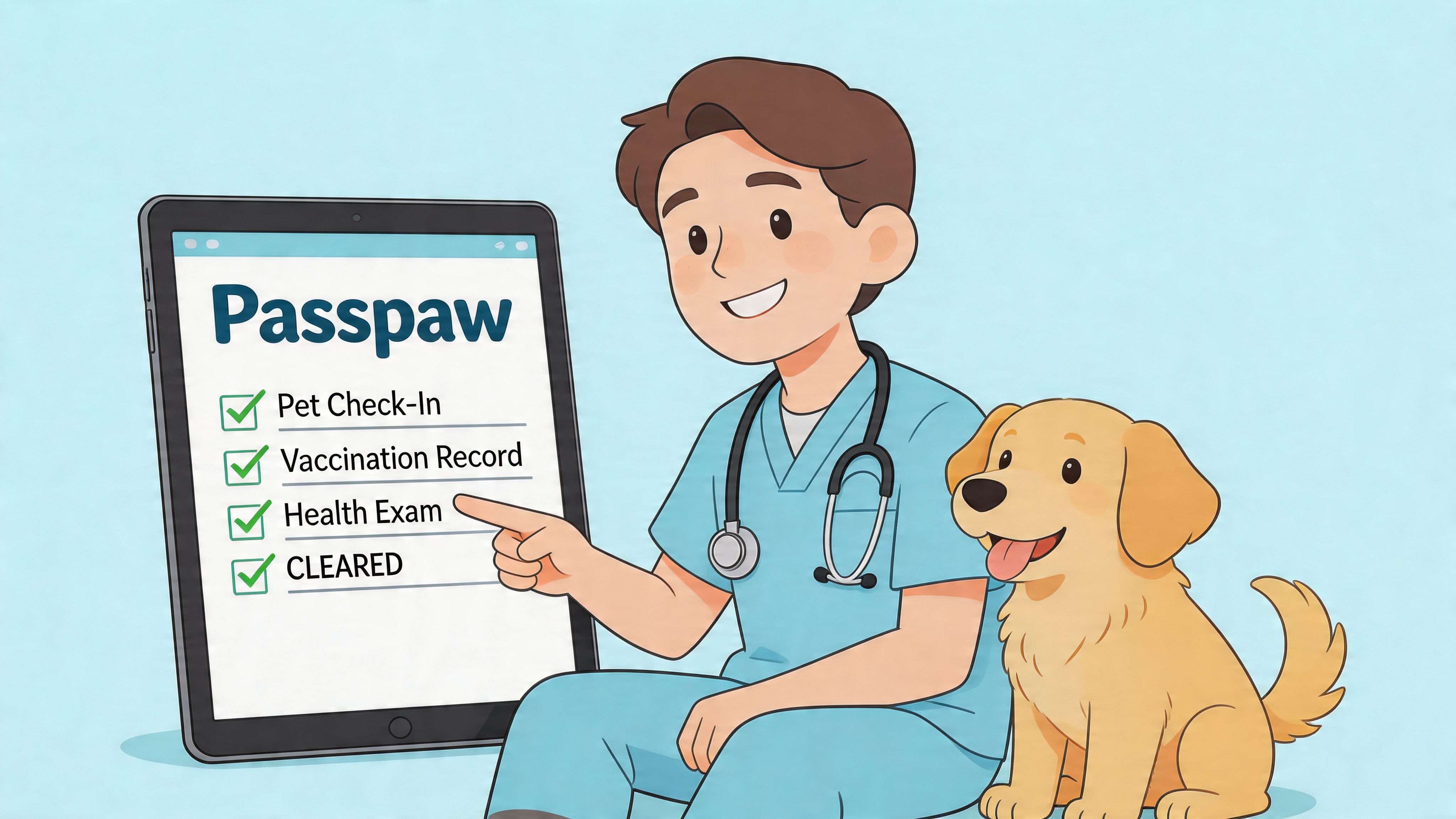
That’s where structured workflow tools help. A platform built for pet travel can centralize deadlines, document collection, and status tracking so the clinic isn’t running a Hawaii case from sticky notes and memory. Practices that already use broader operational systems often see the value right away. If your hospital is also looking at tools beyond travel, all-in-one business management software can help streamline the admin side of operations that surrounds these cases.
What a better workflow looks like
For Hawaii travel specifically, the biggest win is consistency. The clinic needs one place to track:
Pet identity data: especially microchip details
Rabies record completeness: before the appointment gets booked too far along
Document readiness: including owner-supplied files
Deadline visibility: so no one misses the narrow timing windows
Client communication: because owners need reminders at the right time, not all at once
A dedicated tool such as Passpaw’s pet travel workflow platform can help practices turn a high-stress service into a repeatable one. That matters for staff confidence, client trust, and fewer avoidable corrections.
The Hawaii process will never be casual. But it can be organized, and that makes all the difference.
If you want a simpler way to manage pet travel paperwork, timelines, and client communication, take a look at Passpaw. It helps veterinary teams and pet travel professionals keep complex trips, including Hawaii entries, on track with fewer manual errors and a clearer workflow.

More articles
From regulatory changes to best practices for veterinarians and pet owners, our resources keep you ahead of the curve.