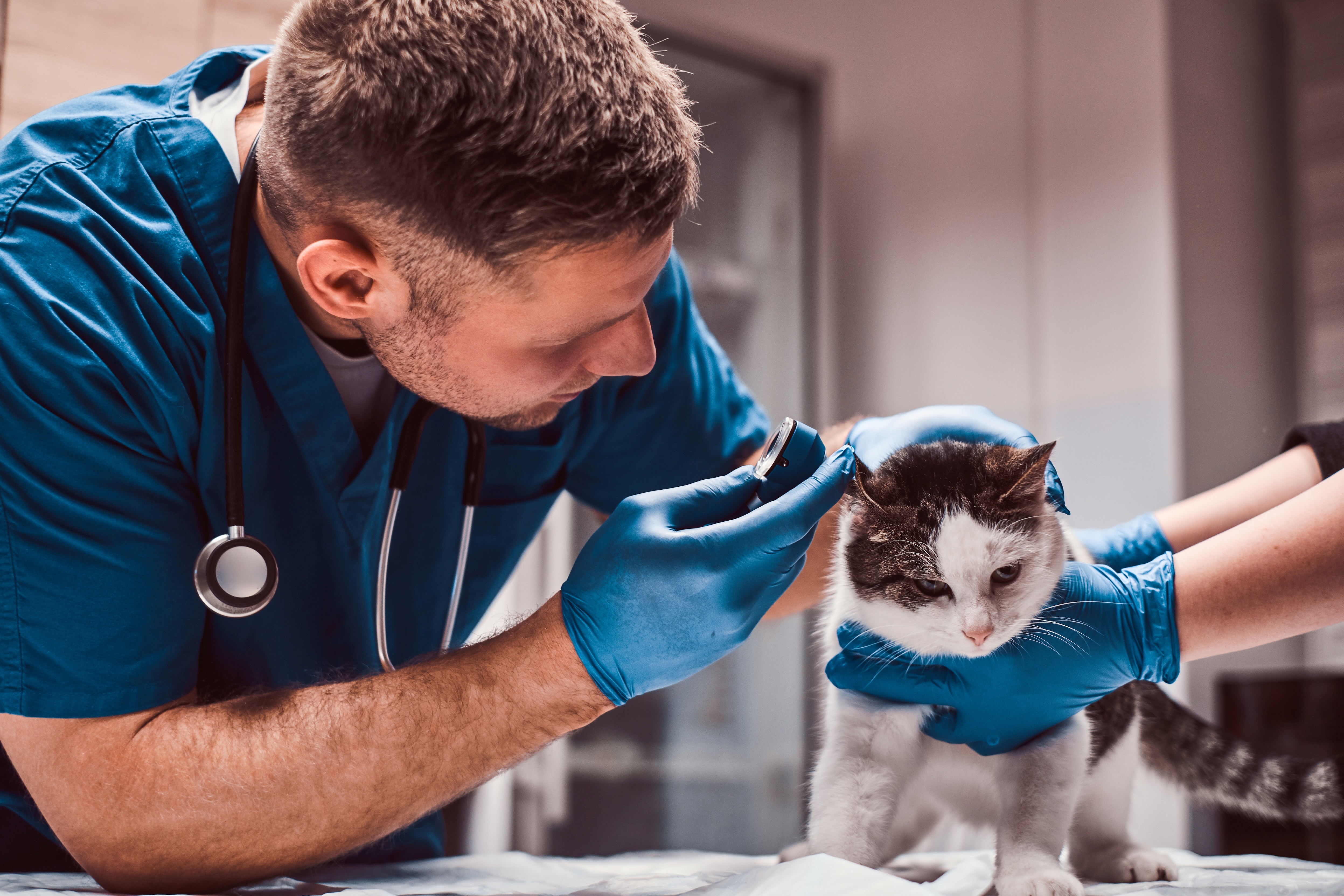
Are you a team member in a veterinary practice?
Are you a pet parent planning a trip with your furry pal?
Your Guide to USDA APHIS Pet Travel
Traveling with your pet can feel like a maze, but understanding the rules for USDA APHIS pet travel is the first, and most important, step to a smooth trip. Think of the USDA's Animal and Plant Health Inspection Service (APHIS) as the official "paw-sport" control for your furry family member. Their job is to help ensure every animal travels safely and meets all the necessary health requirements.
Starting Your Pet Travel Adventure
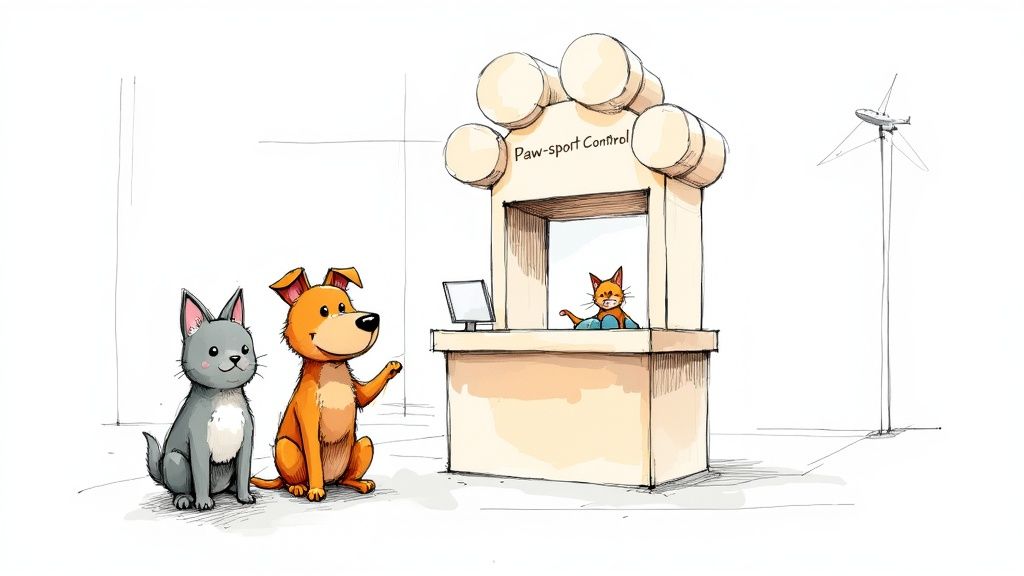
Planning a trip with your pet involves a lot more than just buying a ticket. Whether you're moving across the country or exploring a new continent, there are specific health and safety guidelines you'll need to follow. This is exactly where USDA APHIS comes into the picture.
The main point of these rules is pretty simple: to protect both animal and public health. By confirming that pets are healthy and properly vaccinated, APHIS helps prevent the spread of diseases across state and international borders.
Domestic vs. International Travel
First things first, you need to know if your trip is domestic or international. The difference is huge. Moving your pet from one state to another is usually much simpler than flying them to another country.
Domestic Travel (within the U.S.): The requirements are often pretty straightforward. However, some places, like Hawaii, have much stricter rules to protect their unique ecosystems. It's always a good idea to check your destination state's specific guidelines.
International Travel (outside the U.S.): This is where things can get complicated. Every country has its own unique set of import rules, which can include things like specific microchips, blood tests, and government-endorsed health certificates.
The USDA’s Animal and Plant Health Inspection Service (APHIS) is the central authority that helps manage these rules for travel. They handle the essential documents, like health certificates and vaccination records, for animals leaving or entering the United States.
Before we dive deeper, let's break down the main steps you'll encounter.
Key Steps in the USDA APHIS Process
Here’s a quick look at the main parts of preparing your pet for travel.
Key Step | What It Means | Why It's Important |
|---|---|---|
Research Destination Rules | Finding out the specific import requirements of your destination state or country. | Every location is different. Missing a single requirement can lead to quarantine or denied entry. |
Visit an Accredited Vet | Scheduling an exam with a veterinarian who is USDA-accredited to issue international health certificates. | Only accredited vets can sign the official paperwork needed for APHIS endorsement. |
Complete Health Certificate | Your vet fills out the official forms, detailing your pet's health, vaccinations, and tests. | This is the primary document showing your pet is healthy and fit to travel. |
Get USDA Endorsement | Submitting the completed health certificate to APHIS for their official stamp of approval. | The USDA's endorsement makes the document official and recognized by foreign authorities. |
This table is just a starting point, but it gives you a clear picture of the journey ahead. Each of these steps has its own timeline and details to manage.
The Most Important Tip
If there's only one piece of advice you take away from this, let it be this: start the process as early as possible. Seriously. Some countries have requirements that need to be completed months before your travel date.
The most common mistake we see is pet owners waiting until the last minute. Giving yourself plenty of time takes the stress out of the equation, allows for any unexpected delays, and helps you get all your ducks—or dogs—in a row before you leave.
By planning ahead, what seems like a confusing task becomes a manageable checklist. This guide will walk you through each step, making your USDA APHIS pet travel experience much clearer. When you're ready to organize your pet's journey, our tools can help you get started with confidence.
Checking Your Destination's Pet Import Rules
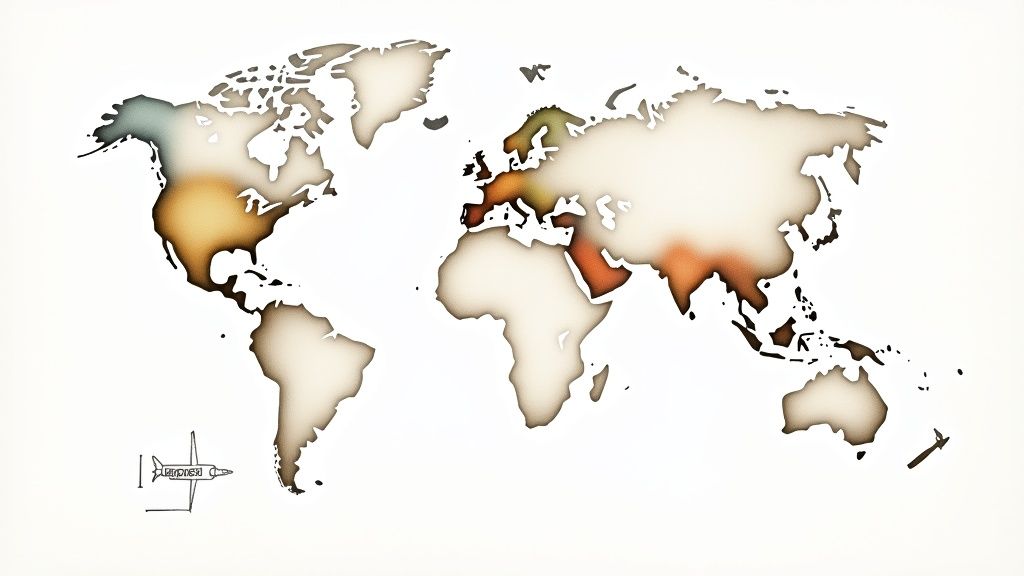
Before you book a flight or pack your pet’s favorite squeaky toy, your first and most critical mission is to find out exactly what your destination country requires. This is the foundation of the entire USDA APHIS pet travel process because every single country has its own rulebook.
Think of it this way: just as you need a passport to enter another country, your pet needs their own special paperwork. Some countries might just need a basic health certificate, but others have very strict rules, like mandatory quarantines or specialized blood tests. Getting this step wrong can stop your trip in its tracks.
Using the USDA APHIS Pet Travel Website
The official USDA APHIS Pet Travel Website is going to be your best friend here. This online database is your direct line to the import rules for nearly every country, and it's built to eliminate the guesswork.
Using the site is pretty simple. You select your destination from a dropdown menu, and it provides a detailed list of requirements for bringing a dog or cat there from the U.S. This isn't third-party information; it's the official source, making it the most reliable place to start your journey.
Important Takeaway: Remember, the rules listed on the APHIS website are created by your destination country, not by the USDA. The USDA's role is to help you meet those requirements and officially certify your paperwork before you leave the U.S.
Understanding Different Country Requirements
As you start clicking around the APHIS site, you'll quickly see just how much the rules can differ. For instance, countries within the European Union tend to have similar regulations, but even then, you'll find small but important variations between them.
Here are a few of the most common terms and requirements you'll probably run into:
Microchip: Most destinations require an ISO-compliant microchip for identification. This is almost always the very first thing you need to do.
Rabies Vaccination: The timing here is everything. Many countries insist that the rabies vaccine is given after the microchip is implanted and at least 21-30 days before you travel.
Rabies-Free Status: Some places, like Japan, Australia, or Hawaii, are considered "rabies-free" or "rabies-controlled." The rules for entering these locations are often much stricter to protect that status.
Staying organized is key. A simple checklist can be a lifesaver. To make this whole process smoother, a dedicated pet travel planner can help you track every requirement and deadline, ensuring nothing falls through the cracks.
Don't Forget the Airline's Rules
Finally, it's important to understand that the government's regulations are only half the battle. Your airline will have its own set of rules for flying with pets, and they are completely separate from what the country requires.
These airline-specific rules often cover things like the exact size and type of pet carrier, temperature restrictions for animal safety, and even limitations on certain breeds. Always check your airline’s pet policy and call them to confirm directly. The last thing you want is a surprise at the check-in counter.
The International Pet Health Certificate Process
Think of the international health certificate as your pet’s official passport. It's the golden ticket for their travel plans, a document showing they are healthy, vaccinated, and ready for an international adventure. This single piece of paper is the centerpiece of the entire USDA APHIS pet travel process, and getting it right is a must.
The journey starts with a visit to a very specific kind of veterinarian. It can't be just any vet; it has to be a USDA Accredited Veterinarian. These vets have gone through special government training and are authorized to prepare the official documents needed to take an animal out of the country. Using a non-accredited vet is a common mistake that can bring your travel plans to a screeching halt.
During this crucial visit, the vet will give your pet a thorough health exam to make sure they're fit to fly. They'll also verify key details like your pet's microchip, rabies vaccination status, and any other treatments or tests required by your destination. This isn't your average check-up; it's a detailed verification where every entry on the form needs to be perfectly accurate.
Getting the Official USDA Endorsement
Once your accredited vet has filled out and signed the health certificate, the next major step is getting it officially endorsed by USDA APHIS. This endorsement is the U.S. government's stamp of approval, confirming that your pet meets the import rules for your destination country.
Thankfully, you don't have to navigate this alone. APHIS provides guidance to help pet owners get their documents in order. There are two main ways to get this done:
By Mail: You can send the completed paperwork to a USDA APHIS Endorsement Office. Our advice? Always use an overnight shipping service with tracking and include a pre-paid return label. This helps get your documents back quickly and safely.
In Person: Some owners prefer the peace of mind that comes with making an appointment at a USDA Endorsement Office and getting the paperwork endorsed on the same day. This is a great option but requires planning ahead, as appointments can fill up fast.
No matter which route you take, our guide on how to get a USDA-endorsed pet health certificate breaks down this part of the journey in much more detail.
The Critical Role of Timing
Here’s where things get tricky: timing is everything. The international health certificate isn't something you can check off your list months in advance. Many countries require the final vet exam and the certificate's issuance to happen within a very tight window before your flight—often just 10 days.
This tight timeline is, hands down, the most stressful part of the process for many pet owners. It leaves almost no room for error. A tiny mistake on the paperwork could mean another trip to the vet and resubmitting everything, which might be impossible if your flight is just days away.
This is exactly why careful planning is your best friend. You have to coordinate your vet visit and the USDA endorsement so they fit perfectly within that narrow timeframe. It's a bit of a balancing act. If you start your research early and book your appointments well in advance, you can cross the finish line without any last-minute panic.
Navigating Common Timelines and Challenges
Even with the most careful planning, the USDA APHIS pet travel process can throw you a curveball. Knowing the common timelines and being ready for potential hiccups is the secret to keeping your journey smooth and avoiding that last-minute panic.
The single biggest hurdle for most pet owners is the tight schedule many countries demand. When we say you need to start months in advance, it's not an exaggeration—it's a necessity. For many popular destinations, like those in the European Union, you should kick off preparations at least three months before you fly. This buffer gives you breathing room for microchipping, vaccinations, and any mandatory waiting periods.
A Sample Three-Month Travel Timeline
To give you a clearer picture, let's walk through what a typical timeline looks like for an international trip with moderate requirements.
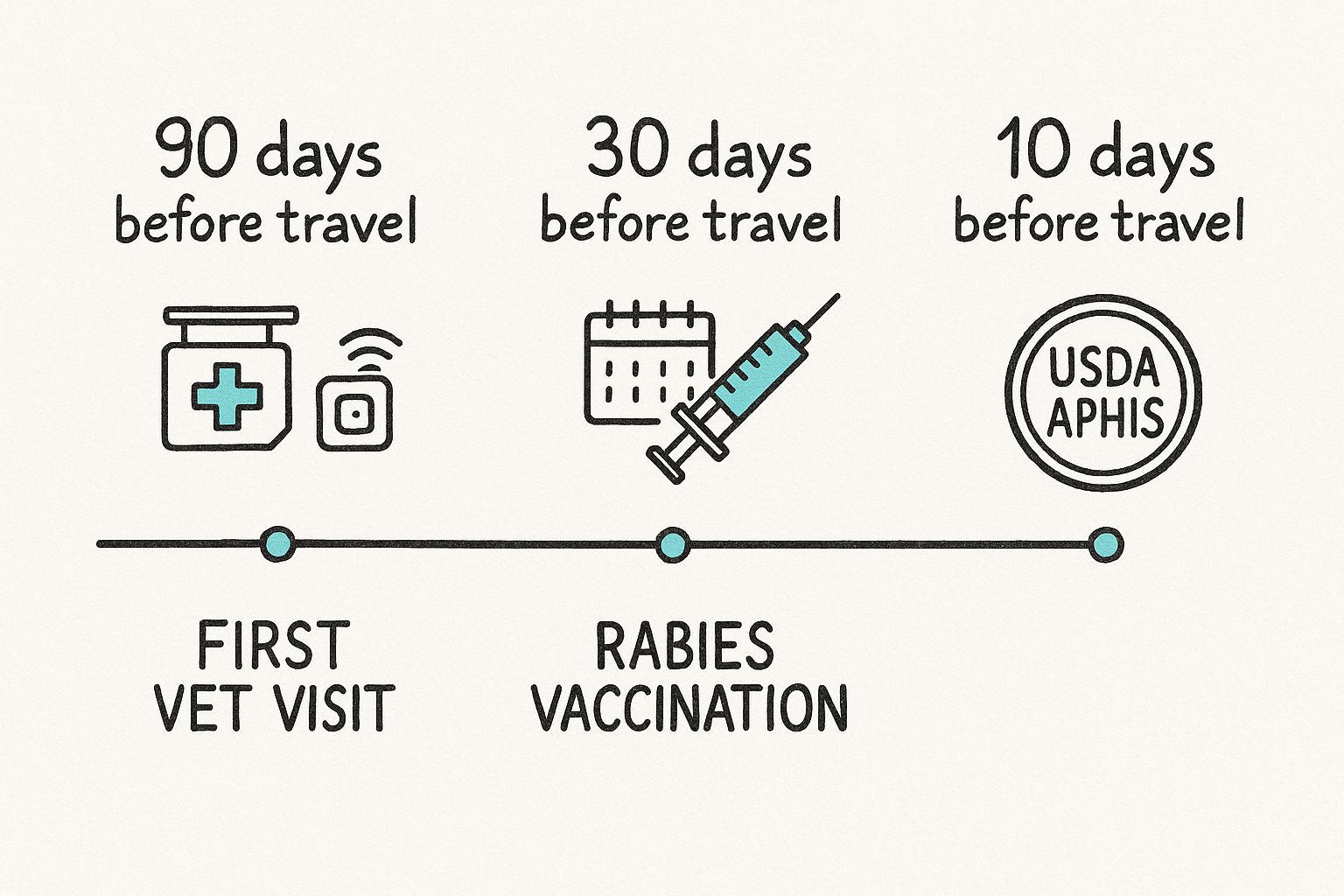
As you can see, the first key steps—like getting the microchip implanted—happen long before that final health certificate is ever signed. Procrastination is not your friend here.
To make this even more concrete, here’s a sample breakdown of what you might expect when traveling to a country in the EU.
Sample International Pet Travel Timeline (EU Example)
Time Before Departure | Action Item | Important Note |
|---|---|---|
90+ Days | Verify Pet's Microchip & Rabies Vaccination | The rabies vaccine should be given after the microchip is implanted. If not, your pet may need a new vaccine. |
30-90 Days | Complete Rabies Titer Test (if required) | Not all EU countries require this, but many do. The blood draw must be at least 30 days after the rabies shot. |
Within 10 Days | Final Vet Visit & Health Certificate Issuance | The USDA-accredited vet performs the final exam and completes the international health certificate. |
Within 10 Days | Submit Certificate for USDA Endorsement | This is your final government approval. It must be done after the vet signs but before you fly. |
1-5 Days | Receive Endorsed Documents & Final Prep | Once you have the endorsed certificate, make copies and prepare your pet's travel crate and supplies. |
This table shows why starting early is so important. Missing one deadline can have a domino effect on the entire process.
Overcoming Common Hurdles
So, what happens when things go sideways? A last-minute flight change or a fully booked vet can feel like a disaster, but they don't have to derail your plans.
Believe it or not, one of the most frequent problems is a simple paperwork error. A wrong date, a typo in a microchip number, or a missing signature can get your documents rejected by the USDA. That's why you should triple-check every single detail with your accredited veterinarian before anything gets submitted.
A great tip we always share is to create a dedicated travel folder for their pet. Keep all original documents, copies, vet records, and contact information in one spot. This simple binder can be a lifesaver when you're juggling deadlines and forms.
Here are a few common snags and how to handle them:
Can't Get a Vet Appointment: If your usual accredited vet is booked solid within that critical 10-day window, don't wait. Start calling other accredited vets in your area immediately.
Last-Minute Travel Changes: If your flight gets rescheduled, you might need a new health certificate. The moment you know, contact your vet and the USDA APHIS office to figure out the next steps.
Mail Delays: When sending documents for endorsement, always use an overnight service with tracking. It’s worth the extra cost to avoid the headache of your paperwork getting lost or arriving late.
Staying current on the rules is also part of the game, as regulations can and do change. To keep up, it's a good idea to read about the recent changes in pet travel for Jan 2025 and see how they might impact your plans. By preparing for these common obstacles, you can tackle them with a clear head and keep your pet’s trip on track.
Why Traveling with Pets Is More Popular Than Ever

If you've noticed more furry faces at the airport lately, you're not imagining it. Traveling with pets has become incredibly popular, and it all comes down to a fundamental shift in how we see our animal companions. They’re not "just pets" anymore—they are family.
This simple change in perspective means more people are choosing to bring their pets along for the ride, whether it's for a vacation or a permanent move across the globe. It's no longer a question of if the dog comes along, but how we make it happen. You might even say it's the beginning of a new leash on life for travel!
The Booming Pet Travel Market
The travel industry has certainly taken notice. From airlines creating dedicated pet programs to hotels rolling out the welcome mat with special amenities, businesses are working hard to meet the needs of modern pet owners. This has created an entire market focused on making animal transport safer, easier, and more accessible than ever before.
And the numbers back this up. In the U.S. alone, nearly 2 million pets fly on commercial airlines every year. The global pet travel market is set to keep growing, proving just how mainstream flying with your four-legged family member has become. You can dig into more of these fascinating pet travel statistics if you're curious.
Normalizing the USDA APHIS Pet Travel Process
So, why does this matter for you? Because it helps put the entire journey into perspective. When you're buried in paperwork and staring down deadlines, the USDA APHIS pet travel process can feel isolating and overwhelming. But you are far from alone in this adventure.
Knowing that millions of people successfully navigate these exact same rules every year can make the whole experience feel less like a daunting challenge and more like a well-traveled path. It's a reminder that with the right preparation, this is a completely achievable goal.
This boom in pet travel has also led to better resources and stronger support systems for owners. From specialized pet travel agents to detailed online guides, there is more information available now than ever before. This collective experience helps demystify the regulations and gives you the confidence to plan a successful trip.
While the APHIS requirements are strict, they're part of a standard process that countless families complete every year. You can, too.
Common Questions About USDA APHIS Pet Travel
Once you start digging into the details of international pet travel, the questions start popping up. It's totally normal. Getting the USDA APHIS endorsement is a process with a lot of moving parts, and it’s easy to get turned around.
Think of this section as your quick-reference guide. We've gathered the most common questions we hear from pet owners to give you clear, straightforward answers. Getting these details right from the start can save you a world of stress down the road.
How Long Does the USDA APHIS Endorsement Take?
This is a big one, and the answer really comes down to how you submit the paperwork. You have two main options, and they operate on very different timelines.
Your fastest route is an in-person appointment at a USDA Endorsement Office. If you can get an appointment and live nearby, you can often walk out with the fully endorsed health certificate that same day. It's a great choice for anyone on a tight schedule who wants that immediate peace of mind.
The other option is mailing your documents. APHIS usually processes mailed-in certificates within 1-3 business days. But don't forget to factor in shipping time both ways. To be safe, you should budget at least a full week for the entire round trip. And a word to the wise: always use an overnight express service with a tracking number.
What Is a USDA Accredited Veterinarian?
While every vet is a hero in our book, not all of them can sign off on international travel paperwork. For that, you need a USDA Accredited Veterinarian.
These are vets who have gone through specific training on federal animal import and export regulations. They’re authorized by the U.S. government to prepare and sign an international health certificate. They act as your official link to the APHIS system.
Let's be clear: this is a non-negotiable requirement. If your regular vet isn't accredited, they cannot sign the forms needed for the USDA endorsement.
What Happens If My Paperwork Has an Error?
Even a tiny mistake on your pet’s health certificate can bring your travel plans to a screeching halt. We’ve seen it happen with simple typos in a microchip number, a missing vaccination date, or an incorrect travel day.
If APHIS finds an error, they will likely reject the certificate. You’ll have to go back to your accredited vet, get the documents corrected, and resubmit everything. When you're working against that tight 10-day travel window, a mistake like this can be a real headache, potentially forcing you to reschedule your flight. This is exactly why you should triple-check every single detail with your vet before anything gets submitted.
Can I Use a Digital or Electronic Health Certificate?
For many destinations, the answer is a big yes! The Veterinary Export Health Certification System (VEHCS) is an online portal that lets your accredited vet submit the health certificate directly to APHIS. It’s usually much faster and more reliable than mailing paper forms back and forth.
But here’s the crucial part: you must confirm that your destination country accepts electronic forms and signatures. While VEHCS is becoming the standard, some countries still prefer original, ink-stamped paper documents. Before you go the digital route, double-check the latest rules for your specific destination on the APHIS Pet Travel Website.
Navigating the complexities of international pet travel is a big task, but you don't have to do it alone. Passpaw provides the tools to simplify document management and help ensure every requirement is met, giving you peace of mind. Learn how we can help at https://passpaw.com.

More articles
From regulatory changes to best practices for veterinarians and pet owners, our resources keep you ahead of the curve.