Are you a team member in a veterinary practice?
Are you a pet parent planning a trip with your furry pal?
Hawaii Health Certificate Dog: Avoid Quarantine in 2026
If you're searching for hawaii health certificate dog requirements, you're probably in one of two situations. Your flight is booked and you're suddenly realizing Hawaii treats pet paperwork very differently than most destinations. Or you're still in planning mode and trying to avoid the nightmare scenario every owner fears: landing in paradise while your dog gets routed into quarantine.
That concern is justified. Hawaii doesn't use strict entry rules to be difficult. It does it to protect its rabies-free status. The process also isn't cheap. Certifications alone can cost about $500 to $1200+, and missing a required step can lead to a 120-day quarantine at the owner's expense, according to the Hawaii health certificate package used by military veterinary clinics.
Aloha State Strict Rules Your Hawaii Pet Travel Journey
A common version of this story starts the same way. A family plans a move or long stay in Hawaii, books tickets, buys the airline kennel, and schedules one vet visit near departure. Then they learn Hawaii wants much more than a routine travel certificate. The timeline is longer, the sequencing matters, and one paperwork slip can turn a beach arrival into a very long kennel stay.
Why Hawaii treats pet entry differently
Hawaii's rules are built around one goal: keeping the islands rabies-free. That's why the state requires a tightly controlled sequence of identification, vaccinations, rabies antibody testing, and final health paperwork. The system is governed by Chapter 4-29 of the Hawaii Administrative Rules, and it has helped maintain Hawaii's rabies-free status since statehood in 1959.
For most owners, there are really two outcomes that matter. Either your dog qualifies for the 5 Day or Less Quarantine pathway, which may include direct airport release in Honolulu when everything lines up correctly, or your dog doesn't and may face the full 120-day quarantine. That's a huge difference in stress, cost, and logistics.
If you're still deciding who'll help once you arrive, it's smart to line up support early. Families often pair travel prep with local care planning, such as trusted pet sitters for Hawaii, especially when housing move-in dates and arrival dates don't match perfectly.
Practical rule: For Hawaii, "close enough" paperwork isn't enough. Sequence, dates, and document details matter just as much as the exam itself.
The path gets easier when you think in stages
Owners usually feel less overwhelmed when they stop thinking of this as one giant form and start treating it as a chain of checkpoints. First comes the microchip and rabies record foundation. Then comes the FAVN test. Last comes the final certificate and submission package.
That's why a timeline matters more than speed. Rushing tends to create avoidable mistakes, while early planning gives your clinic time to catch missing data before it becomes a boarding-level problem.
If you'd like a broader overview of the entry system before getting into the weeds, Passpaw also has a helpful primer on Hawaii animal quarantine rules.
Building a Solid Foundation with Microchips and Rabies Vaccinations
The Hawaii process becomes much less intimidating once you understand this point: the first steps have to happen in the right order. Not almost the right order. The right order.
Start with the microchip, not the vaccine paperwork
Your dog needs an ISO-compliant microchip, and it must be implanted before the FAVN rabies antibody blood draw. This is one of the most common places people stumble. Data summarized from Hawaii-related travel guidance shows that around 18% of failures are tied to a microchip being implanted after the FAVN blood draw, which invalidates the test, and 22% of rejections come from incomplete rabies certificates missing required lot numbers or dates, as outlined in this Hawaii travel guidance for pet owners and clinics.
That means the chip isn't just identification. It's the anchor for the rest of the file. If the chip number doesn't match across records, Hawaii can treat those documents as unreliable.
A few habits make this step safer:
Scan the chip more than once: Don't assume a newly placed chip will read perfectly on the first try.
Match every digit: The chip number on the rabies certificate, lab submission, and later health certificate should be identical.
Use a clinic checklist: Front-desk intake errors happen more often than owners expect.
If you're checking whether your dog's chip format fits travel standards, this guide to ISO-compliant microchips is a useful reference.
Rabies vaccines need spacing and complete records
Hawaii requires two rabies vaccinations administered more than 30 days apart. The certificates matter just as much as the shots. The most recent certificate needs the vaccine name, lot or serial number, booster interval, vaccination date, and expiration date. If even one of those details is missing, the paperwork can unravel later.
Here’s where owners often get tripped up. A dog may be properly vaccinated in a medical sense, but the certificate is incomplete in an administrative sense. Hawaii cares about both.
A valid medical history doesn't always equal a valid travel file.
What works well in practice
In clinic, the smoothest Hawaii cases usually follow a boring routine. That's a compliment. Nobody improvises, nobody assumes the prior vet "must have documented it," and nobody waits until the last month to request records.
A reliable workflow looks like this:
Confirm the microchip first: Scan and document the full number before planning the FAVN draw.
Audit both rabies certificates: Check dates, manufacturer details, and lot information before the owner books flights.
Clean up weak records early: If an old certificate is hard to read or incomplete, solve that problem before the case moves forward.
What doesn't work
The risky approach is trying to reconstruct the file late. That usually means chasing old clinics, requesting duplicate vaccine records, and discovering that a lot number or expiration date never made it into the chart. By then, owners are often counting days until departure and every fix feels urgent.
That's why I tell clients to treat the first rabies document review like pre-flight maintenance. It's not glamorous, but it keeps the trip from going off the runway.
Passing the All-Important FAVN Rabies Antibody Test
For most Hawaii-bound dogs, the FAVN rabies antibody test is the longest pole in the tent. If owners underestimate any part of the process, it's usually this one.
The sequence matters more than speed
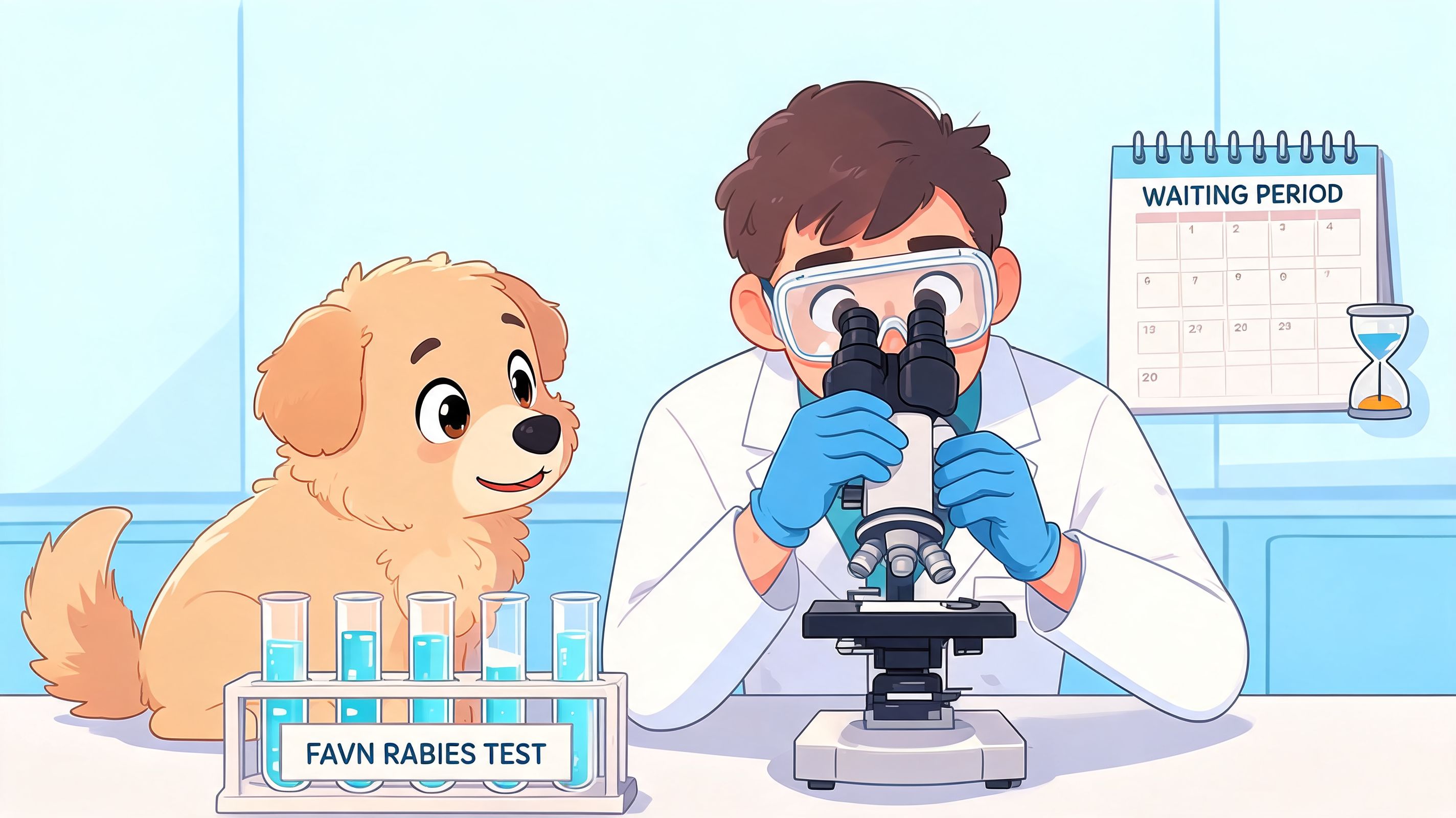
For the 5 Day Or Less Quarantine program, a passing FAVN result is mandatory, and the default 120-day quarantine can affect an estimated 20% to 30% of non-compliant arrivals, according to Hawaii's Animal Quarantine Information page. The blood draw must happen after the microchip is in place and after the waiting period following the second rabies vaccine has passed.
That order is easy to say and surprisingly easy to botch. Owners sometimes book the blood draw before confirming the chip was scanned and logged properly. Others assume the second rabies vaccine can be given and tested immediately. That's not how Hawaii wants the file built.
What a passing result looks like
The FAVN test is looking for a rabies antibody level of at least 0.5 IU/mL. The sample goes to an approved lab, and results typically take 4 to 6 weeks. Hawaii also expects the original result to go directly to the Hawaii Department of Agriculture.
This is why "I'll handle it next month" is dangerous. The FAVN stage includes veterinary timing, lab timing, and agency timing. Those clocks don't always move at the same speed.
If you want a plain-language walkthrough of the lab side, this article on the dog rabies titer test helps explain what owners are waiting for.
Don't schedule your final travel appointment until you know the FAVN result is in order and correctly routed.
A simple way to think about the FAVN step
Use this mental model:
Checkpoint | What to confirm |
|---|---|
Before blood draw | Microchip is implanted and readable |
Vaccine review | Second rabies shot is already on record and the waiting period has passed |
Lab submission | Sample goes to an approved lab with matching identifiers |
After result | Original result is directed to Hawaii as required |
Owners often ask whether this is the point where the trip becomes real. It is. Once the FAVN is done correctly, the rest of the case becomes much more manageable. Until then, everything else is just packing treats and hoping for the best.
The Final Paperwork Push for Your Dog's Health Certificate
A common last-week problem looks like this: the flights are booked, the crate is ready, and the dog is fully qualified on paper. Then the final exam gets scheduled a day too early, a name is written one way on the health certificate and another way on the rabies record, or the AQS-279 package goes out late. Hawaii can treat that as a documentation failure, not a minor clerical issue.
What the final appointment needs to accomplish
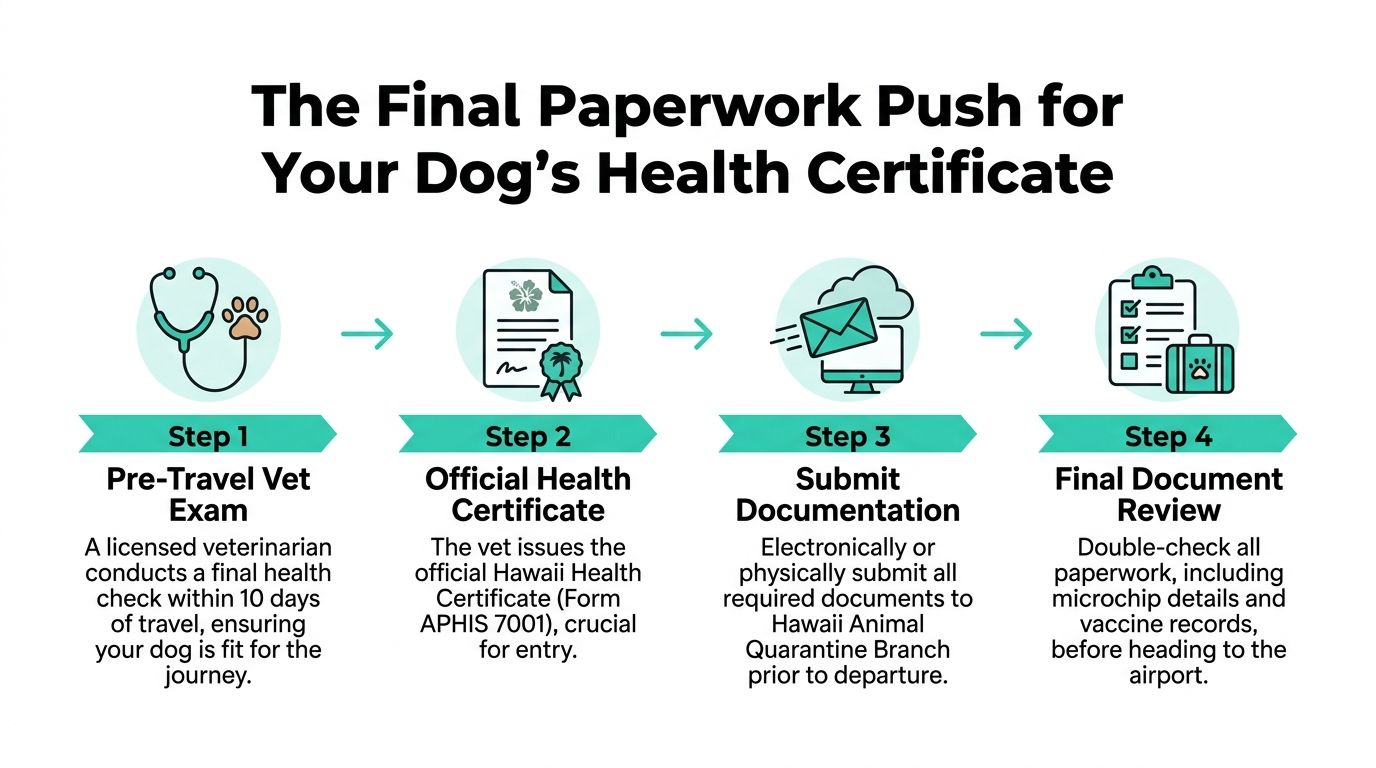
Your dog needs a USDA APHIS Form 7001 health certificate issued by a USDA-accredited veterinarian within 10 days of arrival in Hawaii. Hawaii also expects the broader entry packet, including Form AQS-279, to be submitted at least 10 days before arrival if you want to stay on the reduced-quarantine or direct airport release track.
Those two 10-day rules cause confusion because they govern different parts of the case. One controls when the dog is examined and certified for travel. The other controls when Hawaii receives and reviews the file. Owners often combine them into one deadline and get burned.
The final visit should confirm three things:
Identity is verified: the microchip scans and matches every document in the file
Records agree: rabies certificates, FAVN details, and the health certificate use the same identifiers and dates
Travel fitness is documented: the dog is healthy enough to fly, and the form is completed without omissions
A good travel exam works like quality control. The medical part matters, but so does document accuracy.
The paperwork packet that needs to line up
The health certificate is only one piece. Hawaii reviews a packet, and the packet has to read as one consistent story from start to finish.
A clean file usually includes:
APHIS 7001 completed close to travel
Rabies vaccination records with all required details
FAVN documentation already handled correctly
AQS-279 submitted on time
I tell clients and referring clinics to do a line-by-line match before anything is mailed, uploaded, or handed to the owner. Check the dog's name, breed, sex, color, dates of rabies vaccination, vaccine product details, and microchip number. A single transposed digit can create the same arrival-day problem as a missing form.
Where timing gets risky
The final week is where stable plans matter. Book the travel certificate appointment only after the itinerary is unlikely to change. If the arrival date moves, the certificate window may move with it.
The other trade-off is speed versus error control. Owners sometimes push for the earliest possible exam to "get it done." That feels safer, but it can make the certificate too old by the time the dog lands in Hawaii. Waiting too long creates a different risk. There may not be enough time to fix a typo, replace a missing signature, or redo a form if the clinic catches a problem at the last minute.
A practical approach is simple. Set the appointment inside the valid window, then use a checklist before the owner leaves the clinic. Scan the microchip in the room. Compare every identifier against the travel packet. Confirm how and when the paperwork will be sent. Those small steps prevent expensive surprises at arrival.
Common Pitfalls That Lead to a 120-Day Quarantine
The biggest mistake owners make is assuming the risky part is over once the vaccines and FAVN are done. In reality, the last details often cause the most avoidable trouble.
The multi-leg itinerary trap
Data shows that up to 30% of pets arriving in Hawaii face extended quarantine due to documentation timing errors, and one recurring issue involves multi-leg itineraries, where owners calculate the 10-day health certificate from the first leg of travel instead of the final arrival in Hawaii, which can leave the certificate expired on arrival, according to this Hawaii pet health certificate guidance.
That problem shows up when an itinerary looks simple on paper but stretches across days. Maybe the dog leaves the mainland, boards overnight, then continues to Honolulu. Maybe weather forces a rebooking. Maybe the owner thought the countdown started with departure from home. Hawaii cares about arrival timing, not what felt reasonable when the ticket was purchased.
Small errors that create large consequences
A pre-mortem helps here. Instead of asking, "What do I still need?" ask, "What could still go wrong?"
Common examples include:
Unreadable microchip on arrival: The dog is chipped, but no one verified the chip scans reliably.
Name mismatch: "Buddy" on one form and "Buddy Smith" on another may seem harmless until an inspector has to reconcile identities.
Incomplete signatures or stale dates: Final documents were prepared, but not finalized in a way Hawaii will accept.
Flight changes: The travel date moved, but the clinic file didn't.
What works better than a simple checklist
A checklist is useful, but Hawaii cases need a timeline review too. I like owners and clinic staff to do one "what if" pass a few days before departure.
Ask these questions:
If the flight moves, does the health certificate still fall inside the allowed window?
If the airline changes the route, does the arrival date in Hawaii change?
If an airport agent scans the microchip, will it read clearly and match every form?
The safest Hawaii file is the one that still works after a delay, not just the one that looked correct on the day it was printed.
The goal isn't to make owners nervous. It's to catch the sort of tail-waggingly frustrating error that looks tiny at home and becomes enormous at the airport.
How Vets Can Streamline the Hawaii Travel Process
For pet owners, Hawaii travel is a special project. For veterinary teams, it's a repeat administrative event with a lot of moving parts. That difference matters. A clinic can't rely on memory when each case depends on sequence, timing, and paperwork accuracy.
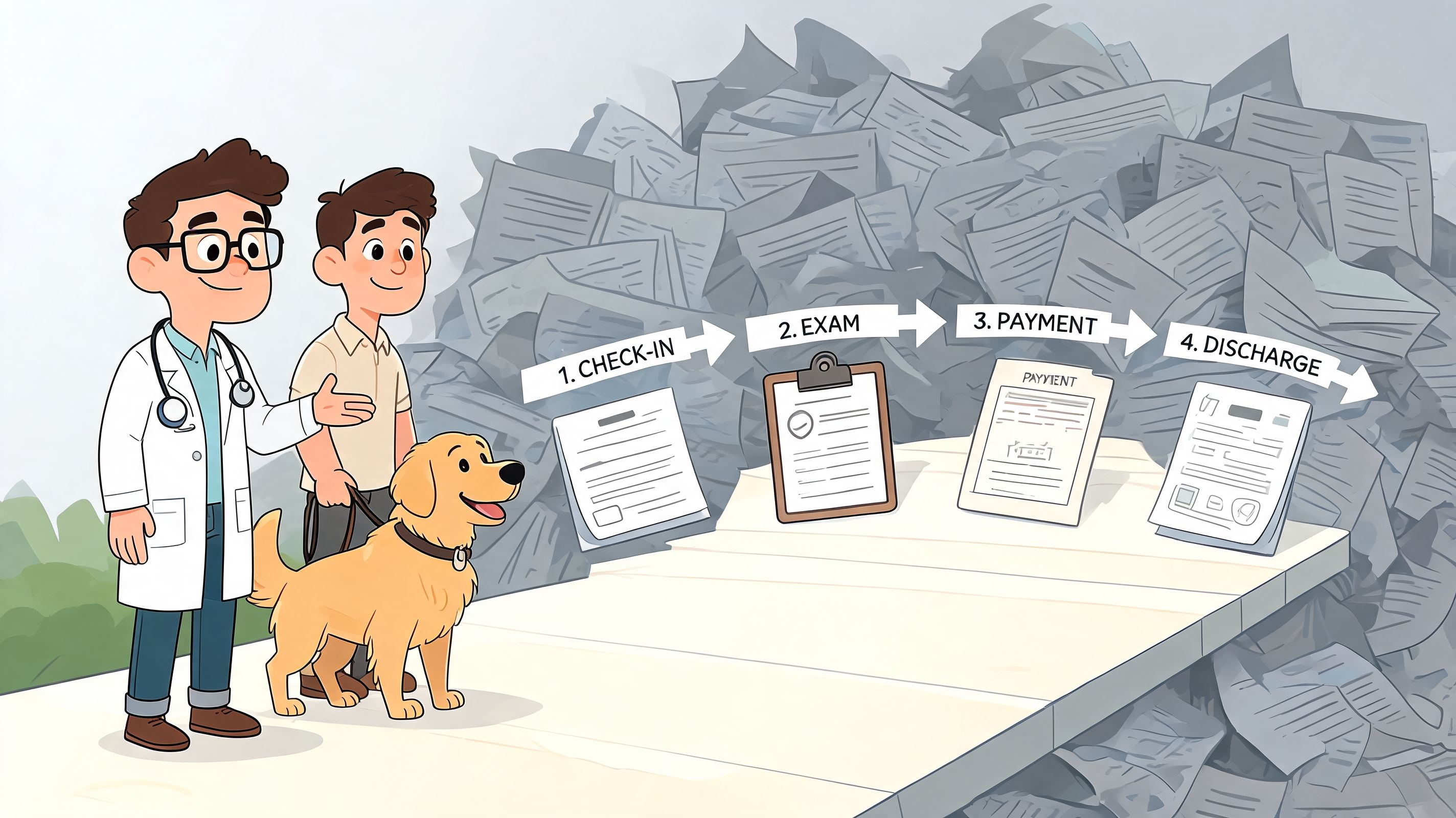
Why manual tracking breaks down
A whiteboard or spreadsheet may work for ordinary travel certificates. Hawaii is different because one case can stretch over months and involve multiple appointments, lab coordination, owner reminders, and final document review. If even one date is entered incorrectly, the whole plan can wobble.
Clinic friction usually shows up in familiar ways:
Front desk teams chase missing records
Technicians recheck timelines by hand
Doctors spend time fixing document issues that should have been caught earlier
Owners call repeatedly because they can't tell what's done and what's still pending
That isn't a staffing problem. It's a workflow problem.
What a better system looks like
The most reliable Hawaii workflows do three things well. They centralize records, calculate timing from the travel date, and flag missing details before the veterinarian signs the final certificate.
For practices that handle these cases regularly, tools can help. One example is practice compliance solutions for pet travel, including Passpaw, which is built to manage travel documents, validate records in real time, and keep clinics and pet owners aligned on deadlines and required items. In Hawaii cases, that kind of system is useful because the work isn't only medical. It's operational.
The service mindset that clients notice
Owners don't expect perfection from memory. They do notice when a clinic has a repeatable process.
A strong Hawaii workflow usually includes:
Early intake review: Someone checks chip, rabies records, and likely timing before the owner books final travel.
Case staging: The clinic marks what is complete, what is pending, and what date controls the next action.
Final review before signing: A staff member compares all identifiers and dates before the veterinarian completes the certificate.
Hawaii travel cases reward clinics that treat documentation like patient care. The details aren't extra work. They are the work.
When a practice handles this well, clients feel guided instead of bounced around. That's good for the pet, good for the owner, and much easier on the team.
If you're preparing a Hawaii-bound dog file and want a more organized way to manage deadlines, records, and final certificate readiness, Passpaw offers a cloud-based workflow built for pet travel documentation. It helps veterinary teams and pet owners keep required records in one place, track timing against travel dates, and reduce the last-minute scramble that so often causes Hawaii entry problems.
More articles
From regulatory changes to best practices for veterinarians and pet owners, our resources keep you ahead of the curve.