Are you a team member in a veterinary practice?
Are you a pet parent planning a trip with your furry pal?
Door to Door International Pet Transport Made Simple
Door to door international pet transport takes the entire journey off your plate—from your front door to your pet's new front door. It covers pickups, ground transfers, customs paperwork, and final delivery, so you're not juggling multiple providers or chasing down documents. Think of it as a V.I.P. (Very Important Pet) service for your cat or dog: less coordination for you, more peace of mind throughout.
What Door To Door International Pet Transport Covers
Full-service pet shipping bundles all the travel logistics so you don't have to piece them together yourself. Here's what's usually included in the package:
Home pickup by a trained handler who checks IDs and inspects the crate before leaving your home—no stressful airport curb drop-off needed.
Ground transfer to the departure airport in a climate-controlled vehicle, with rest stops and monitoring along the way.
Airline transit using a travel-safe crate, with check-in help or manifest cargo booking depending on your pet's size and the route.
Customs clearance at the destination, including handling health certificates, import permits, and microchip verification.
Final delivery from the arrival airport to your new address, complete with a delivery checklist and photo confirmation.
I've seen families moving from London to Toronto save themselves a ton of extra work by having the shipper manage a vet check at pickup, confirm the rabies certificate, and clear Canadian import rules before the pet even landed. That kind of prep work helps avoid the nightmare of a last-minute quarantine hold.
Door to Door vs Airport to Airport Service
These two service types handle very different amounts of work. Here's how they compare:
Feature | Door to Door Service | Airport to Airport Service |
|---|---|---|
Pickup responsibility | Provider performs home pickup | Owner delivers to departure airport |
Paperwork handling | Provider helps submit and track documents | Owner often submits permits |
Ground transfers | Included | Owner arranges |
Final delivery | Included | Owner collects at arrival airport |
"Choosing full-service reduced our stress and cut the risk of paperwork errors," says a pet owner who recently used a door-to-door carrier.
The real difference comes down to who handles the coordination. Door to door shifts that task to the shipper. It usually costs more upfront, but it can lower the chance of missed connections or document mix-ups messing up the move. Services like Passpaw also help vets and owners keep documents in order before pickup, so a missing health certificate doesn't delay the whole trip.
For a deeper dive into the full process, check out our guide on Moving Internationally With Pets.
Getting the Veterinary Paperwork Right the First Time
Paperwork is often the trickiest part of door-to-door international pet transport. The key is to treat documentation like a travel plan for your pet—something you build carefully, not scramble to finish at the last minute.
Start with the microchip. Most countries accept ISO 11784/11785 chips, but if yours doesn't match that standard, you may need a scanner-readable backup ready to go. Confirm this early, not the week before you leave.
Book a vet visit at least 6–8 weeks before you go. That gives you enough time to check the microchip data and plan out vaccinations. Rabies shots often need to be done 21–30 days before travel, though some places have a longer waiting period. Check the rules for your destination and schedule follow-ups.
Parasite treatments are another detail that can catch people by surprise. Many countries need specific treatments within a short window before export. Have your vet record the treatment brand, dose, and exact time on the official forms—customs officers shouldn't have to guess.
This is where a tool like Passpaw can be a real help. It turns scattered deadlines into a clear task list that both vets and owners can follow. When vet offices use Passpaw, teams can assign tasks, attach scanned records, and flag missing certificates before the pet is even picked up. Fewer surprises on moving day is a pawsitive thing.
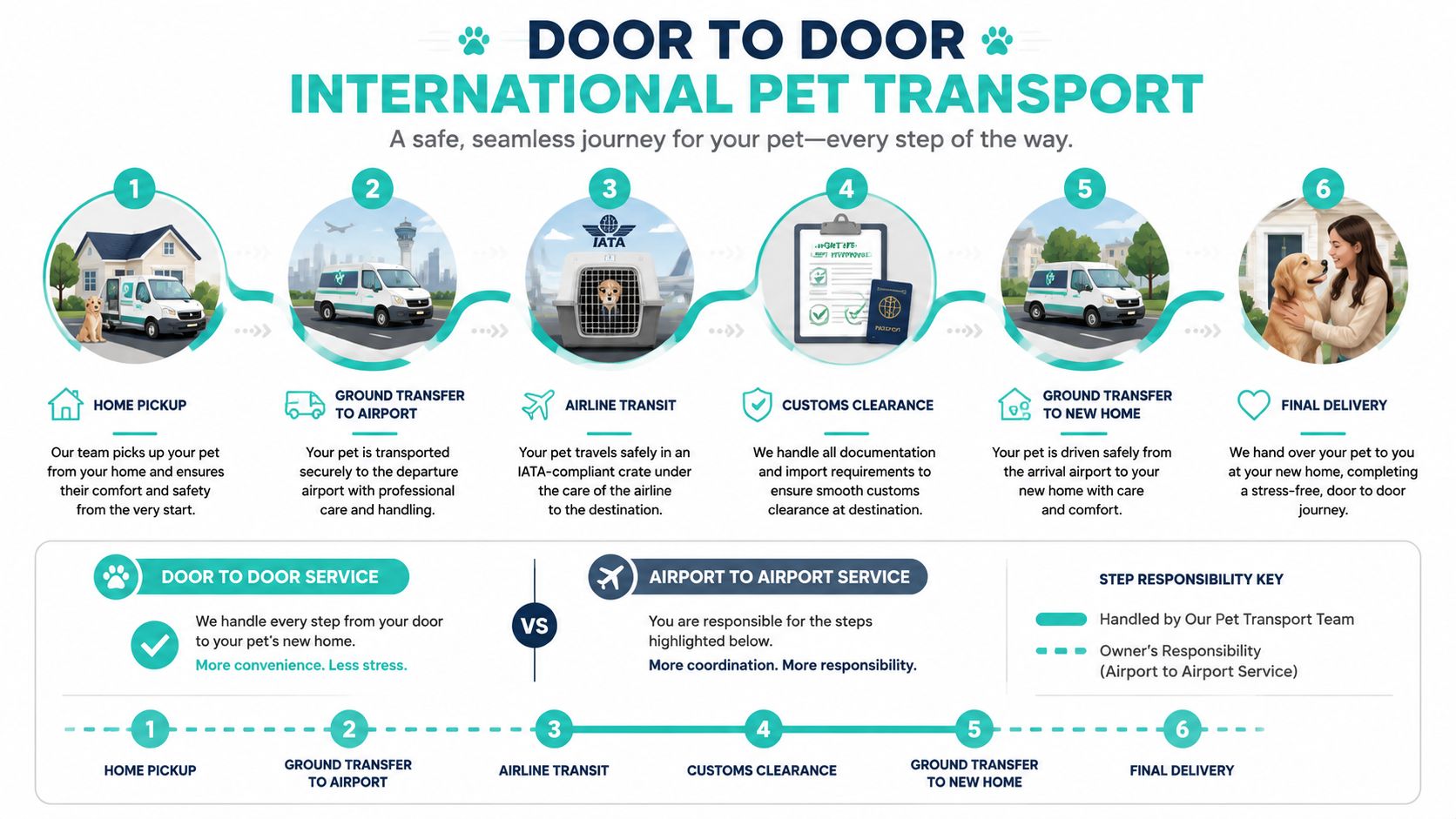
This infographic shows the six main steps of a full door-to-door move and highlights which parts are handled by the shipper versus the owner.
Plan for at least 6–8 weeks of lead time for most international moves to help avoid rushed paperwork and unexpected quarantine holds.
Preparing Your Documents
Gather original vaccination records and a copy of the microchip registration. Customs and import permits often need originals, not copies.
Request an international health certificate from an accredited vet. It's a good idea to keep both digital and paper copies handy.
If your vet scans large files, learning simple tricks for file size control can be useful. For large scanned documents, you might need to reduce their size to meet upload limits—see how to compress PDF files for easy methods.
A Real-World Example
A family moving from Madrid to Sydney scheduled their first vet visit eight weeks early. Their vet entered tasks into Passpaw, which sent reminders to complete a second rabies booster and a parasite treatment seven days before the flight. The team caught an expired microchip registration early, so it was fixed with time to spare and the pickup stayed on schedule.
Your Vet Visit Checklist
Check the microchip and update the registry if needed.
Complete the rabies vaccination timeline and note the batch numbers.
Give parasite treatments within the destination's required window.
Get a signed international health certificate and any import permits.
Upload scans to a shared platform and confirm your shipper has them.
Following these steps can turn paperwork from a headache into a simple checklist, keeping your pet happy all the way to their new home.
Read also: Learn more about veterinary international health certificates in our guide Veterinary International Health Certificate
Choosing a Pet Shipper You Can Actually Trust
Picking a shipper is just as important as picking the right crate—maybe even more. A good partner keeps your pet safe and you calm. Before you decide, check for credentials that matter for international moves.
Look for IPATA membership and USDA registration where relevant, then ask for references from recent overseas moves. Not just any references—recent ones, with details. That shows they can handle your specific route and breed.
Communication during the trip makes or breaks the experience. You'll want scheduled updates, photo check-ins, and one person who actually answers the phone instead of bouncing you between departments.
Crate Standards That Pass At Check-In
Airlines are strict about their crate rules. For sizing, a general guideline is: length should be your pet's nose-to-tail-base measurement plus about 4 inches (10 cm), width should be their shoulder width plus about 2 inches (5 cm), and height should be their standing height plus about 2 inches (5 cm). Most airlines need ventilation on three sides, and fasteners should be screw-type bolts or metal locks. Zip ties alone won't fly.
A good crate has solid ventilation, a food and water cup you can reach from the outside, and a bolted door. A crate that gets rejected often has flimsy plastic clips, poor airflow, or the wrong internal size.
Check the crate label for IATA or airline approval.
Confirm measurements against the airline's published limits.
Send a photo of your crate to the shipper for pre-approval.
Crate Acclimation Tips
Getting your pet used to the crate before travel reduces stress for everyone. Start with short 10–15 minute sessions using treats, then slowly build up to longer periods. Toss in favorite toys and a worn t-shirt with your scent—it helps them feel more at home when things get unfamiliar. It's all about making the crate feel like a safe, cozy den.
"A pet who knows their crate stays calm at the airport"—this simple truth saves owners from frantic crate swaps at the last minute.
Practical Questions to Ask During Consultations
Who will be handling my pet on travel day, and are they certified or registered?
Can you connect me with a recent client who moved to the same destination?
Do you double-check crate dimensions with the airline and provide written confirmation?
For more context on top-tier handling, look for services that act like personal concierges for your pet's travel—see what are luxury travel concierges.
If you want a detailed checklist for comparing providers, our guide Choosing An International Pet Shipper walks through the details.
A few checks upfront can prevent big headaches later and help ensure your pet's door-to-door international pet transport is a smooth ride.
Planning Your Budget and Booking Timeline
Let's talk about money, without the mystery. Breaking down costs helps you understand what you're paying for with door-to-door international pet transport.
Start by looking at the main cost drivers: distance and route, pet size and breed, seasonal demand, and add-ons like a custom crate or quarantine help. A long flight with two connections often has more handling fees and overnight care costs than a direct flight. That's why you should ask for route options and a detailed quote instead of just a single flat fee.
Think about your pet's size early on. Larger dogs need bigger crates, which often travel as cargo and add to both airline and ground transport charges. Some breeds, like those with short noses, might have extra fees or need to fly at certain times—ask carriers about their breed-specific policies before you book.
Timing affects both price and risk. Try to book flights and full-service shippers at least 6–8 weeks ahead for common international routes. More complex destinations might need 12+ weeks of planning. Booking early can help you avoid rush fees and gives vets enough time for vaccines and paperwork.
Insurance adds another layer of protection. Standard travel policies often don't cover existing health issues or routine vet care. Look for special pet travel insurance that covers things like mishandling, missed connections, or emergency vet care during the trip. Compare the costs and coverage to see if it's a good fit for you.
Practical Checklist to Build a Realistic Budget
Get at least three detailed quotes that list ground pickup, airport handling, airline fees, customs clearance, final delivery, and crate cost.
Ask about rebooking fees and who pays if a paperwork mistake causes a delay.
Set aside some extra funds for unexpected vet care or short-term boarding.
How Passpaw Helps
A tool like Passpaw can reduce the friction that often leads to surprise charges. Its real-time document validation and task reminders can cut down on rebooking fees from missing certificates. One family moving to Sydney had a scanned rabies certificate flagged two weeks before their flight—that early warning helped them avoid a costly stopover and quarantine fee.
Build the budget like a travel plan for your pet: with clear items, deadlines, and a backup fund.
Tips and Examples
If a quote looks too simple, ask for a breakdown. A cheap base price can sometimes hide add-on fees.
For seasonal moves (like holidays or summer), expect higher rates and book further in advance.
Keep receipts and reports from vets and shippers to support insurance claims if you need to file one.
Read also: Understand detailed pricing scenarios and cost-saving tactics in our article Pet Transportation Costs Explained
Handling Pickup, Transit, and Unexpected Hiccups
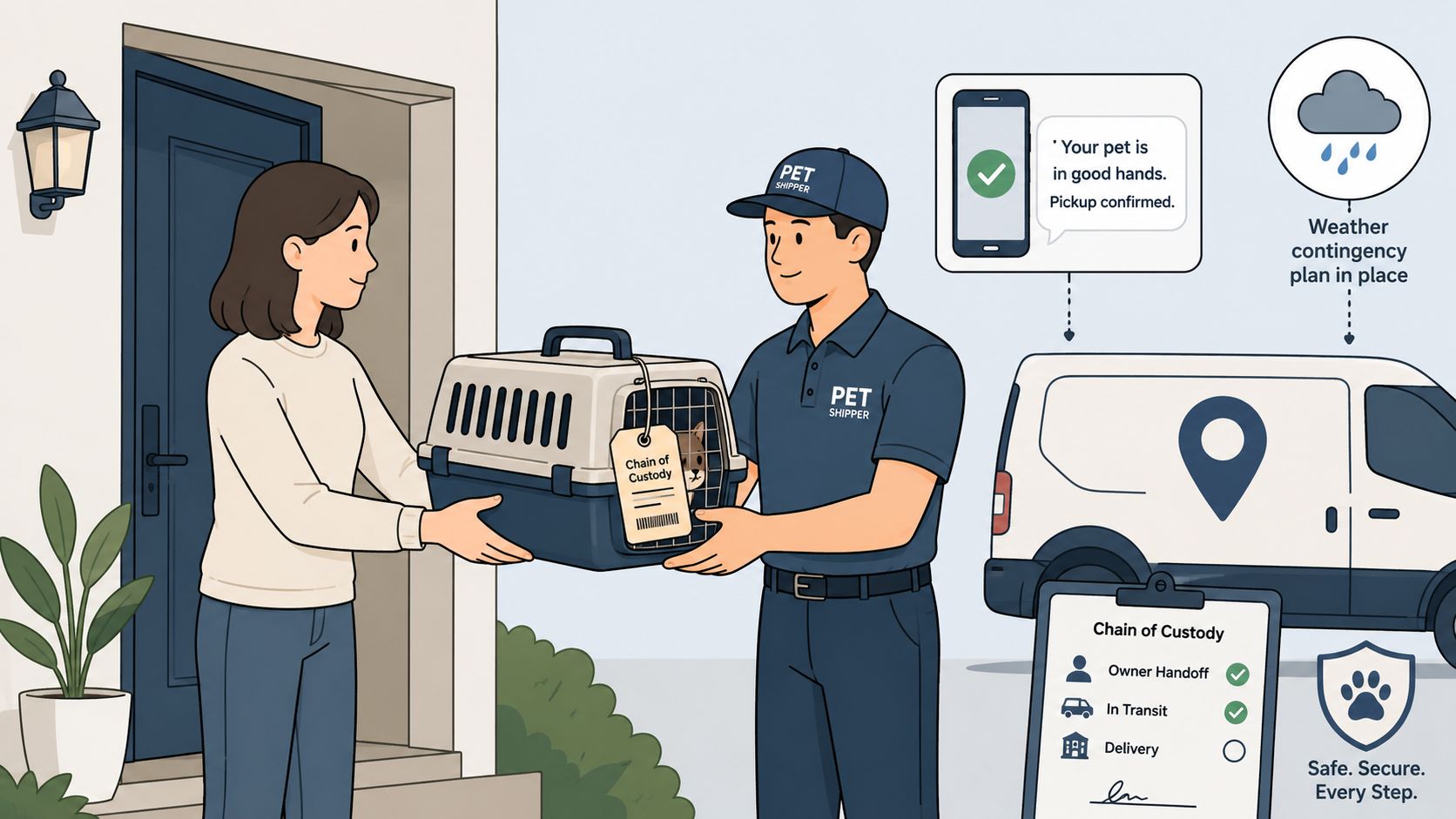
A smooth door-to-door international pet transport day starts with a clear handoff. The handler should check your ID, scan the microchip, inspect the crate, and have you sign a form before driving away. This simple routine helps prevent mix-ups and gives you a record of when your pet was picked up.
I've seen this work out well. One owner in London had the pickup team photograph the sealed crate label and text it over right away. That one photo saved everyone a frantic round of phone calls when a connecting flight was delayed. Visual proof and quick updates really do pay off.
Handoff checklist to keep handy:
ID and microchip check with the registration number
Health certificate and import permit copies uploaded to the shipper
Crate inspection notes covering water, food, bedding, and bolt checks
Key takeaway: Confirm three communication points — pickup, airport handover, and final delivery — and ask for photos with timestamps for each one.
Communication During Transit
Good providers offer live tracking or regular text updates. It's a good idea to have a named contact who you can reach easily. When flight cancellations or weather delays happen, an assigned agent can reroute your pet much faster than you could on your own.
Common hiccups and how to handle them:
Flight cancellation — Ask your shipper about other routes and short-term boarding options near the diversion airport.
Customs hold — Make sure your shipper can present original documents on short notice and has a local contact to help.
Unexpected quarantine — It can be helpful to pre-identify approved facilities nearby and build in a 48–72 hour buffer for paperwork issues.
A practical tip: It's wise to discuss a written emergency plan upfront that states who pays for short stays, vet checks, or rebooking if delays aren't your fault. Getting this sorted out before anything goes wrong can save a lot of stress.
A tool like Passpaw helps by flagging missing documents before pickup and sharing a task log with both your vet and shipper. That pre-flight check often turns potential messes into manageable bumps—so your pet's trip stays as calm and happy as possible.
Frequently Asked Questions About International Pet Moves
Is Sedation Safe for Air Travel With Pets?
Most vets advise against sedation. It can affect a pet's breathing and balance at high altitudes. The safer choice is crate training well before travel day. In some cases, a vet might suggest a mild anti-anxiety medication after an exam. If your pet is given medication, make sure you get a written note explaining what was given and when. Airline and customs staff might ask for it.
How Do Households with Multiple Pets Travel?
Moving with pets of different species can be more complex. Each pet needs its own crate, its own travel plan, and often its own permits. For example, a household with a cat and a bearded dragon might need to book staggered pickups so each animal's paperwork lines up correctly. Don't forget species-specific documents, like CITES permits for certain reptiles, which can add weeks to your planning.
Key takeaway: Using separate checklists for each pet helps reduce paperwork mix-ups and last-minute problems.
What Happens If a Pet Fails a Pre-Flight Health Check?
The shipper will usually pause the process and help you figure out what needs to be fixed. In most cases, it's something manageable—a booster shot, a parasite treatment, or a short observation period with a vet. It can be helpful to budget a contingency fund of $200–$800 to cover these common fixes without messing up your whole schedule. It's a small price to pay for a smooth move.
How Long Does Post-Arrival Adjustment Take?
Most pets settle in within a week. But long journeys or quarantine can stretch that to 2–6 weeks. Dogs that have been on long trips often need extra walks and patience. Cats, on the other hand, usually do better with a quiet room and a slow introduction to the new space. Every animal is different, so give them time to adjust at their own pace. You'll be back to playing "fetch" and getting head boops in no time.
How Passpaw Helps With Tricky Cases
A platform like Passpaw can catch missing documents early, schedule vet tasks so nothing gets missed, and share validated files directly with shippers to help prevent delays. This proactive checking turns what could be a frustrating surprise into just another task on the list. It's especially useful when you're dealing with unusual destinations or specific requirements that don't follow the standard playbook.
If you want hands-on help with your timeline and documents, visit Passpaw.

More articles
From regulatory changes to best practices for veterinarians and pet owners, our resources keep you ahead of the curve.