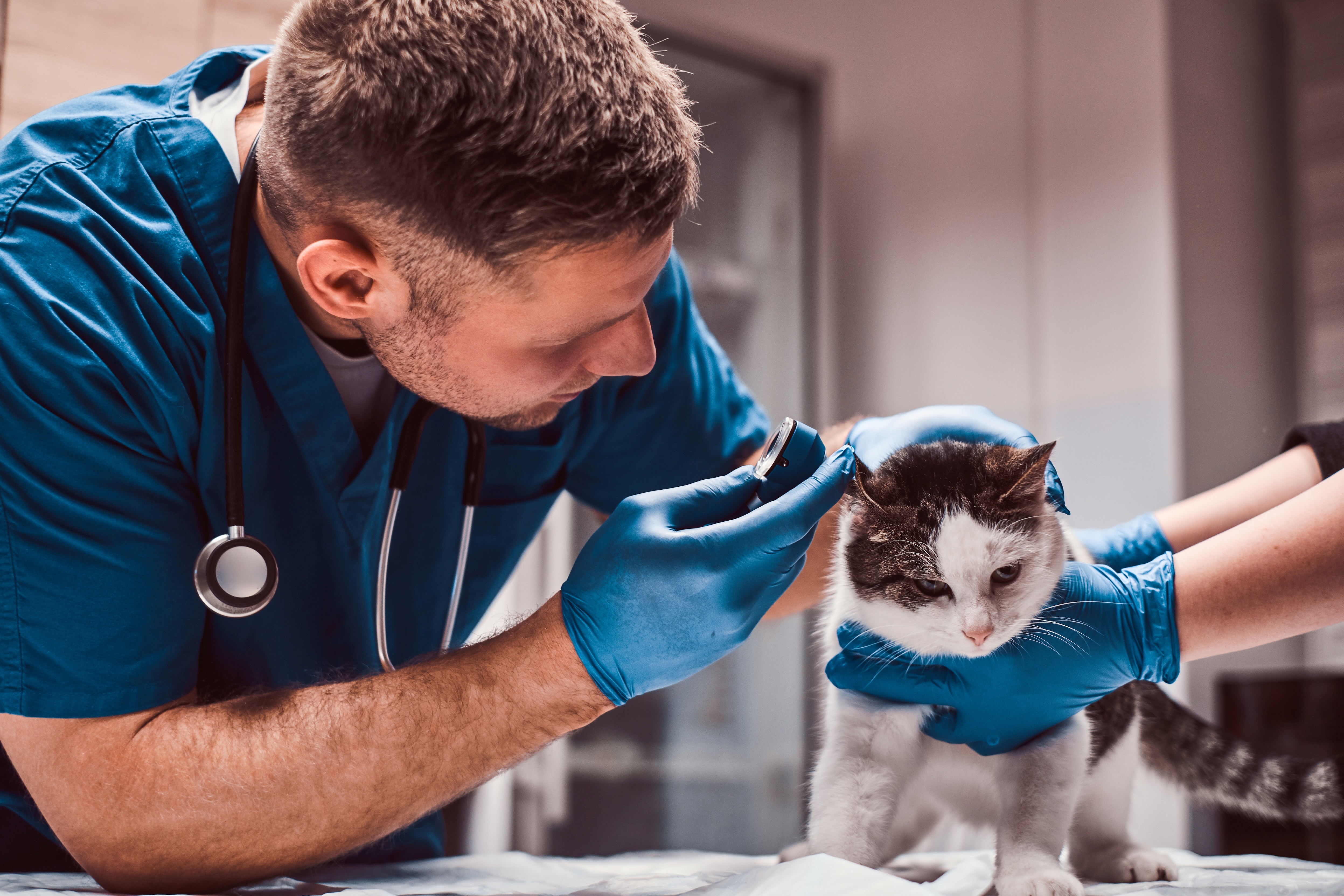
Are you a team member in a veterinary practice?
Are you a pet parent planning a trip with your furry pal?
CVI for Travel: Your Complete Guide to Pet Health Papers
You’ve booked the flight, found the pet carrier, and started imagining your dog snoozing at your feet in a new city or your cat judging the entire journey from inside the carrier. Then the paperwork shows up and suddenly the fun part feels a little less tail-wagging.
That’s a very normal place to be.
Most pet owners don’t struggle because they don’t care. They struggle because cvi for travel rules are full of moving pieces. One office says health certificate. Another says CVI. An airline asks for one thing, a state asks for another, and your vet may mention USDA paperwork if you’re going abroad. It can feel like everyone got a different memo.
A good way to think about it is this. Pet travel is a small project with deadlines, dependencies, and a final launch date. If one item is late or mismatched, the whole plan can wobble. That sounds stressful, but it also means the process becomes much easier once you treat it like a timeline instead of a last-minute errand.
Say you’re moving across the country with your Labrador. Or maybe you’re taking a long-awaited vacation and have already started planning your trip to Milan, including how you’ll get from the airport to your hotel. Your pet’s paperwork deserves the same kind of planning. It’s part of the trip, not a side task.
Ready for an Adventure with Your Furry Copilot
A lot of travel plans start the same way. You pick dates, compare routes, maybe reserve a pet-friendly hotel, and tell yourself you’ll “handle the vet paperwork soon.” Then a few days pass. Then you realize your destination has its own rules, your airline has another set, and the phrase Certificate of Veterinary Inspection has started following you around.
That document is the star of the show.
For many pet trips, especially when crossing borders between states or going overseas, the CVI is the official paper that helps show your pet has been examined and meets the destination’s entry rules. It’s less of a bureaucratic hoop and more of a travel pass with a medical purpose. The point isn’t to make things harder for you. The point is to reduce the chance that animals carry illness or parasites into a new place.
Traveling with pets works best when you treat paperwork the same way you treat tickets and hotel reservations. Early planning beats rushed corrections.
Owners often get tripped up because they expect one simple form. In reality, the CVI sits inside a bigger travel plan. You may need vaccination records, identification details, and sometimes extra tests or treatments depending on where you’re headed. Some trips are pretty straightforward. Others need weeks or even months of lead time.
The good news is that this gets much easier once you stop asking, “What form do I need?” and start asking, “What are the milestones for my pet’s trip?” That small shift can save a lot of last-minute panic.
What Exactly Is a CVI for Pet Travel
A Certificate of Veterinary Inspection, or CVI, is an official document issued by an accredited veterinarian certifying that an animal has been inspected and meets the specific health regulations for its destination. It’s used for travel within a state, between states, or internationally, as explained by the AVMA’s overview of certificates of veterinary inspection.
Think of it as your pet’s official travel pass
If your rabies certificate is like one page in a folder, the CVI is the official summary document that says, “This pet was examined, identified, and documented for this trip.”
That distinction matters. A CVI is not the same thing as:
A routine invoice from your vet
A vaccine reminder
A basic medical record printout
A rabies certificate by itself
Those records may support the CVI, but they don’t replace it.
If you’ve ever wondered whether those terms overlap, this quick explanation of whether a CVI is the same as a health certificate can help clear up the wording.
Why destinations care about it
The CVI exists to protect animal health and public health. When animals move from one place to another, officials want proof that a veterinarian inspected them and that required rules were checked before travel. Depending on the destination, those rules may involve age, species, vaccination status, travel purpose, or specific tests and treatments.
Here’s where owners often get confused. They assume the CVI means the pet “looks healthy.” In practice, it does more than that. It ties your pet to a destination and confirms that the travel requirements for that destination were addressed at the time of the exam.
Practical rule: A CVI is destination-specific paperwork. It isn’t a generic note that works everywhere.
That’s why one trip may be easy and another may feel more complicated, even with the same pet. A dog flying privately with its owner may face one set of expectations, while a dog being transported for sale or transfer may face another. Same species, different rulebook.
For pet owners, the main takeaway is simple. A CVI for travel isn’t just another paper to collect. It’s the document that pulls the rest of your pet’s travel details into one official record.
Decoding CVI Requirements and Critical Timelines
The biggest trap in pet travel paperwork isn’t usually the exam itself. It’s timing.
Most U.S. states enforce a 10 to 30 day validity window for a CVI from the date of issuance, with examples such as Virginia’s 10-day rule and Colorado’s 30-day rule, according to the Ohio animal movement guidance on CVI validity. That same guidance notes that non-compliance with these timelines or rabies vaccination rules can block entry.
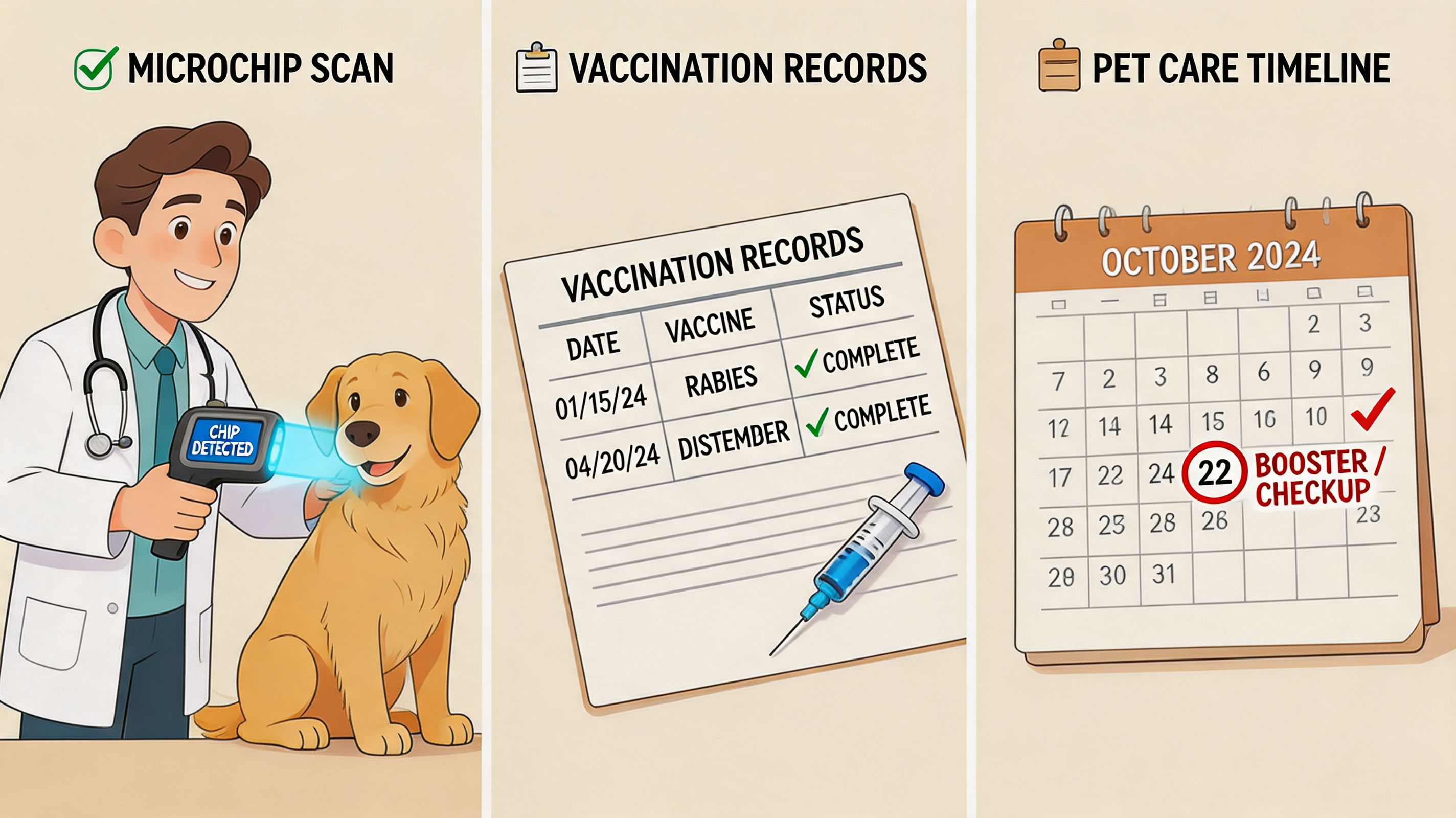
What usually goes into the review
Before a vet can issue travel paperwork, they need a clear, accurate picture of your pet and the destination requirements. That often means checking items like these:
Identity details such as species, breed, sex, age, and identifying marks
Vaccination records, especially rabies if the destination requires it
Travel dates so the certificate is issued inside the valid window
Destination-specific extras such as tests, treatments, or special statements
Some destinations are strict about age cutoffs for rabies rules. In some states, rabies requirements apply at 3+ months. In others, they apply at 4+ months, as noted in the verified state examples above.
Why the clock matters so much
Owners often assume, “Earlier is safer.” With a CVI, that can backfire.
If your destination requires the document within 10 days, a certificate issued on day 11 may be treated as too old even if your pet is perfectly healthy. That’s why the CVI is less like a school report card and more like fresh produce. It has a useful window, and the window matters.
A simple example helps. If your flight is on a Friday and the rule is 10 days, then an exam done the Tuesday before last might already be outside the accepted timeframe by travel day. A lot of heartbreak happens because someone counted “about a week and a half” instead of counting exact dates.
The safest appointment isn’t the earliest one. It’s the one that matches the destination’s allowed window.
Not every veterinarian can issue one
This surprises people all the time. Your regular veterinarian may be wonderful, but official travel paperwork often needs a USDA-accredited veterinarian or another specifically authorized veterinarian, depending on the trip.
That doesn’t mean you need to leave your trusted clinic. Many practices have accredited veterinarians on staff. It does mean you should ask that question early, before your travel window gets tight. If your clinic doesn’t issue these documents, you’ll want enough time to book with one that does.
Your Step-by-Step Guide to Getting a CVI
The smoothest pet trips usually come from boring planning. That’s a compliment. When the process is organized, the day of travel feels almost uneventful, which is exactly what you want.
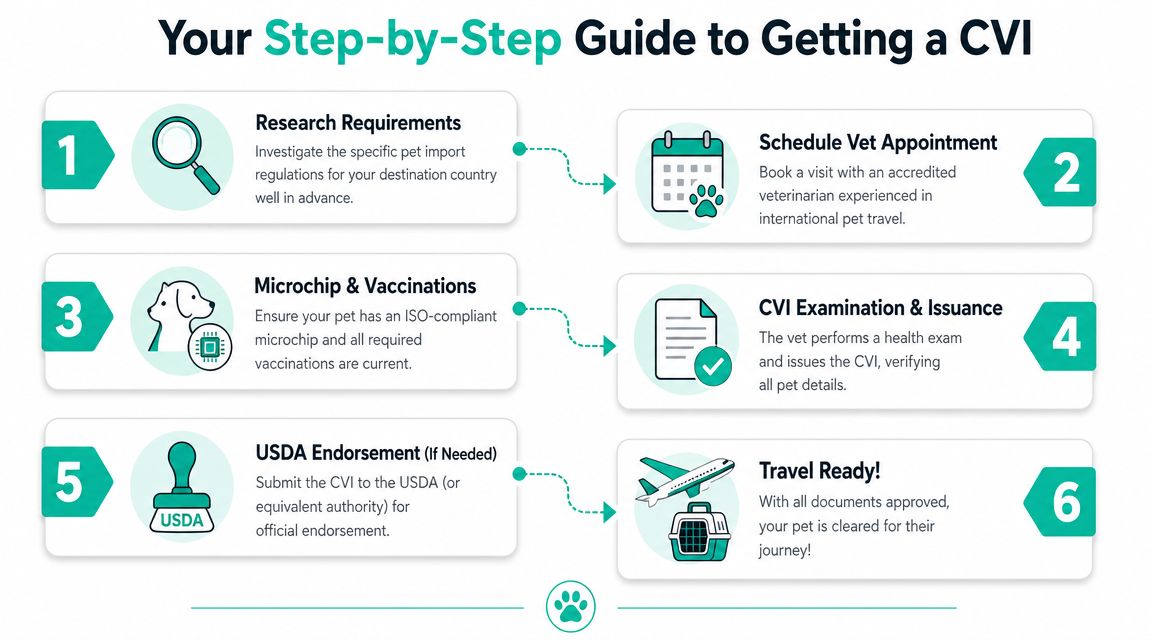
Start with the destination, not the form
Before you book any exam, confirm what the destination requires. Rules can differ by state, country, species, travel purpose, and method of transport.
If the trip is international, this is also the point where many owners discover they may need federal endorsement or extra paperwork beyond the clinic visit. This overview of a pet travel certificate and USDA steps is useful if you’re trying to understand where the clinic paperwork ends and government endorsement begins.
A helpful way to organize this stage is with a short planning list:
Write down the destination exactly. State-to-state and country-to-country rules are not interchangeable.
Check whether your pet is traveling privately, commercially, or for transfer. The purpose of the trip can change the requirements.
Ask the airline or carrier for its pet document policy. Their checklist may be stricter than the government rule.
Confirm whether endorsement is needed. International travel often adds this extra step.
Book the right appointment at the right time
The next job is getting on the calendar with the right veterinarian. When you call, don’t just ask for a “health check.” Say you need a CVI for travel and mention the destination and travel date. That helps the clinic schedule the correct type of appointment and tell you what records to bring.
Bring every document you already have. That may include vaccine certificates, past test results, identification details, and travel itinerary information. The exam itself is usually straightforward, but missing paperwork can slow everything down.
During the visit, the veterinarian must personally inspect your pet before issuing the certificate. That’s one reason these appointments can’t be treated like a simple administrative errand.
Bring a printed copy and a digital copy of your pet’s records to the visit. When one version is hard to read, the other often saves the day.
Understand submission and endorsement
Once the exam is complete, the paperwork may still need to move through another step. For some domestic trips, the clinic can issue and provide the final certificate directly. For international travel, the document may need endorsement through USDA APHIS or another authority.
Electronic systems make life much easier.
According to the ASPCA Pro guidance on electronic certificates of veterinary inspection, electronic CVIs often process within minutes versus hours for paper forms, and their standardized layout helps reduce rejection problems. That same resource notes that GlobalVetLINK (GVL®) is approved in all 50 states and can automatically deliver documents to state veterinary offices.
Why many clinics prefer eCVIs now
Paper forms can still exist in some settings, but they create familiar headaches:
Handwriting problems that make details hard to read
Mailing or delivery delays when time matters
Manual copying errors in names, dates, or identification
Harder record retrieval when you need a duplicate quickly
Electronic tools such as GlobalVetLINK, Vet Sentry, and Vet CVI are popular because they create cleaner records and help clinics submit documents more efficiently. For owners, that usually means fewer back-and-forth calls and fewer chances for a typo to chase you down right before departure.
Navigating Domestic Versus International Travel Rules
A road trip from one U.S. state to another and a flight to Australia can both involve a CVI, but they do not live on the same planet in terms of planning effort.
Domestic travel is often more manageable. You still need to confirm the destination’s rules, get the timing right, and make sure your records match the trip. International travel adds extra layers. Some countries require forms in a specific format, endorsement after the veterinary exam, or long lead times for tests and waiting periods.
The most dramatic difference is time. Destinations such as Japan and Australia may require rabies titer testing 180+ days before travel, and failure to meet those stricter import rules causes an estimated 25% of global pet import rejections, as stated in the AKC state matrix reference discussing international preparation timelines.
CVI requirements at a glance
Requirement | Domestic Travel (e.g., NY to CA) | International Travel (e.g., US to Australia) |
|---|---|---|
Planning lead time | Often shorter, but still depends on the destination and carrier | Often much longer because countries may require tests, endorsement, and long waiting periods |
Main paperwork | CVI, vaccine records, destination-specific entry documents if required | CVI or health certificate, country-specific forms, and possible government endorsement |
Rabies rules | Vary by state and age threshold | Often stricter, with added sequencing and timing rules |
Extra testing | Sometimes required | More likely, especially for rabies-related import protocols |
Risk of mismatch | Usually timing or missing records | Timing, endorsement, country form errors, and test sequence mistakes |
If your trip is abroad, it helps to review a destination-specific guide to international pet travel requirements before booking anything that can’t be changed.
Airlines can add a second rulebook
Here’s the sneaky part. Even if your government paperwork looks acceptable, the airline may still have its own acceptance standards. They may want a document dated closer to departure, or they may have rules about check-in, kennel setup, routing, or weather restrictions.
That’s why I tell owners to think in layers:
Destination rules decide if your pet may enter
Carrier rules decide if your pet may board
Clinic timing decides if the paperwork can be completed correctly
When those layers line up, travel feels simple. When they don’t, the check-in counter becomes a very expensive place to discover the difference.
Common CVI Mistakes and How to Avoid Them
The most common mistake isn’t loving your pet too little. It’s assuming this can all be handled “sometime next week.”
That mindset causes problems because travel paperwork depends on dates, document matching, and who signs what. One missed detail can turn a well-planned trip into a scramble.
The mistakes I see most often
Waiting too long to book the exam
Clinics that handle travel paperwork may have limited appointment slots, especially during busy travel seasons. If your regular vet doesn’t issue CVIs, you may need extra time to find an accredited veterinarian.Misreading the date window
People often count loosely and end up outside the valid travel range. A certificate that seemed close enough may still be too old on departure day.Assuming airline rules match state or country rules
They often don’t. The USDA APHIS page on unknown requirements and carrier conflicts notes a common problem: airlines may require a health certificate within 10 days, even when a state allows a more lenient 30-day CVI validity. That mismatch can lead to denial at check-in.Using incomplete or messy records
If names, vaccine dates, or identifying details don’t line up across documents, staff have to stop and verify everything.
Better habits that prevent drama
A good travel file goes a long way. Clinics and owners who follow strong document management best practices are less likely to lose time chasing missing records or correcting obvious errors.
Try this simple checklist:
Match every name exactly. If your dog is “Benjamin” in one record and “Benji” in another, fix that before the appointment.
Ask the carrier early. Don’t wait until the night before to learn that the airline wants a tighter date window.
Keep one folder for the trip. Include digital and printed copies.
Confirm who signs the certificate. Official travel documents need the correct veterinarian authorization.
A smooth check-in usually reflects work done two or three steps earlier.
That may not be glamorous, but it is very effective. And your pet would probably prefer fewer surprises too.
Streamlining Pet Travel Compliance with Passpaw
Pet travel paperwork gets hard when too many details live in too many places. The destination rules are in one system. The clinic schedule is somewhere else. The owner’s records are in a folder, an email thread, and maybe a photo on someone’s phone. That’s how simple trips turn into stressful ones.
A purpose-built platform helps because it treats pet travel like the timeline-driven process it really is. Instead of relying on memory, scattered notes, or repeated manual checks, veterinary teams can manage destination requirements, task order, document status, and client communication in one workflow.
That matters for everyday reasons. Staff can see what’s due first. Owners can stay informed. Clinics can catch mismatches before the certificate is submitted. When travel plans change, the workflow can adjust with them rather than forcing everyone to restart from scratch.
For pet owners, the biggest benefit is peace of mind. You still need to plan ahead and show up prepared, but you’re less likely to run into avoidable paperwork problems at the worst possible moment. For clinics, a more organized process means less admin chaos and more time for actual patient care.
Pet travel may never be completely fuss-free. Animals don’t pack themselves, and cats still reserve the right to object. But with the right system, the paperwork side can become a lot more manageable.
If you’re a veterinary practice, pet travel service, or pet owner looking for a simpler way to manage travel documents, Passpaw is built to make the process easier. It helps organize requirements, track timelines, validate paperwork in real time, and keep everyone on the same page from the first appointment to final approval.

More articles
From regulatory changes to best practices for veterinarians and pet owners, our resources keep you ahead of the curve.