Are you a team member in a veterinary practice?
Are you a pet parent planning a trip with your furry pal?
Pet Travel Certificate USDA: A Complete Guide
So, what exactly is a pet travel certificate usda? It's an official health document that gets a final stamp of approval from the United States Department of Agriculture. Think of it as your pet's passport for traveling to another country—it’s the proof that your furry friend is healthy and ready for a new adventure.
What Is a USDA Pet Travel Certificate?
Before you pack the travel bowls and favorite toys, let's dig into what this certificate really is. This isn't just a simple health note from your local vet. It's a formal, government-backed document with a big job: to help prevent the spread of animal diseases across borders.
The whole thing is a multi-step process. First, a specially trained and accredited veterinarian gives your pet a thorough health check. After that, the USDA provides the final, official stamp. This tells your destination country that your pet has met all their unique health standards.
The Key Players in This Process
Getting this certificate ready is a team effort. Knowing who does what is key to making sure everything goes off without a hitch. It's a three-way partnership to get everything in order.
To make it easier to see who's responsible for what, here's a quick look at the team involved in getting your pet's travel papers ready.
Who It Is | Their Role | Key Responsibility |
|---|---|---|
You, the Pet Owner | Project Manager | Researching destination rules, scheduling appointments, and gathering your pet’s records. |
USDA-Accredited Vet | Medical Expert | Performing the health exam, giving required treatments, and filling out the official forms. |
USDA APHIS | Government Endorser | Reviewing and officially stamping the certificate, making it a valid travel document. |
Each player has a distinct job, and when everyone does their part, the process can run smoothly.
This certificate is more than just another piece of paperwork; it’s your ticket to a successful international trip with your pet. Without a properly endorsed pet travel certificate usda, you could run into serious trouble. Your pet might be denied entry or, even worse, be put into a long and expensive quarantine.
For a more detailed look, you can learn more about the specifics of the veterinary international health certificate and what goes into it.
Key Takeaway: The USDA pet travel certificate involves three key players: you, an accredited vet, and the USDA. Every step is important to get your pet cleared for international travel and avoid any 'ruff' surprises at the border. Getting it right from the start makes all the difference.
First Things First: Research Your Destination's Pet Import Rules
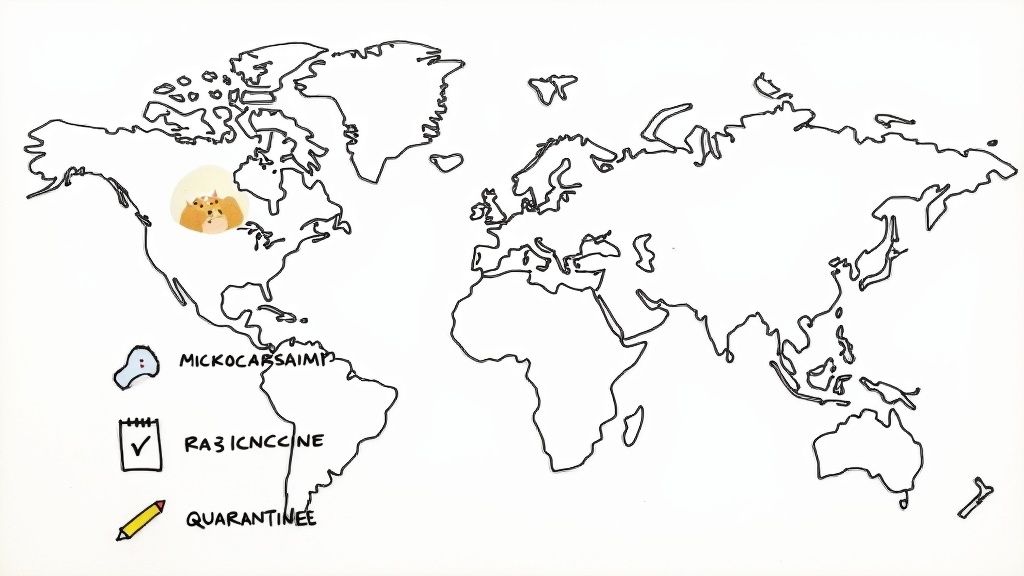
Before you book a flight or start packing, you have to become a bit of a detective. Every country has its own rulebook for letting pets cross its borders, and there is no "one-size-fits-all" health certificate.
Getting this initial research right is one of the most important parts of the entire process. Spending the time now can save you from big headaches and potential heartbreak down the road.
One country might just want to see a rabies vaccine, while another could have a strict, months-long timeline of blood tests, specific parasite treatments, and even a quarantine period upon arrival. Don't leave this to the last minute. Starting your research well in advance is the best way to plan for a stress-free trip.
Your Go-To Source: The USDA APHIS Website
Your first and most trusted stop should be the official USDA Animal and Plant Health Inspection Service (APHIS) Pet Travel Website. Think of it as the main guide for taking a pet out of the U.S. It helps take the guesswork out of the equation by breaking down the specific requirements for each country.
From the APHIS homepage, you can select your destination country, and it will give you a detailed, step-by-step list of everything you may need to do.
This helpful tool outlines everything from vaccination timelines to the exact forms you'll need. For instance, if you're headed to the European Union, you'll find that the health certificate usually must be completed within a tight 10-day window before your pet arrives. The APHIS site is where you'll find important details like these that can make or break your travel plans.
Creating Your Personalized Travel Checklist
As you look into the APHIS website, start building a custom checklist for your pet. This document will become your roadmap, helping you keep track of every little detail. For a closer look at what this might involve for different destinations, check out our guide on international pet travel requirements.
Your checklist should capture every important detail for your specific destination, such as:
Microchip Requirements: Is your pet’s microchip ISO-compliant? Some countries are very particular about this.
Rabies Vaccination Timing: Does the vaccine need to be given at least 21 days before travel? Is a rabies titer blood test required? This test alone can take months, so it’s a huge factor in your timeline.
Other Vaccinations and Treatments: Many countries require other vaccines or specific parasite treatments that have to be given within a narrow timeframe before your flight.
Key Takeaway: Every country's rules can be very different. Your first move should be to use the official USDA APHIS website to build a detailed, personalized checklist for your trip. This one step will help define your entire timeline and preparation process.
Working With a USDA-Accredited Veterinarian
Once you’ve figured out your destination’s rules, your next mission is to find a partner for this journey: a USDA-accredited veterinarian.
It’s a common mix-up to think any vet can sign international travel forms, but that could lead to a rejected application. This isn't your average check-up; it's a specialized task that requires specific federal training. Only a USDA-accredited vet can complete and sign the international health certificate, as they are trained to check that your pet meets the import standards set by other countries.
Finding the Right Veterinarian for the Job
So, where do you find one of these specially trained vets? Luckily, you don’t have to go on a wild goose chase. The USDA has an online search tool that makes it simple. Just enter your location, and it will show you a list of accredited veterinarians near you.
When you call to book the appointment, make it clear that you need an international health exam for your pet. This lets the clinic know it's a detailed appointment that needs a specific professional, so they can block out the right amount of time.
Important Tip: Schedule this appointment well within the timeline required by your destination. Many countries, especially those in the EU, want the health certificate signed no more than 10 days before your pet’s arrival. Cutting it close can be very stressful.
Preparing for the Big Vet Visit
To make the appointment as smooth as possible, you’ll need to do a bit of prep work. Think of yourself as the project manager and your vet as the medical expert. Arriving with all your ducks in a row helps prevent frustrating delays and repeat visits.
Before you head to the clinic, gather all the essential paperwork. Having everything organized shows you're on top of things and helps your vet complete the forms accurately.
Your Vet Visit Checklist
Item to Bring | Why It's Important | Extra Tip |
|---|---|---|
Destination Checklist | Bring the printed rules from the APHIS site. This ensures everyone is working from the same playbook. | Highlight the key dates and requirements so they're easy to spot during the appointment. |
Complete Pet Records | This includes the full vaccination history, especially the original, signed rabies certificate. | A digital backup on your phone is great, but try to bring the physical copies too. |
Microchip Information | Have the microchip number and implant date handy. The vet needs to scan and check it. | Test the microchip at a previous visit to make sure it’s still scanning correctly. |
Your Travel Details | Provide your full name (as it appears on your passport) and your new address. | If you don't have a permanent address yet, a temporary one (like a hotel) often works. |
A successful visit often comes down to clear communication. For more on what makes a valid rabies document, check out our guide on the requirements for a proof of rabies vaccine.
By working closely with your vet and bringing all the necessary information, you can get the pet travel certificate usda filled out correctly, ready for its final step: the official USDA endorsement.
How to Get the Official USDA Endorsement
Once your accredited veterinarian has filled out the health certificate, you’re on the home stretch! The last, and arguably most important, step is getting that official stamp of approval from the USDA. This endorsement is what turns a simple vet form into a valid international travel document for your pet.
You have two main ways to get this done: the modern online system or the traditional mail-in method. Your choice will likely depend on your destination country's rules, how much time you have, and your vet's setup. Let's walk through both so you can figure out the best route for your trip.
This infographic gives a great overview of the prep work that leads up to this final step.
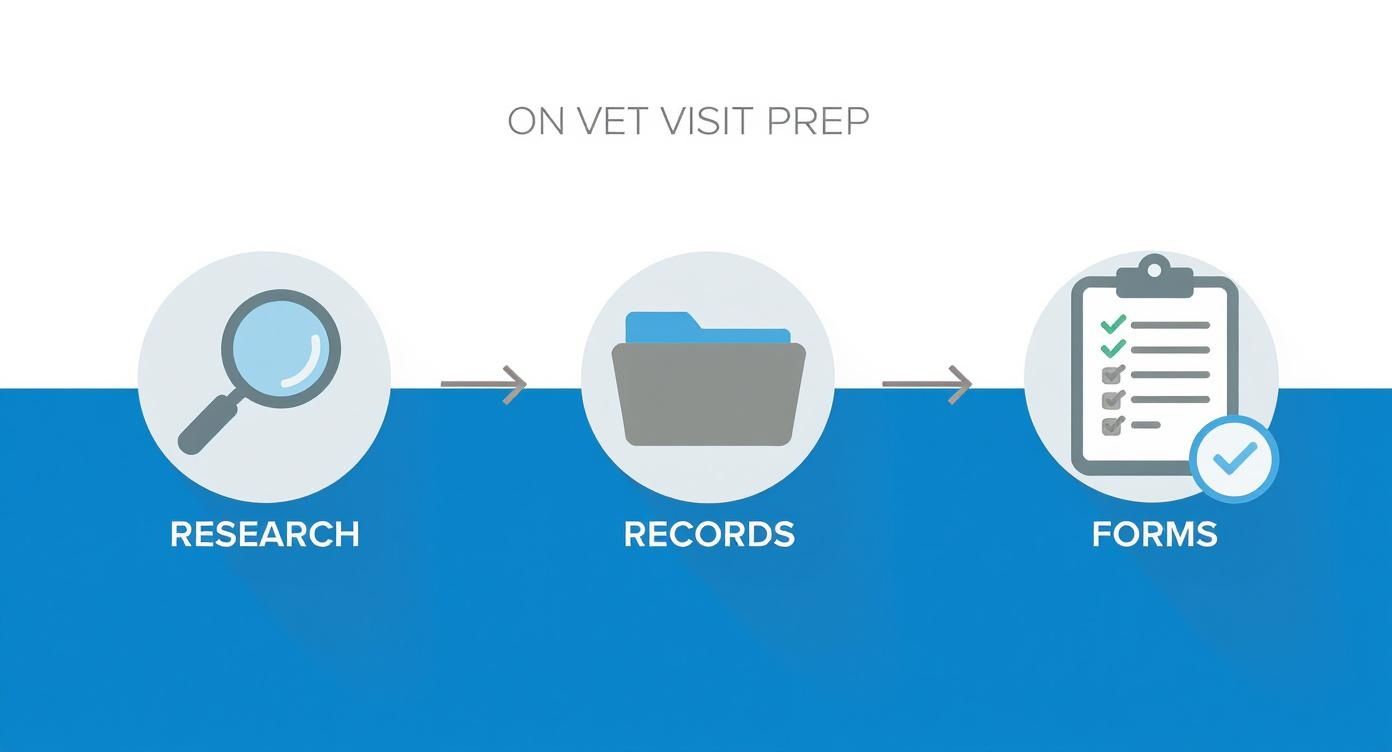
As you can see, solid research and having your records in order are the foundation. A successful vet appointment is the critical step before getting the USDA's final sign-off.
The Online Route: VEHCS
The Veterinary Export Health Certification System (VEHCS) is the USDA’s online portal, and for many pet travelers, it’s a total game-changer. Your vet can upload the completed health certificate directly to the USDA for a digital review and endorsement.
This system is a huge time-saver. The USDA’s VEHCS now processes over 100,000 electronic certificates every year, and that number has climbed steadily since it launched. It has shrunk processing times from weeks down to just a few days for many destinations. You can learn more about the USDA's pet travel systems directly on their site.
Here’s why so many people and vets lean on VEHCS:
Speed: It is much faster than mailing. Endorsements can sometimes come back in just a few hours, though planning for a few business days is wise.
Tracking: Both you and your vet can check the submission status in real-time. No more wondering if your documents arrived.
Fewer Errors: Going digital reduces the risk of paperwork getting lost or damaged.
The big catch? Not all countries accept the digitally endorsed certificates from VEHCS. You must confirm your destination’s requirements on the APHIS website before you commit to this path. Our guide on how to get a USDA endorsed pet health certificate dives deeper into navigating these country-specific rules.
The Traditional Mail-In Method
If your destination country wants an original ink signature and an embossed seal—or if your vet isn't set up for VEHCS—you'll need to go the old-school route and mail the physical paperwork. It might feel a bit dated, but this method is still reliable when you do it right.
This process means sending the completed certificate, your payment, and any other necessary forms directly to the USDA APHIS Endorsement Office that serves your state.
Pro Tip: Don’t just drop the envelope in a mailbox and cross your fingers. Treat these documents like a passport—because they are just as important for your pet's travel.
To make sure your mail-in submission goes off without a hitch, follow these suggestions:
Use Tracked Shipping: Always try to send your documents using a courier like FedEx or UPS that gives you a tracking number. This simple step provides great peace of mind.
Include a Pre-Paid Return Envelope: You must include a pre-paid, self-addressed return envelope from the same courier. This is how the USDA will get the endorsed certificate back to you.
Double-Check Everything: Before you seal that envelope, lay everything out. Did you include the correct payment? Are all pages of the health certificate there? Any supporting documents? A single missing piece could cause a major delay.
No matter which path you take, getting that official pet travel certificate usda endorsement is the final hurdle. Once it's in your hands, your pet is one step closer to takeoff.
Little Oversights That Can Derail Your Pet's Trip
Even the most organized traveler can hit a snag. When it comes to your pet's international move, a few common pitfalls can turn a smooth process into a last-minute scramble. Let's walk through them so you can sidestep the headaches.
One of the biggest trip-ups? The timeline. It can be tighter than you think. Many countries, especially those in the European Union, have a strict 10-day rule. This means the health certificate may need to be completed by your vet and endorsed by the USDA within just ten days of your pet's arrival. Miscalculating this narrow window is a frequent reason for panic.
You’re not alone if you find the paperwork a bit much. A survey from the International Pet and Animal Transportation Association (IPATA) suggested that nearly 30% of pet owners find documentation challenging. It also noted that 15% of them faced travel delays because of incomplete or improperly certified paperwork. You can find more details directly from the USDA's official resources.
Double-Check These Details
A classic mistake is mixing up airline rules with country import rules. They are two completely different things. Your airline might have specific carrier dimensions or breed restrictions that have nothing to do with the pet travel certificate usda requires for entry into your destination.
Our Two Cents: Treat them as separate missions. Create one checklist for the airline and a second one for the destination country. This simple step can save you from a nasty surprise at the check-in counter.
It’s also very important to confirm your vet's credentials. Don't just ask, "Can you fill out travel forms?" The key words you want to hear are "USDA-accredited veterinarian." Only a vet with this specific accreditation is authorized to sign an international health certificate. Handing the USDA a form signed by a non-accredited vet may lead to an automatic rejection.
Final Checks Before You Go
Finally, it's the tiny admin errors that can really throw a wrench in your plans. A misspelled name, a missing apartment number in an address, or a wrong digit in the microchip number could cause the USDA to send your application back, eating up precious time.
Here are a few final pointers from seasoned globetrotters:
Go Digital with Your Docs: Scan or take clear photos of every single document—the health certificate, vaccination records, and the final endorsed papers. Save them to your phone and a cloud service for easy access.
Test the Microchip: At the final health exam, ask your vet to do a quick test scan of your pet’s microchip. You want to be sure it’s working and easy to read before you get to the airport.
Don't Laminate Anything: This is a big one. Never laminate the endorsed health certificate. Officials often need to see and feel the embossed USDA seal, and lamination might make your certificate invalid.
By keeping an eye out for these common missteps, you’ll be in a much better position for a smooth, successful journey with your four-legged family member.
Common Questions About International Pet Travel
Heading into the world of international pet travel can feel like you're chasing your own tail sometimes. It’s totally normal to have a ton of questions, and getting the right answers is what makes the difference between a smooth trip and a stressful one.
Let’s clear up some of the most common things pet owners ask about the pet travel certificate usda. Getting these details straight will help you sidestep any last-minute panic.
How Long Is a USDA Pet Travel Certificate Valid?
This is probably one of the most critical details to know. The certificate’s validity isn’t a one-size-fits-all number; it’s determined entirely by your destination country’s rules.
For many places, including the entire European Union, the health certificate is only good for entry for 10 days from the date your accredited veterinarian signs it. That’s a very tight window. It means you have to coordinate your vet visit, the USDA endorsement, and your actual flight very carefully. You should always check the APHIS website for your specific country’s requirements.
Can I Use APHIS Form 7001 for Travel Within the US?
While the APHIS Form 7001 is the go-to for international trips, it's generally not needed for flying from one state to another. For domestic pet travel, you'll typically just need a standard Certificate of Veterinary Inspection (CVI), which you might hear called a domestic health certificate.
A CVI is simpler and doesn't require that final USDA endorsement stamp. Still, you should always check the rules for both your airline and your destination state. Some states, like Hawaii, have much stricter entry rules than others.
A common point of confusion is thinking the USDA certificate is for all travel. Just remember: international trips often need the official USDA-endorsed certificate, while domestic flights usually only require a standard health certificate from your vet.
What Is a USDA Accredited Veterinarian?
Think of a USDA-accredited vet as a specialist who has gone through extra federal training. Your regular veterinarian is fantastic for check-ups and routine care, but they may not be able to sign the paperwork required for international pet export.
Only an accredited vet has completed the specific training that allows them to prepare and sign official international health certificates. They’re the ones who understand the disease control measures and documentation standards that other countries require. Finding one isn't just a good idea—it's a necessary step in this process.
What Happens if My Paperwork Is Wrong at the Airport?
This is the nightmare scenario for every pet owner. Showing up at the airport with incorrect or incomplete paperwork can turn into a huge problem, fast. In a best-case scenario, the airline might not let your pet board, causing a stressful and expensive delay.
But the worst-case scenario is more serious. Officials in your destination country could deny your pet entry. This could lead to your pet being put into a long and costly quarantine (at your expense) or even being sent back to the United States. This is why double- and triple-checking every single detail is so important. It’s not the time to hope for the best.
Are you a veterinary professional tired of wrestling with paperwork? Passpaw offers a simple, cloud-based platform to manage international health certificates, reduce errors, and keep clients happy. Simplify pet travel compliance by visiting https://passpaw.com today.
More articles
From regulatory changes to best practices for veterinarians and pet owners, our resources keep you ahead of the curve.