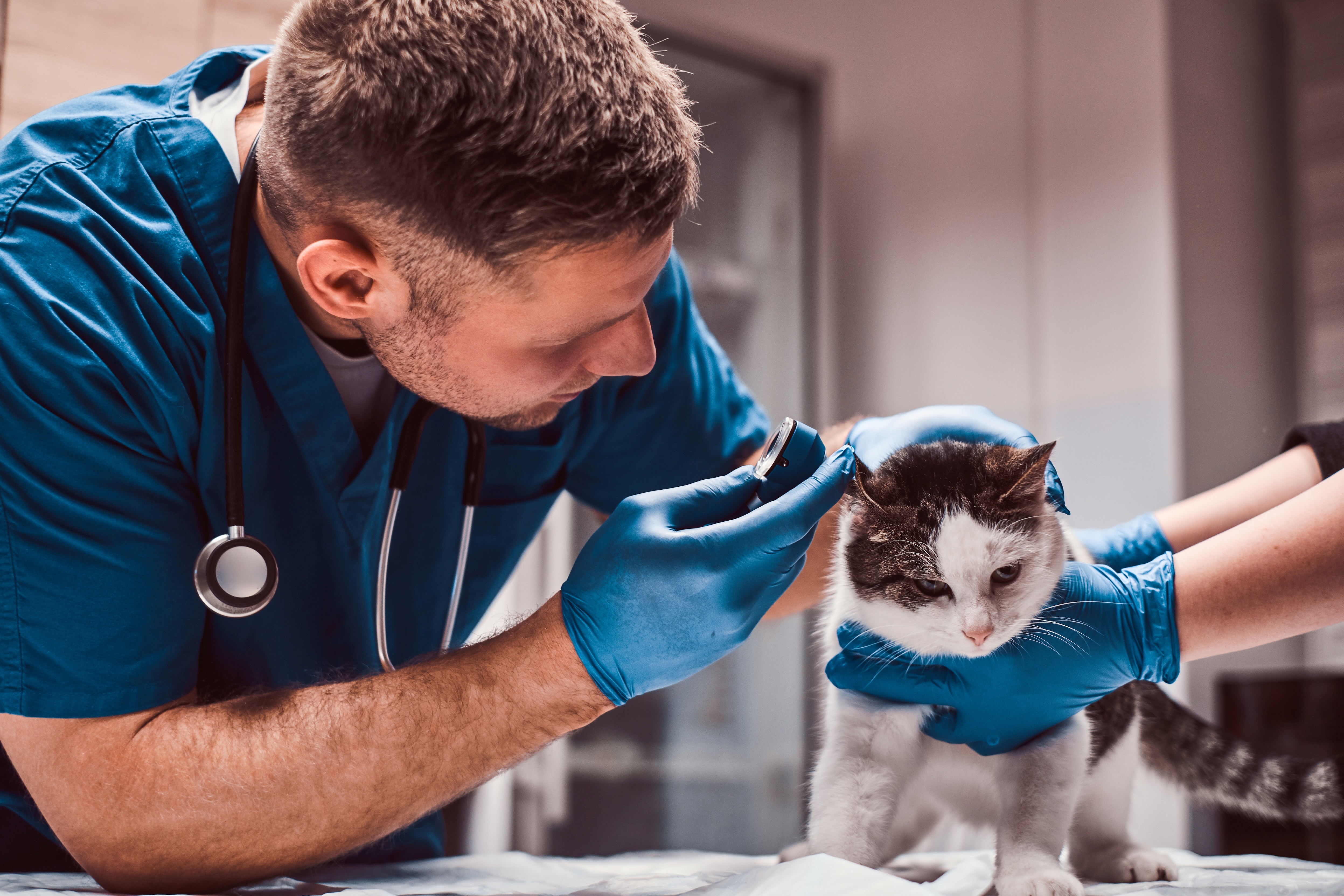
Are you a team member in a veterinary practice?
Are you a pet parent planning a trip with your furry pal?
A Vet's Guide to Veterinary Accreditation USDA for Pet Travel
So, what exactly is USDA veterinary accreditation? Think of it as a special credential from the Animal and Plant Health Inspection Service (APHIS) that gives licensed veterinarians the green light to handle official regulatory work. It's the license that lets you sign off on important documents, like the health certificates required whenever a pet needs to travel across state or international borders.
Unpacking USDA Veterinary Accreditation
If a client has ever asked you about taking their golden retriever to France or their cat to a new home in another state, you've bumped right into the world where USDA accreditation is essential. This is the official nod from the federal government that says you're authorized to perform tasks that protect animal health on a national and even global scale.
This isn't just another certificate for the wall. It's a key part of a modern veterinary practice. Being accredited means you've become a trusted partner of the USDA, empowered to help stop the spread of animal diseases and confirm that pets meet the very specific health rules of their destinations.
Before we dive deeper, here's a quick look at what the program is all about.
USDA Accreditation At a Glance
Aspect | Brief Explanation |
|---|---|
What It Is | An official credential from USDA-APHIS authorizing vets to perform regulatory tasks like issuing health certificates. |
Who Needs It | Any veterinarian who wants to issue interstate or international health certificates for pets, livestock, or other animals. |
Primary Benefit | Expands your practice's services, drives revenue, and positions you as the go-to expert for clients with travel needs. |
This table just scratches the surface, but it shows how helpful this credential can be for growing your clinic's offerings.
Why This Credential Matters
At its heart, the National Veterinary Accreditation Program (NVAP) is about trust and protection. When an accredited vet signs a health certificate, they're not just filling out a form—they're officially confirming that an animal is healthy and meets every single requirement for movement.
This system is important for a few big reasons:
Protecting Animal Health: It’s our first line of defense against introducing and spreading diseases across state and international lines.
Helping Commerce: The program is key for the safe and regulated movement of livestock and other animals involved in trade.
Making Pet Travel Possible: It gives pet owners peace of mind, knowing their furry family members can travel safely because all health rules have been met.
The NVAP has been around for a while, starting way back in 1921 to help federal vets manage disease control. Fast forward to today, and over 71,000 accredited veterinarians—that’s more than 80% of all vets in the U.S.—are the backbone of the nation’s animal health efforts.
Two Paths to Accreditation
The USDA offers two different categories of accreditation, based on the focus of your practice. It’s a good idea to know the difference from the start.
Category I: This one is for vets who mainly work with small companion animals. We're talking dogs, cats, rabbits, ferrets, and other common household pets. It's the perfect fit for most small animal clinics.
Category II: This category covers everything. It includes all the animals from Category I plus farm animals like horses, cattle, pigs, and poultry. This is the one you'll need if you're in a mixed-practice or large-animal setting.
Key Takeaway: Choosing the right category is all about the types of animals you see day-to-day. Your choice will define the scope of official work you’re authorized to handle.
Ultimately, getting USDA veterinary accreditation unlocks a major service area for your clinic. It lets you become the trusted guide for clients trying to figure out the often-confusing maze of pet relocation. For a closer look at that process, you might find our guide on USDA APHIS pet travel requirements helpful. This credential really is a powerful tool for expanding your services and helping your clients—and their pets—on their next big adventure.
So, You're Ready to Become USDA Accredited? Here's What You'll Need
Thinking about becoming an officially accredited veterinarian? That’s a fantastic move. Before you can start issuing those important travel documents, you need to check a few boxes. Think of it as the pre-flight checklist for your accreditation journey—getting these foundational pieces in order makes the whole process a lot smoother.
The good news is that the USDA has made the core requirements pretty simple. They've designed it for qualified veterinarians who are ready to step into this important role. Let's walk through exactly what you'll need to get started.
The Foundational Credentials
First things first: you need the right educational and professional qualifications. This isn’t just about knowing your stuff; it’s about having the official paperwork to prove it. These are the must-haves.
You must meet two main criteria:
A Degree from an Accredited College: You need to have graduated from a college of veterinary medicine that is accredited by the American Veterinary Medical Association (AVMA) Council on Education. This ensures a standard, high-quality level of training across the board.
A Valid State License: You must hold a current, valid license to practice veterinary medicine in at least one U.S. state. It’s important that this license is in good standing, without any restrictions that would get in the way of performing your duties.
These two items are the bedrock of your eligibility for the veterinary accreditation usda program. Without them, your application can't move forward.
Completing the Initial Accreditation Training
Once you've confirmed your degree and license are in order, your next step is the required training. This isn't your average continuing education. It’s a specific program designed to get you up to speed on the unique responsibilities of an accredited vet.
This is called the Initial Accreditation Training (IAT). The IAT is an online, self-paced course you can access right through the USDA. It’s built to give you a solid grasp of federal animal health regulations, disease control programs, and the proper procedures for issuing official documents. It's the essential groundwork for the real-world scenarios you’ll soon be facing.
The course covers topics like:
Your role and responsibilities within the National Veterinary Accreditation Program (NVAP).
How to recognize and report foreign animal diseases.
The nuts and bolts of correctly completing and distributing health certificates.
Emergency preparedness and response protocols.
Pro Tip: Don't just click through the IAT to get it over with. Pay close attention to the modules on certificate completion. So many travel delays are caused by small, avoidable mistakes on these forms. Mastering this early on will save you—and your clients—a lot of future headaches.
The Application Paperwork
Training complete? Great. Now you’re ready to tackle the application itself. This means filling out and submitting the official form, which is your formal request to join the NVAP.
The main document here is the VS Form 1-36A, the Application for Veterinary Accreditation. This form collects all your key info—personal details, license number, and the accreditation category you're applying for (we'll get into categories later).
The submission process isn't just about sending a form into the void. It follows a specific chain of command to make sure everything is verified correctly.
First, you complete the form: Fill out the VS Form 1-36A accurately and completely.
Next, it goes to your State Official: You'll submit your application to your State Animal Health Official. They review your credentials to confirm you're licensed and in good standing in that state.
Finally, APHIS gives the final approval: After the state-level check, the application is forwarded to the USDA’s Animal and Plant Health Inspection Service (APHIS) for the final review and green light.
Once APHIS approves your application, you’ll receive your official accreditation certificate and number. It's a great moment when you officially become part of this vital national program. Just be sure to check for any additional state-specific requirements—some states have their own small variations on the process.
Navigating Your Application and Training
Once you’ve confirmed you meet the basic requirements, it’s time to get into the hands-on part of the process: the training and application. This is where you move from the theory of vet school to the practical responsibilities of a federally recognized professional. It’s less about textbooks and more about understanding your specific role in the national animal health system.
The whole process is designed to be thorough, making sure every accredited vet is on the same page when it comes to the rules and procedures. Let's break down what you can expect.
What to Expect From Initial Accreditation Training
The Initial Accreditation Training (IAT) is your official introduction to the world of a USDA-accredited veterinarian. This online, self-paced course is the core of your preparation, focusing on the specific duties you'll be authorized to perform. Think of it less like another CE module and more as a focused program covering the essential knowledge you'll use regularly.
The IAT curriculum really zeroes in on a few key areas:
Federal Animal Health Regulations: You’ll get up to speed on the laws governing the movement of animals, which is the foundation for everything you'll do.
Disease Control and Prevention: The training covers your role in recognizing and reporting foreign animal diseases—a critical part of protecting the nation's animal population.
Official Responsibilities: This gets into the nitty-gritty of correct procedures, from conducting exams to accurately filling out health certificates, which is absolutely vital for successful pet travel.
One of the biggest takeaways from the training is just how much rests on accurate paperwork. A simple error on a health certificate can create a world of stress and delays for a pet owner. Mastering the details in the IAT isn't just a good idea; it's a must.
A Real-World Look at the VS Form 1-36A
Let's make this practical. Imagine Dr. Evans, a recently licensed vet at a busy small animal clinic. She wants to help clients with their pet travel needs, so she starts her application for Category I accreditation. The main document she'll need is the VS Form 1-36A.
As she fills it out, she’s careful, but a few common slip-ups almost trip her up.
Incorrect License Number: She nearly enters her national provider identifier (NPI) number instead of her state veterinary license number. This is a very common mistake that can get an application rejected right away.
Incomplete Information: She initially forgets to specify her chosen accreditation category. Leaving fields blank is another frequent reason for delays; the form has to be 100% complete to be processed.
Mismatched Names: Dr. Evans's legal name on her license is slightly different from the name she uses daily. It’s vital that the name on the application exactly matches the name on her state license to avoid any verification headaches.
By double-checking every single field against her official documents, Dr. Evans catches these potential errors before submitting the form to her State Animal Health Official. That simple review is the difference between a smooth process and weeks of frustrating back-and-forth.
This graphic gives a great overview of the key milestones in the accreditation journey.
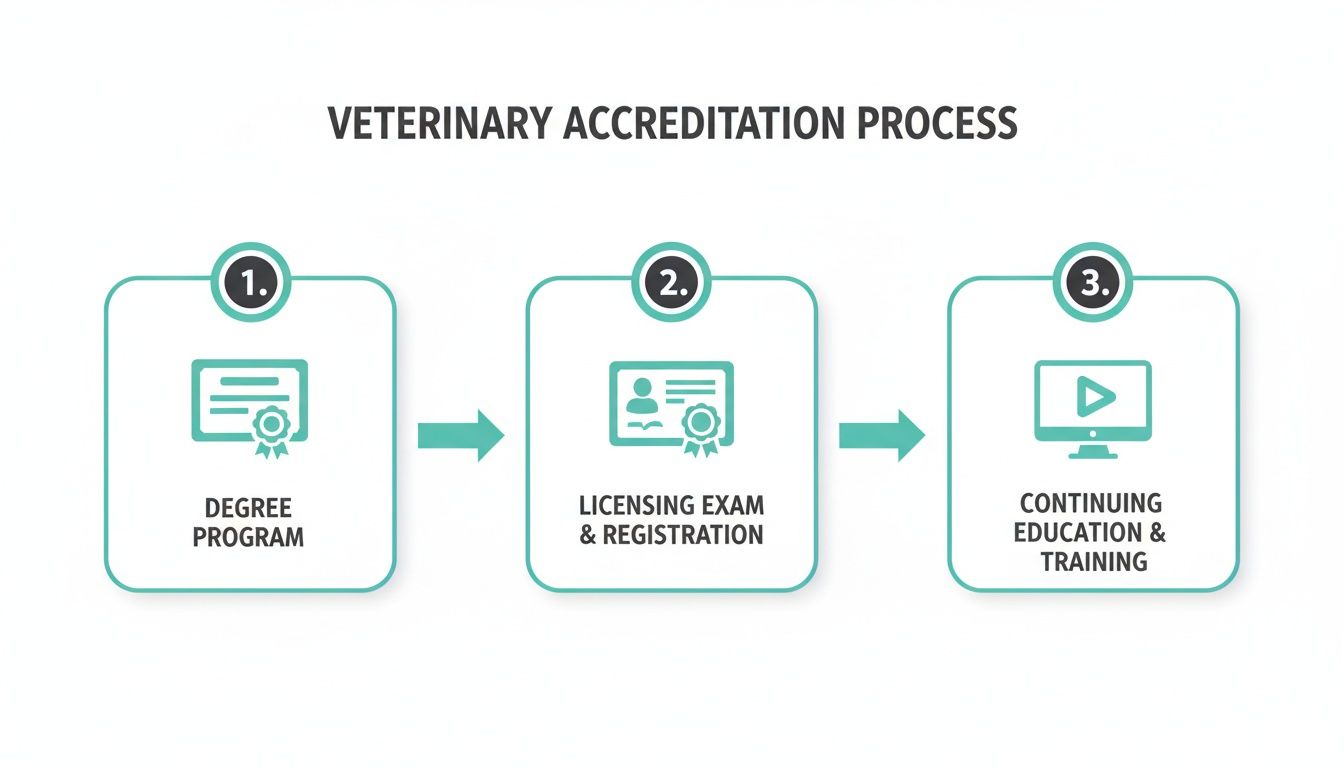
As you can see, accreditation is a structured path, building from your foundational education to specialized federal training.
Managing Expectations on Timelines
After you’ve completed the training and submitted your application, the waiting game begins. So, how long does it actually take? Honestly, the timeline can vary quite a bit based on your state's processing speed and the current workload at APHIS.
Generally, you can expect the process to take anywhere from a few weeks to a couple of months from the time your application is forwarded to APHIS. Because of this, it’s smart not to promise clients you can sign travel certificates until you have your official accreditation number in hand. It will save you—and them—a lot of stress. Being proactive and starting the process early is always the best move.
From day one, careful record-keeping will be your best friend. This is where tools designed specifically for veterinarians can be a game-changer. For example, a platform like Passpaw helps organize all the documentation needed for pet travel, ensuring nothing slips through the cracks. Thinking about this early can set you up for success long after you receive your certificate. If you're curious about the specific documents involved, you can learn more about how to get a USDA-endorsed pet health certificate and see why organization is so critical. It’s not just paperwork; it’s peace of mind for you and your clients.
Choosing Your Accreditation: Category I vs. II
One of the first forks in the road on your path to veterinary accreditation usda is picking the right category. Think of it like deciding between a small animal practice and a mixed-animal one—your choice needs to reflect the patients you actually see. Getting this right from the start saves you a lot of headaches and ensures your credentials match your day-to-day work.
The USDA keeps it simple with two categories. Your choice here directly determines which animals you're officially authorized to issue health certificates for.
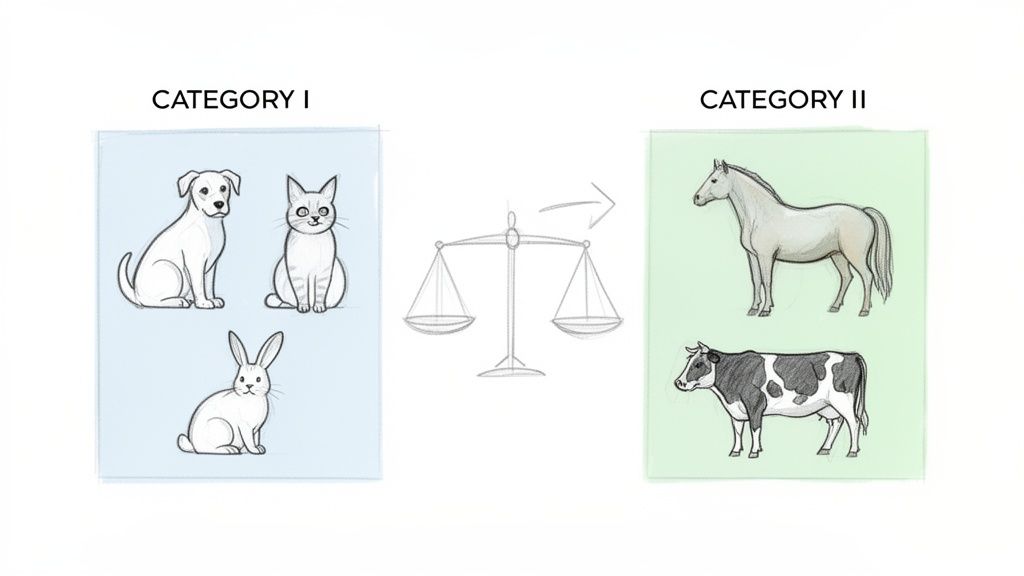
Let’s dig into the details so you can make a confident decision.
Category I: For The Companion Animal Specialist
Category I is designed for veterinarians who primarily work with small companion animals. If your days are filled with dogs, cats, and the occasional rabbit or guinea pig, this is almost certainly the right fit for you.
This accreditation covers a pretty specific list of animals:
Dogs and cats
Rabbits and rodents (hamsters, gerbils, etc.)
Ferrets
Reptiles and amphibians
Captive, non-poultry birds
Basically, Category I has you covered for the vast majority of household pets. It's the go-to for vets in urban or suburban clinics who aren’t dealing with livestock, horses, or other farm animals.
Category II: The All-Access Pass
Category II is the all-inclusive option. It covers every single animal species—that means everything in Category I plus all the others. We’re talking horses, cattle, pigs, sheep, goats, all poultry, and even farm-raised aquatic animals.
This is the clear choice for anyone in a mixed or large-animal practice. If your schedule could jump from a kitten wellness check to a health certificate for a horse heading to a show, you need Category II. It gives you the broadest authority, making sure you can serve every client who walks, trots, or is trailered to your door.
My Two Cents: The easiest way to decide is to ask yourself, "Will I ever need to sign official health documents for animals other than common household pets?" If the answer is yes or even a solid "maybe," just go for Category II. It’s safer and gives you much more flexibility down the road.
Real-World Scenarios to Make It Clear
Sometimes theory is one thing, but seeing it in practice makes all the difference. Let's look at a couple of vets to see how this plays out.
Dr. Anya Sharma's City Pet Clinic
Dr. Sharma runs a busy clinic in a downtown high-rise. Her patient list is 99% dogs and cats, with a handful of rabbits and hamsters. Her clients frequently need health certs for domestic flights or international moves to places like the UK or France. For her, Category I is a purrfect fit. It covers every animal she treats and allows her to handle all the pet travel requests she gets, without any extra scope she'll never use.
Dr. Ben Carter's Rural Mixed Practice
Out in the country, Dr. Carter’s practice serves everyone from pet owners to hobby farmers and commercial ranchers. In a single day, he might vaccinate a litter of puppies, examine a herd of cattle for interstate transport, and sign an international health certificate for a horse flying to a competition in Europe. For Dr. Carter, Category II is the only option. It gives him the official authority to manage the incredibly diverse range of animals that make up his client base.
To help you see the differences at a glance, here’s a quick breakdown of how the two categories stack up.
Comparison of USDA Accreditation Categories
Feature | Category I | Category II |
|---|---|---|
Covered Animals | Companion animals only (dogs, cats, rabbits, etc.) | All animals, including livestock and poultry |
Ideal For | Small animal and exotics practices | Mixed and large animal practices |
Flexibility | Limited to non-agricultural species | Maximum flexibility for all species |
Training Focus | Modules focus on small companion animal regulations | Includes additional modules on livestock and foreign animal diseases |
At the end of the day, choosing your accreditation category is all about matching your credentials to the reality of your practice. Pick the one that fits, and you’ll be set up for success from the get-go.
Understanding Your Responsibilities as an Accredited Vet
Earning your USDA veterinary accreditation is a major milestone, but it’s really just the starting line. This credential is far more than a piece of paper; it’s a serious commitment to upholding national and international animal health standards. With this new authority comes significant responsibility, placing you directly on the front lines of disease prevention and the safe movement of animals.
Your role now officially extends beyond the exam room. You are a representative of the USDA, entrusted with the important task of verifying an animal's health for travel. Every health certificate you sign and every exam you perform carries the weight of federal authority, making sure pets can travel safely without posing a risk to public health.
The Core Duties of an Accredited Vet
Becoming an accredited veterinarian means you're taking on tasks vital for global animal health and safety. It’s a role that demands precision, a keen eye for detail, and a commitment to staying on top of the rules. While the duties are varied, they all come back to one thing: making sure animals can move safely and correctly.
Your primary responsibilities will boil down to these key areas:
Performing Thorough Examinations: You must conduct comprehensive health exams to confirm an animal is free from any infectious or contagious diseases and is truly fit for travel.
Accurate Document Completion: Issuing health certificates is a detailed process. You are responsible for making sure every single detail is correct—from microchip numbers to vaccination dates. Even a tiny error can cause huge travel disruptions for a family.
Following the Rules: You must follow all the rules and standards of the National Veterinary Accreditation Program (NVAP) when performing your official duties.
These tasks form the bedrock of your accredited status. They're absolutely critical for maintaining the integrity of the entire system.
Staying Current with Ever-Changing Rules
Here’s where things get tricky. One of the most challenging—and most important—parts of the job is keeping up with the specific import requirements of different states and countries. These rules are anything but static; they can change overnight due to disease outbreaks or sudden policy updates. What was true for a pet flying to Japan last month might not be true today.
This is where your diligence is absolutely key. You are responsible for finding and applying the most current regulations for each specific destination. Missing a step here can have heartbreaking consequences for your clients and their pets, like being denied entry at the border or facing an unexpected, lengthy quarantine.
A Real-World Scenario: Imagine a client is moving to Japan with their beloved Shiba Inu. The import requirements are notoriously strict and complex. An accredited vet using a platform like Passpaw can instantly pull up the latest Japanese regulations. This ensures the correct rabies titer test is done within the right timeframe and all paperwork is completed flawlessly, preventing a nightmare situation where the dog is turned away at the airport because of outdated information.
The Gatekeeper of Animal Health
Beyond just travel documents, you have a vital public health role. As an accredited veterinarian, you are in a unique position to spot and report potential threats to the nation's entire animal population. This is a responsibility that cannot be taken lightly.
Your duties in this area are clear:
Disease Surveillance: You have to be vigilant, always watching for signs of foreign animal diseases (FADs) or other reportable conditions during your examinations.
Mandatory Reporting: If you even suspect a case of a reportable or foreign animal disease, you have a responsibility to report it immediately to the State Animal Health Official or the APHIS Area Veterinarian in Charge.
This reporting function makes you a crucial part of a nationwide surveillance network protecting both animal and public health. Your sharp eyes could be the key to stopping a potential outbreak before it even starts. For a deeper look at the documents involved, our guide to the veterinary international health certificate offers more specific insights.
Ultimately, being an accredited vet is about so much more than signing forms—it's about being a trusted guardian of animal welfare on a global scale.
Maintaining Your Accreditation and Streamlining Pet Travel
Earning your USDA veterinary accreditation is a huge accomplishment, but it's not a "set it and fur-get it" credential. This is an ongoing commitment, one that requires you to stay sharp and keep your status active. Staying on top of renewal isn’t just about checking a box; it’s what allows you to continue offering pet travel services to your clients without any interruptions.
This commitment to maintenance is what keeps the entire National Veterinary Accreditation Program (NVAP) strong and trustworthy. Let's walk through what it takes to keep your accreditation in good standing and explore how modern tools can make the whole process much less of a headache.
The Three-Year Renewal Cycle and Continuing Education
Your USDA accreditation runs on a three-year renewal cycle. To keep your status, you’ll need to complete a specific amount of APHIS-approved supplemental training—also known as continuing education (CE)—within that timeframe. Think of it as a professional tune-up, keeping you current on the latest regulations and animal health protocols.
The number of CE units you need depends entirely on your accreditation category:
Category I Vets: You'll need to complete 3 units of APHIS-approved training every three years.
Category II Vets: You’ll need to complete 6 units of this specialized training during the same period.
The good news is APHIS offers these training modules online, which makes it much easier to squeeze them into a packed clinic schedule. But don't put it off. Forgetting to renew means your accreditation goes inactive, and you’ll have to start the initial application process all over again.
Pro Tip: The moment you get your accreditation, mark your renewal date on the calendar. Better yet, set a reminder for six months out. That gives you plenty of time to knock out the CE without a last-minute scramble.
Integrating Accreditation Duties into Your Practice Workflow
So, how do you actually manage all of this alongside a schedule packed with appointments? This is where the rubber meets the road. The admin side of issuing International Health Certificates (IHCs) can be a real time-sink, involving a dizzying mix of deadlines, complex country-specific rules, and endless back-and-forth with clients.
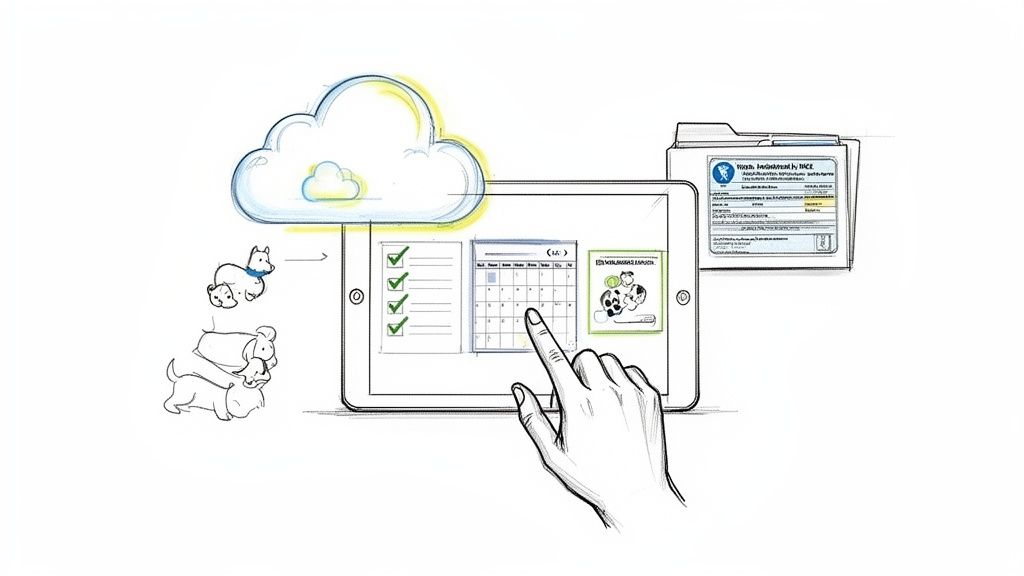
This is exactly where a dedicated system can make all the difference. Instead of drowning in sticky notes and overflowing binders, a cloud-based platform can centralize everything related to pet travel. It turns what feels like a chaotic, manual process into a smooth, repeatable workflow.
A platform like Passpaw, for example, is built to help you:
Organize Client and Pet Data: All travel-related information lives in one secure, easy-to-find place.
Track Critical Deadlines: Get automated alerts for upcoming travel dates, vet appointments, and document submission deadlines.
Validate Document Requirements: Instantly access up-to-date regulations for different destinations to avoid costly, trip-delaying errors.
Automate Client Communications: Send out automatic updates and reminders to pet owners, keeping them in the loop and cutting down on phone tag.
By creating a clear, digital workflow, you slash the risk of human error and give your team back their valuable time. They can focus less on chasing paperwork and more on providing fantastic patient care.
How Software Transforms the Pet Travel Process
Let's get practical. Imagine a client wants to move their two cats to Germany. The old-school way meant digging through pages on the USDA website, printing checklists, and making countless phone calls. It was an administrative headache waiting to happen.
A modern approach completely changes the game. Using a platform designed for this specific task, you can build a travel plan for that client in just a few minutes. The system automatically pulls in Germany's import rules and lays out every required task based on the cats’ travel date. It flags when rabies vaccinations are due, helps schedule the final health exam, and even pre-fills the necessary forms.
This proactive method doesn't just save hours of work; it delivers a much better, less stressful experience for your clients. They feel confident that every little detail is being handled correctly.
Ultimately, using the right tools allows you to handle the complexities of veterinary accreditation usda responsibilities efficiently, turning a potential burden into a valuable and profitable service for your practice.
Common Questions About USDA Veterinary Accreditation
When you're juggling a busy practice, the idea of adding another credentialing process can seem like a lot. It’s totally normal to have questions about timelines, flexibility, and what happens down the road. Let's clear up a few of the most common ones that come up.
Getting these answers sorted out now will help you plan ahead, so you can start offering pet travel services without any last-minute surprises.
How Long Does the USDA Veterinary Accreditation Process Usually Take?
This is probably the number one question we hear, and the honest answer is: it varies. Once you’ve completed the Initial Accreditation Training (IAT) and sent in your application, the clock starts ticking, but the speed depends entirely on your state's processing times and the current workload at APHIS.
Generally, you should plan for it to take anywhere from a few weeks to a couple of months before you get your official accreditation. Because of that variability, it’s a smart move to get started long before you have clients asking for travel certificates. Better to be prepared than to be scrambling!
Can I Upgrade From a Category I to a Category II Accreditation Later?
Absolutely. It’s pretty common for a vet’s focus to shift or for a clinic’s clientele to change over time. If you start with a Category I accreditation but later find yourself needing to work with animals outside that scope, upgrading is a straightforward process.
Typically, you'll need to:
Complete the extra training modules that are specific to Category II animals.
Submit an updated application form to your State Animal Health Official and APHIS for the final green light.
This flexibility means your accreditation can evolve right along with your practice.
What Happens If I Let My USDA Accreditation Expire?
This is a situation you really want to avoid, because fixing it isn't quick. If you miss completing your continuing education and don't renew within your three-year cycle, your accreditation simply becomes inactive.
This means you are no longer authorized to perform any official duties, including signing health certificates for travel. To get your status back, you would need to re-apply and may have to complete the full Initial Accreditation Training (IAT) all over again. It’s a classic case where an ounce of prevention—like setting a calendar reminder—is worth a pound of cure.
Managing all the details of pet travel, from your own accreditation to issuing certificates, can feel like a lot. Passpaw was built to simplify every step, helping your practice manage documents, track deadlines, and communicate with clients effortlessly. Learn how Passpaw can help.
More articles
From regulatory changes to best practices for veterinarians and pet owners, our resources keep you ahead of the curve.