Are you a team member in a veterinary practice?
Are you a pet parent planning a trip with your furry pal?
What Is Flea Dirt? A Pet Owner's Guide to Spotting and Stopping It
If you’ve ever been grooming your pet and noticed tiny black specks in their fur, you might have wondered, "Is that just dirt?" It's a common question, and the simple answer is probably not. That stuff is almost certainly flea dirt, and it's the calling card fleas leave behind—a sure sign that fleas are hanging around.
What Is That Black Stuff in My Pet's Fur?
Finding what looks like black pepper or coffee grounds on your pet’s skin can be a little alarming, but figuring out what it is puts you on the right path to solving the problem.
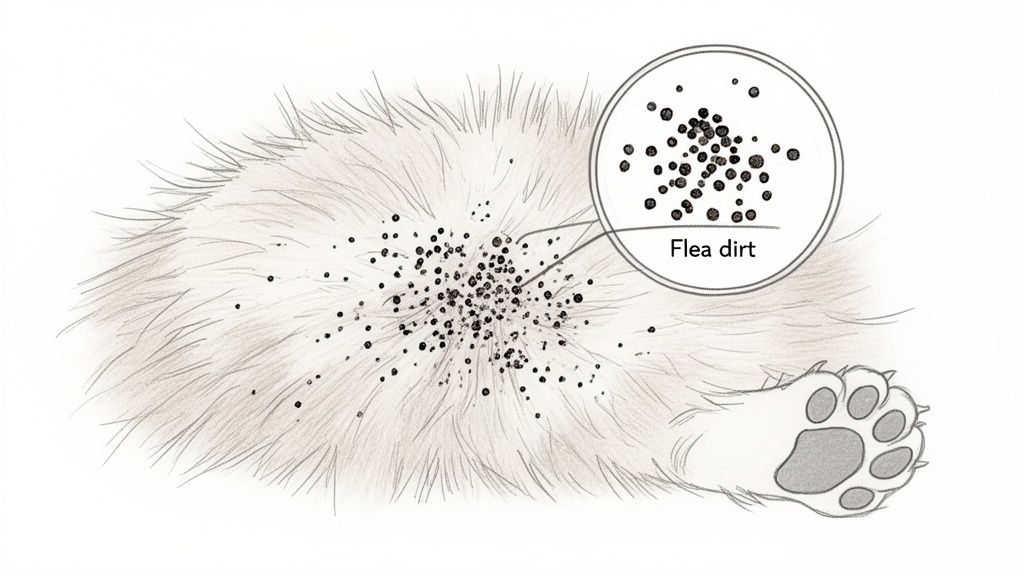
Unlike regular grime that just brushes away, flea dirt—which is actually flea droppings made of digested blood—is a bit stickier. It clings to the fur and skin, and its presence means fleas have already had a blood meal at your pet’s expense.
This isn’t just a cosmetic issue; it’s a direct confirmation that fleas are living on your animal. Think of it this way: seeing flea dirt is like finding crumbs on the counter. You may not see the cookie thief, but you know they’ve been there.
The Flea Dirt Identification Card
Not sure if it's flea dirt or just plain old dirt? This quick checklist will help you tell the difference.
Characteristic | What It Looks Like |
|---|---|
Appearance | Tiny black or dark brown specks, like ground pepper. |
Texture | Gritty and hard when dry. |
Location | Often found near the base of the tail, groin, or belly. |
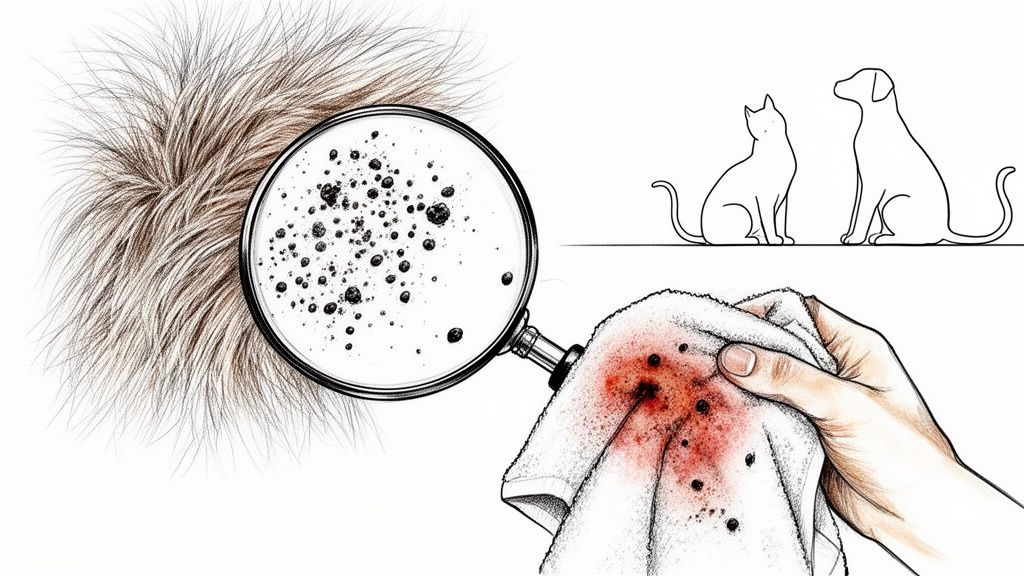
The "Wet Test" | Turns reddish-brown when placed on a damp paper towel (because it’s rehydrated blood). |
The wet paper towel test is the best way to be sure. If those specks bleed red, you have your answer.
Why Catching It Early Matters
Finding flea dirt is your cue to act fast. A few specks today can turn into a full-blown infestation that takes over your pet and your home before you know it.
Here’s why early detection is so important:
It confirms an active flea problem: You don’t have to hunt for a fast-moving flea. The evidence is right there in your pet's fur.
It helps prevent health issues: Untreated fleas can lead to miserable skin irritation, allergic reactions (flea allergy dermatitis), and in serious cases, even anemia.
It protects your home: The sooner you get on top of it, the less time fleas have to lay eggs in your carpets, furniture, and bedding.
Regular grooming sessions are one of the best ways to spot issues like flea dirt early. The benefits of regular pet grooming go way beyond a shiny coat; it’s your first line of defense against pests. And while you might not be planning a big trip, staying watchful is just as important as having the right essential documents for pet travel—it's all part of being a proactive pet owner.
The Simple White Towel Test to Confirm Fleas
So, you've spotted some suspicious specks on your pet and you're ready to play detective. The good news is you don’t need a fancy kit to crack this case. A super simple at-home method, known as the wet paper towel test, will give you a clear answer in just a few seconds.
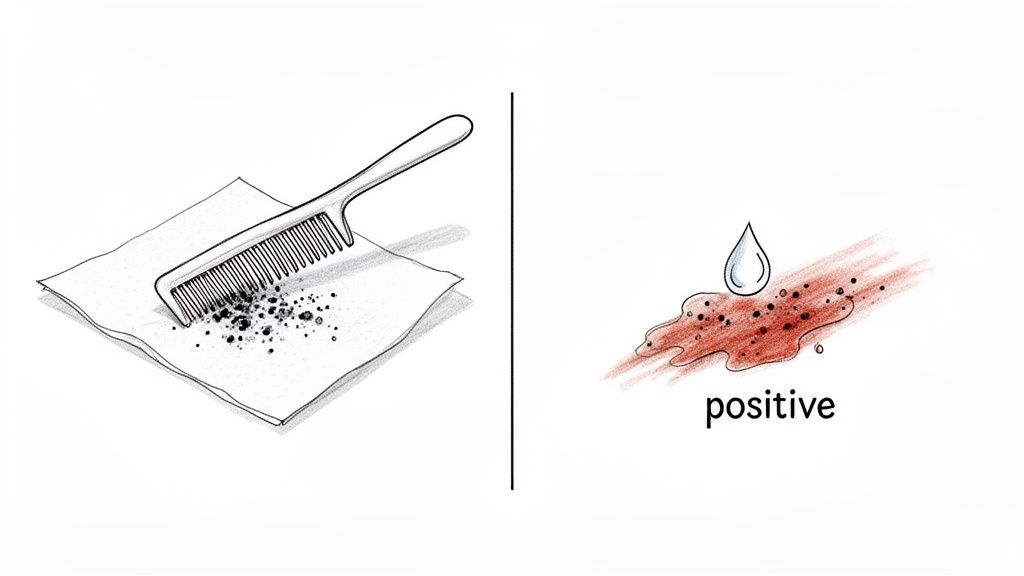
This test is a foolproof way to know if you're dealing with harmless grime or the real deal. It works because flea dirt is just digested blood, and like a tiny speck of dried paint, it gets its color back when it gets wet. It’s a simple but effective trick that leaves no room for doubt.
How to Perform the Test
Ready to find out for sure? This will only take a minute. Here’s a quick step-by-step guide to uncovering the truth about those little black specks.
Get Your Supplies: All you need is a white paper towel (a white cloth or even a cotton ball works too) and a little bit of water. A fine-toothed flea comb is also a great tool for collecting a good sample.
Collect the Evidence: Have your pet stand on a white towel or sheet to catch anything that falls. Gently run the flea comb through their fur, focusing on the "hot spots" where fleas love to hang out—their lower back, belly, and around the base of the tail.
Add Water and Watch: Lightly drip or spray some water onto the specks you've collected on the paper towel. Now for the moment of truth.
The big reveal: If the specks start to dissolve and leave behind reddish-brown or rust-colored streaks, you’ve got flea dirt. Regular dirt will just look like wet, clumpy dirt, with no color change.
This simple confirmation is your green light to take action. Finding flea dirt means it’s time to shift from investigator to problem-solver and create a solid plan to get rid of these unwelcome guests. It's nothing to flea-k out about, but it does require your attention.
Why Flea Dirt Is Your Wake-Up Call
Finding a few black specks in your pet’s fur might not seem like a big deal, but it's one of the most important warning signs a pet owner can spot. Think of flea dirt as the tip of the iceberg—what you can see is just a tiny fraction of a much larger problem lurking just out of sight.
The adult fleas hopping around on your pet make up only about 5% of the total flea population in an infestation. The other 95% is completely invisible, made up of a huge number of eggs, larvae, and pupae. They’re hiding in your carpets, tucked into your pet’s bed, and burrowed in your furniture, just waiting for their turn to hatch.
More Than Just an Itch
A flea problem goes way beyond a little scratching. If you ignore flea dirt, you’re opening the door to health issues that can turn a minor pest problem into a bigger concern. Taking it seriously from the moment you spot it is the best way to protect your pet.
Here are the biggest risks to watch out for:
Flea Allergy Dermatitis (FAD): This is one of the most common skin diseases in dogs and cats. For a pet with an allergy, a single flea bite can set off a chain reaction of intense itching, inflamed skin, painful scabs, and even hair loss.
Anemia: Each flea feeds on blood, and a large infestation means hundreds of them are feeding on your pet. This is especially dangerous for small puppies, kittens, or senior pets, who can quickly become weak from the blood loss.
Tapeworms: Fleas can carry tapeworm larvae. When your pet grooms itself, it's very easy for them to swallow an infected flea. Before you know it, you have a second, internal parasite problem that requires a different treatment.
Seeing flea dirt is your signal to act. It confirms that adult fleas are present, feeding, and—most importantly—laying eggs that will fuel the next generation.
Understanding these risks really drives home why a fast response is important. While fleas are common, managing them is a basic part of responsible pet ownership, right up there with routine vet visits. For instance, knowing when to get key shots is key, and you can learn more about how often a dog needs a rabies vaccine to stay on top of their preventative care schedule. Taking action now stops a small issue from becoming a big, itchy, and expensive headache.
The Sneaky Truth About the Flea Life Cycle
Ever feel like you're fighting a losing battle against fleas? It’s not just you. Their secret weapon is a sneaky four-stage life cycle that can turn a couple of unwanted guests into a full-blown infestation before you even know it. A single adult female flea can lay up to 50 eggs a day, quickly turning your home into her nursery.
To win this war, you need to understand the enemy. The fleas you see hopping on your pet are just a tiny fraction of the real problem. Think of it like an iceberg—what you see is only the tip.

This image nails it. Those visible adult fleas only make up about 5% of the total population. The other 95%—the eggs, larvae, and pupae—are hiding out in your carpets, bedding, and furniture.
The Four Stages of Flea Development
Getting rid of fleas for good means breaking the cycle at every single stage, not just zapping the adults you can see. The battle is fought on two fronts: on your pet and in your home.
Stage 1: Egg: Flea eggs aren't sticky. Once laid on your pet, they roll off like tiny seeds, scattering into carpets, couches, and pet beds, just waiting to hatch.
Stage 2: Larva: Once hatched, the larvae immediately burrow deep into fibers to escape the light. These tiny worm-like creatures feed on the flea dirt (digested blood) left behind by adults.
Stage 3: Pupa: This is the flea's "armored" phase. The larva spins a sticky, protective cocoon that’s very resistant to bug sprays and can lie dormant for months.
Stage 4: Adult: An adult flea won't emerge until it senses a meal is nearby. Vibrations, heat, and carbon dioxide from your pet (or you!) walking past trigger it to hatch, jump on, and start feeding within minutes.
The tough pupa stage is the secret to their survival. It’s why you might see new fleas suddenly appear weeks or even months after you thought you’d solved the problem.
This entire cycle can speed up in warm, humid conditions. In some climates, many fleas can mature in just 14 to 28 days, which is why a minor issue can explode into a major infestation so quickly. You can find more fascinating flea facts on lawndalevets.com. Understanding this process makes it clear why treating both your pet and your home is the only way to win.
Your Action Plan After Finding Flea Dirt
Okay, you've done the paper towel test and confirmed it: that black stuff is flea dirt. Don't panic—the most important thing is that you've caught the problem early. Now you can get to work. Having a clear plan is the best way to tackle this head-on without feeling overwhelmed.
Your first and most important move is to call your veterinarian. Their knowledge is key for choosing a flea treatment that’s both safe and effective for your pet. Things like age, weight, breed, and any other health conditions are huge factors in finding the right product.
Your vet can help you steer clear of some of the over-the-counter options, which may not always be effective or suitable for your pet. They can recommend a product designed not just to kill adult fleas, but to break their entire life cycle.
Tackling the Home Front
Once your pet is on a vet-approved treatment, it's time to deal with the other 95% of the flea population—the eggs, larvae, and pupae hiding in your home. This is no time to cut corners, you’ve got to be thorough.
Here’s your cleaning battle plan:
Wash Everything: Grab all the pet bedding, blankets, and any soft toys you can. Run them through the washing machine on the hottest setting, then dry them on high heat to help kill off any flea eggs and larvae.
Vacuum Like You Mean It: Go to town on all your carpets, rugs, upholstered furniture, and even hardwood floors. Make sure to hit the spots where your pet loves to lounge. Don't forget the dark corners and under the furniture!
Dispose of the Evidence: As soon as you're done vacuuming, take the vacuum bag, seal it in a plastic trash bag, and get it into an outside bin. If you've got a bagless vacuum, empty that canister outside and give it a good wash.
Remember, consistency is key here. You’ll probably need to repeat this cleaning routine a few times over the next few weeks to catch any newly hatched fleas emerging from their protective cocoons.
Treat Every Pet in the Household
Fleas are excellent travelers and will happily jump from one pet to another. If you have more than one animal, you should treat every single one of them with a vet-approved flea preventive. Do this even if they aren't showing any signs of fleas or flea dirt.
Not treating every pet is like locking your front door but leaving a window wide open. A proactive approach is the best way to protect your entire furry family. Staying on top of preventive care is just as important as knowing other safety measures, like these holiday safety tips for your pets, to avoid unexpected trouble. Follow these steps, and you'll get ahead of the infestation and bring some peace back to your home.
When You Should Call Your Veterinarian
While cleaning your home is a huge part of the plan, some situations really call for a veterinarian. Trying to guess with over-the-counter products can be a risky game, as their safety and effectiveness can vary. Your vet is your best partner in this fight, making sure your pet gets the right treatment, safely.
Sometimes, what looks like a simple flea problem can become a more serious health issue. You should know the red flags that mean it's time to stop the home remedies and get your vet on the phone.
Signs of a Severe Reaction
If your pet is suffering beyond just a typical itch, their body is likely having a strong reaction. A condition called Flea Allergy Dermatitis (FAD) is very common and can make pets miserable. For these allergic animals, just one bite can trigger an intense, body-wide response.
Keep an eye out for these specific signs:
Constant, frantic scratching or biting at their skin.
Hair loss, especially in patches on their lower back, tail, or hind legs.
Red or raw-looking skin that appears painful.
Scabs or crusty sores from all the non-stop scratching.
Symptoms of Anemia
A heavy flea infestation is especially dangerous for puppies, kittens, and senior pets. With hundreds of fleas feeding at once, these pets can develop anemia from the blood loss—a serious medical situation.
Anemia symptoms are a critical warning. If you see pale gums, weakness, or unusual tiredness in your pet, contact your veterinarian immediately. These signs indicate a situation that needs professional care right away.
Fleas are everywhere. Surveys show that at certain times of the year, infestations can be found on up to 28.1% of cats and 14.4% of dogs. Given how common they are, knowing when to call in the professionals is key. You can read the full research about flea infestation rates to understand why consistent, vet-guided prevention is so important.
Your vet's guidance is just as vital for your pet’s health as having the right paperwork for other situations. You wouldn't try to handle international travel without expert help for a veterinary international health certificate, and the same logic applies here. Don't hesitate to make that call—it’s the fastest way to get your furry friend back to being happy and healthy.
Navigating pet health challenges is easier with the right tools. Passpaw simplifies complex processes like obtaining pet travel documents, ensuring you and your vet can focus on what matters most—your pet’s well-being. Learn more at Passpaw.
More articles
From regulatory changes to best practices for veterinarians and pet owners, our resources keep you ahead of the curve.