Are you a team member in a veterinary practice?
Are you a pet parent planning a trip with your furry pal?
What Is a Coggins Test for a Horse and Why It Matters
If you've spent any time around a barn, you've probably heard someone mention getting a "Coggins" done. But what exactly is it? Think of it as your horse's official health passport—a simple blood test that proves they are free from a serious virus called Equine Infectious Anemia (EIA), which has no cure.
It’s not just a piece of paper. A negative Coggins certificate is often a must-have for travel, shows, and sales. It represents your commitment to protecting your horse and every other horse it comes into contact with.
What Is a Coggins Test for a Horse
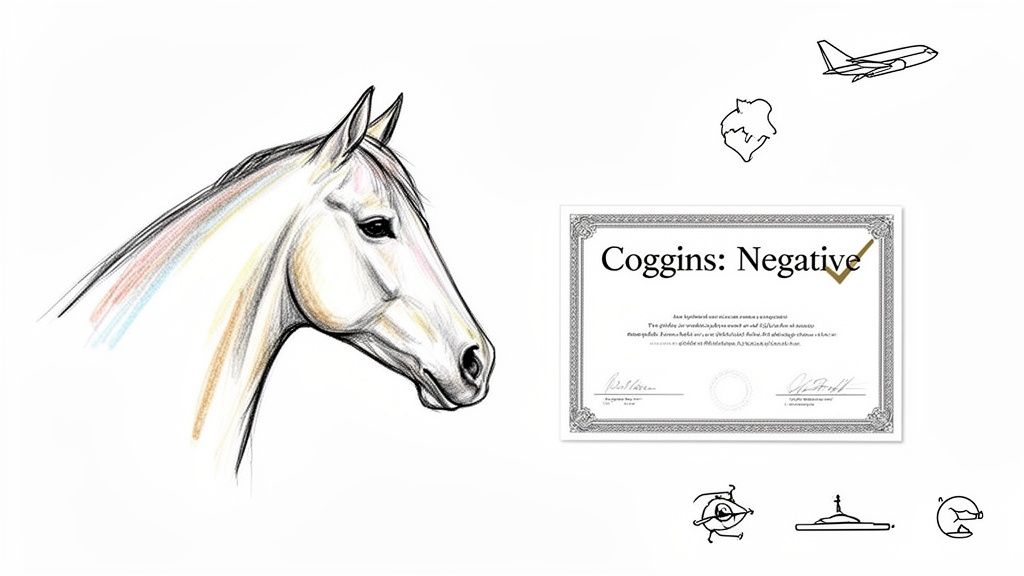
At its heart, the Coggins test is a key health screening designed to find antibodies for Equine Infectious Anemia. If a horse has these antibodies, it means they've been exposed to the virus and are considered a carrier for life, even if they don't look sick.
This is what makes the test so important. EIA is often spread by biting insects like horse flies or through dirty needles, making it a silent threat in any horse community.
Why It's More Than Just a Formality
This test isn't just another routine checkup you file away and forget. A negative Coggins certificate is your horse's literal ticket to ride. Without a current, valid one, you might be stopped at the gate when you try to:
Travel Across State Lines: Every state has its own rules, but almost all suggest or require proof of a recent negative Coggins test for horses coming in.
Attend Events: Horse shows, clinics, rodeos, and even organized trail rides will likely ask to see your papers before letting you unload.
Board at a New Stable: Good barns often ask for a negative Coggins from all incoming horses to protect their resident herd.
Sell Your Horse: A valid Coggins is a standard, expected part of any sale or change of ownership.
Here's a quick overview of what the Coggins test is all about.
Coggins Test at a Glance
Aspect | Quick Explanation |
|---|---|
What It Is | A blood test that looks for antibodies for Equine Infectious Anemia (EIA). |
Why It's Done | To show a horse is not a carrier of EIA, a contagious virus with no cure. |
Who Performs It | A licensed and accredited veterinarian draws the blood sample. |
When It's Needed | For interstate travel, shows, sales, and boarding at most facilities. |
Result | "Negative" means no antibodies were found; "Positive" means the horse is a carrier. |
This simple test, developed back in the 1970s by veterinary researcher Dr. Leroy Coggins, is still the main tool for finding EIA carriers and stopping outbreaks.
A negative Coggins is more than a formality; it's a key part of keeping herds healthy. It confirms your horse is not a silent carrier of a serious disease, giving everyone peace of mind.
Understanding the importance of this test is one of the first and most important steps in responsible horse ownership. To learn more, you can check out our broader look at what are Coggins tests and what they entail.
Why This Simple Test Is So Important
So, what's the big deal about one simple blood test? It all comes down to protecting our horses from a sneaky and dangerous virus called Equine Infectious Anemia (EIA). This isn't your average bug; EIA is a lifelong disease with no vaccine and, sadly, no cure.
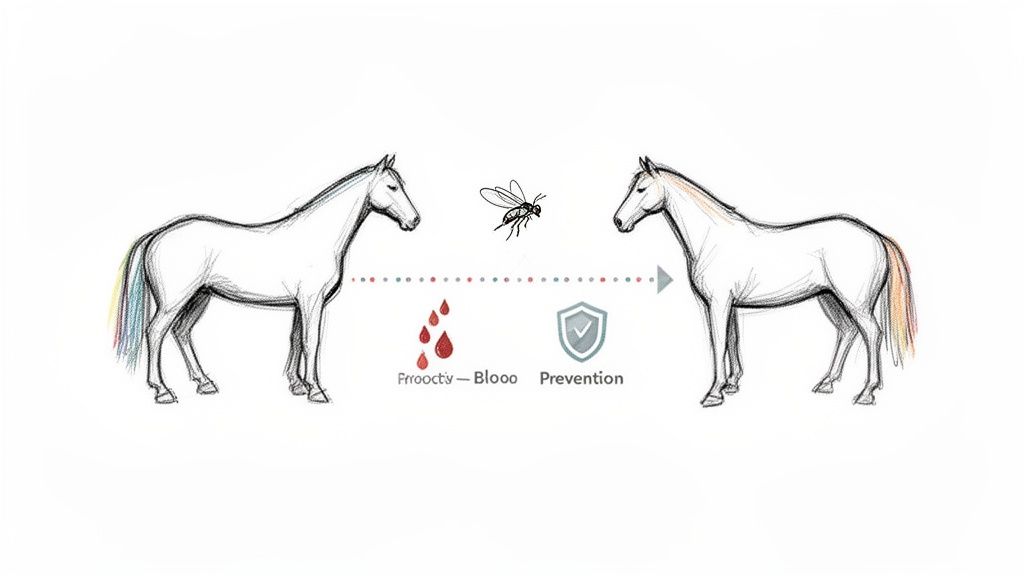
The scariest thing about EIA is that an infected horse can look perfectly healthy for months or even years. All the while, they are silent carriers, able to spread the virus to every other horse they meet without anyone ever knowing.
How Equine Infectious Anemia Spreads
Understanding how EIA moves through a herd is key to seeing why the Coggins test is so vital. The virus lives in the blood of infected horses and spreads from one animal to another, mostly through blood-to-blood contact.
The main culprits are biting insects, which act like tiny, flying, dirty needles. When a horsefly or deerfly bites an infected horse and gets interrupted, it can fly to a nearby horse and transfer the infected blood with its very next bite.
The Coggins test is basically a silent alarm system for the horse community. It finds EIA antibodies, revealing hidden carriers before they can unknowingly spread this incurable disease to others.
Besides insects, other things can put horses at risk. Sharing dirty equipment is a huge concern. For example:
Needles and Syringes: Reusing needles between horses is one of the easiest ways to pass on blood-borne diseases like EIA.
Surgical Instruments: Any tools used for dental work or minor procedures must be properly cleaned between every single animal.
Tattoo Equipment or Transfusion Supplies: Though less common, any equipment that touches blood can be a source of infection.
The Unfortunate Reality of a Positive Test
Because there’s no treatment, a positive EIA result has serious, permanent outcomes. That horse becomes a lifelong risk to other horses. In most cases, owners face two heartbreaking choices: lifelong quarantine in a screened-in, isolated area or humane euthanasia.
This tough reality is why prevention through testing is our only real defense. A negative Coggins certificate isn't just about following rules; it's about being a responsible horse owner. By regularly testing our horses, we collectively build a firewall that protects the health and well-being of the entire community, one simple blood draw at a time.
Walking Through the Coggins Testing Process
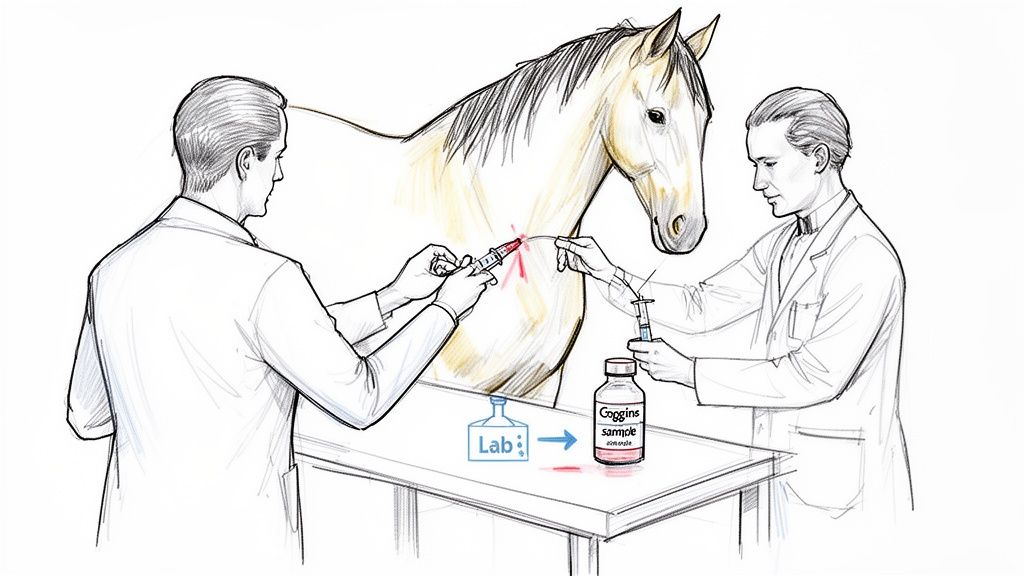
Now that you know why the Coggins test is so vital for horse health, let's trot through what actually happens during the test. It's a surprisingly simple and routine procedure, designed for safety and your peace of mind.
The whole thing starts with a call to your veterinarian to schedule a farm visit. They're the only ones accredited to draw the blood and submit the paperwork, making sure everything is handled correctly right from the start.
The Blood Draw
During the appointment, your vet will collect a small blood sample—a quick and minimally stressful moment for your horse. The sample is usually drawn from the jugular vein in the neck. Most horses barely flinch, and it's over in just a minute or two.
Once the blood is drawn, the veterinarian carefully fills out the official Coggins form. This document is a detailed profile of your horse, including:
Name, age, breed, and color
Detailed descriptions of all markings, like stars, snips, or socks
Photos or drawings to guarantee the horse in front of you is the one on the certificate
This level of detail is critical for verification, especially when you’re traveling or at a show. Official paperwork can be tricky, and for anyone navigating the rules of animal transport, getting it right is key. Our guide on USDA APHIS pet travel requirements offers more insight into health documentation.
Lab Analysis and Turnaround Time
With the sample collected and paperwork complete, the vial is sent off to a special lab. These facilities, just like other medical testing labs, have the specific equipment needed to run these important screenings accurately.
The lab uses one of two main methods to check the blood for EIA antibodies. The choice often comes down to how quickly you need the results.
The core of the Coggins testing process is simple: a quick blood draw by a vet, followed by expert analysis at an accredited lab. The result is a certificate that acts as a verified health passport for your horse.
The most common methods are the traditional Agar Gel Immunodiffusion (AGID) test or the faster Enzyme-Linked Immunosorbent Assay (ELISA) test. The AGID is often considered the gold standard and can take a few days to a week. The ELISA, on the other hand, can turn around results much faster, sometimes in less than an hour, making it ideal for last-minute travel plans.
Your vet will know exactly which test your situation needs, so you don’t have to get bogged down in the science—they've got it covered.
How to Read Your Horse's Coggins Paperwork
After the lab has done its work, you'll get the official Coggins paperwork. This document, whether it's a digital file or a classic paper copy, is basically your horse's health passport for travel. Knowing how to read it is just as important as knowing why you got the test in the first place.
Thankfully, most of the time, the results are straightforward and bring good news. A "Negative" result is what we're all hoping for. It means no EIA antibodies were found, so your horse is considered healthy, safe, and ready to hit the road for shows and events.
What's on the Certificate
A Coggins certificate is much more than a simple pass/fail slip; it’s a detailed ID for your horse. To make sure everything is in order, it's helpful to understand some basic medical documentation guidelines that ensure everything is clear and accurate. Every valid Coggins form has to include a few key pieces of information:
Horse Identification: This covers the basics like your horse’s registered name, barn name, age, breed, and color.
Unique Markings: The vet will carefully note any special marks—think white leg markings like socks or stockings, facial markings like a star or snip, and any scars or brands.
Photographs or Drawings: Modern digital forms now include clear photos of the horse from the front and both sides. This makes it easy to confirm the horse in front of you is the same one on the certificate.
This official document precisely logs the horse's description, the owner's details, and, of course, the test result, all signed off by an accredited veterinarian. This paper is often a required companion to other travel documents. You can learn more about those by checking out our guide on the APHIS 7001 health certificate.
Understanding a Positive Result
Now, for the tough part. In the rare and unfortunate event of a "Positive" result, the situation gets serious. This means the horse is carrying EIA and is a risk to every other horse it comes near.
A positive Coggins test means immediate and careful action is needed. The horse must be quarantined, and the result is reported to state and federal animal health officials to prevent any potential spread of the disease.
Your veterinarian will be your guide through the next steps, which are often guided by state and federal rules. While it’s a heartbreaking outcome, these strict protocols exist for a very good reason—to protect the entire horse community from an incurable disease. It’s a somber but powerful reminder of why this simple test is so critical for every horse owner.
When Your Horse Needs a Coggins Certificate
Think of a Coggins certificate not as just another piece of paper, but as your horse’s passport to the wider horse world. It’s the official document that shows your horse isn’t a silent carrier of Equine Infectious Anemia, giving everyone peace of mind.
Knowing when you need to have this certificate ready is key to avoiding headaches at the barn gate or delays on the road. Smooth trailering starts with the right paperwork.
Travel, Shows, and New Barns
The most common reason you'll need a Coggins is for travel. If you’re planning on hauling your horse across state lines, a current, negative Coggins test is almost always recommended or required. While each state has its own specific rules, this is one of the most common requirements out there, designed to stop the spread of EIA between regions.
Beyond interstate hauling, that certificate is your ticket into most organized horse activities. Heading to a show, rodeo, clinic, or even a big group trail ride? You can bet the organizers will ask to see your Coggins before you’re even allowed to unload.
This policy is all about protecting every horse in attendance. The same goes for most boarding facilities. Any good stable will want to see a negative test before a new horse sets a hoof on the property to safeguard the health of their entire herd. It's just good, responsible barn management.
A valid, negative Coggins certificate is your key to unlocking new adventures. It helps ensure your horse is welcome at events, across state lines, and in new barns, all while contributing to the health of the entire horse community.
Finally, if you’re selling your horse, the buyer will absolutely expect a current negative Coggins as a standard part of the sale. It gives them confidence that they're bringing a healthy animal home.
To make it easier, here's a quick breakdown of common situations where a Coggins is a must-have.
When Is a Coggins Test Typically Needed?
Situation | Typical Guideline (Always Verify) | Why It's Needed |
|---|---|---|
Interstate Travel | Negative test within 12 months (sometimes 6). | To help prevent the spread of EIA across state borders. |
Horse Shows & Competitions | Negative test within 12 months or per event rules. | To protect all participating horses from potential exposure. |
New Boarding Facility | Negative test before arrival. | To ensure the health and safety of the resident herd. |
Trail Riding Events | Often requested, check with the organizer. | Large gatherings increase the risk of disease transmission. |
Horse Sales | Current negative test for the buyer. | Provides assurance of the horse's health status. |
Breeding | Often requested for both mare and stallion at many farms. | To prevent transmission during breeding activities. |
This table covers the basics, but remember to always double-check the specific rules for your destination or event, as requirements can vary.
How Long Is a Coggins Certificate Valid?
Typically, a negative Coggins test is valid for 12 months. But don’t treat that as a hard-and-fast rule for every single situation.
It’s crucial to check the specific requirements for your destination or event. Some states, high-level competitions, or international travel destinations have stricter rules and may need a test performed within the last 6 months or even more recently.
Staying on top of these rules is key. Having the right documents is just as important as the Coggins itself. To better understand the paperwork involved in animal transport, check out our guide on getting a pet health certificate for travel.
By knowing when a Coggins is needed, you prevent any "nay-sayers" from holding you up. It ensures your adventures are hassle-free and that you’re always acting as a responsible member of the horse community.
Alright, let's talk about the practical side of things: how much a Coggins test costs and how often you'll need one.
Getting a Coggins test is pretty straightforward—it just takes a call to your vet to schedule a farm visit. It's a standard part of horse health management, and thankfully, it’s one of the more affordable procedures in your annual horse care budget.
The final price tag usually has two parts: your vet's fee for drawing the blood and submitting the sample, plus the farm call charge to get them out to your property. Here’s a pro tip: see if you can coordinate with others at your barn. Many vets will discount the farm call fee if they can see multiple horses in one trip, which can save everyone a bit of money.
How Often Is a Coggins Test Needed?
For most horse owners, the answer is simple: once a year. A negative Coggins test is generally valid for 12 months, which keeps you covered for most boarding stables, shows, and travel. Think of it as your horse's annual health passport, keeping them ready for whatever adventures you have planned.
Of course, there are exceptions. If your horse is a serious competitor who travels constantly or lives in an area known to be at higher risk for EIA, your veterinarian might recommend testing every six months. This is just a more careful approach to stay on top of the strictest event rules and to give you extra peace of mind for your frequent-flyer.
While a positive result is incredibly rare, the Coggins test is a critical safety net for the entire horse population. Staying current is a small price to pay for such significant peace of mind.
It’s easy to get anxious about any kind of test, but the data here is very reassuring. In 2022, labs across the U.S. ran a whopping 1,349,759 EIA tests and found only 96 positive cases. That's a positivity rate of just 0.007%. For the average horse owner, a negative result is the overwhelmingly likely outcome. If you're curious, you can dig into the numbers yourself in the full USDA report on annual equine health findings.
Your Top Coggins Test Questions, Answered
Even after you've got the basics down, a few specific questions always seem to pop up. Let's walk through some of the most common ones horse owners ask, so you'll have clear answers ready to go.
Are Digital Coggins Certificates Valid?
Yes, they absolutely are! Digital Coggins, sometimes called "eCoggins," are official, widely accepted, and frankly, a lot more convenient. Instead of digging through your glove box for a folded piece of paper, you can pull up the official document right on your phone.
These are secure files that contain all the same critical information as the traditional paper forms—detailed descriptions, photos, and the accredited veterinarian's electronic signature. It’s always a good idea to download a copy to your phone for offline access, just in case you find yourself at a showground with spotty cell service.
What if I Buy a Horse Without a Coggins Test?
Buying a horse without a current negative Coggins certificate is a huge red flag and a risk you really don't want to take. You could unknowingly bring Equine Infectious Anemia onto your property, putting your other horses in serious danger.
Also, proof of a negative test is often needed for a change of ownership in most places.
Think of it this way: a current negative Coggins should be a non-negotiable condition of the sale. For total peace of mind, have your own vet pull a new Coggins on the horse before you bring it home and introduce it to your herd.
That extra step ensures you're starting off on the right foot, protecting both your new horse and the ones you already have.
Can a Foal Get EIA From Its Mother?
Yes, it's possible for a foal to get EIA from its dam. An infected mare can pass the virus to her foal in the womb (before it's born), though this is one of the less common ways the disease spreads.
It gets a bit more complicated, too. A foal nursing from an infected mare will get antibodies through her first milk, called colostrum. This can cause the foal to test positive for a while, creating a temporary "false positive" even if the foal isn't truly infected. These maternal antibodies usually fade after a few months.
Because of this, any foal born to a positive mare needs very careful and specific management by a veterinarian to figure out its true health status.
At Passpaw, we get that managing health documents is a crucial part of responsible animal ownership. Our platform is built to help veterinary practices handle all the necessary paperwork for pet travel with accuracy and ease. Find out more about how we support vets and pet owners at https://passpaw.com.
More articles
From regulatory changes to best practices for veterinarians and pet owners, our resources keep you ahead of the curve.