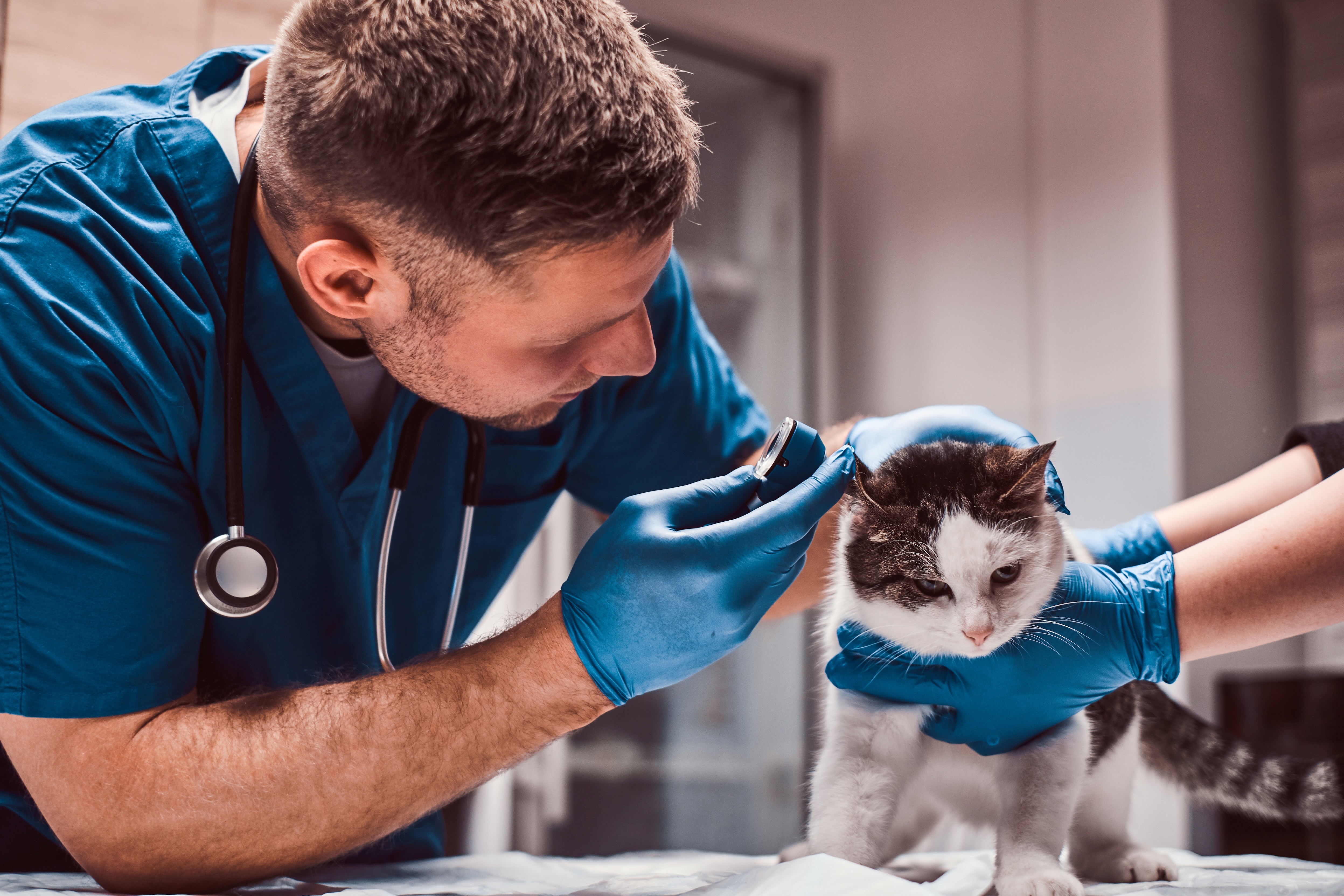
Are you a team member in a veterinary practice?
Are you a pet parent planning a trip with your furry pal?
Your Veterinary Health Certificate Guide for Pet Travel
You’ve booked the trip. Your pet carrier is out. The leash is hanging by the door. Then the paperwork starts, and the mood changes fast.
Many individuals approach this process excited about travel but somewhat daunted by the forms. That’s normal. A veterinary health certificate sounds like one more bureaucratic obstacle, but in practice it’s the document that makes responsible pet travel possible.
It helps airlines, border officials, and animal health authorities confirm that a pet has been examined and meets the rules for the trip ahead. That protects your pet, other animals, and your travel plans.
The part that often gets overlooked is this. Pet travel works best when the owner and the veterinary team act like one unit. Owners bring the timeline, records, and travel details. The vet handles the exam, health review, and certification. If either side is missing key information, things get hairy in a hurry.
A smooth trip usually isn’t about luck. It’s about timing, accurate records, and a process that keeps everyone on the same page.
Planning Pet Travel A Veterinary Health Certificate Guide
A common scene in practice goes like this. A family is relocating, flights are booked, and the pet is absolutely coming too. Then someone asks, “Can we just get the certificate next week?”
Sometimes yes. Often no.
Travel paperwork has a way of sneaking up on people because it doesn’t feel medical at first. It feels administrative. But the certificate sits right at the intersection of medicine, recordkeeping, and travel rules. That’s why it can seem confusing until you understand its function.
A veterinary health certificate is best thought of as your pet’s travel clearance. It tells the next state, country, airline, or official reviewer that a veterinarian has examined the animal and documented the required details for movement.
For many owners, that shift in mindset helps. This isn’t pointless paperwork. It’s a safety document.
A good pet travel plan starts with the destination rules, not the flight confirmation.
That matters whether you’re taking a dog to a new state for a move, bringing a cat overseas for a long-term relocation, or preparing for a trip tied to military orders, school, or a dog show. The travel reason may differ, but the working rhythm is the same. Start early, verify the exact rules, and let the certificate process follow a clear timeline.
What works is simple:
Start with the destination: State and country rules drive everything else.
Treat records like travel gear: Vaccine dates, microchip details, and prior paperwork need to be ready.
Book the right veterinary appointment: Not every visit is a travel-certification visit.
Leave room for corrections: One small mismatch can slow the whole process.
What doesn’t work is trying to squeeze a detailed travel case into a standard last-minute wellness slot. That’s where owners feel stressed, veterinary staff feel rushed, and preventable mistakes pop up.
Understanding Your Pet's Travel Papers
The easiest way to explain a veterinary health certificate is this. It’s a pet passport document, but with health and compliance details attached.
Certificates of Veterinary Inspection, or CVIs, are official documents that certify animals meet health regulations for movement. For international pet travel from the United States, the USDA APHIS Form 7001 is a standardized International Health Certificate, and it requires USDA endorsement while confirming the pet is healthy, microchipped, and vaccinated according to destination rules, as outlined by Penn State Extension’s guide to certificates of veterinary inspection.
Domestic travel and international travel are not the same
Many owners get tripped up here.
For domestic interstate travel, the document is usually a CVI. It supports movement from one state to another and confirms the animal meets health requirements for that trip.
For international travel, the process is broader. The paperwork may involve country-specific forms, government endorsement, and tighter sequencing around identification, vaccines, tests, or treatments.
If you’re trying to sort out which records usually come into play, this overview of travel documents for pets is a useful companion to the certificate process.
Who can issue the paperwork
Not every veterinarian can handle every travel certificate.
The certification process is managed through USDA APHIS-accredited veterinarians. These are the veterinarians authorized to issue the relevant documents for animal movement. In practice, that means your regular clinic may help, or they may refer you to a doctor in the practice who handles travel cases specifically.
That distinction matters because travel certificates aren’t just clinical notes. They are formal documents with required fields, signatures, identifiers, and, in some cases, government review after the appointment.
What the certificate includes
The forms vary, but the core information is practical and specific:
Animal identification: Breed, sex, age, and microchip when required
Owner and destination details: Where the pet is coming from and going to
Veterinary credentials: Accreditation details and official signoff
Health data: Exam findings, vaccine status, and any required tests or treatments
Purpose of movement: Travel, relocation, event participation, or another approved reason
Think of the certificate as a checkpoint document. If the pet, the records, and the form all tell the same story, the trip usually moves forward.
When owners understand that basic structure, the process gets much less mysterious.
Required Information and Common Pitfalls
Most certificate delays don’t happen because the pet is unhealthy. They happen because the details don’t line up.
That’s frustrating for owners and clinics because many of the problems are small on paper. A typo in a microchip number. A date entered in the wrong place. A treatment given before the identification step that a destination country expects to come first.
The microchip comes first
One rule causes more confusion than almost any other. Vaccinations or treatments completed before a pet’s microchip is implanted are not recognized by receiving countries, and mismatches involving the microchip number or implantation date can invalidate the entire certificate, as explained in this guide to the veterinary international health certificate.
That sounds strict because it is strict.
If the destination expects the microchip to anchor the medical history, then the sequence matters. The records have to show that the pet’s identity was established first and that the later vaccine or treatment belongs to that same animal.
The error points I watch most closely
When a clinic reviews a travel packet, these are the spots that deserve slow, careful attention:
Microchip number: Every digit has to match the scan and the prior records.
Implant date: It must fit correctly with later vaccines or treatments.
Exam date: It has to fall inside the valid travel window for that destination.
Signatures: Missing or incomplete signatures can stop an otherwise correct file.
Legibility: If a reviewer can’t clearly read a field, the clinic may have to redo it.
A 2024 APHIS report cited that 15% of certificate rejections were due to identification mismatches, according to USDA APHIS guidance on common problems in animal movement documents. That’s a strong reminder that record accuracy is not a minor detail.
What owners can do before the appointment
Owners can make the veterinary visit far more productive by bringing one clean, organized record set.
Use a simple checklist:
Bring prior vaccine records: Especially if they came from another clinic.
Bring microchip documentation: Don’t rely on memory.
Confirm names and spellings: Owner names and pet names should match across records.
Send files securely: If you’re transmitting records before the visit, review the best way to send sensitive documents so personal and medical information isn’t floating around unsecured.
For owners dealing specifically with the international form, this walkthrough of the APHIS 7001 health certificate can help you recognize what your veterinary team is reviewing.
Practical rule: If a number appears on the certificate, compare it to the source document character by character. Don’t skim it.
That habit saves a surprising number of trips.
Your Step-by-Step Guide to Getting a Health Certificate
A veterinary health certificate goes more smoothly when both sides know their job. Owners gather, confirm, and schedule. The veterinary team examines, documents, and submits.
The process is manageable when it’s broken into stages.
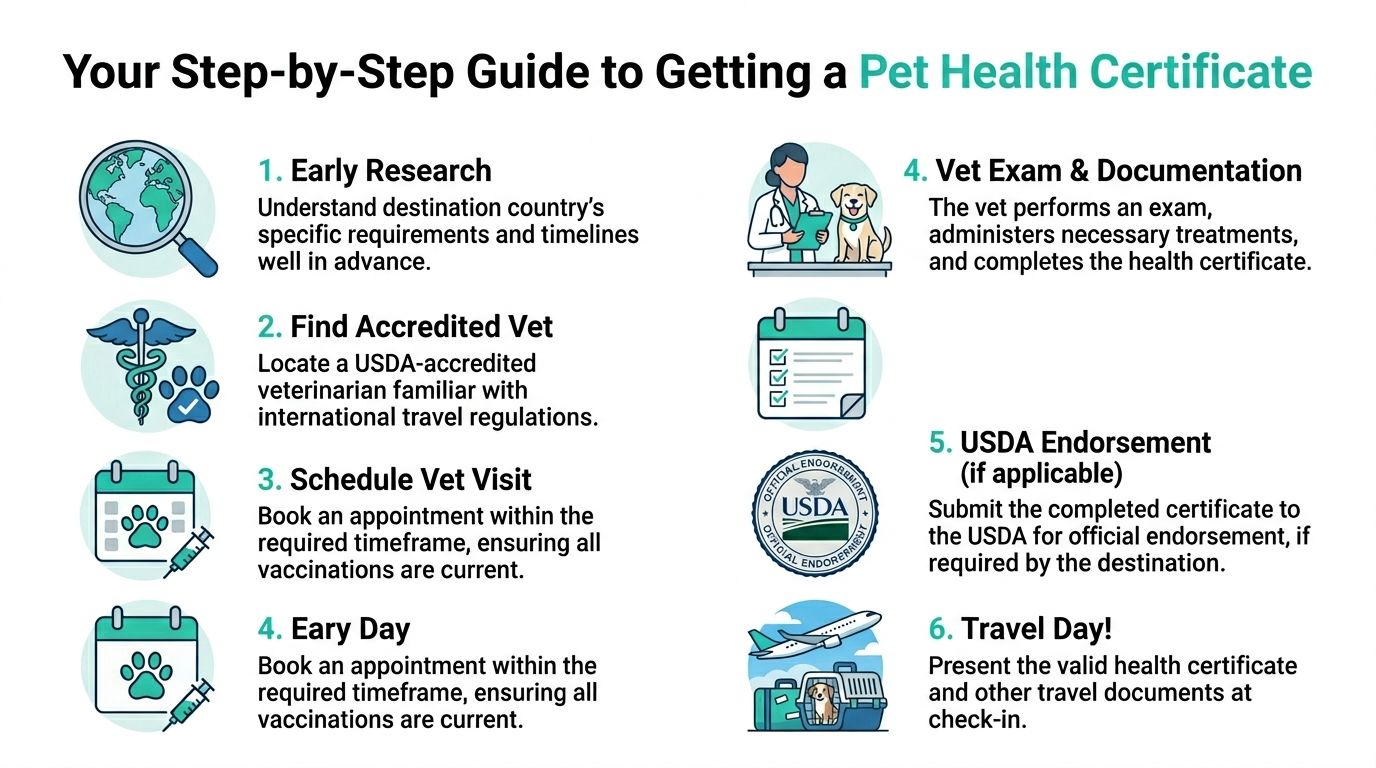
Step 1 Get the destination rules before you book around them
The primary task isn’t calling the clinic. It’s confirming the exact rules for the destination.
For domestic travel, that means checking state requirements. For international travel, it means looking at the importing country’s current pet entry requirements and seeing whether government endorsement is needed.
Owners often lose time by booking based on a rough guess, then learning the country requires a different timeline or specific sequencing. That’s avoidable.
Step 2 Find the right accredited veterinarian
The process is managed by USDA APHIS-accredited veterinarians, and capacity is a real concern. The Association of American Veterinary Medical Colleges projects a need for 70,092 new veterinarians by 2032 but expects 52,926 graduates, based on the veterinary workforce figures summarized by the University of Illinois review of health certificate roles and accreditation.
In plain terms, don’t wait to book.
A clinic may have an accredited veterinarian on staff, but travel appointments still take time and planning. If your trip is complex, ask whether the doctor routinely handles international cases.
Step 3 Prepare records for clinic use
This is the owner’s big contribution.
A messy stack of screenshots and partial PDFs slows everything down. A clear packet helps the clinic review the case faster and catch gaps early. The same principle behind good patient registration forms applies here. Complete information upfront reduces rework later.
Helpful items to gather include:
Current vaccine records
Microchip details
Prior travel paperwork if the pet has traveled before
Owner contact details exactly as they should appear
Destination address and travel date
Step 4 Attend the travel appointment with enough time to correct issues
This visit is not just a routine exam with a signature added at the end.
The veterinarian may need to review identification, scan the microchip, confirm the sequence of prior care, perform the physical exam, and document destination-specific requirements. If something is missing, the clinic needs enough runway to fix it.
That’s why squeezing travel paperwork into the last open slot before departure often backfires.
Step 5 Complete submission and endorsement if required
For some trips, the veterinary signature is not the final step. The certificate may still need government endorsement.
That can include electronic submission, supporting documents, and waiting for approval before travel. Owners should ask one key question early: “Who is handling the endorsement step, and how will I know when it’s done?”
If you want a practical owner-focused walkthrough of that process, this guide on how to get a USDA-endorsed pet health certificate is a useful reference.
Step 6 Do a final document review before travel day
Before you head to the airport or start the drive, review the packet one last time.
A quick final check should include:
Item | What to confirm |
|---|---|
Pet identity | Name, species, and identifiers match all records |
Owner details | Spelling and destination details are correct |
Dates | Exam, vaccine, and treatment dates fit the travel window |
Required signatures | Every signature and endorsement is present |
Access | Originals or required copies are easy to reach during travel |
The last review should happen before travel day gets hectic. A calm ten-minute check is better than a panicked gate-counter search.
How Travel Destinations Change the Rules
There is no single international rulebook that covers every pet, every route, and every country the same way. The destination decides the standard.
That’s why one trip can feel straightforward and another can feel like a long obedience course with extra paperwork.
Domestic movement versus international entry
Within the United States, the purpose of the certificate is usually to document compliance for movement between states.
International travel is different because the importing country sets the terms. Some countries focus on a fairly direct review of identification, vaccination, and certificate completion. Others impose tighter controls because they’re protecting a specific animal health status.
The same dog can be easy to move to one place and much harder to move to another. That difference is about the destination’s rules, not the pet’s personality, even if your beagle insists otherwise.
Some systems are built for repeat travel
One useful contrast is the EU Pet Passport, which supports travel within the European Union and reduces the need for multiple separate certificates for intra-EU travel. That kind of system is designed to streamline movement inside a defined framework.
By comparison, travel from the United States into another country often requires a fresh certificate process tied to that country’s current import rules.
So when owners ask, “Can’t I just use the same paper from last time?” the honest answer is often no. Reuse depends on where the pet is traveling, what document is involved, and whether the rules allow it.
Green-banner and Orange-banner countries change the workflow
The USDA’s Veterinary Export Health Certification System, or VEHCS, uses two pathways. For Green-banner countries, the process is fully digital. For Orange-banner countries, APHIS must print the certificate, apply an original signature and embossed seal, and return it by overnight express shipping. That adds a 1 to 3 day shipping contingency, according to the U.S. government explanation of pets and international travel through VEHCS pathways.
That difference matters more than many owners realize.
A digital route usually means fewer handling steps. A hardcopy route means the clinic and the owner need to account for printing, endorsement, shipment, and physical return of the document before departure.
What this means in real life
If I’m advising a family on timeline risk, I look at the destination in practical terms:
Is the certificate digital or hardcopy at the endorsement stage?
Does the country require very exact timing on treatments or exam dates?
Will the owner need originals in hand before airline check-in?
Is there room for a corrected submission if something gets rejected?
Those questions shape the schedule more than the flight itself.
A common mistake is treating every international destination as if it uses the same process. It doesn’t. One route may be fairly linear. Another may involve more moving parts and less room for error.
The country’s import rules write the playbook. The clinic and the owner are just trying to run the play correctly.
That’s why destination research isn’t a side task. It is the task that determines every step after it.
How Passpaw Makes Pet Travel Paws-itively Simple
When pet travel cases go off track, it usually isn’t because anyone failed to care. It’s because the process is fragmented.
The owner has records in one inbox. The clinic has forms in another system. The destination rules change. A microchip detail needs checking. Someone still has to watch the calendar. That kind of workflow creates drag for everyone.
Where clinics and owners usually feel the strain
Manual record-chasing is one of the biggest pain points in travel work. Staff spend time asking for missing vaccine proof, confirming identifiers, and rechecking fields that should have matched the first time.
That problem shows up clearly in identification errors. As noted earlier, APHIS reported that 15% of certificate rejections were due to identification mismatches. For clinics, that means avoidable review work. For owners, it means delays and stress.
What a connected platform changes
A platform such as Passpaw helps by keeping the owner and veterinary team in the same workflow. The practical value is straightforward:
Travel-date based task tracking: The case can be organized around when the pet is scheduled to leave.
Document validation: Staff can catch mismatches before submission.
Client communication in one place: Owners know what’s still missing.
Country-specific workflow support: The team can follow the destination’s route instead of building the process from scratch each time.
For clinics, that reduces administrative clutter. For owners, it makes the process feel less like a scavenger hunt.
If you want to see how a travel workflow can be organized from the beginning, the Passpaw pet travel planner shows the kind of structured checklist that helps both sides stay aligned.
The key benefit is shared visibility
The best pet travel cases are collaborative. The owner can see what’s needed. The clinic can see what’s complete. Nobody is guessing which record version is current.
That doesn’t remove the rules. It just makes them easier to manage.
And that’s the sweet spot. The process still requires care, timing, and medical oversight, but it no longer has to feel like a game of fetch with missing paperwork.
Frequently Asked Questions
How long is a veterinary health certificate valid
It depends on the destination and the purpose of travel.
For CVI documents, validity often falls around a short travel window and can vary by state and situation. Penn State Extension notes that CVIs typically expire after a limited number of days, though requirements vary by state, purpose, and disease conditions. For instance, Pennsylvania requires CVIs to be issued within a specific window prior to entry.
For international travel, the valid window may be much tighter and tied to the destination’s rules and endorsement timing. Ask your veterinary team to calculate the valid dates from the travel date backward.
What if my pet’s microchip is not ISO compliant
Don’t guess and don’t leave that question for the last week.
The key issue is whether the destination accepts the chip and whether the pet’s records consistently match it. If there’s any uncertainty, the clinic should verify the chip details, scan readability, and record history early. This is one of the issues most likely to slow an endorsement if it’s discovered late.
Can my regular vet issue the certificate
Sometimes, yes. Sometimes, no.
The deciding factor is whether your veterinarian is USDA APHIS-accredited and whether they handle the type of travel certificate you need. Some practices have one doctor who manages travel cases while others refer them out.
What should I bring to the appointment
Bring more than you think you need, but organize it well.
The most useful packet usually includes your pet’s vaccine records, microchip information, prior travel documents if relevant, your itinerary or travel date, and the exact destination details. A clean file saves time for the veterinary team and lowers the chance of missed details.
If you’re planning pet travel and want a clearer path from first records to final paperwork, Passpaw offers a structured way for pet owners and veterinary teams to manage the health certificate process together.
More articles
From regulatory changes to best practices for veterinarians and pet owners, our resources keep you ahead of the curve.