Are you a team member in a veterinary practice?
Are you a pet parent planning a trip with your furry pal?
Veterinary Health Certificate: Your Essential Pet Travel Guide
If you're planning a trip with your four-legged family member, you'll quickly discover a veterinary health certificate is one of the most critical documents you'll need. Think of it as your pet's official passport or travel visa—it’s the paperwork that shows they are healthy enough for the journey and meet the destination's rules.
Whether you're moving across the country or jet-setting internationally, this certificate isn't just a friendly suggestion. For most commercial travel and border crossings, it's a must-have.
What Is a Veterinary Health Certificate
At its core, a veterinary health certificate is an official statement from an accredited vet. Its main job is to protect public health and stop animal diseases from spreading across state or international lines. It gives authorities the peace of mind they need, confirming your pet isn't carrying any illnesses that could harm other animals or people where you're headed.
Why This Document Is So Important
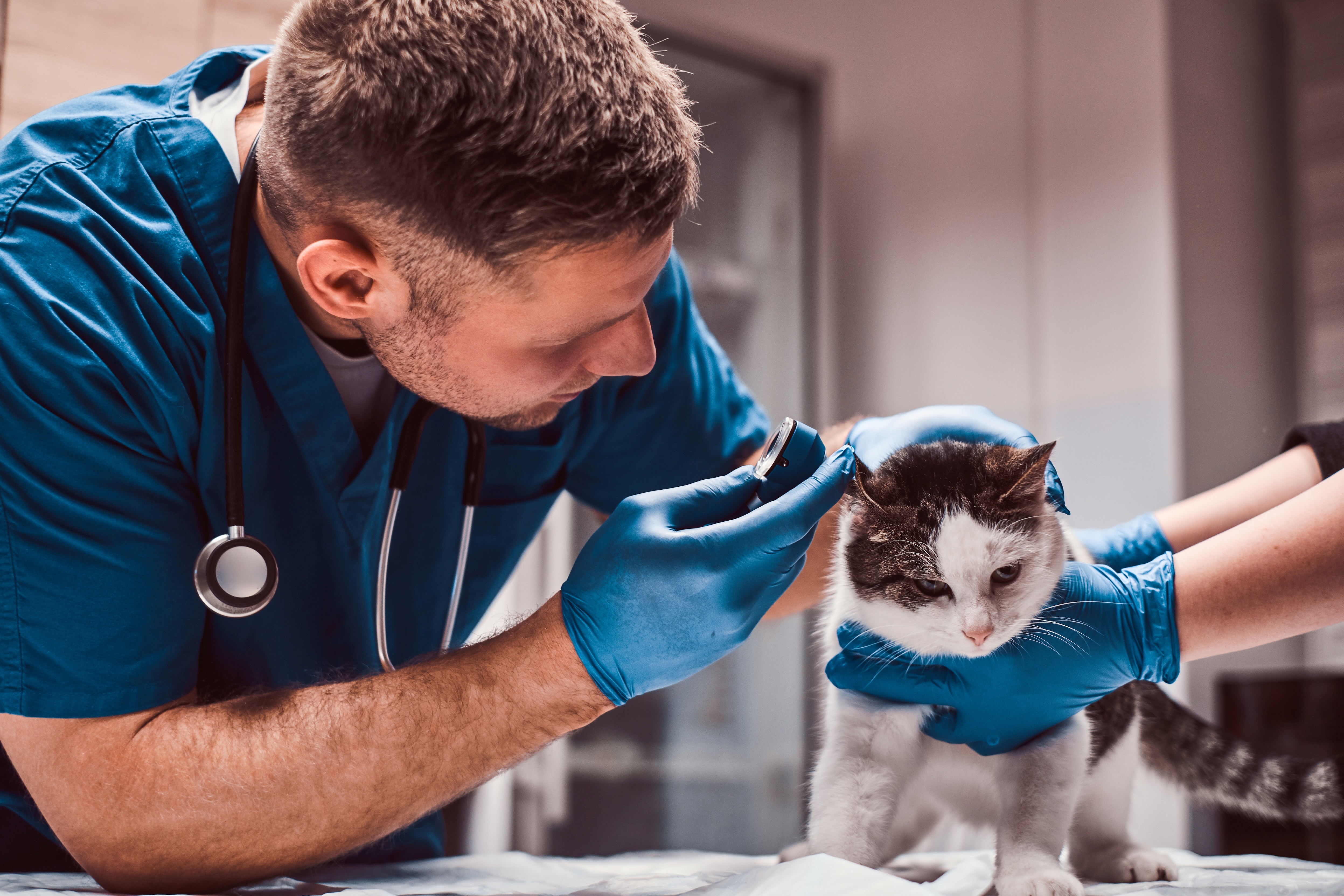
This document, sometimes called a Certificate of Veterinary Inspection (CVI), is the formal record of your pet’s health at a specific point in time. It's issued after a thorough physical exam where a vet checks for any signs of illness and makes sure all required vaccinations are current.
Trying to travel without one can lead to a real headache—think long delays, unexpected quarantines, or even being denied entry at your destination. It's a truly ruff situation you definitely want to avoid.
Essentially, the certificate answers a few key questions for travel authorities:
Fitness for Travel: Is your pet healthy enough to handle the stress of the trip?
Vaccination Proof: Are they up-to-date on all required shots, especially rabies?
Disease Prevention: Are they free from parasites and contagious diseases?
Following the Rules: Have you followed all the specific import rules for your destination?
The table below breaks down the typical information you'll find on one of these forms.
Key Information on a Veterinary Health Certificate
Information Category | What It Includes |
|---|---|
Pet Identification | Name, breed, age, sex, color, and microchip number. |
Owner Information | Your name, current address, and destination address. |
Vaccination Records | Details on rabies and other required vaccines, including dates. |
Physical Exam Findings | A statement from the vet confirming the pet is healthy and free of disease. |
Parasite Treatments | Records of recent flea, tick, or deworming treatments, if required. |
Lab Test Results | Information on any necessary blood tests, like a rabies titer test. |
This quick-reference table shows how the certificate provides a complete snapshot of your pet's health status for officials.
The demand for these documents is only growing. The global veterinary services market was valued at an impressive USD 110.8 billion in 2023 and is expected to climb, partly driven by what owners are spending on premium pet care, including travel services.
Think of the health certificate as a bridge between your veterinarian's office and your travel destination. It translates your pet’s health record into a universally accepted format that officials can quickly understand and approve.
Ultimately, getting a veterinary health certificate is a key part of responsible pet travel. It’s what helps ensure a smooth and safe journey for your companion. For a deeper dive into what's involved, check out our complete guide on the pet travel health certificate.
How to Get Your Pet's Health Certificate Step by Step
Getting a veterinary health certificate can feel like you're trying to solve a puzzle with a deadline. But if you break it down into a clear, step-by-step plan, it's completely manageable. Think of it less like a mountain of paperwork and more like a simple travel checklist for your pet.
Your journey doesn't actually start at the vet's office. It begins with a little bit of homework. Every destination plays by its own set of rules, and getting those straight from the beginning is the key to a smooth trip. This one step will save you from a world of backtracking and headaches down the road.
Start with Destination Research
Before you do anything else, you need to find out exactly what the import requirements are for where you're headed. The rules for flying from one state to another are worlds apart from what's needed for an international trip. The USDA APHIS Pet Travel website is your best friend here—it has a search tool that lets you look up the specific rules for countries all over the globe.
For instance, a trip from California to New York might just need a basic Certificate of Veterinary Inspection (CVI). But if you're flying to a country in the European Union? You're looking at ISO-compliant microchips, very specific rabies vaccination timelines, and a government endorsement on top of everything else.
This is exactly what the USDA's tool is for—helping you build a personalized checklist before you even pick up the phone to call your vet.
Find and Schedule with an Accredited Veterinarian
Once you know the rules of the game, it's time to find the right vet. Here's an important point: not just any veterinarian can sign off on international health certificates. For most travel across borders, you'll need to see a USDA-Accredited Veterinarian. These are vets who've gone through extra training to handle the paperwork required to move animals from one country to another.
When you call to make the appointment, make it clear you need an exam for a veterinary health certificate for travel. That's the signal to the clinic staff that this isn't just a routine wellness check, and they'll block out the right amount of time.
Pro Tip: It's a good idea to double-check that your vet is accredited for your specific type of travel. A certificate for an international trip signed by a non-accredited vet may be invalid, which could bring your travel plans to a screeching halt.
The Health Certificate Examination
The exam itself is a thorough, nose-to-tail health check. Your veterinarian will do a full physical to make sure your pet is healthy and shows no signs of infectious diseases. This is also their chance to verify all the critical details.
Here’s what you can expect during the appointment:
Microchip Scan: The vet will scan your pet to confirm the microchip number is correct and matches your records. For many international destinations, this has to be an ISO-compliant 15-digit microchip.
Vaccination Review: They'll go over your pet's vaccination records with a fine-tooth comb, especially the rabies vaccine. The timing here is often very important.
Parasite Treatments: Depending on where you're going, your pet might need specific treatments for fleas, ticks, or internal parasites, all given within a strict timeframe before you leave.
Filling Out the Forms: Finally, the vet will complete the official health certificate with all the necessary information.
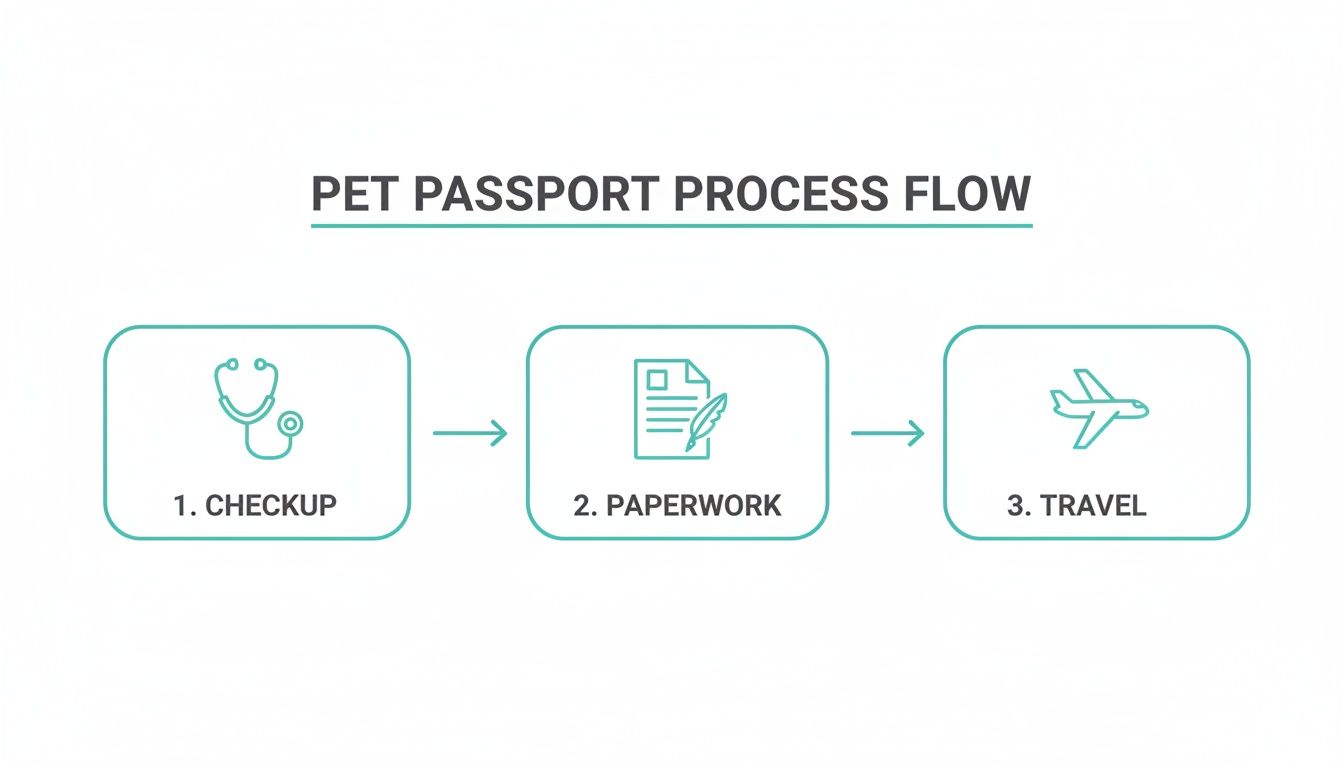
Each step—the checkup, the paperwork, the final sign-off—builds on the last one to get you ready for a hassle-free journey.
Manage Your Timeline Carefully
Timing is, without a doubt, the trickiest part of this whole process. Most health certificates are only valid for a very short window, often just 10 days. This is the famous "10-day window," which means the final exam and the issuing of the certificate have to happen within 10 days of your arrival at your destination.
Here’s a rough timeline to keep you from scrambling at the last minute:
3+ Months Before Travel: Start researching your destination’s rules. See if a rabies titer test is needed, because getting those results back can take months. Make sure your pet's microchip and rabies vaccine are up to date and compliant.
1-2 Months Before Travel: Book your flights and schedule that appointment with your USDA-accredited vet. Start gathering all your pet's records.
Within 30 Days of Travel: Get any required parasite treatments done. If a rabies booster is due, now's the time.
Within 10 Days of Travel: This is go-time. Get the final health exam done and have the veterinary health certificate issued. If you need a USDA endorsement, you'll submit the paperwork for that immediately after this appointment.
Beyond the official documents, preparing your pet might mean looking into additional pet services and programs for things like crate training or anxiety. And for a deeper dive on the government sign-off, our guide on the USDA pet travel certificate walks you through those specific requirements. Planning ahead really is the secret to a stress-free trip for everyone involved.
Domestic Versus International Travel Requirements
Thinking about a cross-country road trip with your furry co-pilot? Or maybe an overseas adventure? While both sound exciting, the paperwork involved is worlds apart. The requirements for a veterinary health certificate change dramatically once you cross a border, so it's smart to know which set of rules applies to your trip.
It's a common misconception that all pet travel documents are the same. A simple trip from one state to another is often pretty straightforward, but international travel adds multiple layers of checks and regulations. Getting this wrong isn't just a minor hiccup—it could mean being turned away at the border.
The Simplicity of Domestic Journeys
For domestic travel within the United States, things are relatively simple. Think of it like showing your driver's license to get on a domestic flight—it's a standard check to confirm everything is in order. Most states just want to see a standard Certificate of Veterinary Inspection (CVI).
This document confirms a few basic but important things:
Your pet has had a recent health exam by a veterinarian.
They are up-to-date on their rabies vaccination.
They show no signs of contagious diseases.
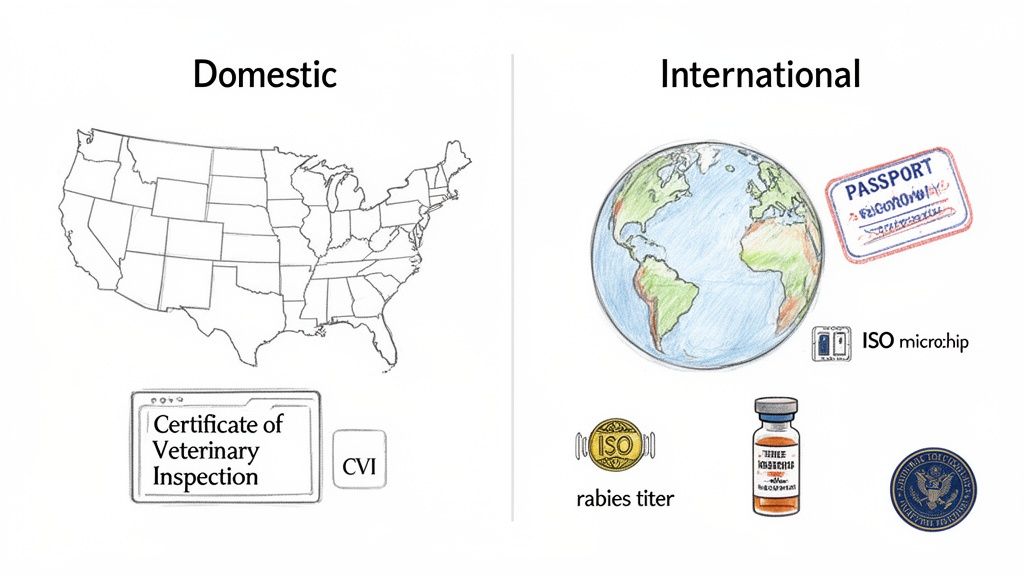
While some states have specific rules, like requiring heartworm tests for dogs, the process is generally consistent. The CVI is usually valid for 30 days, giving you a bit more flexibility than international certificates. It’s still a good idea to check the rules for your destination state, but the paperwork is much less of a headache.
The Intricacies of International Travel
Crossing an international border is a whole different ball game. Your destination country isn't just checking if your pet is healthy; they're enforcing biosecurity rules to protect their own animal populations. This means the requirements for an international veterinary health certificate are far more demanding.
Think of an international health certificate not as a single document, but as a full file on your pet. It must show that your companion meets every single one of the destination country's import laws, from microchips to blood tests.
These extra steps often require specialized knowledge from your vet. The growing complexity of these rules highlights the importance of advanced training in the veterinary field. In fact, the global veterinary education market is projected to reach USD 6.04 billion by 2033, partly driven by the need for expertise in areas like international pet travel. You can learn more about this growth from Grand View Research's industry analysis.
Comparing Domestic and International Pet Travel Rules
Let's break down the key differences side-by-side to see just how much the requirements can vary. It really puts the planning into perspective.
Requirement | Domestic (Interstate) | International |
|---|---|---|
Primary Document | Certificate of Veterinary Inspection (CVI) | Often a country-specific health certificate |
Veterinarian | Any licensed veterinarian | Often a USDA-Accredited Veterinarian |
Government Endorsement | Typically not required | USDA APHIS endorsement is often required |
Microchip | Recommended, but not always required | Usually required and may need to be an ISO-compliant 15-digit chip |
Rabies Titer Test | Almost never required | Required for many rabies-free or rabies-controlled countries |
Validity Window | Usually valid for 30 days | Very strict, often only 5-10 days |
This comparison makes it crystal clear why international pet travel requires so much more planning. For a deeper dive, you might be interested in our guide covering international pet travel requirements. The stakes are simply higher, and every single detail matters.
Common Mistakes to Avoid During the Process
Getting a veterinary health certificate is a process where the details are everything. One tiny oversight can snowball into a massive headache, possibly derailing your trip or forcing a frantic last-minute scramble. By learning from the common pitfalls others have stumbled into, you can keep your travel plans on track. It’s all about being proactive to avoid a real cat-astrophe.
Even the most organized pet owner can slip up, but a little foresight goes a long way. Let's walk through the most frequent errors and how to sidestep them, ensuring a smoother journey for you and your furry co-pilot.
Getting the Timing Wrong
One of the easiest traps to fall into is misjudging the timeline for the health exam. So many travelers assume any recent check-up will work, but that’s rarely the case. Most destinations, especially international ones, have a very strict validity window for the health certificate.
The Mistake: Scheduling the health certificate exam too early. If your destination requires the certificate be issued within 10 days of arrival, getting it done on day 11 means it’s invalid before you even pack your bags.
The Solution: First thing's first: confirm the exact validity period required by your destination country or state. Then, book your vet appointment to fall squarely within that window, making sure to account for any extra time needed for government endorsements.
This is a classic case where "the early bird gets the worm" just doesn't apply. In pet travel, the "on-time bird" is the one who gets to fly. Precision with your dates is very important.
Not Using a USDA-Accredited Veterinarian
This is a critical detail that trips up a surprising number of people, particularly first-time international travelers. For many trips that cross a U.S. border, the veterinary health certificate should be completed and signed by a vet who holds a special accreditation from the USDA. Your wonderful family vet might not have this specific credential.
The Mistake: Assuming any licensed veterinarian can issue an international health certificate. A certificate signed by a non-accredited vet may be rejected by officials, stopping your travel plans cold.
The Solution: When you call to book the appointment, ask this one simple question: "Is the veterinarian USDA-accredited for issuing international health certificates?" It's a five-second check that can save you from a major disaster.
Overlooking Microchip Requirements
Another frequent hiccup is the microchip. Just having one isn't enough; it often has to be the right kind for international travel. Many countries use specific scanner frequencies, and they require a compatible microchip to read your pet's information upon arrival.
Forgetting this detail can lead to serious problems. The last thing you want after a long flight is to find out your pet's identification can't be verified by local authorities.
The Mistake: Traveling with a non-compliant microchip. Many countries, especially those in the European Union, require a 15-digit ISO 11784/11785 compliant microchip. An older 9 or 10-digit chip just won't cut it.
The Solution: Well before you travel, have your vet scan your pet’s microchip and confirm its type. If it's not ISO-compliant, you’ll need to have a new one implanted before the rabies vaccination is given. This is key because it ensures all the paperwork links back to the correct, scannable chip.
How Technology Is Taming the Health Certificate Workflow
Anyone who's managed a veterinary health certificate knows the traditional process feels like a paper chase against a ticking clock. Between complicated country-specific rules, tight deadlines, and the risk of one typo derailing the entire trip, it’s a high-stakes game for everyone involved. A single mistake can mean costly delays or, in the worst-case scenario, a pet being turned away at the border.
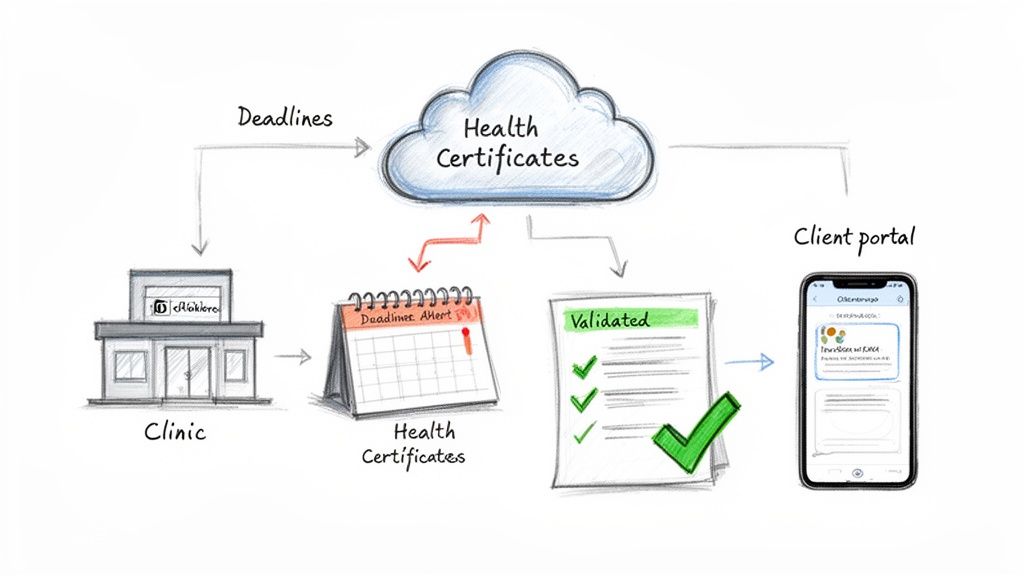
Thankfully, technology is finally stepping in to help. Specialized, cloud-based software is changing the game, turning a confusing, error-prone process into something clear and organized. It's the difference between navigating a foreign city with a tattered paper map versus using a GPS—both might get you there, but one is a whole lot smarter and more reliable.
Automating Tasks and Managing Deadlines
Juggling multiple pet travel cases at once is one of the biggest headaches for veterinary clinics. Every pet has a different travel date, a unique destination with its own rulebook, and a long list of deadlines for exams, treatments, and endorsements. Trying to keep all that straight with spreadsheets and sticky notes is a recipe for a last-minute scramble.
This is where automated workflows make a real difference. A purpose-built platform can:
Build dynamic checklists: The software generates a step-by-step task list based on the pet’s specific travel date and destination.
Send out deadline alerts: It automatically reminds the team about key dates, like the crucial "10-day window" for the final exam or when the USDA endorsement packet needs to be shipped.
Flag urgent cases: The system can highlight pets with looming travel dates, making sure no one slips through the cracks during a busy week.
Moving from manual tracking to an automated system brings a sense of calm and order to the chaos. It helps prevent the frantic rush that so often comes with preparing a veterinary health certificate.
Catching Errors Before They Become Disasters
A simple mistake on a health certificate—a swapped microchip number or a wrong vaccination date—can invalidate the whole document. These slip-ups are easy to make but can be a nightmare to fix once the paperwork is out the door. This is where real-time validation becomes a game-changer.
Modern software acts like a digital proofreader for pet travel documents. It cross-checks information as you type, instantly flagging inconsistencies or missing details long before they can cause a problem at the border.
This instant feedback is invaluable. It helps catch human error on the spot, ensuring every detail on the veterinary health certificate is accurate and lines up with the destination country's rules. This greatly reduces the risk of rejection and gives both the clinic and the pet owner much-needed peace of mind.
A Clearer Connection With Pet Owners
Veterinary teams spend a huge amount of time on the phone, answering the same questions and giving status updates to anxious pet owners. A client portal built into the platform solves this by giving owners direct access to the information they need, when they need it.
Pet owners can log in to see their pet's travel timeline, check off completed tasks, and upload their own documents. This transparency keeps them in the loop and helps ease their anxiety, which in turn cuts down on inbound calls to the clinic. It creates a smoother, more collaborative experience for everyone. A clear plan can make all the difference, which is why a good pet travel planner is such a helpful tool for organizing these details.
The veterinary field is always adapting. As of 2023, there were 78,220 veterinarians in the United States, backed by over 16,000 board-certified specialists. This growing expertise is more than capable of handling complex tasks like travel certification, and the right technology helps them do it far more efficiently. By embracing these tools, veterinary practices can save time, reduce errors, and deliver a better, less stressful experience for pets and their people.
Answering Your Top Veterinary Health Certificate Questions
Even with the best-laid plans, a few nagging questions always seem to surface when you’re prepping for pet travel. Let's face it, navigating the world of the veterinary health certificate can feel like you’re trying to learn a new language. But don't worry, we're here to translate.
This section cuts through the noise to tackle the most common questions we hear. Think of it as the final check on your travel list, designed to give you clarity and confidence before you head out.
How Long Is a Health Certificate Valid?
This is easily one of the most critical questions, and the answer is all about timing. A veterinary health certificate has a much shorter shelf life than most people expect. And to make it trickier, the validity period isn't standardized—it’s set by your destination.
For most international trips, the health certificate is only good for 10 days. This is what's known as the "10-day window." It means your pet’s final exam and the certificate's issue date must fall within 10 days of your arrival, not your departure. This tight timeline is designed to give officials the most current snapshot of your pet's health.
For domestic travel within the U.S., you usually get a little more breathing room. A standard Certificate of Veterinary Inspection (CVI) is often valid for 30 days. But don't get too comfortable; you should always double-check the specific rules for your destination state just in case.
A good rule of thumb is to treat the validity period as a firm deadline. Being off by even a single day can render the entire document useless, so careful planning is your best friend here.
Can I Use a Digital or Electronic Health Certificate?
In a world where our phones hold everything from boarding passes to payment cards, it’s only natural to wonder if pet travel documents have gone digital. The short answer is: yes, but with some big "ifs" attached.
The move toward digital health certificates is definitely happening, but it isn’t universal yet. Many domestic routes and a growing number of international destinations are starting to accept them. For example, the USDA's Veterinary Export Health Certification System (VEHCS) lets accredited vets submit certificate info online, which can really speed things up.
However, a lot of countries still prefer paper. They may require a physical, hard copy of the veterinary health certificate with an original ink signature and an official government seal or stamp. A PDF on your phone just won't cut it at their border.
Before you go paperless, make sure you:
Check with Your Airline: Airlines have their own policies and might insist on seeing physical copies of everything at check-in.
Verify Destination Rules: Go straight to the source. The official import requirements on your destination country's government website will tell you exactly what they accept.
Always Carry a Backup: Even if digital is officially okay, it’s just smart to have a printed hard copy with you. Tech fails, but paper is reliable.
The trend is moving in the right direction, but for now, the "better safe than sorry" approach of having a physical document in hand is the smartest way to travel.
What If My Travel Dates Change?
Life happens. Flights get delayed, plans shift, and suddenly your carefully timed schedule is up in the air. This can be a real problem when your pet's health certificate is on a ticking clock.
So, what happens if your travel dates change after the certificate has already been issued?
If it's a small change and your new arrival date still falls within the certificate's validity window (like that crucial 10-day period), you might be in the clear. But if the delay pushes you outside that window, your existing veterinary health certificate is likely no longer valid.
When that happens, you have to hit the reset button on the final step. Here’s what you may need to do:
Call Your Vet Immediately: Let them know about the change as soon as you do.
Schedule a New Exam: Your pet may need another check-up to confirm they're still fit to fly on the new dates.
Issue a New Certificate: The vet will have to complete a brand-new health certificate with the updated information.
Get a New Endorsement: If USDA endorsement was required, the new certificate will need to be sent for endorsement all over again.
This is exactly why it’s so important to be as sure as you can be about your travel dates before you enter that final 10-day countdown. Having to re-do a certificate is stressful and can be expensive, but it's the only way to help ensure your pet can travel safely if your plans get derailed.
Feeling overwhelmed by the paperwork and deadlines? Passpaw is here to help. Our platform simplifies the entire process, providing automated checklists, deadline reminders, and a clear portal for communication between you and your vet. Let us handle the complexity so you can focus on the exciting adventure ahead with your best friend. Learn more about how Passpaw makes pet travel easier at passpaw.com.

More articles
From regulatory changes to best practices for veterinarians and pet owners, our resources keep you ahead of the curve.