Are you a team member in a veterinary practice?
Are you a pet parent planning a trip with your furry pal?
Taking a Cat to Hawaii: Your 2026 How-To Guide
You’ve got the flights half-picked, the housing tabs open, and a cat who has no idea island life is being planned on their behalf. That’s usually where this process begins. One part excitement, one part paperwork, and one part low-grade panic after reading Hawaii’s pet entry rules for the first time.
Taking a cat to Hawaii is absolutely doable. It just isn’t casual.
Hawaii protects its rabies-free status with strict import rules, and that means your cat’s trip has to be handled like a project, not a last-minute add-on. The good news is that there is a workable path. The biggest shift came when Hawaii introduced the Direct Airport Release program in 2017, allowing qualifying cats and dogs to avoid the old mandatory 120-day quarantine. Since then, over 20,000 pets have used that route, according to Passpaw’s Hawaii pet travel overview.
That single change is why the process feels hard, but not hopeless. Before that, even prepared owners faced a long hold. Now, careful planning can mean landing in Honolulu and taking your cat with you the same day after inspection.
Most problems I see come from timing, not from impossible rules. Owners wait too long to start. A clinic enters one date wrong. Someone assumes a vaccine record can be “fixed later.” Hawaii is not the place for fuzzy admin.
Still, this isn’t a hiss-terical situation. It’s a checklist.
If you want a broader overview of the state’s process before diving into the timeline, this guide on pet travel to Hawaii is a useful companion. Then come back and work backward from your arrival date, because that’s the cleanest way to keep every deadline straight.
Your Aloha Dream and Your Cat's Grand Adventure
The dream often begins. A lanai. Trade winds. A cat stretched in a sunny patch of floor like they personally negotiated the lease.
Then the reality lands. Hawaii treats incoming pets very differently from most destinations, and for good reason. The state’s rules are built around keeping Hawaii rabies-free, which means taking a cat to Hawaii involves more than a carrier and a boarding pass.
Why this trip feels bigger than a normal flight
A mainland move with a cat often means a vet visit, an airline reservation, and a few stress treats. Hawaii isn’t that kind of trip.
Your cat’s records have to line up. The order of steps matters. The timing matters even more. If one item is missing or done out of sequence, the consequences aren’t just “bring it next time.” They can affect whether your cat qualifies for quick release at arrival.
Hawaii is strict, but it’s predictable. If you respect the sequence, the process becomes much easier to manage.
That predictability is what helps. There’s no mystery once you know the route.
The path that most owners want
For most clients, the goal is simple. Qualify for Hawaii’s 5-Day-or-Less Quarantine Program with Direct Airport Release at Honolulu, so your cat can be inspected and released instead of heading into a long quarantine track.
That’s the version of the story everyone wants. You land, collect your cat after inspection, and start settling in together.
What works is early planning and clean documentation. What doesn’t work is treating the state’s requirements like flexible suggestions. Hawaii’s system rewards organized owners and organized veterinary teams.
A practical mindset helps more than nerves do:
Pick your arrival date first. Every other deadline flows backward from that.
Work with records, not memory. Vaccine timing, chip details, and form versions should all be checked against documents.
Expect admin to take real effort. The medical side matters, but paperwork is where many trips wobble.
The process can feel like a lot when you first see it. Then it becomes manageable, one item at a time.
The Purr-fect Hawaii Pet Travel Timeline
Reverse planning is the least stressful way to handle taking a cat to Hawaii. Instead of asking, “What do I do now?” ask, “What must already be done by the day I land?”
That one shift keeps owners from scrambling in the final stretch.
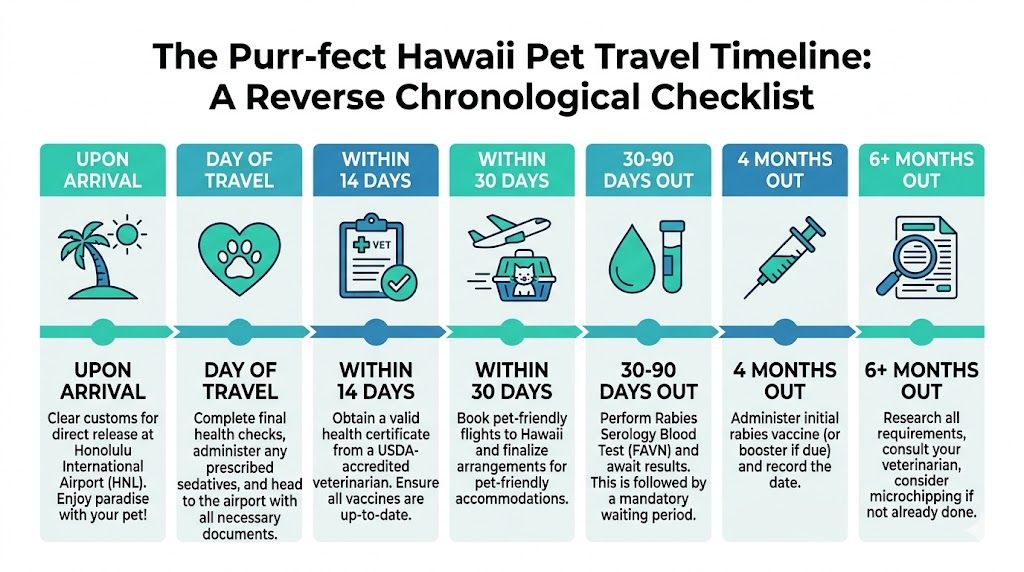
If you want a system that maps deadlines based on your destination and travel date, Passpaw’s pet travel planner is one example of a tool that helps owners and clinics keep the sequence straight.
Six plus months out
Start here if you can. Earlier is calmer.
This is the stage for reading Hawaii’s current requirements carefully, reviewing your cat’s medical history, and booking a planning visit with your veterinarian. If your cat doesn’t already have a readable ISO 11784/11785-compliant microchip, this is when that issue should be addressed.
A few things belong on your checklist right away:
Confirm the microchip standard. Hawaii requires an ISO-compliant chip.
Pull every rabies record you have. Don’t rely on a clinic summary if originals are available.
Choose a realistic arrival date. If your own timeline is tight, move the trip, not the rules.
Owners often lose time here because they assume their cat is “probably current.” Probably isn’t useful when dates must match.
Four months out
This is usually the vaccine audit period.
Hawaii requires at least two rabies vaccines, spaced more than 30 days apart, and the order matters with the microchip. If the chip wasn’t implanted before the rabies vaccination sequence used for travel qualification, your vet may need to help you determine the cleanest path forward.
This period is less dramatic than it sounds. It’s mostly about getting the record set into a condition Hawaii can accept.
A simple planning table helps:
Time window | Priority |
|---|---|
Early planning stage | Verify microchip and record history |
Rabies review stage | Confirm the vaccine sequence can support travel |
Test preparation stage | Get ready for the FAVN blood draw |
Booking stage | Coordinate flights and housing around approval timing |
Thirty to ninety days out
This is the stretch people underestimate.
Your cat needs a rabies antibody titer test (OIE-FAVN) from an approved lab, and the result must be at least 0.5 IU/mL. After the blood draw, there is a required 30-day wait before arrival eligibility. That waiting period is one of the biggest trip-makers or trip-breakers in the whole process.
Practical rule: Don’t schedule your flight until you’ve checked that the FAVN timeline and your arrival date actually match.
This is also the stage when you should start building your submission packet, not the week before mailing it. If documents dribble in from different clinics or old records, gather them now.
Within thirty days
Now the trip starts to feel real.
Book a pet-friendly flight into Honolulu if your plan depends on direct release there. Finalize pet-friendly housing, confirm airport logistics, and make sure everyone involved knows your cat is traveling under Hawaii entry rules, not just on a domestic flight.
Use this window to do the boring work that saves the day later:
Review names and chip numbers carefully. One typo can create a mess.
Check document originals. Hawaii wants original rabies certificates in the packet.
Prepare your cat for the carrier. Practice matters more than most owners expect.
Within fourteen days
Your cat needs a health certificate issued within 14 days of arrival by a USDA-accredited veterinarian. This is not the appointment to improvise.
Bring every relevant record, and confirm the clinic understands Hawaii timing. The certificate should match the rest of the file exactly. If a clinic uses a travel workflow, then it earns its keep.
Also make sure any required parasite-related treatments and supporting notes are handled exactly as your vet advises for Hawaii travel paperwork.
Day of travel and arrival
Travel day should feel boring. That’s the goal.
Pack your cat’s essentials, bring your paperwork in a tidy folder, arrive early, and assume airport staff may need time to review pet details. At Honolulu, qualifying cats can be inspected for Direct Airport Release after landing.
The best travel days aren’t glamorous. They’re organized. Your cat may disagree with the carrier, the airport noise, and your entire decision-making framework, but once you’ve done the prep, the final step is mostly follow-through.
Mastering the Key Entry Requirements
The biggest Hawaii mistakes happen when owners know the list, but not the logic behind the list. Order matters here. So does wording.
The microchip has to come first
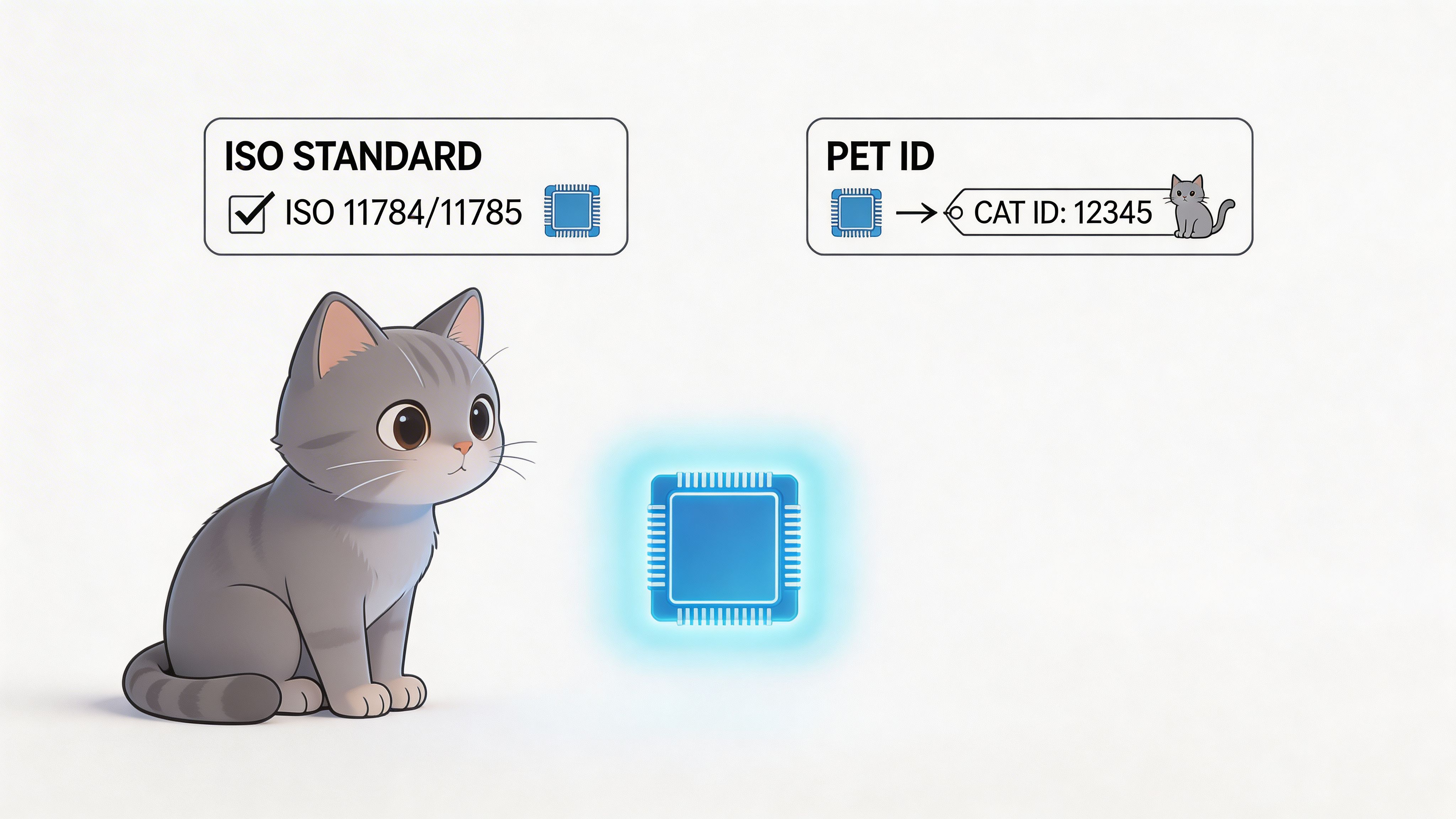
Hawaii requires an ISO 11784/11785-compliant microchip, and it must be implanted before the rabies vaccinations used for travel qualification.
That sequencing point is easy to miss and expensive to fix.
Why is Hawaii so particular about this? Because the chip ties the cat to the records. If the chip comes later, the state can’t use it as the anchor for the vaccine and testing history in the same way. A chip that exists only “now” doesn’t cleanly verify what happened before.
If your cat already has a chip, don’t assume it’s readable or documented the same way everywhere. Scan it. Match the number against your records. Then match it again.
The rabies history has to be clean
Hawaii requires a series of at least two rabies vaccines, spaced more than 30 days apart. For owners, the practical lesson is simple. Don’t look at one current rabies certificate and assume you’re set.
The state wants a documented history that supports the import pathway. Missing certificates, vague clinic notes, and uncertain dates are all trouble.
A useful way to think about the vaccine record:
First requirement: there must be a qualifying chip on board first
Second requirement: the vaccine series has to show the needed spacing
Third requirement: the paperwork has to prove it clearly
The FAVN test is not just “a blood test”
The OIE-FAVN rabies antibody titer test is one of the most misunderstood steps. The required result is at least 0.5 IU/mL. Then comes the part many owners forget. Hawaii also requires a 30-day wait after the blood draw.
That means a passing result alone doesn’t make your cat arrival-ready.
Send yourself one calendar reminder for the blood draw date and another for the earliest eligible arrival date. Treat them as separate deadlines.
The state’s framework under Chapter 4-29 of the Hawaii Administrative Rules is strict because pets that don’t qualify can face up to a 120-day quarantine at the Animal Quarantine Station on Oahu, while qualifying pets may use the 5-Day-or-Less Quarantine Program and, when approved, Direct Airport Release at Honolulu after inspection, according to the Hawaii Animal Quarantine Station information page.
The mailing deadline is not optional
A lot of owners focus so hard on the medical work that they fumble the submission deadline. To qualify for the 5-Day-or-Less Quarantine Program, documents including the AQS-279 form and original health records must reach the Animal Quarantine Station at least 10 business days prior to arrival. Missing that deadline can increase the fee from $185 to $244 per pet and may make Direct Airport Release impossible, as outlined by Hawaii’s animal quarantine guidance.
If I had to boil the whole process down to one truth, it’s this:
The right steps done in the wrong order can still derail the trip.
That’s why owners who seem “mostly ready” sometimes have worse outcomes than the ones who start early and follow the sequence carefully.
Assembling Your Documents and Travel Gear
By the time your cat’s medical timeline is in place, the job shifts from veterinary compliance to travel logistics. You then turn a stack of requirements into a real trip.
Build one complete document set
Your travel packet should be easy to carry, easy to review, and hard to mix up.
For most owners, that means gathering:
Original rabies certificates
The FAVN lab report
The completed AQS-279 form
The health certificate from a USDA-accredited veterinarian
Proof tied clearly to the microchip number
Don’t leave these scattered across email, clinic printouts, and screenshots. Put them in one folder and keep copies for yourself. Administrative mistakes often happen when a record exists, but no one can produce it fast enough.
If your clinic handles travel paperwork regularly, ask how they review Hawaii submissions before they go out. Some practices use digital workflows to validate required fields, share forms with owners, and track what’s still missing. This overview of vet health certificates for travel is a useful reference point when you’re coordinating with the issuing veterinarian.
Choose gear your cat can tolerate
A technically acceptable carrier that your cat hates can still make travel miserable.
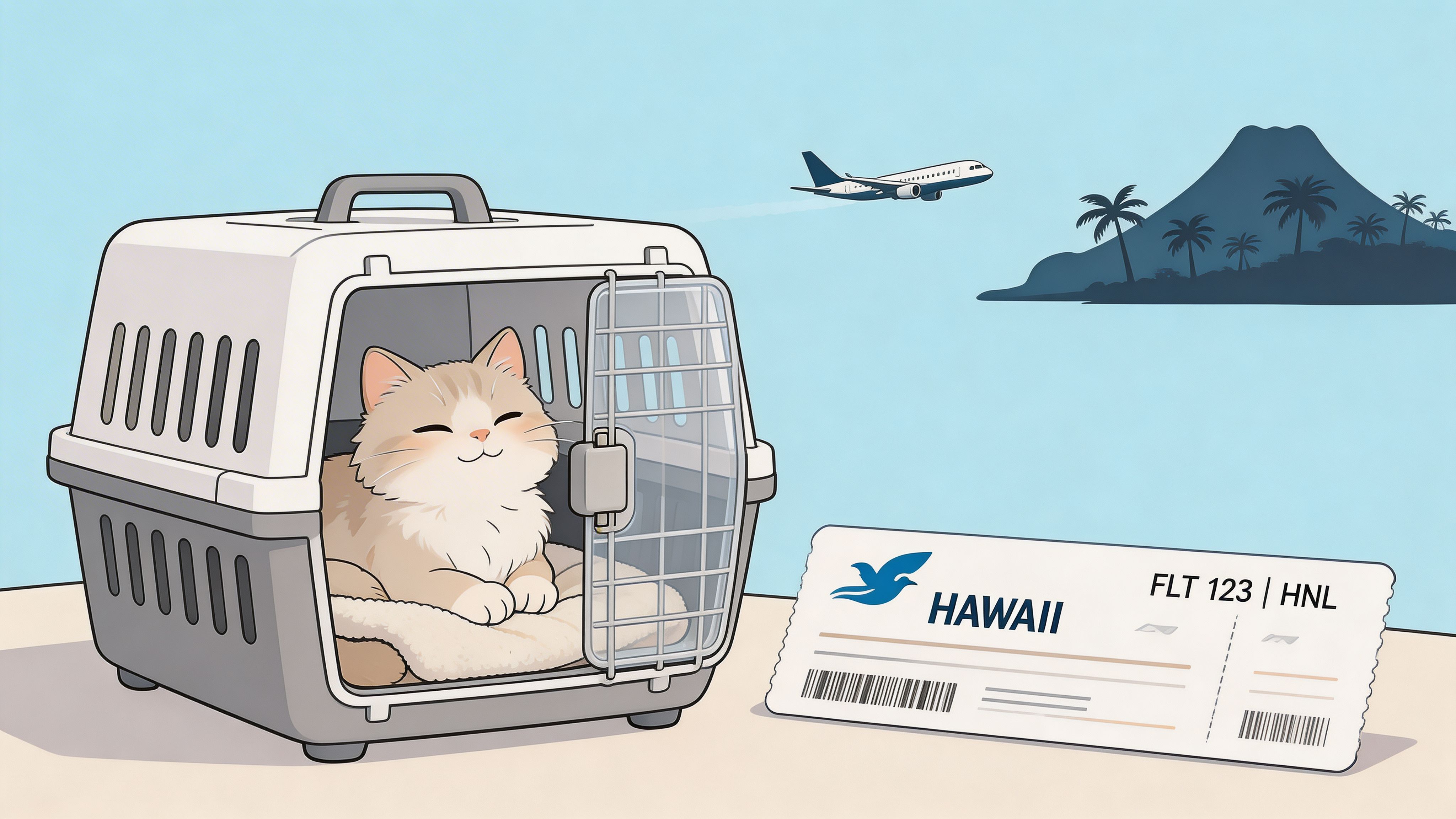
Look for a secure, well-ventilated carrier that fits your airline’s requirements and gives your cat enough stability to rest. If you want a practical breakdown of features, sizing, and in-cabin comfort, this guide to choosing the best cat carrier for air travel is worth reading before you buy.
A few gear choices matter more than trendy add-ons:
Absorbent bedding: Useful if your cat gets motion stress.
Clear labeling: Add your contact details and microchip info.
Familiar scent: A small blanket from home can help some cats settle.
Keep the travel setup simple
Owners sometimes overpack for the cat and underprepare for the airport process. Bring what your cat needs, but keep the setup manageable.
You want a carrier that opens safely, documents you can reach quickly, and a plan for feeding and comfort that doesn’t create airport chaos. Sleek travel starts with boring prep. That’s not glamorous, but it is very cat-approved by the end of the day.
The Final Countdown and Arrival in Paradise
The last stretch is where nerves spike. That’s normal. By this point, though, the hard part should already be done. The final days are about confirming details, not reinventing the plan.
In the last two weeks
Your health certificate window is active now, so timing gets tight.
Confirm that your veterinarian has issued the certificate within the required window and that every identifier matches your file. Review your mailed packet tracking and make sure the Animal Quarantine Station received what it needed. If you’re missing clarity on receipt or status, don’t guess. Check.
Your last-days checklist should be short and deliberate:
Re-scan the microchip at the clinic if there’s any doubt
Review names, dates, and IDs one final time
Pack records in carry-on luggage, not checked bags
Prepare your cat’s carrier with familiar bedding and simple essentials
The final week is not the time to “clean up” bad records. It’s the time to confirm good ones.
Travel day
Keep the routine calm. Feed according to your vet’s advice and your cat’s travel tolerance. Leave extra time for check-in. Airport staff may not see Hawaii pet entries every day, and a little patience goes a long way.
Cats usually do best when owners stay boring and steady. Too much fuss can make a nervous cat more alert, not less. Carrier covered lightly, paperwork ready, voice calm. That’s the vibe.
If your veterinarian has prescribed anything for travel, use it only as directed by that veterinarian. Don’t add last-minute experiments from the internet.
What arrival usually feels like
Landing in Honolulu with a cat can feel surreal after months of prep. You’re tired, your cat is annoyed, and everyone would like this to move briskly.
For qualifying entries, your cat will go through the inspection process connected to airport animal quarantine handling. The key is that nothing on arrival should surprise the file. Inspectors should see the same cat, chip, and paperwork trail you’ve been building all along.
Most owners feel the pressure drop once the review is underway. At that point, the project becomes a reunion. Then you head out, carrier in hand, and your cat begins their island era, whether they asked for it or not.
Common Mistakes That Can Derail Your Plans
The most expensive Hawaii errors usually sound small when they happen. “We thought that would be fine.” “The clinic said the record was on file.” “We mailed it, just a bit late.” Those are the phrases that turn a clean trip into a mess.
Mistake one, treating the order as flexible
A cat gets chipped after earlier vaccine records already exist, and the owner assumes the chip can be added to the file later.
That’s risky thinking.
Hawaii’s process depends on a traceable chain between the cat, the chip, and the qualifying medical steps. If the order is wrong, you may need a veterinarian to help rebuild the path in a way that works for travel. Don’t assume old records can be patched into compliance by annotation alone.
Mistake two, waiting too long to start the FAVN step
This one catches organized people too. They know the test is required, so they book it. Then they realize the waiting period and travel date don’t line up.
The fix is simple in concept and painful in practice. Start earlier.
A lot of owners look at a calendar and count only clinic appointments. Hawaii travel requires you to count waiting periods, mailing time, and the possibility that one document needs correction. Cats are many things, but last-minute project managers they are not.
Mistake three, trusting incomplete paperwork
A client may have the vaccine history, the lab result, and the health certificate, but one item doesn’t match the chip number exactly. Or the AQS-279 form is incomplete. Or originals never made it into the mailed packet.
That’s where trouble starts.
Watch for these paper-cut problems:
Mismatched identifiers: One digit off can trigger major delays.
Missing originals: If the state expects originals, copies won’t fix the gap.
Late packet delivery: Mailing something is not the same as it arriving on time.
Mistake four, using the wrong clinic workflow
Not every veterinary clinic handles travel paperwork often. That doesn’t make them a bad clinic. It just means Hawaii travel may require more coordination than a routine domestic trip.
If your clinic is unfamiliar with destination-based pet travel, ask direct questions. Who checks the sequence of records? Who confirms the health certificate timing? How are owners notified if something is missing?
Some practices use structured travel platforms to reduce manual errors, track deadlines, and keep owner communication in one place. That kind of workflow is especially useful when the destination is strict and the paperwork chain matters.
Good Hawaii prep isn’t about doing more. It’s about doing the right things in the right order, with proof.
Mistake five, booking around hope
This is the emotional one.
Owners fall in love with a flight, a move-in date, or a rental start date, then try to force the cat’s timeline to match it. When the medical or mailing timeline doesn’t support that date, they push ahead anyway.
That’s backwards.
For taking a cat to Hawaii, your cat’s eligibility timeline has to lead. The flight comes after. The move can be adjusted. The records can’t be argued into becoming earlier.
The owners who get through this smoothly are not always the most experienced travelers. They’re the ones who respect the calendar, double-check every record, and leave enough room for one thing to go wrong without the whole plan collapsing.
If you’re coordinating a Hawaii move and want a more structured way to manage deadlines, forms, and veterinary paperwork, Passpaw offers a cloud-based workflow that helps clinics and pet owners organize travel documents, validate requirements, and keep the process moving without so much last-minute scrambling.

More articles
From regulatory changes to best practices for veterinarians and pet owners, our resources keep you ahead of the curve.