Are you a team member in a veterinary practice?
Are you a pet parent planning a trip with your furry pal?
Rabies Shot Certificate: Smooth Pet Travel 2026
You’ve booked the flight. You’ve checked the pet carrier. You may even have a color-coded folder with tabs that say “airline,” “hotel,” and “treats.” Then the rabies paperwork lands on your to-do list, and suddenly the whole trip feels less like a vacation and more like an obstacle course.
That reaction is normal.
For many pet owners, the rabies shot certificate looks simple at first. It’s just proof of a vaccine, right? Then you learn that one date can change whether the vaccine counts for travel, one missing lot number can slow down paperwork, and one old record can become a problem at the border. Busy vet teams feel this too. The form itself may be short, but the rules around it are where people get tripped up.
Your Pet Travel Adventure Starts with Paperwork
A common scenario goes like this. A family is moving overseas with their dog. They already have yearly vet records, a rabies tag, and a recent exam. They assume they’re in great shape, then they find out the destination wants a specific sequence of events, not just proof that the dog has “had rabies shots.”
That’s the part that catches people off guard.
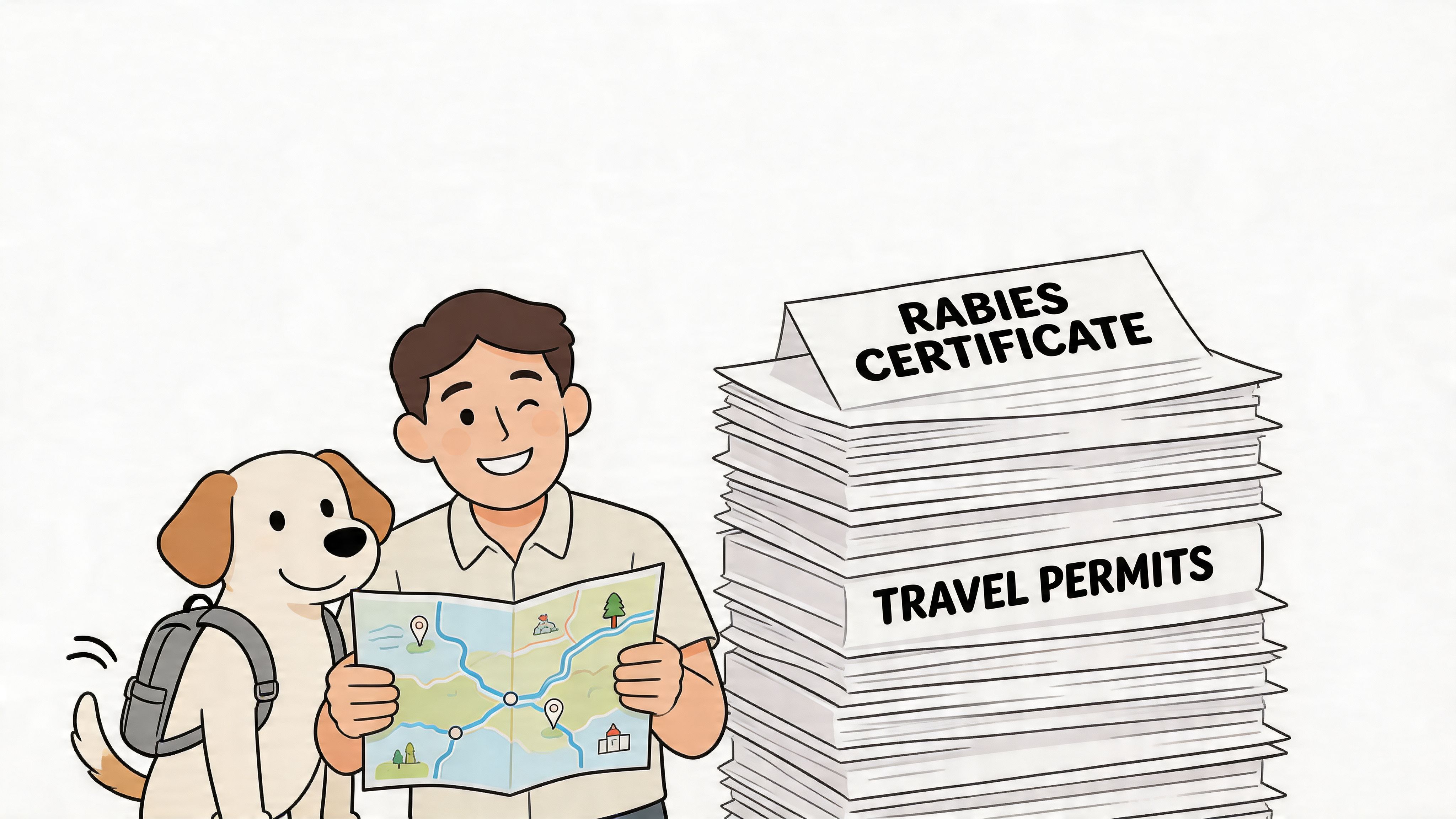
A rabies shot certificate matters because it isn’t just paperwork for airlines or border agents. It’s a public health document. According to the World Health Organization, dog bites are responsible for up to 99% of all human rabies cases worldwide, which is why countries take proof of rabies vaccination so seriously in pet travel policy (WHO rabies proof context).
Why this document feels bigger than it looks
A pet owner may say, “My dog is vaccinated, so we’re good.” Sometimes that’s true for routine local records. For international travel, though, officials often care about:
The exact vaccine date so they can count any waiting period correctly
The pet’s identity so the vaccine is tied to the right animal
The timing of the microchip because some countries won’t accept a vaccine that came before identification
The age of the certificate at entry because some places focus on when you arrive, not just the printed expiration date
That’s why a rabies shot certificate can make or break a trip.
Practical rule: Don’t treat the certificate as the last item on your checklist. Treat it as one of the first.
What stressed owners usually need most
Individuals don’t need more jargon. They need a calm, clear path.
If you’re planning travel soon, it helps to start with a broader pet travel planning guide before you zoom in on rabies paperwork. A good place to begin is this overview of pet travel preparation basics, then you can line up your vaccine records, chip details, and destination rules in the right order.
The good news is that the confusion usually comes from a few repeat problem areas. Once you understand those timing rules, the whole process feels much less snarled.
What Exactly Is a Rabies Shot Certificate
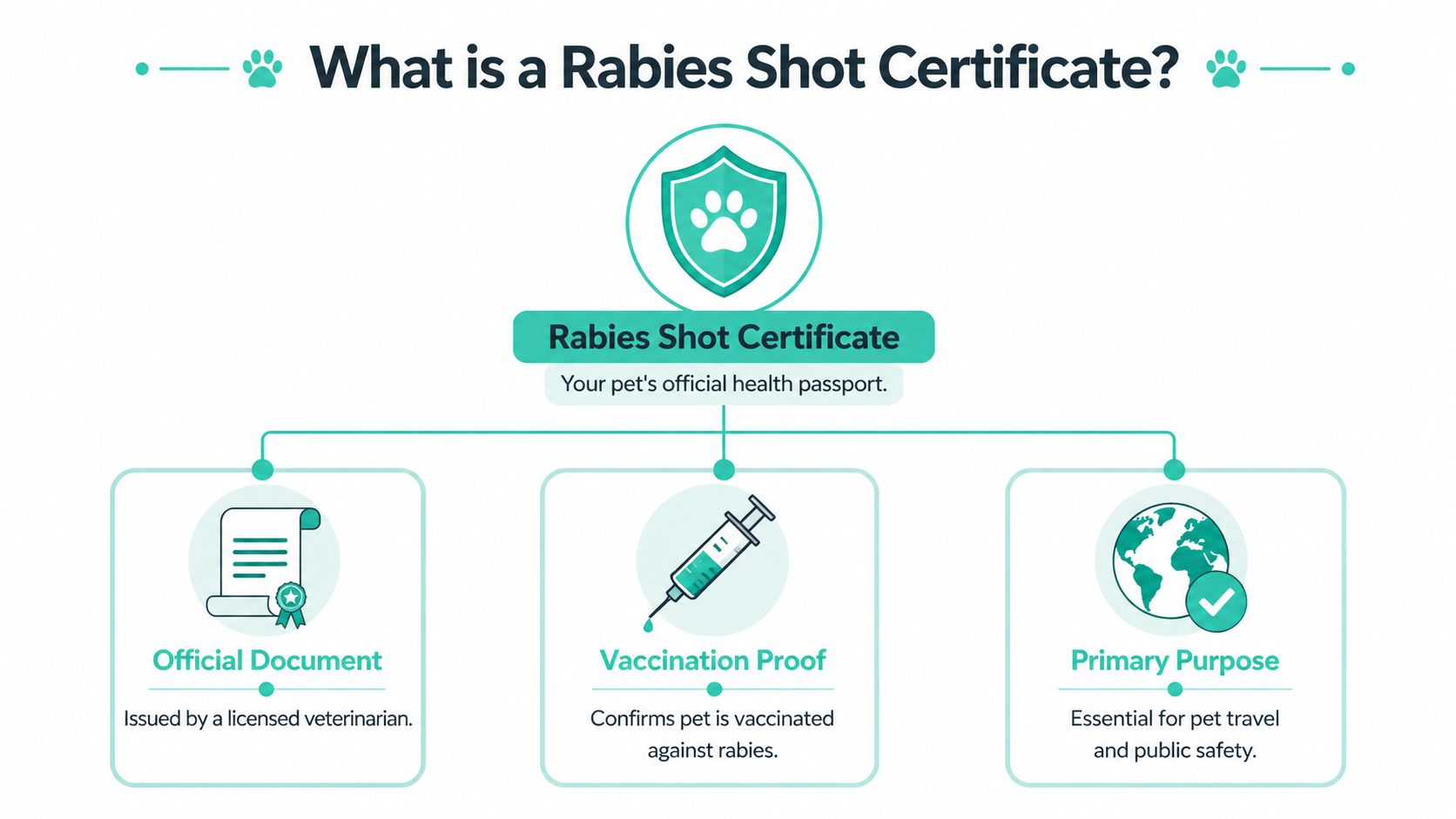
Think of a rabies shot certificate as your pet’s official health passport for one very specific issue. It shows that a licensed veterinarian gave a rabies vaccine and recorded the details needed to verify it.
That sounds basic, but each line on the form has a job.
What’s usually on the certificate
Most certificates include the pet’s identifying details, the owner’s information, and the vaccine record itself. Depending on the situation, that may include:
Pet description such as name, species, breed, color, sex, and age
Owner information so the certificate connects the animal to the correct person
Vaccine details including product name, administration date, lot or serial number, and expiration or validity information
Veterinary signature and clinic details so the document can be traced back to the issuing practice
If any of those pieces are unclear, the certificate may still work as a medical record, but it can become shaky as a travel document.
Why the details matter so much
A rabies certificate isn’t only for your filing cabinet. It supports a system that has had real public health results. In the United States, the canine rabies virus variant was completely eliminated from circulation in 2008, a milestone tied to broad vaccination and certification efforts (AAHA rabies guidance).
That’s why border officials and veterinary authorities care about precision. They’re not looking for paperwork theater. They’re trying to confirm that the vaccine can be trusted.
If the pet name is misspelled, the chip number is missing, or the vaccine information is incomplete, the issue isn’t just formatting. The record becomes harder to verify.
Certificate versus full medical record
Owners and even some clinic staff frequently misunderstand this distinction. A full medical record may mention a rabies vaccine, but a rabies shot certificate is a cleaner, travel-ready document built around proof.
For vet teams, this is similar to broader healthcare documentation work. Clear fields, consistent identifiers, and traceable entries matter. If your clinic wants a useful refresher on record quality, this article on understanding patient record standards is a practical comparison point.
If you want to see how these forms are typically structured, a rabies vaccine certificate template guide can help you spot the fields that often cause trouble before travel day sneaks up on you.
Decoding Certificates for International Travel
Domestic rabies records and international rabies records may look similar, but they don’t behave the same way. International travel adds a layer of scrutiny that feels fussy until you understand what officials are checking.
The biggest issue is often sequence.
The microchip first rule
For international pet travel, the United Kingdom requires the microchip to be implanted before or on the same day as the primary rabies vaccination, and the vaccine’s validity begins 21 days after administration (USDA APHIS guidance for UK travel).
That one rule creates several common headaches:
Vaccine before chip: The vaccine may not count as the travel-qualifying primary vaccine.
Chip after vaccine by one day: Owners often assume close is good enough. It usually isn’t.
Wrong date copied onto forms: Even when the pet is medically fine, bad paperwork can still cause rejection.
Here’s a plain-language example. Your dog got a rabies shot on Monday. The microchip was implanted on Tuesday. For ordinary clinic history, both events are in the file. For many travel purposes, that Monday vaccine may not qualify as the valid primary travel vaccine.
That’s the sort of detail that turns a calm appointment into a last-minute scramble.
International forms want exact wording
When a pet crosses borders, ambiguity becomes your enemy. “Rabies current” is not enough. “Vaccinated last year” is not enough. Officials usually want details that can be matched line by line.
Look closely at these fields before anyone signs:
Certificate item | Why it matters |
|---|---|
Full vaccine manufacturer name | Abbreviations can create uncertainty |
Lot or serial number | Helps verify the exact product used |
Administration date | Needed to calculate waiting periods |
Pet identifiers | Must match the pet and related documents |
Microchip information | Ties the vaccine to the correct animal |
A point that often surprises owners
The first rabies vaccine after proper microchip placement is the one many authorities treat as the primary travel vaccine. That means an owner can have a long vaccination history and still need to focus carefully on one recent shot and one exact sequence.
For some routes, a rabies antibody test may also enter the process. If your destination asks for that extra step, this overview of the dog rabies titer test process can help you understand where it fits without mixing it up with the certificate itself.
The short version is simple. International rabies paperwork isn’t hard because the form is long. It’s hard because the dates have to line up perfectly.
Understanding Vaccine Validity and Booster Timelines
Many travel problems come from one mistaken assumption. People think “valid vaccine” and “travel-valid vaccine” always mean the same thing. They don’t.
A certificate can be medically current and still fail a travel timeline.
Primary vaccine versus booster
For travel planning, the primary vaccination is the key starting point. In plain terms, this is the first rabies vaccine given after the pet is properly identified in the way the destination requires. After that, later doses are often treated as boosters if they’re given without a break that disrupts the record.
That distinction matters because the primary vaccine is the one that usually triggers the wait before travel. Owners sometimes say, “But my pet has had rabies shots for years.” That history is helpful, but travel officials still want to see whether the current certificate fits the sequence they require.
The waiting period that catches people
The 21-day wait creates the most scheduling pain.
If your pet receives a primary rabies vaccine, travel often can’t happen until that waiting period has fully passed. People often count incorrectly because they focus on weeks, weekends, or flight dates instead of the official count from the vaccination date. In practice, this means booking the ticket first can be a risky move.
“We leave in two weeks” is often the moment a travel rabies plan falls apart.
Why certificate timing is not just one date
A rabies certificate usually contains more than one date that matters. Owners may look only at the expiration date, but travel review often involves a bundle of dates:
The microchip date
The vaccine administration date
The date the vaccine becomes valid for travel purposes
The arrival date in the destination country
Those dates interact. If one of them falls out of sequence, the certificate may stop working for that itinerary even if the vaccine is still medically active.
A simple timeline example
Here’s the easiest way to think about it.
Identify the pet correctly according to the destination’s rules.
Give the rabies vaccine that will count for travel.
Wait the required period before departure.
Check whether the certificate will still be acceptable on the day of entry, not just on the day you leave.
That last point matters more than people expect. Some countries are very particular about what is valid when the pet lands, not what looked fine when the owner packed the suitcase and the squeaky lobster toy.
Why clinics should slow down and double-check
Vet teams are often rushed, especially when owners call close to travel. But rabies certificate work rewards a slower, date-by-date review. One extra minute spent checking sequence can save days of stress later.
A good clinic habit is to review the timeline out loud with the owner. Not just “your rabies is current,” but “this is the shot that counts for travel, this is when the waiting period ends, and this is the date you should compare against entry requirements.”
That kind of clarity saves everyone from barking up the wrong tree.
Avoiding Common Pitfalls and Country-Specific Rules
The most expensive mistake in pet travel is assuming your certificate is fine because the vaccine isn’t expired. That’s not always the rule countries use.
Some countries judge the certificate based on how old the rabies vaccination is at the time of entry. That is a very different question from whether your veterinarian considers the vaccine current in the medical record.
The trap of the three-year vaccine
A pet may receive a vaccine labeled for a longer validity period and still need a fresh booster before travel. Countries including the UK, Ireland, New Zealand, and the UAE may reject rabies certificates that are over 1 year old at entry, even if the official vaccine expiration date is later (country-specific certificate timing overview).
That’s why “my dog has a three-year shot” doesn’t automatically answer the travel question.
Travel reality: Entry officers often care less about the marketing label on the vaccine and more about whether the destination accepts that timing on arrival.
Post-July 31, 2025 U.S. re-entry confusion
Another major pitfall involves dogs returning to the United States. According to the CDC, post-July 31, 2025 U.S. re-entry rules require a dog whose prior rabies vaccines were given without a microchip to receive a new microchip and then a new 1-year rabies vaccine for entry purposes, which means older records won’t count in that situation (CDC U.S.-issued rabies vaccination form instructions).
This catches owners with older domestic records all the time. They may have years of vaccination history, but if those vaccines were not linked to a microchip in the required way, the records can become unusable for re-entry planning.
It also creates a paperwork mismatch problem. Owners may think an export health certificate automatically solves the return trip. It may not.
A quick comparison
Requirement | USA re-entry | European Union | United Kingdom |
|---|---|---|---|
Microchip linked to rabies record | Important, especially for dogs returning under CDC rules | Commonly expected for travel compliance | Required before or on same day as primary rabies vaccine |
Waiting period after primary rabies vaccine | Check current route-specific entry process and forms | Often tied to primary vaccine timing | 21-day wait after primary vaccine |
Certificate age at entry | Depends on applicable entry rules and form requirements | Review destination-specific acceptance at arrival | Some travelers need a booster if the certificate is over 1 year old at entry |
Extra form issues | Specific CDC re-entry documentation may apply | Health certificate review is typically central | Timing and sequencing are closely reviewed |
Mistakes that end trips fast
These are the errors I see most often:
Assuming the rabies tag is enough: It usually isn’t a substitute for the certificate.
Checking only departure date: Entry date is often the one that matters.
Ignoring old microchip gaps: Older vaccines may not help if they can’t be tied properly to the pet’s identity.
Booking first, checking later: Flight schedules don’t change the vaccine timeline.
If you remember only one thing from this section, let it be this: the destination decides what counts, not your memory of what worked on a previous trip.
How to Get Replace or Legalize Your Certificate
When the travel date is approaching, owners often ask one practical question. “What do I need to do next?” The answer is usually less dramatic than people fear, but it does require order.
Start with the veterinarian who will review the travel plan and the existing vaccine record.
Getting a certificate for travel
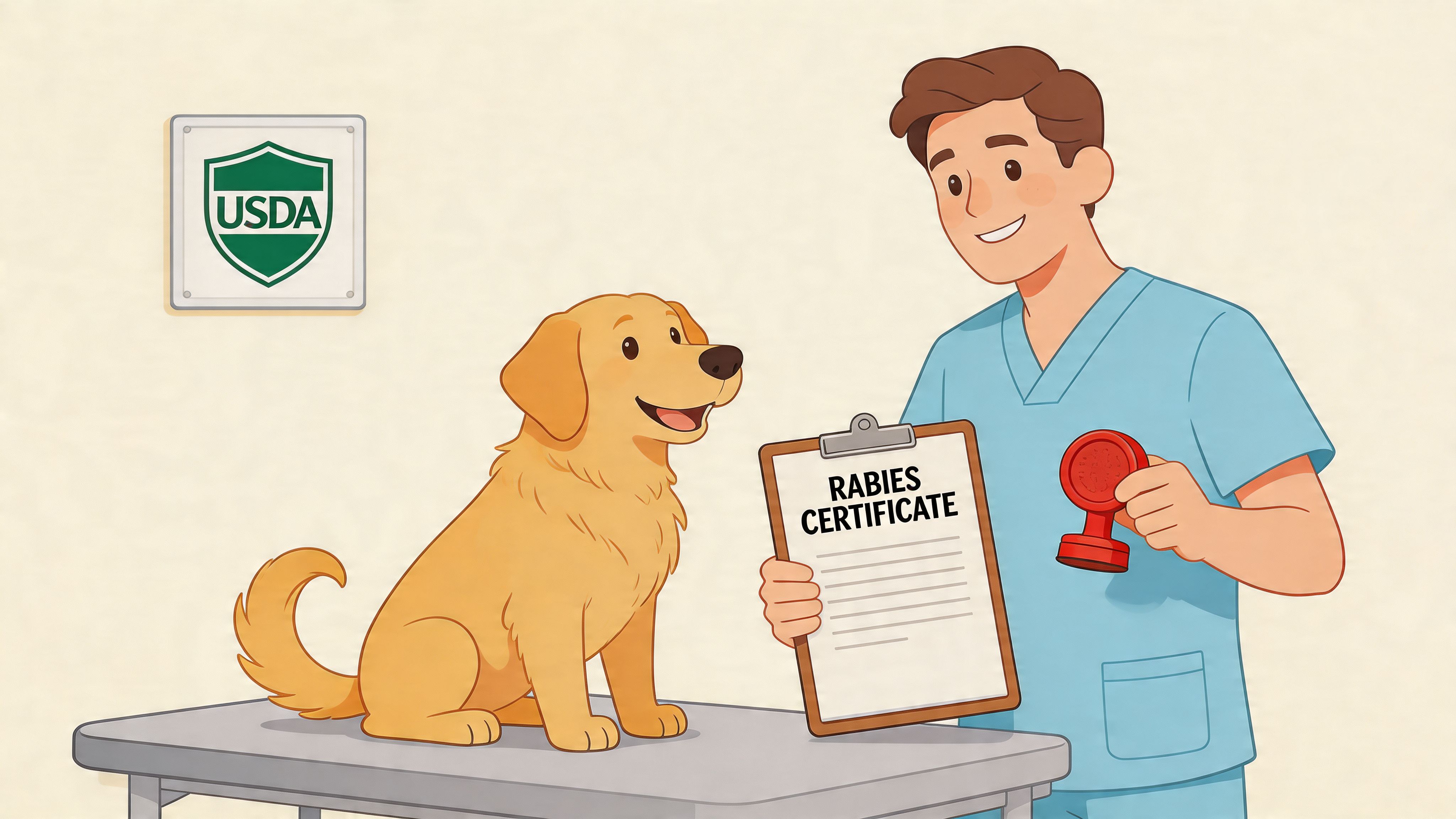
For international travel, pet owners often need a veterinarian who is authorized to complete the relevant international documents. The rabies shot certificate may be one part of that packet, not the whole packet.
A practical workflow usually looks like this:
Book early with the right clinic so there’s time to review vaccine dates, chip details, and destination rules.
Bring every prior rabies record you have, especially older certificates and microchip paperwork.
Ask the clinic to verify sequence, not just vaccine status.
Confirm whether government endorsement is needed for your route.
If endorsement applies, that means a government authority reviews and validates the paperwork as authentic. In the United States, that often involves USDA APHIS for export documentation.
Replacing a lost rabies certificate
Lost certificate? Don’t panic.
Call the clinic that gave the vaccine. They usually keep the underlying medical record and may be able to issue a replacement or certified copy based on that file. If the pet had several vaccinations at different clinics, gather all of them before assuming one office has the full history.
When “current” still isn’t enough
Many owners are ambushed late in the process. Many countries like the UK, Ireland, New Zealand, and the UAE reject certificates that are over 1 year old at entry, so a pet may need a pre-travel booster even when the vaccine’s printed expiration date is later. That timing issue is one reason owners often seek help with USDA-endorsed pet health certificate steps.
Bring the vaccine certificate, not just the reminder email from your vet app. Travel staff need document details, not general proof that an appointment happened.
Legalization and endorsement in plain English
People hear “legalize” and imagine a courtroom. In travel paperwork, it usually means the document receives the official review or stamp required by the destination or exporting country.
That process does not fix bad dates, missing chip information, or unclear vaccine details. It confirms the paperwork after it has been prepared correctly. So if something is wrong, the best time to catch it is before the document goes out for endorsement.
Rabies Certificate FAQs and Troubleshooting
My regular vet isn’t accredited for travel paperwork. Can they still help?
Yes. Your regular vet may still provide medical records, vaccine history, and referrals. If your route requires specialized international paperwork, you may need another veterinarian to complete that part.
Can I use a digital copy of the rabies shot certificate?
Sometimes digital records help with planning, but many travel situations still require original signed documents or officially accepted forms. Ask what format your airline, destination, and endorsing authority expect before relying on a phone screenshot.
I lost the old certificate. What now?
Contact the clinic that issued it and ask for a replacement copy or record extract. Give them the pet’s full name, owner name, and approximate vaccine date so they can locate the file faster.
What if the dates don’t seem to line up?
Pause before booking or submitting anything else. Ask the clinic to review the sequence of microchip, rabies vaccine, and travel date. That one conversation can prevent a lot of tail-chasing later.
Is a rabies titer test the same thing as a certificate?
No. A titer test is a blood test used by some destinations as an extra proof step. It doesn’t replace the rabies shot certificate. It sits alongside it when the destination requires both.
If you’re sorting through vaccine records, timing rules, and travel forms, Passpaw helps veterinary teams and pet owners keep the process organized. It’s built to simplify international pet health certificate workflows, flag document issues early, and keep travel paperwork moving without the usual last-minute scramble.

More articles
From regulatory changes to best practices for veterinarians and pet owners, our resources keep you ahead of the curve.