Are you a team member in a veterinary practice?
Are you a pet parent planning a trip with your furry pal?
The Ultimate Guide to a Pet Carrier for Air Travel
Thinking of taking your pet on a plane? You're not alone. The first—and most important—step in planning your trip is finding the right pet carrier for air travel. This isn't just about picking any old box; it's about giving your pet a safe, secure space for the journey, whether they’re in the cabin with you or flying in cargo.
Your First-Class Guide to Pet Air Travel
Taking your pet on a flight might feel like a huge challenge, but it's becoming very common. By 2025, an estimated 2 million domestic animals are expected to fly on commercial airlines in the U.S. each year.
This is all part of a larger trend: a 19% increase in families traveling with their pets over the last decade. It’s clear that more and more, we want our companions by our side for every adventure.
This boom in pet travel makes choosing the right carrier more important than ever. Think of it as your pet's personal travel suite. Just as you need a safe and comfortable seat, they need a secure, properly sized space to handle the sights and sounds of an airport and a flight at 30,000 feet.
In-Cabin vs. Cargo Travel
When you fly, your pet generally has two options, and the choice affects the type of carrier you'll need.
In-Cabin: This is for smaller pets who can fit in a carrier tucked under the seat in front of you. It's a great way to keep them close, but be ready for strict size and weight limits set by the airline.
Cargo Hold: Larger pets travel in a special temperature-controlled and pressurized area. While it might sound a bit scary, it's a standard, safe procedure when you use an airline-approved hard-sided kennel.
The decision really comes down to your pet's size, its breed, and the airline’s specific rules. If you're ready to dive deeper into this now, check out our complete guide on how to fly with pets.
Why Carrier Rules Are So Important
Airlines have very specific rules for a good reason: your pet's safety and well-being. Showing up with a carrier that doesn't meet the requirements could mean you're denied boarding—a stressful and sad situation for everyone.
The right pet carrier for air travel is the foundation of a successful trip. It’s not just about following rules; it’s about giving your pet a secure, familiar space to navigate an unfamiliar environment.
This guide will walk you through everything, from measuring your pet for that perfect fit to understanding the maze of airline rules. By the end, you'll feel confident and prepared, turning what could be a stressful process into a smooth takeoff for you and your best friend.
Let’s get this journey started on the right paw.
Choosing Between In-Cabin and Cargo Carriers
Picking the right pet carrier for air travel is one of the most important decisions you'll make for your journey. This isn't just about finding a bag for your pet; it’s about choosing their personal safety pod for thousands of miles in the sky. Your main choice is between flying with your pet in the cabin or placing them in the cargo hold, and each one needs a very different type of carrier.
Your pet's size, weight, and even their personality will point you in the right direction. A small, laid-back cat might be perfectly happy at your feet, but a larger dog will need the security and space of a dedicated cargo kennel. Understanding the differences is the first step to a smooth flight for both of you.
In-Cabin Carriers for Smaller Pets
For pets traveling in the cabin, a soft-sided carrier is almost always the answer. Think of it as a flexible, cozy little den designed to slide under the seat in front of you. Their biggest advantage is that they can squish down a bit, which is a huge help when dealing with the tight and varied under-seat spaces on different planes.
These carriers are perfect for smaller dogs, cats, and other compact companions who meet the airline’s strict limits—usually under 20 pounds, including the carrier itself. They often have mesh windows for good airflow, a soft, padded interior, and shoulder straps that make getting through a busy airport much easier. Best of all, it keeps your furry co-pilot right there with you, which can be a huge comfort.
Even though they're flexible, a soft-sided carrier must still give your pet enough room to stand up and turn around completely. While they’re great for convenience, remember they offer less physical protection than a hard-sided kennel.
Cargo Kennels for Larger Companions
If your pet is too big to fly in the cabin, a hard-sided kennel for the cargo hold is your go-to. Before you worry, know that the cargo area used for live animals is a specific, climate-controlled, and pressurized part of the plane. The kennels required for this journey must meet much higher standards, often set by the International Air Transport Association (IATA).
These kennels are all about safety and security.
Sturdy Construction: They’re made from hard plastic or wood with a solid metal door that locks securely. This prevents the carrier from collapsing or breaking open under pressure.
Proper Ventilation: IATA guidelines suggest that ventilation openings should be on at least three sides to guarantee plenty of fresh air.
Secure Hardware: All the bolts holding the carrier together should be metal, not plastic. This is a common requirement and stops the kennel from accidentally coming apart.
Choosing a cargo kennel is a serious decision. It's not just a box; it’s a protective shell designed to keep your best friend safe during loading, the flight itself, and unloading. To see what specific airlines require, you can check out our guide on airlines that take dogs in cargo.
In-Cabin vs Cargo Pet Carrier Comparison
A side-by-side look at the two main carrier types can make the choice much clearer. Here’s a quick comparison to help you weigh the pros and cons of each.
Feature | Soft-Sided Carrier (In-Cabin) | Hard-Sided Carrier (Cargo) |
|---|---|---|
Best For | Small pets (typically <20 lbs) that can fit under an airline seat. | Larger pets that are over the in-cabin weight and size limits. |
Pros | Lightweight, easy to carry, flexible for tight spaces, and keeps your pet close by. | Extremely durable, offers maximum protection, and meets strict IATA safety suggestions. |
Cons | Gives less impact protection and may not hold up to anxious chewers. | Heavy, bulky, and means your pet travels separately from you in the hold. |
Primary Material | Durable fabrics like nylon or polyester. | Hard plastic or wood with metal hardware and a metal grate door. |
Key Consideration | Must fit the airline’s specific under-seat dimensions. | Should be IATA-compliant with proper ventilation and secure metal hardware. |
Ultimately, the carrier you choose is tied directly to where on the plane your pet will be. Your decision should always put their safety and comfort first, giving them a secure space for their adventure in the sky.
How to Measure Your Pet for the Perfect Carrier Fit
When it comes to picking a pet carrier for air travel, getting the size right isn't just a good idea—it’s everything. A carrier that's too small is uncomfortable and unsafe. One that's too big lets your pet get tossed around during turbulence. Every airline wants to see a proper fit to make sure your pet travels safely and humanely.
Think of it as finding your pet’s own first-class seat. The goal is a space where they can comfortably stand up, turn around, and lie down naturally. Let’s walk through the simple steps to get that perfect fit and take the guesswork out of the equation.
The Two Critical Measurements
You only need two measurements to find the right size carrier: your pet's length and height. Grab a soft measuring tape (the kind for sewing works great) and a few treats to make this a positive experience. It’s best to measure when your pet is calm and standing on all four paws.
1. Measuring Your Pet’s Length (Measurement A)
Start at the tip of their nose and run the tape along their back to the base of their tail—right where the tail meets the body. Make sure not to include the tail itself in this measurement.
2. Measuring Your Pet’s Height (Measurement B)
While your pet is standing tall, measure from the floor straight up to the top of their head or the tip of their ears, whichever point is highest. For dogs with pointy ears, like a German Shepherd, be sure you’re measuring to the very top of the ear.
Once you have these two numbers, you’re ready to figure out the right carrier size.
A common mistake is picking a carrier based on weight alone. While airlines have weight limits for in-cabin travel, IATA guidelines for proper sizing focus on your pet's physical dimensions—length and height, not pounds or kilograms.
Calculating the Ideal Carrier Size
With your pet's measurements in hand, you can now calculate the minimum internal size for their carrier. Airlines and IATA often use specific formulas to ensure enough space.
Here’s an easy way to calculate it:
Required Carrier Length: Your pet's length (A) + 4-6 inches. This gives them room to lie down and stretch out a bit without being cramped. A good rule of thumb is to add about half their leg length.
Required Carrier Height: Your pet’s standing height (B) + 3-5 inches. This ensures they can stand up completely without their head or ears brushing against the top of the carrier.
Those extra inches aren't just for comfort; they provide an important safety buffer. For a deeper look at different kennel options, check out our guide on choosing the right pet crate for travel.
Matching Measurements to Carrier Types
How you use these measurements will depend on whether you need an in-cabin carrier or a cargo kennel. The rules and materials are quite different for each.
For In-Cabin Soft-Sided Carriers
Soft-sided carriers give you a little wiggle room since they can squish down to fit under a seat. Even so, your pet must still be able to stand and turn around inside. Always check the carrier’s interior dimensions, not the exterior, and compare them to your airline's maximum under-seat dimensions.
For Cargo Hard-Sided Kennels
With hard-sided kennels, there is zero flexibility. The inside of the crate should meet the minimum length and height requirements you calculated. These kennels are built for sturdiness, so the space is fixed. Double-check that it’s tall enough for your pet to stand naturally and long enough for them to turn around without a struggle.
Taking a few minutes to measure correctly from the start saves you from the nightmare of being denied boarding at the check-in counter. It’s the key to knowing your pet will be safe, comfortable, and ready for takeoff.
Navigating Airline and International Pet Carrier Rules
Trying to figure out airline pet carrier rules can feel like solving a puzzle with half the pieces missing. But once you know what to look for, it all starts to click. Every airline and country has specific requirements for a pet carrier for air travel, and they’re all designed to keep animals safe. Getting these details right is your ticket to a smooth, stress-free check-in.
Think of it from the airline's perspective: they are responsible for your pet’s well-being from takeoff to landing. Their rules about carriers—everything from ventilation to the type of lock—are there to create a secure environment. If you show up with a carrier that doesn't follow the rules, you risk being denied boarding, which is a heartbreaking experience for any pet owner.
Common Airline Carrier Requirements
While the fine print can differ between airlines, a core set of standards applies almost everywhere, especially for pets traveling in the cargo hold. These guidelines are largely based on recommendations from the International Air Transport Association (IATA) and are very important to follow.
When you get to the airport, airline staff will inspect your pet’s carrier for these key features:
Proper Ventilation: The carrier should have ventilation on at least three sides to ensure a steady flow of fresh air. For international flights, four sides of ventilation is a common standard.
Secure Locking Mechanism: The door has to lock securely. Many airlines prefer a single-piece metal grate door with spring-loaded locks at the top and bottom.
Waterproof Flooring: The bottom of the carrier must be solid and leak-proof. You’ll also want to line it with an absorbent pad to keep your pet dry if they have an accident.
Approved Materials: For cargo, the carrier should be made of hard plastic, wood, or metal. Carriers made of flimsy materials or those with plastic doors are often rejected on the spot.
Sturdy Hardware: Any nuts and bolts holding the two halves of the carrier together should be metal. Plastic fasteners can crack under pressure, which is a serious safety risk.
It’s smart to get familiar with these features before you even start shopping. For a deeper dive into specific airline policies, check out our guide on which airlines allow pets in the cabin.
Why International Rules Are Stricter
If you’re planning to fly internationally, get ready for an extra layer of rules. When your pet crosses a border, their carrier isn’t just a piece of luggage; it's a key part of a biosecurity process. Countries have these strict rules to prevent the spread of diseases like rabies.
Your pet's carrier is the first line of defense in a safe and controlled import. Border officials will look at it closely to make sure it meets every single requirement. A carrier that fails this inspection can lead to major delays or, in the worst-case scenario, your pet being sent back.
International travel with a pet is a medical and regulatory event. The carrier isn't just a box; it's a regulated shipping container that must meet the health and safety standards of both the airline and the destination country.
Special Considerations That Affect Travel
Beyond the carrier's construction, other factors can throw a wrench in your travel plans. It’s definitely not a one-size-fits-all situation, so knowing these rules can help you avoid last-minute surprises.
Breed-Specific Rules: Many airlines restrict the transport of brachycephalic (snub-nosed) breeds like Pugs, French Bulldogs, and Persian cats, especially in cargo. Their breathing issues can make them more vulnerable to the stress of air travel.
Temperature Restrictions: Airlines won't fly animals in the cargo hold if the temperature at the origin, destination, or any connection point is too hot or too cold. This "heat embargo" protects pets from extreme conditions while they are on the tarmac during loading and unloading.
Always, always double-check with your airline about their specific policies on breeds and temperature extremes well before your flight. Getting these details sorted out from the beginning is the key to making sure your plans don't get grounded.
Getting Your Pet Comfortable with Their Carrier
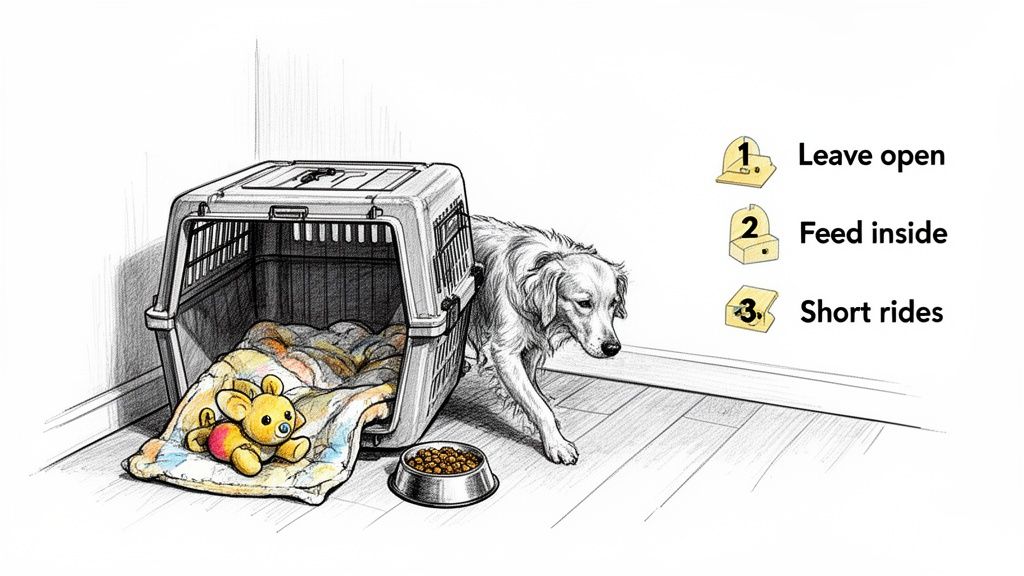
The best pet carrier for air travel isn’t just about meeting airline rules. It’s about giving your pet a personal safe space they actually like. A smooth flight often depends on work you put in weeks, or even months, before ever stepping foot in an airport.
The goal is simple: transform a strange box into a familiar, cozy den your pet chooses on their own.
This process, called acclimation, uses positive reinforcement to build a happy connection with the carrier. Instead of it signaling a stressful trip, your pet will learn to see it as a source of good things—treats, toys, and comfort. It's the single most effective way to lower travel anxiety and set your pet up for a calm journey.
Creating a Pawsitive Association
First things first, introduce the carrier into your home like it’s just another piece of furniture. Don't push your pet toward it. Just leave the door wide open and place it in a living area where your family hangs out. Let their natural curiosity take over from there.
To make it more tempting, you’ll want to dress it up.
Tuck in a favorite blanket or an old t-shirt with your scent on it. That familiar smell can be incredibly comforting.
Start by tossing some high-value treats near the entrance, and then eventually right inside.
Place one of their favorite toys inside for them to stumble upon.
Let your pet explore on their own timeline. Never, ever lock them inside during these early days. The whole point is to make the carrier a place they want to be, turning it from a potential trap into a trusted retreat.
From Stationary Den to Moving Vehicle
Once you notice your pet willingly going into the carrier for a nap or to grab a treat, you can start closing the door for just a few seconds at a time. Open it, offer praise, and let them out. Slowly work your way up to longer periods while you stay close by.
Next up is motion. Start small by just picking up the carrier and walking around the house. After that, you can move on to short car rides.
A Trip to Nowhere: Secure the carrier in your car and just drive around the block. Come straight home and reward them with lots of praise and a treat.
A Trip to Somewhere Fun: As they get used to it, take them on short drives to a park or another spot they love. This helps them link the carrier and car rides with fun results, not just a trip to the vet.
Acclimation is all about baby steps. If you rush it, you risk creating fear and setting your progress back. The key is making every single interaction with the carrier a positive one, building their confidence layer by layer until it feels like their home away from home.
Pre-Flight Carrier Essentials
When your travel date gets closer, it's time to think about what goes inside the carrier for the actual flight. Comfort and safety are the top priorities.
Absorbent Lining: Always line the bottom of the carrier with an absorbent puppy pad. Accidents can happen on long flights, and this will be a lifesaver for keeping your pet clean and dry.
Familiar Comfort Item: A small blanket or an item of clothing carrying your scent can work wonders for stress. Just avoid bulky bedding or big toys that might get in the way of proper airflow.
Clear Identification: Your pet should have a collar with an ID tag, but don't stop there. Make sure the carrier itself is clearly labeled with your name, phone number, and a “Live Animal” sticker.
When it comes to food and water, the general rule is to give your pet a light meal a few hours before the flight but not right before leaving. A little water is fine, but most airlines suggest water dishes be empty for takeoff to avoid spills. If your pet is traveling in cargo, attach food and water bowls to the inside of the door so airline staff can access them if a delay occurs.
The Ultimate Pre-Flight Paperwork and Carrier Checklist
You’ve picked out the perfect pet carrier for air travel, and your furry sidekick is finally starting to treat it like a personal hideout. Great. Now comes the last, and arguably most important, part of your prep: the paperwork. It’s not the fun part of the trip, but getting this right is what separates a smooth check-in from a travel nightmare.
Think of it like getting your own passport and tickets in order, but for your pet. A specific set of documents is your pet’s ticket to fly, and being organized is the only way to avoid a last-minute panic at the check-in desk.
Your Pet’s Essential Paperwork
Pet travel documents can feel overwhelming, mostly because the rules shift depending on where you're going. Whether you're flying to another state or halfway around the world, a few documents are almost always on the list.
Health Certificate: Often called a Certificate of Veterinary Inspection (CVI), this is the big one. It's a form signed by a licensed veterinarian confirming your pet is healthy and not carrying any contagious diseases. Domestic flights usually need it; for international travel, it’s a must.
Vaccination Records: Proof of an up-to-date rabies vaccination is the bare minimum. You'll need the official certificate—not just the tag—and you must make sure the vaccine was given within the timeframe required by your destination.
Microchip Information: For all international travel and for entry into certain places like Hawaii, your pet might need an ISO-compliant microchip. Keep the chip number handy and, just as important, double-check that your contact details are current in the registry.
This stack of paper is your pet’s passport. Missing just one piece can ground your travel plans before you even leave the house.
Streamlining International Travel Documents
Once you cross a border, the paperwork gets much more complicated. Every country has its own rulebook, from strict vaccine schedules to required parasite treatments. It can be a massive headache to track, and a single mistake could mean your pet is denied entry. This is where specialized help is a game-changer.
International pet travel is fundamentally a medical and regulatory process. Your pet's health documents are just as important as your own passport, and they must be perfect to meet the strict biosecurity rules of the destination country.
Thankfully, you don't have to manage this alone. Platforms like Passpaw are built to simplify this exact process for both veterinarians and pet owners. They help track deadlines, check requirements, and organize all the necessary documents into one place. This gives your vet the tools they need to get it right and gives you complete confidence when you walk up to that airline counter.
The Final Carrier Check
Right before you leave for the airport, do one last inspection of the carrier. You want to make sure it’s completely ready for a safe and comfortable trip.
Your Final Checklist:
The carrier is clean with a fresh, absorbent pad lining the bottom.
All nuts and bolts (for hard-sided carriers) are tightened and secure.
"Live Animal" stickers are clearly visible on the outside.
Your name, address, and phone number are written legibly on the carrier.
Food and water dishes are clipped securely to the inside of the door (a must for cargo travel).
With these final details handled, you can finally relax and focus on what matters most: starting an incredible adventure with your best friend.
Last-Minute Questions About Flying with Your Pet
Even after you’ve found the perfect pet carrier for air travel, a few nagging questions can pop up right before your trip. It's completely normal. Let's walk through some of the most common concerns so you and your pet can head to the airport with confidence.
Should I Sedate My Pet for a Flight?
This is a big one, and the answer from most vets and airlines is a firm no. Sedating a pet for air travel can be risky, as it can affect their breathing and ability to manage their body temperature in a pressurized cabin. It also throws off their balance, making them more likely to get hurt if there's turbulence.
Instead of reaching for medication, your best bet is to spend a little extra time getting your pet comfortable with their carrier. When they see it as their own safe little den, their travel anxiety naturally goes down. If you're still worried, have a chat with your vet about non-sedative, anxiety-reducing options.
What Should I Put Inside the Pet Carrier?
Think simple and safe. The goal is comfort without clutter.
Absorbent Pads: Always line the bottom of the carrier with a puppy pad or something similar. Accidents happen, and this is the best way to keep your pet clean and dry.
A Comfort Item: A small blanket or an old t-shirt that smells like you can work wonders. Just avoid anything bulky that might get in the way of good airflow.
Food and Water Dishes: For pets traveling in cargo, the dishes should clip onto the inside of the carrier door. This lets airline staff give your pet food or water during a long layover without having to open the door.
Clear Labeling: Make sure you have a "Live Animal" sticker on the outside of the carrier, along with your name and contact information where it’s easy to see.
Can I Use the Same Carrier on Different Airlines?
Probably not, and it's a trap many travelers fall into. While lots of carriers are designed to meet general airline rules, every airline has its own specific size limits, especially for in-cabin travel. That soft-sided carrier that was a purr-fect fit on your last flight might be an inch too tall for the next one.
It's a classic mistake to buy one carrier and assume it works for every flight. Always, always check the maximum under-seat dimensions directly with the airline you're flying before you get to the airport. It'll save you a huge headache at the gate.
For hard-sided cargo carriers, the IATA standards make things a bit more consistent, but a quick call to the airline to confirm is still a very smart move.
Of course, choosing the right carrier is only one piece of the puzzle. Managing travel paperwork can feel like the most overwhelming part of the journey. Passpaw gives veterinarians and pet owners a clear path forward, with tools to manage documents and check requirements, ensuring your pet is truly ready for takeoff. You can learn more at https://passpaw.com.
More articles
From regulatory changes to best practices for veterinarians and pet owners, our resources keep you ahead of the curve.