Are you a team member in a veterinary practice?
Are you a pet parent planning a trip with your furry pal?
Your Ultimate Guide to the JetBlue Pet Policy
Thinking about flying with your furry co-pilot? JetBlue is a popular choice for pet parents, but there are a few key rules you'll want to know right off the bat. The big ones are the $125 fee each way and a firm combined weight limit of 20 pounds for your pet and their carrier.
Getting these details down first makes planning your trip a whole lot easier.
Your Quick Guide to Flying with a Pet on JetBlue
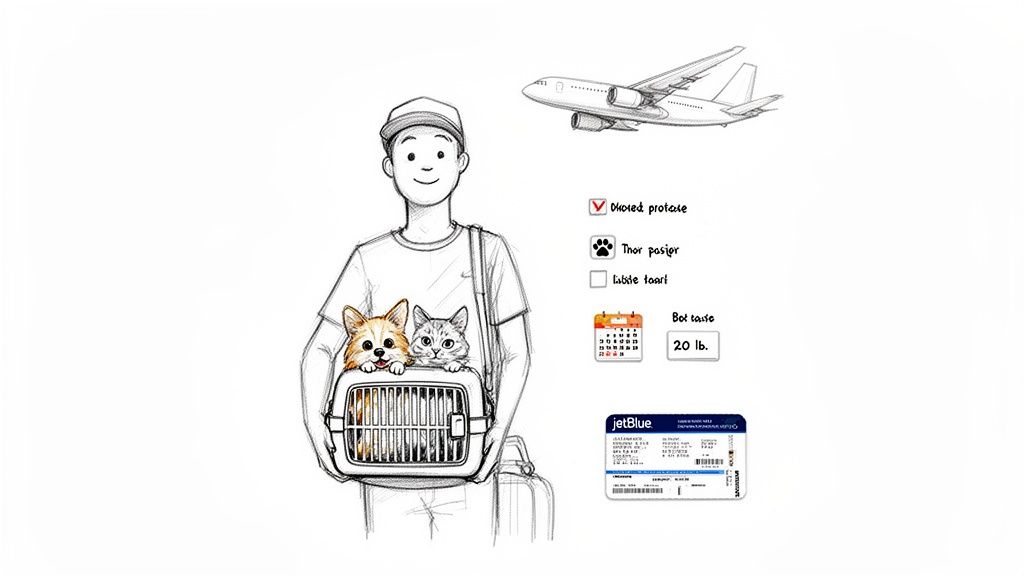
JetBlue has a reputation for being pet-friendly, and they even have a cool program called JetPaws. It's designed to make your journey smoother, giving you a special carrier bag tag and other helpful resources for the trip.
But here’s the catch: the airline only allows six pets on any given flight. That’s not a lot of spots. You should book your pet's space as early as you can, ideally right when you book your own ticket. It would be a real bummer to get your seat confirmed, only to find out there's no room left for your best friend.
Key Policy Details at a Glance
For those of us with smaller pets, JetBlue has long been a reliable option. That 20-pound weight limit (pet and carrier combined) is the main hurdle. It means only small dogs and cats can fly in the cabin. Since JetBlue doesn't offer a cargo option, larger animals can't fly with them.
To give you a clear, quick picture, here's a little cheat sheet of the most important rules.
JetBlue Pet Policy at a Glance
This table breaks down everything you need to know to see if JetBlue works for you and your travel buddy.
Policy Item | Details |
|---|---|
Eligible Pets | Small dogs and cats only. |
Pet Fee | $125 each way, per pet. |
Weight Limit | 20 pounds total (pet + carrier). |
Carrier Dimensions | Max 17"L x 12.5"W x 8.5"H. |
Pets Per Flight | Maximum of 6 pets. |
Booking Method | Online or by phone. |
Think of this as your go-to summary before you book. It helps you decide quickly if you're good to go with JetBlue or if you need to look at other airlines.
If you're weighing your options, our guide on which airlines allow pets in the cabin is a great place to start. For a broader look at prepping for any trip, you can also check out this general pet travel information.
Figuring Out if Your Pet Can Fly on JetBlue
Before you start picturing your furry friend snoozing at 30,000 feet, let’s make sure they fit JetBlue’s travel rules. JetBlue is pretty welcoming to pets, but they have some firm rules to keep everyone safe and comfortable. Getting a handle on these from the start will save you a lot of headaches later.
The single most important rule is the weight limit. Your pet and their carrier, together, cannot weigh more than 20 pounds. This is a strict rule, and they will likely check at the airport. It's a really good idea to do a test run on your home scale before you even think about booking.
Who Gets a Ticket
JetBlue’s pet policy is built for small companion animals. Plain and simple, this means only small dogs and cats are allowed in the cabin.
Here’s an important point for many owners: JetBlue does not transport any pets in cargo. This policy really highlights their focus on small pets that can safely tuck under the seat in front of you. If your dog or cat is over the 20-pound limit, you’ll need to look into other options. For a breakdown of what other airlines offer, check out our guide on the best airlines for pet travel.
Age and Breed Considerations
Besides size, your pet’s age is also a factor. Puppies and kittens should be at least eight weeks old to fly on domestic routes, just to make sure they’re mature enough for the trip.
And while JetBlue doesn’t have a scary list of banned breeds, their strict weight and size rules do the filtering for them. Many larger breeds, even as puppies, will quickly outgrow that 20-pound limit. This approach centers on the individual pet's size, not on breed stereotypes.
The airline's policy, with its fees and limited spots, points to a high-demand service for a certain type of traveler. JetBlue's rules—like the cap of six pets per flight and no cargo option—mean it's tailored for small pet owners. The good news is that the lack of breed bans keeps it open to all small dogs and cats that meet the size and weight rules.
Choosing the Right Carrier for Your Pet
Finding the right travel carrier is about so much more than just checking a box on a list. You're creating a safe, comfy den for your pet at 30,000 feet. According to JetBlue's policy, your carrier should be FAA-approved and, most importantly, fit snugly under the seat in front of you. This is a safety rule for every single flight.
The absolute maximum dimensions JetBlue allows are 17" L x 12.5" W x 8.5" H (43.18 cm x 31.75 cm x 21.59 cm). The best way to think about it is like a small garage; your pet's carrier is the car that needs to park inside it perfectly. If it's even a little too big, it won't fit, and your pet won't be cleared to fly.
Sizing Up the Situation
Before you even think about buying a carrier, pull out a measuring tape. Your pet’s comfort is the number one priority, and they need to be able to stand up and turn around completely inside. This isn't just a friendly suggestion—it’s important for their well-being during the trip.
A good rule of thumb is to measure your pet's length from their nose to the base of their tail, and their height from the floor to the top of their head. Add a couple of inches to those numbers to find a carrier that gives them enough breathing room to shift around without feeling cramped.
A carrier that’s too small will cause stress and discomfort. One that's too big might not fit under the seat. You're aiming for that "pawsitively" perfect sweet spot where your pet feels secure but has enough space to move.
The type of carrier you choose is another big decision. For in-cabin travel, you're generally looking at two main options.
Soft-Sided vs. Hard-Sided Carriers
Each type has its own pros and cons, especially when you're dealing with the under-seat dimensions required by the JetBlue pet policy.
Soft-Sided Carriers: These are, by far, the most popular choice for air travel, and for good reason. Their flexible structure allows them to squish down a little to fit into tight spaces, which can be a real lifesaver when under-seat dimensions vary from plane to plane. They’re also lighter and much easier to carry through a busy airport.
Hard-Sided Carriers: While they offer great protection, hard-sided carriers have zero flexibility. If the carrier is even a fraction of an inch too tall, you won't be able to force it to fit. On the plus side, they are often easier to clean and can provide a more sturdy, den-like space that some pets prefer.
At the end of the day, a soft-sided carrier that meets the size requirements is almost always your safest bet. It gives you the best shot at fitting under the seat without any last-minute drama at the gate. For a deeper dive, you can learn more about choosing the best airline pet travel carrier in our dedicated guide.
How to Book a Spot for Your Pet on JetBlue
Alright, let's get your pet's ticket booked. Nailing down their spot on a JetBlue flight is pretty simple, but you absolutely need to plan ahead.
Here's the most important thing to know: JetBlue only allows six pets on any given flight. Those spots get snatched up fast, so our best advice is to add your pet to your reservation the moment you book your own seat.
Seriously, don't leave this to the last minute. It’s a gamble you don't want to take. Imagine having your entire trip set, only to discover there's no room for your furry co-pilot. It’s always better to lock in their spot right away and avoid the headache.
Adding Your Pet to Your Booking
JetBlue gives you a couple of easy ways to get your pet on your travel plans. You can get it all done in one shot when you first book your flight.
Online Booking: The fastest way is to add your pet while buying your ticket on jetblue.com. As you go through the booking steps, you'll see an option for extras—that's where you'll select "Pet in Cabin."
Booking by Phone: If you'd rather talk to a person or need to add a pet to a flight you've already booked, you can call JetBlue directly at 1-800-JETBLUE (538-2583). A crewmember can add your pet for you, as long as there's still a spot available on that flight.
The pet fee is a flat $125 each way, and it's non-refundable. Just remember that you'll pay this for each leg of your trip, so a round-trip flight will come out to $250 for your pet.
Keep in mind that securing your pet's spot isn't just about paying the fee. It's about claiming one of those six precious slots on that specific flight. Acting fast is the key to making sure you don't face any travel day disappointments.
Seating and Special Rules
Once your pet is booked, you need to know where you can—and can't—sit. For everyone's safety and comfort, pets aren't allowed in every seat on the plane.
Restricted Seating Areas:
Mint Seats: JetBlue's premium Mint cabin is a no-go for pets.
Exit Rows: You also can't sit in any bulkhead seats or emergency exit rows.
Seats with no under-seat storage: Your pet's carrier has to be stowed under the seat in front of you, so any seat without that space is off-limits.
Thinking about bringing two small pets along? JetBlue allows it, but you'll have to buy a second seat right next to yours and pay a second $125 pet fee. Both pets must stay in their own separate carriers, tucked under the seats for the whole flight. This rule helps ensure both your little buddies can travel together safely and comfortably.
Preparing Your Pet's Travel Documents
Navigating airline paperwork can feel like trying to solve a puzzle, but it doesn't have to be the most stressful part of your trip. The key is knowing exactly what JetBlue's pet policy asks for before you get to the airport. A little preparation goes a long way.
For most domestic flights within the continental U.S., JetBlue keeps it simple—you typically won't need a health certificate. That changes, however, as soon as your travel plans include certain destinations.
When Health Certificates Are Needed
Think of a health certificate as your pet's official "fit to fly" note from their veterinarian. It's the document that shows they are healthy and up-to-date on all their shots.
You will definitely need a valid health certificate for your furry friend if you're flying to:
Puerto Rico
The U.S. Virgin Islands
These documents aren't valid forever, so you'll need to work with your vet to make sure they're issued within the right timeframe before your flight. You'll also need proof of a current rabies vaccination for these destinations, so have those records ready to go.
Simplifying Paperwork with Modern Tools
Juggling health certificates, vaccination records, and destination-specific forms can get overwhelming fast. This is exactly where services like Passpaw step in, helping both pet owners and veterinarians manage the entire documentation process without that last-minute scramble.
First things first, you have to book your pet on the flight. The process is pretty straightforward.
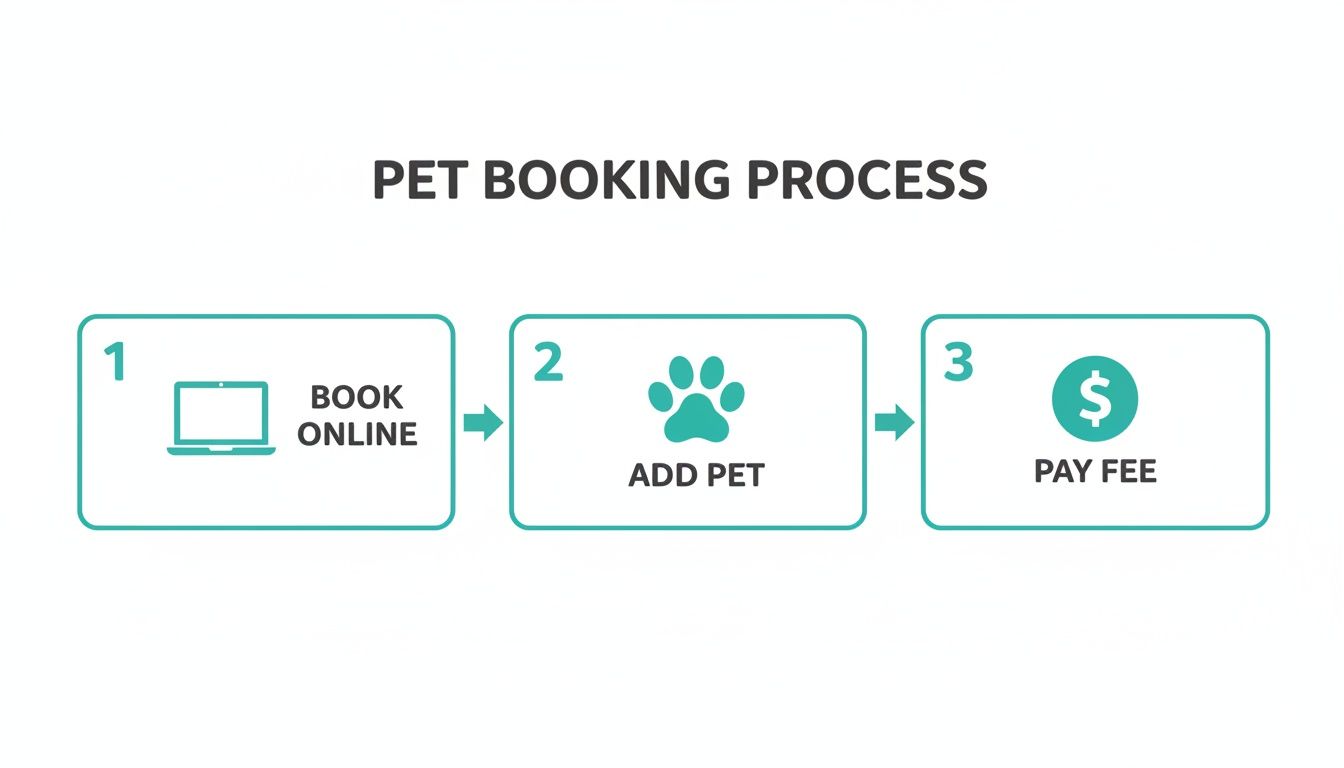
Once your pet's spot is secured, it's time to tackle the paperwork. Using a tool that digitizes and validates these documents helps catch common errors that could otherwise ground your travel plans. For a deeper dive, check out our guide on essential travel documents for pets.
A Note on Service Animals and ESAs
The rules around support animals have changed quite a bit over the last few years. Back in 2018, JetBlue started to adjust its emotional support animal (ESA) policy. By early 2021, ESAs were no longer classified as service animals.
This shift means they now travel under the standard pet rules, which includes paying the pet fee and meeting the weight requirements. Today, only trained service dogs are generally permitted to fly free of charge, as outlined by the Department of Transportation.
Navigating the Airport on Your Day of Travel
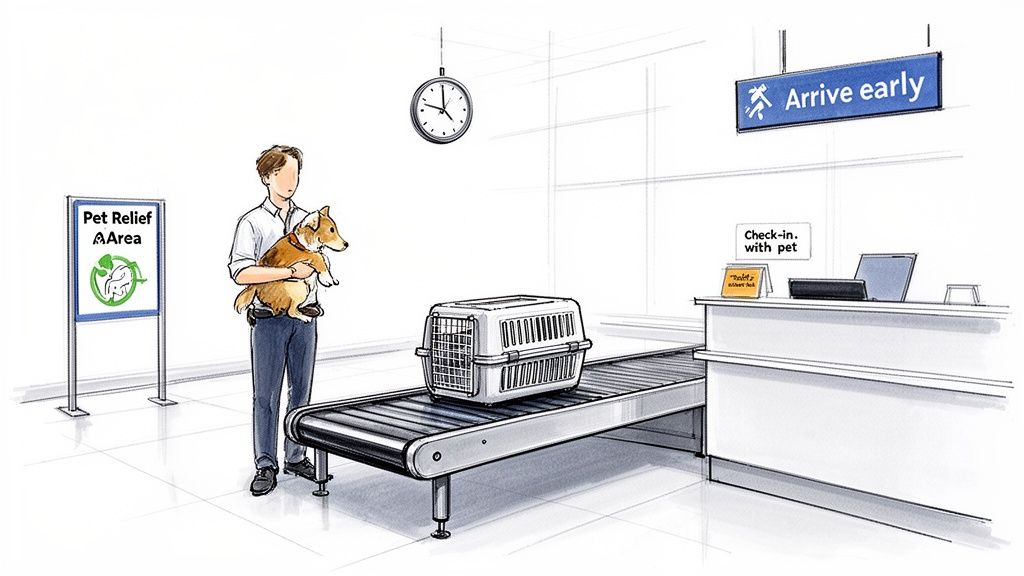
The big day is here! While any airport trip can feel a bit hectic, a little bit of planning goes a long way in ensuring a smooth start for both you and your furry travel companion. The key is to stay organized and, most importantly, give yourself plenty of extra time.
Honestly, one of the best things you can do to lower everyone's stress levels is to show up early. Make a plan to get to the airport at least two hours before your domestic flight. This buffer gives you more than enough time to handle everything without feeling rushed.
Your Airport Checklist
First thing's first: you can't use curbside or kiosk check-in when you're traveling with a pet. JetBlue's policy is clear that you must go to the full-service ticket counter to check in with a crewmember. This is where they'll weigh your pet and carrier, look over your documents, and give you a special JetPaws bag tag for the carrier.
Once you’re all checked in, it’s time to head to security. The TSA screening process requires a little teamwork between you and your pet:
Remove your pet: You’ll need to take your pet out of their carrier.
Carry your pet: Hold your pet securely in your arms as you walk through the metal detector together.
Carrier scan: The empty carrier gets sent through the X-ray scanner just like your other carry-on bags.
This process is usually pretty quick, but it's another great reason why that extra arrival time is so valuable. Remember, a calm owner often leads to a calm pet.
Keeping your pet comfortable is the top priority. Busy airports can be overwhelming with all the new sights, sounds, and smells. A familiar blanket or a favorite quiet toy tucked inside their carrier can provide a much-needed sense of security.
Keeping Your Pet Comfortable
Before you settle in at your gate, take a moment to find the airport's pet relief area. The JetBlue terminal at JFK, for example, is known for having a great outdoor space that’s perfect for a pre-flight potty break.
It's also a smart move to limit your pet’s food and water intake a few hours before the flight to help avoid any accidents. A small amount of water is fine, but it’s best to hold off on a big meal.
With a little preparation, you'll be all set for a "fur-st" class experience from check-in all the way to takeoff.
Got a Few More Questions? Let's Clear Them Up
Still have a few things you're wondering about? You're not the only one. Flying with a pet brings up all sorts of questions, so let's tackle some of the most common ones people have about JetBlue's policy. Think of this as your quick-reference guide for those last-minute details.
Can I Bring My Pet on an International JetBlue Flight?
For the most part, JetBlue's pet policy is designed for flights within the U.S., which includes travel to Puerto Rico and the U.S. Virgin Islands. When it comes to other international destinations, things get more complicated. You'll need to look into that specific country's rules for importing pets.
Many countries have very strict regulations, sometimes requiring lengthy quarantines or not allowing pets in the cabin at all. The airline's policy is only one piece of the puzzle; the destination country's laws are what really matter.
What if My Pet and Carrier Are Over the 20-Pound Limit?
This is one rule you can't bend. The 20-pound combined weight limit for your pet and their carrier is firm. JetBlue crew will weigh them at check-in, and if you’re even slightly over, your pet will likely be denied boarding.
Since JetBlue doesn't fly pets in cargo, there's no backup plan. It's so important to weigh your pet in their carrier before you even head to the airport.
This isn't just a suggestion—it's a strict rule. Trying to sneak by with a little extra weight is a huge gamble that could end your trip before it even starts.
Does JetBlue Always Require a Health Certificate for Domestic Flights?
For most flights within the continental U.S., JetBlue doesn't ask for a health certificate. However, these documents are definitely needed if you're flying to destinations like Puerto Rico and the U.S. Virgin Islands.
It’s always a smart move to double-check the specific rules for your destination state, just in case. State regulations can vary, and the last thing you want is to get caught in a paperwork pickle at the airport.
Navigating pet travel can feel like a maze, but getting the required health documents shouldn't add to the stress. Passpaw gives veterinarians and pet owners a simple, digital way to handle travel compliance with total confidence. See how we make getting ready for your next trip easier at https://passpaw.com.

More articles
From regulatory changes to best practices for veterinarians and pet owners, our resources keep you ahead of the curve.