Are you a team member in a veterinary practice?
Are you a pet parent planning a trip with your furry pal?
How to Get a Health Certificate for Dog: 2026 Guide
You’ve booked the trip. Your dog’s crate is picked out. The airline page is open in one tab, your destination’s rules are open in another, and suddenly the fun part gets buried under forms, vaccine dates, microchip records, and one very pressing question: how to get a health certificate for dog travel without making a costly mistake.
That confusion is normal. Pet travel paperwork looks simple until you’re on a real deadline. Then every detail matters, from which veterinarian signs the form to whether the certificate will still be valid on arrival. I’ve seen the same pattern again and again. The families who have the smoothest trips are not the ones who “figure it out later.” They’re the ones who build a timeline early, keep records organized, and treat the certificate like travel-critical paperwork, because that’s exactly what it is.
Fetching Your Paperwork What is a Pet Health Certificate?
Two clients can leave the same airport on the same day with dogs of the same breed and age, yet only one gets on the flight. The difference is often paperwork timing, not the dog’s health. A pet health certificate is the document that ties the medical record to the trip, and if that document is incomplete, signed by the wrong veterinarian, or issued outside the accepted window, travel can stop at check-in.
For domestic travel in the United States, the document is often a Certificate of Veterinary Inspection, or CVI. For international travel, the process usually involves a country-specific form, a recent veterinary exam, and USDA endorsement after the appointment, as explained in Passpaw’s overview of pet health certificate requirements. If rabies titer testing may be part of your route, review this dog rabies titer test guide for travel planning early, because that step can affect your timeline long before the certificate visit.
What the certificate accomplishes
A health certificate documents that a veterinarian examined your dog and found no obvious signs of disease that would make travel inappropriate on that date. It also records the details that airlines, border officials, and destination authorities may compare against other records, including identity markers, vaccination history, microchip information, and travel dates.
That last point causes more trouble than owners expect.
The certificate only works when the supporting records match. A rabies certificate with the wrong microchip number, a vaccine entered under an old owner name, or a form completed for the wrong destination can turn a routine trip into a missed departure. In clinic, I tell owners to treat this as controlled paperwork, not casual admin. If you are juggling scans, vaccine records, and submission deadlines across email and paper copies, basic document management best practices can prevent the kind of clerical mismatch that delays endorsement.
Domestic versus international
Domestic certificates are usually simpler because the review stays closer to the veterinary exam and the requirements are often set by state rules, airline policies, or both. International certificates carry more moving parts. The veterinarian may need USDA accreditation. The form may be unique to the destination country. Some countries also require lab results, parasite treatment entries, or tightly timed signatures that line up with departure and arrival dates.
That is why I do not describe the health certificate as a single form. It is a checkpoint in a timeline.
Used well, the certificate confirms your dog is ready to travel and proves the record behind that conclusion is consistent. Used late, it exposes every missing step at once. Tools such as Passpaw help by keeping records, deadlines, and destination requirements in one place, which reduces one of the most common failure points I see: owners discovering a paperwork gap only after the travel window has already opened.
Laying the Groundwork for Travel
The certificate appointment is not the first step. Research is.
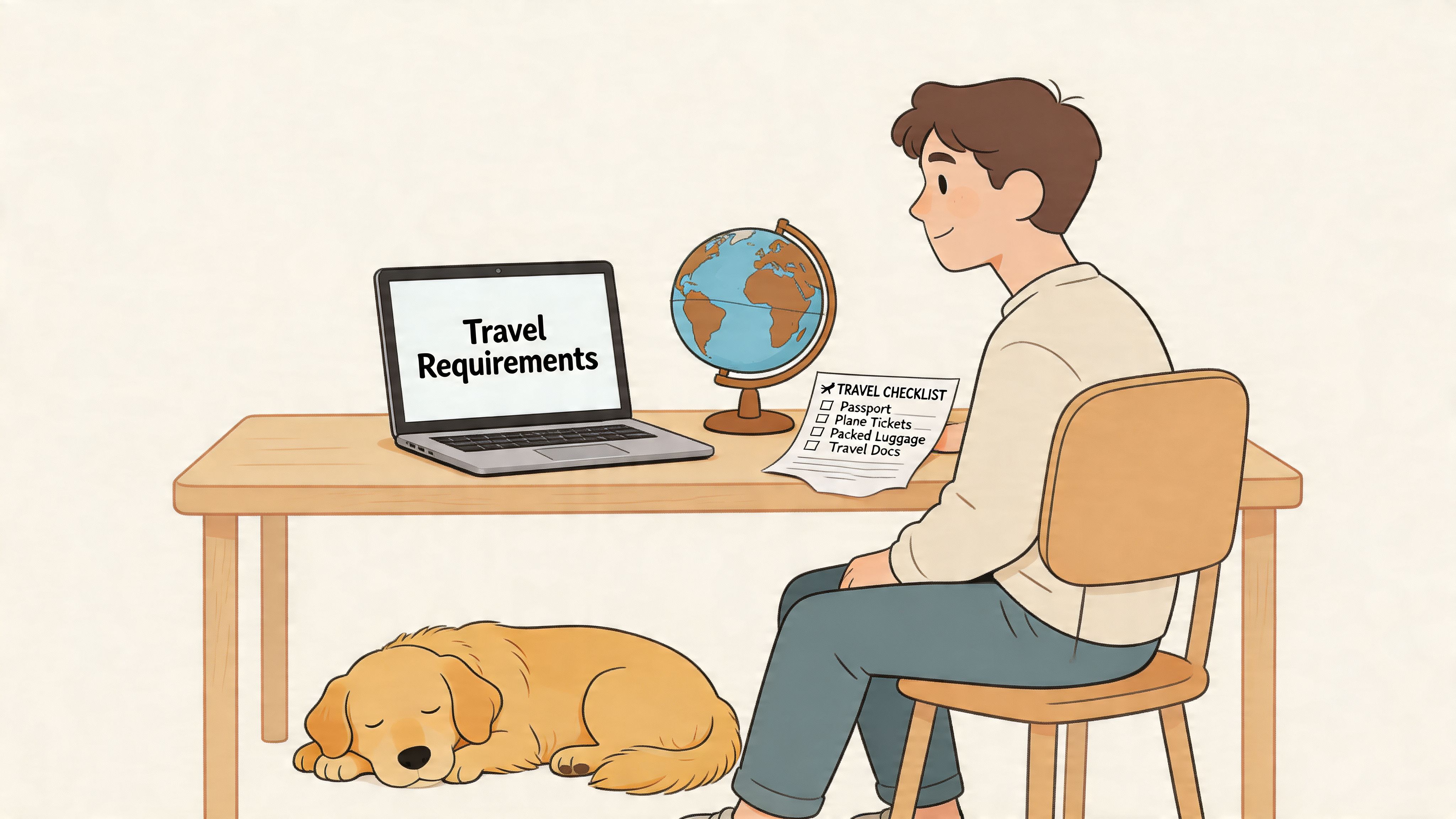
Most international health certificates for air travel are valid for only 10 days from the date the veterinarian issues them, and some destinations require paperwork that can take up to six months to process, according to Bruceville Pet Hospital’s health certificate guide. That’s why the process starts months ahead, even though the final exam often happens close to departure.
Start with the destination, not the dog
Owners often begin by calling the vet and asking for “the travel certificate.” That’s understandable, but it’s the wrong order. The better first question is: What does the destination require?
Different countries may ask for some or all of the following:
A readable ISO microchip
Current rabies vaccination
Country-specific forms
Parasite treatment records
Additional testing, depending on destination rules
If rabies titer testing might be part of your route, review a practical breakdown of the process in this dog rabies titer test guide.
The three checks that matter early
Before you schedule the travel exam, confirm these basics.
Microchip status
Your dog should have a chip that can be scanned and matched to the paperwork. If the chip is unreadable or the number on file doesn’t match, that problem can ripple through the whole application.Rabies record quality
Don’t just confirm that a vaccine was given. Confirm that the record is complete and legible. Travel paperwork often depends on exact dates and manufacturer details.Travel timing
The validity window is short. If your flight moves, the certificate may no longer line up with arrival.
Don’t book the exam based on when you’re free. Book it based on when the certificate will still be valid when your dog actually lands.
What works and what doesn’t
A few habits make this much easier.
Approach | What happens in real life |
|---|---|
Keeping all records in one folder | The vet can review them quickly and flag missing items early |
Waiting until the flight is booked to check country rules | Owners discover too late that extra steps were needed |
Confirming the destination’s exact import process first | The appointment gets scheduled at the right time |
Assuming every country uses the same form | The wrong paperwork gets started |
The biggest practical lesson is simple. Start early, but don’t confuse early planning with early certificate issuance. You want the homework done well in advance and the final certificate timed carefully. That difference is where many smooth trips are won.
The Big Vet Visit for Your Certificate
Three weeks before a flight is when many owners learn whether their travel plan is realistic. The exam itself is usually straightforward. The delays come from missing record details, a chip number that does not match, or a form that cannot be signed yet because the timing is off.
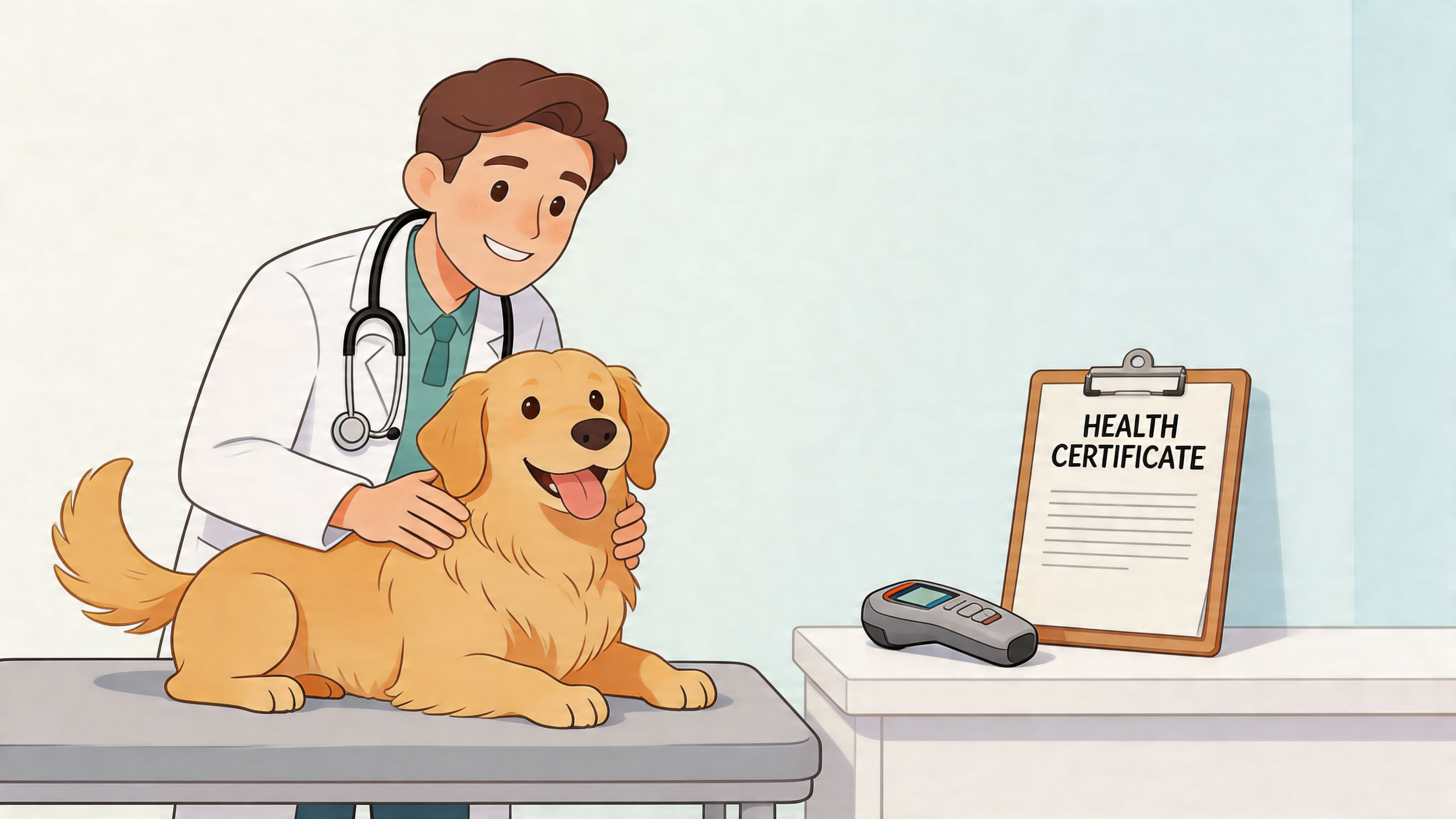
For international travel from the United States, the exam generally needs to be done by a USDA-accredited veterinarian. During that visit, the veterinarian is certifying more than “my dog looks fine today.” We are confirming that the dog shows no clinical signs that would block travel, and we are checking whether the medical record supports the certificate being issued. Microchip verification is part of that review. If the chip cannot be read or does not match the paperwork, the certificate can be rejected during the travel process, as noted by Greenpoint Vetcare’s travel certificate guide.
What to bring to the appointment
The cleanest appointments start before anyone walks into the exam room.
Bring:
Vaccination records with exact dates, manufacturer details, and lot information if available
Microchip details and any registration paperwork you have
Your full itinerary, including arrival date and any layovers
Destination requirements or the country-specific form, if you already have it
Records for required lab tests or parasite treatments tied to that route
Partial records create a very predictable problem. The veterinarian may be able to examine your dog, but not finish or sign the certificate until the paperwork is complete. That gap is where tight timelines start to break down.
What the veterinarian checks during the exam
A travel certificate visit is part physical exam, part document audit.
In most appointments, the veterinarian will:
Perform a full physical exam
Scan the microchip and match the number to the record
Review rabies and other vaccine history against the destination rules
Confirm that any required tests or treatments were done in the correct window
Complete the specific certificate form with the wording, dates, and identifiers the destination requires
This is also where experienced clinics catch failure points early. I often see owners arrive with the right vaccine, but the wrong certificate name, the wrong chip number on one page, or treatment timing that falls just outside the entry window. Those are frustrating problems, but they are fixable if they are found before the form is submitted.
Some clinics use digital systems to reduce handwriting mistakes, missing attachments, and back-and-forth with clients. For practices improving their travel workflow, these document management best practices for veterinary teams are a practical reference.
Travel certificates are delayed more often by record mismatch than by anything found on the physical exam.
What owners misunderstand most often
The appointment does not guarantee that your certificate is ready the same day. Sometimes the exam goes well, but the paperwork still cannot move forward because one supporting item is missing or a country rule was interpreted too loosely.
That is why timeline control matters here. A good veterinarian checks the dog. A good travel process checks the dog, the documents, and the calendar together. Tools such as Passpaw help owners keep those pieces organized in one place, which lowers the odds of a last-minute scramble after the exam.
Getting the Official Stamp of Approval
For international trips, the veterinarian’s signature usually isn’t the last stop. The paperwork often must be endorsed by the USDA before your dog can travel.
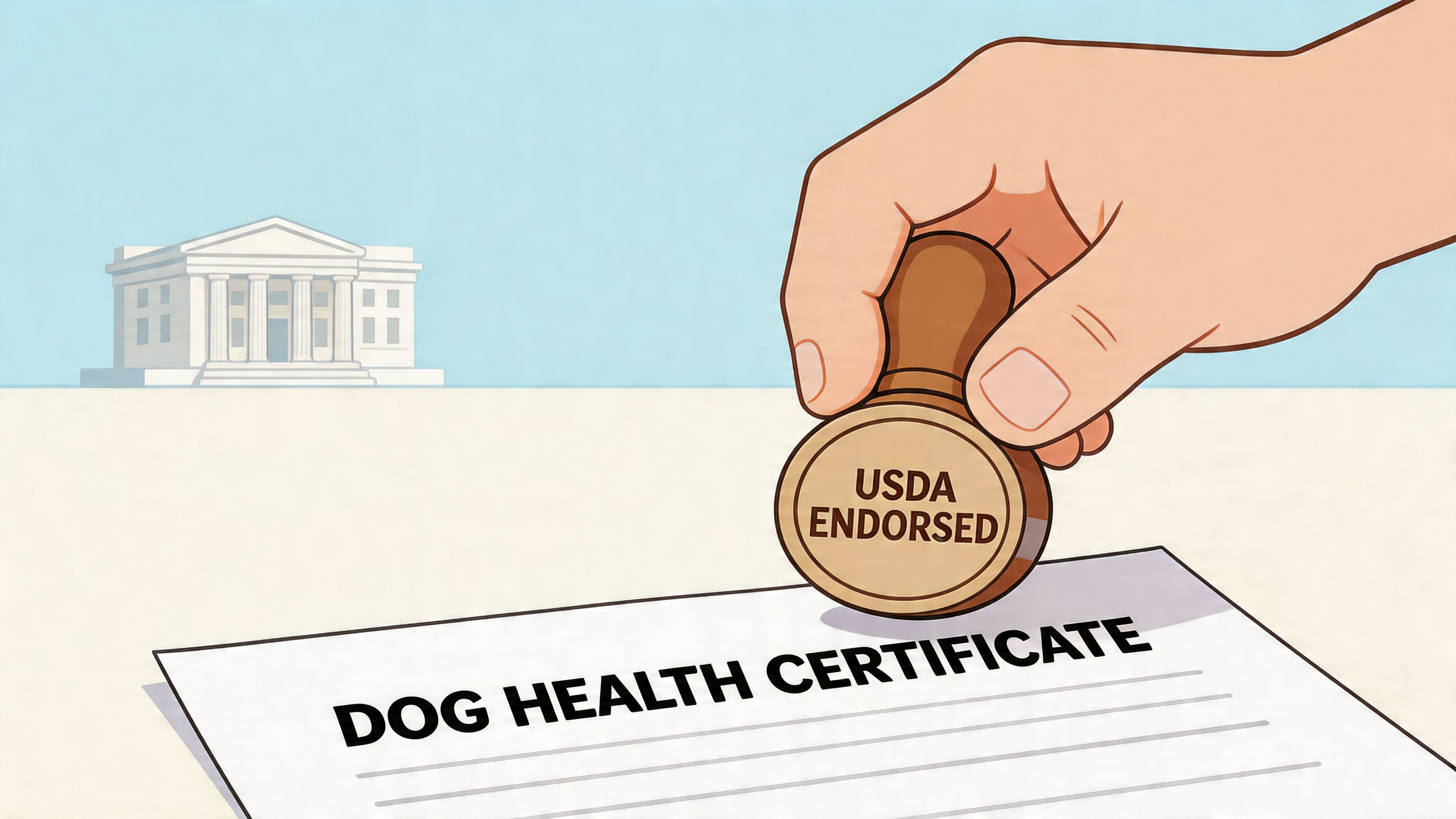
Owners are often surprised by this stage. They leave the clinic thinking the hard part is over, then realize the certificate still needs federal review, shipping, and return timing to line up perfectly.
VEHCS versus mail
The USDA reports that 85% of health certificates submitted through the electronic VEHCS system are processed within 2 days, while the traditional mail-in method can take 7 to 10 business days, not including shipping time. Endorsement fees can range from $38 to over $200, according to this USDA endorsement summary.
That difference matters. A lot.
Endorsement path | What to expect |
|---|---|
VEHCS | Faster processing, less paper handling, better fit for tight timelines |
Mail-in submission | Slower, more shipping risk, harder to recover from mistakes |
For a practical walkthrough, this guide on how to get a USDA-endorsed pet health certificate explains the sequence clearly.
How to choose the right route
If your deadline is tight, digital submission is usually the safer play. Fewer handoffs mean fewer places for something to sit unopened, get misrouted, or arrive too late.
Mail can still work, especially for less urgent situations, but it leaves much less room for correction. If a document comes back with an error close to departure, you may be out of runway.
If the trip is time-sensitive, choose the process with the fewest physical handoffs.
The real trade-off
VEHCS isn’t just about convenience. It’s about reducing the number of moving parts in a process that already has enough of them. Mail submission may be familiar to some clinics, but familiar doesn’t always mean dependable when the validity window is narrow.
By this stage, owners should be thinking less about “finishing paperwork” and more about protecting the travel date. That’s the frame that leads to better decisions.
Avoiding Travel Turbulence Common Certificate Mistakes
A dog can be fully vaccinated, healthy, and cleared by the clinic, then still miss a flight because one date, one chip number, or one destination form does not line up.
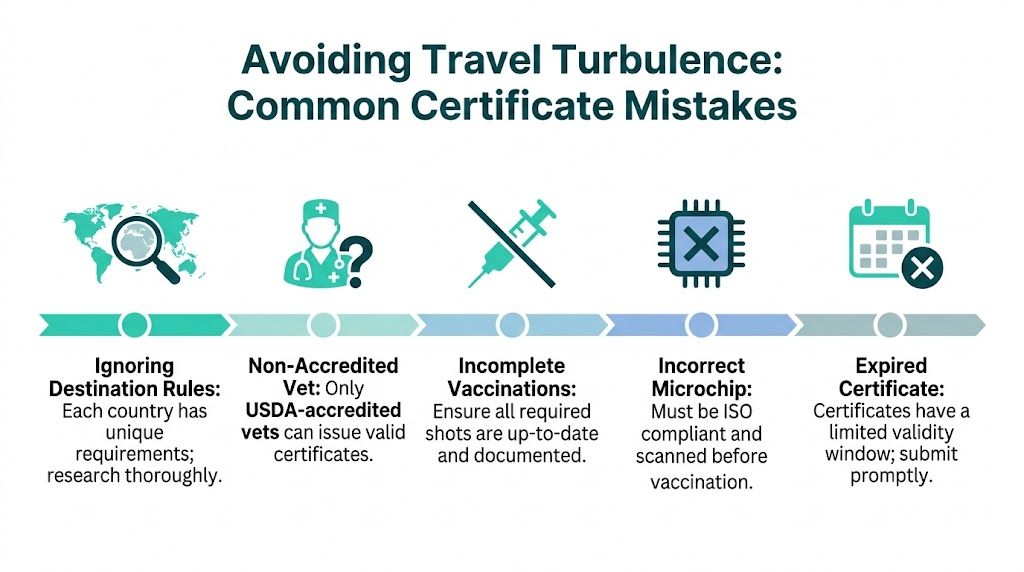
That is why I coach owners around failure points and timing, not just a list of requirements. The missed trips I see rarely come from one dramatic error. They come from a chain of small misses that only become obvious when departure is close and correction options are limited.
The mistake pattern I see most
A 2025 survey found that 42% of international pet travelers experienced itinerary changes within 10 days of departure. The same source reported a 28% increase in rejections for certificates that did not match exact arrival dates, according to Symphony Mobile Vet’s pet air travel guide.
Those numbers match what clinics deal with every week. The certificate may be correct on the day it is issued, but the travel plan shifts and the document no longer fits the trip.
The trouble spots are usually predictable:
Timing errors
The exam and certificate were booked too early, or a flight change pushed arrival outside the validity window.Form mismatch
The owner brought a general health form, but the destination required a country-specific certificate and extra attachments.Incomplete medical records
A vaccine was given, but the record is missing the lot number, manufacturer, administration date, or the veterinarian’s signature.Microchip discrepancies
The microchip number on the paperwork does not match the scanner reading, or the chip was placed after a rabies vaccine in a country that requires the reverse order.Late corrections
A spelling issue, wrong date, or missing lab result is caught after submission, when every revision costs time.
A workable countdown
Owners do better when they treat this as a staged process.
Three months or more out
Confirm the destination rules, transit-stop rules, and your dog’s ID details. Check that the microchip reads properly and matches every prior rabies document. If the country has waiting periods, rabies titer testing, or parasite treatment windows, put those dates on the calendar now.
Several weeks out
Book the certificate exam with the right veterinarian and collect every supporting record before the appointment. That includes vaccine certificates, lab reports, prior import permits, and the current itinerary. This is also the point where I advise owners to keep one source of truth for dates and files, such as a pet travel planning tool that tracks documents and deadlines.
Final travel window
Check the arrival date, not just the departure date. Reconfirm airline and destination requirements, then compare them line by line with the draft certificate. If the route changes, review the validity window before assuming the existing paperwork still works.
What prevents last-minute problems
Good preparation is less about doing more and more about catching mismatches early. One owner should hold the master file. One itinerary should be treated as current. Every date on the certificate should be checked against the flight booking before anything is submitted.
That process sounds simple because it is. The hard part is keeping it organized when plans change. That is where trips are saved or lost.
A Smoother Journey with Digital Pet Travel Tools
The hard part of pet travel isn’t usually understanding one requirement. It’s managing all of them at once when dates shift, forms vary by destination, and owners, clinics, and shippers are all touching the same file.
That’s why digital pet travel tools have become more useful in day-to-day practice. They help clinics and owners keep records centralized, track deadlines, and catch mismatches before the certificate reaches the final stage. For many teams, that’s the difference between a calm workflow and a scramble.
One example is Passpaw’s pet travel planner, which is designed to organize travel tasks around destination requirements and departure timing. In practical terms, tools like this can support document collection, task prioritization, and cleaner communication between the clinic and the pet owner.
Where digital tools help most
Deadline tracking so the exam and endorsement happen in the right order
Document review so missing items are spotted before submission
Central communication so owners aren’t texting partial records from three devices
Adjustment support when an itinerary changes close to departure
The main benefit isn’t magic. It’s fewer preventable mistakes. And in pet travel, fewer preventable mistakes usually means a much smoother trip for the dog, the owner, and the veterinary team trying to keep every detail from going off leash.
If you're preparing for a trip and want a clearer way to manage pet travel documents, deadlines, and destination-specific tasks, Passpaw offers a practical starting point for organizing the process.

More articles
From regulatory changes to best practices for veterinarians and pet owners, our resources keep you ahead of the curve.