Are you a team member in a veterinary practice?
Are you a pet parent planning a trip with your furry pal?
Animal Health Certificate for Travel Cost A Clear Guide
An animal health certificate for travel cost can range from about $100 to $170 for simple domestic trips to over $1,200 for complex international travel. The wide spread comes from what your destination requires, who has to sign off, and how much prep your pet needs before the certificate can be issued.
If you're reading this while pricing out a move, a vacation, or a family visit, you're probably feeling the same thing I hear in exam rooms every week. The trip looked manageable until the paperwork estimate landed. Then the questions start. Why is one certificate fairly simple while another turns into a stack of appointments, lab work, endorsements, and courier envelopes?
That reaction is completely fair. Pet owners often assume they’re paying for a form. In reality, they’re paying for a regulated medical and administrative process that has to match the rules of the destination exactly.
As a USDA-accredited veterinarian and practice owner, I can tell you the bill usually makes more sense once you see what sits underneath it. Some routes are straightforward. Others are a real cat-herding exercise with strict timing, extra testing, and no room for mistakes. If you understand what drives the animal health certificate for travel cost, you can plan better, avoid repeat fees, and make the process much less stressful for both you and your veterinary team.
Your Guide to Pet Travel Costs
You book a flight, reserve a pet-friendly hotel, and assume the last step is a quick signature from your veterinarian. Then the estimate arrives, and the cost is higher than expected. In practice, that surprise usually comes from one misunderstanding. Owners think they are buying a form, when they are paying for a medical clearance process that has to match the destination’s rules exactly.
For some trips, the paperwork is straightforward. For others, the certificate is only the visible part of the job. The final bill may reflect record review, vaccine timing, microchip confirmation, parasite treatment, lab work, government endorsement, and the staff time required to make sure every detail lines up before your pet travels.
That is why prices can vary so widely from one route to another.
From the clinic side, this work is rarely just administrative. A USDA-accredited veterinarian is putting a license and accreditation on the line with every signed certificate. If the destination requires a treatment within a tight window, or a lab result tied to a specific microchip number, there is very little room for guesswork. Owners feel the cost. Practices feel the risk and labor behind it.
What surprises owners most often: the certificate fee is often only one part of the total. Extra costs can come from medical prep, destination requirements, endorsement, and document delivery.
Some of those costs are fixed by regulation. Others are preventable. I see avoidable expense most often when travel plans start late, owners book flights before checking import rules, or clinics are forced to piece the process together manually from government sites, spreadsheets, and courier forms. That friction affects both sides of the exam room. Passpaw’s overview of the hidden costs of pet travel that pet owners and vets often discover late-don-t-realize-until-it-s-too-late) captures that dynamic well.
What you’re really paying for
At a high level, the total usually includes:
Veterinary exam and judgment: the veterinarian must confirm that your pet is fit for travel and that the record supports the certificate.
Route-specific compliance work: staff have to check the exact requirements for your destination, species, airline, and travel date.
Medical preparation: this may include vaccines, parasite treatments, microchip verification, or testing required before the certificate can be issued.
Official processing: some trips require USDA endorsement or other government review after the clinic visit.
Seen from that angle, the bill makes more sense. It reflects medical work, compliance work, and timing pressure. For owners, the best way to control cost is to start early and avoid rework. For practices, better systems reduce manual errors, staff time, and the last-minute scramble that makes travel paperwork expensive for everyone.
The Anatomy of a Health Certificate Bill
A health certificate bill usually reflects two jobs at once. One is medical. The other is compliance.
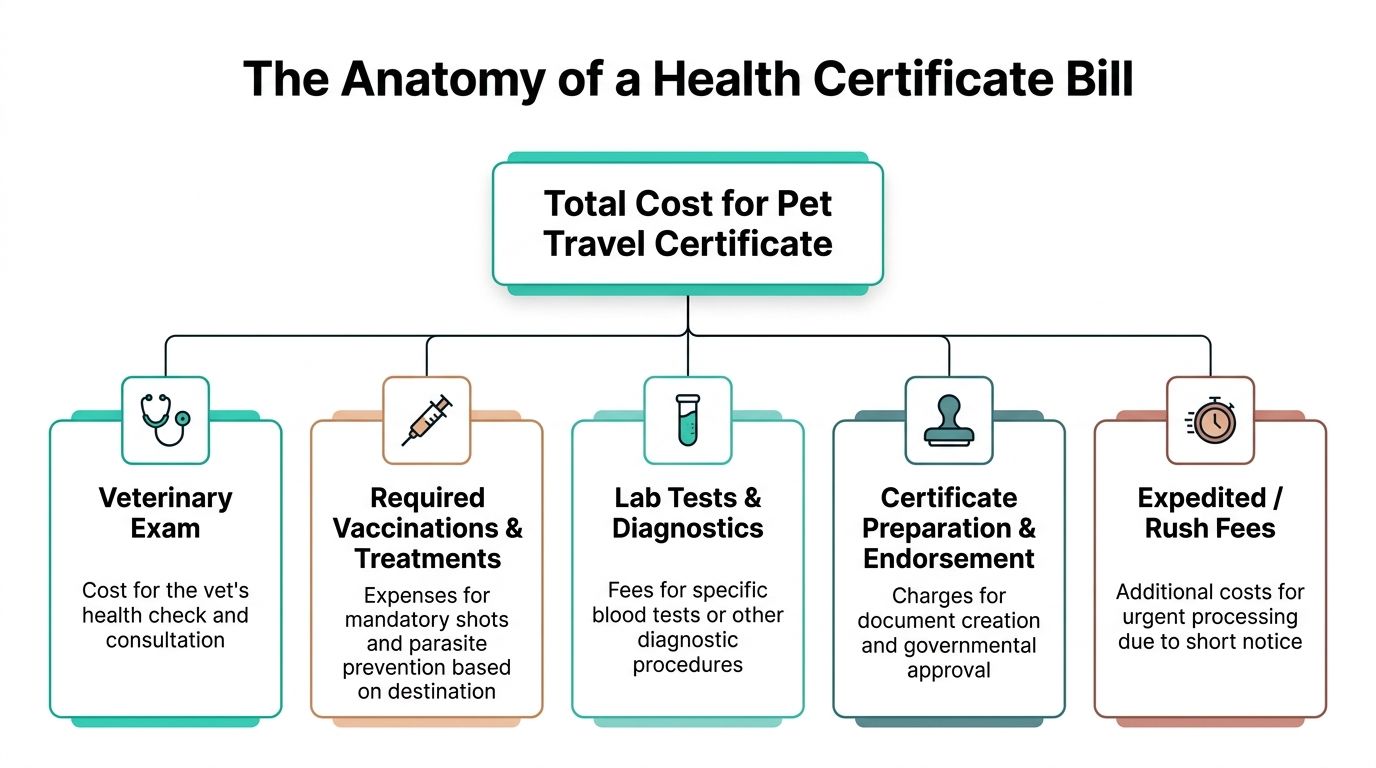
Owners often focus on the line that says “certificate,” but that line is only part of the work. Before I sign any travel document, I have to confirm that the pet is healthy enough to travel, that the record supports every statement on the form, and that the timing matches the destination’s rules. If any of that is off, the paperwork can fail at check-in, at customs, or after submission for endorsement.
The veterinary side of the bill
The first layer is the clinical work. That includes the physical exam, review of vaccine history, review of prior records, and any treatment or correction needed before the paperwork can be issued.
For a straightforward domestic trip, that work is usually on the lower end of the range. International travel costs more because the appointment is rarely just an exam. Staff time goes into checking country rules, matching those rules to the pet’s record, preparing the form correctly, and catching problems before they become expensive do-overs.
That is why two certificates can look similar on paper and still be priced very differently in practice.
The prep items that change the final number
The total often rises because the destination requires extra medical steps before the certificate is valid. Common examples include:
Microchip verification: the chip has to be readable, recorded correctly, and matched to the rest of the file.
Vaccination updates: a valid rabies vaccine is not enough if the timing does not fit the destination’s entry window.
Parasite treatment: some countries require a specific drug within a specific timeframe.
Lab work: certain routes require testing before the certificate can be prepared or endorsed.
These charges are tied to entry requirements, not padding on the invoice. If one item is missing or documented incorrectly, the certificate may be unusable even if the pet is perfectly healthy.
A certificate is only as good as the records behind it. One wrong date, one missing treatment, or one mismatched microchip number can force a do-over.
The endorsement piece owners often miss
Many international trips require approval after the clinic visit. USDA endorsement fees are separate from your veterinarian’s charges, and the USDA APHIS endorsement fee guidance for pet travel shows how those fees increase based on testing and case complexity.
That separation catches owners off guard all the time. A clinic estimate may cover the exam, record review, certificate preparation, and staff handling, while government fees, shipping, and some lab costs sit outside that quote.
For practices, this is also where workflow matters. If a team is chasing records by email, re-entering information across forms, and manually checking country rules, labor costs climb quickly. Tools such as Passpaw help clinics organize requirements, reduce avoidable rework, and give owners a clearer estimate earlier in the process. If you want context on one of the forms that still comes up often, Passpaw’s guide to the APHIS 7001 health certificate explains where it fits.
What a clean estimate should show
When my team builds a travel estimate, we separate the bill into clear categories so owners can see what is fixed, what depends on the destination, and what may still change.
Cost component | What it covers |
|---|---|
Veterinary exam | Physical exam and travel consultation |
Medical updates | Vaccines, parasite treatment, microchip check |
Diagnostics | Any country-required lab testing |
Certificate prep | Form completion and compliance review |
Endorsement and delivery | Government fees and document handling |
That level of detail helps owners budget early. It also helps veterinary teams explain the why behind the price, which usually makes these conversations easier on both sides of the exam room.
Why Your Destination Dictates the Price Tag
Two pets can leave from the same city on the same day and have very different paperwork bills. The reason is simple. Countries don’t all ask for the same proof.
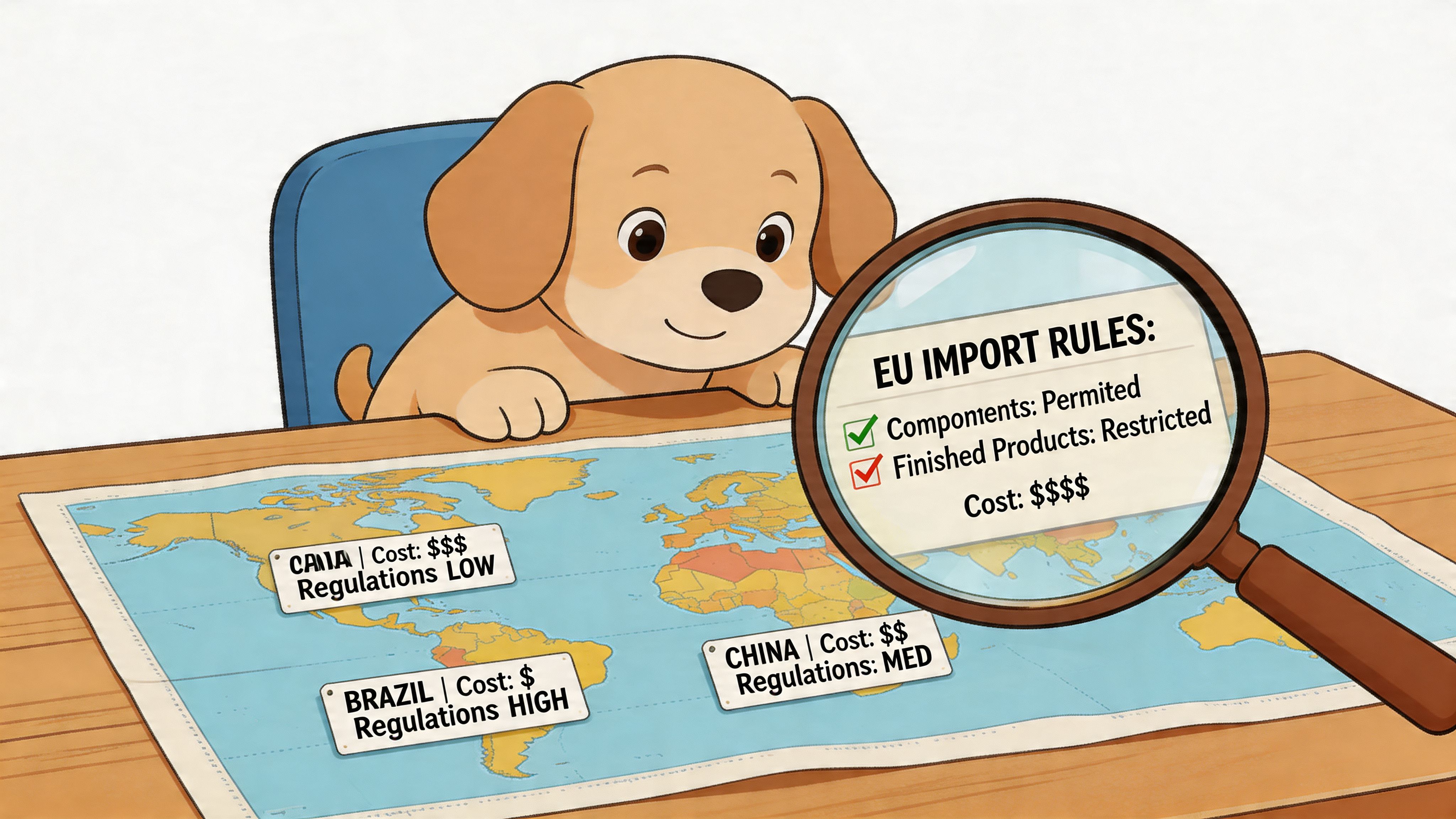
It's similar to visas for people. Some destinations wave you through with basic documentation. Others want very specific records, exact timing, and evidence that every box was checked in the right order. Pet travel works the same way.
Easier routes
Some travel plans are relatively light on requirements. Domestic flights often need only a standard health review and certificate. Canada and Mexico are frequently more manageable than long-haul international destinations, which is why clinics often price them separately from more complex international work.
These are the cases where owners usually feel the process is annoying but understandable. The clinic verifies the pet’s health, confirms the records, completes the paperwork, and sends the owner on their way.
Moderate routes
The middle tier usually includes destinations with structured import rules that are not especially forgiving. The EU is a good example of a market where details matter. Microchip records, rabies documentation, timing, and treatment requirements all need to line up.
What raises cost here isn’t just one dramatic requirement. It’s the number of moving parts. The veterinarian has to verify sequence and timing, not merely presence. That takes more review time and creates more opportunities for delays if anything in the record is incomplete.
Owners usually save money when they ask “What does my country require?” before they ask “Can I get the form next week?”
Complex routes
High-scrutiny destinations are where the animal health certificate for travel cost can jump sharply. According to Paws Abroad’s 2026 pet travel cost guide, high-risk destinations like Australia can push total costs to $800 to $1,100+ because they may require rabies titer testing proving at least 0.5 IU/ml antibodies, specific parasite treatments, and verification of a 15-digit ISO 11784/11785 microchip well before travel.
That kind of route is expensive because the certificate becomes the final step in a much longer chain. If the microchip is wrong, the timing is off, or the test isn’t completed in the proper order, the whole plan can wobble.
Here’s the practical version:
Simple destination: fewer prerequisites, shorter prep list
Structured destination: more record review and tighter timing
High-scrutiny destination: layered testing, narrow windows, and higher risk of costly delays
What doesn’t work
What fails most often is assuming every country wants the same thing. Owners hear that a friend flew with a pet using “just a certificate” and expect the same experience. That shortcut rarely travels well.
Another common mistake is focusing only on the country and forgetting transit points. If your route passes through another jurisdiction, your clinic may need to consider those rules too. That’s one reason pet travel estimates can feel less like a flat fee and more like a custom plan.
Sample Costs for Popular Travel Routes in 2026
A client flying a healthy dog from Chicago to Toronto may need a fairly straightforward certificate visit. A client moving the same dog to New Zealand is usually budgeting for a process, not just an appointment. That difference matters because owners often ask for one number, while the actual answer depends on how much work the route creates before the certificate can be signed.
The ranges below are best read as planning ranges for veterinary services, not guaranteed totals. For some trips, the clinic fee is the smaller part of the bill. For others, it is most of the bill.
Estimated Pet Health Certificate Costs by Destination 2026
Travel Scenario | Estimated Cost Range (Vet Services) | Key Factors |
|---|---|---|
Domestic U.S. travel | Lower end of the range | Exam, record check, and a basic certificate if the route allows it |
Travel to Mexico or Canada | Often modestly higher than domestic | Cross-border documentation, destination review, and carrier-specific details |
Standard international destination | Mid-range international pricing | More form work, stricter rule checks, and possible in-clinic treatments tied to travel |
Complex international destination | Highest total cost potential | Multiple prerequisites, outside lab work, endorsement, and a greater chance of repeat steps if records are incomplete |
Owners are often surprised by how much of the price comes from judgment and verification, not paper. A USDA-accredited veterinarian is not just filling out a form. The doctor is confirming identity, checking vaccine timing, matching microchip records, reviewing destination rules, and putting a license behind every statement on that certificate.
That is why two pets on similar routes can end up with different estimates.
One patient arrives with a readable microchip, complete vaccine history, and records that line up cleanly with the destination requirements. Another arrives with a vaccine given before microchipping, missing lot numbers, or records split across three hospitals. The second case takes more staff time, more doctor review, and sometimes another visit to fix what looked minor at first.
Vet fee versus total travel paperwork cost
The clinic quote usually covers the parts your veterinary team controls directly. That may include the exam, record review, certificate preparation, and any treatments performed in the hospital. It often does not include government endorsement fees, outside laboratory charges, courier costs, or airline-related expenses.
That gap is where owners get frustrated, and frankly, where clinics get stuck too. If the estimate is explained poorly, the certificate fee can look inflated when the actual issue is that pet travel involves several players with separate charges.
For broader budgeting, this guide to the cost of pet shipping helps put the certificate portion next to carrier, crate, and transport expenses.
Why these examples are still only examples
Route-based estimates are useful because they set expectations. They also have limits. A simple route can become expensive if the records need repair. A harder route can stay manageable if the pet already has the right microchip, vaccine sequence, and test history in place.
From the practice side, this is also why better workflow matters. When clinics use structured travel tools such as Passpaw to organize records, track rule sets, and catch mismatches earlier, owners get clearer estimates sooner and staff spend less time rebuilding a case by hand. That does not erase the underlying rules, but it can reduce avoidable labor, missed details, and last-minute rework.
The best quote is still pet-specific and route-specific. Good planning turns it from a surprise bill into a workable budget.
Timing is Money Your Travel Timeline's Impact
Pet travel costs don’t only come from regulations. They also come from the calendar. The same trip can be smoother and cheaper when the process starts early.
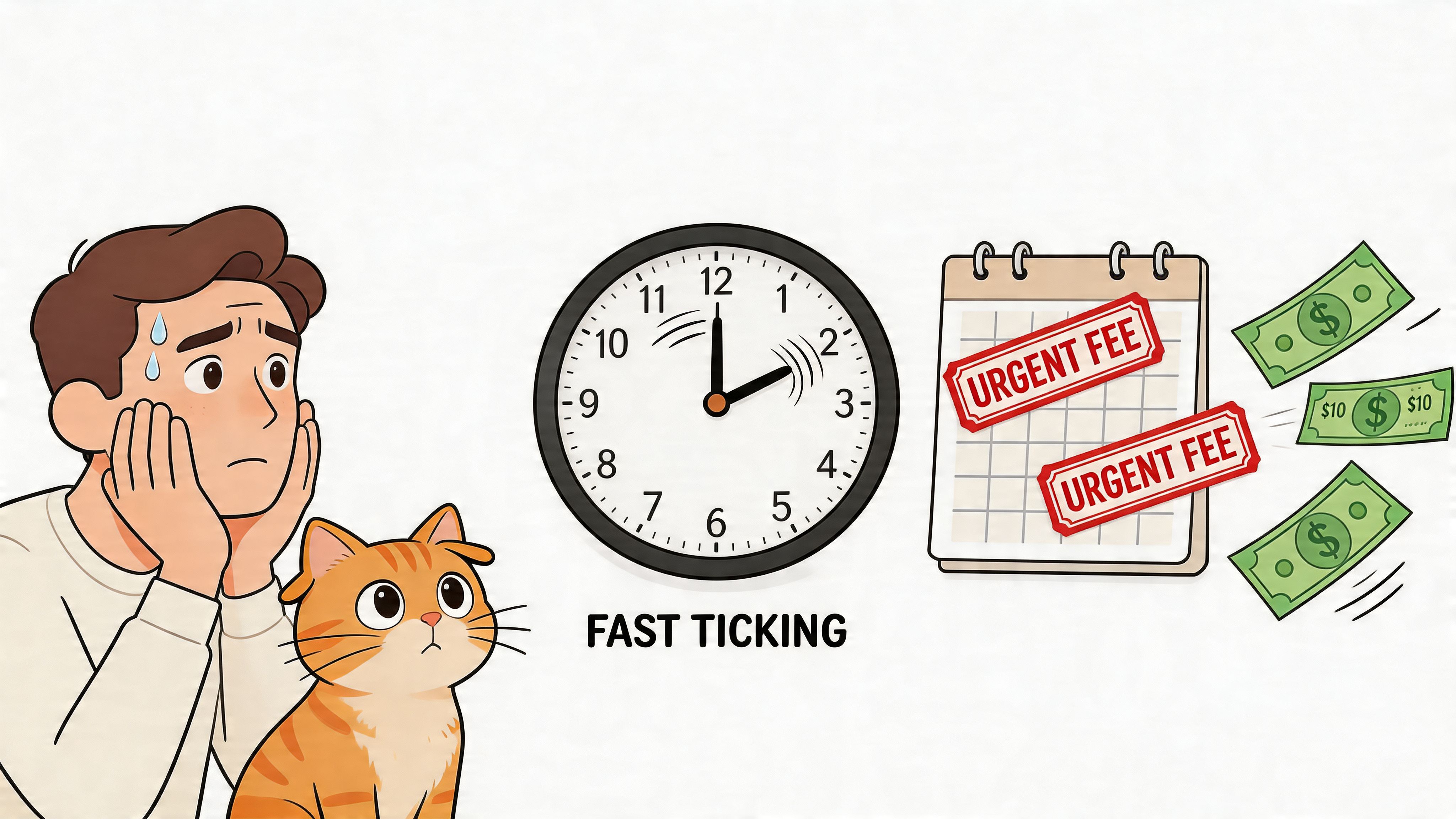
In practice, short timelines create expensive decisions. Staff have less room to correct record problems, labs may need to be rushed, and original documents may need overnight shipment to make an endorsement window.
Why late planning gets expensive
International pet paperwork has a sequence. A vaccine may need to happen before a test. A treatment may need to fall within a specific window. Endorsement may need original signatures or fast handling depending on the route.
When owners start late, the clinic often has only bad options to choose from:
Compress appointments: harder for everyone, especially if records need review from prior clinics.
Pay for faster document movement: overnight shipping often becomes necessary for originals.
Repeat work after an error: rushed paperwork leaves less time to catch mismatches.
The painful part is that these aren’t luxury extras. They’re rescue moves.
Planning protects your budget
Early preparation gives your veterinarian choices. There’s time to verify microchip details, correct vaccine history, and spot missing records before they become emergency problems. It also gives owners time to compare routes, ask the airline the right questions, and avoid paying for preventable repeats.
This matters even more for destinations with layered requirements. A pet that needs multiple steps can’t “squeeze in” at the end.
Start with the destination rules, then back into your travel date. Owners who do it in the reverse order usually spend more and worry more.
What works better in real clinics
The lowest-stress cases usually share three habits:
Records are gathered early. Not the week of travel.
The destination is confirmed before the vet visit. Not after the certificate is drafted.
The family leaves room for corrections. Because something small often needs attention.
Owners sometimes think planning early means paying early. Usually it means paying more predictably. That’s a much friendlier leash on the budget than scrambling at the end.
Pawsitive Savings How to Reduce Your Travel Bill
You can’t eliminate every cost in pet travel, but you can avoid a surprising amount of waste. The smartest approach is to reduce rework, not to bargain-hunt the certificate itself.
Ask better questions at the first appointment
A short, direct conversation with your clinic can prevent a lot of backtracking. Ask:
What is included in your certificate fee? Find out whether the estimate covers only the exam and paperwork or also treatments, endorsement handling, and follow-up.
What records do you need from me before you can quote accurately? This often includes vaccine history, microchip information, and prior test results.
Which items are destination-driven versus clinic-driven? That helps you see what’s fixed and what may vary.
Those questions don’t just help owners. They help the clinic give a cleaner estimate from the start.
Keep the basics current
Routine preventive care is still the cheapest part of this process. Owners who keep rabies records organized and microchip information easy to access usually have fewer surprises.
That matters because travel paperwork is very unforgiving about missing or inconsistent documentation. If your pet’s records are scattered across three clinics and an old email thread, the admin time grows fast.
Group tasks whenever possible
Try to avoid turning one travel plan into five separate errands. Ask whether the clinic can combine the exam, record review, and any needed updates into a coordinated schedule. That won’t erase destination requirements, but it can reduce duplicated visits and reduce the chance that one step gets missed.
A few practical habits help:
Bring every prior travel and vaccine document you have. Even if you think it’s outdated.
Confirm your exact destination and route in writing. Border rules don’t respond well to guesswork.
Book with a USDA-accredited veterinarian early for international trips. That avoids last-minute transfers between clinics.
Use organization tools, not memory
Pet travel falls apart when deadlines live in text messages and sticky notes. Use a shared checklist, a calendar, or a clinic-approved workflow to track due dates, treatment windows, and document handoffs.
A missed date is often more expensive than a high fee. Good organization saves money because it prevents repeat work.
Don’t shop on price alone
The cheapest quote isn’t always the least expensive outcome. If a clinic doesn’t routinely handle travel paperwork, you may end up paying elsewhere to correct timing or documentation issues.
That doesn’t mean expensive is always better. It means you want clarity, experience, and a process that matches your route. In pet travel, the best savings come from getting it right the first time.
For Vets A Smarter Way to Manage Travel Paperwork
For veterinary teams, travel certificates can be a profitable service or a daily headache. Usually they become a headache when the workflow lives in email chains, spreadsheet notes, and manual deadline tracking.
The challenge isn’t just medical knowledge. It’s operational control. Teams must gather records, match destination rules, watch timing windows, communicate with clients, and catch inconsistencies before endorsement. One missing detail can burn staff time and damage client trust.
The business case for better workflow
According to Polk Street Animal Hospital’s discussion of digital pet travel workflows, cloud-based platforms can slash vet practice prep time by 40% for international health certificates and help avoid over $200 in re-do costs from failed validations. The same source notes that manual workflows are prone to errors and can contribute to high-end vet fees of $500 to $750.
That tracks with what many practices already feel. Travel medicine isn’t only about signing forms. It’s about building a repeatable system so the doctor’s time is used where it matters most.
What modern practice owners should look for
A useful workflow platform should help a clinic:
Track route-specific requirements without relying on memory
Surface deadlines clearly so urgent cases don’t hide in the inbox
Standardize client communication with fewer back-and-forth messages
Reduce preventable errors before documents go out the door
For practices thinking about whether travel medicine can become a healthier service line, Passpaw’s pet travel practice revenue calculator is a practical place to evaluate the opportunity.
Travel paperwork doesn’t have to be the part of the week that everyone dreads. With the right system, it can become a reliable service that helps clients, protects staff time, and keeps the whole process from going off the leash.
If your clinic wants a cleaner way to manage international pet travel paperwork, Passpaw helps veterinary teams organize requirements, validate documents, prioritize deadlines, and keep pet owners informed without the usual spreadsheet scramble.

More articles
From regulatory changes to best practices for veterinarians and pet owners, our resources keep you ahead of the curve.