Are you a team member in a veterinary practice?
Are you a pet parent planning a trip with your furry pal?
Decoding the Cost of Pet Shipping
Planning a move with your furry family member? The first question that pops into your head is probably about the cost of pet shipping. A domestic trip might run anywhere from a few hundred to over a thousand dollars. For international journeys, you could be looking at $1,500 to well over $8,000, sometimes even more, depending on where you're going and what's required.
The Real Cost of Your Pet's Big Adventure
Moving a pet is a whole lot more than just buying a plane ticket. Think of it less like booking a flight and more like planning a fully-managed, first-class tour for a VIP (Very Important Pet). The final price tag isn't a single fee but a combination of services designed to keep your companion safe, comfortable, and in line with all the rules.
Every step of the journey has a cost, from the mode of travel to the mountain of paperwork. This is one of those times where you definitely don't want any financial surprises or last-minute scrambles. Getting the details right isn't just about your budget—it’s about making the whole process paws-itively smooth.
Why Is Pet Shipping So Complex?
Unlike shipping a box, moving a living, breathing animal involves a maze of strict rules designed to protect their well-being. These rules can change a lot between states, countries, and even airlines. Each step requires careful planning and coordination.
The total cost reflects the immense care and logistics needed to transport an animal safely across long distances. It covers everything from health clearances to ensuring they are comfortable and secure in the cargo hold.
Several key components drive the final bill:
Veterinary Care: Health exams, vaccinations, and official health certificates are always needed.
Travel Crate: Your pet needs a specific, IATA-compliant crate that’s perfectly sized for them.
Transportation Fees: This is often the biggest piece of the puzzle, whether your pet travels by air or ground.
Administrative Paperwork: Import permits, customs clearance, and other official documents all have associated fees.
Preparing for the Financial Journey
Getting a handle on these elements ahead of time is the best way to budget without stress. While the transportation fee gets most of the attention, a pet's big adventure can also come with significant health-related expenses. For a great resource on what to expect from veterinary bills, check out this guide on Understanding Pet Surgery Costs.
In the next sections, we'll dive deep into each potential expense, from the crate to customs fees, so you can plan your pet's move with total confidence.
Breaking Down the Pet Shipping Bill
Figuring out the cost of pet shipping can feel like trying to solve a puzzle with a bunch of moving parts. The final number on your quote isn't random; it's a sum of many different costs, each playing a critical role in getting your pet safely from point A to point B. Understanding what goes into that final price is the first step to creating a realistic budget and avoiding any last-minute surprises.
If you've ever moved homes, you know the total bill is more than just the moving truck. It's the boxes, the packing service, the insurance—all sorts of little things. Thinking about decoding the total cost to move house is a great parallel for grasping the different services and fees involved in a complex process like moving a beloved pet.
To make it a little easier, here's a quick visual breakdown of the main cost components.
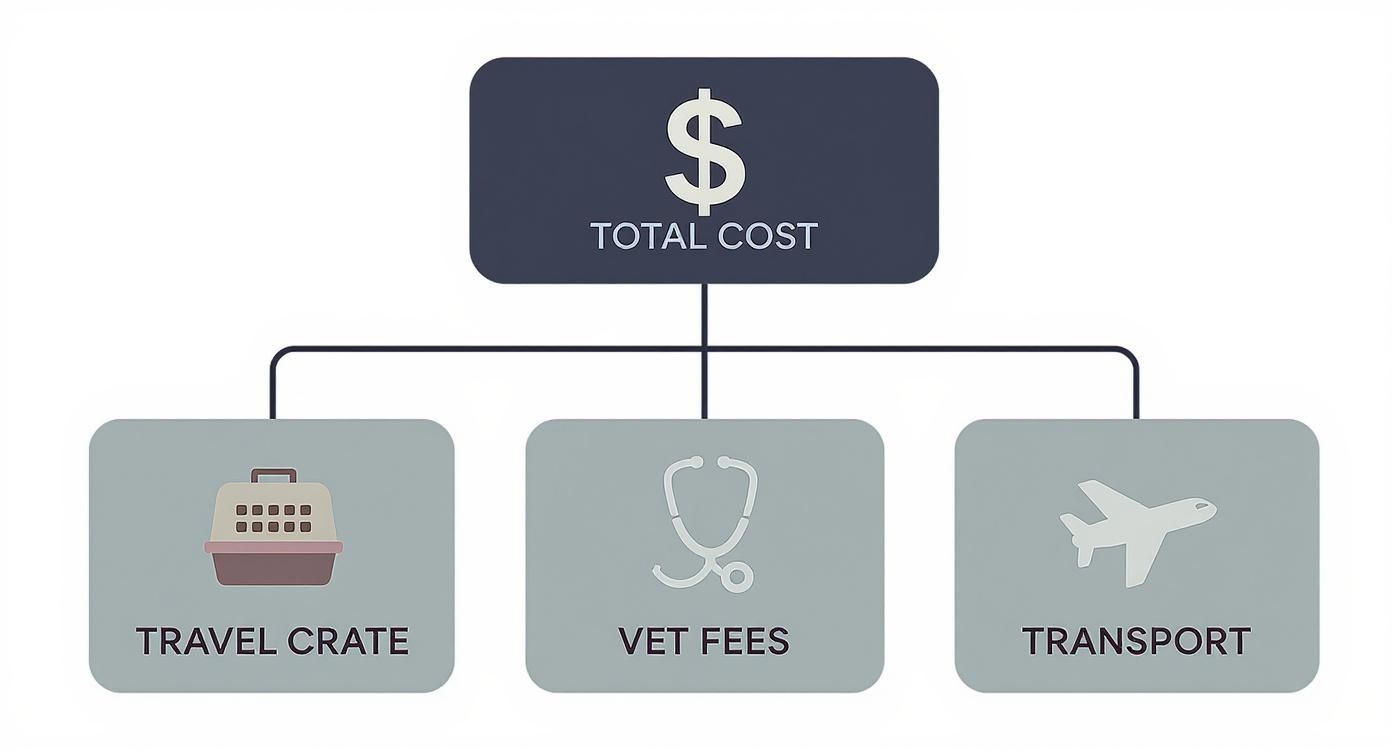
As you can see, the bill is built on three pillars: the travel crate, vet fees, and the actual transport. Let's dig into each of these.
Mode of Transport and Distance
The first and usually biggest piece of the pie is the transportation itself. You’re generally looking at two main options: ground or air. The right choice depends on your situation, and the prices are worlds apart.
Ground Transport: This is often a fantastic choice for shorter, domestic moves. Picture it like a private car service for your pet, complete with climate-controlled vans and professional handlers. It's a lifesaver for snub-nosed breeds that often face airline restrictions.
Air Transport: When you're crossing the country or an ocean, flying is pretty much the only way to go. The cost here isn't based on your pet's weight, but on the volume of their crate. Airlines charge for the space it takes up in the special, temperature-controlled cargo hold.
And, of course, distance matters. A trip from California to New York will naturally cost a lot more than a move one state over.
The All-Important Travel Crate
We're not talking about the soft carrier you use for a trip to the vet. For air travel, your pet needs an IATA-compliant crate, and the rules are strict. They cover everything from the size and ventilation to the materials and locking mechanism.
The crate has to be big enough for your pet to comfortably stand up, turn around, and lie down. A bigger pet means a bigger crate, and a bigger crate takes up more room on the plane. It's simple logistics—more space costs more money.
Vet Visits and Health Certificates
Before any travel, a vet has to give your pet the green light. This involves more than just a routine check-up.
You'll need an official Health Certificate, which is a document signed by a USDA-accredited veterinarian. For international moves, this paperwork gets a lot more intense, with strict timelines for vaccines, treatments, and government endorsements.
These vet costs are part of the deal. They are fundamental to ensuring your pet is safe and that you're meeting all the requirements of your destination. It's about protecting your pet and the local animal population.
Import Permits and Export Paperwork
Crossing international borders adds a whole new layer of paperwork and fees. Many countries will require you to apply for an import permit before your pet is even allowed to board the plane.
This paperwork is how they ensure you're following their specific rules on animal health. The process often involves fees for the application itself, government sign-offs, and sometimes even consular legalization. Our deep dive on international pet travel requirements can walk you through the nitty-gritty of this critical step.
Quarantine Fees and Taxes
Some destinations, especially island nations like Australia, New Zealand, and Japan, have very strict quarantine laws to prevent diseases from coming in. If your destination requires a quarantine period, you’ll be footing the bill for your pet's stay in a government facility.
This can last anywhere from a few days to several weeks, and those daily boarding fees add up fast. On top of that, some countries might slap an import tax or customs duty on arriving pets, so be sure to factor that into your budget.
Optional Pet Travel Insurance
Just like insurance for your own trip, pet travel insurance provides a safety net for the unexpected. It can cover things like flight cancellations, delays, or unforeseen medical issues that might pop up during transit.
While it’s an extra cost, many owners find the peace of mind is well worth it, especially for long and complicated international journeys.
Seasonal Surcharges and Carrier Fees
Finally, there are a few variable costs that can pop up. Airlines sometimes add seasonal surcharges during busy travel periods like summer or the holidays when cargo space is in high demand.
Pet shipping companies may also have their own set fees for specific services, such as:
Door-to-door pickup and delivery
Handling the airport check-in process for you
Managing customs clearance when your pet arrives
In the United States, all these factors create a pretty wide price range. Data shows that a short-distance ground trip can be anywhere from $100 to $300, while longer hauls range from $350 to $600. For flights, prices typically start around $275 and can easily soar past $1,000. The crate size is a huge driver here—costs might climb from about $490 for small breeds to $845 for giant ones.
Real-World Journeys and Their Costs
All this talk about crates, certificates, and transport fees can feel a bit abstract. The best way to really understand how the cost of pet shipping adds up is to see it in action. So, let's bring these numbers to life by following the journeys of a few different furry companions.
Seeing how these factors combine in different situations helps you find a scenario that closely matches your own. It gives you a much clearer, real-world picture of what to expect for your budget. We'll explore four common moves, from a simple domestic hop to a complex international relocation.

To make these scenarios easier to compare, we've put together a table summarizing the estimated costs for each journey. You'll see how quickly the expenses can escalate as the distance and complexity grow.
Example Pet Shipping Cost Breakdowns
Scenario | Estimated Vet & Health Cert. Cost | Estimated Crate Cost | Estimated Transport Fare | Estimated Admin/Permit Fees | Total Estimated Cost (USD) |
|---|---|---|---|---|---|
Domestic Air (Cat) | $150 - $250 | $70 - $100 | $350 - $500 | $0 | $570 - $850 |
Domestic Ground (Dog) | $150 - $250 | $150 - $200 | $800 - $1,400 | $0 | $1,100 - $1,850 |
International Air (Small Dog) | $400 - $600 | $100 - $150 | $1,200 - $1,800 | $100 - $200 | $1,800 - $2,750 |
Int'l Long-Haul (Large Dog) | $800 - $1,200 | $300 - $450 | $4,000 - $7,000 | $2,000 - $2,800* | $7,100 - $11,450 |
*Includes import permits and mandatory quarantine fees. |
These figures are just estimates, of course, but they give you a solid baseline. Now, let's dive into the details of each pet's trip to see what's behind the numbers.
Scenario 1: A Cat's Trip from New York to Florida
Let’s start with a pretty straightforward move. Luna, a 10-pound domestic shorthair cat, is relocating with her family from New York City to Miami. Since it’s a long drive, her owners decide flying is the quickest and least stressful option for her.
This is a domestic flight, which keeps the paperwork simple. Luna needs a standard vet check-up to get her Certificate of Veterinary Inspection (CVI), also known as a health certificate. Her owners purchase a new airline-approved crate that gives her plenty of room.
Here's a potential cost breakdown for Luna's journey:
Veterinary Exam & Health Certificate: $150 - $250
Airline-Approved Crate (Small): $70 - $100
Air Cargo Fare (based on crate volume): $350 - $500
Administrative/Permit Fees: $0 (not needed for this route)
Total Estimated Cost: $570 - $850
Scenario 2: A Mid-Sized Dog's Cross-Country Move
Next up is Cooper, a 45-pound Golden Retriever moving from San Francisco, California, to Austin, Texas. His owners are driving their car, but there isn't enough space for Cooper and his large crate. They decide to hire a professional ground transportation service.
Ground transport is often priced by the mile and can be a fantastic alternative to flying, especially for larger dogs or certain breeds. Cooper still needs a health certificate from his vet, and his crate must be sturdy enough for the multi-day road trip.
For many pet parents, ground transport offers real peace of mind. Pets travel in climate-controlled vans with professional handlers who make regular stops for walks, water, and food. It turns a long haul into a much more comfortable experience.
Let's look at what Cooper's move might cost:
Veterinary Exam & Health Certificate: $150 - $250
Sturdy Travel Crate (Large): $150 - $200
Ground Transport Fare (cross-country): $800 - $1,400
Administrative/Permit Fees: $0
Total Estimated Cost: $1,100 - $1,850
Scenario 3: A Small Dog's International Flight to Europe
Now things get a bit more involved. Meet Daisy, a 15-pound French Bulldog moving from Chicago, USA, to Paris, France. International travel means more paperwork, strict vet timelines, and government endorsements are necessary.
Because Daisy is a snub-nosed (brachycephalic) breed, her owners have to find an airline with specific policies to ensure her safety. She'll need an international health certificate endorsed by the USDA, which costs more than a domestic one. Her crate also has to meet strict IATA standards.
Her estimated costs start to climb pretty quickly:
International Vet Exam & USDA Endorsed Certificate: $400 - $600
IATA-Compliant Crate (Medium): $100 - $150
International Air Cargo Fare: $1,200 - $1,800
Administrative/Permit Fees (USDA Endorsement): $100 - $200
Total Estimated Cost: $1,800 - $2,750
Scenario 4: A Large Dog's Long-Haul to Australia
Our final scenario is the most complex of all. Max, an 80-pound German Shepherd, is moving from London, UK, to Sydney, Australia. This journey involves one of the strictest import processes in the world, including a mandatory quarantine period. It's a true logistical marathon that requires purr-fect planning.
Max's journey involves extensive vet work, including specific blood tests (like a rabies titer test) months in advance. He needs an import permit from the Australian government, and his health certificate will require multiple official stamps. The biggest ticket items are the long-haul flight and the mandatory 10-day stay at a government quarantine facility.
International pet shipping costs from the UK can vary a lot. For 2025, major airlines like Qatar Airways and Singapore Airlines that handle pet transport have prices ranging from about £1,400 to £8,000 ($1,750 to $10,000 USD). A large dog like Max would be at the higher end of that scale. You can find more UK pet shipping estimates to get a feel for the market.
Here’s a breakdown of this massive undertaking:
Vet Work (Exams, Blood Tests, Parasite Treatments): $800 - $1,200
IATA-Compliant Crate (Extra-Large): $300 - $450
International Air Cargo Fare (UK to Australia): $4,000 - $7,000
Admin/Permits (Import Permit, Export Health Certificate): $500 - $800
Mandatory 10-Day Quarantine: $1,500 - $2,000
Total Estimated Cost: $7,100 - $11,450
How to Create Your Pet Travel Budget
Alright, you've seen all the moving parts and how the costs can stack up. Now it's time to wrangle those numbers into a real-world financial plan. Budgeting isn't just about crunching numbers; it's about taking control, nipping surprises in the bud, and making sure you know where every dollar is going.
This is where you move from theory to action. By gathering quotes and mapping out your total estimated cost of pet shipping piece by piece, that big, scary final number starts to look a lot more manageable.
Gathering Your Quotes and Estimates
First things first: you need to start making some calls. Your key contacts are your veterinarian, the airlines or ground transporters you're considering, and any relevant government agencies. Think of yourself as the project manager for your pet's big trip.
Here's a quick checklist to get the ball rolling:
Talk to Your Vet: Ask for a detailed cost breakdown for the health exam, any needed vaccines or microchipping, and the price for issuing the official health certificate (ask for both domestic and international estimates if you're not sure).
Research Transporters: Don't just get one quote. Reach out to at least two or three pet shipping companies or airlines. Give them your pet's breed, weight, and crate size to get the most accurate estimate possible.
Check Government Fees: If you're heading overseas, hit the official government website for your destination country. You'll need to find the costs for import permits and any required government endorsements.
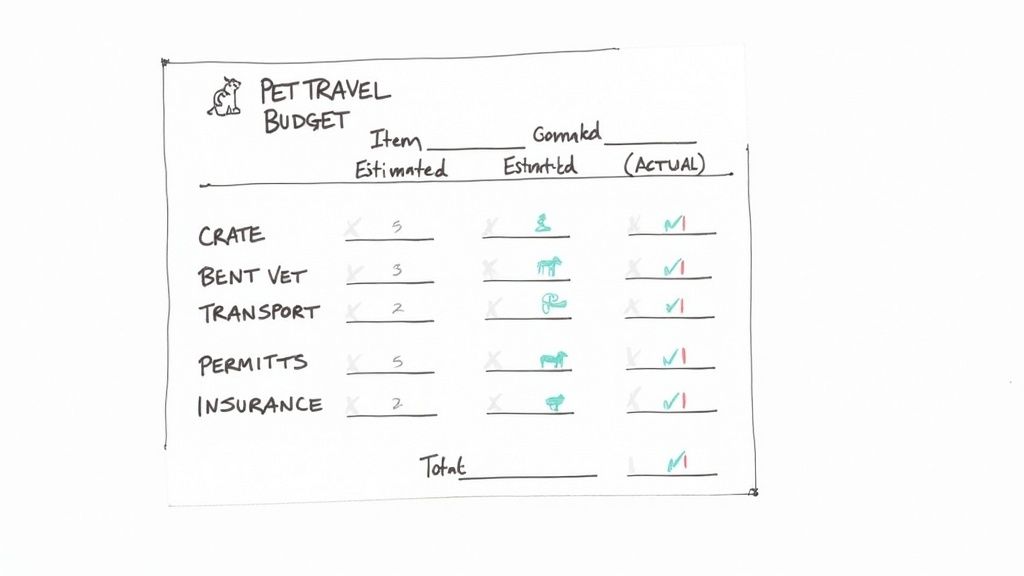
Using a Budget Worksheet
To keep all this information from turning into a chaotic mess of notes and emails, a simple budget worksheet is your best friend. You can create one in a notebook or a spreadsheet—whatever works for you. Just list out every potential expense we've talked about, then make columns for your "Estimated Cost" and "Actual Cost."
Think of your budget template as a financial roadmap for the move. It helps you see where your money is going in real-time and makes sure no hidden costs sneak up on you.
This simple tool turns a complicated process into a clear, actionable checklist, helping you stay on top of your spending from start to finish.
Questions to Ask Potential Transporters
When you're gathering quotes, what you don't see is often as important as what you do. To sniff out any hidden fees, you have to ask the right questions. A few minutes of being thorough now can save you a world of headaches (and money) later on.
Here are a few essential questions for any company you're considering:
Is the travel crate included in this quote, or do I need to purchase that myself?
Are there extra fees for things like airport check-in assistance or customs clearance services?
What's the plan if my pet's flight gets delayed or cancelled? Will I be charged for rebooking or overnight care?
Does your service cover door-to-door pickup and delivery, or is it just airport-to-airport?
Should I be aware of any fuel surcharges or seasonal price hikes that could affect my final cost?
Getting straight answers to these questions ensures you're truly comparing apples to apples. If you want a more guided experience for organizing all these moving parts, using a dedicated pet travel planner can be a game-changer, helping you track every document, deadline, and cost all in one place.
Smart Ways to Manage Pet Shipping Costs
Your pet's safety is always number one, but that doesn't mean you can't be smart about the budget. With a bit of forward planning, you can find ways to manage the total cost of pet shipping without cutting corners where it counts. Think of yourself as a savvy travel agent for your four-legged family member.
A few strategic moves can make a real difference to the final invoice. The trick is knowing where you have flexibility and, just as important, where you absolutely shouldn't compromise. Let’s walk through some practical tips to keep those expenses in check.
Travel During the Off-Season
Just like with our own travel plans, timing is everything. Airlines often tack on surcharges during peak travel seasons—think summer or major holidays—when cargo space is in high demand. If your moving schedule has some wiggle room, planning your pet’s trip for the off-season (like fall or spring) can help you dodge those extra fees.
There’s another bonus: weather. Airlines have strict temperature restrictions and won't fly pets if it's too hot or cold on the tarmac. Traveling during milder seasons lowers the risk of a last-minute cancellation or the added cost of rebooking. It’s a win-win for your wallet.
Crate Train Your Pet in Advance
One of the kindest things you can do for your pet is to help them see their travel crate as a safe, cozy den long before the trip. Start early. Leave the crate open in your living room with their favorite blanket and toys inside. Let them explore it on their own terms.
A calm pet is much easier for airline staff to handle and is far less likely to run into stress-related issues. While this doesn't directly slash a specific fee, it ensures the whole process goes smoothly, helping you avoid unexpected complications that could drive up costs.
A well-adjusted pet is a happier traveler. Investing time in crate training is one of the most effective ways to ensure their well-being, which is priceless.
Compare Ground Versus Air Transport
For domestic moves, don't just assume flying is the only way to go. While air travel is certainly faster, professional ground transport can be surprisingly cost-effective, especially for larger dogs, families with multiple pets, or trips that aren't coast-to-coast.
Ground shippers often provide a door-to-door service, which means you can skip the separate trips to and from the airport cargo facility. Always get quotes for both options. A few minutes of research here could easily save you hundreds of dollars.
Where Not to Cut Corners
Saving money is great, but some things are simply not up for debate when it comes to your pet's safety and health. Never skimp on these critical items:
A Compliant Crate: An IATA-approved crate isn't just a suggestion; it's a key requirement for air travel for good reason. They are designed for safety, security, and proper ventilation.
Proper Veterinary Care: All the required health checks, vaccinations, and official paperwork are essential. They keep your pet healthy and help you meet all travel rules.
Reputable Transporters: Always choose a proven, professional pet shipper. You're trusting them with a family member, and their expertise ensures safety is the top priority.
Globally, the factors influencing shipping costs are diverse. A domestic door-to-door ground move in the U.S. can approach $5,000, while flights often range from $900 to $2,500. International moves can climb to $4,000 or more with all the extra requirements. You can discover more insights on how these costs vary at Tailwind Global Pet Transport. Managing these variables smartly is key, and tools that help organize the process can be invaluable. For instance, understanding the Passpaw pricing structure can help vet clinics offer clients clear, predictable costs for handling complex travel paperwork.
Ensuring a Happy Landing for Your Pet
We’ve covered a lot of ground unpacking the total cost of pet shipping. While that final number might seem intimidating at first, it becomes far less daunting once you see all the individual pieces that come together to make the journey happen.
Knowing what to expect is half the battle. When you plan ahead for the big-ticket items—the mode of transport, necessary vet care, official paperwork, and the right travel crate—you can move forward with confidence, not anxiety. Think of the tips and tools in this guide as your roadmap to building a realistic budget and sidestepping those frustrating last-minute surprises. This is about more than just money; it's about making the entire relocation as smooth and stress-free as possible for you and your pet.
At the end of the day, proactive planning is your single best tool for managing costs and ensuring a safe, successful trip. A well-prepared move is a happy move for everyone involved.
Hopefully, you now feel ready and empowered for the adventure ahead. For more expert insights, be sure to explore our other articles covering all things related to pet travel.
Here’s to a safe and happy landing for you and your furry, feathered, or scaled family member.
A Few Final Questions on Pet Shipping Costs
Even with the best plan, there are always a few questions that pop up around the cost of pet shipping. To help you tie up any loose ends, we've put together answers to some of the most common things we hear from pet parents. Think of this as the extra bit of clarity you need for a stress-free move.
Is Ground or Air Travel Cheaper for Pets?
For shorter, domestic trips—think under 500 miles—ground transport is usually the more budget-friendly route. It's also a fantastic choice for very large dogs, whose crate size can make air travel surprisingly expensive.
But once you're looking at a cross-country or international journey, air travel often becomes more practical. Sometimes, it's even cheaper than a multi-day ground trip once you add up the handler's time, fuel, and accommodation. The only way to know for sure is to get quotes for both and compare the total cost, transit time, and what's included.
Why Do Certain Breeds Cost More to Ship?
Some breeds, especially snub-nosed (brachycephalic) dogs and cats like Pugs, French Bulldogs, and Persian cats, often come with a higher shipping price tag. It's not a penalty—it's all about safety. Because of their breathing sensitivities, they need special handling and are often limited to flying with specific airlines that have safety protocols just for them.
These airlines might require larger crates for better airflow or have stricter temperature controls in their cargo holds, which adds to the cost. The higher fare simply reflects the extra care and precautions needed to make sure they travel safely.
Ultimately, that extra expense is buying you peace of mind, knowing that the airline is taking every possible step to ensure their well-being.
How Far in Advance Should I Plan to Manage Costs?
To keep pet shipping costs from getting out of hand, the best advice is to start early. The sooner, the better, truly. For an international move, you should begin your research at least six months out. This gives you plenty of time to tackle lengthy requirements like rabies titer tests without paying for expensive rush services.
For a domestic move, a one- to two-month head start is a good rule of thumb. Booking early usually means more options and better pricing before cargo space fills up, particularly during busy travel seasons. Last-minute moves are almost always more expensive and a whole lot more stressful.
Feeling overwhelmed by the paperwork and costs? You don't have to be. Passpaw gives veterinary teams the tools to organize every detail of your pet's travel documentation for a smooth, error-free process. See how we make complex travel simple at https://passpaw.com.
More articles
From regulatory changes to best practices for veterinarians and pet owners, our resources keep you ahead of the curve.