Are you a team member in a veterinary practice?
Are you a pet parent planning a trip with your furry pal?
Your Guide to Alaska Airlines Flying with a Dog
Thinking about flying with your dog? Good news. Alaska Airlines allows dogs to fly either in the cabin with you or as checked baggage through their Pet Connect cargo program. They're well-known for being one of the more pet-friendly airlines out there, but you'll still need to get the details right on carrier size, breed rules, and fees to make sure everything goes smoothly.
Your Guide to Flying with a Dog on Alaska Airlines
Bringing your dog along for the ride is one of life's great joys, and with a bit of prep, flying on Alaska Airlines can be surprisingly straightforward. Think of this as your go-to playbook for a stress-free trip with your four-legged co-pilot. We’ll walk through everything you need to know, from choosing between the cabin and the climate-controlled cargo hold to the nitty-gritty of carrier sizes, fees, and health documents.
There's a reason so many pet parents choose Alaska. The airline has built a solid reputation with its "Fur-st Class Care™" program and a strong safety record that gives owners peace of mind.
Alaska Airlines has been a leader in pet transport for years, flying more animals than any other U.S. carrier since 2015. Between January 2015 and December 2020, they safely moved over 730,000 animals and maintained an impressively low incident rate of just 0.26 incidents per 10,000 animals. In 2020 alone, Alaska flew 107,042 animals with zero reported incidents—a perfect score that speaks volumes about their care.
This guide will give you a clear map of the entire process, so you feel ready from the start. The first big decision is figuring out how your dog will travel. For more details on this, you can also check out our general guide on which airlines allow pets in the cabin.
In-Cabin vs. Pet Connect Cargo
Your first major choice is deciding where your dog will ride: in the cabin under the seat in front of you, or safely in the cargo hold via the Pet Connect program. This decision almost always comes down to your dog's size and weight. Smaller pups can usually tuck in right at your feet, while larger dogs travel in the temperature-controlled Pet Connect cargo area. Each option has its own set of rules.
To help you figure out the best fit for your dog, here’s a quick comparison of the two options.
Alaska Airlines Pet Travel Options at a Glance
This table breaks down the key differences at a glance, helping you choose the most comfortable and appropriate option for your pup.
Feature | In-Cabin Travel | Pet Connect (Cargo) |
|---|---|---|
Eligibility | Small dogs, cats, rabbits, household birds | Most dogs, cats, ferrets, guinea pigs, hamsters, rabbits, etc. |
Carrier Type | Soft-sided or hard-sided carrier | Hard-sided, FAA-approved kennel only |
Max Weight | Dog + carrier should not exceed 20 lbs | Combined weight up to 150 lbs |
Cost | $100 each way | Starts at $150 each way |
Travel Area | Under the seat in front of you | Pressurized, temperature-controlled cargo hold |
Best For | Small breeds that can fit comfortably in an under-seat carrier | Larger breeds or when flying multiple pets |
We'll dive deeper into what these requirements mean for you in the next sections, but this should give you a solid starting point for making that initial decision.
Choosing Between In-Cabin and Pet Connect Travel
The first big decision you'll make is where your dog will fly. Will they be tucked safely in a carrier at your feet, or will they travel in Alaska's dedicated Pet Connect cargo compartment? For anyone flying with a dog on Alaska Airlines, this choice almost always comes down to one simple factor: size.
Think about planning a trip with a tiny Yorkie versus a big, lovable Golden Retriever. The Yorkie can easily curl up in an under-seat carrier, making them a perfect candidate for in-cabin travel. The Golden Retriever, however, needs more room and will fly comfortably and securely in the temperature-controlled cargo hold.
Let's break down what each option really means for you and your dog.
Flying with Your Dog in the Cabin
Bringing your dog into the cabin is a popular choice for smaller pets. It's reassuring to have them close by, which can ease anxiety for both of you. But since space is limited, Alaska Airlines has some specific rules to help ensure everyone's comfort and safety.
Only certain small animals are allowed in the cabin, including dogs, cats, rabbits, and household birds. Alaska generally allows one pet carrier per passenger, so if you're traveling with two small dogs, you'll need another person in your party to handle the second carrier.
There is one small exception to this rule:
Two small puppies or kittens of the same species and similar size can share a carrier, but only if they can both stand up and move around comfortably.
The goal here is to make sure the animals aren't cramped and have plenty of air. So, if you're bringing two tiny pups, double-check that they have enough room to share before you even think about heading to the airport. It's a small detail that can make a huge difference on travel day.
Understanding the Pet Connect Program
So, what happens if your dog is too big to fit under the seat? That’s where Alaska’s Pet Connect program comes in. This isn't your standard cargo; it's a special service designed just for animal transport. The cargo holds are pressurized and temperature-controlled, just like the main cabin, creating a safe environment for your pet.
The Pet Connect program is built for larger dogs, with a pretty generous weight limit. Your dog and their kennel can have a combined weight of up to 150 pounds. This covers most large breeds, from Labradors to German Shepherds, giving them a safe way to fly.
It's helpful to remember that Pet Connect is for shipping your pet as checked baggage on your same flight. It’s different from cargo services that ship animals independently. This means you and your best friend are on the same journey from start to finish.
However, not all breeds are eligible for Pet Connect. For safety reasons, Alaska Airlines does not transport brachycephalic, or "short-nosed," breeds like Pugs, Bulldogs, and Boston Terriers in the cargo hold. These breeds can have breathing difficulties at high altitudes, and the airline’s policy on this is firm—it puts animal well-being above all else. For a more detailed look at this, check out our guide on airlines that take dogs in cargo.
The costs for these two options are different, too. For small dogs traveling in the cabin, the airline charges $100 each way. For larger dogs traveling via the Pet Connect program, the fee is $150 each way.
Booking Your Dog's Flight and Finding the Right Carrier

Alright, you've figured out whether your dog will be joining you in the cabin or flying via Pet Connect. Now it’s time to get them on the manifest. Unlike booking your own seat, this step requires a bit more than a few clicks.
First things first: book your own ticket. Once that's confirmed, you need to add your pup to the reservation. Because spots for pets are limited on every flight, you can't just add them online.
You'll need to contact Alaska Airlines Reservations directly by phone or chat to see if there’s room for your dog. We can't stress this enough: do this the moment your own seat is booked. You don't want to find out the flight's "pet quota" is full right before your trip.
Understanding the Fees for Your Furry Co-Pilot
Bringing your dog along comes with a fee, which is pretty standard across airlines to cover the special handling involved. Alaska keeps it simple and easy to understand.
In-Cabin Pets: The cost is $100 each way for each carrier.
Pet Connect (Cargo): The fee is a bit higher at $150 each way.
These fees are non-refundable and you’ll pay them at the airport during check-in. It's basically your dog's own boarding pass! Alaska also offers fee reductions for active-duty U.S. military personnel and their dependents traveling on orders, which is a nice touch.
Choosing the Right Carrier for Your Dog
The carrier is your dog’s home base for the entire journey, so getting it right is important for their safety and comfort. The rules are very different for in-cabin versus cargo travel, so pay close attention here.
For dogs flying in the cabin with you, Alaska has specific size limits.
Hard-sided carrier dimensions: Up to 17" L x 11" W x 7.5" H
Soft-sided carrier dimensions: Up to 17" L x 11" W x 9.5" H
Most people find soft-sided carriers easier to work with since they have a little give and can be squished down to fit under the seat more easily. The most important rule, regardless of carrier type, is that your dog must have enough room to stand up and turn around inside without being cramped.
If your dog is flying via Pet Connect, the carrier requirements are much stricter for safety reasons. You'll need a hard-sided kennel made of rigid plastic with a solid top and secure metal hardware (no plastic clips!). It must have ventilation on at least two sides, a leak-proof bottom, and strong latches to prevent any clever escape attempts. For a deeper dive, check out our guide on selecting the perfect airline pet travel carrier.
Helping Your Dog Love Their Carrier
The last piece of the puzzle is making sure the carrier is a happy place for your dog long before you ever head to the airport. If the carrier only comes out right before a stressful trip, your dog will learn to dread it.
Start introducing the carrier weeks in advance. Leave it open in your living room with treats, favorite toys, and a comfy blanket inside. Let your dog explore it on their own terms. The goal is to build a positive association, turning the carrier into a safe den, not a scary box.
Once your dog seems comfortable going in and out, try closing the door for just a few minutes. Gradually increase the time. Taking them on short car rides in the carrier can also help them get used to the feeling of movement. A little prep work here goes a long way in making the travel day less stressful for everyone involved.
Untangling the Paperwork: Health Certificates and Travel Documents
Let's be honest, figuring out the paperwork for flying with your dog can feel like a headache. But getting this part right is super important for a smooth check-in. If your documents aren't in order, you and your furry copilot could be grounded before you even make it through security.
For a simple domestic flight with a small dog in the cabin, Alaska's requirements are usually pretty straightforward. Things get a little more complex when your dog is traveling in the cargo hold, or when you’re flying to a destination with strict animal import rules. This is where the Certificate of Veterinary Inspection (CVI), more commonly known as a health certificate, becomes very important.
When Do You Actually Need a Health Certificate?
So, is this form really necessary for your trip? The short answer is: it depends entirely on your travel plans.
While Alaska Airlines might not ask to see a health certificate for a dog flying in-cabin from, say, Seattle to Los Angeles, it's never a bad idea to have one. Airline policies can shift, and having official proof of your dog's health provides valuable peace of mind.
However, a health certificate is usually required in a few key situations:
Flying in Pet Connect Cargo: Any animal traveling in the cargo hold will need a valid health certificate. This is a firm requirement for safety.
Traveling to Specific Destinations: Some states and U.S. territories have their own animal import laws to protect local wildlife and agriculture. Hawaii is a good example, with lots of paperwork that needs to be prepared far in advance.
All International Flights: Every country has its own rulebook for bringing in animals. A health certificate is almost always the first document you'll need for international travel.
Think of the health certificate as your dog's official "fit to fly" letter. It's a document signed by an accredited veterinarian saying your pet is healthy, free from infectious diseases, and up-to-date on all needed vaccinations.
Getting the Timing Right for Domestic Travel
For domestic flights that require a health certificate (like for dogs in cargo), timing is everything. The certificate has a shelf life, and it must be issued by a licensed veterinarian within a very specific window before you fly.
As a general guideline, the CVI should be issued no more than 10 days before your departure. This is a tight turnaround. For example, if you fly out on June 1st, the certificate should be dated May 23rd or later.
Keep your return trip in mind, too. If you'll be gone for more than 10 days, you'll likely need a second health certificate from a vet at your destination for the flight home. So, if you return on June 15th, you'll have to schedule another vet visit during your trip. Plan accordingly!
What Your Vet Needs to Include
A valid health certificate is more than just a quick note from your vet. It's a specific form that must contain detailed information to be accepted by the airline.
Your veterinarian will need to document:
Your name and address as the pet owner.
Your dog's details: name, breed, age, and color.
A clear statement confirming the dog is in good health and shows no signs of diseases that can spread.
The date and details of their most recent rabies vaccination.
Make sure your veterinarian is USDA-accredited, as their signature and accreditation number are what make the document official. A simple mistake or a missing piece of information can cause a major headache at the check-in counter. It’s always a good idea to review the form for accuracy before you leave the vet's office.
If this process feels like a lot, you can learn more about how to get a health certificate for dog travel in our detailed guide.
Tackling International Travel Documents
Flying internationally? That’s a whole different ballgame. The standard 10-day health certificate is just the starting point. Each country has its own unique, and often very specific, set of import rules.
For instance, flying to the European Union requires a specific EU Pet Health Certificate, a compatible microchip, and proof that the rabies vaccine was given after the microchip was put in.
Other countries might ask for:
Import Permits: Some nations require you to apply for and receive an official import permit weeks or months before your dog is even allowed on the plane.
Specific Treatments: Beyond rabies, some countries require proof of specific vaccinations or parasite treatments (like for tapeworm) given within a precise timeframe.
Quarantine: A few destinations, like Australia and New Zealand, have mandatory quarantine periods for all incoming pets, which can last for days or even weeks.
This is not a process you can rush. Planning for an international trip with your dog should begin months—not weeks—in advance to make sure you can check every single box. One missed step could result in your dog being denied entry.
Your Travel Day Checklist for a Calm Departure
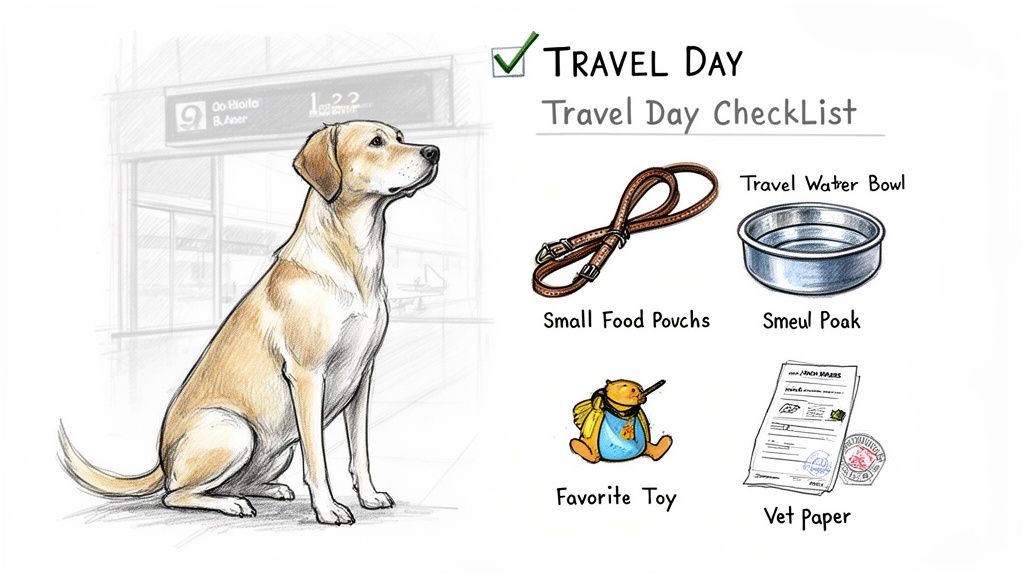
The big day is here. You’ve done the hard work of booking reservations and sorting out the paperwork. Now, it’s all about making it happen. A little day-of planning can turn potential travel chaos into a smooth, calm experience for both you and your dog.
Think of this as your pre-flight mission plan. A well-prepared traveler is a happy traveler, and that goes double when your co-pilot has four paws. The goal is to avoid surprises so you can focus on making this a positive memory.
Pre-Airport Prep: The Night Before
A smooth morning starts the evening before. Rushing around at the last minute trying to find a leash or their favorite toy is a recipe for stress. Take some time the night before to get everything organized and ready to go.
Your first task is to put together your dog's carry-on kit. This bag should be easy to get to and contain all the essentials for the journey.
Here’s what we always recommend packing:
Food and Water: Pack a small portion of their regular food and a collapsible water bowl. You don't want to give them a huge meal right before flying, but having food on hand is a lifesaver for long flights or unexpected delays.
Leash and Collar: An obvious one, but very important. Your dog will need their leash for potty breaks and walking through the airport. Double-check that their collar has up-to-date ID tags with your contact info.
Comfort Item: A small, familiar blanket or a favorite chew toy can provide a huge sense of security in a new, busy environment. Just make sure it’s not a squeaky toy—your fellow passengers will thank you.
Waste Bags: You will definitely need these for that final potty break before you head inside the terminal.
It’s a common mistake to overfeed a nervous dog, thinking it will calm them down. It’s actually better to give them a light meal about four hours before your flight. This gives them enough time to digest, reducing the risk of an upset stomach or motion sickness once you're in the air.
Navigating the Airport with Your Dog
Once you arrive, things will look a bit different than when you travel by yourself. Because you're flying with a dog on Alaska Airlines, you have to check in at the counter with a customer service agent—even if you have no bags to check. The self-service kiosks won't work when you have a pet.
To start your journey off right, it helps to understand general airport arrival guidelines. Building in extra time is always a smart move with a pet in tow. This buffer gives you plenty of time to handle check-in, find a pet relief area, and get through security without that frantic, rushed feeling.
After checking in and paying the pet fee, you’ll head to the TSA security checkpoint. This part can be a little tricky for first-timers.
Your dog must come out of their carrier so the carrier can go through the X-ray scanner. You'll then carry or walk your dog through the metal detector with you. A good tip is to make sure their collar is free of any metal to avoid setting off the alarm. Once you're both cleared, you can place them back in their carrier.
Keeping Your Dog Calm in the Terminal
Airport terminals are a sensory overload for dogs—a whirlwind of new sights, sounds, and smells that can be overwhelming. Your calm energy will be their biggest source of comfort.
Here are a few tips for a more peaceful wait at the gate:
Find a quiet corner away from the main streams of foot traffic.
Keep your dog in their carrier as much as possible; it’s their safe space.
Offer them a small amount of water, but don't overdo it right before boarding.
Speak to them in a calm, reassuring voice.
Following these simple steps can make all the difference, ensuring your flight with your dog on Alaska Airlines is a "pawsitive" experience from start to finish. A little planning goes a long way.
Common Questions About Flying with Your Dog
Even the most buttoned-up travel plan can leave you with a few lingering questions. When you're flying with your dog on Alaska Airlines, getting those final details ironed out is the key to a stress-free travel day.
We've gathered some of the most common questions we hear from fellow pet travelers to help you finalize your plans with total confidence.
Can I Buy an Extra Seat for My Dog on Alaska Airlines?
This question comes up a lot, and the answer is a straightforward no. Alaska Airlines doesn't allow you to purchase an extra seat for your pet. Your dog's carrier, tucked under the seat in front of you, is their designated spot for the flight.
Your pup must stay inside their carrier for the entire journey. This rule is firm for all in-cabin pets and is why getting the carrier dimensions right is so important. The only exception is for fully trained service animals, which fall under a different set of federal guidelines.
What Should I Do If My Flight Has a Layover?
Layovers are often an unavoidable part of air travel, and they require a bit of extra planning when you have a dog in tow. If your dog is traveling in the cabin with you, you're in charge of their care during the connection.
Think of it as a built-in potty break. Most airports now have designated pet relief areas—often small, grassy patches either inside or outside the terminal.
A few tips for navigating layovers:
Find the Relief Area ASAP: As soon as you deplane, pull up the airport map on your phone to find the closest pet relief station.
Leash Up: Your dog must be on a leash any time they are out of the carrier inside the airport.
Hydrate, Don't Feast: It's a great time to offer a little water, but it's best to hold off on a full meal until you reach your destination.
For dogs traveling via the Pet Connect cargo program, the process is handled entirely by the airline. Alaska's ground staff makes sure your pet is safely transferred between flights. For longer layovers, they'll be moved to a quiet, temperature-controlled area to rest. Still, the best strategy is always to book the most direct flight possible to minimize travel time and stress for your pet.
Are There Weather Restrictions for Pets in Cargo?
Yes, and this is an important safety rule. Alaska Airlines has strict temperature restrictions for any animal traveling in the cargo hold to protect them from extreme heat or cold.
Alaska will not transport pets in the cargo compartment if the current or forecasted temperature is above 85°F (29.4°C) or below 45°F (7.2°C) at any airport on your itinerary. This includes your starting point, destination, and any connection points.
This policy is all about animal welfare. It means you’ll need to become a bit of a weather-watcher in the days leading up to your trip, especially if you're flying in peak summer or deep winter. Always have a backup plan in case your pet's flight is impacted by a temperature hold. It's far better to be prepared.
What Documents Are Needed for a Simple Domestic Flight?
For most domestic flights within the U.S. (excluding Hawaii), Alaska Airlines typically only asks for proof of a current rabies vaccination for dogs traveling in the cabin. While they might not always ask to see a formal health certificate, it’s just smart practice to have one with you.
However, a health certificate issued within 10 days of travel is required for any dog traveling in the Pet Connect cargo compartment. When in doubt, it is a good idea to get the paperwork. Having everything in order is the easiest way to avoid a last-minute headache at the check-in counter and ensure a smooth start to your trip.
After you've successfully landed, the next step is finding a great place to stay. If you're heading to the Sunshine State, there are plenty of amazing pet friendly vacation rentals Florida has to offer.
Juggling pet travel documents like health certificates and import permits can feel like a full-time job. Passpaw takes the complexity out of the equation for both veterinarians and pet owners, making sure every detail is correct for your trip. Stop stressing about paperwork and start getting excited about your adventure. Learn how Passpaw can help you today.
More articles
From regulatory changes to best practices for veterinarians and pet owners, our resources keep you ahead of the curve.