Are you a team member in a veterinary practice?
Are you a pet parent planning a trip with your furry pal?
International Health Certificate Pet: Your Paws-itively Essential Guide to Pet Travel
If you’re planning an international adventure with your pet, you’ve probably got a long to-do list. But there’s one item that’s more important than all the rest: the international health certificate.
This isn't just another form. It’s the official document that shows your pet is healthy and meets all the import rules of your destination country. Think of it as your pet's passport and visa rolled into one, all signed off by a specially accredited veterinarian.
Your Pet's Passport to the World
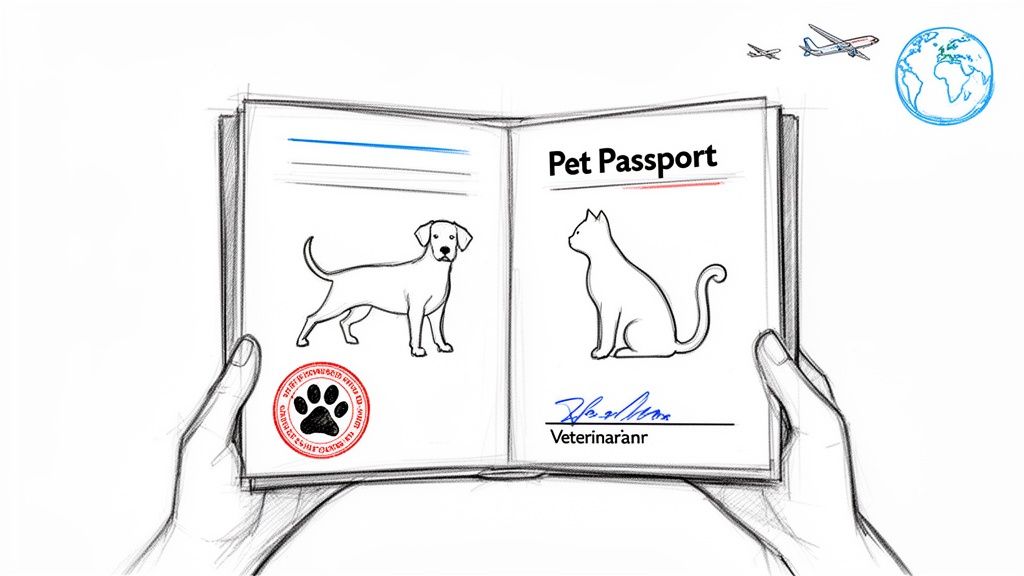
This certificate is your furry co-pilot’s golden ticket for global travel, and its main job is to help prevent the spread of animal diseases across borders. It serves as official proof that a qualified veterinarian has examined your pet, confirmed they're free from contagious illnesses, and given all required treatments and vaccines.
Why This Document Is So Important
Just like a person might need a visa to enter another country, your pet needs this health certificate. It’s a formal statement to border officials that your companion meets all their entry requirements.
Showing up without a valid one can bring your trip to a screeching halt, either at the check-in counter or, far worse, at customs in your destination.
This isn't just paperwork. It’s an important document confirming your pet is healthy, has all the required vaccinations, and is fit to travel. Border officials take it very seriously.
Getting this certificate right is a team effort. The key players are you (the pet owner), a USDA-accredited veterinarian, and the government agency that gives the final stamp of approval. Knowing who does what from the start makes the whole process much smoother.
Breaking Down the Process
While the journey to getting a valid international health certificate for your pet might seem complicated, it’s much more manageable when you break it down. Don't worry, it's not as ruff as it sounds!
Here’s a bird’s-eye view of the typical steps involved:
Research the Rules: Every country is different. You’ll start by looking into the specific import requirements for your destination.
Visit an Accredited Vet: Next, you'll need an exam with a veterinarian who has the special credentials to handle international travel documents. Not every vet does!
Complete the Paperwork: After a thorough health check, your vet will fill out and sign the official certificate.
Get the Final Stamp: Finally, the document is usually sent to a government agency (like the USDA in the U.S.) for an official endorsement.
This certificate is your peace of mind, showing you've followed all the rules to protect your pet and the animal populations in the country you're visiting. For a more detailed walkthrough, check out our guide on how to get a pet passport.
Understanding this document is the first step toward a smooth, stress-free trip. If you start early and work closely with your vet, you can make sure your best friend is all set for their global adventure.
Understanding the Core Requirements for Pet Travel
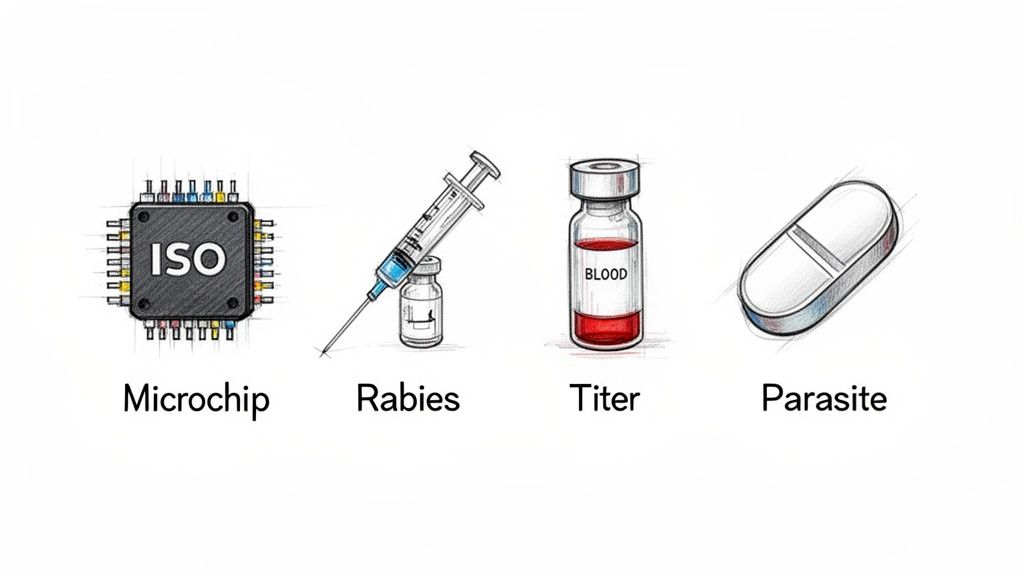
Think of an international health certificate for a pet as their passport, but with a lot more moving parts. While every country sets its own rules, a handful of key requirements form the foundation of almost every trip. Getting these right from the very start is the key to a stress-free journey.
These are the "must-haves" that border officials will look for immediately. They serve as proof of your pet's identity, confirm their protection against serious diseases, and show they’re free from parasites. Let's break down what these core parts actually involve.
Before diving into the specifics, it helps to see the big picture. Nearly all international pet travel certificates are built around these same foundational elements.
Core Components of an International Pet Health Certificate
Requirement | What It Is | Why It's Important |
|---|---|---|
Microchip | A permanent, scannable ID chip implanted under the pet's skin. | The first step. It proves the pet in front of the official is the same one on the paperwork. It should be an ISO-compliant 15-digit chip. |
Rabies Vaccination | A current, valid rabies vaccine given after the microchip was implanted. | This is one of the most critical public health requirements, with strict timing rules (e.g., a 21-30 day wait period). |
Rabies Titer Test | A blood test that confirms the rabies vaccine is working effectively. | Required by many rabies-free countries (like Japan or Australia) and involves a long waiting period (3-6 months). |
Other Vaccinations | Proof of core canine (DHP) or feline (FVRCP) vaccinations. | Helps protect your pet and prevent the spread of common animal diseases across borders. |
Parasite Treatments | Vet-administered treatments for fleas, ticks, and/or tapeworms. | Must be done within a very specific timeframe before travel, often just a few days. |
Understanding each of these pieces is important, because a simple mistake on any one of them can cause issues for the entire process.
The Microchip: Your Pet's Digital ID
Everything starts with the microchip. This tiny electronic chip, about the size of a grain of rice, is implanted just under the skin and acts as your pet’s permanent ID number. It’s the very first thing an official will scan to connect your pet to their paperwork.
But not just any chip will do. For international travel, the global standard is an ISO-compliant 15-digit microchip. This helps ensure scanners worldwide can read it.
Important Takeaway: Any vaccinations or treatments done before the microchip is implanted may not be accepted by your destination country. The microchip should always come first.
This is a make-or-break first step. Without a scannable, ISO-compliant microchip, the health certificate process is at a standstill. It’s the foundation everything else is built on.
Rabies Vaccination and Titer Tests
Next up is the big one: rabies. Because it’s such a serious public health risk, nearly every country asks for proof of a current rabies vaccination. The timing here is very important.
A new rabies vaccine usually requires a waiting period—typically 21 to 30 days—before your pet is even considered eligible to travel. This small detail trips up countless pet owners, so planning ahead is a must.
Some rabies-free countries, like Japan, Australia, and many island nations, take this a step further. They require a Rabies Antibody Titer Test (RNATT).
What it is: The RNATT is a simple blood test that measures the level of rabies antibodies in your pet’s system, showing the vaccine is doing its job.
When it's done: The blood must be drawn by your vet after the vaccination waiting period, sent to an approved lab, and then followed by another waiting period of 3 to 6 months before your pet can enter the country.
This lengthy waiting period is one of the single biggest reasons travel plans get delayed. If your destination requires a titer test, you need to start the process as early as possible.
Other Key Vaccinations and Treatments
Beyond the microchip and rabies requirements, countries will want to see proof of other protections to keep their local animal populations safe. These are just as important and will be carefully checked on the final international health certificate pet document.
Commonly required extras include:
Core Vaccinations: You’ll need to show proof of current vaccinations against common diseases. For dogs, this is typically Distemper, Hepatitis, and Parvovirus (DHP). For cats, it’s Feline Viral Rhinotracheitis, Calicivirus, and Panleukopenia (FVRCP).
Parasite Treatments: Many countries require specific internal and external parasite treatments, given by a vet within a very tight window before travel. This usually includes treatments for fleas, ticks, and tapeworms, with the exact product and date recorded on the certificate.
With around 2 million pets flying commercially in the US each year, vet practices are constantly juggling these complex rules. Dogs are the most frequent flyers, making up 58% of international pet travelers, with cats at 22%. In a busy clinic, one missed treatment or an incorrect date can cause a major headache at the border.
Each of these steps builds upon the last, creating a complete health profile for your pet. You can learn more about how these rules change by country in our detailed guide on international pet travel requirements.
How Country-Specific Rules Change the Game
Once you’ve got the core requirements down, the real fun begins. Getting an international health certificate for a pet isn't a one-size-fits-all deal. Every country has its own unique rulebook for importing animals, and assuming the rules are the same everywhere is a recipe for a truly ruff travel day.
Think of it like getting a visa for yourself. The documents you need to visit France are completely different from what you'd need for a long-term stay in Japan. Pet travel works the same way; each nation sets its own standards to protect its public health and local wildlife. This is where solid, upfront research becomes your best friend.
High-Security Destinations: The Rabies-Free Nations
Some countries are known for being strict, and for very good reason. Nations that have successfully eliminated rabies—like Australia, New Zealand, Japan, Singapore, and Hawaii—go to great lengths to keep it that way. If you’re heading to one of these places, buckle up. The process is far more complex and takes much longer.
Here’s a taste of what you can expect:
A Long Timeline: You'll likely need to start the process 6 to 12 months before you even think about booking a flight.
Mandatory Rabies Titer Test (RNATT): As we covered, this blood test is non-negotiable for these destinations. It must also be followed by a waiting period that can last for several months.
Import Permits: You’ll almost certainly need to apply for and receive an official import permit before your pet is even allowed to travel.
Strict Quarantine: Upon arrival, expect your pet to spend time in a government quarantine facility. This can range from a few days to several weeks, depending on the country.
These rules aren't in place to make your life difficult; they're there to help protect the local animal population from a serious disease. Following every step to the letter is the only way your pet will be granted entry.
A Tale of Two Timelines: EU vs. Australia
To really see how much the rules can vary, let’s compare two popular destinations: the European Union and Australia. This contrast shows exactly why you can't make any assumptions when it comes to your pet's international health certificate.
Traveling to the EU (e.g., France or Italy): The process for most EU countries is relatively straightforward, often called a "non-commercial" move.
Microchip: Your pet needs an ISO-compliant microchip.
Rabies Vaccination: A valid rabies shot must be given at least 21 days before travel.
EU Health Certificate: Your vet fills out a specific EU form, which then just needs a USDA endorsement.
No Quarantine: If all the paperwork is in order, there’s typically no quarantine upon arrival.
The whole thing can often be wrapped up in about a month, making it one of the more manageable international moves for pet owners.
Traveling to Australia: On the other end of the spectrum, Australia has some of the most rigorous pet import regulations on the planet. The process is lengthy, expensive, and demands careful planning.
Microchip and Rabies Vaccination: This is just the starting point, same as the EU.
Rabies Titer Test (RNATT): A blood test is required, followed by a mandatory 180-day waiting period before your pet can enter Australia.
Import Permit: You must apply for and be granted an import permit from the Australian authorities.
Extensive Parasite Treatments: A specific series of internal and external parasite treatments are required at precise intervals before the flight.
Mandatory Quarantine: When your pet arrives, they must complete a minimum 10-day stay at a government quarantine facility.
The difference is night and day. A trip to the EU needs careful planning, but a move to Australia is a multi-month, highly-involved commitment.
An international health certificate is not a single, universal document. It's a collection of requirements dictated by your final destination, and the stakes for getting it wrong are incredibly high.
Forms, Endorsements, and Translations
The variations don't just stop at medical requirements. The paperwork itself can be wildly different. While some countries might accept a standard form like the USDA APHIS 7001, many others insist you use their own country-specific health certificate.
On top of that, some nations require the final, endorsed certificate to be translated into their official language. This isn’t a job for an online translator; it often has to be done by a certified professional translator.
Finally, the endorsement is the last important hurdle. In the United States, the final stamp of approval comes from the USDA's Animal and Plant Health Inspection Service (APHIS). Your accredited veterinarian will guide you on how to submit the paperwork for this essential endorsement, which makes the document official in the eyes of foreign border agents.
Navigating this complicated web of rules is exactly why starting early is key. To see a breakdown for different destinations, you can explore Passpaw’s list of supported countries to get a head start. Understanding these differences from day one will help ensure your pet's journey is a success.
Your Step-by-Step Timeline to a Stamped Certificate
Getting an international health certificate for your pet is a marathon, not a sprint. The key to crossing the finish line without any stress is knowing the timeline and planning each step carefully. Think of it as your pet's pre-travel training plan—a clear, actionable roadmap that takes you from initial research all the way to holding that officially stamped certificate.
Breaking the process down into phases makes it far less intimidating. When you tackle one stage at a time, you stay organized and make sure no small detail gets missed. This approach makes the whole journey feel completely manageable.
Months Before Travel: The Planning Phase
This is where your journey begins, and honestly, it’s the most important part. The actions you take here set the foundation for everything that follows. Rushing this stage is a common mistake that can lead to major headaches down the road.
Your main goal here is to gather information and get the initial, time-consuming requirements out of the way.
Research Destination Rules: First thing's first: find the exact import requirements for your destination country. A good source for this is often the USDA APHIS Pet Travel Website. Don't just browse—print out the rules for your specific destination.
Find a USDA-Accredited Veterinarian: Not all vets can sign an international health certificate for a pet. You'll need to work with a veterinarian who is specifically accredited by the USDA. Confirm this credential before you even book an appointment.
Microchip First: If your pet doesn’t have an ISO-compliant, 15-digit microchip, this is your very first medical step. Every single vaccination and test that follows should happen after the microchip is implanted and scanned.
Administer Rabies Vaccine: Once the microchip is in, it's time for the rabies shot. Keep in mind, many countries have a mandatory 21-30 day waiting period after the vaccine is given before the pet is even eligible for travel.
Schedule a Rabies Titer Test (If Needed): Heading to a strict, rabies-free country like Australia or Japan? You'll need a rabies antibody titer test (RNATT). This blood test has to be done months in advance, and it's followed by a waiting period of 3 to 6 months.
Weeks Before Travel: The Final Preparations
With the long-lead items handled, you can now shift your focus to the final preparations. This phase is all about scheduling and completing the last few medical requirements before that final vet visit. It’s time to start ticking off the last boxes on your checklist.
Don't let your guard down, though; timing is still everything.
Book Your Pet’s Flight: Now that you have a much clearer timeline, you can confidently book your pet’s travel arrangements.
Schedule Parasite Treatments: Many countries require specific internal (like tapeworm) and external (flea/tick) parasite treatments. These have to be administered by your vet within a very specific window, so get them on the calendar.
Gather All Documents: Collect all original, signed documents—rabies certificates, lab test results, and any other required paperwork. Organize them neatly in a folder to bring to your final vet appointment.
The global pet travel services market is booming, projected to grow from $2.8 billion in 2025 to $5.9 billion by 2034. But this growth is tangled in a web of international regulations—from the EU’s focus on rabies titers to Australia’s strict quarantine rules—which can create challenges for veterinarians trying to manage the process by hand.
The Final 10 Days: Countdown to Departure
Welcome to the final stretch! This is easily the most time-sensitive part of the entire process. Most countries require the international health certificate for your pet to be completed, signed, and endorsed within 10 days of your departure. There is very little wiggle room here.
This infographic shows just how much the rules can vary between a few popular destinations.
As you can see, a trip to the EU might take a few months to prepare for, while getting a pet to a highly regulated country like Australia requires a much longer commitment.
Here’s your action plan for these crucial final days:
Attend the Final Health Exam: Your accredited vet will perform a final examination to confirm your pet is healthy and free of any contagious diseases. They'll also scan the microchip one last time.
Complete the Health Certificate: The vet will fill out and sign the official international health certificate for your destination. Go over every single detail with them—names, dates, and microchip numbers must be perfect.
Submit for USDA Endorsement: Immediately after the exam, the completed certificate and all supporting documents must be sent to your regional USDA APHIS office for the final government stamp. This can be done via overnight mail or, if available for your destination, through their online portal.
Critical Tip: Plan your final vet visit for the very beginning of that 10-day window. This builds in a buffer for potential shipping delays or corrections, ensuring you get the endorsed document back with time to spare.
Once you receive the endorsed certificate, your pet is officially ready for their adventure. You can find a complete walkthrough of this final step in our guide on how to get a USDA-endorsed pet health certificate.
Common Mistakes and How to Avoid Them
Getting an international health certificate for a pet is a process loaded with details, and one tiny misstep can derail your entire trip. Knowing where others have stumbled is the best way to make sure your travel plans go off without a hitch.
Think of this as your "what not to do" list. Dodging these common errors will save you time, money, and a mountain of stress.
Starting the Process Too Late
This is, hands down, the biggest and most common mistake. Pet owners often underestimate just how long it takes to tick every box, especially for strict, rabies-free destinations.
For example, countries like Australia or Japan require a rabies titer blood test (the RNATT). After the blood is drawn, there’s a mandatory waiting period of 3 to 6 months before the pet can even travel. If you start the process just a couple of months before your flight, you've already missed the boat.
How to Avoid It: The second you know international travel is on the horizon, start researching. For rabies-free countries, you really need to begin the process 6 to 12 months ahead of time. For everywhere else, giving yourself a 3-month buffer is a smart move.
Using a Non-Accredited Veterinarian
Your local vet might be a hero for routine check-ups, but that doesn't mean they're authorized to sign an international health certificate for a pet. Only a USDA-accredited veterinarian has the specific federal approval needed to handle these official travel documents.
If a non-accredited vet signs the paperwork, the government endorsement office will likely reject it, leaving you completely stuck.
How to Avoid It: Before you book an appointment, ask the clinic one simple question: "Do you have a USDA-accredited veterinarian on staff who can complete an international health certificate?" If the answer is no, ask for a referral.
A lot of people assume any licensed vet can sign international travel forms. The reality is, it requires a special federal accreditation, and getting this wrong can stop your travel plans cold.
Miscalculating the Final 10-Day Window
Most countries have a strict rule: the final health exam, certificate completion, and government endorsement must all happen within 10 days of your pet's arrival. This is an incredibly tight and unforgiving deadline.
It's common for people to schedule the final vet visit too late in that window, leaving zero room for shipping delays or any corrections the USDA might require. It’s a recipe for a nail-biting, stressful finish.
How to Avoid It: Book your final vet exam for day one or two of that 10-day window. This gives you a comfortable cushion to overnight the documents to the USDA, get them endorsed, and have them back with days to spare.
Simple Paperwork Errors
It’s truly heartbreaking, but something as simple as a typo can invalidate the entire certificate. We see it all the time. Some of the most common errors that can lead to rejection are:
Incorrect Microchip Number: One wrong digit is all it takes for the certificate to be rejected.
Missing Signatures or Stamps: Every single required field needs an original "wet ink" signature or an official clinic stamp. No exceptions.
Wrong Dates: This could be using the wrong format (like MM/DD/YYYY when the country wants DD/MM/YYYY) or having vaccination dates that don't line up with the country's rules.
How to Avoid It: Before that certificate goes anywhere, sit down with your vet and review every single line together. Pull out your pet's records and double-check the microchip number. Confirm all the dates are correct. Make sure every signature and stamp is exactly where it needs to be. A few extra minutes of review here can save you from a major disaster later.
Your Top Pet Travel Questions, Answered
Even with a perfect plan, it's natural to have a few last-minute "what ifs" when you're getting an international health certificate for a pet. We get it. This is your final check-in to clear up the common questions we hear from vets and pet owners alike.
Let's tackle these head-on so you can move forward with confidence.
How Long Is an International Health Certificate Valid For?
This is where the clock really starts ticking, and it trips a lot of people up! An international health certificate is usually only valid for a very short window—often just 10 days from the moment your accredited vet signs it.
This means timing your final vet visit is absolutely critical. You have to sync it perfectly with your travel date so the certificate doesn’t expire before you even land. Always, always double-check the specific validity period for your destination country, as it can vary.
What Is the Difference Between an Accredited Vet and My Regular Vet?
Your regular vet is a hero for your pet's day-to-day health, but they might not be authorized to handle international travel paperwork. An accredited veterinarian has gone through specific training with the USDA's Animal and Plant Health Inspection Service (APHIS). It’s a special credential that gives them the green light to prepare and sign these official export documents.
Before you even book the appointment, confirm your vet has this accreditation. If a non-accredited vet signs the forms, the endorsing agency will likely reject them, bringing your travel plans to a screeching halt.
Here's the bottom line: only a USDA-accredited veterinarian can sign the official forms for an international health certificate pet. This isn’t a suggestion; it's a key requirement for the document to be valid.
Can I Get a Digital International Health Certificate for My Pet?
In a world of digital everything, pet travel is still surprisingly old-school. While you can sometimes submit forms to the USDA electronically, the final, endorsed health certificate is almost always a physical paper document.
Most countries and airlines will require you to present the original hard copy, complete with "wet ink" signatures and an official embossed stamp. Don't find yourself in a cat-tastrophic situation at the check-in counter by assuming a PDF on your phone will work. Plan on having that original, endorsed certificate in your hands when you travel.
Planning an international move with a pet shouldn't feel like you're piecing together a complex puzzle. With Passpaw, veterinary teams can manage every step with clarity and confidence, ensuring every detail is perfect for your pet's big adventure. Learn more about how we make global pet travel simpler at https://passpaw.com.
More articles
From regulatory changes to best practices for veterinarians and pet owners, our resources keep you ahead of the curve.