Are you a team member in a veterinary practice?
Are you a pet parent planning a trip with your furry pal?
Your Guide to the Grand Canyon With Dogs
So, you’re dreaming of visiting the Grand Canyon with your dog. Good news! It's absolutely possible to share this incredible experience with your four-legged best friend.
However, your adventure will be limited to specific areas, primarily the paved trails along the South Rim. You won't be able to hike with your dog into the canyon, but with the right plan, you can still soak in some truly epic views together.
Can You Bring Your Dog to the Grand Canyon?
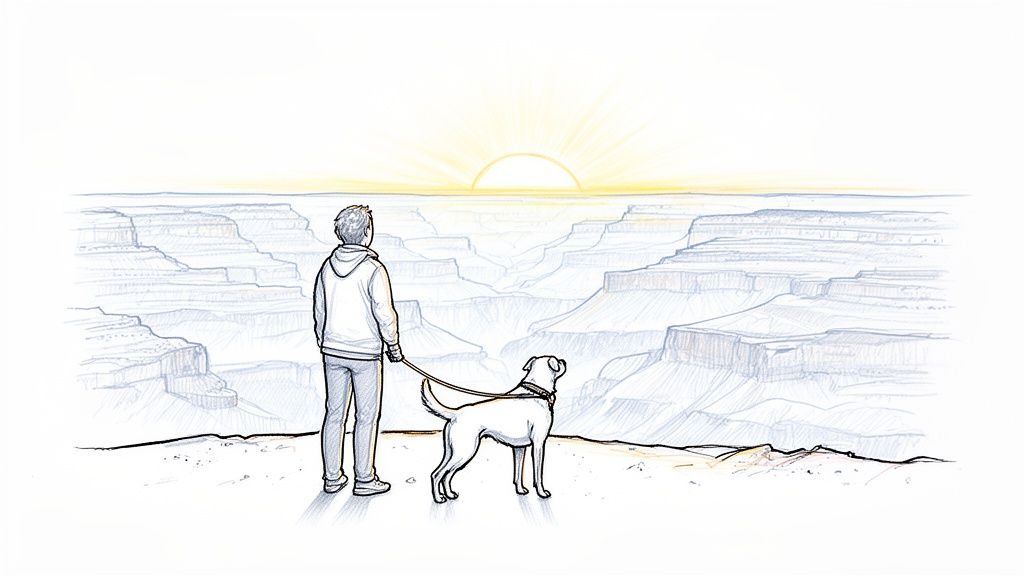
The idea of snapping that perfect photo of your pup against the vast canyon backdrop is a bucket-list item for many of us. The good news is that it’s not just a dream—it’s totally doable and can be an amazing trip for both of you.
This guide will give you the real-world, practical advice you need to plan a safe and unforgettable visit. We'll skip the confusing words and get straight to what you need to know to work within the park’s guidelines and create an adventure you'll both enjoy.
Why Are There Pet Restrictions?
At first glance, the rules might seem a bit strict, but they exist for some very important reasons. The main goal is to protect the park's delicate ecosystem, its native wildlife, and, of course, your own dog.
Unfamiliar scents can disrupt local animals, and the steep, rugged terrain below the rim is seriously dangerous for pets who aren't used to it. The heat alone can be very risky.
The National Park Service tries to strike a balance, allowing pet access where it's safe while preserving the natural environment. This approach is common in many national parks, so if you're planning a multi-park road trip, it helps to check the rules for each one.
The core rule to remember is "paws on pavement." For the most part, if a trail is paved, your leashed dog is welcome. This simple guideline makes it much easier to know where you can and can't go.
What to Expect on Your Visit
With over 65 million U.S. households owning a dog, it’s no wonder that national parks are popular destinations for the whole family. The park saw nearly 4.9 million visitors in 2023, and a good number of them were figuring out how to include their four-legged members.
The most important rule is that dogs are not allowed on any trails below the canyon rim. This means iconic hikes like the Bright Angel Trail and the South Kaibab Trail are off-limits for your pup.
Instead, you and your dog can explore the entire paved 13-mile South Rim Trail, plus developed areas like campgrounds, picnic spots, and sidewalks—as long as they are on a leash no longer than six feet.
To make planning even easier, here's a quick summary of where your dog can and can't go along the South Rim.
Grand Canyon Dog Access at a Glance
Location | Is Your Dog Allowed | Key Rules |
|---|---|---|
South Rim Trail | Yes | Paved trail between Grand Canyon Village and Hermit's Rest. Must be leashed. |
Mather Campground | Yes | Welcome in the campground but not in the buildings. Leash required. |
Desert View Campground | Yes | Allowed on leashes within the campground area. |
Trailer Village RV Park | Yes | Dogs are allowed on leash. A very pet-friendly option. |
Trails Below the Rim | No | All inner canyon trails (e.g., Bright Angel, South Kaibab) are not permitted for pets. |
Park Shuttle Buses | No | Only service animals are permitted on park shuttles. |
Park Lodges & Buildings | No | Pets are not allowed inside any public buildings or lodges. |
Just keep these key areas in mind, and you’ll have no trouble planning a fantastic, dog-friendly itinerary.
This guide will walk you through everything else you need to know, from finding the best dog-friendly lodging to creating a fun-filled day that will have your dog’s tail wagging. Let's get this adventure started on the right paw!
So, What Are the Rules at the South Rim?
Okay, let's dig into the details of bringing your dog to the Grand Canyon. The South Rim is, by far, the most accommodating area for visitors with pets, but you need to know the rules before you go. Think of them less as restrictions and more as a shared agreement to keep the park safe and beautiful for everyone—including the wildlife, other visitors, and your own four-legged explorer.
These rules aren't just for show. They're there to protect the canyon’s delicate ecosystem and prevent any dangerous encounters between pets, native animals, and the thousands of people soaking in the views. Following them is the key to a smooth, incredible trip.
The Leash Is Your Best Friend
This is the big one: your dog must be on a leash no longer than six feet at all times. This isn't just a friendly suggestion; it's a park regulation. A six-foot leash keeps your dog safely by your side, away from the steep, sudden drop-offs just steps from the paved path.
It’s also about respecting the local wildlife. Squirrels, deer, and elk can be easily startled by an off-leash dog, which could lead to a dangerous situation for both your pet and the wild animal. A leashed dog is a respectful one.
Know the No-Go Zones
While the South Rim Trail offers miles of amazing walks, there are some important areas where dogs simply aren't allowed. Knowing these spots ahead of time will save you a ton of logistical headaches.
Your dog cannot go to these places:
Any trails below the rim. This is the most important rule. Trails like the Bright Angel Trail and South Kaibab Trail are not permitted for pets. The terrain is steep, rugged, and can get incredibly hot, making it quite dangerous for dogs.
Park shuttle buses. Only certified service animals can ride the free park shuttles. If you want to hop between viewpoints, you'll need to walk the Rim Trail or drive your own car.
All indoor public buildings. This means visitor centers, museums, gift shops, and restaurants are out. If you want to pop inside, someone in your group will need to hang back with your pup.
With 65 million households in the U.S. now owning dogs, pet travel to iconic spots is booming. In a recent year, the park saw a jaw-dropping 4,919,163 visitors, and the South Rim's paved paths are often dotted with happy, leashed dogs. The below-rim ban is important for protecting the park's ecology; dogs can attract predators and create hazards on the narrow mule trails, which accommodate over 96,000 commercial rides annually. You can learn more about these impacts in this fascinating article from Arizona Detours.
A Little "Petiquette" Goes a Long Way
Beyond the official rules, practicing good trail etiquette makes the experience better for everyone. In a busy national park, a little courtesy is always appreciated.
A great way to remember your responsibilities is the "B.A.R.K." Ranger code: Bag your pet's waste, Always use a leash, Respect wildlife, and Know where you can go. It’s a simple and helpful guide for being a responsible pet owner in any national park.
Here are a few more tips to keep in mind:
Clean Up Immediately. Always carry poop bags and use the designated trash cans. Leaving waste behind isn't just messy—it's harmful to the environment.
Keep Barking in Check. The canyon’s acoustics are amazing, which means sound can travel for miles. If your dog gets vocal around new people or animals, try to keep them calm and quiet so everyone can enjoy the peace.
Bring Plenty of Water. The high altitude and dry desert air will dehydrate your dog faster than you think. Always have a collapsible bowl and extra water on hand, even if it doesn't feel that hot.
By following these simple guidelines, you're doing your part to ensure that visiting the Grand Canyon with dogs remains a privilege we can all enjoy for years to come.
How to Prepare Your Pup for the Trip
A great adventure with your four-legged co-pilot starts well before you even hit the road. Getting your dog ready for the Grand Canyon is the secret to a trip that’s memorable for all the right reasons—not for last-minute vet visits or a stressed-out pup.
Think of it this way: a little bit of prep now means you can actually relax and enjoy the views later. It’s about making sure your dog is not just physically ready for the high desert, but mentally comfortable with a brand new environment.
Schedule a Vet Check-Up
Your first move, before anything else, should be to book an appointment with your vet. A pre-trip health check is a smart move for a destination like the Grand Canyon. The park's high altitude—the South Rim sits at roughly 7,000 feet—and incredibly dry air can take a toll on dogs, just as it does on us.
Talk through your travel plans with your veterinarian. They’ll be able to give your dog a thorough check-up and flag any potential concerns related to their age, breed, or current health. This is also the perfect time to get all their vaccinations in order. If you're unsure what's needed, our guide on what vaccinations do i need for my dog is a great place to start.
Keep your dog's health documents with you, even if you don't think you'll need them. Proof of vaccination and a clean bill of health are helpful, especially if you cross state lines or face an unexpected emergency.
Pack the Ultimate Doggy Go-Bag
With a green light from the vet, it’s time to pack. I’ve found that keeping a dedicated "go-bag" for my dog makes road life infinitely simpler. For the Grand Canyon, you'll want to think beyond the basics; this unique environment calls for a few special items.
Here’s what should be on your dog's packing list:
Sturdy Leash and Harness: The park suggests a non-retractable leash no longer than six feet. I always recommend a harness over a collar for long walks to avoid any strain on your dog's neck.
Food and Water: Pack more than you think you'll need. The dry air and altitude mean dehydration is a real risk, so bring a collapsible bowl for easy water breaks on the go.
Dog Booties: This might sound like a novelty, but the pavement along the Rim Trail can become dangerously hot. A good pair of booties will protect your dog's sensitive paw pads from burns.
Pet First-Aid Kit: You can grab a pre-made kit or build your own. Make sure it includes essentials like antiseptic wipes, gauze, and any pet-safe pain relievers your vet recommends.
Waste Bags: Pack plenty. Following Leave No Trace principles is a big deal in our national parks, and that means cleaning up after your pet, every single time.
Condition Your Canine Companion
Let’s be honest: is your dog more of a professional napper than a trail blazer? If so, you’ll want to help them build up some stamina before you go. A tired, sore pup is no fun for anyone.
In the weeks leading up to your trip, start taking longer and more frequent walks. If you can, find some local trails with gentle hills to get them used to varied terrain. This conditioning will help them handle a few miles along the Rim Trail without getting wiped out.
It’s also the perfect time to work on their leash manners. The park gets busy, so you’ll want to be confident they can walk calmly past other people and dogs. For more general advice, these actionable tips for traveling with a dog are a fantastic resource for making the entire journey, not just the destination, a success.
After a long day of soaking in those incredible canyon views, both you and your four-legged hiking buddy are going to need a comfy spot to crash. Nailing down the right pet-friendly lodging is a huge piece of the puzzle when planning a Grand Canyon trip with your dog.
The good news is you’ve got options, both inside the park and just a short drive away, that fit all kinds of budgets and travel styles. This isn't just about finding a place to sleep—it’s about having a real home base where your dog is actually welcome, which makes the whole adventure run that much smoother.
Staying Inside the Park
For anyone who wants to be right in the middle of the action, a couple of great options exist right inside Grand Canyon National Park. Waking up mere steps from the Rim Trail is the ultimate convenience.
Yavapai Lodge: This is the only pet-friendly hotel inside the park. They have specific rooms set aside for travelers with dogs, so you should mention your pet when you book. These rooms are in high demand and get snapped up quickly, especially in peak season, so book as far ahead as you can.
Mather Campground & Trailer Village RV Park: If you're more of a camping or RV family, both of these are fantastic choices. Dogs are welcome on a leash at your campsite and on the paved roads throughout the campgrounds. It's an amazing way to really immerse yourself in the park's environment.
Pro Tip: When booking Yavapai Lodge, I always recommend calling them directly. You can confirm their current pet policy, ask about fees, and get the most up-to-date info straight from the source. Policies can change, so it's good to be sure.
Exploring Lodging Outside the Park
If the in-park lodging is booked or you're just looking for more amenities, the nearby towns of Tusayan and Williams have a ton of pet-friendly places to stay. These gateway communities are just a quick drive from the park entrance and offer a different kind of vibe.
Tusayan (7 miles south): As the closest town to the South Rim, Tusayan is unbelievably convenient. You'll find several big-name hotel chains here that welcome pets, giving you easy access to restaurants and shops after a day of exploring.
Williams (60 miles south): This classic Route 66 town is where the Grand Canyon Railway departs, and it's full of charm. Williams offers a great mix of hotels, motels, and vacation rentals that are more than happy to host your dog. For those looking for something a bit more upscale, you can even find large luxury properties that accommodate pets.
Essential Services for Your Pet
Even the most perfect plans need a backup. Knowing where to find local pet services gives you peace of mind and, more importantly, flexibility. This is especially true if you want to explore parts of the park where dogs aren't allowed.
Grand Canyon Kennel
This kennel is probably the single most valuable resource for dog owners visiting the South Rim. It's located right next to Yavapai Lodge and offers both day and overnight boarding you can count on.
Why use it? Want to hike below the rim, take a mule ride, or have dinner inside one of the historic lodges? The kennel makes it possible. You should never leave a dog in a car here—the temperature can become dangerous in just minutes.
Requirements: You'll likely need to show proof of current vaccinations for Rabies, DHLP, and Bordetella. Make sure you bring those documents with you.
Booking: It's a really good idea to make reservations, especially during holidays and the busy summer months.
Using the kennel, even just for a few hours, can open up a whole new side of the Grand Canyon experience. To get all your documents and trip details organized in one place, our pet travel planner is a great tool for staying on top of everything.
Emergency Veterinary Services
There is no veterinarian located within Grand Canyon National Park. If an emergency happens, you’ll have to drive to a nearby town. I always save the contact info for these clinics in my phone before I even leave home.
Williams: Kaibab Veterinary Clinic
Flagstaff: Canyon Pet Hospital or Village Veterinary Clinic (both provide emergency care)
Having this information ready means you’re prepared for the unexpected, allowing you and your dog to explore the Grand Canyon with real confidence.
Planning Your Grand Canyon Day with Your Dog
Okay, this is where all your prep work comes together for the fun part. The secret to an amazing Grand Canyon trip with your dog isn't just showing up; it's about having a plan that works for everyone. You need to find that sweet spot between seeing the iconic sights, letting your pup stretch their legs, and making sure they stay safe and happy.
A good itinerary lets you make the most of the dog-friendly spots while also having a smart plan for the times you want to see things where paws aren't allowed. Let's walk through what a pawesome sunrise-to-sunset day could look like.
Sample 1-Day Dog-Friendly Itinerary
To give you a real-world idea, here’s a sample timeline for a fantastic day at the South Rim. This schedule balances activity on the beautiful Rim Trail with crucial rest breaks and takes advantage of the kennel for some solo exploring.
Time of Day | Activity | Location | Pro Tip |
|---|---|---|---|
Early Morning | Sunrise Walk | Mather Point to Yavapai Point | Get out there before the crowds and the heat arrive. The sunrise light is spectacular, and the paved trail will be nice and cool on your dog’s paws. |
Mid-Morning | Village Stroll | Grand Canyon Village | Wander through the historic village and admire the architecture from the outside. Grab a shady bench to chill out and people-watch with your pup. |
Lunchtime | Picnic Break | A Designated Picnic Area | Pack a lunch for both of you. Find a shaded picnic table away from the canyon edge for a safe, relaxing meal with a view. |
Afternoon | Kennel & Solo Hike | Grand Canyon Kennel | Drop your dog off at the kennel for a few hours. This is your chance to hike a bit below the rim or check out the Yavapai Geology Museum. |
Late Afternoon | Rim Trail, Part Two | West of the Village | After picking up your rested pup, enjoy a casual walk on the western section of the Rim Trail. It's often quieter over here. |
Evening | Sunset Views | Hopi Point (via your car) | Hopi Point is famous for its sunsets. You can drive right up, park, and then walk with your dog to find the perfect spot to watch the show. |
Of course, this is just a template. Feel free to adjust it based on your dog’s energy and your own pace. The goal is simply to have an incredible day together without any stress.
What About the "Human-Only" Stuff?
Let’s face it, some of the most famous Grand Canyon experiences are off-limits to dogs. But that absolutely doesn't mean you have to skip them. This is where the Grand Canyon Kennel becomes your best friend.
Instead of seeing it as a limitation, think of the kennel as a "doggy day camp" that unlocks the rest of the park for you. By booking your pup in for a few hours, you can:
Hike a short way down the Bright Angel Trail.
Hop on a free shuttle bus to a viewpoint that doesn't allow private cars.
Explore the historic Kolb Studio or Hopi House.
Sit down for a proper meal inside one of the park’s historic lodges.
Never, ever leave your dog alone in a car. Temperatures inside a vehicle in the Arizona sun can become very high in minutes, even with cracked windows. The kennel isn't just a convenience—it's an important safety tool.
Tips for a Perfect, Pawsitive Day
A few extra pointers can make your well-planned day even better. These little things often make the biggest difference in keeping your dog comfortable and your trip enjoyable.
Watch the Pavement: The paved Rim Trail can get very hot by noon, easily hot enough to burn your dog's sensitive paw pads. Always plan your longest walks for the cooler morning and late afternoon hours.
Hydration Is Key: The high altitude (around 7,000 feet) and incredibly dry air can dehydrate you and your dog faster than you think. Carry at least one extra water bottle just for them, along with a collapsible bowl. Offer them water frequently.
Read Your Dog's Cues: A full day of new smells, sights, and sounds can be tiring for a dog. Watch for signs of stress or fatigue—like excessive panting, lagging behind, or seeking shade. Don't push it. It’s always better to cut an activity short and let them rest. For more tips that apply to any trip, check out our comprehensive guide on pet travel.
So, you've explored the paved paths of the Grand Canyon with your dog, but what about letting them really stretch their legs? While park rules are strict, the adventure doesn't have to end there. Northern Arizona is a massive playground for you and your pup, offering the rugged, off-pavement freedom you can't get below the rim.
Think of the park as the main event and these nearby spots as the incredible encore. It’s the perfect way to make sure your trip is a tail-wagging success for every single member of the family.
Unleash More Fun in Kaibab National Forest
Just outside the park gates, you'll find the Kaibab National Forest, a sprawling forest of over a million acres bordering both the North and South Rims. This is exactly where you'll find the dirt trails and deep-woods sniffing opportunities your dog has been dreaming of.
Unlike the national park, many trails in the Kaibab are open to leashed dogs. You can find everything from easy strolls through towering ponderosa pines to more challenging hikes that will burn off some serious energy. Before you head out, always check with the local ranger district for current guidelines and trail conditions.
Pet policies really do matter. A recent dip of nearly 10% in Grand Canyon visitors, which meant shedding 500,000 people in just one year, highlights how pet rules can influence choices. In sharp contrast, fully dog-permissive parks like White Sands (700,000 visitors) are thriving by welcoming pups on all their trails. You can find more details about these visitor trends on ArizonaDetours.com.
Discover Nearby Pet-Friendly Towns
After a few days of rustic exploring, you and your furry sidekick might be ready for some town comforts. Good news: the communities near the Grand Canyon are famously welcoming to four-legged visitors.
Williams: Known as the "Gateway to the Grand Canyon," this charming Route 66 town is lined with pet-friendly patios where you can grab a bite. It also has local parks that are perfect for a quick game of fetch before you hit the road.
Flagstaff: A bit further out, Flagstaff is a vibrant mountain town with a huge dog-loving culture. You'll find countless restaurants with outdoor seating, numerous breweries that welcome pups inside or out, and an extensive network of urban trails for a more civilized walk.
Have More Questions? We've Got Answers.
Still have a few things you're wondering about before packing up the pup for the Grand Canyon? You're not alone. Here are some of the most common questions we get from fellow dog-loving adventurers.
Are There Any Real Hiking Trails for Dogs in the Park?
Yes, but it's important to know exactly where you can and can't go. The main dog-friendly path is the spectacular South Rim Trail. It's paved and runs for about 13 miles, offering those classic, jaw-dropping canyon views. Your dog is also welcome on the Greenway Trail, which connects to the main village.
The critical thing to remember is that all trails leading down into the canyon are not permitted for pets. This includes famous routes like the Bright Angel and South Kaibab Trails. The park has this rule to protect the delicate ecosystem and wildlife, but also for your dog's safety on that steep, rugged terrain.
What Happens if My Dog Gets Sick or Hurt?
Since there are no vets located inside the park itself, being prepared is your best line of defense. A well-stocked pet first-aid kit is a must-have for handling minor scrapes or issues on the trail.
For any serious emergency, you'll need to drive to the nearest clinic. Your closest options are in Williams (about an hour's drive) or Flagstaff (roughly 1.5 hours away). Do yourself a huge favor: save their phone numbers and addresses in your phone before you even leave home. That way, you can act fast when every second counts.
Never, ever leave your dog alone in a car. The desert sun is no joke. Even on a seemingly mild day, the inside of a vehicle can become dangerously hot in just a few minutes. If you plan to explore a non-dog-friendly trail, you should use the Grand Canyon Kennel.
What Paperwork Should I Bring for My Dog?
While a park ranger probably won't ask to see your dog's papers at the entrance gate, traveling with them is just part of being a responsible owner. It's a good idea to have your dog's rabies vaccination certificate and a recent health certificate on hand, especially when crossing state lines.
Think of it as peace of mind in your glove compartment. If you need to use the kennel unexpectedly or face a vet emergency, you'll have everything you need ready to go. It’s a small bit of prep that makes the whole trip feel more relaxed.
Juggling all the details for a trip with your furry co-pilot, from health certificates to destination-specific rules, can feel like a lot. Passpaw is designed to help vets and pet owners manage all that travel documentation with ease, ensuring every single requirement is met. Make your next adventure simpler by visiting Passpaw.
More articles
From regulatory changes to best practices for veterinarians and pet owners, our resources keep you ahead of the curve.