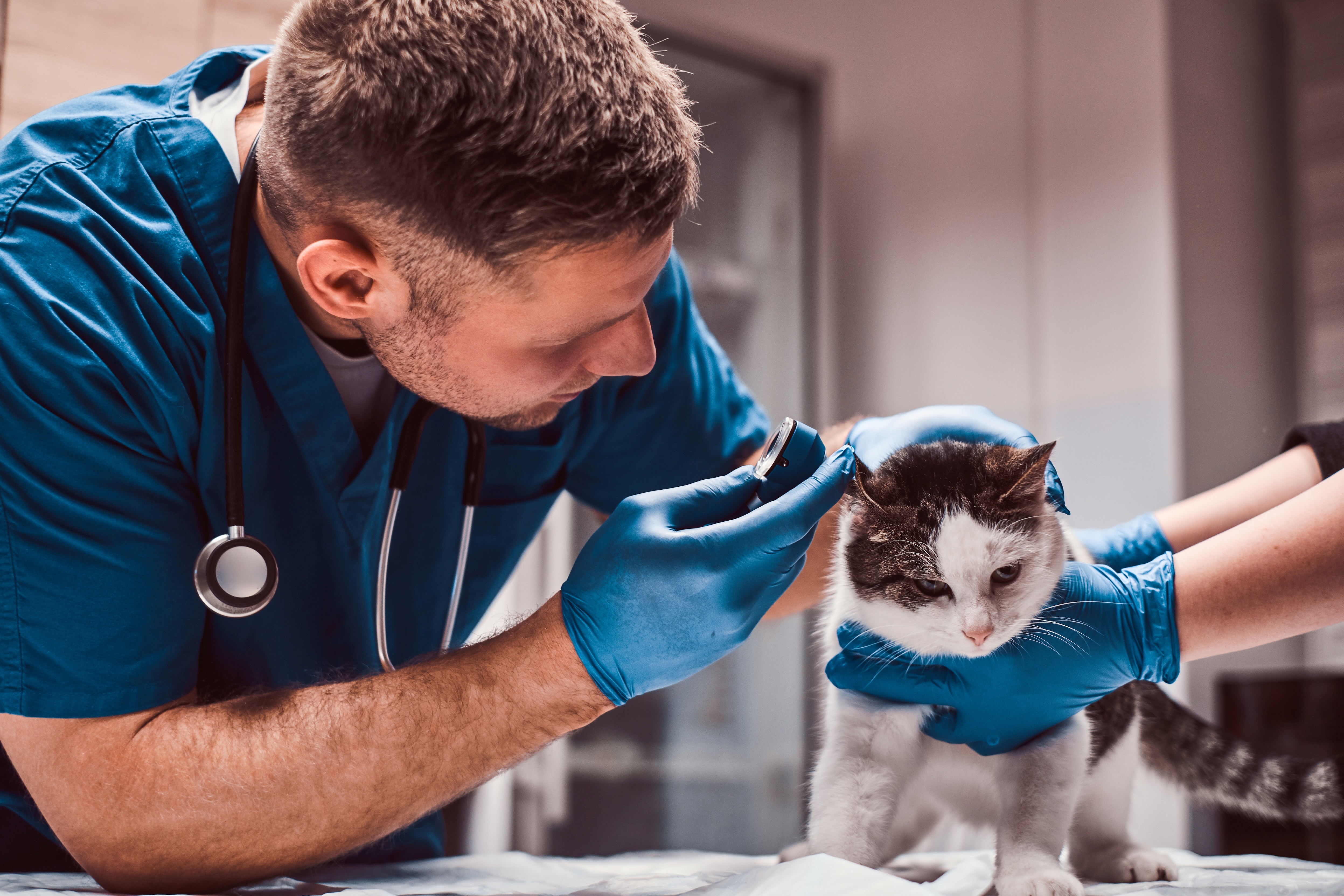
Are you a team member in a veterinary practice?
Are you a pet parent planning a trip with your furry pal?
A Guide to World Wide Pet Transportation
Arranging world wide pet transportation might feel like a huge task, but it doesn't have to be. The best way to think about it is planning a very special trip for your most important family member, where every single detail is managed for their safety and comfort. With the right roadmap, you can make this a smooth and successful process.
Your Pet's Journey Starts Here
Welcome to your complete guide for moving your furry, feathered, or scaled companion across the globe. We’re going to break down the entire process step-by-step, from understanding the maze of international rules to picking out the right travel crate. This guide is designed to help you, your vet, and any professional shippers you work with operate like a well-oiled machine.
More and more families are choosing to bring their pets along on international moves. This isn't just a hunch; it's a trend that has fueled a big expansion in the pet travel industry. The market was recently valued at around $2.6 to $2.8 billion and is expected to climb to between $4.7 and $5.9 billion within the next ten years. This isn't just a number—it shows a real shift in how we view our pets: as key family members who move with us.
The Four Key Stages of Pet Travel
When it comes to a successful move, planning is everything. The entire process generally follows four distinct phases, each with its own timeline and to-do list. Getting a handle on these stages early will save you from last-minute stress. This isn't just a trip; it's a carefully planned project.
Here's a quick visual that lays out the four main steps for planning your pet's travel, from initial research all the way to final preparations.
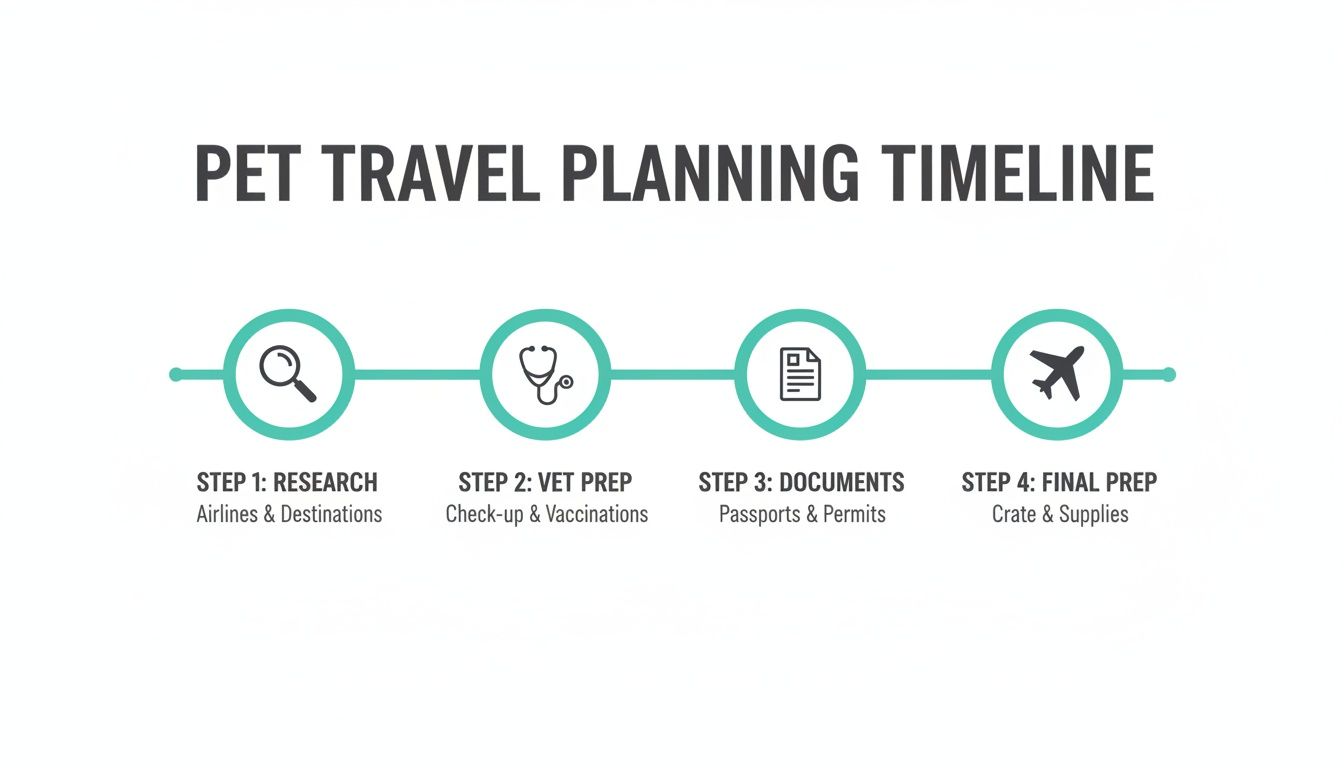
As you can see, a successful move starts months ahead of time. The early research and vet prep work lay the foundation for all the paperwork and final steps that follow.
To give you a clearer picture, here's a simple breakdown of what to expect at each point in the journey.
Key Stages of International Pet Travel
Stage | Key Focus | General Timeline |
|---|---|---|
Stage 1: Research & Discovery | Understanding destination country rules, airline policies, and finding an accredited vet. | 6-12+ months before travel |
Stage 2: Vet Prep & Vaccinations | Microchipping, rabies vaccination, titer tests, and other needed shots. | 3-6 months before travel |
Stage 3: Documentation | Getting health certificates, import permits, and the required government endorsement. | 1-2 months before travel |
Stage 4: Final Logistics | Booking flights, confirming plans with the shipper, and final vet check-up. | 2-4 weeks before travel |
This table is just a general guide, of course. Some destinations, like Australia or Japan, have much longer timelines, so always start your research as early as possible.
Building Your Support Team
You absolutely do not have to manage this journey alone. In fact, a smooth move almost always involves a small but mighty team: you, your veterinarian, and sometimes a professional pet shipper. Each person plays an important part in making sure every box is checked correctly and on time.
When you're dealing with such a specialized journey, it's worth looking into the benefits of a bespoke travel agent who lives and breathes these complexities. These experts can handle the logistics, paperwork, and airline bookings, which can be a huge weight off your shoulders.
Remember, the goal is a safe and low-stress journey for your pet. Careful planning and clear communication between you, your vet, and any travel partners are the keys to making that happen.
So, let's get this journey started on the right paw. This guide will give you the confidence and know-how you need to bring your best friend home, wherever in the world that may be.
Understanding International Pet Travel Rules
Planning your pet's move abroad can feel like you've bitten off more than you can chew. Every country rolls out a different welcome mat, each with its own set of rules to keep local animals safe from disease. Think of it like getting a visa for your pet—each destination has its own specific application, and there are no shortcuts.
This maze of rules is the very foundation of world wide pet transportation. Just like people, pets need the right paperwork to show they're healthy and won't pose a risk. Getting this right is the first big hurdle to clear for a smooth journey.
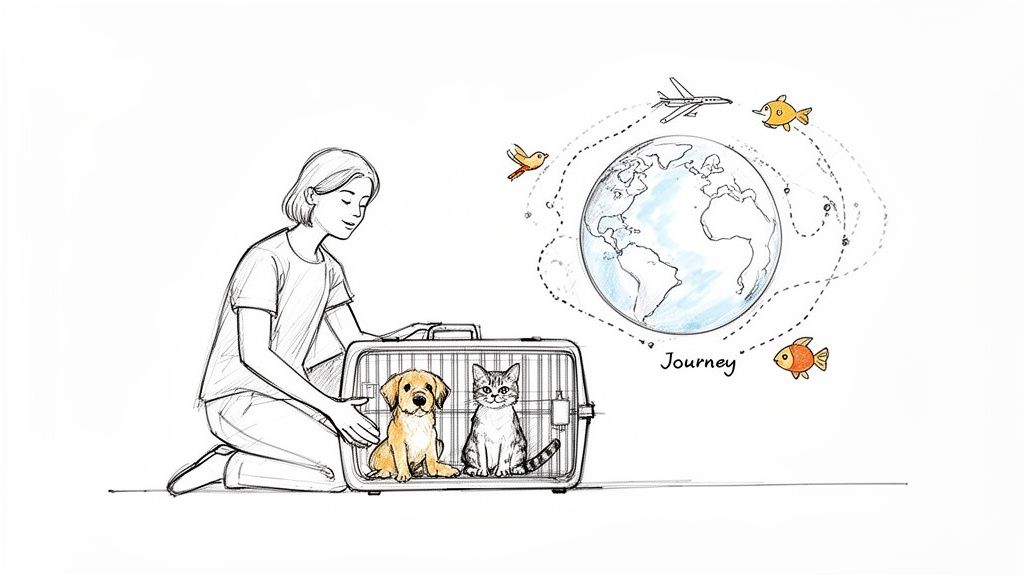
Core Requirements You Will Likely Encounter
While every country’s rulebook is different, a few requirements pop up almost everywhere. These are the must-haves of pet travel, and they're the best place to start your planning.
First up is the microchip. This tiny electronic chip, about the size of a grain of rice, is your pet’s permanent ID. It's not just any chip, though. Most countries ask for a 15-digit ISO-compliant microchip to ensure it can be read by standard scanners anywhere in the world.
Next is the most important animal health rule: the rabies vaccination. Nearly every country asks for proof of it. But here’s the important detail—the vaccine must be given after the microchip is put in. This order proves the vaccination belongs to that specific pet.
The Great Divide in Country Regulations
This is where things can get a little hairy. The rules for one country can be very different from another, which is why you have to start your research early. Some places have a pretty simple process. Others have tough, multi-step requirements that can take months to complete.
Let's look at a couple of examples to see just how much things can vary:
Moving a cat to France: This is a fairly direct process. You'll need an ISO microchip, a valid rabies vaccination given at least 21 days before travel, and an official health certificate from an accredited vet right before you leave.
Moving a dog to Australia: Buckle up, because this is one of the most complex moves out there. It requires the microchip and rabies shot, but also a rabies titer test (a blood test to prove the vaccine worked), a 180-day waiting period after the blood draw, an import permit, and a stay in quarantine upon arrival.
These differences show exactly why a one-size-fits-all approach just doesn’t work. For a deeper look into these country-specific details, you can learn more about international pet travel requirements and how they change from place to place.
Why Rabies Titer Tests Are a Big Deal
For many rabies-free or rabies-controlled countries like Japan, Australia, and New Zealand, a simple vaccine record isn't enough. They require a rabies titer test, also known as a Rabies Antibody Titer Test (RNATT). This is a blood test that measures the level of rabies antibodies in your pet’s system, giving officials solid proof that the vaccine is providing protection.
A rabies titer test is your pet's ultimate proof of protection. It shows health officials that your pet isn't just vaccinated but is demonstrably protected, which is why it’s a key step for many of the world's strictest countries.
The biggest challenge with the titer test is the required waiting period. After a successful blood draw, you have to wait a specific amount of time—often between 90 and 180 days—before your pet can enter the country. Miscalculating this timeline is one of the most common and costly mistakes in world wide pet transportation, frequently causing major delays. This one requirement is a perfect example of why planning far, far in advance is absolutely necessary.
If the rules and regulations are the roadmap for your pet’s international move, then the paperwork is the engine that gets them there. Getting the documentation right isn't just a part of the process—it's everything. It's the one thing that stands between a smooth journey and a heartbreaking problem at the border.
Think of it this way: each document tells a piece of your pet's story to customs officials. The microchip number is their passport photo, vaccination records are their medical history, and the health certificate is their visa. Without the complete story, written exactly as required, your pet’s journey comes to a sudden halt.
The Most Important Document: The International Health Certificate
The absolute centerpiece of your paperwork is the International Health Certificate. This is the official document, filled out and signed by an accredited veterinarian, that states your pet is healthy, free of contagious diseases, and fit to fly. It's the golden ticket that gets your pet into their new home country.
But this isn't just any old form from your vet's office. It's a specific, often multi-page document that has to be completed within a very tight window—usually just 5 to 10 days before you leave. Every country has its own unique version, and using the wrong one or missing a single signature can lead to your pet being denied entry. The details matter, right down to the color of ink used for the signature.
The International Health Certificate is more than just a piece of paper; it’s an official declaration of your pet's fitness for travel. It's the primary way your destination country knows that your companion meets their strict biosecurity standards, which are in place to protect local animal populations.
For anyone planning a move, really getting to grips with this form is a must. To see what that involves, our complete guide to the pet health certificate for international travel breaks down the entire process, step by step.
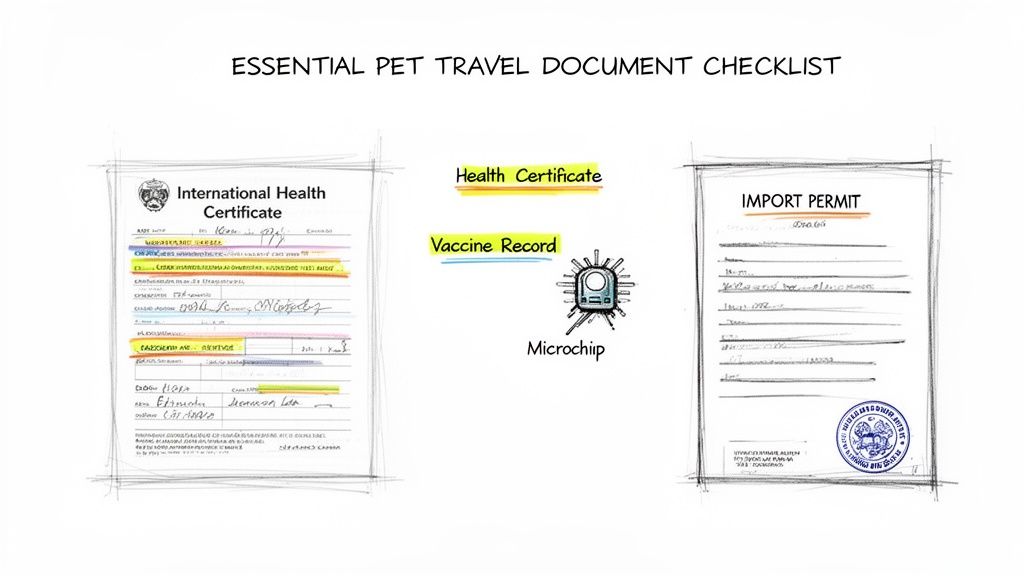
Core Documents Your Pet Will Need
Beyond the main health certificate, you'll need a collection of supporting documents. Having these organized and ready to go makes the final, time-sensitive steps much less stressful. Let's run through the essentials.
Proof of Microchip: This is usually a certificate from your vet or the chip maker. It needs to list the chip number, the date it was implanted, and where it's located on your pet.
Rabies Vaccination Certificate: This is a must-have, signed certificate showing the date of vaccination, the vaccine maker, and its expiration date. Crucially, the rabies shot must have been given after the microchip was put in.
Other Vaccination Records: Depending on where you're going, you may need proof of other shots, like FVRCP for cats or DHPP for dogs.
Import Permit (If Required): Some countries with very strict biosecurity rules, like Australia or Singapore, require you to apply for an official import permit months ahead of your trip. This permit is your formal permission to bring your pet into the country.
Defining Roles in the Paperwork Process
Getting your pet's travel documents right is a team sport. Everyone has a specific part to play, and understanding who does what is the key to avoiding last-minute panic and costly mistakes. It's a partnership between you, your vet, and the government.
Your Responsibilities as the Owner You are the project manager of this move. Your job is to:
Research the destination country's rules inside and out. Don't skim.
Give your vet all the correct information, especially your exact travel dates and your pet's history.
Keep all the original documents together in a safe, organized folder.
Your Veterinarian’s Role Your vet is the medical expert. They are responsible for:
Performing the final health exam to confirm your pet is truly fit to travel.
Accurately completing and signing the International Health Certificate and any other needed veterinary forms.
Making sure all vaccines, tests, and treatments are done correctly and within the strict timelines.
The Government Agency’s Role (e.g., USDA) The final piece of the puzzle is getting the paperwork endorsed by the official veterinary authority in your departure country. In the U.S., this is the USDA’s Animal and Plant Health Inspection Service (APHIS). Their job is simple but important:
Verify that your accredited vet has filled out all the paperwork correctly.
Endorse the documents with an official stamp or seal, which makes them valid for international travel.
This final endorsement is the official green light, the stamp of approval that confirms your pet has met every single requirement for their big adventure.
Navigating Airline and Country Requirements
Once you've got a handle on your destination country's rules, the next big piece of the puzzle is the airline's specific policies. Think of it like a two-part security check: the country sets the rules for getting in, and the airline sets the rules for getting on the plane. You have to meet both for your pet to have a safe and successful trip.
Every airline has its own playbook, so never assume what works for one will fly with another. These policies aren't there to make your life harder; they exist for the safety and comfort of your pet, other passengers, and the crew. Getting familiar with them early is the best way to avoid any last-minute turbulence.
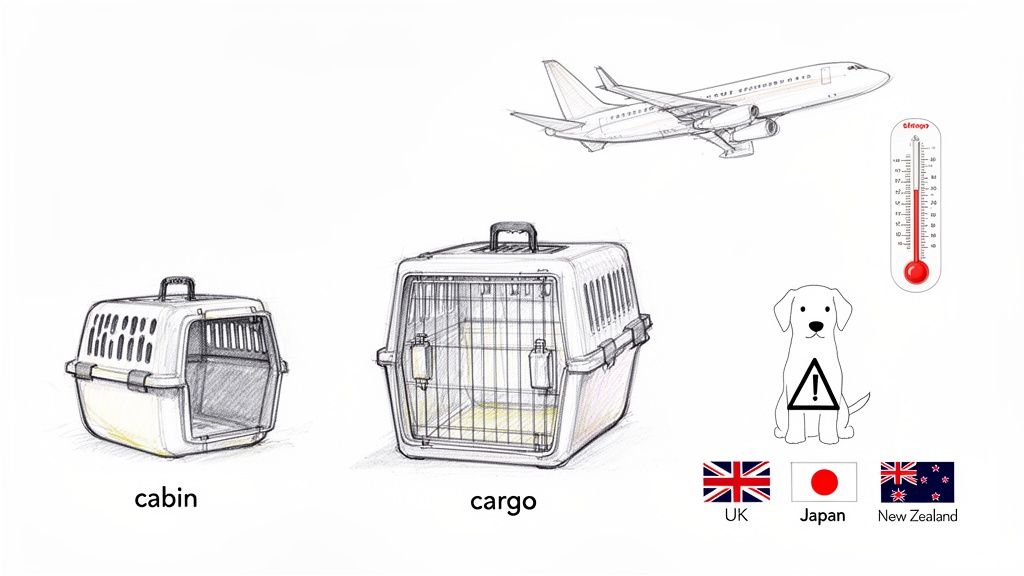
In-Cabin, Checked Baggage, or Cargo
One of the first decisions you’ll make is how your pet will fly. There are generally three options, and the right one depends on your pet's size, your destination, and of course, the airline’s rules.
In-Cabin: This is the go-to for small pets who can fit comfortably in a carrier under the seat in front of you. While it's a popular choice for tiny companions, airlines are strict about space and usually only allow a handful of pets per flight.
Checked Baggage: For some medium-sized pets, traveling as checked baggage in a temperature-controlled, pressurized hold is an option on certain routes. Be aware, though: many airlines have stopped offering this for international flights due to safety concerns.
Manifest Cargo: This is the most common—and often only—option for larger pets or for travel to certain countries. Your pet travels in the same safe, climate-controlled hold, but they are handled by specialized cargo staff and booked through a totally separate system.
It's an interesting fact that dogs are by far the most frequent flyers in the pet world. Canines make up a whopping 58% of all pets that travel globally, making dog-dominated travel the largest segment of the industry. One major transporter even reported moving 1,322 dogs compared to just 740 cats in a single year. That's a lot of pups on the move!
Breed and Weather Restrictions
Airlines are extremely cautious about certain breeds and weather conditions. These aren't just random rules; they're essential safety measures put in place to protect your pet.
One of the biggest hurdles involves brachycephalic breeds—those adorable flat-faced dogs and cats like Pugs, French Bulldogs, and Persian cats. Their short snouts make them extra vulnerable to breathing problems at high altitudes and in warm temperatures. Because of this risk, many airlines have strict rules and won't fly these breeds at all.
Weather also plays a huge role. Airlines enforce temperature restrictions to protect animals from extreme heat or cold on the tarmac during loading and unloading. If the forecast at the departure, arrival, or connecting airport is too hot or too cold, your pet’s flight will be canceled or rescheduled. This is a common issue in the summer and winter months.
Navigating airline rules can feel like a full-time job, but these policies are designed with one goal in mind: your pet's well-being. Understanding breed and weather restrictions ahead of time is critical to prevent last-minute cancellations and ensure a safe trip.
The Importance of the Right Travel Crate
Your pet’s travel crate is so much more than a box. It's their safe space for the entire journey. Airlines require all crates to meet specific standards set by the International Air Transport Association (IATA).
An IATA-compliant crate must:
Be large enough for your pet to stand up, sit down, and turn around comfortably.
Have plenty of ventilation on all four sides.
Be made of sturdy plastic, wood, or metal with a solid roof.
Contain separate food and water bowls that are reachable from the outside.
Be secured with metal nuts and bolts—those little plastic clips are almost always a no-go.
Showing up with a non-compliant crate is one of the fastest ways to get turned away at the airport. For a deep dive into these requirements, check out our guide on flying with pets internationally, which covers crate selection in detail.
Country-Specific Rules and Quarantine
Finally, you have to remember that some countries add another layer of complexity with their own arrival procedures, including quarantine. The airline is responsible for enforcing these rules before your pet even boards the plane.
United Kingdom: While the UK is rabies-free and has strict rules, it doesn't require quarantine for pets arriving from many countries—as long as every piece of paperwork and every treatment is perfect.
Japan: Japan is famous for its detailed import process. If you follow every step precisely, including the rabies titer test and the 180-day waiting period, quarantine can be less than 12 hours. Any slip-up, however, can lead to a much longer stay.
New Zealand: As an island nation with a unique ecosystem, New Zealand has some of the toughest biosecurity laws on the planet. A required quarantine period of at least 10 days is in place for all dogs and cats arriving from most countries.
These examples show just how much your destination's policies can shape your travel plans and even which airline you can choose. Always ask the right questions when booking to ensure a smooth, stress-free trip.
Avoiding Common Pet Travel Mistakes
Even with the best planning, the world of international pet transport can feel like navigating a minefield. One wrong step can lead to heartbreaking delays, unexpected costs, and a whole lot of stress for both you and your pet. Knowing the common pitfalls ahead of time is your best defense for a smooth, hiccup-free journey.
International pet relocation is booming. In fact, it's the fastest-growing corner of the entire pet travel industry. One leading transport company recently handled moves for 2,062 pets to 38 different countries, with hotspots like the UK, USA, Australia, and Spain leading the way. As more families take on these complex moves, understanding where things can go wrong has never been more critical. You can explore more data and trends from experts like Starwood Pet Travel to see just how global this has become.
Timing is Everything: Microchips and Vaccinations
One of the most frequent—and frustrating—errors we see is getting the timing wrong for microchips and rabies vaccinations. Many countries have a strict rule: the microchip must be put in before the rabies vaccine is given. If the shot comes first, it's often considered invalid for travel, and you have to start the clock all over again.
Just imagine this: a family carefully planned their move to Europe for months. But at the final document check, they discovered their dog's rabies vaccine was dated one week before the microchip was implanted. The result? They had to re-vaccinate and wait an additional 21 days before their dog could fly, completely messing up their schedule and budget.
The Perils of Incorrect Paperwork
Documentation mistakes are another huge hurdle. Using an outdated health certificate, missing a single required signature, or even filling out a form in the wrong color ink could get your pet denied entry at the border. These aren't just friendly suggestions; they are firm requirements.
Here are a few common paperwork blunders to watch out for:
Wrong Health Certificate Version: Using a form that is even slightly outdated can invalidate the whole document.
Missing Government Endorsement: Forgetting that final, official stamp from the USDA (or your country's equivalent) is a dealbreaker.
Incorrect Timelines: Failing to get the certificate completed within the strict 5 to 10-day window before travel.
The Importance of a Backup Plan
No matter how perfectly you plan, things happen. Flights get canceled due to weather. A customs official might decide on an extra inspection. Having a backup plan isn't just a good idea; it's absolutely essential for your peace of mind.
A backup plan is your safety net in the unpredictable world of travel. Budgeting for a potential extra night in a hotel or having funds set aside for an unexpected vet visit can turn a potential crisis into a manageable problem.
Building a financial cushion is a key part of this strategy. It’s important to understand the hidden costs of pet travel-don-t-realize-until-it-s-too-late) that pop up from these surprise delays. A small buffer can make all the difference.
Finally, relying on professional services or a platform like Passpaw adds another key layer of security. These experts are trained to spot potential errors—like incorrect dates or missing information—long before they become travel-day emergencies. This expert oversight acts as a final check, helping ensure your pet’s journey is as seamless and stress-free as possible.
Your Pet Transportation Questions, Answered
Planning to move your pet across the world naturally comes with a long list of questions. It's totally normal to wonder about the "what ifs" and "how-tos" as you get ready for the big day. We've gathered some of the most common questions we hear from pet owners and laid out clear, straightforward answers to help you feel more prepared.
Think of this as your quick-reference guide for those nagging concerns. We’ll cover everything from how early you need to start planning to whether you should sedate your pet for the flight.
How Far in Advance Should I Plan My Pet's Move?
The golden rule here is simple: start as early as you can. When it comes to world wide pet transportation, waiting until the last minute is not a good idea.
For destinations with very strict biosecurity rules—think Australia, New Zealand, or Japan—you need to start the process 6 to 12 months ahead of your travel date. That isn't an exaggeration. The timeline is based on required waiting periods for things like rabies titer tests, and there are no shortcuts.
For many other places, like moves within Europe or to North America, a 3 to 4 month window can work. But giving yourself more time is always the smarter move. It creates a much-needed buffer for unexpected hiccups, like a lab test taking longer than you thought or a document needing a last-minute correction. A longer runway also gives you more time to get your pet comfortable with their travel crate, which makes a world of difference for their stress levels on travel day.
Should I Give My Pet Sedatives for the Flight?
This is a question we hear all the time, and the answer from every expert is a firm no. Vets and all major airlines strongly advise against sedating or tranquilizing pets for air travel. It might feel like a kind choice, but it can be very dangerous.
Here’s why sedation is a bad idea:
Breathing Issues: Sedatives can slow down breathing, which is especially risky at high altitudes where the air pressure is lower.
Temperature Regulation: The drugs can mess with a pet's natural ability to control their body temperature, making it hard for them to adapt.
Balance Problems: A groggy, disoriented pet is far more likely to lose their balance and injure themselves inside the crate during turbulence.
The International Air Transport Association (IATA) and the American Veterinary Medical Association (AVMA) both recommend against sedation for pets traveling by air due to significant health and safety risks. A much safer and more effective approach is positive crate training, helping your pet view their carrier as a safe and familiar den.
Instead of medication, put your energy into crate training weeks or months before the flight. Turn the crate into a happy place with their favorite toys, treats, and comfy bedding. That kind of prep work is a far better way to ensure your pet has a calm and safe trip.
What Is a Professional Pet Relocation Service?
A professional pet relocation service, often just called a pet shipper, is a company that focuses on the logistics of moving animals. Think of them as a travel agent for your pet. Their services can be as simple as a one-off consultation or as complete as a full door-to-door move. Hiring one can turn a completely overwhelming process into something manageable.
A full-service shipper will typically handle:
Booking the most direct, pet-friendly flights.
Working with your vet to make sure every medical step is done on schedule.
Reviewing all paperwork to ensure it's accurate and properly endorsed.
Navigating the maze of customs clearance at your destination.
Arranging safe ground transportation to and from the airports.
When you’re looking for a professional, make sure you get a detailed list of exactly what’s included in their quote. That clarity ensures there are no surprises and that every part of your pet's journey is covered. It's not just about convenience; it’s about having an expert in your corner who knows how to handle the complexities of world wide pet transportation.
How Can My Vet Handle All the Complex Paperwork?
Let's be honest: preparing international health documents is a complicated, high-stakes task that’s well outside a vet clinic's normal daily routine. One tiny mistake on a form can cause huge problems. Because of this, many modern veterinary practices now use specialized software built to bring order to the chaos.
These platforms are a lifesaver for busy clinics. The software takes your pet's species, destination, and travel date and generates a clear, step-by-step timeline. It lays out every required action, from getting a microchip to the final health certificate endorsement. This system helps prevent human error by making sure every form is filled out exactly how each country demands. For the vet, it’s like having a digital expert on the team, which drastically cuts down the risk of costly mistakes and leads to a much smoother journey for you and your pet.
Planning your pet's international move is a huge undertaking, but you don’t have to do it alone. Passpaw provides a platform that simplifies the entire documentation process, giving veterinarians the tools they need to ensure every detail is perfect. By creating clear, automated workflows, we help clinics eliminate errors and save time, ensuring your pet’s paperwork is ready for a safe and successful journey. Discover how Passpaw can bring peace of mind to your pet’s travel plans at https://passpaw.com.
More articles
From regulatory changes to best practices for veterinarians and pet owners, our resources keep you ahead of the curve.