Are you a team member in a veterinary practice?
Are you a pet parent planning a trip with your furry pal?
What Is a Coggins Test? A Guide for Every Horse Owner
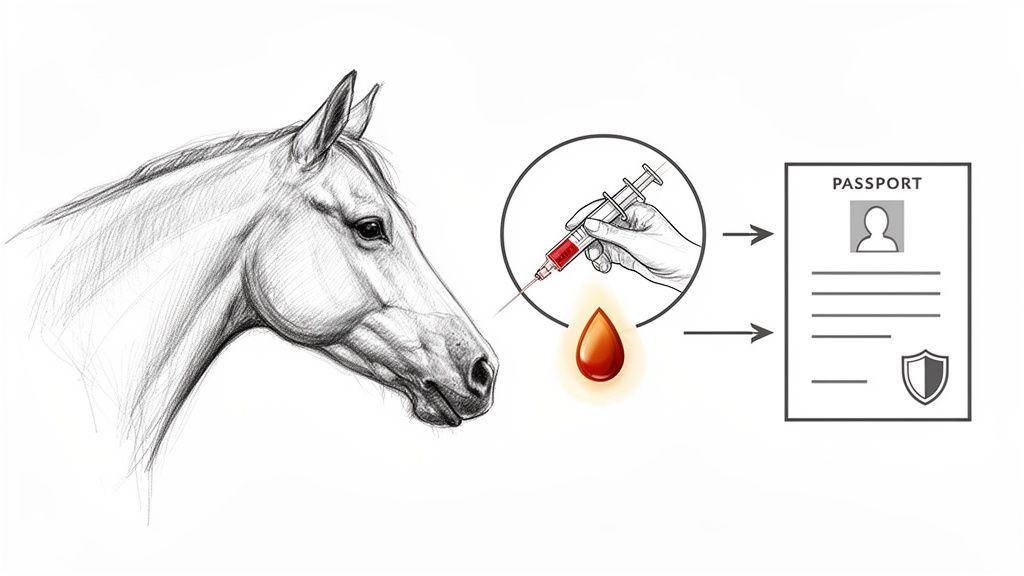
A Coggins test is a simple blood test that looks for antibodies to a disease called Equine Infectious Anemia (EIA). For horse owners, the best way to think of a negative Coggins certificate is as your horse's passport. It's the official document that proves they are healthy and safe to be around other horses, whether at shows, boarding stables, or just crossing state lines.
What Is a Coggins Test and Why Is It So Important?

If you're a horse owner, the term "Coggins" is probably one you hear all the time. But this is more than just another piece of paperwork; it's a cornerstone of responsible horse ownership and our single best tool for protecting the entire equine community.
Let's not get our manes in a tangle over complicated words. The test is simply designed to find antibodies for Equine Infectious Anemia, a nasty and incurable viral disease. The real danger with EIA is that some horses can carry it without ever showing symptoms, making this test our frontline defense against its silent spread.
The Role of a Coggins Test in Equine Health
A negative Coggins test is the ticket your horse needs for most common activities. This simple screening acts as a critical safeguard, making sure that when horses get together, they don't unknowingly pass this dangerous disease to one another.
Here's a quick look at the most common scenarios where you'll likely need one:
Traveling: Many states require a negative Coggins for any horse crossing state lines.
Competitions: Shows, rodeos, and fairs often ask for a current negative test for every participant.
Boarding: Stables typically request it to protect their resident horses from the risk of an outbreak.
Sales: Proof of a negative test is often a key part of buying or selling a horse.
To give you a better idea, here's a quick summary of what the Coggins test is all about.
Coggins Test At a Glance
Aspect | Quick Explanation |
|---|---|
What it tests for | Antibodies to Equine Infectious Anemia (EIA), a viral disease. |
Why it's needed | To prevent the spread of EIA, as many horses are silent carriers. |
When it's often needed | Travel, competitions, boarding, sales, and some vet procedures. |
Validity Period | Typically valid for 12 months, but can be 6 months for high-risk areas or events. |
Who performs it | A licensed veterinarian draws the blood; an accredited lab runs the test. |
This small step provides immense peace of mind for everyone involved.
The Coggins test was developed by Dr. Leroy Coggins way back in the 1970s, and it remains the gold standard for detecting EIA today. In 2022 alone, authorities in the U.S. conducted over 1.3 million tests and identified only 96 positive cases—a powerful testament to how effective this program is at keeping the disease under control.
Just like with other crucial travel documents, having your Coggins papers in order is a good idea. If you're planning a big trip, you can learn more about managing all the necessary paperwork in our guide to international pet travel requirements.
Understanding Equine Infectious Anemia
Before we dive into what a Coggins test is, we need to talk about the disease it detects: Equine Infectious Anemia (EIA). You might have heard it called "swamp fever," and while it’s a serious viral disease affecting horses, donkeys, and mules, there’s no need to panic. Knowing the facts is the best way to protect our four-legged friends.
Think of the EIA virus as a sneaky intruder. Once it gets into a horse’s bloodstream, it’s there for life, often without causing any visible signs of sickness. That’s the real challenge with EIA—an infected horse can look perfectly healthy but still pass the virus to others.
How EIA Spreads in Herds
The virus moves from horse to horse through blood. The most common culprits are biting insects, especially horseflies and deer flies. A fly takes a bite from an infected horse, picks up the virus, and then transmits it when it bites the next horse on its route.
It can also spread when equipment gets contaminated. Things like needles, dental tools, or even shared bits with a trace of blood can carry the virus. This is why good hygiene and never sharing needles are so important in the barn.
The most dangerous part of EIA is the asymptomatic carrier. A horse can carry the virus for its entire life, appearing completely healthy while remaining a potential source of infection for every other horse it encounters.
Because there is no cure and no vaccine, our only defense is prevention through regular testing. Before the Coggins test became standard in the 1970s, outbreaks could cause fever and anemia, but it was the silent carriers that posed the biggest threat. For a deeper dive, the USDA's official report has all the details.
Why Prevention Is So Important
Getting a handle on the "why" behind the test helps us see it as more than just another piece of paperwork. It’s a vital shield. A negative Coggins isn’t about restricting your horse; it’s about protecting them and helping create a safe community for all equines.
Every negative test result is a win, helping keep our barns, trails, and showgrounds safe for everyone.
How the Coggins Testing Process Works
So, what actually happens when your horse needs a Coggins test? No need to get worked up over the details. The whole process is refreshingly straightforward and a routine part of any solid equine wellness plan. It's so easy, you'll wonder what all the foal-derol was about!
It all kicks off with a visit from a licensed veterinarian. They'll perform a quick and simple blood draw, usually from the jugular vein in your horse's neck. It’s over in a flash and causes only a moment of discomfort, much like when a person has their blood drawn.
From the Barn to the Lab
Once the sample is collected, your vet takes it from there. The blood is carefully prepared and shipped off to a federally accredited lab that’s specifically authorized to perform Coggins tests. Inside, trained technicians are on the lookout for one thing: antibodies to the Equine Infectious Anemia (EIA) virus.
There are two main types of Coggins tests you’ll encounter:
AGID (Agar Gel Immunodiffusion): This is the original test, often called the gold standard for accuracy. It just takes a little longer to get the results back.
ELISA (Enzyme-Linked Immunosorbent Assay): This one is a much faster screening test, often giving you results in under an hour. If an ELISA test comes back positive, it's typically sent for confirmation using the AGID test.
This diagram shows just how easily the disease can be spread by biting insects, which is exactly why testing is so critical.

As you can see, a single horsefly can act as a carrier, moving the virus from an infected horse to a healthy one. This simple act is what makes those asymptomatic carriers so dangerous in a herd.
The Coggins test isn't just another piece of paper; it’s a proactive health measure. By identifying carriers, we create a firewall that stops EIA from spreading through local and national horse populations.
The entire process, from that initial blood draw to the final report, is designed for accuracy and safety. It's a key piece of the puzzle when it comes to travel documentation, right up there with the other paperwork needed for moving animals. You can learn more by checking out our guide on the animal health certificate for travel.
How to Read Your Horse's Coggins Certificate
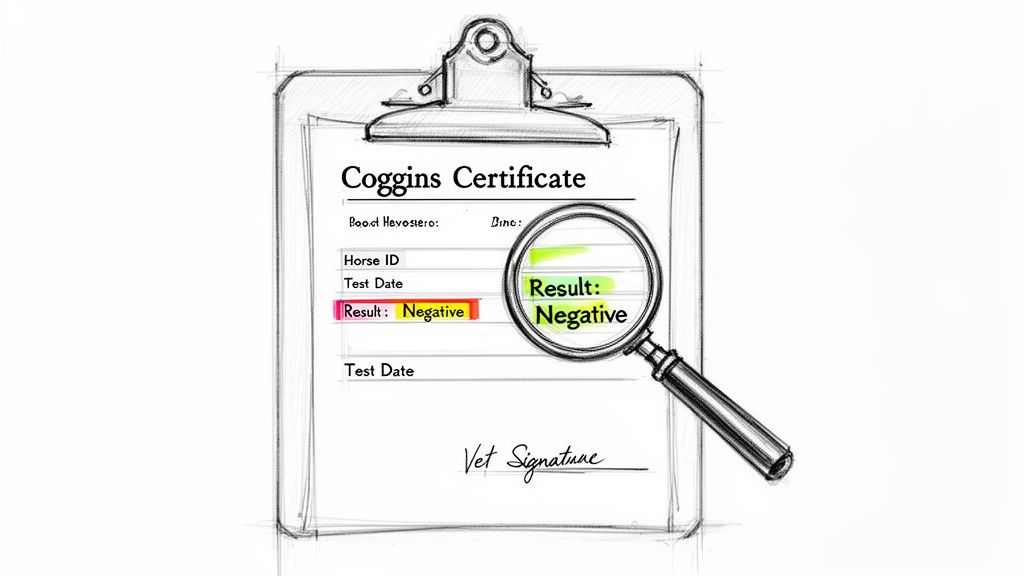
When your vet sends over the Coggins certificate, it might look like just another piece of paperwork. But this single document is your horse's passport to the world, holding important health information that's helpful for travel, competition, and even just moving to a new barn. Knowing how to read it is a useful part of responsible horse ownership.
Naturally, the first thing everyone looks for is the test result. A "negative" result is the best news you can get. It means no antibodies for Equine Infectious Anemia (EIA) were found in your horse's blood, giving you the all-clear for many activities. Think of it as the golden ticket you've been waiting for.
Decoding the Certificate Details
Beyond the result, the form is packed with a detailed description of your horse. This isn't just for record-keeping; it's to help make sure the certificate belongs to your horse and can't be used for a different animal. Don't be surprised if it gets incredibly specific.
You'll want to double-check these key details:
Horse's Description: This section paints a picture of your horse, covering breed, age, color, and any unique markings like whorls, scars, or brands. Digital photos are now standard on most modern forms, which makes identification even easier.
Owner and Location Information: Pretty straightforward—this just confirms who the horse belongs to and its home base.
Veterinarian and Lab Details: The form will list the accredited vet who drew the blood and the specific laboratory that processed the sample.
Test Information: Here, you'll see the exact date the blood was drawn and the type of test used (usually an AGID or ELISA test).
A positive result, while rare, is a serious situation. If a test does come back positive, your veterinarian and state animal health officials will step in. They'll guide you through the next steps with compassion and support, with the primary goal of keeping the entire herd safe.
A Coggins certificate is typically valid for 12 months from the date the blood was drawn. However, some high-traffic events or certain states may suggest a test that’s been done within the last 6 months.
This timeframe is important because it ensures a recent, accurate snapshot of your horse's health before they mingle with others. It’s why keeping your Coggins current isn't just a good idea—it's a community responsibility.
Coggins Test Validity for Common Activities
How long your negative Coggins is good for really depends on where you're going and what you're doing. A test that's valid for your local trail ride might not be accepted for an out-of-state competition.
Here’s a quick look at some common scenarios:
Activity or Destination | Typical Validity Period | Important Note |
|---|---|---|
Local Shows/Clinics | 12 Months | Most local events and clubs will accept a Coggins drawn within the last year. |
Boarding Stables | 12 Months | Standard for most facilities, though some may ask for a test upon arrival if your horse is coming from out of state. |
Out-of-State Travel | 6 to 12 Months | This varies widely by state. Some suggest a 6-month Coggins, while others accept a 12-month one. |
Major Competitions | 6 Months | High-traffic venues (like major USEF or AQHA events) often have stricter rules to protect the large number of horses. |
Canada | 6 Months | Traveling across the border to Canada typically means needing a negative Coggins test completed within the last 180 days. |
The golden rule? Always check the specific requirements for your destination or event well in advance. A quick phone call or a visit to the event's website can save you a massive headache on travel day. Managing this paperwork is simple with tools like Passpaw, which help you keep all your horse's travel documents organized and accessible.
Why a Coggins Test Is Your Horse's Travel Passport
A negative Coggins certificate is so much more than another piece of paper in your horse’s file—it’s their passport to the world. This simple document is the key that unlocks new trails, show rings, and boarding stables, making it one of the most essential items in your equine management toolkit. It’s time to quit stalling and make it a priority.
Think of it like this: when you travel internationally, your passport proves your identity and lets you cross borders. A Coggins test does something similar for your horse. It verifies their health status, confirming to everyone that they don't carry Equine Infectious Anemia and aren't a risk to other horses. This is why many states ask for a recent negative test before a horse can even set hoof across their border.
A Community Responsibility
This isn't just about bureaucracy or ticking a box on a form. Just about every public equestrian venue you can think of—from showgrounds and event facilities to public trails and boarding stables—often asks for proof of a negative Coggins. This widespread practice acts as a powerful shield for the entire horse community.
By making sure every horse at an event or facility has been tested, we dramatically lower the risk of an EIA outbreak. It’s a small effort from each owner that adds up to powerful protection for the whole herd.
The Coggins test is often a prerequisite for horse travel, and understanding other regulations is crucial for ensuring smooth journeys; explore a comprehensive guide to traveling with your animal for broader insights.
The effectiveness of this system speaks for itself. Many U.S. states have requirements for interstate horse transport, and it's standard practice for virtually all organized events. While some parts of the world struggle with higher rates of EIA, the U.S. has successfully kept its infection rate at less than 0.005%. That's a direct result of this diligent, community-wide testing.
Whether you're hauling to a local show or heading to another country, having the right documents is important. For those planning bigger trips, our guide on the veterinary international health certificate offers essential information to make sure you're prepared for any journey. Ultimately, keeping your horse's Coggins current is just plain good horsemanship.
Ditching the Paperwork Pile for Good
Let's be honest, keeping track of equine health paperwork can feel a lot like trying to wrangle a herd of yearlings. The frantic search through dusty file cabinets for a Coggins certificate before a show is a stress no one needs. Thankfully, those days are on their way out as digital solutions are stepping in to help veterinarians and horse owners alike.
Imagine this: your horse’s entire health history, including their current negative Coggins, stored securely and accessible right on your phone. This isn't science fiction anymore. Digital platforms are built to organize these vital documents, putting everything you need just a tap away. It’s a complete game-changer when you're packing the trailer for a competition or an unexpected trip.
Never Miss a Deadline Again
One of the biggest wins here is automated reminders. These tools can send you an alert when your horse’s Coggins is getting close to its expiration date, giving you plenty of lead time to schedule a re-test with your vet. That means no more last-minute panic or, worse, discovering your papers are out of date the day before you need to leave.
By moving to a digital system, you’re not just organizing files. You're eliminating the risk of lost papers, erasing the stress of tracking dates, and making sure you and your horse are always ready for the next adventure.
This kind of technology also helps sync your documents with your destination's specific rules, ensuring you have the right paperwork every single time. To see how these systems streamline travel documents beyond Coggins tests, you can learn more about getting a pet health certificate online.
Coggins Test FAQs
We've covered a lot of ground, but you probably still have a few questions. Let's tackle some of the most common ones we hear about the Coggins test.
Is the Coggins Test Painful for My Horse?
Not at all! A Coggins test is just a simple blood draw, very much like when people give blood for a routine check-up. Your veterinarian is a pro at this, making sure the whole thing is quick and causes just a brief moment of discomfort for your horse.
Why Do I Need a New Test Every Year?
Equine Infectious Anemia can pop up anytime, thanks to biting insects. An annual test is your way of confirming your horse is currently negative and keeping their health record up to date. This regular monitoring is a key part of preventing outbreaks, which is why most facilities and states suggest a certificate that's no more than 12 months old.
The yearly Coggins test isn't just about following a rule; it's a commitment to the health of the entire horse community. It ensures every horse at a show, on a trail, or in a new barn has been recently confirmed as EIA-negative, protecting everyone from a silent but devastating disease.
Can a Foal Get a False Positive Result?
Yes, and it's a great question. If a foal nurses from a mare carrying EIA antibodies, the foal can absorb them through the colostrum (the mare's first milk) and temporarily test positive. Because of this, foals are usually re-tested after they are 6-8 months old. By then, their mother's antibodies have faded, and you can get a truly accurate result. It's a small detail, but an important one for breeders to know.
Juggling Coggins certificates and other health papers can feel like a chore, but it doesn't have to be. With Passpaw, you can keep all your horse's health records organized and right at your fingertips, so you're always ready for the next ride. See how Passpaw makes managing travel compliance simple.
More articles
From regulatory changes to best practices for veterinarians and pet owners, our resources keep you ahead of the curve.