Are you a team member in a veterinary practice?
Are you a pet parent planning a trip with your furry pal?
USDA Pet Travel: Your Guide to Health Certificates
Taking your pet on an international adventure is an incredible experience, but a smooth journey starts with solid planning. The most important thing to know is that this process often kicks off months, not weeks, before your flight. Getting that USDA-endorsed international health certificate is the key to a successful trip for your furry co-pilot.
Your Pet’s International Travel Checklist
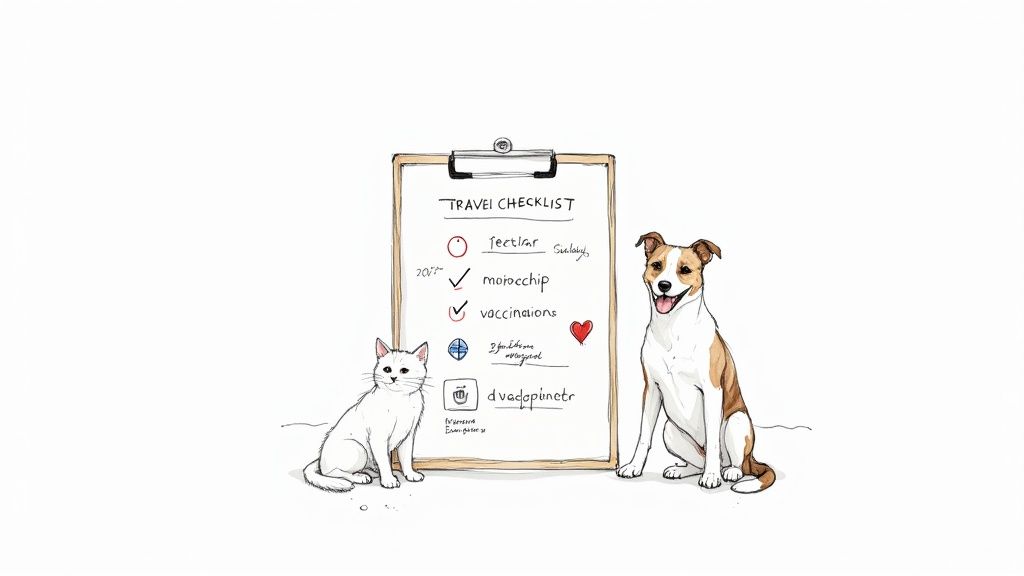
The idea of moving a pet across borders can feel like a lot, but breaking it down into a clear checklist makes all the difference. Think of this as your pre-flight briefing. The goal is to turn a confusing process into an exciting countdown.
Your journey begins long before you even think about packing. Every country has its own unique, and often very specific, set of rules. For instance, some destinations require a rabies antibody test, which can take several months from the day the blood is drawn until you get the results back. This is exactly why starting early isn’t just a good idea—it's essential for a stress-free experience.
First Things First: The Vet Visit
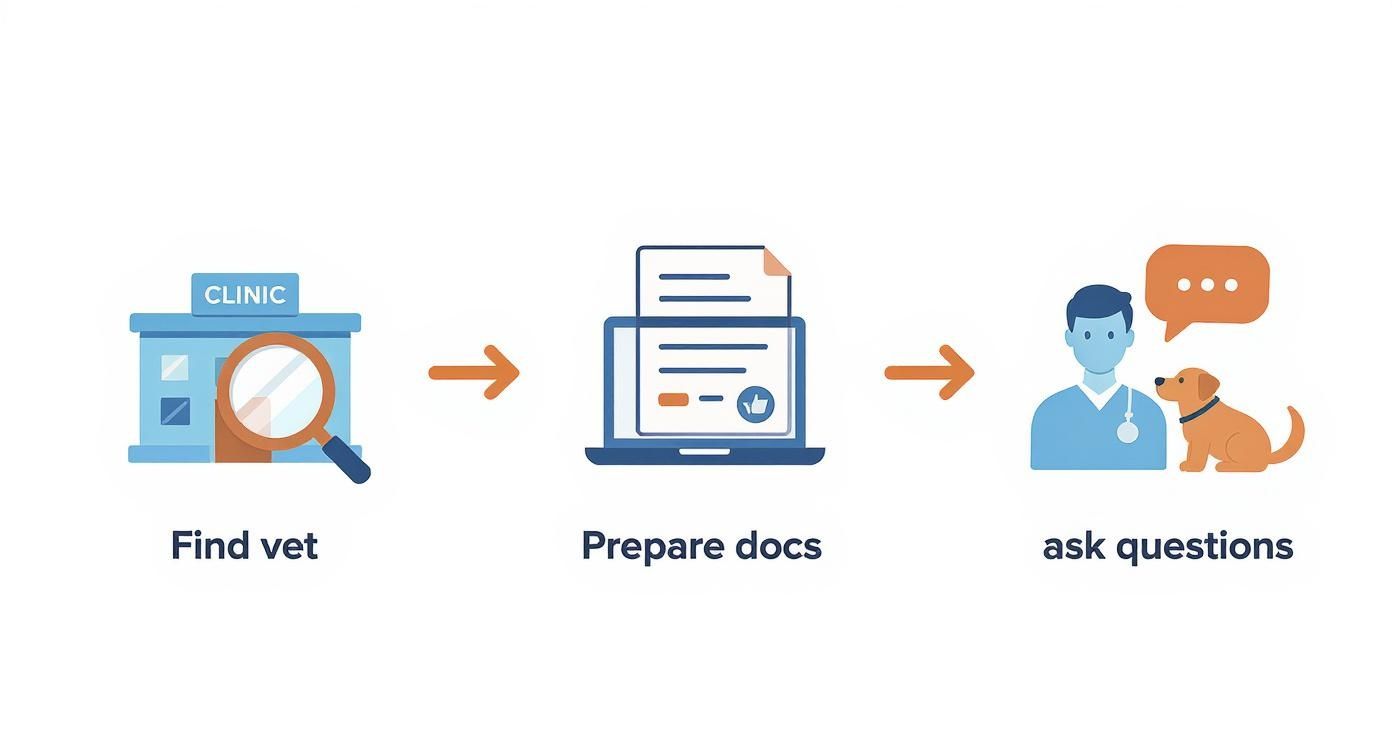
Your first stop should be your veterinarian's office. But here's the catch: not just any vet can sign off on international travel paperwork. You need a USDA-accredited veterinarian. These vets have completed special training that allows them to handle and sign these official government documents.
This distinction is important. A signature from a non-accredited vet on an international health certificate will likely be rejected. When you call to book the appointment, make sure you specifically ask if the vet has their USDA accreditation. This initial meeting is where you'll map out the entire timeline for vaccinations, necessary treatments, and the final health exam.
Key Takeaway: The single most important first step is finding a USDA-accredited veterinarian. Their expertise is the foundation of your entire pet travel plan, helping prevent common mistakes that could lead to delays or travel issues.
Understanding Your Destination's Rules
Every country sets its own import requirements. These aren't just suggestions; they are regulations that need to be followed closely. Getting these wrong can bring your travel plans to a screeching halt.
Some of the most common requirements you'll need to look into for your specific destination include:
Microchip Specifics: Many countries, especially in the European Union, require a 15-digit ISO-compliant microchip. An older, different type of chip might not be accepted.
Vaccination Timelines: You'll find strict schedules for when vaccines, particularly rabies, must be given relative to your travel date. For a deeper dive, you can learn about the importance of having a valid proof of rabies vaccine when getting your documents in order.
Parasite Treatments: It's common for countries to require specific flea, tick, or deworming treatments within a narrow window before your flight.
Of course, while juggling all these travel preparations, your pet’s overall well-being is what matters most. Good health, including dental hygiene, can make the stress of travel easier on them. You can find helpful resources on maintaining your pet's dental health to keep them feeling their best for the big trip.
To give you a better sense of how far in advance you need to start thinking about this, here’s a sample timeline.
Sample Pet Travel Planning Timeline
This table provides a general overview to help you visualize the process. Keep in mind that timelines can be much longer for stricter destinations like Australia or Japan, so always confirm the specific requirements for your country.
Time Before Departure | Key Action | Important Note |
|---|---|---|
6+ Months | Research destination requirements & find a USDA-accredited veterinarian. | Some rabies titer tests or quarantine periods require a very long lead time. Start your research now. |
3-4 Months | Administer rabies vaccine & get microchip (if needed). | The microchip should be implanted before the rabies vaccine is given for it to be valid in many countries. |
1-2 Months | Schedule the final health certificate appointment with your vet. | Book this well in advance, as accredited vets' schedules can fill up quickly. |
10-14 Days | Final vet visit for the health certificate and any required treatments. | This is often a very specific window, so timing is critical. |
2-7 Days | Submit documents to the USDA for endorsement. | Use an overnight shipping service with tracking to ensure your documents arrive and are returned on time. |
Getting this process started on the right paw really comes down to organization and paying close attention to the details. By understanding these initial steps, you're setting yourself and your pet up for a successful and exciting adventure abroad.
Decoding Your Destination’s Import Rules
Okay, now that you’re ready to plan ahead, it’s time to get into the details. Every single country has its own unique rulebook for arriving pets, and this is where many travelers get tangled up in frustrating red tape.
Your most important resource here is the official USDA APHIS Pet Travel Website. This isn't just a helpful guide; it's the main source of truth for every country's current requirements for pets coming from the United States. Make this your first stop and your final checkpoint for all things USDA pet travel.
Finding Your Country’s Specific Rules
The APHIS site is organized by destination country. You simply find the country you're traveling to, and it pulls up a detailed list of everything you'll need. It is very important to read this information carefully—even a small misunderstanding can snowball into a massive headache at the border.
These country-specific pages will spell out exactly what you need to do, often including details like:
The exact international health certificate form to use (it's often not the generic one).
Required vaccination schedules, including mandatory waiting periods after the shots are given.
Whether a rabies blood titer test is needed, a step that can easily add months to your timeline.
Any required parasite treatments and the precise window for giving them.
Let's take a real-world scenario: travel to the European Union. Pets often need to arrive within 10 days of the USDA endorsing their health certificate. If you have a layover in another EU country before your final stop, you might even need an extra transit certificate. It's these small details that can make or break your trip.
You can dive deeper into these export regulations on the official APHIS website to see how they work to protect animal welfare across borders.
Common Requirements You Might Encounter
While every country has its quirks, you'll start to see some common themes. Getting familiar with these will help you know what to expect and what to ask your accredited vet.
ISO-Standard Microchips
Think of a microchip as your pet’s digital passport. Many destinations, especially in Europe, require a specific 15-digit ISO 11784/11785 compliant microchip. If your pet has an older, non-compliant chip, you'll likely need to get a new one implanted.
Pro Tip: The microchip should be implanted before the rabies vaccination. If the vaccine is given first, it might be considered invalid, forcing you to get your pet revaccinated and start the clock all over again.
Strict Rabies Vaccination Schedules
Rabies control is a huge priority worldwide. This means countries have very strict rules about when the vaccine must be given. For instance, many countries won't consider a pet fully vaccinated until 21 or 30 days after their primary shot. This waiting period is important and must be factored into your timeline.
Rabies Titer Tests
Some rabies-free places, like Japan or Australia, ask for a blood test called a rabies titer test. This test shows the vaccine is working by measuring the level of rabies antibodies in your pet’s system. The process involves a blood draw, shipping the sample to an approved lab, and waiting for results—which can easily take over a month.
The best way to stay organized is to build a personalized checklist straight from your destination's rules. Our handy pet travel planner can also help you keep all these critical deadlines and documents straight. This isn't just about ticking boxes; it's about building a clear roadmap for a smooth, stress-free arrival for your best friend.
Working With Your USDA-Accredited Veterinarian
When you're planning an international trip with your pet, your most important partner is a USDA-accredited veterinarian. Think of them as the captain of your pet’s health and documentation team.
This isn’t just any vet. These professionals have completed special training with the U.S. Department of Agriculture, which gives them the authority to sign official international health forms. This single detail is the key to the entire USDA pet travel process. A signature from a vet without this specific accreditation could get your paperwork rejected, stopping your plans in their tracks. It's a vital step, so you've got to get it right from the very start.
Finding the Right Vet for the Job
So, how do you track down one of these specialized vets? The easiest place to start is your current clinic. Many larger practices have at least one USDA-accredited veterinarian on staff.
When you call, be clear about what you need: "I'm planning international travel for my pet and need to book an appointment with a USDA-accredited veterinarian."
If your clinic doesn't have one, don't worry. The USDA has resources to help you locate an accredited vet in your area. Putting in a little effort here saves you from a world of headaches later. It's like hiring a seasoned guide for a tricky mountain trail—their know-how is invaluable. Once you find the right vet, you'll work together to map out a clear timeline for exams, vaccinations, and any specific treatments your destination requires. Building a good rapport turns a confusing task into a manageable team effort.
How to Prepare for Your Vet Appointment
Showing up to your appointment prepared is one of the smartest things you can do. This meeting kicks off the official paperwork trail, so having all your ducks in a row makes your vet’s job easier and helps prevent costly errors.
Here’s a quick checklist of what you should bring:
Complete Vaccination Records: This means everything—date, manufacturer, and lot number for every vaccine, especially rabies.
Microchip Information: Have the microchip number, implantation date, and its location on your pet ready to go.
Your Travel Itinerary: Bring your flight details and the full address of where you’ll be staying at your destination.
A List of Questions: Jot down anything you're unsure about regarding your destination’s rules, the paperwork, or the timeline.
Your accredited vet isn't just there to sign a form; they are your expert consultant. They can help clarify confusing requirements and spot potential issues before they become problems, making them your best ally for a successful trip.
This prep work helps your vet fill out the international health certificate accurately on the first try. For a deep dive into this crucial document, check out our guide on how to get a USDA-endorsed pet health certificate.
Having everything organized for this appointment isn't just helpful—it’s the difference between a smooth takeoff and being grounded by paperwork problems. This is one of those times where being a little "paw-ticular" really pays off.
Getting the Health Certificate Paperwork Just Right
Let’s be honest: the health certificate is where most international pet travel plans hit a snag. It happens time and again—a single typo in a vaccine date or a misplaced microchip number can derail your entire trip. Getting this paperwork perfect isn’t just about ticking a box; it’s about making sure your best friend meets all the international health rules before you even think about heading to the airport.
Many pet owners (and even some vets!) underestimate just how detailed the APHIS Form 7001 can be. This document is like your pet's official passport, containing their identity, microchip number, complete vaccination history, and travel dates. Every single entry has to line up perfectly with the data from the microchip scan and your pet's official vaccine records.
For instance, if your dog Fluffy’s rabies shot was given on April 15, 2024, writing "4/15/24" instead of "15 April 2024" could get the form rejected, depending on the destination country's specific format rules. And you'd be surprised how many certificates are sent back simply because they're missing the USDA-accredited veterinarian’s signature or official stamp.
Key Takeaway: Simple mistakes are the biggest problems. Things like using the wrong color ink (stick to blue or black!), mixing up date formats, or a hard-to-read signature cause most certificate rejections.
A Closer Look at the Form Fields
Your accredited veterinarian will be filling out some very specific sections, and it helps to know what they're looking for.
Field 1 is all about your pet's basic info: species, breed, sex, and color.
Field 2 is for the microchip data. This number has to be an exact match to what the scanner reads. No exceptions.
Field 3 covers vaccinations, and you can bet the rabies entry gets the most attention.
Field 4 notes the exam date, which for many countries must be within 10 days of your travel date.
Field 5 is where your vet signs their name and adds their credentials and USDA accreditation number.
Field 6 is often used for destination-specific requirements, like noting a recent deworming treatment.
A few pro tips to help with accuracy:
Double-check that the microchip number on the form matches what your vet’s scanner shows.
Ask your vet to enter all vaccine dates in DD Month YYYY format (e.g., 15 April 2024) if your destination requires it.
Only use blue or black ink for any handwritten parts.
If you or your vet are unsure about any field, it’s always better to ask. A quick call to the USDA office can save you hours of frustration and costly resubmission fees.
Choosing Your Endorsement Method: Mail vs. Online
Once the certificate is filled out, you need to get it endorsed by the USDA. You have two main paths, and the best one for you really depends on your timeline.
The traditional method is mail-in endorsement. You package everything up and send it to the USDA office. The main downside is the turnaround time, which can be 7–10 business days. The standard fee is $38, and you get a physical document back via courier.
The faster, more modern option is the online VEHCS portal. This is a game-changer. The turnaround is usually just 1–3 business days. The fee is the same $38, plus a $15 digital processing fee, but you get real-time status updates and a lot less paper to shuffle.
Method | Processing Time | Fee | Primary Benefit |
|---|---|---|---|
Mail Endorsement | 7–10 business days | $38 | Tangible paper certificate |
VEHCS Online | 1–3 business days | $53 total | Fast updates and tracking |
Most vets prefer VEHCS, especially for those last-minute travel plans. But if you're traveling with several pets, some people find that mailing everything in one package helps keep their records organized.
How the VEHCS Online Portal Works
The Veterinary Export Health Certification System (VEHCS) is the USDA’s official portal for handling digital endorsements. It’s designed to take the guesswork and paper-shuffling out of the process.
Once your vet logs in, they can start a new application, upload scanned copies of the health certificate and supporting documents, and pay the fees securely online. From there, you can track every single step.
Here’s a real-world example: A vet in Texas recently had to prepare certificates for two cats traveling to Italy. She uploaded everything to VEHCS and had both endorsed documents back in just two days. She said her practice has cut its administrative time on these certificates by at least 50% since switching to the portal. That’s more time focused on animals, less on paperwork.
The dashboard, as you can see above, is pretty straightforward. It shows you exactly what’s happening—if a field is missing, if payment has been confirmed, or if the endorsement is pending. It’s a huge relief compared to waiting by the mailbox.
Real-World Document Example
Let’s walk through a quick scenario. Imagine a Labrador named Scout is moving with his family to France.
His owner, Alex, worked with his vet to make sure Scout’s microchip number, 981020043215654, was recorded on the form exactly as it appeared on the scanner. The vet carefully entered the rabies vaccine date as "12 June 2024" using black ink.
They uploaded the completed form to VEHCS, and Alex got the notification that it was endorsed just 48 hours later. This quick turnaround gave him the peace of mind to book Scout's flight three weeks in advance without any stress.
Final Tips Before You Submit
Before that final click or trip to the post office, do one last review with your veterinarian.
Confirm all signatures and stamps are clear and easy to read.
Make sure all the information perfectly matches your travel itinerary and the specific rules for your destination country.
Save digital copies of the final, endorsed certificate to your email and phone. You never know when you’ll need a backup.
If you're mailing it, always use a service with tracking and consider insuring the package.
Expert Insight: The single best piece of advice we can give is to submit everything as early as you possibly can. Building in some buffer time is your best defense against unexpected delays.
For a more comprehensive walkthrough on getting these forms filled out correctly, take a look at our detailed guide on securing your veterinary international health certificate.
Getting these details right takes a bit of focus, but it’s what ensures you and your pet can sail through customs and start your new adventure without a hitch.
Final Preparations Before You Fly

You’ve got the USDA-endorsed health certificate in hand—that’s a huge milestone. Now, the focus shifts from government paperwork to the practical side of travel day: airline rules and your pet's comfort. Getting these final details right is what separates a stressful airport experience from a smooth one.
Every airline has its own playbook for pet travel, covering everything from crate dimensions and weight limits to specific drop-off times. Don't assume anything. One airline might be fine with a soft-sided carrier for in-cabin pets, while another insists on a rigid one. Our advice? Call customer service to confirm the specifics for your flight and keep a printout of their pet policy with you. You'll be glad you did.
Airline Requirements And Carrier Tips
Before you even think about heading to the airport, double-check these common requirements:
Carrier Size: Does the crate actually fit under the seat or meet the cargo hold standards? Measure it yourself.
Labeling: Your pet’s carrier is their ticket. Make sure it's clearly labeled with their name, your contact info, and a copy of the USDA certificate securely attached.
Drop-Off Windows: Airlines are serious about their check-in times for pets. Many require you to be there at least 2 hours before departure. Don't cut it close.
Keep in mind that pet travel is popular. American Airlines, for instance, transported a staggering 80,817 pets in a single recent year. That popularity means they have their processes down, but it also means you need to follow their rules closely.
Calming Your Pet Before Departure
The single most important thing you can do is get your pet comfortable with their carrier long before travel day. Start practicing with short sessions at home, using plenty of treats and their favorite toys to build a positive feeling. You want them to see the carrier as a safe space, not a scary box.
Timing their food and water is also key. A light meal 2–4 hours before leaving for the airport is usually best—you don't want an upset stomach mid-flight. Keep fresh water available right up until you check in to make sure they stay hydrated.
“A calm pet is less likely to experience stress-related issues during flights,” advises flight nurse Laura M. This approach lowers the risk of motion sickness and dehydration.
Comfort And Safety Tips
Here are a few more practical things you can do in the days leading up to your trip:
Exercise Breaks: A tired pet is a calm pet. Schedule a good, long play session before you head to the airport to burn off any nervous energy.
Familiar Scents: Tuck a t-shirt you've worn or a small blanket that smells like home into the carrier. That familiar scent can be incredibly reassuring.
Health Check: Give your USDA-accredited vet a quick call to confirm the health certificate is still valid on your travel day. It’s a simple step for peace of mind.
With roughly 2 million live animals flying commercially in the U.S. each year, safety is important. Incident rates can vary between carriers—some report up to six times more safety incidents than others. It's worth looking into. You can learn more about pet travel statistics on DreamBigTravelFarBlog.
Airline | Cabin Limit | Cargo Limit | Pet Fee |
|---|---|---|---|
American | 18 x 11 x 11 in | 125 lb total | $125 |
Delta | 18 x 11 x 11 in | 100 lb total | $125 |
United | 17 x 11 x 9.5 in | 100 lb total | $125 |
Preparing For Arrival
Once you land, you'll need to go through customs with your pet. Have your folder ready with the original USDA certificate, vaccination records, and your own passport. Having everything organized makes the inspection process much faster and avoids unnecessary delays.
After you're officially through, find a quiet area to let your pet out of the carrier to stretch their legs and have a drink of water. If you can, book a pet-friendly taxi or ride service ahead of time so you aren't left scrambling at the curb.
Before leaving the airport grounds, do a final check on any local requirements. Some destinations have on-arrival health checks or fees. A little prep here prevents last-minute surprises and lets you get on with your adventure.
Key Takeaway: Preparation pays off. A well-planned travel day reduces stress for both you and your pet, ensuring a purr-fect landing and a smooth start to your adventure.
You're ready to handle travel day like a seasoned pro. Keep this guide handy, and let Passpaw help with any final paperwork questions. Bon voyage to you and your furry co-pilot!
Your Top USDA Pet Travel Questions, Answered
Let's be honest: navigating the world of international pet travel can feel like you're trying to read a map in a foreign language. It's totally normal for questions to pop up, and you're not the first person to wonder about the finer details.
Think of this as your quick-reference guide. Getting these answers straight is the key to making sure your journey is as smooth as possible for you and your furry co-pilot.
How Long Is a USDA Health Certificate Valid For?
This is probably the most common question we get, and the answer is always the same: it depends entirely on your destination country. There’s no one-size-fits-all rule here.
For example, if you're headed to any country in the European Union, that health certificate is typically valid for just 10 days from the moment the USDA endorses it. That creates a tight window for your final vet visit, getting the paperwork to the USDA, and catching your flight.
On the other hand, some countries are a bit more generous, giving you a window of up to 30 days. The only way to know for sure is to check the official APHIS Pet Travel Website for your specific destination. This is exactly why you have to plan those final appointments and your travel date so carefully.
What Does It Mean for a Veterinarian to be "USDA-Accredited"?
Your regular vet is a superstar for annual check-ups and routine care, but they generally can't sign off on international travel documents without a special authorization. A USDA-accredited veterinarian has gone through additional training and is officially recognized by the U.S. government to handle and sign these specific forms.
Only their signature is valid on an international health certificate. While many vet clinics have at least one accredited vet on staff, you need to confirm this when you book your appointment. It’s a small step that prevents a massive headache later.
Here's an easy way to think about it: Your family doctor is fantastic, but you'd need a specialized surgeon for a specific operation. An accredited vet is the specialist you need for the "operation" of international USDA pet travel.
Can I Just Use the APHIS Form 7001 for Any Country?
Usually not. This is a common mix-up that can derail your travel plans in a hurry. The APHIS Form 7001 is a general international health certificate, but many countries—and entire regions like the European Union—require their own specific, often bilingual, health forms.
Using the wrong form is a common way to have your pet's entry delayed or even denied at the border. It’s a costly and heartbreaking mistake to make. Always, always, always use the APHIS Pet Travel Website to find and download the exact, most current forms required for your destination. Don't guess.
What Happens If There's a Mistake on My Paperwork?
Even the tiniest mistake on your pet's travel documents can snowball into a major problem. We’re talking about things as simple as a wrong date, a missing piece of information, or even using the wrong color ink. These small errors can lead to frustrating delays at the airport or, in the worst-case scenario, your pet being denied entry and either sent back or put into quarantine.
This is why you have to double- and triple-check every single detail with your accredited vet before the forms go to the USDA. A few extra minutes of review can save you from a world of stress and unexpected expenses. It’s not being “paw-ranoid,” it’s just being prepared!
As more families travel with their pets, the services supporting them have grown right alongside. The U.S. pet travel services market was estimated at USD 659.90 million in 2024 and is projected to more than double to USD 1.37 billion by 2033. This growth shows just how many people are navigating this exact process. You can dig into the numbers in the full U.S. pet travel services market report.
Ready to simplify your pet's international journey and make sure every document is perfect? Passpaw gives you the tools and support to manage health certificates with confidence, cutting down on errors and saving you valuable time.

More articles
From regulatory changes to best practices for veterinarians and pet owners, our resources keep you ahead of the curve.